


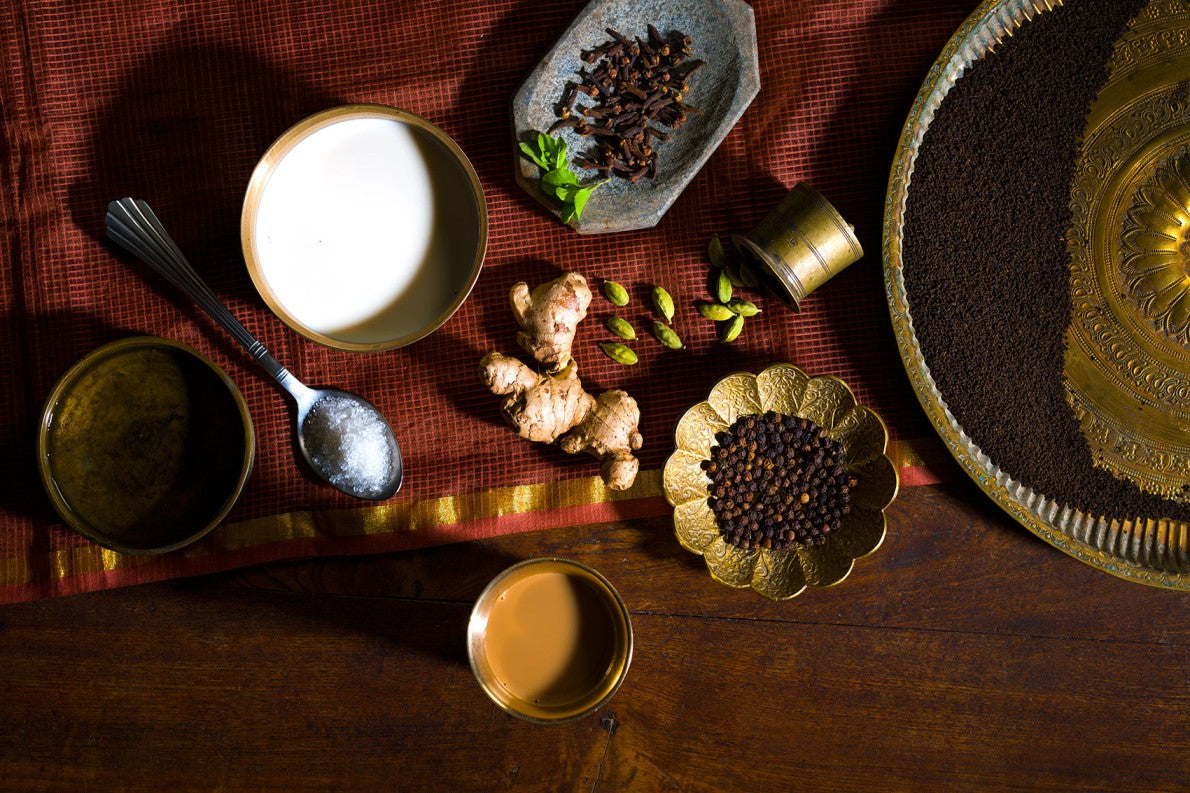
The chai story in India is separated by a few centuries and unfolds in more ways than one.
Legends trace the origin of masala chai back about 1,400 years to the royal court of Harshavardhana, who concocted this special beverage. Made with the goodness of Ayurvedic herbs to stay awake during long court hours, the delicious masala chai soon trickled down for mass consumption. More often than not, it served as a remedy for mild ailments.
The original version of ‘masala chai’, however, contained no actual tea leaves, and even the milk and sugar varieties occurred thousands of years later. However, this concoction remained on the memory palate of the masses and would emerge much later to become a national staple.
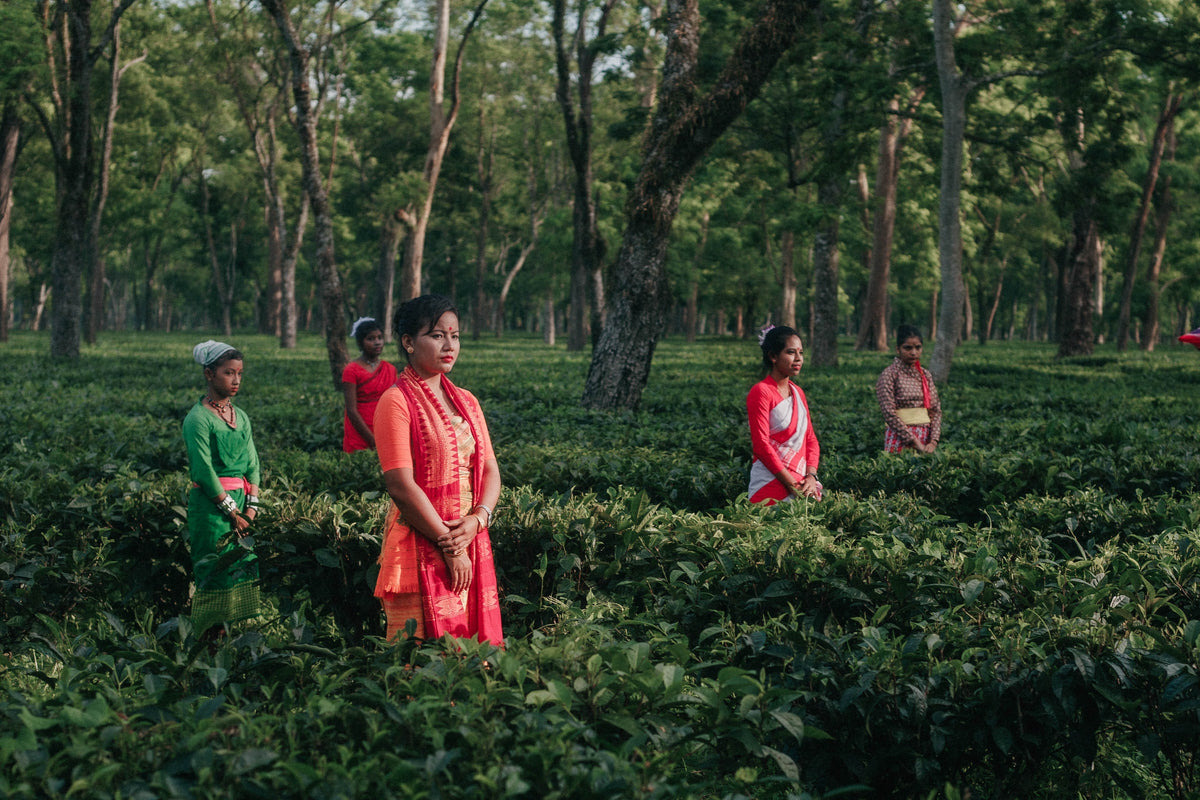
Tea workers in Assam, India (Image source: The Library of Congress)
It was the British who would bring organized tea plantations to India in the early 1800s. With the tea trade with China becoming uncertain, the British were on the lookout for a new market. With the discovery of the possibility of growing tea in India, they seized upon the opportunity to capture the global tea market. Soon, by the late 19th century, Indian tea far exceeded the popularity of Chinese tea, aided by the exploitative measures and aggressive advertising of the British. Chinese tea was bandied about as weak and less pure in comparison to Indian teas. They also sought to point out that Darjeeling and Assam teas were more full-bodied and flavorful, at a cheaper price.
The massive production of Indian teas saw differential auction house prices in London, where the preference was for the higher grades of the leaf, with no real market for the fannings and dust. Coupled with the long-distance transportation, by the early 1900s the British-owned Indian Tea Association began to see India as a potential market for the leftover tea. In the beginning, the reception of the beverage was lukewarm. With periodic advertising of tea as a symbol of elite social class, it began to draw a certain audience, especially among the Parsis and Bengalis.
Vintage advertisement: A comparative study of the Chinese and Indian tea market
A special mention should be made of the Indian Railways, which played a symbiotic role not only in the globalization of tea but also in creating the culture of chai. It became the first chai epicenter. Low-quality tea would be sold in paper packets at very low prices to the public, especially at the Howrah railway station in erstwhile Calcutta. Tea stalls at Howrah railway station (some exist even to this date) were set up for the sole purpose of demonstrating the British way to steep tea. It was the Great Depression that followed World War I, when international tea prices dropped, that witnessed the rise of Indian and Eurasian vendors, with their special tea-making units selling chai at the railway stations of Bengal, Punjab, and the Frontier provinces.
Tea stall at a station platform in the 1930s. Archival photo courtesy of Ravindra Bhalerao
The Tea Association put all their effort into developing the domestic market. Hoardings and posters in the vernacular displaying tea recipes were put up across several railway platforms, covering even the suburban railway network. With the cost of black tea still high even for domestic consumption, the dormant memory palate of Indians began to awaken. To make each cup more cost-effective and close to popular traditional beverages like ‘sharbat’, local vendors began to add large quantities of milk, sugar, and an amalgamation of spices. The hybrid beverage soon converted the nation from being a mere factory to a booming market.
The difference in tea drinking styles, however, still persists, mainly due to the difference in variety. The exquisite Darjeeling tea, prized for its aroma and champagne color, was never made available to the Indian masses. Conditioned from the beginning to drink low-grade teas, the dust and the fannings or the CTC, most Indians would find Darjeeling tea, with its thin body, ill-suited for making a cup of chai. With more demand in auction houses abroad, the high price of Darjeeling tea kept it further alienated from the palate of Indians.
The varieties of chai grow exponentially, an ever-evolving beverage
But chai has triumphed in so many ways. Despite historical ups and downs, the ‘chaiwallah’ and the ‘chai stall’ are to this day cultural icons. The humble beverage itself has gone around the world, reinvented itself under various monikers such as chai latte, golden chai, pumpkin spiced chai tea latte, and masala chai ice cream, and is lovingly savored. Steeped in history and legend, chai remains still, a constant cup of comfort.
Originally published on Still Steeping, the Teabox blog, on August 16, 2021. Lightly edited for clarity in October 2026. Brew a cup of this history at home: try our Kolkata Street Chai, or explore all our masala chai blends.

Leave a comment
All comments are moderated before being published.
This site is protected by hCaptcha and the hCaptcha Privacy Policy and Terms of Service apply.