



For a hot chai latte, mix 80 ml of concentrate with sugar or honey and top up with hot, frothed milk; for iced chai, pour concentrate over ice and add cold milk. In a standard 240 ml mug that is roughly one part concentrate to two parts milk; use more concentrate for a stronger cup. This page covers hot and iced chai, the mocktails we have built on tea concentrate, and how to stop ginger splitting the milk.
How do you make a hot chai latte from concentrate?
Pour 80 ml of concentrate straight from the fridge into a mug, sweeten it, and top it with hot, frothed milk; the hot milk does the warming.Read more
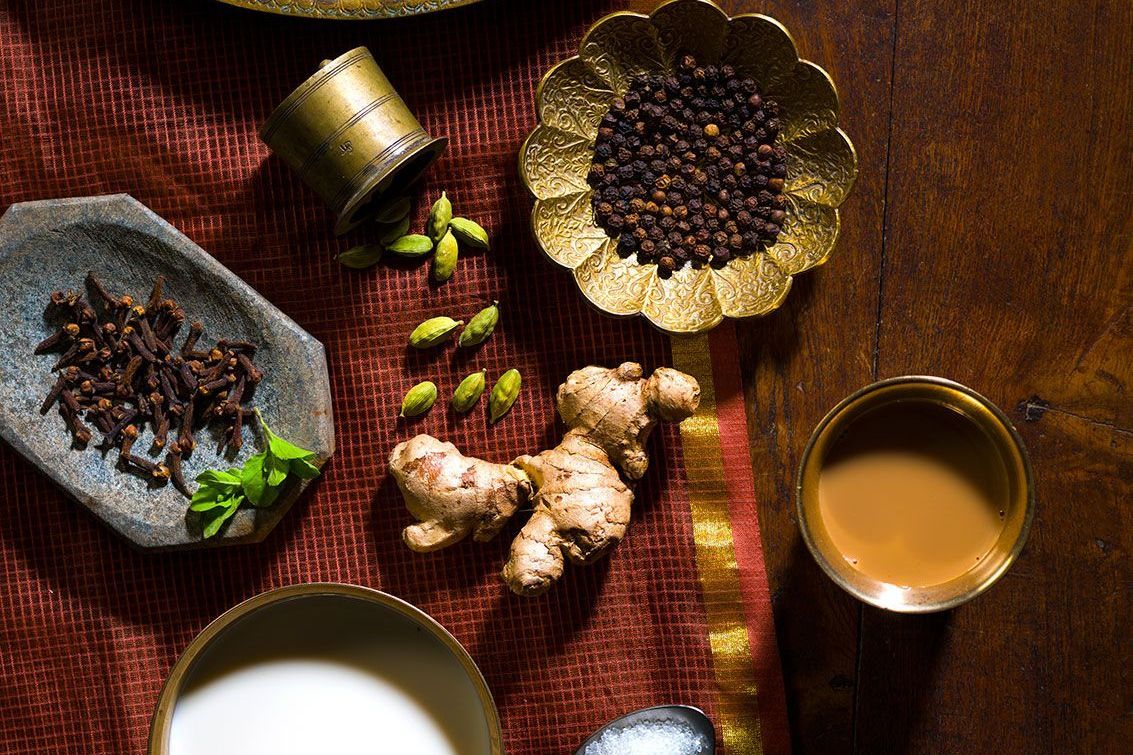
Our original recipe: “In a tea mug take 80ml of the concentrate. Add sugar or honey to taste. Then add hot milk, followed by whipped cream to top.” Our 2022 chai latte recipe works the same way in one go: 4 spoons of any Teabox masala chai steeped in half a cup of water, then 1¼ cups of milk or a dairy-free alternative, foamed, with a sprinkle of cinnamon or nutmeg on top.

Froth the milk with a frother, a whisk or by shaking it in a jar, or simply heat concentrate and milk together in a pan until steaming, which gives a cup closer to Indian chai. Frothing methods, milk choices and café-style variations are in our chai latte guide, and for a shot of espresso in the cup see Dirty chai.
India has its own frother. In Tamil Nadu’s tea shops, the tea masters “do this trademark pour from several feet to mix the milk, tea liquor and sugar and create a frothy concoction,” as our 2015 story on India’s chai wallahs describes. Pouring the latte between two jugs a few times, from as high as you safely can, does the same at home.
How much milk for your blend
Match the milk to the concentrate. Our Assam Masala Chai takes plenty: with milk, our procurement team’s Avishek finds it “impressively dense, full-bodied and sweet.” Kolkata Street Chai is more aromatic, and in his notes “a dash of milk brings out the flavors even more,” so pour less.
How do you make iced chai from concentrate?
Pour chilled concentrate over ice and add a splash of cold milk; for a cold glass, our recipes use 120 ml of concentrate.Read more
Fill a glass with ice, pour in the chilled concentrate and top it with cold milk. Our 2015 Summer Iced Chai used about 4 tablespoons of milk per glass, which keeps the spice and tea to the fore. Frozen concentrate cubes work even better than ice.
For a milk-free version, the same recipe suggests lemon juice and mint, “or enjoy the chilled masala tea as it is,” though its author added that chai without milk is “like pizza without cheese.” More cold recipes are in How to make iced tea.
Iced chai nearly became a Teabox product. When we planned our first summer range in 2015, “We were leaning toward iced chais,” until someone, quite likely from marketing, said “No, not chai!” and the team made iced tea blends instead.
Chai popsicles
A concentrate also freezes into dessert. Our 2024 chai popsicle steeps 3 tablespoons of a saffron and rose chai in 2 cups of water for 5 to 7 minutes, strains it, and stirs in ½ cup of sweetened condensed milk and ½ cup of whole milk before freezing. The condensed milk keeps the frozen tea creamy rather than icy.
Can you make mocktails and cocktails with tea concentrate?
Yes: a strong, chilled tea concentrate is a good base for a mixed drink, and our own recipes start from 120 ml of it per glass.Read more
Concentrates also make good mocktails. One of our holiday recipes stirs 120 ml ginger tea concentrate with 80 ml litchi juice, 5 ml rose water and 15 ml sugar syrup over ice, garnished with julienned ginger and rose petals.
Our 2017 summer series built a whole menu the same way, each on 120 ml of an iced tea concentrate:
- Kopi Chia: 35 ml almond milk, 40 ml whiskey, 7 ml brown sugar syrup, a dash of cinnamon and ice, in a glass rimmed with coffee and cinnamon powder; the almond milk makes it a dairy-free creamy drink.
- Orange Sorbet: 15 ml honey, a dash of pepper and 45 ml brandy, showing that a spice note can carry a cocktail.
- Tropic Topic: 45 ml whiskey, 15 ml lime juice, 20 ml sugar syrup and a splash of soda, a sweet and sour balance.
For our Berry Blitz cocktail the tea was brewed for the time on the pack, infused “for not more than 2 hours,” cooled and strained, then refrigerated overnight before mixing. Chef Priya Vijan, who created the recipes with our iced teas, gave the rule that applies to any concentrate drink: “balancing the sweet with sour is the key to get a perfect drink!”
Why does a ginger chai concentrate split the milk?
Fresh ginger contains enzymes that clot milk between about 60°C and 70°C, so simmer the ginger in water first, or add it only once the milk is very hot.Read more
If your concentrate is heavy on fresh ginger, simmer the ginger in water rather than steeping it raw. Writer Srinath Perur found that ginger contains enzymes that clot milk: they are most active above about 60°C and are neutralized above about 70°C. Raw ginger meeting warm milk is why a ginger chai sometimes splits. Boiling the ginger in water first, or adding it only once the milk is very hot, avoids it.
He found it only happened above a certain quantity: a bigger pot of milk took longer to heat, so it was still in the clotting range when the ginger went in. The two fixes taste different, too. Boiling the ginger in water first gives “a brash ginger burn,” and adding it to milk hot enough to sizzle against the pan gives “a mellow glow.” His full story is The Science Behind My Ginger Chai.
For a concentrate, this makes the simmered whole-spice method the safer choice for ginger: the ginger is boiled in water before any milk is near it.
Caffeine in a chai made from concentrate
A concentrate is still tea, so it carries tea’s caffeine; how much depends on how much leaf goes into each cup. See Does chai have caffeine? Tea 101 puts a cup of masala chai at about the same as a cup of black tea, roughly 50 mg, and every 80 ml serving of our concentrate holds the tea of about one teaspoon of leaf, close to one ordinary cup. Caffeine varies with the leaf, the amount, the water temperature and the steeping time.
Keep reading
Sources
- Teabox blog: Forgive Me Chai, It’s Summer (Iced Chai Recipe) (2015), The Science Behind My Ginger Chai (2015), Behind the Scenes: Making of Our Iced Tea (2015), A Blender of Teas (2015), Cross Country in Search of the Chai Wallah (2015), Recipe: An Iced Tea Cocktail (2017), Would you like some sugar in your tea? Or a little tea in your sugar? (2017)
- Teabox blog (Still Steeping) stories: The Teabox Top 10 Teas of 2015 (2015); My Inconspicuous Companion (2015)
- Teabox Tea 101: FAQs, What’s the difference between tea, chai, chai tea?
- Teabox product descriptions: Instant Chai Latte Mix, Assam Masala Chai, Kolkata Street Chai, The Chai Tea Gift Box, Authentic Indian Chai Complete Trial Pack, Halmari Summer Black, Singlijan Summer Black, 2026; Teabox house facts, 2026
- Teabox Drive: Teabox internal document, 2023; Teabox internal document, 2021; Teabox internal document, 2025; Teabox internal document, 2017; January 2020 Dry to a Tea chai latte shoot; 2022 chai latte recipe card; photos as credited
- Teabox on Instagram (@teabox.tea): chai concentrate latte, Jan 2020, chai latte recipe, Nov 2022, Instant Chai Latte Mix launch, Feb 2026, mocktail sugar syrup, Jun 2017, Orange Sorbet, 2017, Kopi Chia, May 2017, Tropic Topic, 2017, Pomegranate Swirl, 2017, iced teas with no sugar, Jun 2017, Caribou Sky gift box, Dec 2019, storage at -5°C, May 2020, ginger tea concentrate mocktail, Dec 2020, chai popsicle, Sep 2024
- Kausshal Dugarr on X (@Teapreneur): chai from a teabag, Dec 2021

Leave a comment
All comments are moderated before being published.
This site is protected by hCaptcha and the hCaptcha Privacy Policy and Terms of Service apply.