


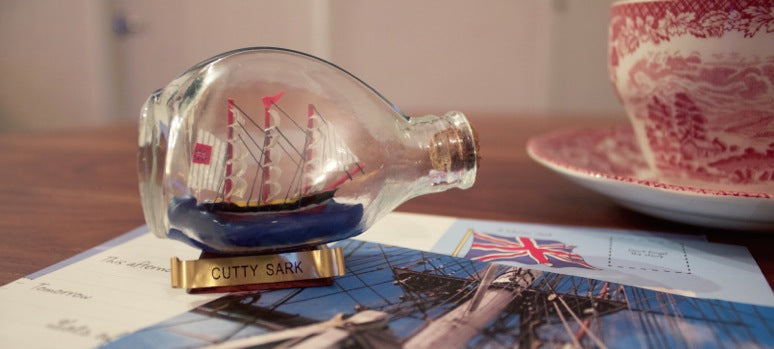
Nobody knows for certain who first blended Earl Grey; the name honors Charles Grey, the second Earl Grey, British prime minister from 1830 to 1834, and bergamot-scented tea was on sale in Britain by the 1820s. Beyond that, the stories compete. Much like English Breakfast, there is no recorded account of how the blend came about.
Who was Earl Grey?
Charles Grey, the second Earl Grey, was an English aristocrat and British prime minister from 1830 to 1834, and his family seat was Howick Hall in Northumberland.Read more
He is remembered in Britain for reform, not for tea. The draft of our 2015 Earl Grey story notes that he was the author of the Reform Bill of 1832.
Peter Keen, who wrote about tea history for our blog, added two more marks of the man. The Earl ended slavery in the British Empire, and earlier in his career he led the failed impeachment of Warren Hastings, the East India Company’s Governor-General of India.
How did Earl Grey tea begin?
The best-loved story says the Earl asked a Chinese tea merchant for a blend that would suit the hard water at his home, and the merchant scented Chinese black tea with bergamot oil.Read more
The version Tea 101 likes best: the Earl asked a Chinese tea merchant to create a blend that would suit the water at Howick Hall, his home in Northumberland, which was unusually high in lime. The merchant added bergamot oil to Chinese black tea, the most widely available tea of the day, and the scented blend made the hard water taste far better.
Our writer Meeta Sharma thought it the most plausible of the stories and dated it to the early 1800s. Her draft gives a reason: the water in industrial Britain was reportedly so foul that a scented tea was a real improvement.
A fashionable cup
Naysayers have a less flattering view: that the bergamot was there to mask the poor quality of the Chinese tea of the day. Either way, the blend found a faithful following.
Tea was already fashionable in aristocratic circles, but a bergamot-scented blend like the Earl’s “spelled gentry.” Lady Grey is said to have served it at the many parties she hosted, and it became the fashionable choice of the aristocracy.
What are the other legends about Earl Grey?
The other stories say the tea was a diplomatic gift, a reward for saving a life, or an accident at sea, and none of them holds up well.Read more
- A gift: Other tellings say the tea was a diplomatic gift, or a present from a Chinese mandarin to the Earl.
- A rescue: The Earl saved the son of a Chinese tea trader from drowning and was given the recipe in thanks.
- An accident: A cargo of tea picked up the scent of bergamot shipped beside it on the voyage from China.
Keen pointed out the holes: the Earl never went to China, and bergamot was never grown or used there. The gift story has the Earl just back from a country he never visited, and the cargo story needs bergamot on a ship from a country that did not grow it.
Keen’s wider point was about marketing. The more a brand focuses on the legend and the heritage, he wrote, “the more sure you can be that the tea is at best mediocre.” The story sells the tin; it tells you nothing about the leaf.
When was Earl Grey first sold?
Bergamot-scented tea was on sale in Britain by the 1820s, Jacksons of Piccadilly says it has sold Earl Grey since 1836, and Twinings is credited with making it widely popular.Read more
Two London houses have claimed the original recipe. Twinings is credited with making Earl Grey widely popular, and Jacksons of Piccadilly says it has sold the blend since 1836.
What the dictionary found
The printed record is much later than the legend. In 2013 the Oxford English Dictionary asked its volunteers to trace the name. As Keen reported, they found a generic Earl Grey “mixture” in 1867 and the name itself not until 1928, both from Jacksons.
Keen grew more skeptical over time. By 2017 he was writing that the Earl “had nothing to do with his tea, which was first mentioned in any document in 1929, almost exactly a century after what is now claimed,” and calling it “a marketing creation of the 1930s.”
So the safe summary is this: bergamot tea was sold in the Earl’s lifetime, a seller has claimed it since 1836, and the name we use today is firmly on record only from the late 1920s.
How does Earl Grey fit into the history of blending?
Earl Grey is a young blend in a very old tradition: people have added flowers, fruit and spices to tea for centuries, and English Breakfast reached the market decades before Earl Grey.Read more
Adding things to tea is far older than either London house: our blog story Tea: A Blended History traces blending back to ancient China, and lists citrus peel in Earl Grey beside rice in genmaicha and spices in masala chai. For the wider story, see The history of tea.
In Britain, the big, bold breakfast blend came first. Keen wrote that “Earl Grey came on the market decades later,” and that even in 2016 it trailed English Breakfast, at maybe a quarter of the UK and USA packaged tea market against about half.
Since then it has traveled. Keen noted that two of the world’s top five tea brands sell a Russian Earl Grey in bags, and that the elite brands and specialist sellers all make small-batch Earl Greys of their own.
How did our own Earl Grey range begin?
Our Earl Grey story starts in 2015, when a long-awaited consignment of bergamot extract cleared customs and our tasters began testing blends; Classic Earl Grey has been on sale since September that year.Read more
- August 2015: Our R&D team received bergamot extract “after two months of struggle with the customs clearance authorities,” and the whole team was “crazy happy.” Our blender Shruti Tripuraneni said the team had “crafted an Earl Grey of every kind, black, white, green and oolong,” after sampling 80-odd versions. Her own story is on our blog: A Blender of Teas.
- September 2015: Classic Earl Grey went on sale on 1 September 2015, and it has stayed in the range ever since.
- Mid-2016: Our blog team told a reader there were 10 Earl Grey variants to choose from, none with orange pieces. Lavender Earl Grey launched on 15 July 2016.
- 2018: Our range of 11 chais still included a fresh Earl Grey variant, alongside Bombay Cutting and Punjabi Masala.
- 2019 to 2022: Classic Earl Grey and Lavender Earl Grey went into our 2019 Christmas gift box, and from 2020 Classic Earl Grey was one of the three teas in Vivant, which we called our most popular gift.
Today the range centers on Classic Earl Grey Citrus Black, on an Assam base. Every blend we made along the way is described in Types of Earl Grey.
Keep reading
Sources
- Teabox Tea 101: The Earl Grey tea; How to prepare Earl Grey tea; Earl Grey: For flavors and for health; English breakfast; Russian Caravan
- Teabox blog: Tea: A Blended History (2016), Tea in France: Not What You Might Expect (2016), English Breakfast: The Baseline Black Tea (2016), The Beginner’s Guide to Choosing a Darjeeling (2017), From history, a long and complicated relationship with tea (2017), At a fast clip: Shipping tea from China (2017), The Samovar: Kettle, Stove, Teapot and History (2016), The Tea Navigation Paths: Artisan and Agribusiness (2017), Jasmine Teas: A Scent of Perfection (2016), Cooking With Mom! (2016), The musician and his tea (2017), A Blender of Teas (2015)
- Teabox blog (Still Steeping, not currently published): How to Choose Your Earl Grey, Peter GW Keen, 2016, with reader comments; Earl Grey ft. Teabox, Meeta Sharma, 2015
- Teabox product descriptions and product data (tasting notes, grade, ingredients, caffeine rating, brewing card, cups per pack), 2026: Classic Earl Grey Citrus Black, English Breakfast Black, Classic Assam Black, Mountain Rose Black, Lavender Earl Grey (unlisted)
- Teabox Drive: Earl Grey range sheets, 2016: Teabox internal document, Teabox internal document, Teabox internal document, Teabox internal document, Teabox internal document, Teabox internal document, Teabox internal document, Teabox internal document; Teabox internal document, 2015; Teabox internal document, 2023; photos as credited
- Teabox on Instagram (@teabox.tea): Caribou Sky gift box, Dec 2019, Vivant gift box, Dec 2020, three most aromatic teas, Sep 2021, Earl Grey plum cake, Nov 2021, our most popular gift, Mar 2022, eleven chais, Jan 2018


Leave a comment
All comments are moderated before being published.
This site is protected by hCaptcha and the hCaptcha Privacy Policy and Terms of Service apply.