


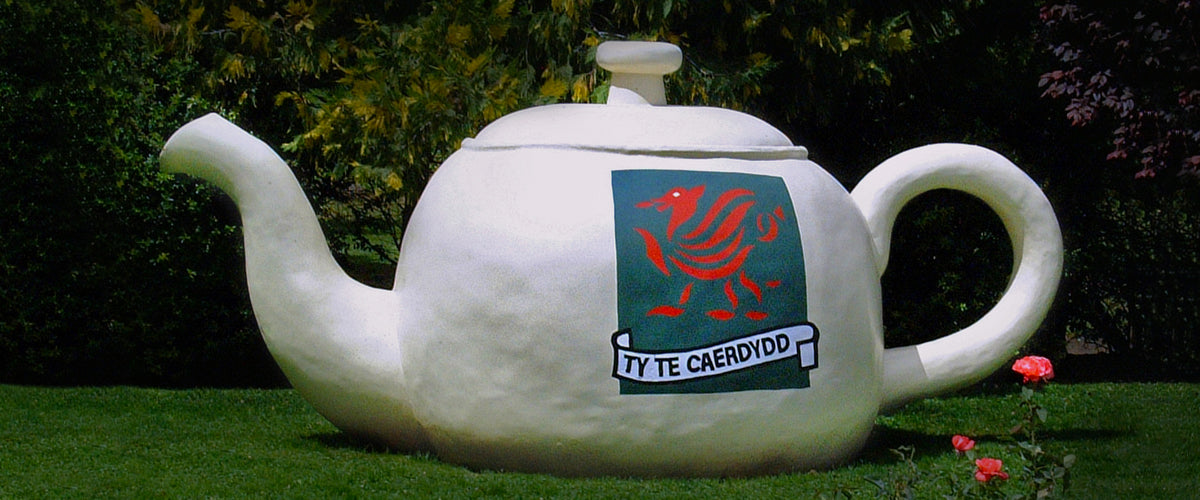
Nobody knows for certain who first mixed English Breakfast, but what is clear is that strong black breakfast blends took over from Chinese teas in Britain during the 1800s, as tea from India and Ceylon arrived. Before then, Britain’s breakfast cup was Chinese black tea. This page follows the two leading stories of its birth, then the changes to breakfast that made the blend a British habit.
Where does English Breakfast tea come from?
Despite the name, English Breakfast was probably not invented in England: the two leading stories place it in New York in the 1840s or with a tea merchant in Edinburgh, and there is no firm record either way.Read more
Tea 101 dates the blend to “sometime around 1843,” and notes that neither story credits an Englishman or woman with it.
The New York story
Kausshal Dugarr, Teabox’s founder, told the New York version in December 2021: “The story begins in 1843, New York. A young immigrant from Hull … Richard Davies, who was till that point only an apothecary, approaches a New York agent for credit to start a business.” He described the blend’s origin as “embroiled in a war for trade secrets” and noted that it “had nothing to do with the Brits. Or England.”
Our older accounts agree that the New York seller had emigrated from England, and our 2016 story adds that he “beefed up” the standard China black tea of the day (congou) with a little pekoe and pouchong.
Our 2017 story on morning tea gives the reason for the name. Davies started selling a blend of black teas in New York around 1844, and “He called it ‘English breakfast tea’, as his supply came from England, and the name stuck.” On this account, “English” described where the tea was bought, not where it was blended.
The Edinburgh story
The Scottish story credits a tea blender in Edinburgh who sold a strong mix simply as “Breakfast Tea,” an “eye-opener” built on Keemun, Assam and Ceylon. Queen Victoria, who loved all things Scottish, is said to have taken to it. With that royal endorsement, the blend went south and was sold as “English Breakfast tea.”
Two of our stories date this blend to 1892. Our 2017 story names its maker as an Edinburgh tea master called Drysdale, who designed it for strength, and says Queen Victoria tasted it on a visit to Scotland and liked it so much that she took it back to London. Keen, writing in 2016, thought the Edinburgh story the more plausible of the two. The blender, he wrote, filled a gap in the market with “a tea that could stand up well to the new breakfast cooking.”
What did Britain drink before English Breakfast?
Chinese tea: first green teas, then Chinese black teas, until Indian and Ceylon tea arrived in the 1800s. Before tea, many English families drank ale with breakfast.Read more
Tea at breakfast is older than the blend. Until the late 17th century, the English took ale with their breakfast. Queen Anne (1665–1714) reportedly took tea with the first meal of the day instead, and the habit spread until tea was a customary breakfast drink by the mid-1700s.
The tea itself changed in stages, as Keen traced it for us. Green tea came first, but the hyson green tea of the 18th century was rife with adulteration, from added leaves of other plants to cobalt blue, which was poisonous but made the leaf look attractive.
- Bohea: Chinese makers began producing “bohea” or “red” teas for Europe. They stayed far fresher than greens on a sailing voyage from China to London that could take a year, but they were often poor, and “bohea” went from a general name for tea to a word of dismissal.
- Congou: congou teas from Anhui and Yunnan were far better and became the base for black teas. Red is still the Chinese word for black tea, after the color of the cup.
- India and Ceylon: the new supplies from the British colonies offered improvements in taste, variety, price and quality control.
Keen saw these trends, together with the bigger breakfast described below, as making English Breakfast “inevitable.” For the bigger picture of how tea moved from China to India and Britain, read The history of tea.
Why is it called breakfast tea?
Because it was blended to be strong enough for a big British breakfast: in our 2016 story’s words, a tea “strong enough to stand up to a fry-up.”Read more
The breakfast part of the name matters more than the English part. Keen pointed out that the tea is not called English Morning or Wakeup, but Breakfast.
From beer and bread to a hearty breakfast
For most working families, the old English breakfast was beer and starch, a filler from the cheapest foods, with the best saved for the evening meal. Cheap tea had already helped cut down the morning drinking. A study of 14-year-old factory girls in 1830s London found that their only breakfast and evening food all year was plain bread and tea.
Through the 1800s the British breakfast grew heartier, helped along by Mrs. Beeton’s best-selling 1861 household book, which pushed the idea of a filling meal to start a working day. Her book ran to about 1,100 pages, with some 3,000 recipes, and stayed a best seller into the 1950s, long after she died at 28. She believed workers needed a morning meal that gave them energy and stamina for long, hard days, and she brought bacon, eggs, sausages, fried bread and baked beans into the mainstream of British households. She did not invent the hearty breakfast, but she popularized it.
A big, balanced black tea fitted that plate. “Whether in New York or Edinburgh,” as Keen put it, “someone came up with a big, bold blend that was smooth and balanced in its flavors,” and the retailers and packers who built Britain’s famous tea brands made it the norm.
Orwell’s strong cup
George Orwell’s 1946 essay on tea caught the style exactly: Indian or Ceylon tea, brewed strong, “six heaped teaspoonfuls” to a quart pot, because “one strong cup of tea is better than twenty weak ones.” He set out eleven rules in all, and called every one of them “golden.” China tea, he allowed, “has virtues,” but “there is not much stimulation in it.” Keen read the essay as both a tribute to English Breakfast and an early obituary for it.
Tea in bed
The morning cup became so British that an alarm clock was invented to make it. In 1891 Samuel Rowbottom applied for the first UK patent for an automatic tea-making machine, and by the early 20th century a machine called the Teasmade was a fixture in many homes. You filled its tank and put the tea in its jug the night before, and at the set time it boiled the water, made the tea and then sounded the alarm.
Why is it called English?
Because of where the tea was bought or blended, not where it was grown: in the trade, “English” came to mean teas from many countries blended in the style of the English companies that built the packaged tea industry.Read more
Keen put the division of labor simply: “Asia and Africa grew tea. England made it.” India’s strength was growing and harvesting, and China’s and Japan’s was processing, but the great English merchants’ strength was always supply chain and blending. He added that “British” would be more accurate, a point he thought the Welsh, Scots and Irish would not let pass.
Its main tea comes from India. Assam is the Indian tea state best known for breakfast teas. Read more in Assam tea.
Famous fans, and a slow decline
The blend has kept famous company. The old Tea 101 post names Queen Victoria and John Lennon among its fans, and in 2015 about half of all Teabox customers drank it.
It is still the everyday standard. In 2016 Keen put English Breakfast at around half of the packaged tea market in the UK and the USA, and noted that UK market studies often file it simply as “ordinary” tea. But he also saw time passing it by: sales were falling, while flavored teas, chais, coffee and specialty teas were gaining ground.
Keep reading
Sources
- Teabox Tea 101: What is the English Breakfast tea?; The Earl Grey tea; Caffeine in tea
- Teabox blog: English Breakfast: The Baseline Black Tea (Peter Keen, 2016), Wake Up to the Year of the Rooster (2017), Irish tea, history and elevenish (2017), A beginner’s guide to Assam teas (2017), The secrets of tea-tasting (Frank Miller, 2017), What a Perfect Breakfast Must Include (2015)
- Teabox blog (Still Steeping), “Some English Breakfast for me, my dear!”, 2015
- Teabox product tasting notes, grades, pairings and steeping notes: English Breakfast Black, Irish Breakfast Black, Classic Assam Black, Classic Earl Grey Citrus Black, Assam Halmari Summer Black, Assam Mangalam Gold Summer Black
- Teabox Drive: Teabox internal document, 2023; Teabox internal document; Teabox internal document; photos as credited
- Teabox on Instagram (@teabox.tea): Assam, known for breakfast teas, Jul 2016, TeaPacs, Oct 2016, Irish Breakfast with milk, Jan 2016, idli breakfast, Nov 2016, tea of the week, Jan 2017, loose leaf and TeaPacs, May 2018, Halmari, Aug 2018, Mangalam Gold, Sep 2018, Assam single estates, Feb 2022, dust or whole leaf, Feb 2024
- Kausshal Dugarr on X (@Teapreneur): English Breakfast origin, Dec 2021, New York, 1843, Dec 2021; one customer post on X, Nov 2025

Leave a comment
All comments are moderated before being published.
This site is protected by hCaptcha and the hCaptcha Privacy Policy and Terms of Service apply.