


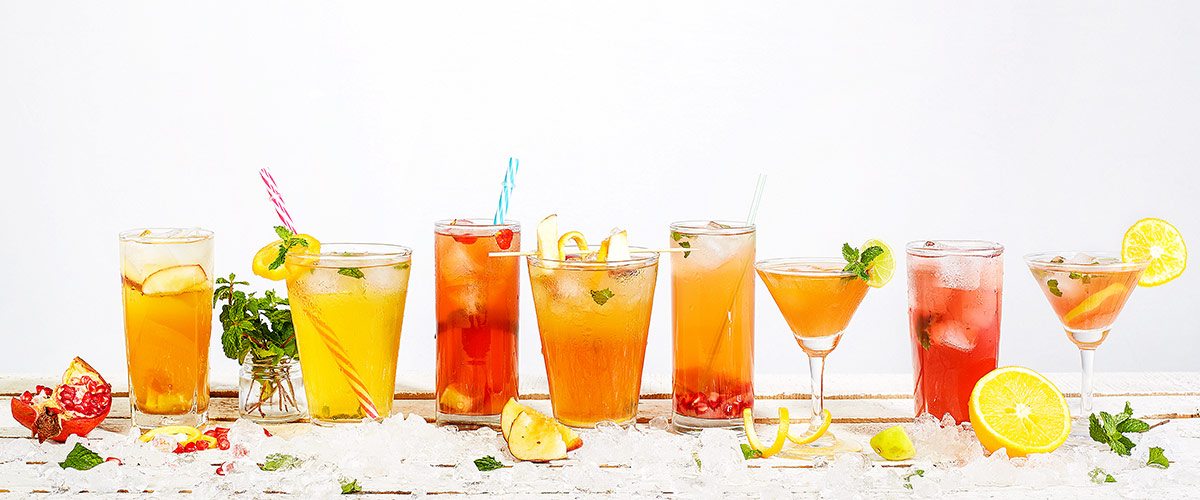
Almost any tea can be iced, but strong, malty Assam black tea gives the classic amber glass, Darjeeling gives a lighter, fruitier one, green tea gives the freshest, and hibiscus gives a ruby-red, caffeine-free glass. Choose by the glass you want, then by the method: our main guide, How to make iced tea, explains hot brew over ice and cold brew in the fridge.
What is the best tea for iced tea?
Assam for a bold lemon iced tea, Darjeeling for a fragrant cold brew, and a plain or mint green tea for a light, fresh glass.Read more
- Assam black tea for the classic lemon iced tea: bold enough to stand up to ice, lemon and sugar. Classic Assam Black is full-bodied and malty, with hints of yellow raisins and date palm and stone fruit near the end. More in Assam tea and What is black tea?
- Darjeeling for an elegant, fragrant glass, especially cold brewed. Our Darjeeling Summer Muscatel Black is blended from the season’s best summer teas, chosen from over 200 samples. A spring first flush Darjeeling makes a lighter, floral iced tea; brew it at 85–90°C (185–195°F) for 3 to 4 minutes.
- Green tea for a light, fresh glass and the recipes in our recipe guide. Darjeeling Green Tea is plain whole-leaf green tea, a good base for ginger, mango or mint.
- Mint green tea if you want flavor without extra steps. Green Tea Mint Digestion blends green tea with peppermint and natural mint flavor, and its product page says to steep it “hot or iced.”
What our blenders look for
Our first in-house blender, Shruti Tripuraneni, had a simple test: “If blending for iced tea, start by tasting the tea with ice to see if it tastes good.” Her notes rate the regions the same way this list does. Darjeelings “make great iced teas and lend themselves well to the addition of sugar syrup and mint,” while “the Nilgiri and Assam teas are delicious when iced and accommodate flavors of spices and milk readily.” Her one line on quality: “A good iced tea is bright and clear in the glass and should not cloud.”
That is why the Nilgiris belong on the list. Our 2015 story on their frost teas noted that Nilgiri teas “don’t develop the cloudiness one would normally find in a cold tea, which makes them perfect for iced tea blends.” Nilgiri Korakundah Winter Frost Black is one to try.
Single-estate teas, brewed cold
Fine teas are worth icing too. Our 2021 iced tea campaign put it this way: “some of these teas come out amazingly better when brewed cold,” from “the signature Muscatel black teas to medium-bodied Summer blacks” to light-bodied whites. Our procurement team’s 2023 spring notes add that high-quality Moonlight whites “can be infused multiple times and enjoyed iced in the 2nd or 3rd steep.” So the first cups of a good white are for drinking hot, and a later steep can go over ice.
A Darjeeling iced tea at home
Darjeeling gives a lighter glass than most people expect, and it tastes of tea, not sugar. When Meeta Sharma made iced tea from scratch in 2015 with “really fresh and delicious Darjeeling black tea,” a lemon, mint and honey, she got a “burnt umber-looking brew” that “had the noticeable astringency of a Darjeeling tea.” Her flatmate, raised on sachet mixes, still preferred the sugary kind. If you want a sweeter, softer Darjeeling glass, cold brew it.
Which teas make caffeine-free iced tea?
Herbal tisanes such as hibiscus and butterfly pea flower contain no leaf from the tea plant, so they make naturally caffeine-free iced teas.Read more
Caffeine-free iced teas
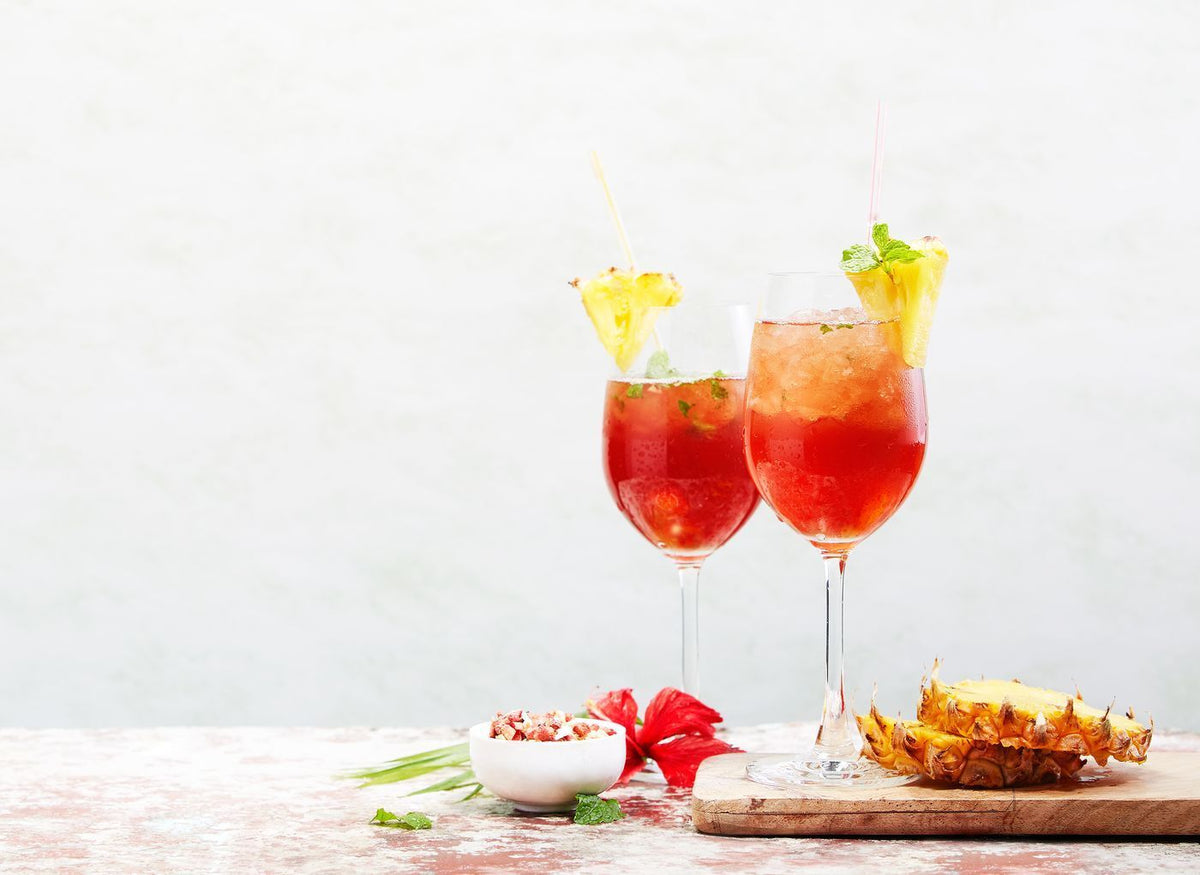
Herbal tisanes contain no leaf from the tea plant, so most are naturally caffeine-free. Brew them with freshly boiled water for 5 to 7 minutes, then chill. Hibiscus Lemongrass Tisane has a velvety, tart and citrus cup with a hint of spice. We introduced it in 2015 as Hibiscus Lush, “best made into a refreshing summer iced tea,” and for a movie night in 2020 we iced it at 2.5 g for every 180 ml of water, chilled and served with ice and mint.
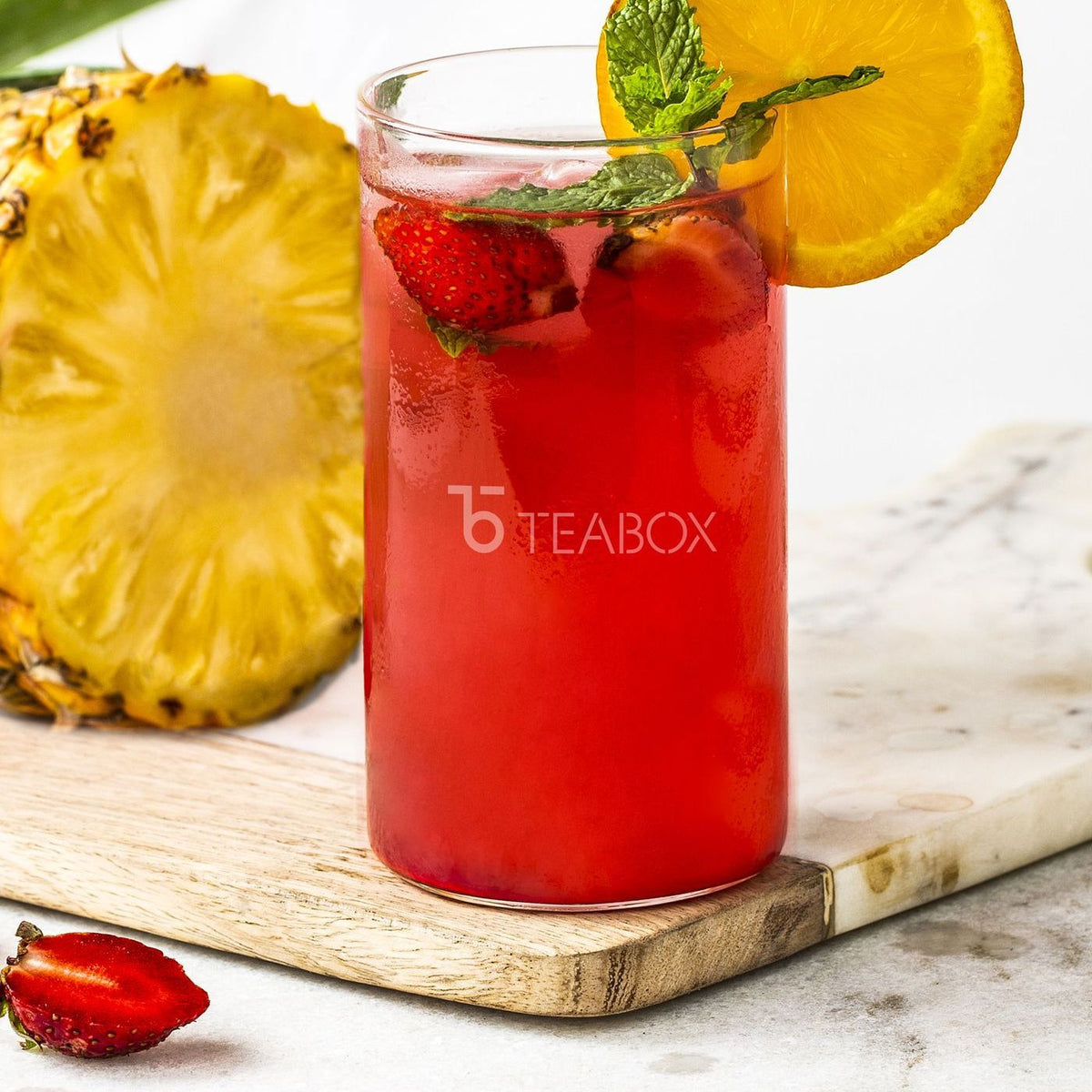
In between, in 2018, we suggested it both ways: “have a steaming cup for quiet comfort in the evening or serve chilled on a sunny afternoon.” Hibiscus gives up its color readily, so the infusion is a deep ruby red, and its tart, fruity taste holds up well when it is cold.
Butterfly pea flower
Butterfly Blue Pea Flower (Blue Amore) is the showpiece. It brews a deep blue, and “a squeeze of lemon” turns it “from blue to purple immediately.” Steep it hot or cold.
Lime works just as well: “Just add a dash of lime and witness the mesmerizing transformation!” we wrote in 2018, and in 2020 we suggested you “transform your party with a squeeze of lime!” In 2018 we also shared an iced version as a “super-cool hack.” More caffeine-free options are in Herbal tea (tisanes).
What are the best teas for summer?
The summer, or second flush, teas of Assam and Darjeeling, harvested from late May into June in Darjeeling and into July in Assam, are India’s classic summer teas, and both make excellent iced tea.Read more
They grow in very different weather: Assam’s summer is hot and humid at 20–30°C, while Darjeeling’s summer days are bright and warm at 15–22°C.
Assam’s second flush is bold, malty and rich with golden tips, the base of most breakfast blends, and it can take milk and sugar, which suits iced chai and lemon iced tea. Darjeeling’s second flush is fruitier and more delicate, with the famous muscatel character, and is best without milk; it makes a fragrant cold brew. Read more in Second flush tea and muscatel.
The leaves picked in summer are more mature than spring leaves and give a more robust liquor, which is what lets them stand up to ice. Our 2015 story on the season called Assam’s summer teas “dark, bold, robust, and topped with classic flavors of malt and woody astringency,” and noted that in Darjeeling the muscatel comes from specific bushes in a short window each year. That window lasts roughly 10 to 15 days around June. For a summer muscatel from a single garden, try Castleton Summer Muscatel Black.
For the Nilgiri teas behind our later iced blends, see Winter and frost teas from the Nilgiris.
How did Teabox make its own iced teas?
From 2015 our team blended iced teas inspired by India’s summer coolers, tasting every blend hot first, and the idea returned in later years as fruit blends and caffeine-free summer tisanes.
Summer has shaped our iced teas from the start. In 2015 our first iced tea blends drew on the coolers in Indian fridges every summer, from jaljeera and aam panna to kokum juice and buttermilk. The team tasted every blend hot first, “since cold numbs the palate,” and after more than a month of adjusting had 10 blends, including a surprise coffee-flavored iced tea. Later blends used seasonal teas: Orange Sorbet paired Nilgiri frost black tea with orange peel and lemongrass, and Mint Cooler paired winter flush Nilgiri green tea with mint and lavender. In 2022 the idea came back as caffeine-free summer tisanes, Kokum Hibiscus, Mint Jamun and Vanilla Grape, inspired by the sharbats that have cooled Indian summers since the 16th century.
Behind the 2015 range
The work started while the Darjeeling first flush was still coming in, because our R&D “takes anywhere from three to six months.” The team gathered ideas from home kitchens and family recipes, sourced the Indian ingredients, then worked out which tea suited each one and whether the mix would still taste good once chilled. On launch day in Bangalore, once the blends were live, a pot of Pineapple Rush went on to brew as the kettle came to a boil once again. The full story is on our blog: Behind the Scenes: Making of Our Iced Tea.
The later ranges
Our 2017 iced teas were sold with “absolutely no sugar,” and in 2018 a cafe served them as summer specials, including a Tropical Aam Panna. The 2019 summer range of fruit blends, among them Mint Jamun, Chilli Berry and Mango Strawberry, was billed as “hot or cold. These teas taste absolutely delicious either way!” By 2023 our iced teas were “made with real freeze-dried indigenous fruits,” with Kokum Hibiscus, Vanilla Grape and Mint Jamun beside Blue Amore. Of that line, only Blue Amore is in the store today.
Keep reading
Sources
- Teabox Tea 101: An easy recipe for making iced teas; Refreshing green tea recipes for summers; Your guide to summer teas
- Teabox blog (Still Steeping): Forgive Me Chai, It’s Summer (Iced Chai Recipe), Meeta Sharma (2015); Behind the Scenes: Making of Our Iced Tea (2015); An Indian Summer in a Cup (2015); The Winter of Our Teas (2015); 8 tips for creating your own tea blends, with Shruti Tripuraneni (2015); Teh tarik milk tea: Pulling depth and sweetness from tea (2015)
- Teabox blog (Still Steeping): Mango Green Tea Mojito (2016); Recipe: An Iced Tea Cocktail, with Priya Vijan (2017); Iced tea traditions from around the world (2017); From history, a long and complicated relationship with tea, Peter GW Keen (2017); 4 easy, must-try cocktail recipes with tea (2014)
- Teabox product descriptions, October 2026: Classic Assam Black, Darjeeling Summer Muscatel Black, Darjeeling Green Tea, Green Tea Mint Digestion, Hibiscus Lemongrass Tisane, Butterfly Blue Pea Flower, Nilgiri Korakundah Winter Frost Black, Valencia Glass Teacup
- Teabox Drive: Teabox internal document, 2021; Teabox internal document, 2021; Teabox internal document, 2021; Teabox internal document, 2016; Teabox internal document, 2023; Teabox internal document, 2022; Teabox internal document, 2023; Teabox internal document; Teabox internal document, 2021; iced tea photos as credited
- Teabox on Instagram (@teabox.tea): Hibiscus Lush, Jul 2015, Mint Cooler, Apr 2016, mango mojito, May 2016, Moroccan mint granita, Jun 2016, Orange Sorbet blend, May 2017, Orange Sorbet cocktail, May 2017, Kopi Chia, May 2017, Pineapple Express, May 2017, Tropic Topic, Jun 2017, Pomegranate Swirl, Jun 2017, Mint Sparkle, Jun 2017, fruit punch mocktail and syrup, Jun 2017, no added sugar, Jun 2017, Blue Amore with lime, Apr 2018, iced teas at a cafe, Apr 2018, iced Blue Amore, May 2018, Hibiscus Lush hot or chilled, May 2018, summer range, May 2019, iced hibiscus, Jan 2020, iced green tea with lime, Jan 2020, Blue Amore and lime, Nov 2020, ginger litchi mocktail, Dec 2020, hibiscus fruit punch, Dec 2020, Moroccan mint mojito, Dec 2020, steep twice and ice, Mar 2021, brewed vs powdered, Mar 2021, Blue Amore, Apr 2022, summer tisanes, May 2022, fruit iced teas, Apr 2023
- Kausshal Dugarr on X (@Teapreneur): the 1823 Naples letter, May 2022
- Teabox on YouTube: TEAJAY Iced Tea Maker

Leave a comment
All comments are moderated before being published.
This site is protected by hCaptcha and the hCaptcha Privacy Policy and Terms of Service apply.