


First flush tea is the first harvest of the year, picked in spring as tea bushes wake from their winter rest. In Darjeeling it runs from about March to mid-April. The leaves are young and tender, and they brew a light, bright cup with floral, green and citrus notes. It is the most anticipated harvest of the year, and usually the most sought after.
At a glance
- WhereDarjeeling, also Assam, Sikkim, Nepal
- TasteFloral, green, citrus, stone fruit
- Brew85–90°C · 3–4 min · plain
What is a “flush” in tea?
A flush is a period of new growth on the tea bush, and the first flush is the first burst of fresh shoots after the winter rest.Read more
During the cold, dry winter, the bushes in the Himalayan foothills go dormant. Our product pages put that rest in Darjeeling at December to February; after it, “the young spring leaves, rich in sap,” are harvested. When spring arrives they push out fresh shoots, and that first burst of growth is the first flush.
In 2014 we described the moment like this: healthy tea bushes throw out “gentle pale-green buds and leaves that have been energized by melting snow and warm spring rains.” Because the leaves have had all winter to build up flavor, the tea they make is brisk in taste but light in color.
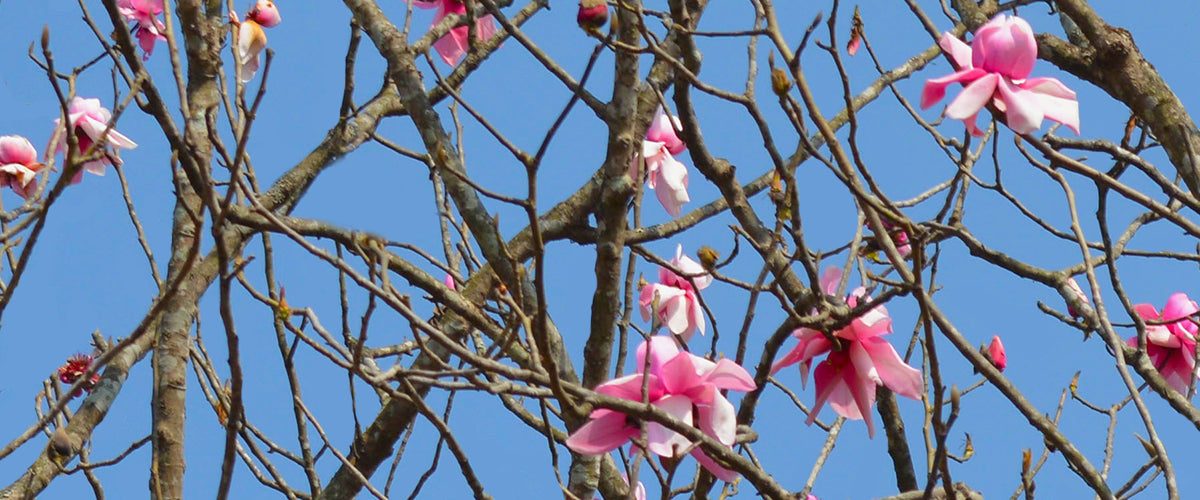
In the hills, people watch the flowers for the signal. As our 2015 spring story put it, “the magnolias bloom, and the rhododendrons and chamomile bloom, and it’s officially spring.”
Each later growth spurt gives its own harvest with its own character, which is why fine Indian teas are sold by flush as well as by estate. In Darjeeling, every flush also needs its own factory method: as our procurement team put it in 2017, “every flush demands a different manufacturing pattern.”
The Darjeeling tea year. Shop each season: first flush · second flush · autumn flush
Spring is a small harvest with a large share of the value. Our 2018 market notes put Darjeeling’s first flush at “about 20 percent of the overall Darjeeling crop” but “about 40 percent” of its revenue. For every flush in the year, see Seasons of tea.
When is first flush tea harvested?
First flush plucking in Darjeeling usually starts in early March, sometimes in late February after a warm winter, and runs until mid-April.Read more
The start is decided by the weather, not the calendar: bushes need warmth and spring rain to push out new shoots, so a dry winter can delay plucking by weeks. Lower gardens wake first and the highest gardens last, which is why the same estate can taste noticeably different from one year’s first flush to the next.
In 2023 the Tea Board of India opened the gardens for plucking on 27 February, and the estates above 4,500 feet waited, as they usually do, until “10-12th of March till Holi” before making their finest batches. In 2026 our first spring tea, Upper Namring Spring Clonal, was picked on 20 and 21 February.
Read nextWhen is first flush tea picked?The opening date, the Holi rule, which teas reach us first, and who does the pickingHow is first flush tea made?
First flush goes through the same steps as any orthodox black tea, but each is handled gently to protect the young leaf.Read more
The result is a black tea that often looks like a mix of green, brown and silver, and tastes closer to a light oolong than to a malty Assam. Our procurement team explains why: “the young, tender two leaves and a bud undergo minimal oxidation during processing and thereby, the dry leaves have a greenish hue when compared to a typical black tea.”
 WitheringFresh leaf rests on troughs for many hours until it turns soft.
 RollingRolled lightly to twist the leaf and release its juices.
 OxidationStopped early, while much of the leaf is still green.
 DryingHot air fixes the leaf and stops oxidation.
 SortingGraded by size and hand-picked for stalks.
In numbers: a Goomtee spring batch
Our tasting notes for a Goomtee spring tea show how light the touch is. The leaf, from vintage China bushes at about 4,500 feet, was withered for 12 to 14 hours, given “a gentle twist for approx 7-10 mins” on the rolling tables, and left “very mildly oxidized.”
The short roll matters: it breaks fewer cells, so less juice meets the air and oxidation stays light. That is what keeps the leaf greenish and the cup pale gold rather than amber. A spring Moonlight white from Margaret’s Hope goes further still: after 12 to 14 hours of withering and an even gentler roll, it is fired at 230–235°F, about 110–113°C, until its moisture is below 3%.
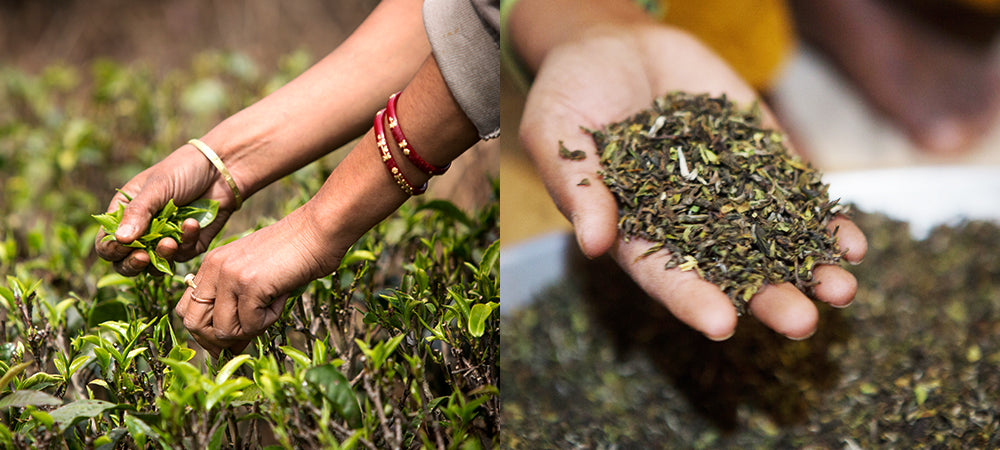
The work starts with the pluck. On the day our first tea of the 2022 first flush was made, the process began at 10 am, since better tea comes from the morning plucking, and about 220 to 230 kg of fresh leaf, only two leaves and a bud, went into the batch. For every step in detail, see How is tea made?
How to read a first flush label
A good first flush comes with more than a name. Here is what each detail on a Teabox first flush tells you:Read more

- Estate. The single garden the tea comes from, here Goomtee. Each estate has its own character.
- Flush. “Spring” means first flush. See Seasons of tea.
- Bush type. Chinary gives the classic floral cup; clonal is often fruitier.
- Grade. FTGFOP1: whole leaf with plenty of buds. See Tea grades explained.
- Lot number. Lower numbers usually mean earlier in the season.
- Picking date. Shown on every tea page. First flush is best in the months after it.
Our product pages explain the bush type this way: a spring clonal “has a smoother, more refined taste with floral and fruity notes,” while a chinary, “made from seed-grown plants, has a wider range of flavors.” For the bushes themselves, see Chinary, Assam and clonal tea plants.
The lot number is the estate’s invoice number, which our tea pages call the “Unique Reference Number For this Batch,” for example DJ-308, so it points to one exact batch from one garden.
Two more words you will see on our spring teas:
- Moonlight: a style of white tea “crafted using tender buds and young leaves, often harvested at dawn.” It is a style, not a promise that every leaf was picked at night.
- Limited Edition and Signature Series: our names for exceptional single lots. In 2024 we launched an Okayti spring tea “brimming with notes of ripe lychee and mango” as the first of a new “Signature Series,” and our Limited Edition lots from Risheehat and Okayti sold out in under 48 hours.
A good label can be very precise. Our 2019 Badamtam Heritage Moonlight Spring White was plucked on 14 March from a single section of the garden at 4,800 feet.
What does first flush tea taste like?
First flush Darjeeling is light and lively: a pale golden cup with floral, green and fresh fruit notes and a crisp, brisk finish.Read more
Expect a pale golden cup; floral and green notes such as fresh-cut greens, spring flowers and orchid; bright fruit like citrus, raw mango and muscat melon; and a brisk, slightly astringent finish that gives it its crispness.
“Light, bright cups with fresh, floral character - this defines the basic essence of Darjeeling Spring teas.”
In the same note he describes the color range: “The liquor tone usually ranges from Sparkling gold to lighter shades of gold and even Champagne in case of Moonlight whites.” Our tasters add that a first flush should be “floral and hint-fruity with no bitterness at all.” If yours tastes bitter, the brewing is usually to blame (see below).
The taste changes from garden to garden and from bush to bush. Castleton leans to stone fruit and fresh nuts, Okayti to ripe mango and honey, and a clonal such as Upper Namring to white lily and geranium. Our tasting notes for each estate, and how our tasters score a spring tea, are on the next page.
Read nextFirst flush tasting notesHow our tasters judge a spring tea, what they argue about, and five estates comparedFirst flush vs second flush: what’s the difference?
First flush is lighter, greener, more floral and brisker; second flush, picked a few weeks later, is darker, fuller, rounder and fruitier, often with the muscatel note.Read more
The same garden, a few weeks apart. These are both from Okayti, shot the same way:


| First flush | Second flush | |
|---|---|---|
| When | March to mid-April | Late May into June |
| Leaf | Young, tender, often greenish | Larger, more mature, darker |
| Cup | Pale gold | Deep amber |
| Flavor | Light, floral, green, citrus | Full, rounded, fruity, muscatel |
| Best for | Drinking plain, slowly | Best plain; a splash of milk is fine |
The color difference comes from the factory. Spring leaf is barely oxidized, while second flush teas “are allowed to enter an oxidization process,” which brings out their deep brown color. Our product pages sum up the cup: spring teas “are lighter, tends to be more floral, and brisker in cup,” summer teas “fuller, fruitier, and rounder in flavor,” and “both come from the same plant.”
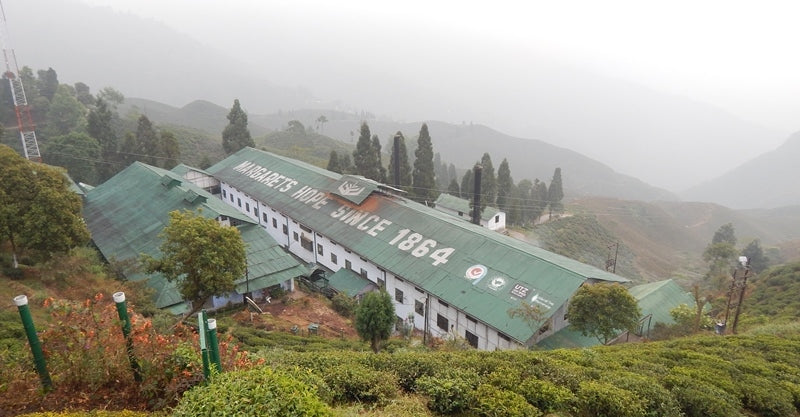
Neither is better: they are different expressions of the same estate. As our beginner’s guide to Darjeeling puts it, there are “two bests,” and each is best “in the sense that you decide.” To taste the difference, brew Margaret’s Hope Spring and Margaret’s Hope Summer side by side. The full comparison is in First flush vs second flush.
How to brew first flush tea
Brew first flush with water a little below boiling, at 85–90°C (185–195°F), about 2 to 2.5 g of leaf to a 250 ml cup, for 3 to 4 minutes, and drink it plain.Read more
Boiling water scorches the young leaves, so let the kettle rest a minute. That is why a first flush Darjeeling is typically brewed cooler and shorter than other teas. If it tastes bitter, the water was too hot or it steeped too long.
Weigh the leaf if you can. In our tasting room each sample is 2.5 g, “not 2.4 gms nor 2.6 gms.” Leave out the milk: our training manual says plainly, “No milk for first flush teas.” Our procurement team agrees that Darjeeling spring teas “are best enjoyed plain.”
Many first flushes give a good second cup: steep again for a minute longer. High-quality Moonlight whites “can be infused multiple times and enjoyed iced in the 2nd or 3rd steep.” Of our 2021 Upper Namring we suggested steeping it twice and adding ice.
For a summer version, cold brew 5 g of leaf in 500 ml of water in the fridge for 8 to 12 hours. More in How to brew Darjeeling tea.
What to eat with first flush tea
First flush is light, so pair it with food that won’t overpower it: garden salads, steamed seafood, a butter croissant, crêpes, soft mild cheeses or a bowl of fresh fruit.Read more
Some first flushes, such as Okayti, are best on their own or with a bowl of fresh fruit. Our procurement team’s short list for spring teas is “fresh fruits, garden salads, sandwiches, and light desserts.”
Each of our spring teas also carries its own suggestions, chosen by our tasters:
- Castleton Spring: steamed seafood, salads with a creamy dressing, tropical fruit and assorted cheeses.
- Margaret’s Hope Spring: fritters, cheese-based salads, tropical fruits and assorted cheeses.
- Thurbo Spring: crêpes, wraps, fritters, a garden salad with cream dressing and dried fruits.
Richer dishes work too, as long as they are not spicy. Our founder, Kausshal Dugarr, has written that “a delicate Darjeeling first flush goes impeccably with seafood, egg-based delicacies and rich desserts like a crumble.” The same rule holds if you blend: with a first flush, avoid strong flavors like cardamom or ginger, which “overpower the inherent flavor of the tea,” and try delicate spring flowers such as lavender or chamomile instead.
Shop this tea
See every spring tea in our first flush collection.
Frequently asked questions
Short answers to the questions we hear most about spring Darjeeling.Read more
Is first flush tea black tea?
Yes. First flush Darjeeling is sold as black tea, but it is only lightly oxidized, so it tastes lighter and greener than most black teas. Darjeeling also makes first flush white teas and oolongs.
Why is first flush tea more expensive?
The spring harvest is small: only the tender new shoots are picked, growth is slow after winter, and demand from tea lovers around the world is high. In Darjeeling, spring gives about a fifth of the year’s crop but about two-fifths of its revenue.
Can I add milk to first flush tea?
You can, but milk masks the delicate floral notes. If you prefer tea with milk, an Assam tea or a second flush Darjeeling is a better match.
How long does first flush tea last?
Best within about a year of picking, in an airtight tin away from light, heat and moisture. It slowly loses its fresh aroma after that. Our beginner’s guide to Darjeeling puts it this way: “Darjeeling is at its best for maybe 6 months, but well-stored it retains its flavors for a year.”
When does Teabox get the year’s first tea?
It depends on the weather. In 2026 our first spring tea, Upper Namring Spring Clonal, was picked on 20 and 21 February and launched on 24 February. In 2025 the same garden came first again, picked on 7 and 8 March.
Is first flush Darjeeling the most prized tea?
It is the most sought-after harvest. In March 2015 a UK importer judged a single 90 kg lot from Namring the best first flush among all 87 Darjeeling gardens; it sold in the UK for Rs 40 lakh (about Rs 4 million).
A short history
Tea was first planted in Darjeeling in the 1840s, and first flush became the harvest fine tea buyers waited for each year.Read more
By the late 1800s the hills were covered with gardens growing bushes raised from Chinese seed. Buyers learned that the spring leaf from these Chinary bushes made a uniquely light and fragrant tea, and first flush became the harvest fine tea buyers waited for each year. In 2004 Darjeeling tea became the first product in India to receive a Geographical Indication.
For a long time, much of it left the country. In 2014 we wrote that first flush is “usually reserved for export.” Many buyers sign a forward contract for the spring harvest “even as winter trails away.”
The style itself has changed. Arun Kumar Gomden, the veteran Darjeeling tea maker and master taster who later worked with our tasting team, remembers that first flush teas “used to be very heavy kinds of teas, strong on the palate with full body. This all changed gradually over a span of a decade.” In the spring of 1979, at Thurbo, he made the first-ever batch of the bud-rich tea he named Silver Tips. Today’s light, floral first flush is the result of that shift.
Some years are lost altogether. When India’s lockdown arrived in spring 2020, at the time of the most prized harvest of the year, “Darjeeling saw a loss of about 0.8 million kg of prime spring flush tea.” In 2022 we dedicated our first flush to the women who pick it, through Kalpana, a tea picker created to stand for all of them.
Keep reading
Sources
- Teabox blog: What’s the fuss about the first flush? (2015), A postcard from Darjeeling: thinking spring (2015), A Postcard from Darjeeling (2015), A postcard from Darjeeling (2015), Conversations from a tea garden (2015)
- Teabox blog: Meet the man who created the Darjeeling oolong (2015), A balancing act in the Darjeeling tea gardens (2015), 8 tips for creating your own tea blends (2015), Why tea always trumps coffee (2014)
- Teabox blog: The beginner’s guide to choosing a Darjeeling (2017), A Nilgiri girl in Darjeeling (2017), In Kangra, for a tour of the tea gardens (2017), A tryst with history (2020), The steep road ahead (2020), The Kalpana story (2022)
- Teabox blog (Still Steeping): First flush teas: a refreshing class of tea (2014); Tea flushes: your guide to tea harvest (2014); The future of Darjeeling’s tea (2015)
- Teabox product descriptions and product data (FAQ, tea specs, liquor color, pairings, freshness journey), October 2026: Castleton Spring Chinary, Margaret’s Hope Spring Chinary, Margaret’s Hope Summer Chinary, Jungpana Spring Chinary, Okayti Spring Chinary, Thurbo Spring Chinary, Puttabong Spring Clonal, Exotic Moonlight White, Margaret’s Hope Moonlight Spring White, Special Spring Silver Needle, Upper Namring Spring Clonal, Temi Spring Chinary
- Teabox Drive: Teabox internal document (Avishek Mondol, procurement, 7 March 2023); Teabox internal document, 2023; Teabox internal document; Teabox internal document, 2024; Teabox internal document, 2022; Teabox internal document, 2019; Teabox internal document, 2018; Teabox internal document, 2020; Teabox internal document, 2018; photos and films as credited
- Teabox on Instagram (@teabox.tea): Badamtam Heritage Moonlight, Mar 2019, Upper Namring, Mar 2021, 2.5 g samples, Apr 2021, how our tasters score spring teas, Apr 2022, brewing first flush, May 2023, first Namring samples, Mar 2019, first cup of 2021, Mar 2021, Goomtee Special Spring, Mar 2021, Jungpana Exotic Spring Clonal, Mar 2021, Oaks Spring Chinary, Apr 2021, Castleton tasting, Jun 2021, Upper Namring first again, Mar 2022, Badamtam tasting, Mar 2022, pluckers at 3 am, Mar 2022, 80+ cups a day, Mar 2023
- Kausshal Dugarr on X (@Teapreneur): making our first tea of First Flush 2022, Mar 2022, 1,578 cups of First Flush 2022, May 2022

Leave a comment
All comments are moderated before being published.
This site is protected by hCaptcha and the hCaptcha Privacy Policy and Terms of Service apply.