


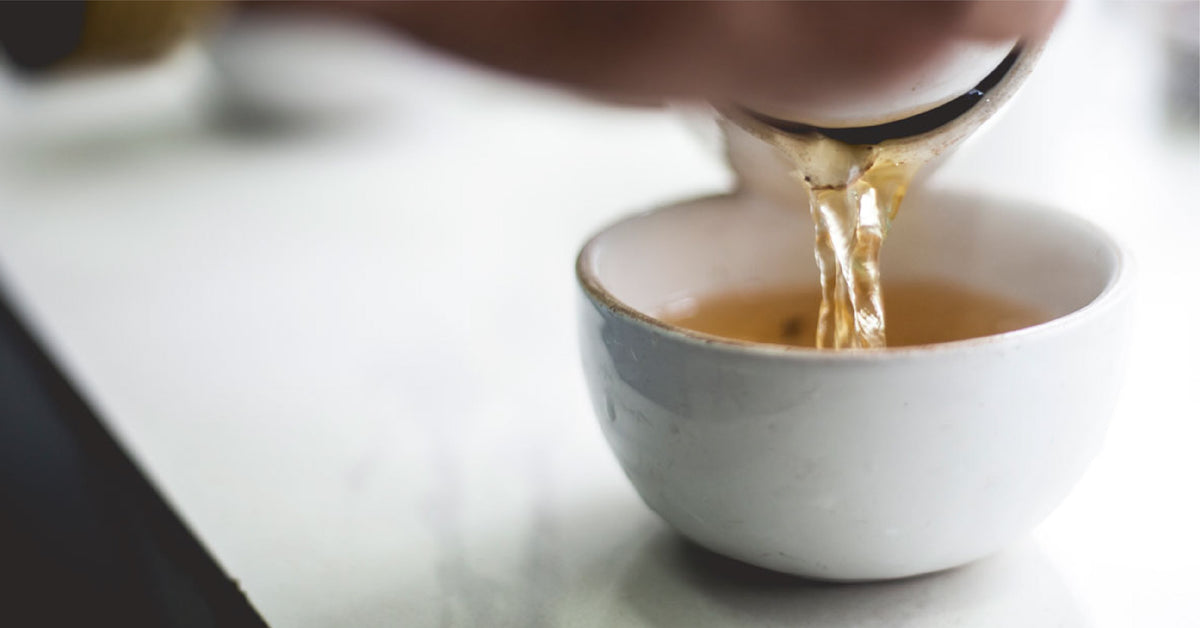
Muscatel is the rich, grape-like flavor found in some Darjeeling second flush teas, named after the Muscat grape used in winemaking. It is not a variety of tea or a separate grade, and it has nothing to do with musk. It is a quality that a few sections of a few gardens produce, for a few days each summer.
What does muscatel mean in Darjeeling tea?
Muscatel means a Darjeeling summer black tea with an unusually intense, fruity aroma and flavor that recalls Muscat grapes, a character found only in a few old Chinary sections in a short window around June.Read more
Our 2019 notes call it one of the defining flavors of Darjeeling, and so elusive that only a few estates make teas that stand out in it. They describe the profile as a Muscat-grape-like fruitiness in aroma and flavor, with a deep amber color and a lasting finish not found in other teas.
People still argue over what exactly it tastes like. “The connoisseur will describe it as a musky spiciness, while regular folks will think of it as a sweet fruity-spicy flavor.” Castleton’s factory manager, D. B. Gurung, would only call it “a special quality, actually. And it’s very hard to describe.”
The name is not a promise every summer tea can keep. “Muscatels are rare. Only a few sections of some estates can have that particular quality that a muscatel has,” says Arun Kumar Gomden, the tea maker who named it, and he warns that some tea makers now use the word too freely, to earn more. A muscatel is also not named after the city of Muscat; the name comes from the grape.
Where did the name muscatel come from?
The name was coined at Castleton, in Kurseong, by Arun Kumar Gomden, a veteran Darjeeling tea maker and master taster, after a summer batch of Chinary black tea in the mid-1980s tasted unlike anything before it.Read more
Gomden is the fourth generation of his family in Darjeeling tea; his great-grandfather came from Nepal in the late 1870s and rose to tea maker sardar. Gomden joined Singbulli in 1968 and moved to Castleton in the mid-1980s. In between, at Thurbo in the spring of 1979, he made the first batch of what he named Silver Tips.
That summer at Castleton, the estate made a batch of Chinary black tea unlike anything before it.
“It was rich, filled the mouth with the softest fruit flavor, something like grapes … It has nothing to do with musk, let me make it clear. But because of its grape-like taste that year, we named this tea after the Muscat grape.”
He chose the word himself. “I perused the dictionary and settled on the word muscatel, which meant ‘grape’ or ‘fruity’; it did justice to the unique flavor and aroma.”
The record at the Calcutta auction
That first muscatel sold for the highest price at the Calcutta auction, and Castleton’s muscatels have topped auctions several times since. Gomden recalls the first lot setting a record at Rs 583, and the next week’s lot fetching Rs 1,460. Our 2019 notes give that second price as Rs 1,460 per kg, for a small batch of 21 kg, at a time when four-figure prices were unthinkable.
One newspaper called the sale “The Battle of Giants,” as Lipton and Brooke Bond bid against each other. Lipton won, and presented the tea to the former Emperor of Japan, Hirohito. Prices kept climbing, to Rs 1,740 and then Rs 2,700. When our team visited Castleton in December 2015, muscatels were trading at Rs 1,600 to Rs 7,000 per kg.
Many estates make muscatel today, but Castleton’s is still the one others are measured against. Gomden later worked with Teabox’s tasting team. Read his own account in The Muscatel Master and the full story in A Tryst with History.
How is a muscatel made?
A muscatel is made from leaf of old Chinary bushes in chosen sections, plucked in a window of about two weeks around June, then given a short wither and a long oxidation by a tea maker who recognizes the leaf as soon as it arrives.Read more
In the garden
A muscatel starts in the garden. Only leaf from seasoned Chinary bushes, usually in open, sunny sections, has the potential, and planters learn over years which sections can give it. Muscatels come from traditional Chinary bushes planted more than a century ago.
Castleton shows the scale. About 70% of the estate is heritage Chinary, some bushes over 130 years old, and the Chinary sections between 3,000 and 4,500 feet are where the teas for muscatel grow. Our 2019 muscatel from there came from select Chinary sections about 100 to 130 years old. In 2023 our procurement team wrote that an exquisite muscatel year depended on gardens properly segregating the leaf and making it from vintage Chinary bushes more than 80 to 100 years old.
The window is short: “a very small window of 10 days, sometimes two weeks,” says Gomden, “around June.” Our 2015 summer story gave each garden 12 to 15 days. Longer plucking rounds or bad weather in those days change the flavor significantly.
In the factory
In the factory, the leaf gets a short wither and a long oxidation, and the tea maker has to recognize it as soon as it arrives. It then has to be fired just right, “cooked to perfection,” to bring out the muscatel quality, and a novice can ruin good Chinary leaf by treating it like an ordinary tea.
“With a muscatel, you just know when you have made a muscatel. The leaves look different, they smell more fragrant, even when they are in the trough.”
The whole building can tell. “When you are making a muscatel, the whole factory floor turns fragrant, I can almost smell mangoes, sometimes peaches all over the floor,” Castleton’s estate manager, Vikas Gajmer, told our team. Gomden puts the skill this way: “I have always believed taste is in the tea bushes, and to make it blossom is in the hands of a tea maker.”
For the hour-by-hour making of one muscatel, from plucking to the first tasting cups, see Tea making step by step.
Do insects make muscatel?
Our own notes say yes: the muscatel character is credited to tiny green leafhoppers called jassids, which feed on the summer leaf, though the planters at Castleton call that story a myth.Read more
This is the most argued question in Darjeeling tea. The popular explanation, which our own posts have told, is that tiny green leafhoppers called jassids, along with thrips, feed on the tender summer leaf at around 4,000 ft. The bitten leaf loses moisture and the bush responds, and that response is said to create the Muscat grape aroma.
How our notes explain it
Our 2019 muscatel notes give the fullest account. The jassids, also called green flies, feed on the leaves and suck out moisture, so the leaves shrivel downward. This does not kill the leaf, but it stunts its growth, which concentrates its flavors.
The same notes say the jassids’ feeding leaves pinpricks on the leaf that start “natural fermentation of the young leaves even before they are plucked,” releasing aromatic compounds. In tea, “fermentation” means oxidation, the leaf’s own browning. Because the insects stay for no more than about two weeks a year, in June, the flavor is just as short-lived.
Our other channels tell the same story: a 2020 blog story on terroir, our 2022 Muscatel Trail booklet, which calls the jassid “a welcome affliction,” and the 2026 product notes, which say the leafhopper’s feeding makes the plant produce compounds that careful oxidation turns into muscatel notes. Summer Darjeeling owes its prized profile, we wrote in 2020, “all thanks to the ever-elusive Jassids.”
The dissent from Castleton
The planters who make the benchmark muscatel disagree. Castleton’s estate manager, Vikas Gajmer, calls it a myth: “How can infestation create great agricultural product?” Chinary bushes are often touched by thrips and jassids, he says, and under control that does no harm, but a muscatel comes from intensive care from pruning to packing.
Both sides agree on the rest: old bushes, the right weather and a skilled tea maker all matter, and no insect makes a muscatel on its own. Our tasting team’s view follows our notes: the jassid’s feeding starts the change, and careful plucking and processing bring it out.
Why is some muscatel plucked by moonlight?
At Seeyok, in Mirik, the estate plucks one muscatel section at night under the June full moon, because, as a biodynamic garden, it believes the bushes carry more sap in bright moonlight.Read more
Some gardens chase the flavor in their own way. Seeyok, in Mirik, is one of the few tea gardens in the world farmed biodynamically. On the strawberry moon, the last full moon of spring, it plucks after sunset, in the belief that the bushes carry more sap in bright moonlight. The result is Seeyok Moonbeam, a muscatel with an intense Muscat grape character.
“As practitioners of biodynamic farming, we follow the lunar calendar,” Seeyok’s Chief Sustainability Officer, Ashwini Sashidhar, told us; the estate believes a full moon night improves the tea. That is the garden’s belief, not something we have measured.
Our team logged the night of 24 June 2021. The estate chose sections 9YT, 10YT and 11YT, 100-year-old bushes that give its rarest muscatels; 70 to 80 pluckers readied oil lanterns, and plucking ran from 7.15 pm to 9.15 pm. We then sampled close to 50 cups of the new tea. Muscatels usually feel strong and reveal their character slowly; these cups were smooth and mellow, with pronounced Muscat grape and peach and a hint of apricot. In 2023 the moon lot was plucked on 3 July, a Buck Moon night, and opened with Muscat grape, then juicy plum.
 Seeyok Moonbeam Summer MuscatelFrom The Source · 0:55
 Seeyok Tea Estate x TeaboxFrom The Source · 2:38
Seeyok still makes our Seeyok Summer Muscatel, and the full story is in A Full Moon Harvest: Farming Biodynamically.
Keep reading
Sources
- Teabox blog: The Muscatel Master (2021), A Tryst with History (2020), An Indian Summer in a Cup (2015), Tea Diversity – How nature speaks through the flavors of tea (2020), A Full Moon Harvest: Farming Biodynamically (2021)
- Teabox blog: Castleton and the mystery musk (Still Steeping, February 2016, reported December 2015)
- Teabox Drive: Teabox internal document, 2019; Teabox internal document, 2023; Teabox internal document, 2022; Teabox internal document, 2021; Teabox internal document, 2026
- Teabox product descriptions, 2026: Castleton Summer Muscatel, Seeyok Summer Muscatel
- Teabox on Instagram (@teabox.tea): Seeyok moonlight plucking, Jul 2018, jassids, Jun 2020, Gomden with our tasters, Mar 2021, 50 cups of Seeyok Moonbeam, Jun 2021, jassids and the muscatel, Jul 2021, strawberry moon night, Jun 2022, Buck Moon lot, Jul 2023
- Kausshal Dugarr on X (@Teapreneur): jassids and thrips, Jan 2022
- Teabox on YouTube: Seeyok Moonbeam Summer Muscatel, Seeyok Tea Estate x Teabox


Leave a comment
All comments are moderated before being published.
This site is protected by hCaptcha and the hCaptcha Privacy Policy and Terms of Service apply.