


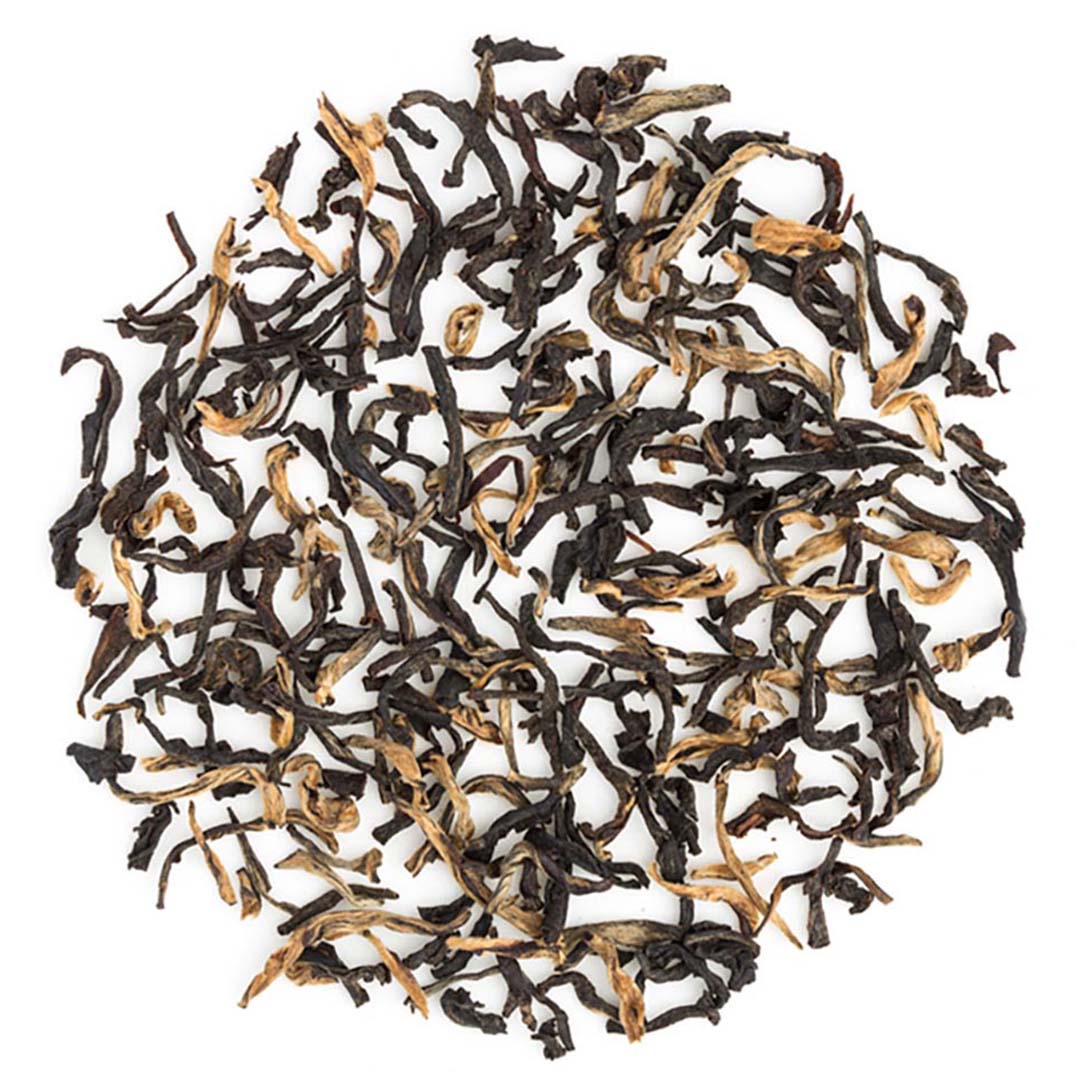
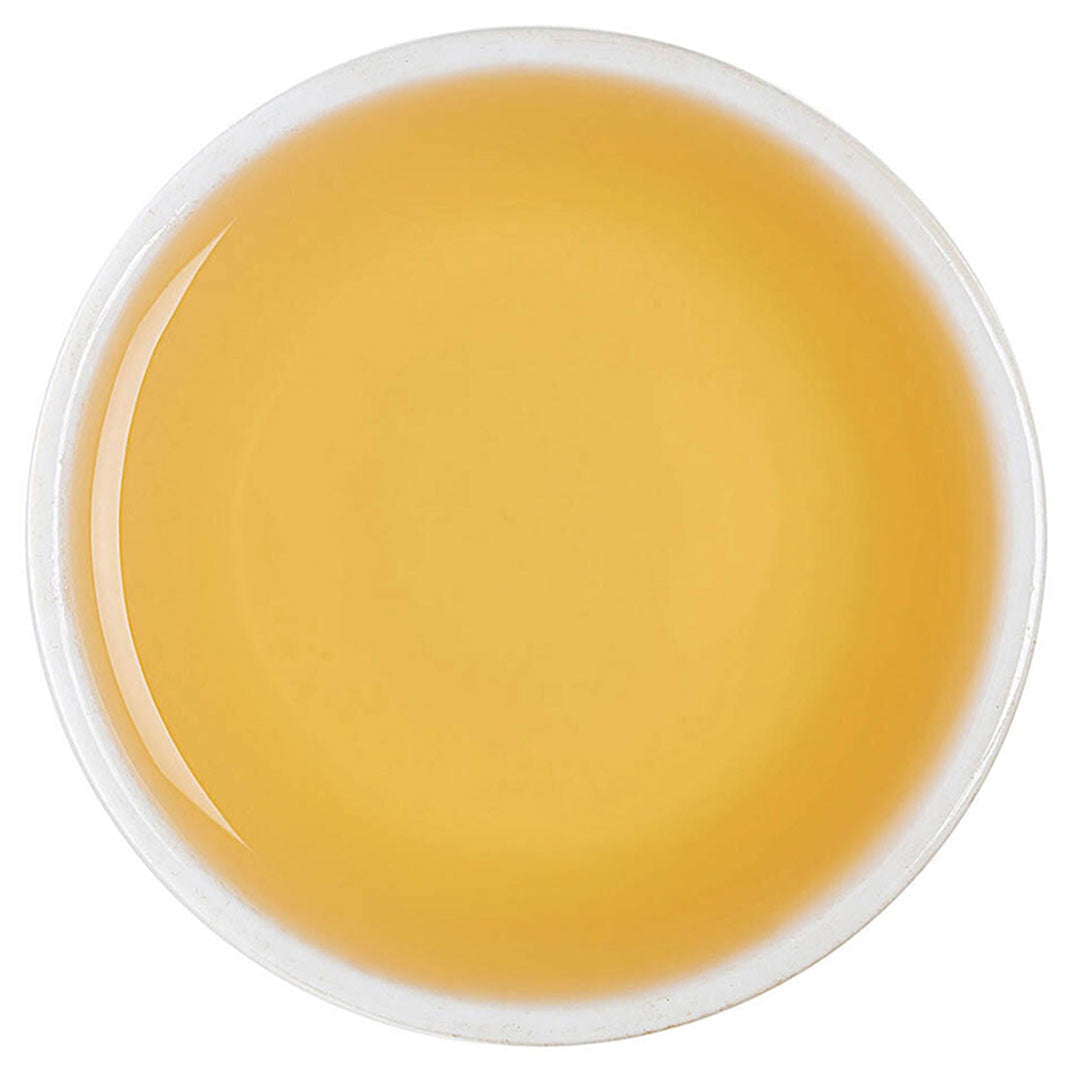
Assam’s second flush is its most prized harvest: bold, malty, full-bodied teas with a dark amber cup and plenty of golden tips. Tea 101 calls them “tippy teas, named after the gold tips that appear on the leaves.” They are fuller and sweeter than Assam’s spring teas, which is why the second flush is considered the better of the two.
When is Assam second flush, and why is it the best?
Assam’s second flush runs from late May into July, when the warm, humid summer brings fast growth, many buds and the maltiest, sweetest teas of the Assam year.Read more
Our 2015 summer story put it plainly: Assam “is known to produce its best teas this season, ones that make their way to breakfast cups all over the world, from the milky Indian chai to the sweet builder’s brew.” The bulk of the world’s breakfast teas are made with Assam tea, and Assam is home to the original Indian tea plant, Camellia sinensis var. assamica.
Summer is when our team visits Assam. On our June 2015 trip, our procurement team found the rains had arrived early in Dibrugarh, and tasted at Chubwa, Balijan, Hoogrijan, Zaloni, Rajgarh, Halmari, Basmatia and Mankota. Compared with Darjeeling, the Assam estates were vast, widespread and more mechanized.
Our buying runs later than the house window suggests. In 2026 our summer Assams were picked from early July (Halmari, 2 to 3 July; Doomni, 11 to 13 July; Mangalam, 21 to 22 July) into September (Dikom and Namsang, 19 to 21 September).
The cups change week by week. When the first 2021 summer samples arrived on 3 June, we noted that Assam’s summer colors run from rich coppery amber to dark amber, and that these teas are prized for a sweet, malty taste.
What are golden tips?
Golden tips are the unopened leaf buds in a finished black tea that turn golden rather than black, and Assam’s summer teas carry more of them than any other season’s.Read more
The buds are covered in fine down and, during rolling, are coated with juice from the leaf; as it oxidizes, they turn golden rather than black. Our tasters’ note on Doomni Gold Summer Black puts it the same way: the tips “get coated with the juices during the rolling stage” and take on a golden color. The warm, humid Assam summer brings fast growth and many buds, so summer teas carry the most tips.
The bush matters too. Halmari makes its top orthodox teas from the P126 clone, also called Pani Tola, which is very high in pubescence, the fine down on the bud, and so gives an attractive show of golden tips. Our 2017 guide to Assam teas adds that the golden tips are very characteristic of Assam and add a hint of sweetness to its malty base.
On a label, tips show up in the grade: the T in TGFOP stands for “tippy,” and extra letters such as GTGFOP (“golden tippy”) or STGFOP (“special tippy”) promise more of them. Our tea grades guide explains every letter.
The estates and what they taste like
Our summer Assams come from a handful of Upper and Lower Assam gardens, from Halmari and Mangalam to Dikom and Namsang, and they share malt, dates and raisins while each adds its own note.Read more
Basmatia is “famous for its golden tippy tea, Assam’s summer specialty,” and at Halmari the pluckers collect leaf in bamboo buckets to keep it from being bruised. Halmari spans 374 hectares of Upper Assam; its turn toward quality came in the 1980s, under the Daga family.
Our current summer Assams show the range:
| Tea (summer) | Grade | Tasting notes |
|---|---|---|
| Halmari Summer Black | TGFOP | Malt, date palm, yellow raisins, soft florals |
| Mangalam Gold Summer Black | FTGFOP1 | Malt, date palm, dried raisins; an all-clonal garden famed for golden tips |
| Dikom Summer Black | GTGFOP1 | Malt, yellow raisins, maple syrup, stone fruit |
| Namsang Summer Black | STGFOP1 | Malt, cocoa, date palm, gentle woodiness |
| Doomni Gold Summer Black | TGFOP1 | Malt, raisins, date palm; “creamy and speckled with gold tips” |
Clones behind the cup
Most of these gardens are planted with selected clones. Nearly 70% of Dikom’s bushes are high-quality clones such as P126A, N436, S3A3, T3A3, CP1 and Tenali 17. Mangalam is entirely clonal and densely planted, at 42,480 bushes per hectare. Harmutty grows P126 and N436.
From the garden to us
Assam is a long way from our facility in Siliguri: Doomni is about 404 km away, Halmari 846 km and Namsang, the farthest, 897 km. Assam second flush keeps changing as the season goes on. As the first summer samples arrive, “the cups are getting maltier, sweeter and mellower” week by week. One of our customers summed up Halmari: “Malt, of course, but it’s the date and raisin that makes it special.”
Not every summer Assam is all malt. Koilamari makes a Summer Raspberry Black, picked on 27 and 28 July 2026. Khobong, one of Assam’s largest estates, has a section dedicated to teas that taste like raspberry jam.
 Halmari Tea Estate, AssamFrom The Source · 2:40
 Namsang Tea Estate, AssamFrom The Source · 1:17
 Singlijan Tea Estate, AssamFrom The Source · 1:22
Brew a summer Assam with water just off the boil (95–100°C) for 4 to 5 minutes, with milk if you like, and pair it with a full breakfast. Our tasters suggest buttered toast, scrambled eggs, croissants and pancakes for Mangalam, and buttered toast, scrambled eggs, biscotti, waffles and banana bread for Harmutty.
More on the region in Assam tea, and on its gardens in Famous tea estates of India.
Keep reading
Sources
- Teabox blog: In Assam for the summer flush (2015), An Indian Summer in a Cup (2015), A beginner’s guide to Assam teas (2017)
- Teabox Tea 101: Your guide to summer teas; Assam
- Teabox product tasting notes, grades, pairings, clones, distances and estate descriptions, 2026 season: Halmari, Mangalam Gold, Dikom, Namsang, Doomni Gold, Harmutty and Koilamari summer blacks
- Teabox Drive: Teabox internal document, 2026; photo as credited
- Teabox on Instagram (@teabox.tea): Khobong, Jun 2018, Halmari customer note, Jul 2019, first summer samples, Jun 2021, Halmari clones, Jul 2021, Assam samples, Jul 2021
- Teabox on YouTube: Halmari Tea Estate, Namsang Tea Estate, Singlijan Tea Estate

Leave a comment
All comments are moderated before being published.
This site is protected by hCaptcha and the hCaptcha Privacy Policy and Terms of Service apply.