


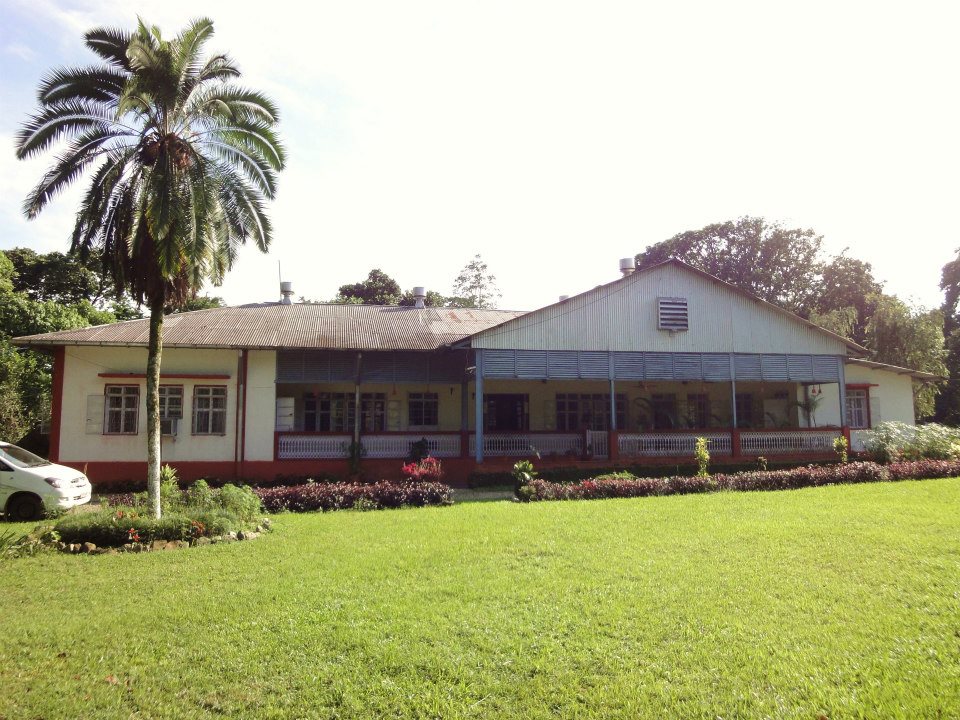
India’s most famous tea estates are single gardens, each with its own name, history and style, such as Castleton, Margaret’s Hope and Jungpana in Darjeeling, and Halmari, Namsang and Dikom in Assam. In India a tea estate, or tea garden, is one plantation with its own factory, so its tea can be traced to one hillside. This guide covers the best-known gardens, the stories behind their names, and how to read an estate on a label.
At a glance
- Registered Darjeeling gardens87
- Oldest claimsChubwa (1836) and Namsang (1837), Assam
- Darjeeling’s largestNamring, about 300,000 kg a year (2015)
- A famous small gardenGoomtee, about 90,000 kg a year (2015)
- One Assam giantKhobong, about 1.8 million kg a year
What makes a tea estate famous?
An estate becomes famous through a combination of place, bushes, people and record: high or distinctive terroir, old or well-chosen tea bushes, skilled tea makers, and teas that have topped auctions or competitions year after year.Read more
Indian estates are a little like wine châteaux. Two neighboring gardens can make very different teas, and the same garden changes from season to season.
- Terroir. Altitude, slope, soil and rivers. Darjeeling gardens climb from about 600 m to over 2,000 m; Assam’s lie on the hot Brahmaputra plain. Soils run from mixed sandy loam in Darjeeling to rich alluvial soil in Assam. Each garden also has its river: the Teesta below Upper Namring, the Mahananda by Jungpana, the Rangeet by Badamtam and the Mechi by Thurbo and Singbulli.
- The bushes. Old China-type (Chinary) bushes give delicacy; selected clones such as AV2 in Darjeeling or P126 in Assam give fragrance or strength. Our buyers put it plainly: Darjeeling is known for teas made from its old Chinary bushes, which cannot be replicated in a new area.
- The people. “Taste is in the tea bushes and to make it blossom is in the hands of a tea maker,” says Arun Kumar Gomden, the veteran Darjeeling tea maker and master taster credited with naming the muscatel teas at Castleton in the mid-1980s, who later worked with our tasting team.
- The record. Auction prices, awards and a loyal following of buyers who wait for each season’s lots. In March 2015 a UK importer judged a 90 kg Namring first flush lot the best of all 87 gardens’ spring teas.
Small gardens, small harvests
The famous gardens are smaller than most people imagine. Goomtee makes about 90,000 kg of tea a year and Namring, Darjeeling’s largest, some 300,000 kg. Margaret’s Hope makes about 230,000 kg. One large Assam garden, Khobong, makes about 1.8 million kg a year on its own, six times as much as Namring.
The land is small too. Giddapahar covers about 80 hectares, Jungpana about 148 and Castleton about 250. And only part of each harvest is special: of the 45 to 50% of Darjeeling’s yearly crop that is whole leaf, barely 5 to 10% qualifies as true specialty tea. That is why a celebrated lot may be only a few dozen kilograms.
How we judge an estate’s tea
We buy directly from more than 250 Indian estates and taste every lot in Siliguri. Samples reach us within about 12 hours of production, and each is graded on four things: moisture, dry leaf, brewed leaf and liquor.
Many gardens still weigh their tasting samples against an old 25-paisa coin, because it weighs exactly 2.5 g. At Goomtee the coin dates from 1974; Namring uses a Pakistani quarter-rupee.
Famous Darjeeling tea estates
Darjeeling has 87 registered gardens; the most famous include Castleton, Margaret’s Hope, Jungpana, Goomtee, Giddapahar, Makaibari, Namring, Okayti, Thurbo, Seeyok, Badamtam, Puttabong and Glenburn.Read more
Our guide to the Darjeeling estates has a table of founding years and altitudes, and the stories of Castleton, home of the muscatel; Margaret’s Hope, named for a manager’s daughter; Jungpana, reached only on foot; and Goomtee, where the tasting coin dates from 1974.
Read nextFamous Darjeeling tea estatesCastleton, Margaret’s Hope, Jungpana, Goomtee, Namring, Badamtam and more, garden by gardenFamous Assam tea estates
Assam’s best-known estates include Halmari, Namsang, Dikom, Meleng, Harmutty, Mangalam, Doomni, Koilamari and Chota Tingrai.Read more
They lie on the plains of the Brahmaputra valley, mostly in Upper Assam around Dibrugarh, and are famous for malty, golden-tipped summer teas. Several are among the oldest tea gardens in India. Each summer our team visits Assam for the second flush and chooses lot by lot.
| Estate | District | Founded | Known for |
|---|---|---|---|
| Namsang | Upper Assam | 1837 | One of the oldest gardens; a marble monument marks Section No. 1, the first plantings; 277 bird species |
| Meleng | Jorhat | 1856 | Birthplace of the P126 clone, now grown across Assam; beside the Gibbon Wildlife Sanctuary |
| Dikom | Dibrugarh | 1875 | About 70% high-quality clones; tippy, malty orthodox teas |
| Harmutty | North Lakhimpur | 1878 | One of Assam’s oldest gardens, by the Dikrong river |
| Halmari | Dibrugarh | Over a century ago | 374 ha; golden tips; quality-first since the 1980s under the Daga family |
| Chota Tingrai | Tinsukia | 1943 | Family-run for four generations; founded by one of Upper Assam’s first Indian estate owners |
| Mangalam | Sibsagar | 1973 | All-clonal, densely planted; famed for golden tips |
| Doomni | Baksa | 1928 | Once a sugar plantation; mostly CTC, with prized orthodox lots |
Stories from the Assam gardens
- Halmari: pluckers collect leaf in bamboo buckets, to keep it from being bruised. Each section is plucked once every six days, and every basket is sorted and weighed before lunch. “One third of your job is done if the plucking is done correctly,” its manager, D. K. Arora, told us; that afternoon our colleague Ravi tasted the day’s batch with him.
- Dikom: part of the estate was the headquarters of a signals battalion, the 236th Signal Service Battalion, in the Second World War “Hump” airlift, and leopards still visit from the neighboring forest.
- Koilamari: in 1969 a flood swept away the factory of neighboring Joyhing, and the two gardens merged. Its pluckers make their own straw hats, called japi, against sun and rain.
- Banaspaty: a 160-acre garden in the Karbi Anglong hills, established in 1905 and run by the third generation of the Mohan family, has mapped elephant corridors and protects native trees; wreathed and great Indian hornbills and pygmy hogs live there.
- Khobong: one of Assam’s largest estates, it makes teas with a raspberry jam flavor from specific clonal bushes found only in this garden.
Doomni, which makes about 88% CTC and 12% orthodox tea, was planted in 1928, according to our estate records. Why each garden is called what it is, from Dikom’s “sweet water” to Koilamari’s coal, is in Where Indian tea estate names come from.
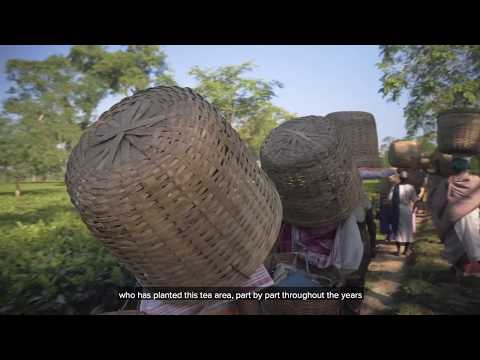 Halmari Tea Estate, AssamFrom The Source · 2:40
 Namsang Tea Estate, AssamFrom The Source · 1:17
 Singlijan Tea Estate, AssamFrom The Source · 1:22
 Saachi Bhasin Daga, HalmariWe Are In This Together
More in Assam tea, and the gardens behind our Assam teas in Assam tea estates.
Famous Nilgiri tea estates
The Nilgiri hills of South India grow tea year round at 1,000 to 2,500 m; their famous estates include Havukal, Korakundah, Glendale and Craigmore, best known for winter “frost” teas.Read more
| Estate | Altitude | Founded | Known for |
|---|---|---|---|
| Havukal | 1,680–1,830 m | 1910 | Winter frost teas; clones CR 6017 and TRF 4 |
| Korakundah | About 2,400 m | Early 1900s | One of the world’s highest tea gardens; organic |
| Glendale | 1,520–1,980 m | – | The hand-rolled “Twirl” teas |
| Craigmore | 1,200–1,800 m | 1884 | Keeps 100 to 200 acres of virgin shola forest; no artificial irrigation |
| Billimalai | About 2,000 m | – | “Goat Mountain”; frost teas hand-picked at dawn |
Havukal, owned by the Thangavelu family since 1957, is known for winter frost teas from bushes that thrive in peak winter; in the Nilgiris, frost slows the bushes without sending them dormant, so the flavor builds slowly. Since 2009 it has averaged more than 4,000 kg of finished tea per hectare, from one of the most modern factories in the hills. Our tasters’ verdict: “With the Havukal teas, there are no surprises. It’s always the most flavorful pick of the season.”
Craigmore’s estates sit in the rain shadow of the Nilgiris, so they dig hundreds of trenches per hectare to catch the rain they do get. When we visited, the count was about 800 trenches a hectare, each about two feet deep, and the bushes were pruned once every three and a half years, with the prunings buried in the trenches to feed the soil.
Glendale makes its teas in the twirl style, and unlike Darjeeling spring teas, which taste leafy and floral, notes of fruit dominate the cup. Korakundah, listed in the Limca Book of Records at 8,060 ft as the highest tea garden in the country, lies inside the Nilgiris Biosphere Reserve. The full frost story, estate by estate, is in The Nilgiri frost tea estates.

More in Nilgiri tea.
Sikkim and the northeast
Beyond Darjeeling and Assam, the best-known gardens are Temi in Sikkim and Lakyrsiew in Meghalaya, with Bermiok in Sikkim among the youngest.Read more
- Temi, Sikkim. Founded in 1969 at the invitation of Sikkim’s king, Palden Thondup Namgyal, by the planter Teddy Young, who spent eight years building it. It is run by the Government of Sikkim and has been organic since 2005. It spreads over 177 hectares near Namchi. Our 2022 summer lot was picked and made on 4 and 5 July, reached our facility in Siliguri, about 116 km away, on 6 July, and was ready to ship the next day.
- Bermiok, Sikkim. One of India’s youngest gardens, started in 2002, and known for its work on women’s empowerment.
- Bermiok’s own story. The family behind it decided in 1999 to build Sikkim’s first professionally managed private tea estate, planted Darjeeling clonal bushes in 2002 and 2003, and began making tea in its own micro factory in 2008. Kalpana Subba, who leads its factory team, made Bermiok’s first white tea pickings.
- Lakyrsiew, Meghalaya. Its name means “awakening” in Khasi. First found in the 1800s and revived in 2002, near Shillong, it is run by its owner, Nayantara Sawian.
- Lakyrsiew today. About 25 acres are under tea, and about 90 acres have been left as forest, to shelter wildlife and buffer the garden; many of its staff are from the Khasi and Garo communities, and some row across the lake to work. It is best known for its second flush teas.
Further east, Donyi Polo in Arunachal Pradesh was planted in 1986. Its 2017 summer oolong reminded our tasters of a white tea: sweet, vegetal and woody, with a velvety cup. More in Sikkim tea and Meghalaya tea.


Where do tea estate names come from?
Most famous Indian estate names come from local words, Lepcha, Nepali, Assamese, Bodo-Kachari or Khasi, from the British planters and their families, or from a local legend.Read more
Okayti was renamed after London tasters said simply “OK,” Margaret’s Hope remembers a manager’s daughter, and Dikom means “sweet water.” The full list, garden by garden, is on its own page.
Read nextWhere Indian tea estate names come fromOkayti, Giddapahar, Badamtam, Dikom, Koilamari and more: the words, people and legends behind the namesCan you visit an Indian tea estate?
Yes, some estates welcome guests, usually in restored planters’ bungalows; most working gardens, though, are not set up for casual visitors, so book ahead.Read more
Many old managers’ bungalows have become homestays, and hospitality is now a useful income for planters. One Nilgiri planter told us the hospitality wing of many tea companies had become “a very profitable revenue stream,” which also keeps the old bungalows in good repair.
- Glenburn, Darjeeling. A boutique hotel in the old Burra Bungalow, with eight rooms and views of Kanchenjunga; guests taste the estate’s teas and walk the gardens. The family spent its first night there on New Year’s Day 2001 and began with just four rooms. Tours are led by Ranjan, a fourth-generation Glenburn resident, and some 4,000 families live on the estate.
- Goomtee, Darjeeling. A three-bedroom visitors’ bungalow with a library and lawns; it is also the base for the climb to Jungpana. “I have many return visitors,” says its owner, Ashok Kumar. Eight people keep the cottage running, and when we stayed, a Korean tearoom owner from Seoul was there too, buying Goomtee and Jungpana teas.
- Coonoor, Nilgiris. Small bed and breakfasts on tea holdings, such as Welaro at Lamb’s Rock. Our buyer called the bungalow at Craigmore “the best bungalow I have ever stayed in, across the country.”
- Margherita, Assam. The Singpho Eco Village, home of the community that drank wild tea long before the British arrived, has a bamboo lodge. Our team stayed three days in its bamboo and wood house as guests of Rajesh Singpho, and tasted the village’s smoked bamboo tea.

How to read an estate name on a tea label
A single-estate label tells you, in order, the region, the estate, the season, the bush or style, the tea type and the grade. Take one of ours:Read more
Darjeeling · Castleton · Summer · Muscatel · Black · FTGFOP1 · 2026
- Region: Darjeeling, a protected Geographical Indication.
- Estate: Castleton, one garden with its own factory.
- Season: Summer, i.e., second flush. Spring is first flush; monsoon and autumn follow.
- Bush or style: Chinary, Clonal or Muscatel; estates also have names for special lots, such as Margaret’s Hope’s “Delight,” given to teas treated with special handling.
- Type: Black, green, white or oolong.
- Grade: FTGFOP1 describes leaf size and tips, not taste. See Tea grades explained.
- Year: the harvest year. Seasons vary, so the year matters.
Estates also sell each batch under a lot or invoice number, such as “DJ-42,” the Castleton muscatel lot that set a record in 1992. A label that names an estate is your best sign of a traceable, single-origin tea. One that says only “Darjeeling” or “Assam” is usually a blend.
Why the invoice number matters
Our single-estate teas are sold by the name of the estate with an invoice number, and our tasters pick the best available lots only after careful evaluation. You will see these numbers on our product pages: DJ-80 for a Seeyok summer muscatel, EX-5 for a Badamtam white, OR-445 for Halmari, SK-52 for Temi and BD-32 for Lakyrsiew. Some customers even reorder by invoice number; one wrote of Margaret’s Hope invoice DJ-12, “Wonderful aromas in the cup. A delight!!”
The estate name matters for freshness too. Through the auction route, a tea passes from garden to auction, exporter, importer, wholesaler and retailer, which takes 12 to 24 weeks; we ship within about 48 hours of production. Our teas don’t come from the auction.
Tea estates FAQ
Which is the best tea estate in India?
There is no single best. In Darjeeling, Castleton, Margaret’s Hope, Jungpana, Goomtee and Giddapahar are among the most celebrated; in Assam, Halmari, Namsang and Dikom. The best estate is the one whose style you like, in a good year.
What is the oldest tea estate in India?
The oldest gardens are in Assam, where commercial tea began in the late 1830s; Chubwa (1836) and Namsang (1837) both claim the earliest plantings. In Darjeeling, Puttabong and Makaibari trace their origins to 1852.
What is the largest tea estate in Darjeeling?
Namring, in the Teesta valley, is one of the largest, spanning over 1,000 hectares across three divisions, about 450 of them under tea. Our 2015 story called it Darjeeling’s largest by area and production, at some 300,000 kg of tea a year.
What is the difference between a tea estate and a tea garden?
In India they mean the same thing: a single plantation, usually with its own factory, where tea is grown, plucked and made.
Can you stay on a tea estate in India?
Yes. Glenburn in Darjeeling runs a boutique hotel, Goomtee lets rooms in its visitors’ bungalow, and many Nilgiri planters’ bungalows are now homestays. Book ahead; most working gardens do not take casual visitors.
Why are famous estate teas so scarce?
Because the gardens are small. Goomtee makes about 90,000 kg of tea a year, while one large Assam garden, Khobong, makes about 1.8 million kg. In Darjeeling only about 5 to 10% of the whole leaf crop is fine enough to count as specialty tea.
Does Teabox buy estate teas at auction?
No. We taste samples from the estates, usually within about 12 hours of production, choose lot by lot, and ship within about 48 hours of production, instead of waiting the 12 to 24 weeks an auction chain can take.
Keep reading
Sources
- Teabox blog estate visits: Castleton, Margaret’s Hope, Jungpana, Goomtee, Glenburn, Avongrove, Dikom, Craigmore, TANTEA, the Singpho village and Nilgiri estate bungalows (2014–2021)
- Teabox blog (Still Steeping): The Muscatel Master (2021), A balancing act in the Darjeeling tea gardens (2015), The Glenburn Boutique Hotel, Darjeeling (2017), In the wow zone at the Goomtee cottage (2015), Seoul searching for Darjeeling tea (2015)
- Teabox blog (Still Steeping): In Assam for the summer flush (2015), Assam Diaries: A tour of Halmari (2016), Of tea, wildlife and stories of yore from Assam (2017), Assam Diaries: A portal to the past (2016), Exploring co-existing spaces: wildlife and tea (2021), Assam Diaries: Margherita, the Singphos and coin tea (2016)
- Teabox blog (Still Steeping): A House for Chinna Dorai – Estate Bungalows in the Nilgiris (2017), Cats, Art, and a Tea Garden, A secret tea garden in the clouds (2015), A day in the life: Kalpana from Bermiok (2021)
- Teabox blog stories: The delight of Margaret’s Hope (2016), A hundred acre forest in the Nilgiris (Craigmore, 2016), Time for tea in the Nilgiris (2016)
- Teabox Tea 101: Assam, Nilgiri, Sikkim
- Teabox product estate descriptions and product data, 2026 season: Havukal Frost, Glendale Frost Twirl, Billimalai Frost, Korakundah Frost, Temi Summer (freshness journey), Seeyok Summer Muscatel, Halmari Summer, Doomni Gold, Koilamari Summer, Dikom Classic
- Teabox Drive: Teabox internal document, 2023; Teabox internal document, 2018; Teabox internal document; Teabox internal document, 2017; Teabox internal document (estate’s own account, 2020); photos as credited
- Teabox internal estate records (2019): founding years and areas only
- Teabox on Instagram (@teabox.tea): rivers by garden, Sep 2021, Khobong, Sep 2018, Havukal, Jan 2019, Havukal yield, Jan 2019, Nilgiri frost, 2016, Bermiok, 2018, Lakyrsiew, 2018, Lakyrsiew second flush, Aug 2019, Donyi Polo oolong, Aug 2017, not from the auction, Jun 2021
- Teabox on YouTube: From The Source and We Are In This Together films, linked where used

Leave a comment
All comments are moderated before being published.
This site is protected by hCaptcha and the hCaptcha Privacy Policy and Terms of Service apply.