


Meghalaya tea is tea grown in the hills of Meghalaya, the small state just south of Assam in northeast India, where tea was only planted in earnest from the 1970s. The region makes small batches of orthodox black, green and white tea in gardens at roughly 900 to 1,700 m. Its best-known garden, Lakyrsiew near Shillong, makes mellow, fruity black teas that sit between Assam’s malt and Darjeeling’s fragrance.
At a glance
- WhereKhasi and Garo hills, Meghalaya, northeast India
- TasteMellow; peach, honey, toffee, gentle briskness
- Brew90–95°C · 3–5 min · plain or a splash of milk
Why does tea grow in Meghalaya?
Tea grows in Meghalaya because its hills share Assam’s soil and rainfall but rise much higher, giving a cool, misty climate that suits slow-growing, flavorful leaf. British prospectors noticed this in the 19th century; it simply took until the 1970s for anyone to plant tea at scale.Read more
Meghalaya shares its northern border with Assam and lies just one state away from West Bengal, home of Darjeeling. Until 1972 it was part of Assam, and its capital, Shillong, was Assam’s capital too. Shillong was once branded “the Scotland of the East,” for its cool hills.
The land and terroir are close to Assam’s, but where Assam tea grows on the low, flat floor of the Brahmaputra valley, Meghalaya’s tea grows on hillsides from about 3,000 to 5,500 ft.
The name itself explains the climate. Meghalaya means “abode of clouds,” a state known for heavy rains, forest-clad hills and mist “that covers the area like a quilt.”
That rain is not guaranteed, and the tea feels it when it fails. Our spring report for 2024 recorded that Meghalaya had received only 210.1 mm of rain from March to May, against a usual 481.8 mm, a shortfall of 56%. Young leaf needs water to grow, so a dry spring means a smaller, slower crop.
Two altitudes, two kinds of tea
That altitude splits the region in two. In the lower Garo Hills, Assam-type plants grow in warm, humid valleys. Higher up, in the Khasi Hills around Shillong, Darjeeling-style plants grow in cooler air, where the leaf grows more slowly and builds more aroma. For how these plant types differ, see Chinary, Assam and clonal tea plants.
Both of the Meghalaya teas we sell come from the higher zone. Lakyrsiew lies between 1,000 and 1,300 m, and its summer and autumn teas are picked at about 4,000 ft, the autumn tea from a section of the garden set aside for it. That is why they taste closer to a Darjeeling than to the Assam teas grown a few hours’ drive away on the plains.
How did tea come to Meghalaya?
Tea came to Meghalaya late: the British judged the Shillong plateau ideal for tea in the 19th century but never planted it, and commercial tea arrived only after the Tea Board of India surveyed the hills in the 1970s.Read more
What is the Lakyrsiew tea estate?
Lakyrsiew (also written LaKyrsiew) is a small boutique tea garden on the southern bank of Umiam Lake, just outside Shillong, at about 1,000 to 1,300 m, and the source of both Meghalaya teas we sell.Read more
What does Meghalaya tea taste like?
Meghalaya’s highland black teas are mellow and lightly brisk, with fruit (especially peach), honey and soft toffee or cocoa notes; they are smoother and lighter than a classic Assam, with less malt. Teas from the lower, Assam-type gardens are bolder and brisker.Read more
Over the years Lakyrsiew’s teas developed what its owners call their distinctive profile: “very mellow, with toffee and cocoa notes combined with stone fruit.” Our own estate notes also mention amaryllis and orchid.
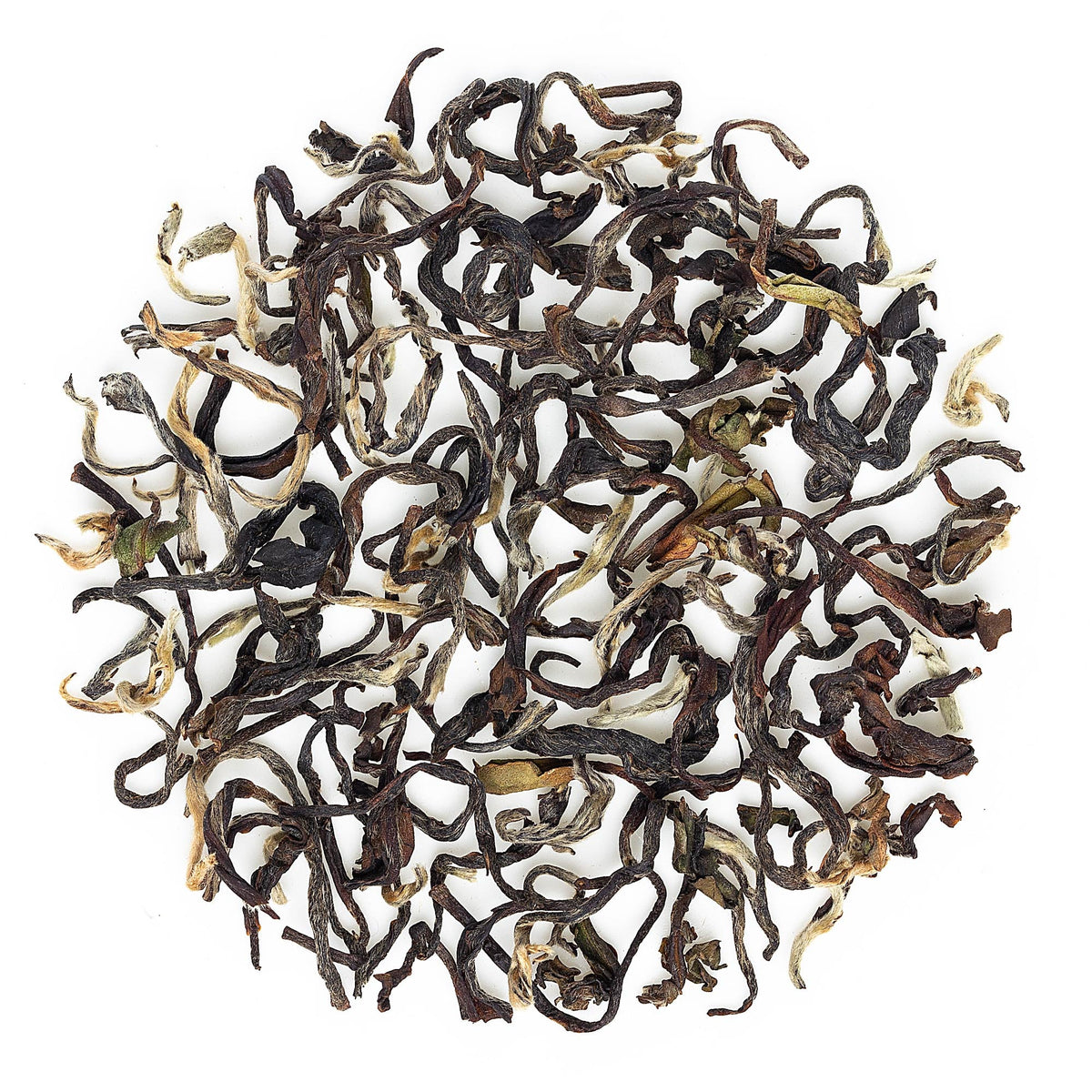
The garden is planted with young bushes of a very fragrant clonal variety, and the leaf is wiry and well twisted, with “a scattering of ochre-hued tips.” Our tasting notes for the two current teas show how the seasons differ:
| Tea | Cup | Tasting notes |
|---|---|---|
| Lakyrsiew Summer Clonal Black (summer flush) | Bright orange | Light-bodied, mellow and gently brisk: peach, then cantaloupe and honey, soft florals and a lingering grape-like sweetness. Dry leaf smells of milk chocolate, vanilla and candied fruit. |
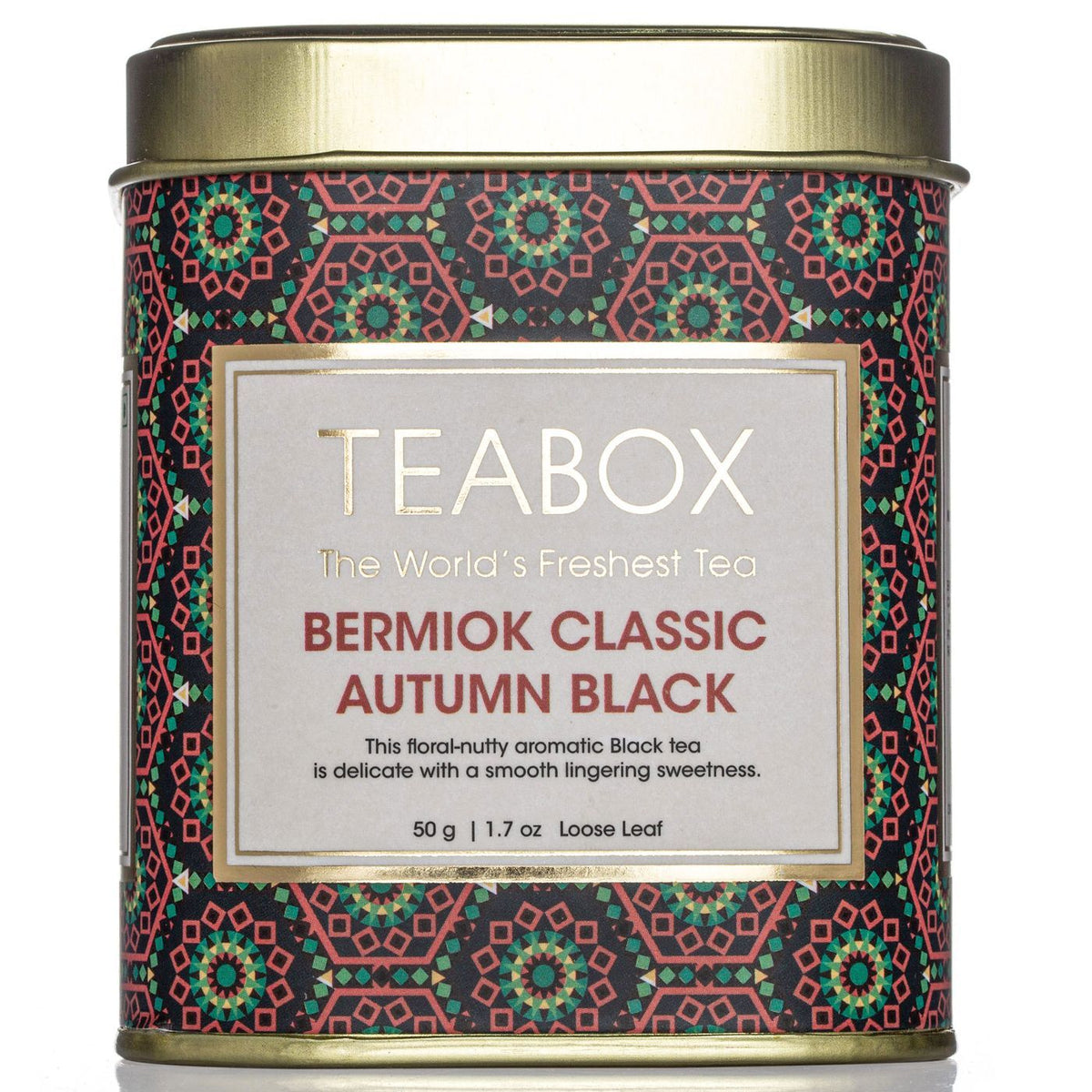
| Lakyrsiew Autumn Clonal Black (autumn flush) | Bright orange | Well rounded and supple: soft fruit opening to woody and caramelized notes, fresh nuttiness, and a soft floral finish. |
Two seasons from one garden
The summer tea follows the pattern of a second flush, fuller and fruitier than spring; the autumn tea has the woody, caramel warmth typical of the autumn flush. We have long known Lakyrsiew for its summer teas, and its fresh second flush lots join our summer range each year.
The 2022 summer lot shows the timing. It was hand-picked on 22 July 2022, graded FTGFOP1 and sold to us under invoice BD-32, and it reached our facility in Siliguri, about 514 km away, on 26 July, four days later. Our product page describes its cup as mellow, with notes of honeysuckle and peach.
The autumn tea comes much later. Its 2022 lot was picked on 9 and 10 December, at the very end of the season, when the bushes are slowing down for winter and the leaf grows rounder and less brisk. Our product data suggests it as an evening tea.
Production is tiny and each lot changes with the weather, so these are teas to taste and compare, not a uniform blend.
Meghalaya’s tea has always reached us in small, rare lots. Back in 2016 we offered Eden’s Cloud, which we described as “a rare cloud tea from the misty highlands of Meghalaya.”
Meghalaya tea vs Assam tea: what is the difference?
Meghalaya and Assam share a border, a history and similar soil, but Assam tea grows on the low Brahmaputra plains and is bold and malty, while Meghalaya tea grows in the hills and is lighter, smoother and fruitier. Meghalaya is also tiny by comparison: a handful of small gardens and cooperatives against Assam’s hundreds of large estates.Read more
| Meghalaya | Assam | Darjeeling | |
|---|---|---|---|
| Land | Khasi and Garo hills | Brahmaputra valley plains | Himalayan foothills, West Bengal |
| Altitude | About 900–1,700 m | Low-lying | About 600–2,000 m |
| Commercial tea since | 1970s | 1839 (Assam Company) | 1850s |
| Scale | Small growers, boutique gardens | Hundreds of large estates | 87 registered gardens |
| Typical cup | Mellow, fruity, honeyed; medium body | Bold, malty, brisk; full body | Floral or muscatel; light body |
| Milk? | Best plain; a splash is fine | Milk welcome | Best plain |
| Shop | Meghalaya teas | Assam teas | Single-estate Darjeeling |
The difference in the cup comes from the land. On the hot, wet plains, Assam bushes grow fast and give a thick, malty leaf; in Meghalaya’s cooler hills, the same plant grows slowly and keeps more fruit and fragrance, which is why the summer Lakyrsiew is light enough to drink without milk.
In daily life, though, Meghalaya has long drunk tea the Assam way. The writer Anjum Hasan, who grew up in Shillong, told us it has always been “a huge tea drinking culture,” but of boiled milk tea with plenty of sugar, “a Brooke Bond culture”; her parents still drink only CTC, and “the idea of brewing their tea, rather than boiling it, is quite alien to them.”
If you love a strong breakfast cup with milk, Assam is your tea. If you drink Darjeeling plain but want a little more body, a Meghalaya black is worth trying side by side with both. For the bigger picture, see Indian tea: the complete guide, and for the hill region next door, Darjeeling tea.
How to brew Meghalaya black tea
Brew Meghalaya black tea like a Darjeeling summer or autumn tea: about 2 to 2.5 g of leaf (one heaped teaspoon) per 250 ml cup, water at 90–95°C, for 3 to 5 minutes, and drink it plain or with a splash of milk.
- Heat fresh water to just below the boil, 90–95°C (195–203°F).
- Measure the leaf: 2 to 2.5 g, about one heaped teaspoon, per 250 ml (8 oz) cup.
- Steep the summer tea for 3 to 5 minutes and the autumn tea for 4 to 5 minutes, then strain.
- Taste before adding anything. The summer tea is best plain, so its peach and honey come through; the autumn tea takes a splash of milk or a little honey well.
Water just below the boil draws out the fruit and honey without pulling too much briskness from the leaf. Water that is too hot, or a steep that runs long, brings out the tannins and hides the soft notes that make these teas worth buying.
Water matters as much as heat. Our tasting and procurement teams notice that a tea tastes different when they sample it at the estate and again at our facility, because the water in high places such as Meghalaya, Darjeeling and Sikkim is rich in minerals and oxygen compared with the plains.

For more on water, timing and teaware, see How to brew loose leaf tea.
Meghalaya tea FAQ
Is Meghalaya tea the same as Assam tea?
No. Meghalaya was part of Assam until 1972 and shares its soil and rainfall, but its tea grows much higher, in the Khasi and Garo hills. Highland Meghalaya teas are mellower, lighter and fruitier than the bold, malty teas of the Assam plains.
Is Meghalaya tea organic?
It depends on the garden and the lot. Some small Meghalaya gardens, Lakyrsiew among them, describe their farming as organic, but certification is specific to each tea and can change. Check the label of each tea; our guide to tea certifications explains what to look for.
Where is tea grown in Meghalaya?
In three areas earmarked by the Tea Board of India in the 1970s, Umsning in Ri-Bhoi district, Tebronggre in the West Garo Hills and Riangdo in the West Khasi Hills, and in small gardens around Shillong such as Lakyrsiew on Umiam Lake.
What is Lakyrsiew?
Lakyrsiew, also written LaKyrsiew or La Kyrsiew, is a small boutique tea garden near Shillong whose name means “awakening” in Khasi. It makes small batches of black tea and a rare silver needle white tea, and it is the source of the Meghalaya teas Teabox sells. More in The Lakyrsiew tea estate.
When is Meghalaya tea picked?
Lakyrsiew makes both a summer and an autumn tea. Its 2022 summer tea was picked on 22 July, and its 2022 autumn tea on 9 and 10 December, at the very end of the year’s growth.
Can I add milk to Meghalaya black tea?
You can, but go lightly. The summer tea is best plain, so its peach and honey notes come through; the rounder autumn tea takes a splash of milk or a little honey well.
Keep reading
Sources
- Teabox Tea 101: Meghalaya: Tea for a new economy
- Teabox blog (Still Steeping): A Secret Tea Garden in the Clouds (2015, with the Teabox reply to readers); Teatime, Talktime (feat. Anjum Hasan and Zac O’Yeah) (2017); Meet the Growers (2020)
- Teabox product tasting notes, estate descriptions and product data (grade, invoice, freshness journey, time of day), 2026: Lakyrsiew Summer Clonal Black, Lakyrsiew Autumn Clonal Black
- Teabox Drive: Teabox internal document, 2020; Teabox internal document, 2024; photos as credited
- Teabox on Instagram (@teabox.tea): Eden’s Cloud, Feb 2016, abode of clouds, Jun 2018, Lakyrsiew film, Jul 2018, Lakyrsiew summer tea, Aug 2019, Meet the Growers with Nayantara, Jun 2020, Lakyrsiew on Umiam Lake, Aug 2020, Lakyrsiew leaf, Aug 2020, hill water and taste, Oct 2021, Masterclass: Meghalaya, Feb 2022, tasting at the garden, Jan 2026
- Kausshal Dugarr on X (@Teapreneur): Meet the Growers launch, Jun 2020
- Teabox on YouTube: Masterclass: Meghalaya (short), From The Source: Lakyrsiew Tea Estate

Leave a comment
All comments are moderated before being published.
This site is protected by hCaptcha and the hCaptcha Privacy Policy and Terms of Service apply.