


Autumn flush tea is the last harvest of the year in India’s northern tea hills, plucked from about mid-October into November, and in some years into early December, after the monsoon and before winter. Also called the third flush, fall flush or simply “autumnals,” these teas are darker, smoother and mellower than spring or summer teas, with notes of stone fruit, nuts and wood. Darjeeling makes the most celebrated ones.
At a glance
- WhenMid-October into November, sometimes early December
- Our recent picksDarjeeling lots picked 15 November to 12 December (2024 and 2025)
- Also calledThird flush, fall flush, autumnal
- WhereDarjeeling, Sikkim, Assam, Meghalaya; Nilgiris too
- Share of the year’s cropAbout a tenth of a Darjeeling garden’s tea
When is autumn flush tea harvested?
Autumn flush tea is harvested from about mid-October, once the monsoon has withdrawn from the hills, and plucking carries on until the gardens close for winter, usually in late November or early December.Read more
In Indian tea, a “flush” is a period of fresh growth. Autumn is the third of the year in Darjeeling, after the spring first flush and the summer second flush, which is why it is also called the third flush.
“In India, autumn is a short season, appearing between the monsoons and winter,” Kausshal Dugarr, Teabox’s founder, wrote in November 2021. As our Tea 101 guide put it, “it’s the Darjeeling autumn teas that call for special mention.” The weather is settled and cool, with “a pleasant nip in the air,” as our blog once put it.
The window is short. Our 2016 notes on autumn teas call it “a short window, not more than 3-4 weeks before winter sets in” in any one garden.
How late does the season run?
Later than most calendars say. Our current autumn lots were picked between 24 November and 12 December 2025: Giddapahar on 24 and 25 November, Jungpana on 2 and 3 December, Okayti on 11 and 12 December.
| Our autumn lot | Picked in 2024 | Picked in 2025 |
|---|---|---|
| Glendale Autumn Twirl Green (Nilgiris) | 12–13 November | 10–11 November |
| Giddapahar Autumn Chinary | 15–16 November | 24–25 November |
| Jungpana Autumn Chinary | 20–21 November | 2–3 December |
| Seeyok and Selimbong Autumn Chinary | 26–27 November | Not offered |
| Goomtee Autumn | 29–30 November | Not offered |
| Okayti Autumn (clonal in 2024, Chinary in 2025) | 30 November–1 December | 11–12 December |
Earlier years look the same. Our Giddapahar, Jungpana and Selimbong autumnals were picked on 3 and 4 December 2021, Jungpana on 21 and 22 November 2022, and Singbulli, Selimbong, Seeyok and Singell between 17 November and 2 December 2023. The Nilgiri green is always the earliest: in 2023 it was picked on 25 and 26 October.
In 2023, the Tea Board of India set 11 December as the last day of picking in Darjeeling, after which the bushes were pruned to prepare them for spring. During the season, pluckers wake at 4 am to bring in the final leaves.

For the whole tea year, see Seasons of tea.
Why does autumn flush tea taste different?
Autumn tea tastes different because the bush is slowing down: cooler days, drier soil and slower growth give a mature leaf with less of spring’s brightness and more depth.Read more
Autumn is the bush’s last push before rest. The soil is usually drier than in spring or summer, and the bushes produce less leaf as they move toward winter dormancy. “It’s as if the bush is looking forward to its rest, content after a season-long journey,” our team wrote after a 2021 sampling trip through Darjeeling and Sikkim.
Cooler days and slower, more mature growth give a leaf with less of spring’s sharp brightness and more depth. Once the autumn harvest ends, the gardens of the north go dormant until the first flush the following spring.
A small crop
Slow growth means little leaf. Our 2017 training notes split a Darjeeling garden’s year this way: about 50% of the crop comes in the rains, 20% in summer, 18% in spring and only 12% in autumn. A later Teabox note on single-estate tea puts autumn at about 10% of Darjeeling’s crop, with a little over half of it whole leaf.
We buy only in spring, summer and autumn, and skip the rains. Even in autumn our procurement team buys “very limited” quantities, because only a few lots each year reach the standard of a single-estate tea.
What the change does to leaf and cup
The mature leaf shows in the tea. Our quality glossary notes that “autumnal teas frequently produce a reddish leaf,” and that if the liquor is good, the leaf’s look “will not normally affect the value.”
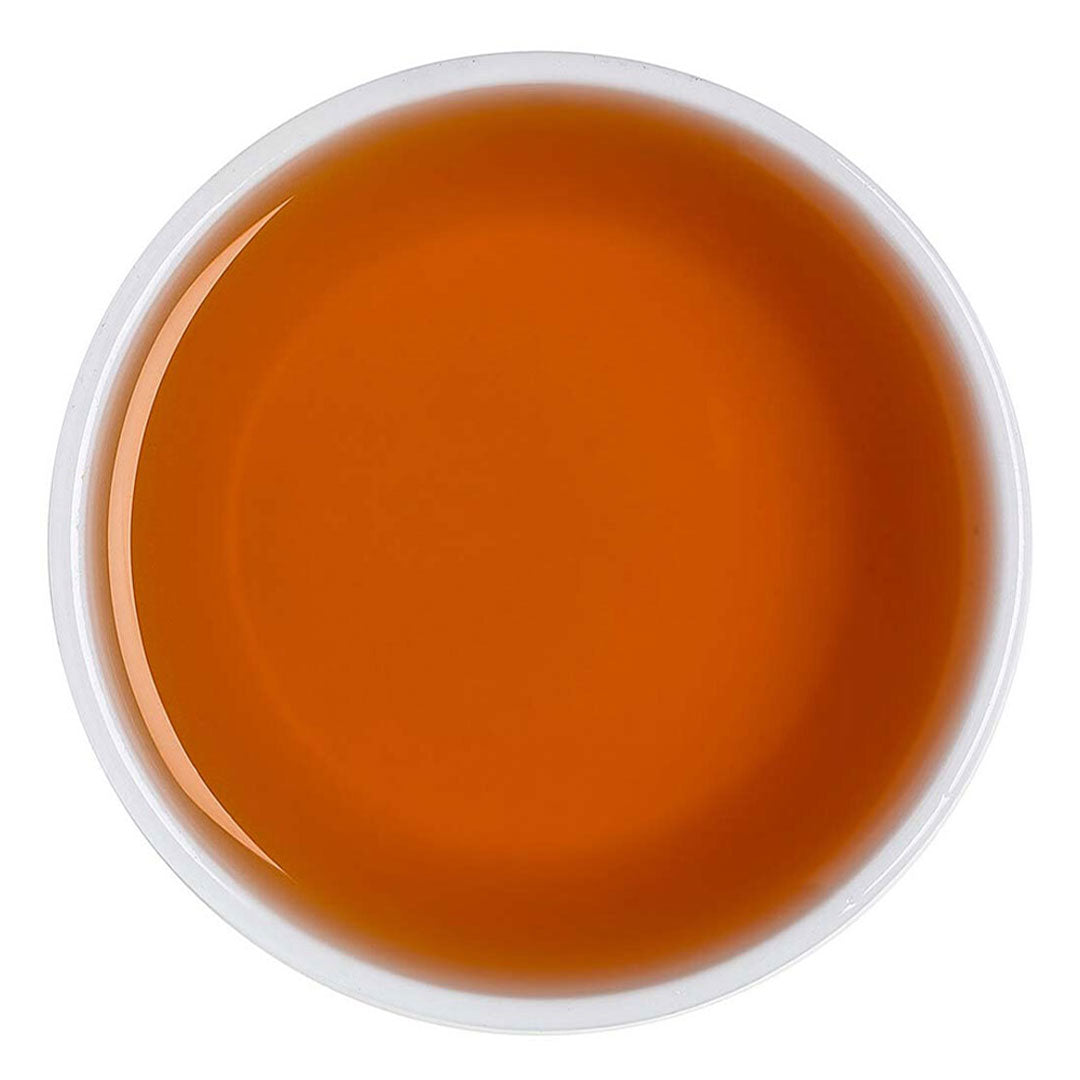
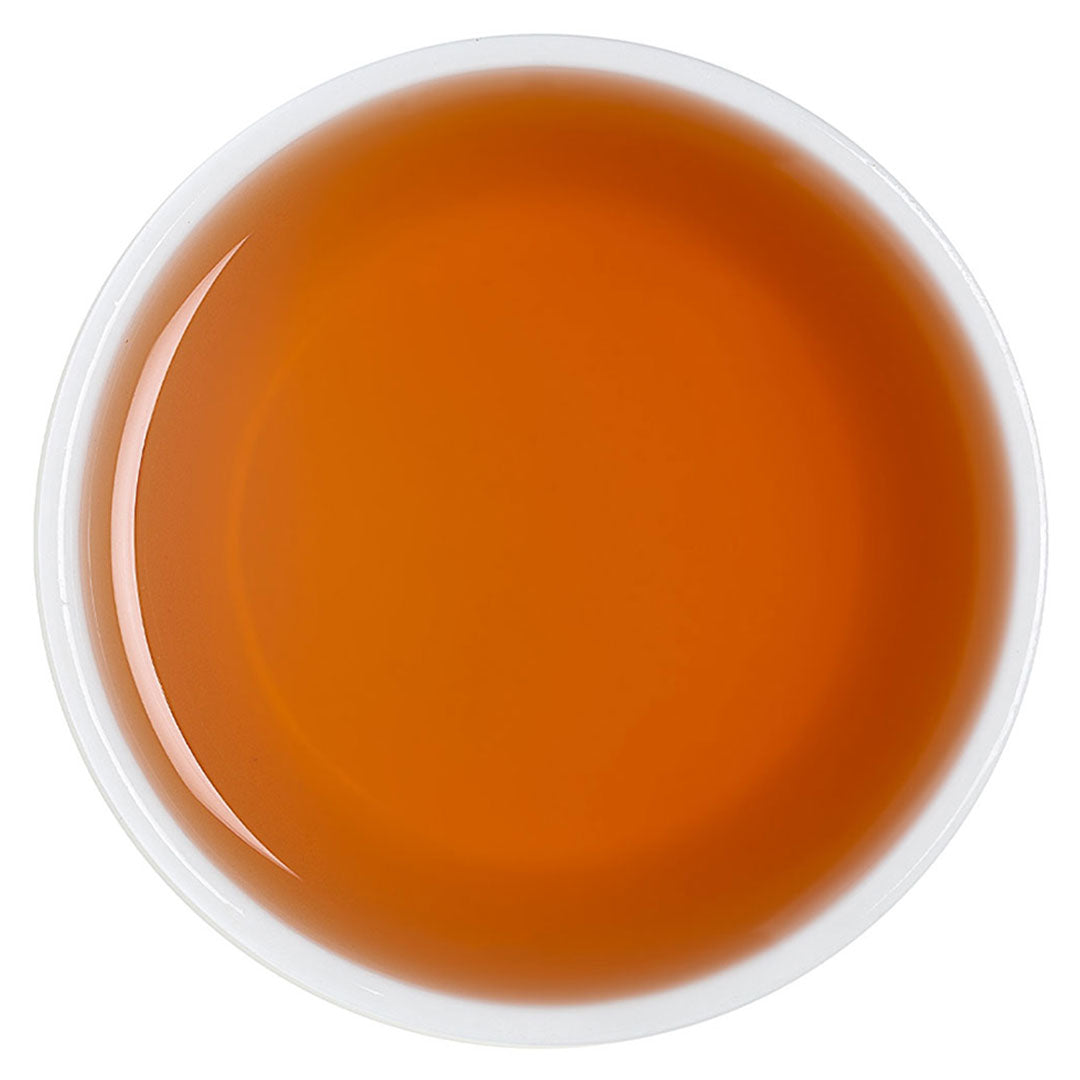
The cup darkens across the year. Our tasters’ color check runs from “light, bright cups for Spring” through “varying shades of Amber in Summer” to “light orange to bright Orange for Autumnal teas.”
What does Darjeeling autumn flush tea taste like?
Darjeeling autumn flush is smooth, mellow and well rounded: an orange-to-amber cup with stone fruit (nectarine, peach), warm nutty notes such as chestnut, and a woody, cedar-like finish, with little of the astringency of spring or summer teas.Read more
Tea 101 describes the leaves as dark and the tea as full-bodied and fruity, with “a subdued and understated refinement.”
“Autumnals from Darjeeling, as author Jeff Koehler puts it, have ‘quite the presence and no impatience.’ The teas picked at this time have a laced woody, almost musky, quality.”
Our tasters call autumnals well balanced, “having no sharpness or astringency that is typical of first and second-flush teas”: less floral and delicate than spring, more fruity, with slightly sweet, nutty undertones, “making it the most readily palatable of all Darjeeling teas.” Other words from our tasting notes: toasty wood, light, brisk and mellow.
Our 2016 notes explain why that quiet profile is the point. Autumn teas “lack the intensity and brightness of the other weather teas,” but their flavors “are mellow and easy, they need no milk or sweeteners to enhance their taste, and they don’t distract.”

Our current autumn teas show the range. All three Darjeeling teas below are from Chinary bushes, the original China variety, which give the season’s clearest, most layered cups (more in Chinary, Assam and clonal tea plants).
| Tea (autumn 2025) | Cup | Tasting notes |
|---|---|---|
| Okayti Autumn Chinary | Dark amber | Nectarine, chestnut, a touch of cedar and gentle musk; picked 11–12 December 2025 |
| Giddapahar Autumn Chinary | Orange amber | Velvety; stone fruit, honeyed nuts, soft musk, faint cedar; picked 24–25 November 2025 |
| Jungpana Autumn Chinary | Bright orange | Mellow; stone-fruit sweetness, subtle nuts, light cedar; picked 2–3 December 2025 |
Where else is autumn flush tea made?
Darjeeling is not the only place with an autumn flush. Assam, Sikkim and Meghalaya make autumn teas before their own winter rest, and the Nilgiris, which pluck all year, make fresh, aromatic autumn teas just as their best season begins.Read more
Autumn flush vs second flush: what’s the difference?
Second flush is the summer harvest (late May into June): brighter, fruitier and more aromatic, with Darjeeling’s Muscat grape “muscatel” notes. Autumn flush comes from mid-October into November, sometimes early December: mellower, rounder and woodier, with nutty, stone-fruit notes and less astringency.Read more
Autumn teas are not as strong as the summer teas, “and yet with enough distinction to command their own following.”
| Second flush (summer) | Autumn flush (third flush) | |
|---|---|---|
| Harvest | Late May into June | Mid-October into November, sometimes early December |
| Growth | Vigorous summer growth | Slower growth before winter rest |
| Darjeeling notes | Muscat grape, ripe fruit, honey | Stone fruit, chestnut, cedar, gentle musk |
| Cup | Bright amber to dark amber | Bright orange to dark amber |
| Astringency | Gentle | Low; smooth and rounded |
| Mood | Lively, aromatic | Quiet, mellow; an evening tea |
The two are easy to confuse because both make dark, amber Darjeeling black teas. The quickest test is in the aroma: a summer tea is lifted and fruity, an autumnal is warmer and woodier.
As our product notes put it, autumn teas come “without the bright astringency of First Flush or the muscatel sharpness of Second Flush,” leaning toward fruity, nutty and warm notes rather than floral or high-toned ones.
Why autumn can be the better buy
Our 2017 beginner’s guide to choosing a Darjeeling describes autumn teas as “lighter and delicate” and “not as complex in flavors as the first and second flushes.” It adds that autumn flush teas are what one expert terms “muted” versions of second flush ones, and that “they can be very good buys.”
The same guide counts autumn among the pedigree seasons: for black teas, “only first (‘spring’), second (‘summer’) and autumn flushes are pedigree,” while the monsoon teas in between are for everyday blends. For more on summer teas, see Second flush tea and muscatel.
How to brew autumn flush tea
Brew Darjeeling autumn black tea with 2 to 2.5 g of leaf (roughly one heaped teaspoon) per 250 ml (8 oz) cup at 90–95°C (195–203°F) for 4 to 5 minutes, then strain.Read more
Each of our current Darjeeling autumnals recommends one steep.
The autumn green from Glendale needs cooler water: 75–80°C (167–176°F) for 2 to 3 minutes, with the same amount of leaf. If the cup tastes thin, add a little more leaf next time rather than steeping longer. Full method in How to brew Darjeeling tea.
Plain, or with milk?
Drink autumnals hot and plain to taste their layers; a splash of milk is fine if you like it. Our Okayti Autumn notes say the same: “While Autumn teas are typically enjoyed plain,” adding milk or sugar “is entirely a matter of taste.”
Some autumn lots are sturdier than others. Of a 2012 Gopaldhara autumnal we wrote that it was “satisfyingly full of tannins but without noticeable bitterness” and “takes milk exceedingly well.”
When to drink it, and with what
Our product records suggest the afternoon for Giddapahar and any time of day for Jungpana. Our notes on an Okayti autumn lot explain why afternoons suit the season, because the teas’ “medium body and mellow flavors make for a comforting and invigorating experience.”
For food, our tasters pair Giddapahar Autumn with sandwiches, bagels, glazed doughnuts, pancakes and puff pastry, and Jungpana Autumn with light foods, crepes, fritters, biscotti and cream cheeses.
How to choose an autumn flush tea
Choose a single estate, a named flush and a year, and pick by style: Okayti for nectarine and chestnut, Giddapahar for a velvety, caramel-edged cup, Jungpana for a mellow, stone-fruit cup, or Glendale if you want a green.
“Darjeeling autumn” on a label without an estate usually means a blend. Look at the dry leaf: it should be whole, wiry and evenly made, darker than spring leaf. The cup should be clear and bright, not dull, and taste smooth, without a harsh finish. Our Seasons of tea hub explains how each flush differs.
What our buying rules look for
Our 2015 buying rules accept a Darjeeling autumn lot at no more than 4% moisture, a little drier than the 4.5% allowed for spring and summer teas, and allow only 1% stalk as normal, 3% at most. Two faults are worth tasting for at home. A dull, sawdust-like woodiness marks teas “manufactured very late in the Autumnal period,” and a “winey” edge marks autumnals past their prime.
Buy the current season
Freshness matters more than the flush name. Our 2025 Giddapahar lot, picked on 24 and 25 November, was ready to ship on 27 November; Jungpana, picked on 2 and 3 December, was ready on 6 December. Our Darjeeling guide gives the rule of thumb: Darjeeling “is at its best for maybe 6 months, but well-stored it retains its flavors for a year.”
Autumn tea has been part of Teabox from the very start. Our first order ever came from a customer in the United States who wanted Darjeeling autumn flush teas, and the invoice was for 56 USD; the story is in Teabox: 100 Countries and Counting.
How do our tasters choose an autumn flush tea?
Our tasters taste every autumn sample side by side, many cups a day, and shortlist only a few lots each season.Read more
Every October and November, our tasting room is busy with the season’s samples. In 2021 we received about 60 autumn samples a day and made more than 220 cups before shortlisting a single autumn flush tea.
That season our founder, chief procurement officers and master tasters also spent two days traveling across Darjeeling and Sikkim to taste fresh autumn cups at the gardens.
How the tasting table is set
In our tasting room, Rupojit Roy lays out each session: measuring out the samples, steeping them for the set time, straining and pouring, so that every cup is made the same way. The dry leaf of each sample sits on a white paper “tasting turnout” card, so that tasters, procurement managers and quality teams can see the leaf clearly and spot brokens, fannings and dust.
The year’s last count
Autumn teas are scarce: the season is short and the bushes are winding down. When the last Darjeeling samples of 2022 reached us, our tasters were counting how many cups they had tasted that year. “I think we have tasted close to 11,456 cups this year!” said Arun Kumar Gomden, the veteran Darjeeling tea maker and master taster who worked with our tasting team. Counting the chai samples as well, our procurement team put the total closer to 24,678 cups. Gopal Upadhayay replied: “Autumn flush is here, the number will just go up!”
Spiced autumn blends and fall teas
Fall teas also include spiced blends: tea with cinnamon, cardamom, clove or ginger, or with fruit and sweet notes such as apple, cranberry, caramel or maple.Read more
These are warming blends for the season rather than autumn flush teas; most use a strong black base. Each fall we bring our spiced blends forward for exactly this reason.
Our blenders have long planned by season. Their 2015 flavor list for autumn named cardamom, cinnamon, bay leaf, pumpkin, walnut, kokum, maple and ginger.
Keep a fine Darjeeling autumnal plain, so nothing competes with its fruit and wood. For a spiced cup, a malty Assam base holds its own: our Assam Masala Chai blends Assam tea with cinnamon, black pepper, cardamom, clove and ginger. To make your own blend, see Chai spices and chai masala.
If you blend at home, follow our blog’s rule of thumb: “Nearly two-thirds of the blend should be tea. The lighter the tea, the lower the concentration of the ingredient to be added.” More tips are in 8 Tips for Creating Your Own Tea Blends.
Autumn flush tea FAQ
Is autumn flush the same as third flush?
Yes. Autumn flush, third flush, fall flush and autumnal all mean the same harvest: the last one of the year in Darjeeling, Sikkim and Assam, plucked from about mid-October into November, and sometimes into early December, after the spring first flush and the summer second flush.
Can I drink autumn flush tea with milk?
Yes, a splash is fine if you like it, but Darjeeling autumnals are best plain, because more milk hides their stone-fruit and woody notes. For a milky, spiced cup, an Assam tea or a masala chai is a better choice.
Does Darjeeling autumn tea have muscatel flavor?
Not usually. Muscatel is a summer character, from the second flush. Autumn teas are rounder and woodier, with stone fruit, nuts and cedar instead of Muscat grape, though some have a soft musky note. A few gardens keep a muscat edge into autumn: in 2012 we offered a Jungpana autumn tea sold as a muscatel.
Why is the autumn flush so short?
Autumn falls in a short gap between the monsoon and winter. The bushes are slowing their growth before winter dormancy, and in Darjeeling picking stops in December so the bushes can be pruned for spring. In any one garden, the window is often no more than three to four weeks.
When can I buy autumn flush tea?
The teas are made from mid-October into November, sometimes into early December, and reach shelves once they have been tasted and selected, usually from late November. Our current lots arrived between 25 November and 13 December 2025.
How long does autumn flush tea stay fresh?
Darjeeling tea is at its best for about six months after picking, and keeps its flavor for about a year if stored well, airtight and away from light, heat and smells. Buy the current season’s lot and check the picking date on the pack.
Is autumn flush tea less expensive than second flush?
Often it is good value. Our Darjeeling guide calls autumn teas “muted” versions of second flush ones that “can be very good buys,” though the best lots are scarce because the crop is small.
Keep reading
Sources
- Teabox blog: An Interlude Called Autumn (2015), The beginner’s guide to choosing a Darjeeling (2017), Teabox: 100 countries and counting (2017), 8 tips for creating your own tea blends (2015), The secrets of tea-tasting (2017), From Europe and food to Asia and tea (2015), Teatime, Talktime (feat. Anjum Hasan and Zac O’Yeah) (2017), Nepal: innovation in the high Himalayas (2016)
- Teabox blog: Tea flushes: your guide to tea harvest (2014); The delight of Margaret’s Hope (2016)
- Teabox Tea 101: Your essential guide to autumn teas or fall teas; Seasons of tea
- Teabox product tasting notes, FAQs, pairings, picking dates (freshness journeys) and steeping instructions: autumn lots 2021 to 2025, including Okayti, Giddapahar and Jungpana Autumn Chinary, Glendale Autumn Twirl Green, Lakyrsiew Autumn Clonal Black and Assam Masala Chai, and the draft Seeyok, Selimbong, Singell, Singbulli, Goomtee and Okayti Clonal autumn records
- Teabox Drive: Teabox internal document, 2024; Teabox internal document, 2016; Teabox internal document, 2012; Teabox internal document, 2017; Teabox internal document, 2023; Teabox internal document; Teabox internal document, 2017; Teabox internal document, 2015; Teabox internal document, 2016; Teabox internal document, 2015; Teabox internal document, 2023; Teabox internal document, 2012; Teabox internal document, 2017; photos as credited
- Teabox on Instagram (@teabox.tea): Thurbo autumn oolong, Feb 2017, Bermiok Classic Autumn, Oct 2017, fall blends, Oct 2018, autumn descriptors, Nov 2019, autumn sampling trip, Nov 2021, 60 samples a day, Nov 2021, tasting turnout card, Nov 2021, cup count, Oct 2022, autumn profile, Nov 2022, tasting room set-up, Nov 2022, 4 am plucking, Dec 2023, end of picking, Dec 2023, Giddapahar autumn, Nov 2024, Jungpana autumn, Nov 2024
- Kausshal Dugarr on X (@Teapreneur): autumn tasting, Nov 2021, a short season, Nov 2021
- Teabox on YouTube: Different Indian tea flushes, Bermiok Tea Estate, Lakyrsiew Tea Estate

Leave a comment
All comments are moderated before being published.
This site is protected by hCaptcha and the hCaptcha Privacy Policy and Terms of Service apply.