


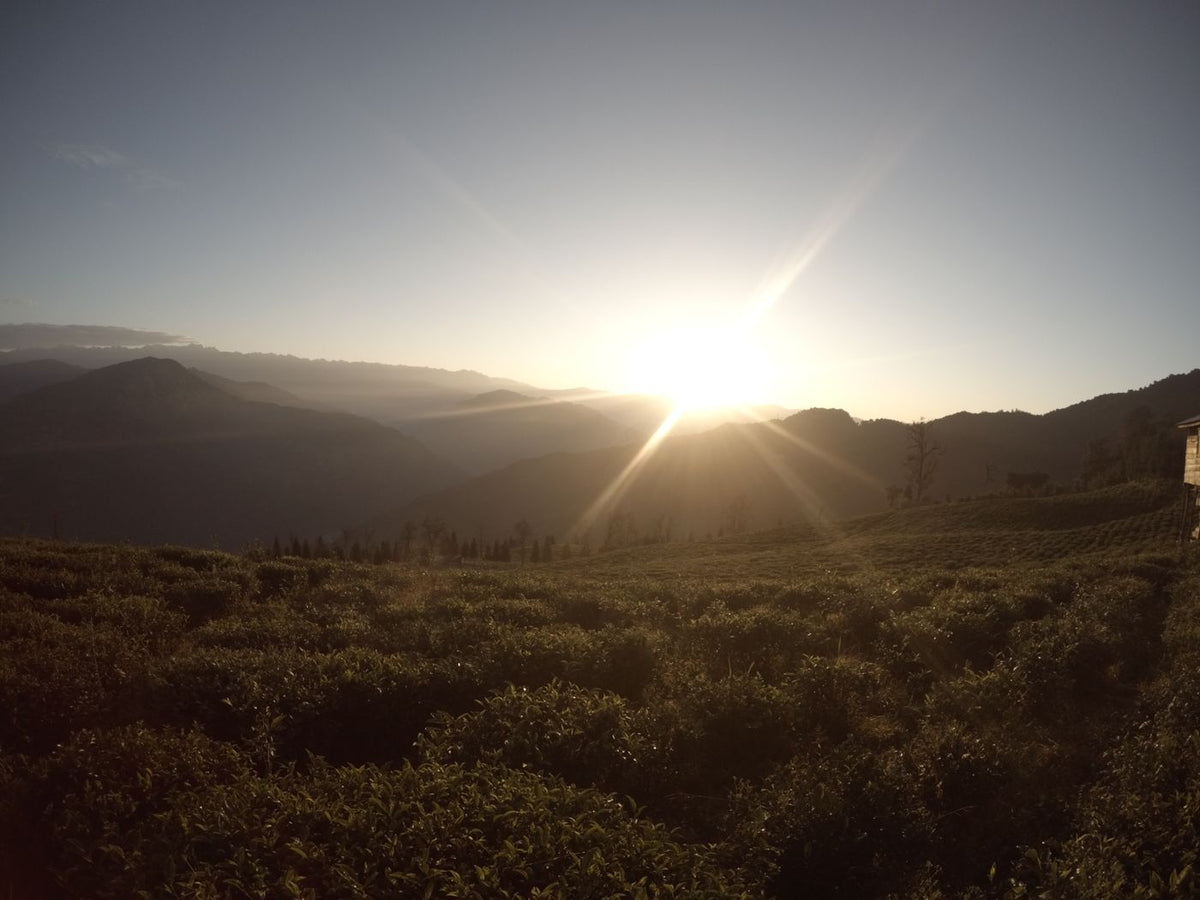
Sikkim tea is tea grown in the small Himalayan state of Sikkim, India, and most of it comes from one famous garden: Temi, set up by the Government of Sikkim in 1969 and farmed organically since 2005. Grown at close to 5,000 feet, just north of Darjeeling, it is a light, fragrant black tea with ripe fruit in summer and a bright, fruity freshness in spring. Our Masterclass places it between India’s two best-known styles: fuller than Darjeeling, gentler than Assam.
At a glance
- WhereSikkim, northeast India; Temi is in Namchi, South Sikkim
- TasteStone fruit, peach, light musk, cedar; medium body
- Brew85–95°C · 3–5 min · best plain
Where does Sikkim tea come from?
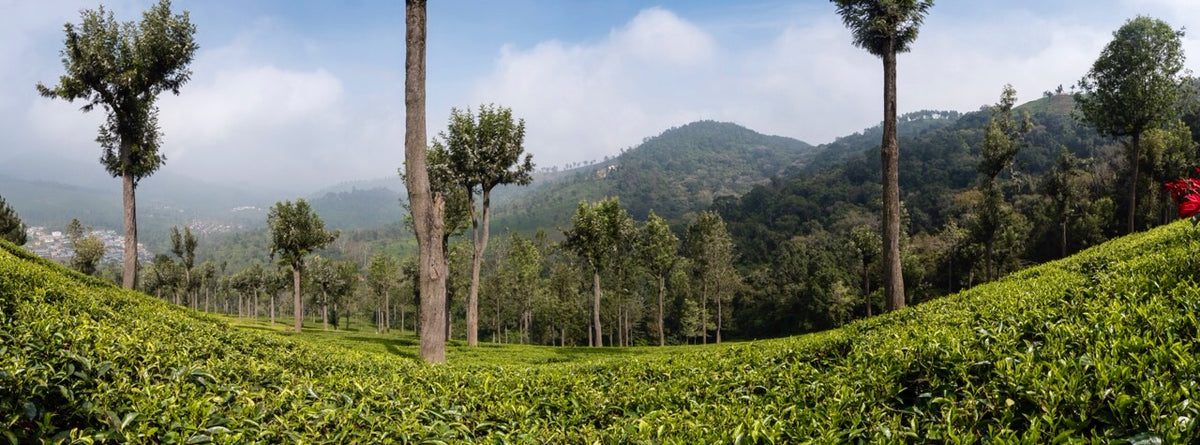
Sikkim tea comes from a handful of gardens in Sikkim, a small Himalayan state in northeast India that borders Nepal, Tibet, Bhutan and the Darjeeling hills of West Bengal; by far the best known is the Temi Tea Garden in Namchi, South Sikkim.Read more
For most of its history Temi was the state’s only tea garden, so when people say “Sikkim tea” or “Temi tea,” they usually mean the same thing. As late as 2020 we described Temi as a garden that, until recently, “was known to be the only tea garden in all of Sikkim.” Our own tea sleeves still called it the “only tea plantation in Sikkim” in 2022, a line that small newer gardens such as Bermiok have since made out of date.
Sikkim sits directly north of Darjeeling, and its gardens share the same Himalayan weather: cool nights, misty mornings and slow growth that builds aroma in the leaf. The old Tea 101 post called Temi’s teas “well-known for their rich aroma and delicate taste.”
Temi lies about 116 km from our tasting and packing facility in Siliguri, which is why its teas reach us within days of being made. Our 2025 summer lot, for example, was picked and made on 10 and 11 July and reached us on 12 July. We buy from the garden directly, and have done since at least November 2014.
The people who work Sikkim’s gardens come largely from the Lepcha and Bhutia communities. Every year they celebrate Pang Lhabsol, Sikkim’s most auspicious festival, which honors Mount Kanchenjunga as a guardian deity; many believe it also protects the remote plantations that grow beneath it. Lepchas believe their earliest ancestors were created from the snows on Kanchenjunga’s peak.

To see how Sikkim fits alongside Assam, Darjeeling, the Nilgiris and India’s smaller regions, start with our guide to Indian tea regions, or go back to Indian tea: the complete guide.
Temi tea garden: how did Sikkim’s first tea estate begin?
The Temi tea garden began in 1969, when the king of Sikkim, Palden Thondup Namgyal, asked his friend Teddy Young, a British tea planter in Darjeeling, to build a tea garden that would give his people work and a new industry.Read more
Is Sikkim tea organic?
Yes. Temi has farmed organically since 2005, and Sikkim as a whole has been declared a fully organic state, so its tea is grown without synthetic fertilizers or pesticides.Read more
Temi made the switch in April 2005, following the guidelines of the Institute of Marketology (IMO) of Switzerland. Conversion is not instant. Our 2013 estate notes record that Temi was fully organic by April 2008, three years after it began.
Sikkim was named the world’s first organic state and received the UN Future Policy Gold Award in 2018, an honor sometimes called the “Oscar for best policies.” As we wrote at the time, when a whole state is organic, the soil around the garden is cared for too, not just the tea bushes.
Sikkim’s newer gardens follow the same rule: Bermiok, the boutique garden in the highlands of Sikkim, says it is certified by the state’s Sikkim Organic Mission and recognized by the Tea Board.
What the label on your tea says
On a label, “organic” is a legal claim that needs a certificate, and each lot is certified on its own. Our Sikkim Temi Summer Chinary Black is listed as USDA Organic, and it also carries the Ethical Tea Partnership mark. Our 2022 sleeve for the summer muscatel lot called Temi “certified Organic and a laurelled tea estate.”
We make no organic claim for a lot unless its own certificate says so, which is why the spring tea is not labeled organic here. To understand what the different labels mean, read Tea certifications explained.
What does Sikkim tea taste like?
Sikkim tea from Temi is a medium-bodied black tea with ripe stone fruit, peach and a light musky depth in summer, and a brighter, fruity, spring-green character in spring.Read more
Our Masterclass sums up the style: Sikkim teas are “neither as brisk as Assam nor as light as Darjeeling,” a balance of strength and aroma. The body comes from the way Temi makes its tea. When we tasted the spring 2024 teas, our team noted that “Temi from Sikkim impressed us with its traditional manufacturing techniques, producing a cup with a substantial body, distinct from typical Spring Darjeeling.”
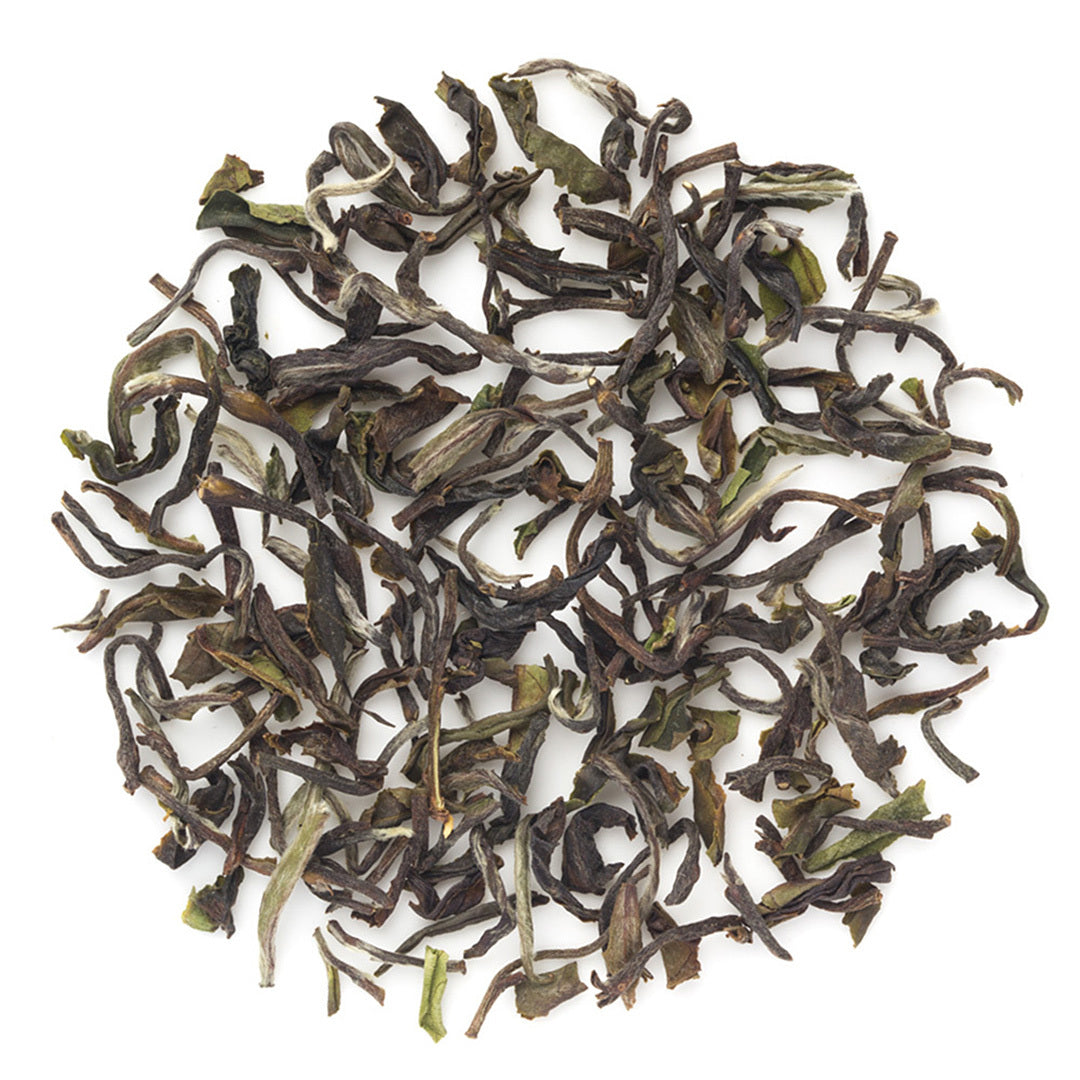
Like Darjeeling, Temi changes with the season. Our current summer tea is made from Chinary bushes (the small-leafed China variety of the tea plant) and graded FTGFOP1, a whole-leaf grade with plenty of tips (see Tea grades explained). Temi also makes an orthodox dust, a reminder that dust is not only a CTC grade. Temi grows clonal bushes too: our 2018 spring lot was an FTGFOP clonal, and in 2015 we wrote about the organic clonal teas from Temi. These notes come from our tasting team’s product notes:
| Tea | Cup | Tasting notes |
|---|---|---|
| Temi Spring Chinary Black (first flush) | Honey | Stone fruit, white peach and light citrus on the nose; vibrant, fruity and spring-green in the cup |
| Temi Summer Chinary Black (second flush, 2025) | Amber | Stone fruit and peach, subtle muskiness and cedar, finishing on red berries |
| Temi Summer Muscatel Black (2022 lot) | Bright amber | Nectarine, apricot, cedar and light musk; a burst of vanilla balancing Muscat grape and raisin |
| Temi summer flush (2020) | Amber | Mellow, smooth and toasty: “summer in a cup” |
Our team describes the summer tea in layers: a top note of stone fruit, a heart of peach and a base of red berries. The 2022 sleeve gave the taster’s notes as an aroma of nectarines, apricot and cedar, and a medium-bodied, fruity palate with a hint of musk.
Some years, Temi’s summer tea has been sold as a muscatel, the grape-like character prized in Darjeeling’s summer teas; in 2021 we called it a “rare Temi Summer Muscatel,” medium-bodied and “beaming with fruity aromas.” Our Darjeeling brief goes further: Temi “can compete with Darjeeling in this exclusive field of Muscatels,” with “vibrant notes of blackcurrants and peach” alongside white almonds and fragrant cedar. More on the seasons in What is first flush tea? and Second flush tea and muscatel, and on the bush in Chinary, Assam and clonal tea plants.

When is Temi tea picked?
Temi’s spring tea is picked from around early April and its summer tea from mid-June into July, a little later than the same flushes in Darjeeling.Read more
Our 2018 spring lot was invoiced on 4 April 2018, and that year’s summer lot reached us on 11 June. The 2022 summer lot was picked on 4 July 2022, and the 2025 summer lot was picked and made on 10 and 11 July 2025, reaching our facility on 12 July. The current spring lot arrived with us on 29 April 2024.
So Temi’s summer tea tends to come a little later than Darjeeling’s, whose second flush runs from late May into June. Its spring tea also comes toward the end of Darjeeling’s first flush, which runs from March to mid-April. On the dates we have, a Temi spring tea reaches our tasting bench as the last spring Darjeelings do, and the summer tea arrives once Darjeeling’s short muscatel window has closed.
Sikkim makes autumn teas too: we offered an autumn black from Bermiok in 2017, and our tasters sampled fresh autumn cups there in November 2021. That autumn trip took our team across Darjeeling and Sikkim. Autumn teas are covered in Autumn flush tea; for the whole tea year, see Seasons of tea.
Bermiok and Sikkim’s newer tea gardens
Temi is no longer alone: smaller boutique gardens have been planted in Sikkim since the turn of the century, and the best known of them is Bermiok, a small organic garden whose first bushes went in during 2002 and 2003.Read more
Sikkim tea vs Darjeeling tea: what’s the difference?
Sikkim and Darjeeling teas grow side by side in the same Himalayan belt and are made in a similar way, but they are different regions: only tea from Darjeeling’s registered gardens can be sold as Darjeeling, and Temi’s teas tend to be a little rounder and fuller.Read more
The two are neighbors with a shared history: it was the ruler of Sikkim who granted Darjeeling to the British in 1835, and the planter who built Temi came from Darjeeling.
| Sikkim (Temi) | Darjeeling | |
|---|---|---|
| Gardens | One large state-owned garden, plus a few small newer ones | 87 registered under the GI tag |
| Origins | Founded 1969 by the Government of Sikkim, at the king’s wish | Colonial gardens from the 1850s |
| Farming | Organic; the whole state is organic | Mix of organic and conventional gardens |
| Altitude | Nearly 5,000 ft at Temi | About 2,000 to 6,600 ft |
| Bush | Chinary in our Temi summer tea; Temi also grows clonals | Chinary and clonals |
| Cup | Medium body; stone fruit, peach, light musk | Lighter; floral in spring, muscatel in summer |
| Shop | Temi Spring Chinary | All Darjeeling teas |
The difference shows in the cup more than on the map. Our 2013 notes on a Temi second flush said it “represents the traditional second flush teas of Darjeeling but with an added unique taste that can make tea connoisseurs clearly discern it as a Temi tea,” with “a clean cup and a sweet after taste.” The spring tea shows it too: in 2024 our tasters found Temi’s spring cup more substantial than a typical spring Darjeeling.
If you like a summer Darjeeling, you will very likely enjoy Temi, and the other way round. Tasting them side by side is the best way to learn the difference: a Temi summer tea next to a Darjeeling muscatel from the same season. Our Darjeeling tea guide covers the hills next door, and Nepal tea covers the gardens on Darjeeling’s other side.
How to brew Sikkim tea
Brew Temi spring tea at 85–90°C for 3 to 4 minutes and Temi summer tea at 90–95°C for 3 to 5 minutes, using about 2 to 2.5 g of leaf (a heaped teaspoon) per 250 ml (8 oz) cup, and drink it without milk.Read more
These are the same settings we use for Darjeeling of the same flush, because Temi’s teas are made in the same orthodox way from similar bushes. The spring leaf is young and tender, so it gets slightly cooler water and a shorter steep. The summer leaf is fuller and darker, and takes a little more heat and time to open up its peach and musk.
- Heat fresh water and let it cool from the boil to the right temperature (185–195°F for spring tea, 195–203°F for summer tea).
- Measure the leaf: about 2 to 2.5 g per 250 ml cup.
- Steep for 3 to 4 minutes (spring) or 3 to 5 minutes (summer), then strain all the liquor off the leaf.
- Taste it plain first. Our product notes suggest honey if you like it sweeter; the spring tea can also take a little lemon or sugar.
Temi’s summer tea is an evening tea in our notes, good on its own or with a cheese sandwich, buttered toast, croissants or pancakes. Store the leaf airtight, away from light, heat, moisture and strong smells. For every type and flush, see How to brew loose leaf tea.
Which Sikkim tea should you try first?
Start with the Temi summer tea: it is Sikkim’s signature cup, organic, fruity and medium-bodied, and the easiest way to taste what makes the region different.
If you prefer lighter, brighter teas, try the Temi spring tea next, or brew the two side by side to see how much a season changes one garden’s tea. A 100 g pack of the summer tea makes about 40 cups, so there is enough to brew it several ways.
To learn the difference between Sikkim and Darjeeling, pair the Temi summer tea with a Darjeeling summer muscatel such as Giddapahar, and the Temi spring tea with a Darjeeling spring Chinary such as Thurbo. Brew each pair with the same leaf, water and time, and taste them while they are still warm.
Sikkim tea FAQ
Is Temi tea organic?
Yes. The Temi tea garden switched to organic farming in 2005 under the standards of Switzerland’s Institute of Marketology (IMO), and Sikkim is now a fully organic state. Our Temi Summer Chinary Black is listed as USDA Organic.
Is Sikkim tea the same as Darjeeling tea?
No. The two regions are neighbors and grow similar Chinary teas in a similar climate, but only tea from Darjeeling’s registered gardens can be sold as Darjeeling. Sikkim tea from Temi is usually a little rounder and fuller than Darjeeling, though still far lighter than Assam.
How many tea gardens are there in Sikkim?
Very few. For decades Temi was the only tea garden in Sikkim, and it is still the largest and oldest. A few small boutique gardens have been planted since, such as Bermiok, a small organic garden planted in 2002 and 2003 that has made tea commercially since 2008.
Who started the Temi tea garden?
The king of Sikkim, Palden Thondup Namgyal, wanted an industry that would give his people work. In 1969 he invited his friend Teddy Young, a British planter from Darjeeling, to build it, and the Government of Sikkim established the garden.
Where is the Temi tea garden?
Temi is in Namchi, South Sikkim, on Himalayan slopes at nearly 5,000 feet. It is about 116 km from our facility in Siliguri.
Can I add milk to Sikkim tea?
You can, but we recommend drinking it plain, like a Darjeeling, so the fruit and aroma come through. A little honey suits the summer tea if you like it sweeter.
Keep reading
Sources
- Teabox Tea 101: Sikkim’s Temi Tea Garden: royal with a British connection
- Teabox blog (Still Steeping): A Day in the Life: Kalpana from Bermiok (Mohona Banerjee, 2021), Teatime, Talktime (feat. Anjum Hasan and Zac O’Yeah) (2017), An Indian Summer in a Cup (2015)
- Teabox product data and tasting notes: Sikkim Temi Summer Chinary Black (2022 and 2025 lots), Sikkim Temi Spring Chinary Black (2024 lot), Darjeeling Giddapahar Summer Muscatel Black, Darjeeling Thurbo Spring Chinary Black
- Teabox Drive: Teabox internal document, 2013; Teabox internal document, 2013; Teabox internal document, 2022; Teabox internal document, 2022; Teabox internal document; Teabox internal document; Teabox internal document, 2020; Teabox internal document, 2023; Teabox internal document, 2017; Teabox internal document, 2018; Teabox internal document, 2017; photos as credited
- Teabox purchase and supplier records (internal, not linked): Temi purchase form, November 2014; Temi invoices, April and June 2018; estate supplier sheet, 2019
- Teabox on Instagram (@teabox.tea): Temi visit, Jul 2017, Bermiok autumn black, Oct 2017, Bermiok, Apr 2018, Bermiok spring oolong, May 2019, organic Sikkim and Temi, Jul 2019, Temi founded 1969, Jun 2020, Bermiok founding, Jun 2020, Bermiok elevation, Jun 2020, Temi 440 acres, Aug 2020, Temi summer flush, Aug 2020, Bermiok spring black, May 2021, how Temi began, Aug 2021, Pang Lhabsol, Sep 2021, autumn tasting trip, Nov 2021, Sikkim tea profile, Feb 2022
- Kausshal Dugarr on X (@Teapreneur): Meet the Growers with Temi, Jun 2020, Meet the Growers with Bermiok, Jun 2020, Temi on The Late Show, Jul 2021
- Teabox on YouTube: Masterclass: Sikkim, From The Source: Temi Tea Estate, From The Source: Bermiok Tea Estate

Leave a comment
All comments are moderated before being published.
This site is protected by hCaptcha and the hCaptcha Privacy Policy and Terms of Service apply.