


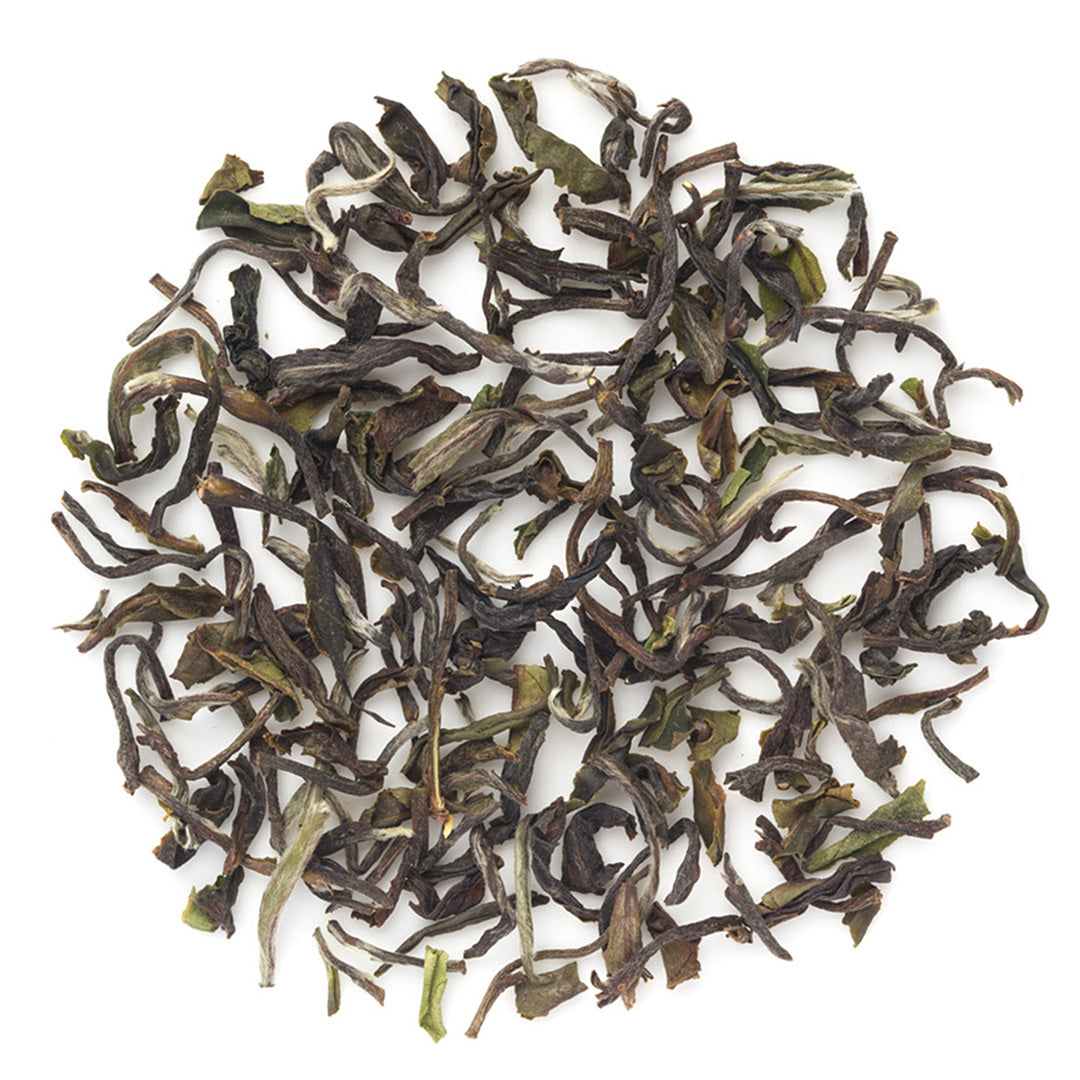
Unlike the colonial gardens of Darjeeling, Assam and the Nilgiris, Temi was the idea of a Himalayan king, and it was set up by the Government of Sikkim. It is still the state’s largest and oldest tea garden, and the one most people mean when they say “Sikkim tea.” This page tells its story, from the king and the planter he invited in 1969 to the lots we buy from Temi today.
How did the Temi tea garden begin?
The Temi tea garden began in 1969, when the king of Sikkim, Palden Thondup Namgyal, asked his friend Teddy Young, a British tea planter in Darjeeling, to build a tea garden that would give his people work and a new industry.Read more
The king foresaw tea as an industry that would provide employment to his people.
Sikkim was then still a kingdom of its own; it became part of the Indian republic only in 1975. In the decade before Temi was planted, the kingdom had played host to many of the Tibetans who followed the 14th Dalai Lama into exile in 1959.
Teddy Young, remembered as “the last of the British ‘sahibs,’” spent eight years creating the garden that is now famous as Temi.
| When | What happened at Temi |
|---|---|
| 1959 | The 14th Dalai Lama flees Tibet; Sikkim, then a separate kingdom, hosts many Tibetan refugees. |
| 1969 | The king of Sikkim invites Teddy Young to plant a tea garden; the Government of Sikkim establishes Temi. |
| 1975 | Sikkim becomes a state of India. |
| 1994 and 1995 | Temi wins the Tea Board’s All India Quality Award two years running. |
| 1997–98 | A record crop of 116,000 kg of tea. |
| 2005 | Temi switches to organic farming under the standards of the Institute of Marketology (IMO), Switzerland. |
| 2008 | Temi is fully organic, three years after conversion began. |
| 2014 | Teabox is buying Temi’s tea direct from the garden by November. |
| 2018 | Sikkim, by then the world’s first fully organic state, wins the UN Future Policy Gold Award. |
| 2021 | A Temi tea from Teabox appears on The Late Show with Stephen Colbert in New York. |
For how Temi’s organic farming works today, and what the label on each lot means, see Is Sikkim tea organic? on our main Sikkim guide.
How big is Temi, and how much tea does it make?
Today Temi covers roughly 440 acres of hillside in Namchi, South Sikkim, with its tea picked at nearly 5,000 feet, and it makes about 100 tonnes of tea a year.Read more
It is the largest and oldest tea garden in Sikkim. We gave its size as 440 acres in 2020, when we called it a certified organic estate. Our product pages put it at over 435 acres and at 177 hectares, which is about 437 acres.
Our 2013 notes on the estate recorded “about 100 MT tea annually,” made by 406 workers and 43 staff. Our 2019 supplier records give the same output, about 0.1 million kg a year, and about 550 workers.
That makes Temi large by hill standards but small next to the plains. A single big Assam garden can make 2 million kg in a year, twenty times Temi’s crop, while Bermiok, Sikkim’s best-known newer garden, makes about 1,500 kg. See Bermiok, Sikkim’s boutique tea garden.
Temi’s quality has long been recognized. Our 2013 notes record that it won the Tea Board’s “All India Quality Award” in 1994 and 1995, and that its tea “fetches one of the highest prices at the Kolkata Tea Auction.”
Who runs Temi?
Temi is a Government of Sikkim undertaking, not a private company’s garden. In 2019 its managing director, Mrinalini Srivastava, told the estate’s story for Teabox, and in 2020 she joined our founder for a live “Meet the Growers” session, where he introduced her as an officer of the Indian Police Service and “a trailblazer in tea.”

How long has Teabox bought tea from Temi?
We have bought Temi’s tea direct from the garden since at least November 2014, and our team has visited and filmed the estate in spring, summer and autumn.Read more
Our earliest purchase paper from Temi is dated 3 November 2014. Because Temi is only about 116 km from our facility in Siliguri, its teas reach us within days of being made. Our training material puts the usual route through auctions, exporters and wholesalers at four to six months from factory to cup.
Our visits to Temi
- July 2017: our team visited the estate in the summer season.
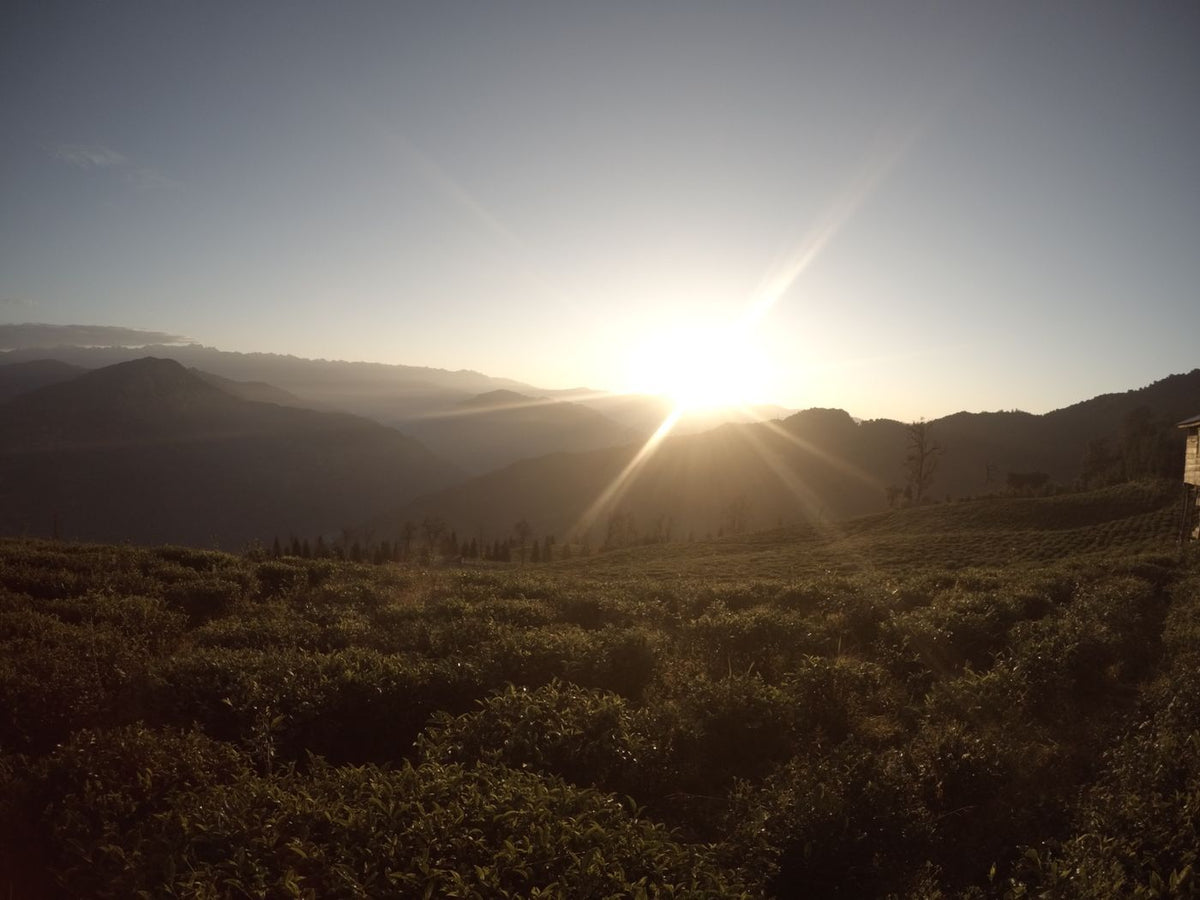
- November 2017: we returned with a film crew; the sunrise at the top of this page was shot on 4 November.
- June 2018: we photographed the second flush, the summer harvest that makes Temi’s best-known tea.
The lots we have chosen
In April 2018 we prepared a launch of new teas from Temi, Mim in Darjeeling and Bermiok in Sikkim. That spring’s Temi was an FTGFOP clonal, invoiced on 4 April, and the summer lot that followed was an FTGFOP1 that reached us on 11 June. Our current summer tea is from Chinary bushes; the 2025 lot was picked and made on 10 and 11 July.
In spring 2024 our tasters singled Temi out: it “impressed us with its traditional manufacturing techniques, producing a cup with a substantial body, distinct from typical Spring Darjeeling.” For tasting notes on every lot, see What does Sikkim tea taste like?
Temi in other people’s cups
Readers of our blog met Temi in 2017, when the novelist Anjum Hasan brewed it for the writer Zac O’Yeah as “a good, strong tea for waking up,” and said a poet friend “considers Temi among the best teas he’s had.” Read the conversation in Teatime, Talktime (feat. Anjum Hasan and Zac O’Yeah).
When Temi tea reached a late-night television desk in Manhattan in 2021, our founder, Kausshal Dugarr, said he was “immensely excited to see Indian Teas reach every corner of this world,” all the way “from the Himalayan slopes in Temi Sikkim,” and called it one of his own favorites.
Keep reading
Sources
- Teabox Tea 101: Sikkim’s Temi Tea Garden: royal with a British connection
- Teabox blog (Still Steeping): A Day in the Life: Kalpana from Bermiok (Mohona Banerjee, 2021), Teatime, Talktime (feat. Anjum Hasan and Zac O’Yeah) (2017), An Indian Summer in a Cup (2015)
- Teabox product data and tasting notes: Sikkim Temi Summer Chinary Black (2022 and 2025 lots), Sikkim Temi Spring Chinary Black (2024 lot), Darjeeling Giddapahar Summer Muscatel Black, Darjeeling Thurbo Spring Chinary Black
- Teabox Drive: Teabox internal document, 2013; Teabox internal document, 2013; Teabox internal document, 2022; Teabox internal document, 2022; Teabox internal document; Teabox internal document; Teabox internal document, 2020; Teabox internal document, 2023; Teabox internal document, 2017; Teabox internal document, 2018; Teabox internal document, 2017; photos as credited
- Teabox purchase and supplier records (internal, not linked): Temi purchase form, November 2014; Temi invoices, April and June 2018; estate supplier sheet, 2019
- Teabox on Instagram (@teabox.tea): Temi visit, Jul 2017, Bermiok autumn black, Oct 2017, Bermiok, Apr 2018, Bermiok spring oolong, May 2019, organic Sikkim and Temi, Jul 2019, Temi founded 1969, Jun 2020, Bermiok founding, Jun 2020, Bermiok elevation, Jun 2020, Temi 440 acres, Aug 2020, Temi summer flush, Aug 2020, Bermiok spring black, May 2021, how Temi began, Aug 2021, Pang Lhabsol, Sep 2021, autumn tasting trip, Nov 2021, Sikkim tea profile, Feb 2022
- Kausshal Dugarr on X (@Teapreneur): Meet the Growers with Temi, Jun 2020, Meet the Growers with Bermiok, Jun 2020, Temi on The Late Show, Jul 2021
- Teabox on YouTube: Masterclass: Sikkim, From The Source: Temi Tea Estate, From The Source: Bermiok Tea Estate

Leave a comment
All comments are moderated before being published.
This site is protected by hCaptcha and the hCaptcha Privacy Policy and Terms of Service apply.