


Darjeeling has 87 registered gardens; the most famous include Castleton, Margaret’s Hope, Jungpana, Goomtee, Giddapahar, Makaibari, Namring, Okayti, Thurbo, Seeyok, Badamtam, Puttabong and Glenburn. About 25 of them lie in the Kurseong valley alone. Here are the gardens we know best, from the founding years and altitudes to the people who make the tea.
Which are the most famous Darjeeling tea estates?
The gardens most often named as Darjeeling’s best are Castleton, Margaret’s Hope, Jungpana, Goomtee and Giddapahar in the Kurseong valley, with Namring, Badamtam, Seeyok, Okayti, Thurbo, Puttabong, Makaibari and Glenburn close behind.Read more
Kurseong’s name is usually traced to the Lepcha for “land of the white orchid.” Our 2018 training manual named Castleton, Jungpana, Margaret’s Hope, Glenburn and Mim as the best gardens to know. Peter Keen, writing a beginner’s guide for us, picked Castleton, Goomtee, Puttabong, Margaret’s Hope, Thurbo, Makaibari and Giddapahar among the Darjeelings to try.
| Estate | Valley | Altitude | Founded | Known for |
|---|---|---|---|---|
| Castleton | Kurseong | 1,000–1,830 m | 1885 | Heritage Chinary; the benchmark muscatel; first Darjeeling garden with ISO 9002 |
| Margaret’s Hope | Kurseong | 1,070–1,830 m | c. 1864 | About 90% Chinary, some bushes 100 years old; Moonlight whites |
| Jungpana | Kurseong | 730–1,860 m | 1899 | Summer muscatels; reached up hundreds of steps |
| Goomtee | Kurseong | 910–1,680 m | 1899 | Vintage Chinary on 225 hectares; muscatels |
| Giddapahar | Kurseong | 1,370–1,585 m | 1881 | Old-growth Chinary; the Shaw family, four generations |
| Makaibari | Kurseong | – | 1852 | Over half the estate kept as forest |
| Okayti | Mirik | 1,220–1,890 m | Early 1870s | Elegant spring teas |
| Thurbo | Mirik | 980–1,890 m | 1872 | China and clonal bushes between the Mechi and Rangbang rivers |
| Seeyok | Mirik | 910–1,830 m | 1869 | Organic since 1994; biodynamic; moonlight plucking |
| Badamtam | Lebong | About 1,460 m | 1858 | Moonlight white teas |
| Puttabong | Rangeet, by Sikkim | 600–1,980 m | 1852 | One of Darjeeling’s earliest gardens |
| Namring | Teesta | Above 1,700 m (upper) | 1855 | One of the largest gardens; AV2 clones; birthplace of Darjeeling oolong |
| Glenburn | Rangeet | – | 1859 | Heirloom China bushes; Moonshine oolong; a boutique hotel |


Castleton: the home of muscatel
Castleton, in the Kurseong valley, is the garden most closely tied to Darjeeling’s grape-scented muscatel, and about 70% of it is still old Chinary bushes.Read more
Planted by Dr Charles Graham in 1885 and once known as Kumseri, Castleton is named after a castle-like bungalow that overlooked the garden. About 70% of it is still Chinary, some bushes over 130 years old, with clones such as AV2 planted higher up, at up to 5,000 ft. Its sections carry local names that the estate has kept: Bhalu Khop (bear cave), Dhobitar (the washerman’s line) and Baseri (the graveyard). It was here, in the mid-1980s, that Arun Kumar Gomden is credited with naming a grape-scented summer tea “muscatel.”
The garden faces north and southwest across elevations of 2,500 to 5,000 ft, and covers about 250 hectares. A fourth section, Jim Basha, is the manager’s domain, and besides AV2 the clones include one called Seeyok 1240.
The record years
Gomden came to Castleton in 1984 to set up its new factory at Springside. A batch of orthodox Chinary he made there fetched a record Rs 583 a kg at auction; a week later the next batch fetched Rs 1,460, after Lipton and Brooke Bond bid against each other, and Lipton presented the tea to Emperor Hirohito of Japan. In 1992 the DJ-42 FTGFOP1 muscatel lot sold for Rs 13,001 a kg at the Calcutta auction, and in 2014 Castleton won a gold medal at the North American Tea Conference.
In our tasting room
Our 2017 notes on a Castleton Moonlight read: “Starts with hints of geranium, a well rounded cup and has some woody notes.” When our tasters debated a Castleton Spring Chinary in 2021, our founder, Kausshal Dugarr, found “a well-balanced cup with vibrant green attributes” and “a subtle sensation of roasted chestnuts.”
“If my plants will only let me make an x quantity of tea, I will not force more out of them. You have to respect the plant at the end of the day.”
Margaret’s Hope: a garden named for a daughter
Margaret’s Hope, founded around 1864 near Kurseong, is a large, mostly Chinary garden named after a manager’s daughter who never came back.Read more
The estate was once called Bada Rington. J. G. D. Cruickshank, its manager from 1896 to 1927, renamed it after his young daughter Margaret. She loved the garden and promised to return, but she died of a tropical illness on the ship home to England. Today the estate covers 586 hectares in three divisions, Margaret’s Hope, Dilaram and Maharani, and makes about 230,000 kg a year. In the estate’s 150th year, a spring batch was named after Purney Subba, a plucker of about 90 with more than 60 years’ service.
The three divisions sit at different heights: Margaret’s Hope at about 915 to 1,830 m, Dilaram by the river at 762 to 1,951 m, and Maharani at 1,066 to 1,358 m; the factory sign reads “4,590 feet above sea level.” About 90% of the bushes are Chinary, and the rest are clones such as AV2 and Takdah 7-8, which produces the most tips. Some of its Chinary plants are 100 years old and now count as heritage varieties.
“We know which plants to pluck, because that part of the estate will emit a particular kind of fragrance,” its manager told us. An assistant manager at Maharani, Arun Gurung, put the appeal of old bushes this way: “With a good chinary you never know what to expect. It surprises you.” Our tasters described a 2017 Margaret’s Hope Moonlight as having “a distinct AV2 character with hints of jasmine” and “a very smooth cup.”
The estate also keeps Bhanjyang, or Salamander, Lake, dug in 1947 by its then manager, L. Helegon; it was abandoned in 1995 and revived in 2003 for the salamanders that live there.

Jungpana: water for a dying man
Jungpana is a remote Kurseong garden, founded in 1899, whose factory can still be reached only on foot, and whose name comes from a local legend.Read more
Local legend says a Nepali nobleman named Jung, fatally wounded by a leopard, asked for paani (water) with his last breath. “That’s how Jungpana got its name,” says Shantanu Kejriwal, whose family has owned the garden since 1956. There is still no road to the factory: everything is carried up hundreds of steps from the stream below, and there is no guest bungalow, so buyers stay at neighboring Goomtee and climb. In 2013, Kolkata’s The Telegraph ran the front-page headline “A new champion rises in Darjeeling” as Jungpana pulled past Castleton.
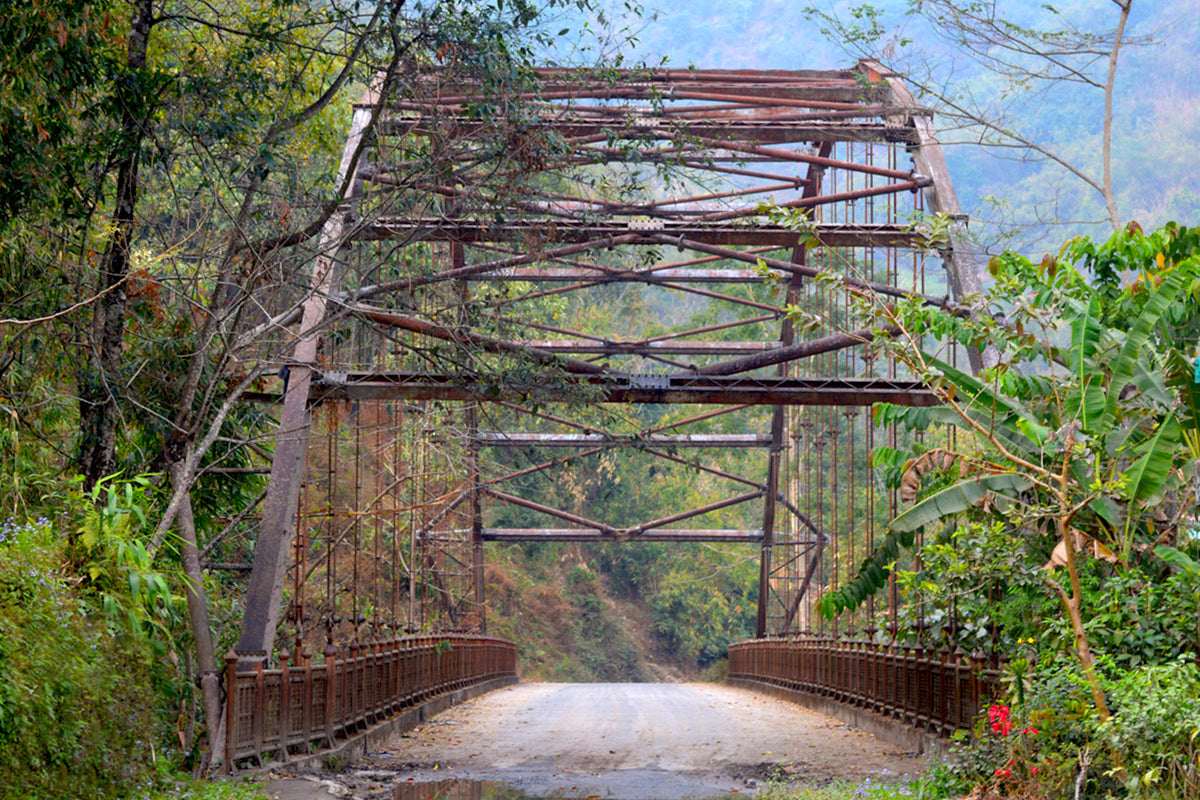
A mule track was once the only way in. The owners later built a road from Mahanadi down to the Bhote Khola, the stream that borders the estate, and a wooden bridge carries you across; from there it is a steep climb up steps cut into the rock face. The old log bridge over the waterfall has since been replaced by a concrete one.
At the top of the 1,300-foot climb, by the factory gate, stands a small Hanuman temple, a welcome place to rest. The garden covers about 148 hectares, and its Malderam division is full of old Chinary bushes.
Its pluckers measure a year by the weather. When we sat with them in May 2015, they said the rains of 2014 had been bad, “Not a good harvest,” and that 2015 was “Good.” That same year a Korean tearoom owner from Seoul bought about 9 kg of Jungpana’s second flush after reading a sample report.
Goomtee: old Chinary and a famous tasting coin
Goomtee is a small Kurseong garden, first planted in 1899, prized for the muscatels from its old Chinary sections and for its tasting room.Read more
A British pioneer, Henry Lennox, first planted tea here in 1899. Another well-known planter, G. W. O’Brien, took it over soon after, and after the Second World War the ruling Rana family of Nepal bought it from him; its later management was led by B. N. Mudgal. Its Muscatel Valley section, above 4,000 ft, is made up of Chinary bushes more than a century old. Even the season’s first plucking in 2018 came from bushes over 50 years old.
Goomtee makes about 90,000 kg of tea a year, and every lot is valued from samples weighed against a 25-paisa coin issued in 1974.
Its pluckers are paid by weight, so their bags are weighed twice a day. When we visited in 2015, the supervisor, known to everyone as Manju didi, recorded every weight in a plucking log book; she had risen from clerk to supervisor in eight years. In 2022, an early summer, Goomtee was one of the gardens, with Castleton, Giddapahar and Singbulli, that made outstanding summer teas with vibrant fruity flavors.
Namring, Badamtam and Seeyok
Namring is Darjeeling’s largest garden and the birthplace of its oolong, Badamtam is one of its oldest and best known for moonlight whites, and Seeyok is a biodynamic garden famous for plucking by moonlight.Read more
Namring
Namring, in the Teesta valley, was founded in 1855. A 2015 story called it Darjeeling’s largest by area and production, and it is there that Sumon Majumder first experimented with a “Formosa oolong,” helped by Karel Theima of Rotterdam Tea Trade; the first lot went to Haelssen and Lyon of Hamburg. Its gardens run from about 3,000 ft to a highest point of 5,500 ft, with China, clonal and Assam hybrid bushes. Upper Namring was one of the first gardens in India to make Chinary teas, and the Poddar family has owned Namring since 1973, when the present owner’s grandfather bought it from Lord Inchcape.
Badamtam
Badamtam, in the Lebong valley, was first planted in 1858 by a British planter, Christine Barnes. A suspension bridge over the Rangeet links the garden to Sikkim, and a 14-foot Buddha by the artist Meera Mukherjee stands on the estate. Our 2023 Moonlight white came from section 9 of its Lamas division, at about 4,500 ft, picked by a small group of specialist pluckers.
Seeyok
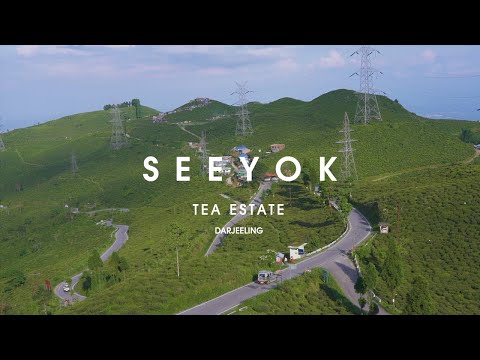
Seeyok, near the Nepal border in Mirik, is run by the Mohan family and turned to organic farming in 1994. Once a year, at full moon, about 50 women pluck a select patch of its best section by lantern light, to an old chant; J. P. Gurung, one of Darjeeling’s most senior tea professionals, explained the custom to us. Our June 2021 Seeyok batch came from sections 9YT, 10YT and 11YT, from bushes about 100 years old, and our tasters found Muscat grape, Mirabelle plum, cedar, chestnut and black currant.


Giddapahar, Makaibari, Glenburn and other famous gardens
The other names worth knowing are Giddapahar, a small family garden; Makaibari, one of the oldest; Glenburn, a garden with a hotel; and Mim, Okayti, Thurbo, Puttabong and Singbulli.Read more
- Giddapahar: the Shaw family has worked this small garden since 1881, at 4,500 to 5,200 ft; it covers about 80 hectares. Our 2017 notes found its dry leaf “white chocolate, floral & spicy.”
- Makaibari: founded in 1852, with over half the estate kept as forest; the product page credits the planter Rajah Banerjee with its organic and biodynamic work, and says the estate is now run by the Luxmi Group.
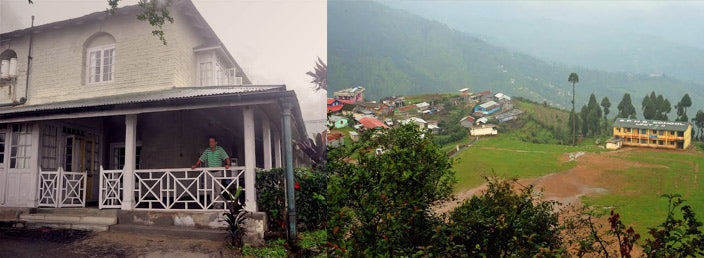
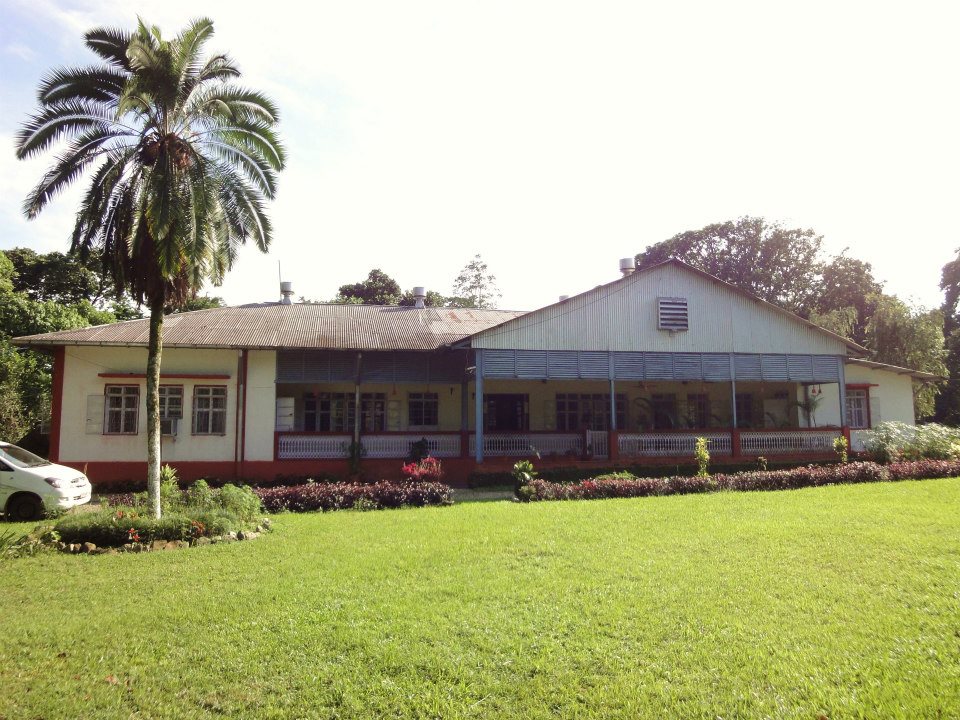
- Glenburn: established in 1859 by a Scottish tea company between the Rangeet and Rung Dung rivers, and managed today by the Prakash family. Before the family bought it, it belonged to a tea company with 52 estates, and a new manager arrived every three years.
- Mim: the only Darjeeling garden owned by the Government of India, at about 5,000 ft, mostly Chinary. A hailstorm over Mim in 2018 gave a spring white flavors we had never tasted before.
- Okayti: in Mirik, about 45 km from Darjeeling town, on the Mechi river at the Nepal border; its factory dates from 1888.
- Puttabong: founded in 1852 under Dr Archibald Campbell, near the Rangeet valley on the Sikkim border, at about 2,000 to 6,500 ft.
- Singbulli: established in 1924 in Mirik, at 2,500 to 4,500 ft, planted with AV2 clonals; our autumn lot was an exclusive batch made for us.
- Samabeong: at about 6,000 ft, one of the highest and most remote gardens, established in 1882 next to the Neora Valley forests.
For the region as a whole, see Darjeeling tea; for how these gardens taste from spring to summer, see Spring vs summer Darjeeling, estate by estate.
Keep reading
Sources
- Teabox blog estate visits: Castleton, Margaret’s Hope, Jungpana, Goomtee, Glenburn, Avongrove, Dikom, Craigmore, TANTEA, the Singpho village and Nilgiri estate bungalows (2014–2021)
- Teabox blog (Still Steeping): A Tryst with History (2020), The Beginner’s Guide to Choosing a Darjeeling (2017), Exploring Co-Existing Spaces: Wildlife and Tea (2021), God in the Tea Gardens (2015), Conversations from a tea garden (2015), Seoul Searching for Darjeeling Tea (2015)
- Teabox blog (Still Steeping): A balancing act in the Darjeeling tea gardens (2015), A Postcard from Darjeeling (2015), Meet the man who created the Darjeeling oolong (2015), A Full Moon Harvest: Farming Biodynamically (2021), The Glenburn Boutique Hotel, Darjeeling (2017)
- Teabox blog stories: Castleton and the mystery musk; The delight of Margaret’s Hope (2016); The legend of Jungpana (Creating flavour in mystical isolation, 2015)
- Teabox product estate descriptions and product data, 2026 season: Castleton China Spring, Giddapahar Spring, Makaibari Summer, Glenburn Moonshine, Mim Spring, Puttabong Spring, Singbulli Autumn, Badamtam Moonlight White, Seeyok Summer Muscatel
- Teabox Drive: Teabox internal document, 2020; Teabox internal document; Teabox internal document, 2017; Teabox internal document, 2023; Teabox internal document, 2018; photos as credited
- Teabox internal estate records (2019): founding years and areas only
- Teabox on Instagram (@teabox.tea): Kurseong, Mar 2021, Castleton tasting debate, Jun 2021, Margaret’s Hope legend, Jul 2020, Margaret’s Hope bushes, Jul 2020, Jungpana road and bridge, Nov 2017, Jungpana bridge, Apr 2019, Goomtee history, Aug 2020, Goomtee first plucking, Mar 2018, Namring, Feb 2016, Upper Namring, Mar 2021, Namring owners, Jun 2020, Badamtam Moonlight, Mar 2023, Mim white, Apr 2018
- Kausshal Dugarr on X (@Teapreneur): 2022 summer teas, Sep 2022
- Teabox on YouTube: From The Source and We Are In This Together films, linked where used

Leave a comment
All comments are moderated before being published.
This site is protected by hCaptcha and the hCaptcha Privacy Policy and Terms of Service apply.