


The pattern holds across Darjeeling: every garden’s spring tea is greener and brisker, and its summer tea darker and fruitier, but each garden keeps its own accent. We buy several gardens in both seasons, so we can show you the same estate twice, a few weeks apart. We start with Okayti, photographed the same way in spring and summer, then read across Margaret’s Hope, Giddapahar, Castleton and Jungpana.
Why compare Okayti’s spring and summer teas?
Okayti is the clearest way to see the difference, because we sell a spring and a summer tea from its Chinary bushes, photographed the same way.Read more
The garden sits in Darjeeling’s Mirik Valley; it was planted in the early 1870s and rises from 4,000 to 6,200 ft. It was first called Rangdoo; the story goes that when London auctioneers tasted its tea they simply said “OK,” and the new name stuck.
Our 2020 estate brief adds the setting: Okayti lies about 45 km from Darjeeling town, on the Mechi river at the Nepal border, and its factory dates from 1888. It is also one of the closest gardens to us, 43.4 km from our facility in Siliguri.
How far apart are the two picks?
Our launch sheet records the day each Okayti lot was picked and made, and the gap between the seasons changes every year:
- 2024: spring Chinary picked on 3 and 4 May, summer Chinary on 9 and 10 August, about fourteen weeks apart.
- 2025: spring picked on 29 and 30 May, summer on 22 and 23 August, about twelve weeks apart.
- 2026: spring picked on 12 and 13 May, summer on 17 and 18 July, about nine weeks apart.
These are late dates for a spring tea. Each spring the clonal, white and oolong teas reach us first, and the big Chinary black teas from the high gardens, Okayti among them, come last.
Okayti also has a clonal side. In spring 2024 it “surprised us with an exclusive batch brimming with notes of ripe lychee and mango, offering an intense aftertaste,” which we released in a new Signature Series. It completes the year with an autumn tea too: Okayti Autumn Chinary Black, picked on 11 and 12 December 2025.
Okayti spring vs summer: leaf, cup and taste
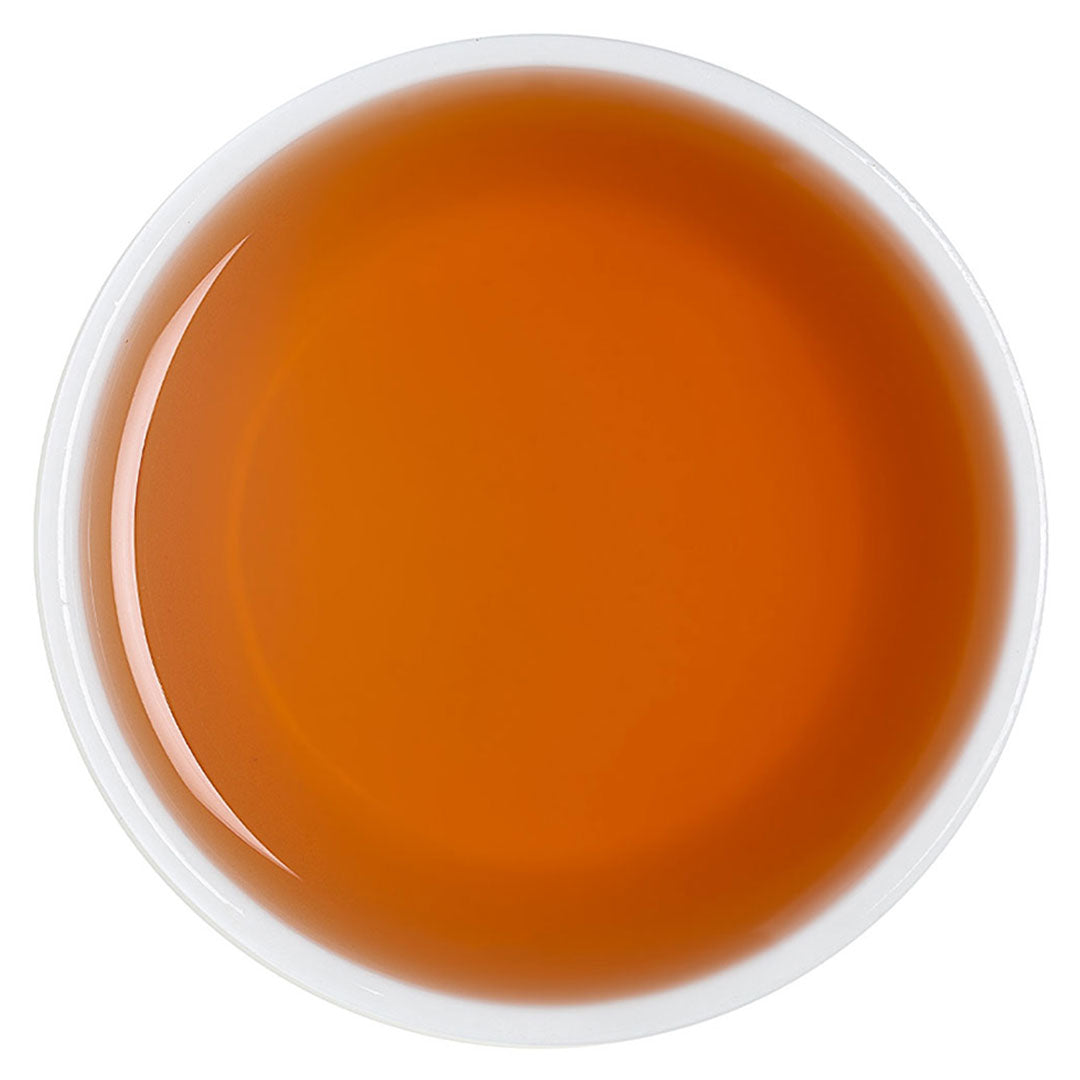
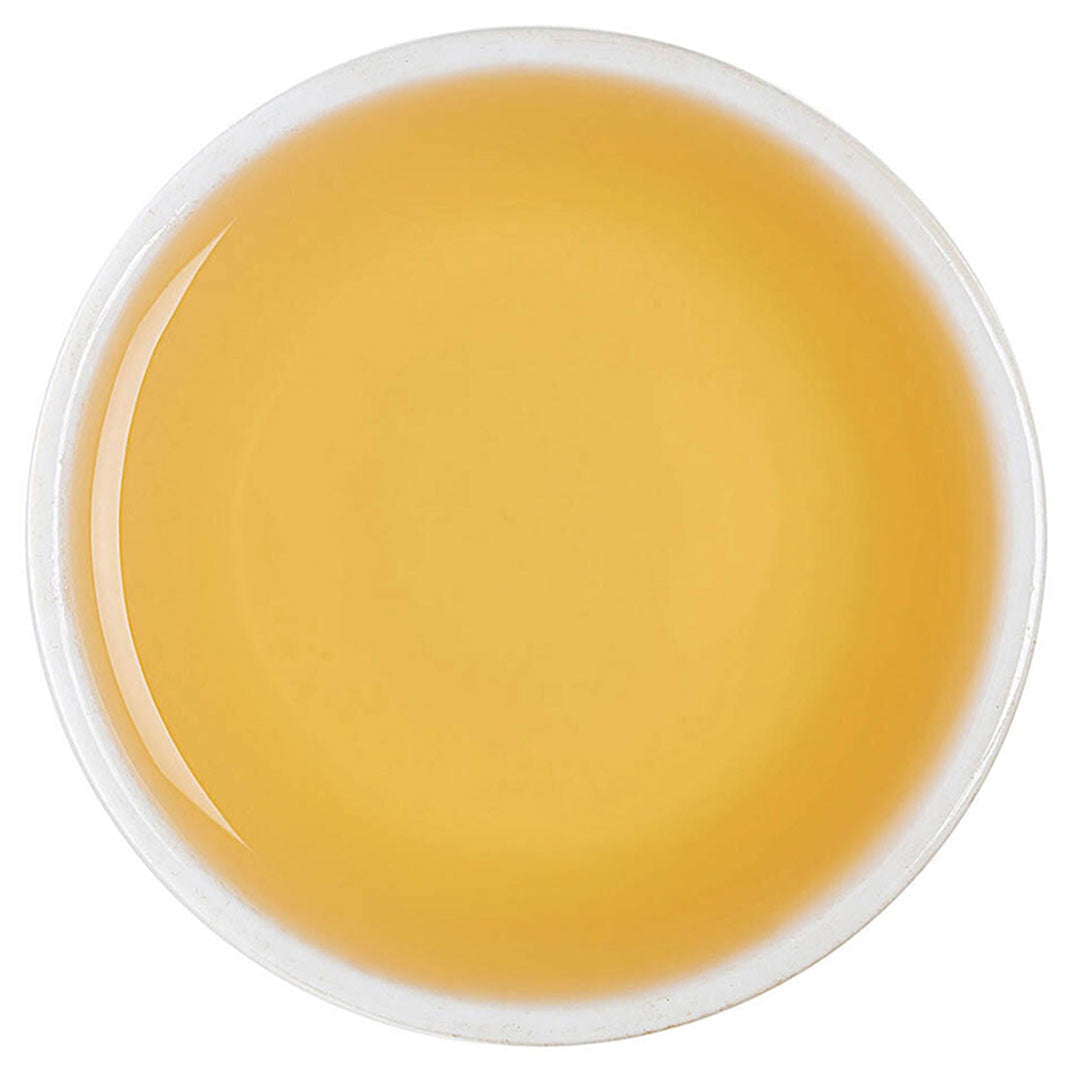
Side by side, the Okayti spring tea has greener, lightly rolled leaf and a pale gold cup, and the summer tea darker, wirier leaf and a deep amber cup.Read more
Dry leaf and cup


Look at the leaf before you taste. The spring tea is “still very green and only lightly rolled,” as our founder, Kausshal Dugarr, wrote in 2015, with silvery buds among the green and olive pieces. The summer leaf is browner and more evenly dark, with fewer silvery tips, because it has been oxidized further.
Infused leaf


The wet leaf tells the story most plainly. Brewed spring leaf opens out yellow-green, almost like a green tea. Brewed summer leaf is coppery brown, and its pieces are larger and broader. That color is the oxidation you then taste in the cup.
How they taste this year
Ripe mango and kiwi, honey-like sweetness, a fresh vegetal note like beetroot, a hint of cardamom and an earthy finish.
Peach, ripe stone fruit and dried apricot, gentle nuttiness, a whisper of cedar, and fruit that lingers.
Our tasters describe the spring cup as vibrant and fruit-forward with a smooth, rounded feel, and the summer cup as medium-bodied, smooth and “unmistakably Darjeeling.” Notice that the mango of spring has become peach and apricot by summer: the same garden’s fruit, ripened by a season.
Both are graded SFTGFOP1, the top whole-leaf grade (see Tea grades explained), so the grade tells you nothing about the season; the label word Spring or Summer does. Buy them together and you have a tasting flight: Okayti Spring Chinary Black and Okayti Summer Chinary Black.
How do other estates compare, spring vs summer?
The pattern holds in every garden we buy in both seasons: the spring tea is gold, citrusy and brisk, and the summer tea amber, riper and smoother.Read more
Three of the gardens we buy from in both seasons are in Kurseong, the valley that gives Darjeeling many of its most famous names. Around 25 of Darjeeling’s 87 estates are in Kurseong.
| Estate | Spring (first flush) | Summer (second flush) |
|---|---|---|
|
Margaret’s Hope Kurseong · 3,500–6,000 ft · mostly Chinary |
Gold. Wood apple, ripe mango, lemony briskness, fresh vegetal lift. Spring Chinary | Dark amber. Stone fruit with nectar-like sweetness, a soft musky depth, honey and nuts on the nose. Summer Chinary |
|
Giddapahar Kurseong · 4,500–5,200 ft · since 1881 |
Bright gold. Citrus peel and fresh greens, cooling cucumber, a lemongrass-like spice; crisp finish. Spring Chinary | Dark amber. Velvety; ripe plum, peach and sweet raisins, a touch of black cardamom, toasted nuts. Summer Chinary |
|
Castleton Kurseong · 1,000–1,830 m · heritage China bushes |
Bright gold. Brisk citrus, raw mango and wood apple, orchid and geranium florals. Spring Chinary | Deep amber. Ripe Muscat grape and stone fruit, honey, white chocolate, toasted nuts. Summer Muscatel |
Read across each row and the season shows itself. Mango, citrus and greens in spring become peach, plum and grape in summer; brisk becomes velvety; gold becomes amber.
Castleton is the extreme case. Its summer tea is a true muscatel, the style that was first made and named there in the mid-1980s. Read how that happened in Darjeeling muscatel tea, or in our interview with the muscatel master himself.
The spacing of the picks differs by garden, too. In 2026 Giddapahar’s spring Chinary was picked on 11 and 12 May and its summer Chinary less than four weeks later, on 8 and 9 June; Margaret’s Hope went from 19 and 20 May to 20 July, and Castleton from 1 June to 24 and 25 July.

What does each garden add to the pattern?
Each garden bends the spring and summer pattern in its own direction: Margaret’s Hope toward sweet florals, Giddapahar toward citrus and velvet, Castleton toward grape, and Jungpana toward plum and musk.Read more
Margaret’s Hope
About 90% of Margaret’s Hope is planted with Chinary bushes, some of them very old, with the rest in clonals such as AV2. In spring 2024 it “stood out with its lovely sweet-floral signature.” Our pairing suggestions show the shift in weight: the spring tea with “Fritters, cheese-based salads, tropical fruits and assorted cheeses,” the summer tea as “Ideal with a light snack of sandwiches and salads.”
Giddapahar
Our product pages describe Giddapahar’s spring tea as “bright and brisk, with citrusy liveliness,” and its summer tea as “rich and velvety, with layered notes of caramel, ripe peach, and chestnut.” The dry leaf alone shows the change: the spring tea is “lightly rolled, mix of olive and emerald-green leaves,” the summer tea “wiry, tightly rolled, blackish leaves with a grayish hue.”
Giddapahar’s summer tea has loyal fans. One customer in Australia wrote that she had bought it for at least four years and enjoys it black, adding that with “sweet and creamy treats, it brings up all the fragrant notes and flavor of the tea.”
Castleton
Castleton is about 70% Chinary. Its muscatels come from select Chinary sections that our 2019 notes put at about 100 to 130 years old.
Castleton also gives the cleanest same-bush comparison we have, in white tea. Of its two Moonlight whites, our notes say: “While both teas are made from the same prized AV2 clonal bushes, the summer flush brings a warmer, fruit-forward profile,” with notes like muskmelon and grape, “compared to the more delicate and floral character of spring.” The summer one is Castleton Moonlight Summer White.
Jungpana
Jungpana, with slopes from 2,400 to 6,100 feet, is one of the high gardens best known for second flush teas. In 2021 its spring clonal opened with “hyacinths and white orchids,” while its summer muscatel gave “Mirabelle plums and hints of musk, cherries, tart drupes, and blackcurrants.” Its spring tea this year, picked on 29 and 30 April 2026, is Jungpana Spring Chinary Black.
Keep reading
Sources
- Teabox Tea 101: Your complete guide to first flush and second flush teas; Your guide to summer teas
- Still Steeping, the Teabox blog: What’s the fuss about the first flush? (2015); An Indian Summer in a Cup (2015); Conversations from a tea garden (2015); A balancing act in the Darjeeling tea gardens (2015); Why tea always trumps coffee (2014)
- Still Steeping: The beginner’s guide to choosing a Darjeeling (2017); A Nilgiri girl in Darjeeling (2017); The Steep Road Ahead (2020); A Tryst with History (2020); The Muscatel Master (2021)
- Unpublished Teabox stories (not yet on the new blog): The Future of Darjeeling’s Tea (2015); Creating Flavor in Mystical Isolation (2015); The chemistry of tea: a lab, not a leaf (2016); The Delight of Margaret’s Hope (2016)
- Teabox product pages and product data (tasting notes, liquor colors, grades, FAQs, pairings, estate locations, caffeine, milk and brewing advice), 2026 season: Okayti Spring Chinary, Okayti Summer Chinary, Margaret’s Hope Spring, Margaret’s Hope Summer, Giddapahar Spring Chinary, Giddapahar Summer Chinary, Castleton Spring Chinary, Castleton Summer Muscatel, Thurbo Spring Chinary
- Teabox Drive: Teabox internal document (Avishek Mondol, procurement, Mar 2023); Teabox internal document (Jun 2023); Teabox internal document (Jun 2024); Teabox internal document (Jul 2019); Teabox internal document (2024 to 2026 single estate launches: picking dates, launch dates, FAQ copy); Teabox internal document, 2020; Teabox internal document, 2017; Teabox internal document, 2016
- Teabox product listing photographs (Okayti spring and summer: Teabox internal document, Teabox internal document, Teabox internal document, Teabox internal document) and Teabox internal document, Teabox Drive
- Teabox on Instagram (@teabox.tea): Kurseong estates, Mar 2021, Jungpana spring clonal, Mar 2021, 2.5 g samples, Apr 2021, amber, Jun 2021, Jungpana summer muscatel, Jul 2021, Giddapahar customer, Aug 2021, Badamtam color, Mar 2022, spring scoring, Apr 2022, brewing first flush, May 2023
- Kausshal Dugarr on X (@Teapreneur): liquor quiz, Jul 2020, quiz answer, Jul 2020, first tea of First Flush 2022 and its batch, Mar 2022, First Flush 2022 verdict and its cause, May 2022, Second Flush 2022, Sep 2022
- Teabox on YouTube: What is a flush?, Different Indian tea flushes, Margaret’s Hope x Teabox

Leave a comment
All comments are moderated before being published.
This site is protected by hCaptcha and the hCaptcha Privacy Policy and Terms of Service apply.