


China is the largest tea producer in the world and the country where tea drinking began, and it makes every type of tea, from green and white to oolong, black and pu-erh. Japan, which took tea from China, grows mostly green tea and keeps most of it for itself, while Taiwan is known less for the size of its crop than for its oolongs. All three treat tea as a craft and a daily ritual.
China: the birthplace and the biggest producer
China grows more tea than any other country and has drunk it for longer, and its famous teas, most of them green, are still largely plucked and made by hand.Read more
Our Tea 101 archive calls it “the largest producer, consumer and also the largest exporter of tea in the world,” and credits its lead to a long history and a deep bench of skilled tea masters. Most of its crop is green tea, and famous names such as Longjing (Dragon Well) are prized each spring.
That lead is very old. Our staff training deck notes that by the end of the 3rd century AD tea had become China’s number one beverage, and that by the 8th century the Chinese were already trading tea to Tibet, the Arabs, the Turks and the nomadic tribes of the Indian Himalayas.
Where China’s green teas grow
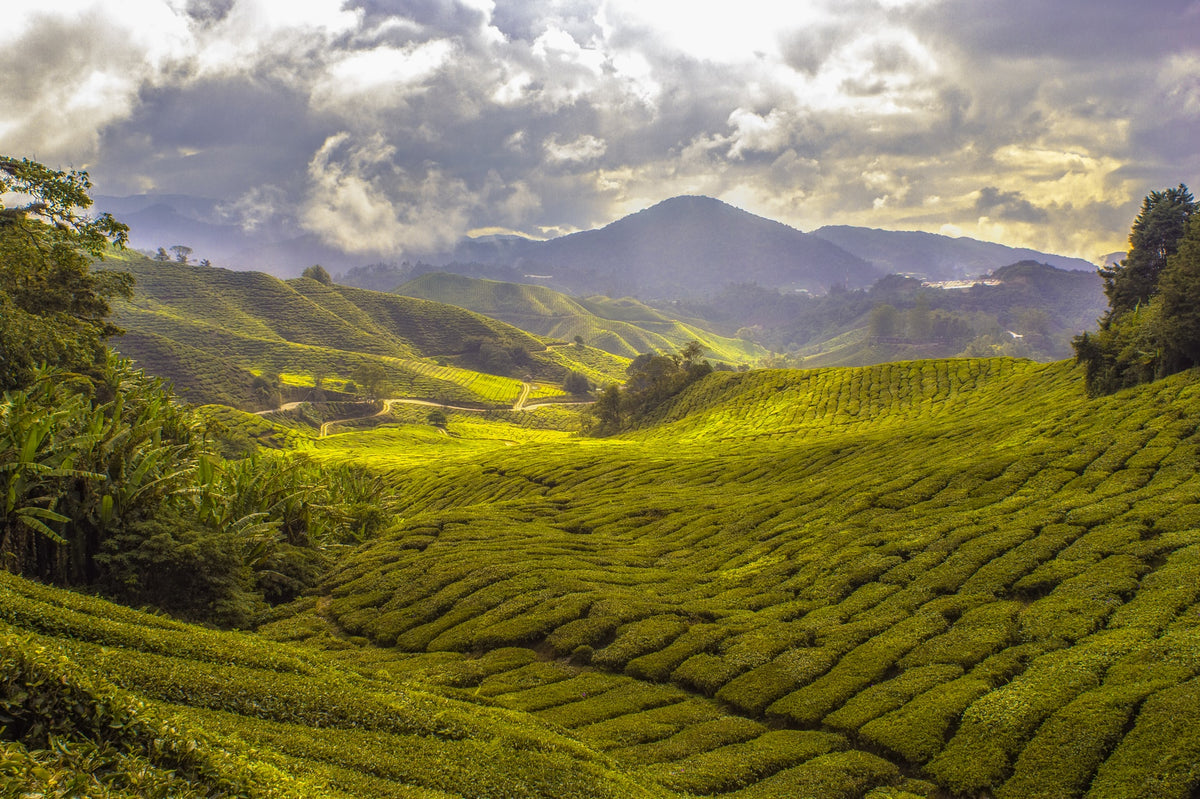
Most of China’s green tea comes from its southern provinces, famously Fujian, Zhejiang and Anhui, where the climate is humid, with plenty of sun and rain. The range of climate, landscape and altitude is so wide that each province, even each small area, has its own flagship tea. Both the long, spear-like, slightly spicy Taiping Houkui and the sweet, furry-tipped Yellow Mountain Maofeng come from Anhui.
Chinese green tea is usually fixed by heating the leaf in constant motion, much like stir-frying: by hand in a large wok for small batches, or in drums for larger ones. The prized “famous” teas, such as the flat Longjing and the curly Bi Lo Chun (spring snail), are still mostly plucked and made by hand, so they vary from farm to farm and harvest to harvest.
Tea houses, then and now
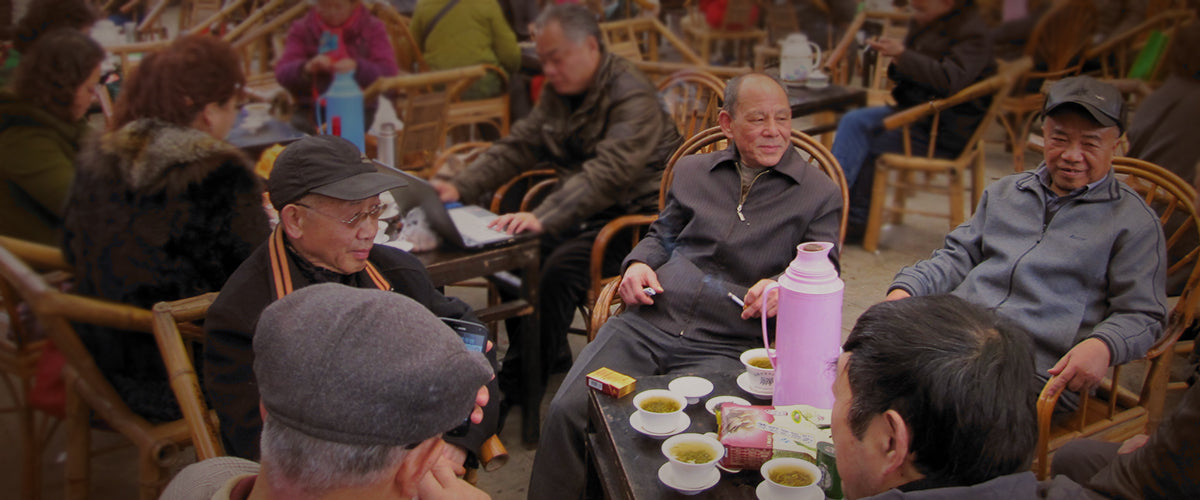
To see how deep tea runs in daily life, go to Chengdu, in Sichuan. In the days of the Tang dynasty there were about 400 tea houses in the city, and tea houses are still everywhere: in the Daci temple, older regulars sit for whole afternoons with a cup of leaves and a thermos of hot water, refilling as the flavor mellows. Locally, a Sichuan tea that doesn’t last at least three steeps is considered inferior. Even so, coffee is gaining ground among younger Chinese as a drink of modern life.
Beijing shows the change more sharply. A hundred years ago every street in the city had a teahouse, but by 2017 our writer found it “surprisingly hard to locate a single good one today in the center of town.” At the Ji Gu Ge Teahouse on Liulichang Culture Street he sampled a sweet osmanthus tea, an oolong scented with the tiny flowers of a jasmine relative, and a silver pekoe rolled into a knob that slowly opened in the water. The bill came to ¥75, about Rs 800 at the time.
Yunnan’s ancient trees, and how China compares with India
Yunnan, where the China plant is native, makes the white tea known as Moonlight. The name is believed to come from plucking the buds by moonlight, when they are most tender; around 30% of them are unopened. Technically, Yunnan Moonlight is made from very large leaf from ancient trees and is often pressed, like pu-erh, into “bing” cakes.
How do Chinese teas compare with ours? Chinese teas are mostly made from the small-leafed China plant and lean toward green and lightly oxidized styles, while India is best known for black tea from both varieties. The full comparison is in Indian vs Chinese tea.
Japan: a green tea nation
Japan grows mostly green tea and keeps most of it for itself; its best-known export is matcha, the shade-grown, stone-ground powder now drunk all over the world.Read more
Sencha is the everyday cup, and Tea 101 traces it to Nagatani Sōen, who developed it in 1738. Gyokuro and bancha have their place too. Regular sencha makes up about 70% of the green tea produced in Japan and about 80% of all the tea drunk there.
How tea came to Japan
Tea reached Japan from China in the 8th century with Buddhist monks returning from their travels. It took root in the late 12th century, when the Zen monk Eisai brought tea seeds back from China and planted them in monastery grounds on Kyushu, Japan’s southwesternmost island.
Japan’s tea areas lie in its warmer south, but much farther north than China’s green tea provinces, and few places in the islands are more than 100 km from the sea. Our writer credits that sea air with the marine, seaweed-like umami of Japanese green tea. During Japan’s long closure to the world (1633 to 1854) its tea making went its own way, and in 1738 Nagatani Sōen began fixing the leaf with steam instead of heat in a pan.
Steamed, not fried
Steaming changes the cup. Steamed leaf stays wetter, so Japanese greens often go through three or more drying stages, against one or two for Chinese greens. The result is vivid green leaf with marine, grassy notes, where pan-fired Chinese greens turn yellower and taste more vegetal, nutty and floral.
Japan also mechanized early, because labor costs more there. Most farms make a semi-finished tea called aracha, often in shared factories, and sell it to tea companies that finish it in their own style. Only tencha (the shaded leaf used for gyokuro and matcha) and shincha (the first sencha of the year) are still picked by hand. The bushes are uniform too: one cultivar, Yabukita, covers over 90% of Japan’s cloned tea fields.
The Way of Tea, and matcha
Japan gave the world one of its great tea rituals, the tea ceremony, or Way of Tea, shaped by the tea master Sen no Rikyū in the 16th century. In it, even the color of the tea in the bowl matters. Our own Pure Japanese Matcha Premium Green comes from Shizuoka, made from shade-grown leaves stone-ground into a fine, vivid green powder with deep umami. Only the youngest tencha leaves are chosen.
Japan also prizes Indian tea, Darjeeling especially. Back in 2010, our founder noted that Japanese buyers were reselling Darjeeling they had bought at about US$100 per kg for US$550 per kg.
Learn more about the style in What is green tea?
Taiwan: the island of oolong
Taiwan is known less for the size of its crop than for its oolongs, partly oxidized teas that range from flowery and green to rich, honeyed and dark.Read more
Tea 101 notes that partly oxidized tea “is grown best in Taiwan at high altitudes.”
Taiwan’s oolong was born in Fujian, in mainland China. In the mid-18th century, settlers from Fujian crossed the Taiwan Strait with their tea bushes and skills, and the island spent the next centuries perfecting them:
- Bai Hao: the heavily oxidized, sun-dried signature oolong of Taiwan.
- Bao Jong: lightly oxidized and intensely flowery.
- High mountain (gao shan) oolongs: ball-rolled teas grown above 1,000 m, such as Dong Ding, Ali Shan and Li Shan, greener, spicier and more complex, with a long aftertaste.
Behind those teas sit hundreds of oolong cultivars bred in China and Taiwan, and many ways of controlling oxidation, fixing and firing. When demand outgrew the island, Taiwan sent its Formosa cultivars and tea makers to Thailand (Doi Mae Salong, in Chiang Rai) and Vietnam, which now export Formosa-style oolongs to Taiwan, Japan and the West.
Taiwan against the “Darjeelongs”
We once sent five Himalayan oolongs to the tea writer Frank Miller, fresh from a two-week tour of Taiwan. His verdict was honest: the Darjeeling oolongs were “a very different animal” from Taiwan’s, closer to Bai Hao than to the high mountain teas, and no match for “the title defender.” They were heavily oxidized for oolongs, at about 80%, and did not hold their complexity over later steeps the way Taiwan oolongs do.
But they were “beautifully turned out and lovely in the cup,” with a muscatel character all their own, and he coined a name for them: “Darjeelongs.” Some Indian gardens are closing the gap with Taiwan’s own tools: Goomtee, in Darjeeling, brought in a special Taiwanese machine to make its oolongs. And when we launched an oolong from Donyi Polo, the first tea garden of Arunachal Pradesh, we found it “remarkably similar to the famed Taiwanese oolong.”
Taste one in our Glenburn Spring Moonshine Oolong, and read more in What is oolong tea?
Keep reading
Sources
- Teabox blog (Still Steeping): Nepal: Innovation in the high Himalayas (2016), Adam’s Peak: Higher and higher, better and better (2017), Tea at Serendip (2017), India vs. Taiwan: The Oolong Challenge (2017), When Tea Came to Australia (2017)
- Teabox blog (Still Steeping): The finest cup of tea in Beijing (2017), A short lesson on Asian green tea (2017), Irish tea, history and elevenish (2017), A Nilgiri girl in Darjeeling (2017), Moonlight Sonatas: The Great White Teas (2016), What Became of the Small Leaf Tea? (2015)
- Teabox blog (Still Steeping), stories: People Who Love to Drink Tea From Morning to Evening, 2016; Tea in Islamic cultures, 2016; Clonals: the tea of the future, 2016; A Biography of the Tea Bush, 2016; Who’s Drinking Tea in America?, 2015
- Teabox Tea 101: Top 10 tea producing regions of the world (2017); History of tea (2017); Popular teas around the world (2017); Assam (2017); Geographical indication; The tea plant; Guide to spring teas; English Breakfast
- Teabox Drive: Teabox internal document, 2023; Teabox internal document, 2021; photos as credited
- Teabox product pages: Castleton, Halmari, Havukal, Temi, Glenburn, Castleton Summer Moonlight White and Pure Japanese Matcha, 2026
- Teabox on Instagram (@teabox.tea): Assam, Dec 2015, Donyi Polo oolong, May 2019, 120th country, Nov 2021, Arunachal Pradesh, Feb 2022, 121st country, Apr 2022
- Kausshal Dugarr on X (@Teapreneur): Japanese Darjeeling prices, Apr 2010, Indian tea industry, May 2020, India’s 25%, Jun 2020, Temi on The Late Show, Jul 2021, tea auctions, Oct 2021, quality over quantity, Jan 2022, first flush cups, May 2022,Sri Lanka, Jul 2022
- Teabox Masterclasses on YouTube: Assam, Arunachal Pradesh

Leave a comment
All comments are moderated before being published.
This site is protected by hCaptcha and the hCaptcha Privacy Policy and Terms of Service apply.