


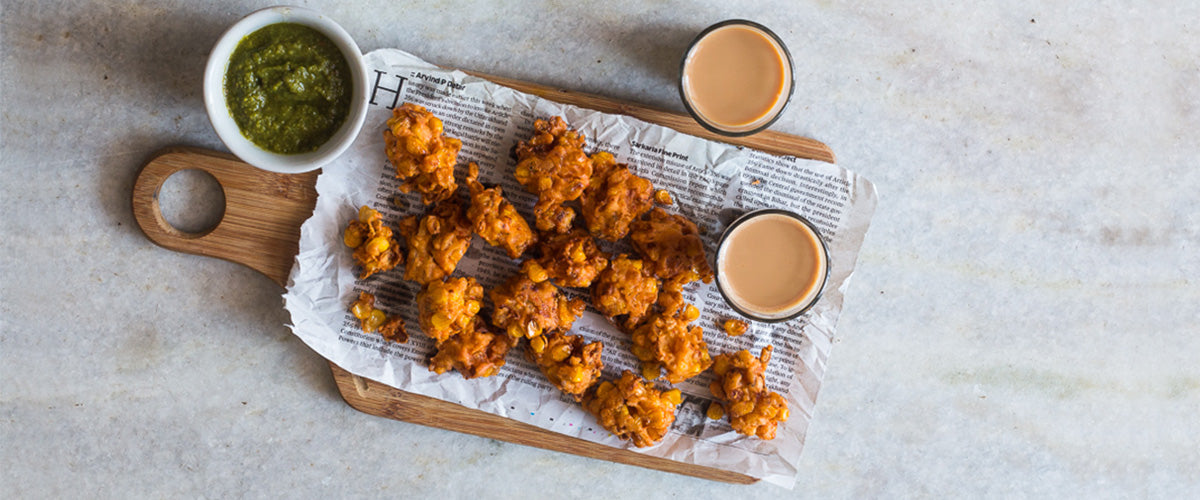
Adrak chai is chai made with fresh ginger (adrak in Hindi), crushed and boiled in the pot so that the cup has a warm, peppery bite. It is a favorite for rainy days and work breaks. This page explains what ginger does to the cup, why ginger chai sometimes curdles, and how to make it at home.
What is adrak chai?
Adrak chai is strong black tea boiled with milk, sugar and fresh ginger, crushed or grated straight into the pot; it can be the only spice, or the lead spice in a masala chai.Read more
Our earlier Tea 101 notes call ginger chai a hot favorite, especially in winter, and describe the method in a line: grated ginger goes into the pot while the tea is brewing. One of our writers gives the home version: a small piece of ginger is swiftly crushed or grated and dropped into the saucepan to boil with the water for the tea, and a generous amount of sugar usually follows.
It turns up all over India. On a visit to Majuli, the river island in Assam, our writer’s lunch at a local canteen was dal, rice, vegetables and ginger chai. High on Himalayan treks, a sweet, milky ginger tea is the one the cook is happiest to serve, “as there are many takers, and any number of reheats is possible.”
Ginger is also the first spice you notice in two of our chais. In Avishek’s tasting notes, ginger is the top note of Assam Masala Chai, “perceived immediately rendering a warm feeling,” and shares the top note with nutmeg in Kolkata Street Chai. Our Bombay Cutting Chai pairs it with cardamom and fennel, as Mumbai’s street pots do.
What does ginger bring to chai?
Ginger brings a citrusy tang and heat that blend well with strong tea, and a warm, spicy aroma that rises from the cup.Read more
Our writers have called ginger chai “the global remedy for a cold,” which says more about how Indians feel about it than about medicine. Not only does ginger have “a citrusy tang that blends perfectly with the caffeine kick of tea,” the same story says, but it gives the cup a warm, spicy aroma. It quotes Niki Segnit’s The Flavour Thesaurus on the flavor: fresh ginger has “a lemony, woody and earthy tone with a kick of heat.”
The age of the root matters. Young ginger tastes sweeter and milder; mature ginger, the kind dried for powder, brings the spicier, warmer flavor. So older, more mature ginger gives a bolder chai.
Its classic partner is a samosa: “The heat of the ginger in the chai complements the spiciness of the samosas.” The samosa itself came to India through the Persians, as the sanbosag.
Why does ginger chai sometimes curdle?
Ginger contains enzymes that clot milk between about 60°C and 70°C, so ginger chai splits when the ginger meets milk that is warm but not yet hot enough.Read more
If your ginger chai has ever split into curds, there is a reason. Ginger contains enzymes that break down milk proteins. Research cited by writer Srinath Perur shows they clot milk most actively above 60°C and are neutralized above 70°C. If the ginger meets milk that is warm but not yet hot enough, the milk can split.
Perur found this out the hard way. His chai was perfect for one cup, but whenever he made more, it separated into what he called “tea whey and nascent tea paneer.” The reason was his routine: he put the milk and water on the stove, then went to wash and pound the ginger. With one cup, the milk was already above 70°C when the ginger went in. With a bigger pot, the milk heated more slowly and was still in the danger zone. The clue came from a Cantonese dessert, ginger milk curd, which uses the same enzymes on purpose: hot sweetened milk poured over ginger juice sets into a silky gel.
His fix: “boil ginger in water before adding milk, or make sure that the milk-water mixture is hot enough to sizzle against the side of the vessel before throwing in the ginger. The former gives the chai a brash ginger burn, the latter a mellow glow.” A reader added one more variable: the chai’s sweetness changes with when in the process you add the sugar.
How do you make adrak chai? Our recipe for two
Simmer crushed ginger in water first, add the tea, then the milk and sugar, and let it rise twice before you strain it: about 10 minutes for two cups.Read more
Ingredients: 1 cup (240 ml) water · 1 cup (240 ml) whole milk · 2 teaspoons Assam CTC tea, or Teabox Kadak Chai · a 1-inch piece of fresh ginger · 2 teaspoons sugar, or to taste
- Crush the ginger in a mortar and pestle, or grate it.
- Bring the water and ginger to a boil in a small pan, then simmer for 2 minutes.
- Add the tea and simmer for 1 minute more.
- Pour in the milk and sugar and bring back to a boil. Let it rise, lower the heat, and let it rise once more, about 2 to 3 minutes in all.
- Strain into cups and serve hot.
For a gentler cup, heat the water, tea and milk until the edges sizzle, then add the ginger for the last minute. Our recipe follows the standard home method; the timing tip comes from our blog.
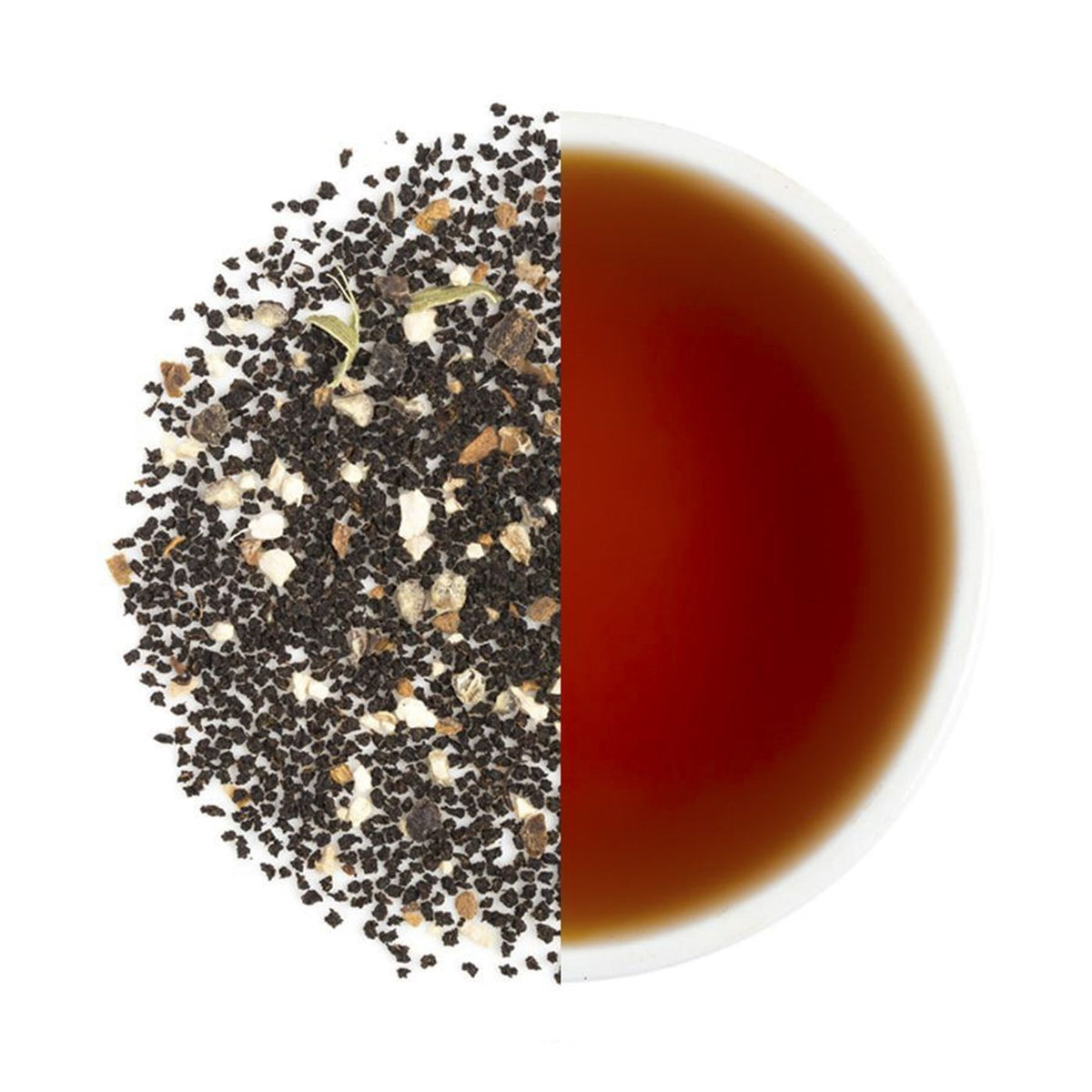
Our Teabox Kadak Chai suits this recipe because it has no spices of its own: it is plain CTC from Assam and the Dooars, so the ginger leads. We choose premium CTCs from the gardens for it.
Two ways other chai lovers do it
- A spice concentrate: one of our writers remembers her mother brewing a pot of regular chai with a little less milk than usual, making a fiery concentrate of ginger, pepper, fennel, cinnamon and cardamom on the side, and adding it just as the tea came to a boil.
- Ginger-led masala chai: Resham Gellatly and Zach Marks, who documented chai wallahs across India, make theirs at home with lots of freshly grated ginger to keep it spicy, plus cardamom, cloves, black pepper, cinnamon, whole milk and brown sugar.
For a full masala chai method, with quantities for one to four cups, see How to make masala chai at home.
Keep reading
Sources
- Teabox blog (Still Steeping): The science behind my ginger chai (2015, with reader comments), Ginger: Not just chai’s partner-in-crime (2016), Assam diaries: a day at Majuli (2016), Tea, not chai, on a trek (2016), Cross country in search of the chai wallah (2015)
- Teabox blog (Still Steeping) on the new site: My inconspicuous companion, 2015
- Teabox Tea 101 (earlier edition): Chai, the Indian way of drinking tea
- Teabox product descriptions: Bombay Cutting Chai, Teabox Kadak Chai, October 2026
- Teabox Drive: Teabox internal document, 2021; photo as credited
- Teabox on Instagram (@teabox.tea): ginger chai and samosas, Apr 2023
- Kausshal Dugarr on X (@Teapreneur): Kadak Chai sourcing, Jan 2022

Leave a comment
All comments are moderated before being published.
This site is protected by hCaptcha and the hCaptcha Privacy Policy and Terms of Service apply.