


All three are chai in clay. Kolkata chai is sweet, milky and sometimes scented with saffron, sold in small clay cups; matka (kulhad) chai is any chai served in an unglazed clay cup; tandoor chai is poured into a clay pot that has been heated in a tandoor oven, so it boils up, froths and picks up a smoky, earthy note. This page starts in Kolkata, where clay-cup chai and long conversation go together.
What makes Kolkata chai different?
Kolkata chai is sweet, slow and social: tea simmered with milk, sugar and sometimes saffron, poured into small clay cups called bhaar and drunk at an adda, the city’s long, unhurried conversation.Read more
“Ask any chai lover where you find the best street tea in India and the unanimous answer will be Kolkata.”
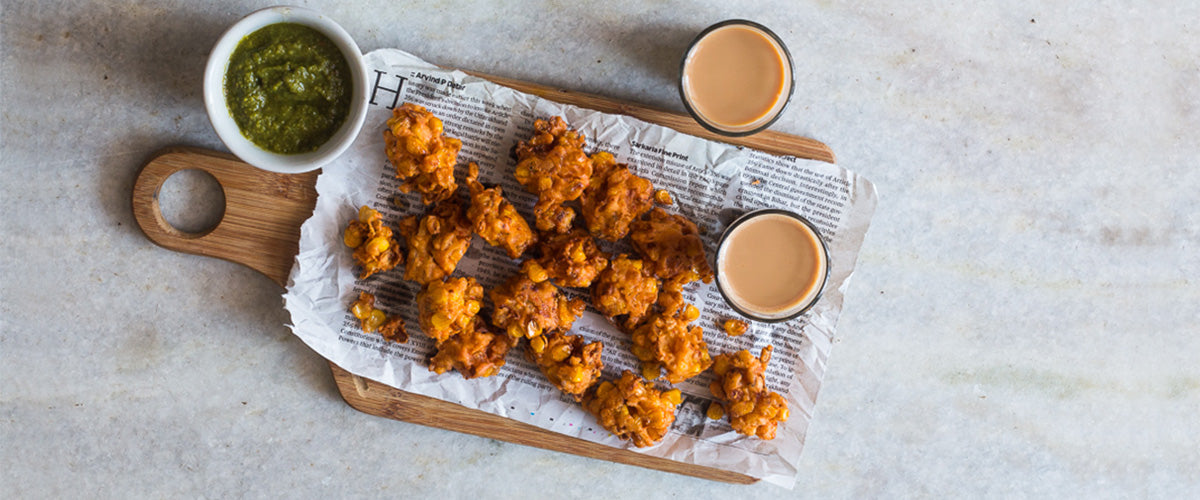
Kolkata takes its chai slowly and sweetly. Our 2020 story calls the city “the earliest known place for chai to make its entry in India,” and notes that its chai, like the city, has not changed much over the years. On the street the chai simmers with milk, sugar and sometimes kesar (saffron), and is poured into bhaar, the city’s earthen cups, to end a round of puchkas, jhalmuri and kathi rolls at an adda, the long, unhurried conversation that is the city’s favorite pastime.
The stalls on Elgin Road, Camac Street and Central Avenue are the classic places to try it. An invitation is a phone call: “Chol cha khete ai,” let’s go for a cup of tea. The talk can be about the latest play at Nandan, the Mohun Bagan and East Bengal football match or the morning’s editorial. The film director Satyajit Ray held regular adda sessions, and for a Bengali the only acceptable snack with tea and talk is muri, puffed rice.
How does Kolkata buy and blend its tea?
Many Kolkata households still buy loose tea from the neighborhood shop and have it mixed to their own recipe, often Darjeeling and CTC together.Read more
Many people still buy loose tea from the neighborhood shop and blend it themselves: it is common to hear someone ask for 50 g of orthodox Darjeeling, 100 g of CTC and a few strands of saffron.
Our 2016 story describes one such shop, with a queue outside on a busy pavement. Plywood tea chests were stacked on three walls almost to the ceiling, holding Darjeeling, Dooars and Assam teas in every form, from orthodox leaf to fannings and dust. Small steel drums on the counter were marked “Cha” and “tea” in red, in Bengali and English. Each family had worked out its own mix over years, down to whether it would go with lemon.
Bengal also drinks its tea without milk: lehbu cha, light black tea with lemon, turns up at village stalls. Writer Jerry Pinto found it at a tiny stall in Amadpur, a village where he had gone for Durga Puja, at a time when Mumbai served lemon tea only in elite homes and expensive tea rooms.
What do two-foot tea and two-into-three mean?
A “two-foot tea” has leaves boiled twice, and “two-into-three” means splitting two cups among three friends: Kolkata’s chai has its own vocabulary.Read more
The city has its own chai vocabulary. In colloquial Bengali, “foot” also means boiling, so a “two-foot tea” has leaves boiled twice, and a “three-foot tea” three times. You can judge the number of “foots,” our writer says, from the grimace on the drinker’s face.
“Two-into-three” means splitting two cups of tea among three friends, so that a short budget stretches over a longer adda. Our writer once watched a stall owner fill a plastic bottle through a funnel: office executives nearby were too embarrassed to order two-into-three in person and had sent their tea boy instead.
The habit travels. A Bengali group in Khartoum meets on Thursdays after dinner on the Blue Nile to talk over Kenyan tea, with muri when they meet at home. And when a film had the Bengali detective Byomkesh Bakshy eating French fries with his tea, a columnist wrote a whole piece about the mistake.
Where is Kolkata’s best chai, and how do you get it at home?
Kolkata’s best chai is at its street stalls, some of them institutions; at home, a blend of chai with saffron, cardamom, nutmeg and ginger comes closest.Read more
Some stalls are institutions. Our founder’s list of Kolkata’s best begins with the stall in front of Gate No. 3 at Jadavpur University, where the owner, Shamol Da, “is as famous as the delicious tea he serves.”
We have also written of chai “from the streets of Kolkata in the clay kulhad along with oil dripping samosas.”
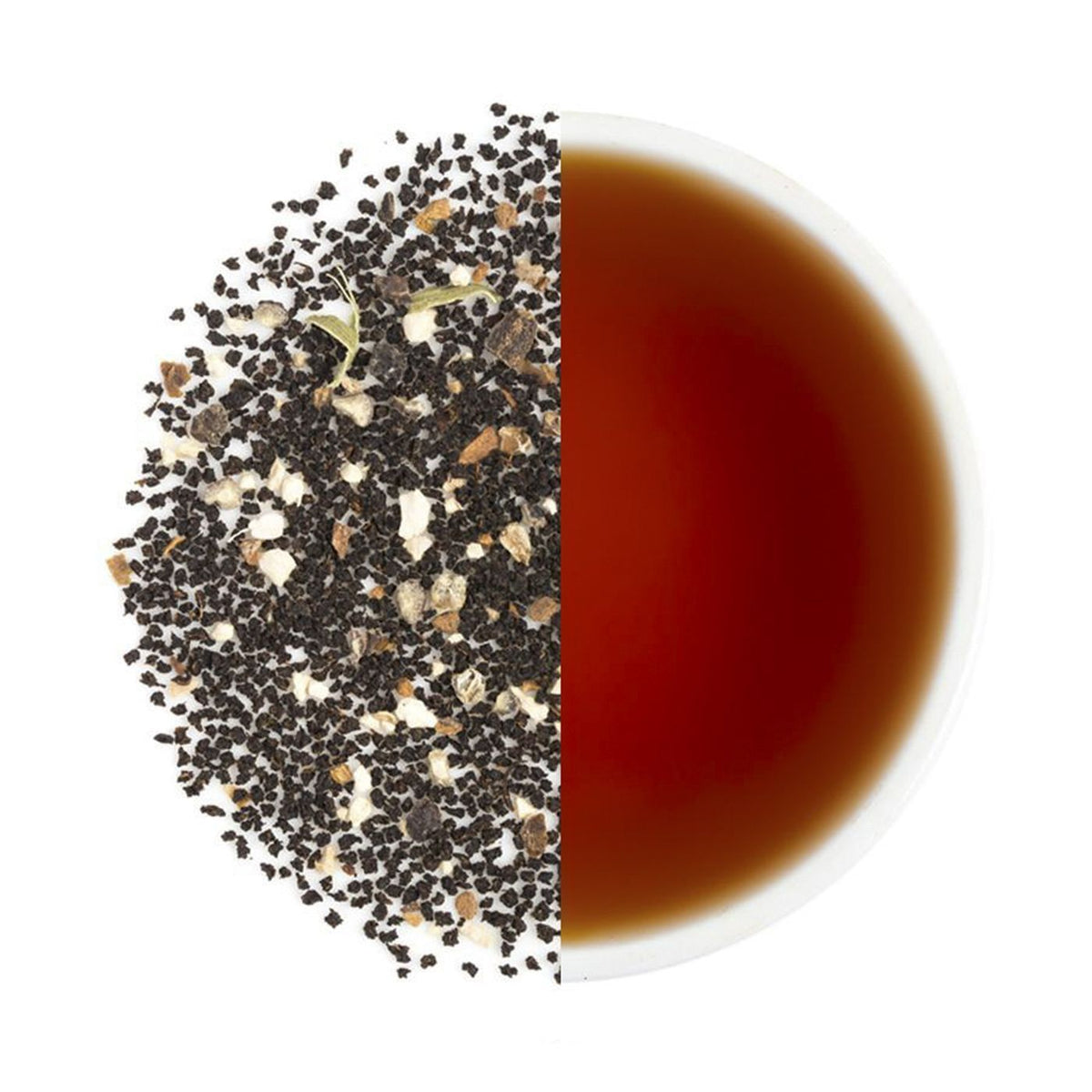
Our Kolkata Street Chai blends saffron, cardamom, nutmeg and ginger with chai; the cup opens with cardamom, then ginger, citrus, malt and nutmeg. Its tea is the small CTC grade BP. Avishek’s tasting notes put ginger and nutmeg at the top, aromatic cardamom in the middle and saffron “at the edges” of the finish, and add that “a dash of milk brings out the flavors even more.” One customer in the US wrote: “This is Kolkata in a cup! The aroma reminds me of the local chai shops of Kolkata.”
What is matka or kulhad chai?
Matka or kulhad chai is any chai served in a small, unglazed earthen cup; the clay adds its own character to the taste.Read more
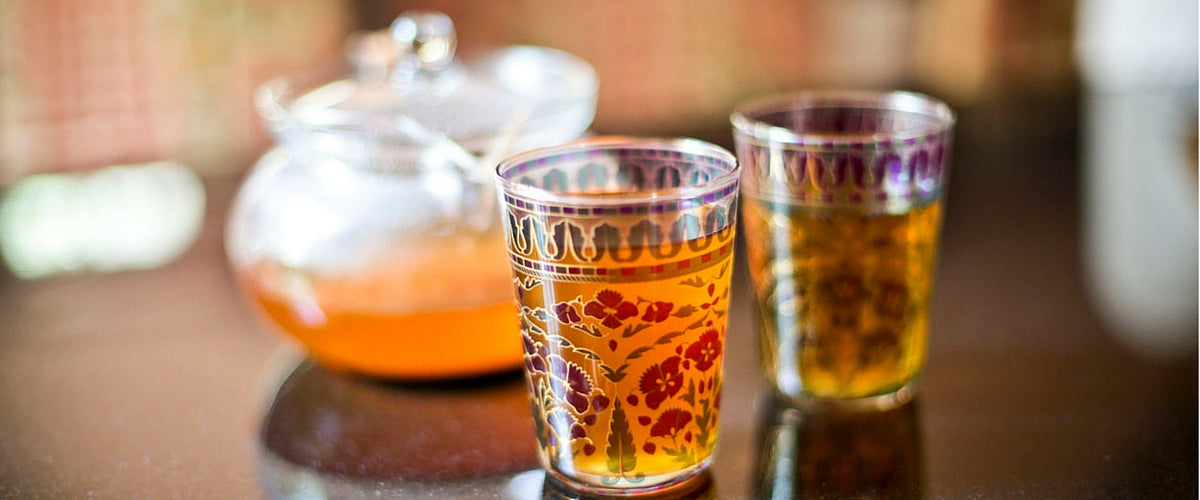
A kulhad (in Bengal, matir bhaar) is a small, sustainable earthen cup, and its natural properties add their own character to the taste of the chai. “Matka chai” is the name for the same idea, from matka, a clay pot. The kulhad “has always been a part of Indian chai culture.”
Our writers have met it all over India:
- On the railways: author Jeff Koehler remembers countless cups of chai “in those little clay cups bought at train stations or on trains from chai wallahs and dashed to the ground when empty.”
- In Jaipur: at the Jaipur Literature Festival, turbaned chaiwallahs serve a special “Diggipuri masala chai” in clay cups.
- In Kutch: during a mid-morning break, the master potter Ismail offered our writer “a warm khullar, a little clay cup of tea.”
- At home: graphic designer and potter Archana Srinivas styles her daily milky brown CTC chai in ceramic kulhads for her chai photographs.
What is tandoor chai?
Tandoor chai is chai poured into an empty clay pot that has been heated in a tandoor, so it boils up, froths over and takes on a smoky, toasted taste.Read more
Tandoor chai is a newer, showier style. Empty clay pots are heated in a tandoor until they are very hot; the chai is poured in, boils up and froths over, and is then served. The hot clay gives a smoky, slightly toasted taste. It became popular at chai stalls in Pune and has spread to other cities.
Keep reading
Sources
- Teabox blog (Still Steeping): The sweet palate, a cup of joy (2020), Two-foot tea and the Bengali (2016), A Mumbai tea story (2015), The authentic Indian chai experience (2023)
- Teabox blog (Still Steeping): From Europe and food to Asia and tea (2015), Travels in the literary landscape of India (2016), Pottering with clay (2016), Chai memories (2016)
- Teabox product descriptions and product data: Kolkata Street Chai, October 2026
- Teabox Drive: Teabox internal document, 2021; Teabox internal document, 2021; photo as credited
- Teabox on Instagram (@teabox.tea): the kulhad, Oct 2021, chais of India’s streets, Jul 2023
- Kausshal Dugarr on X (@Teapreneur): Kolkata’s street tea, Nov 2021, Jadavpur University tea stall, Nov 2021

Leave a comment
All comments are moderated before being published.
This site is protected by hCaptcha and the hCaptcha Privacy Policy and Terms of Service apply.