


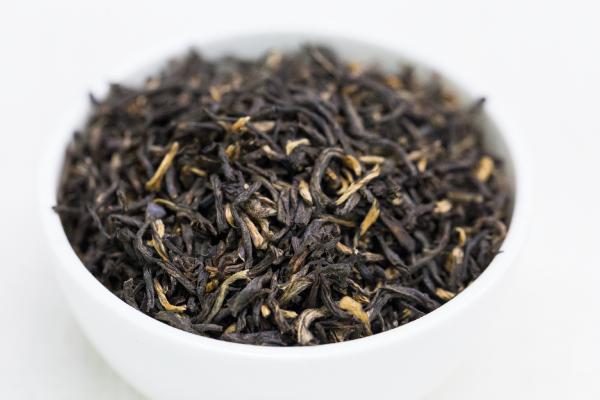
Orthodox tea is rolled to keep the leaf whole or in large pieces, while CTC tea (crush, tear, curl) is cut by machine into small, hard granules that brew strong and fast. These are the two ways India makes its black tea. Orthodox gives the layered, estate-and-season teas you drink plain; CTC gives the dark, brisk base of almost every cup of Indian chai.
At a glance
- CTC full formCrush, tear, curl (also cut, tear, curl)
- Orthodox leafWhole or large broken leaf, twisted or wiry
- CTC leafSmall, round, even granules
- Made byOrthodox: rolled · CTC: toothed steel rollers
- CTC roller speed600–1,200 revolutions a minute
What is orthodox tea?
Orthodox tea is tea made the traditional way: plucked, withered, rolled, oxidized and dried, with the leaf kept as whole as possible and each step judged by a tea maker.Read more
“Orthodox” here simply means traditional. The aim is to keep the character of a particular garden, bush and season in the leaf, so that a Darjeeling tastes like a Darjeeling and this summer’s tea tastes different from last year’s. Peter Keen, writing for our blog, tied the word to “the traditional hand-plucked harvesting and processing by artisan methods,” in which the maker nurses the leaf to balance the hundreds of compounds that give it flavor, texture and aroma.
In orthodox processing, every batch of plucked leaf gets its own wither, roll and oxidation, set by trained tea makers to bring out the best flavors. The leaf is handled with care, because it is delicate and bruises and breaks easily. It is slow, skilled work, and the result is a whole or large broken leaf that unfolds in the cup. At Koilamari in Assam, the team told us orthodox making takes time “because of the attention given to extract the flavors from every leaf.”
The care starts in the field. In Darjeeling, a single kilogram of fresh leaf for an orthodox factory takes about 20,000 shoots, plucked by hand on slopes of 40 to 60 degrees, and labor is “60-70% of total incremental expenses.” That is why a fine orthodox tea costs more than a CTC made from the same hills.
Darjeeling’s prized teas are made this way, and so are the finest teas of Assam and the Nilgiris. Fine white, green and oolong teas are orthodox teas too, even though they skip some of the black tea steps. Indian oolongs, for example, follow the orthodox black tea template, with changes at the withering and oxidation stages.
Orthodox estates keep their history close. Chubwa, in Assam, one of the leading producers of fine orthodox teas, is among India’s oldest gardens: its first successful planting of tea saplings was in 1836, and its records go back to 1898. Its name joins two words, “chah” for tea and “bowa” for planting. At Chota Tingrai, founded in 1943, vintage rollers from the 1940s still work in the orthodox factory. When our team arrived there in 2016, we sat straight down for tea, and “this first cup of Orthodox Black Tea set all the right notes.”
For every step from bush to cup, see the parent guide, How tea is made.
What is CTC tea? CTC full form and meaning
CTC tea is black tea made by feeding withered leaf through steel rollers with hundreds of sharp teeth, which crush, tear and curl it into small, even pellets. The CTC full form is “crush, tear, curl,” sometimes written “cut, tear, curl.”Read more
Our own 2016 history of tea machinery spells it the same way, crush, tear and curl, “sometimes Crush is replaced by Cut, but the result is the same.” It is the method behind the strong, kadak cup of chai that so many of us grew up on.
Inside a CTC line
The heart of a CTC line is the rotorvane, a powerful machine that conditions and breaks up the leaf, followed by pairs of grooved, toothed cylinders rotating against each other. The crushers and tearers run at 600 to 1,200 revolutions a minute, and “rollers with sharp grooved cutters reshape it to look leaf-ish.” Broken pieces and dust are fed back into the flow, and the machines turn everything into granules of a uniform size.
The pellets start oxidizing at once and finish faster than whole leaf, and they brew a much darker, stronger cup. Peter Keen passed on one commentator’s comparison with Grape-Nuts cereal, which is neither grapes nor nuts but toasted breadcrumbs: “This is tea toast.”
Our tasters judge CTC leaf by its own signs. A browner look means a lighter cut, usually found in Assam teas, and a good CTC should have a “clean, grainy texture.” The dry leaf of our Kadak Chai is noted as blackish-brown nuggets, with specks of fiber showing through.
Built for scale
CTC was designed for scale. Developed in the 1930s and widely adopted in the decades after, it cut processing time and labor and turned tea into an everyday, affordable drink. It spread widely from the 1950s and reached India’s chai market in the 1960s, valued because it was economical and “could bring aroma, taste, and color within seconds of boiling.” It reached Kashmir around the 1970s, and by the end of 1985 “every stratum in Kashmir knew about CTC chai.”
Our own essays put it at roughly 80% of the world’s black tea. In India it is how most people drink tea every day: as chai, from loose CTC or tea bags. Our staff notes say it in one line: “India being a CTC drinking nation, tea is synonymous with chai.” The machines’ story is told in How tea is made.
Both styles come from the same plant. Black, white, oolong, green and CTC teas all come from one tea plant, and “almost always folks are very surprised” to hear it, as our founder, Kausshal Dugarr, says. The plant is Camellia sinensis; see What is tea?
Orthodox vs CTC tea: what’s the difference?
The difference comes down to intent: orthodox tea making preserves the individual leaf and its flavor, while CTC makes a strong, consistent tea quickly and in large volume.Read more
That one choice, made between withering and oxidation, decides how the tea looks, tastes, brews and is used. Peter Keen called it the choice that “drives all the later processing steps,” and compared it to a butcher’s: a steak allows more options than ground beef, and “once the chopping and mincing starts, there’s no going back.” Our training decks boil it down to two lines: orthodox is leafy, with a wide range of flavors; CTC is granular, with a strong cup.
| Orthodox tea | CTC tea | |
|---|---|---|
| Name | The traditional (orthodox) method | Crush, tear, curl (or cut, tear, curl) |
| Dry leaf | Whole or large broken leaf, twisted, often with tips | Small, round, hard granules |
| How it is shaped | Rolled, gently, to twist the leaf and release its juices | Macerated by toothed rollers into pellets |
| Decided by | A tea maker, batch by batch | Machines set for a standard result |
| Flavor | Complex and aromatic; varies by garden and season | Strong, brisk, astringent; much the same batch to batch |
| Cup | Bright, clear, amber to coppery | Dark and red-brown, colors the water fast |
| Brewing | Steeped 3–5 minutes; good leaf brews again | Strong in moments; boiled for chai |
| With milk | Darjeeling plain; Assam with a splash | Made for milk, sugar and spices |
| Typical use | Single-estate loose leaf | Chai, tea bags, everyday blends |
On the brew, one of our essays notes that a whole-leaf black tea takes 3 to 4 minutes to open up in water at or just below the boil, while a CTC tea bag gives a strong cup in about half a minute. Ian Bersten, writing for our blog, once brewed a CTC for 30 seconds in an Indonesian tea factory and was told by the taster, “Oh, you are making tea for drinking. I am making tea for tasting.” In his view, particle size, not time, is “the chief determinant of flavor extraction.”
Smaller pieces release their flavor faster and taste harsher; that is the trade-off at the heart of the two styles. The same guide sums up the taste: broken Assam teas are “strong but plain,” while whole-leaf Assams are “mellow, malty or ‘tippy.’” Even the dryness differs. Our 2023 bulk tea specification allows orthodox tea up to 10% moisture by weight and CTC less than 7%; these are receiving limits for bulk tea, not the dryness of the tea in your pack.


How are orthodox and CTC tea made?
Both start the same way, with plucking and withering, and end the same way, with drying and sorting. The difference is the middle: orthodox leaf is rolled, CTC leaf is crushed, torn and curled.Read more
“Orthodox teas are rolled and CTC (base of your chai tea) is crushed,” as our procurement team put it. In the CTC method, “the leaves are fed into large machines where they are crushed, torn and curled to break them.” Each step, with the times from a batch we logged hour by hour, is explained in Tea making step by step; here are the two paths side by side.
How orthodox tea is made
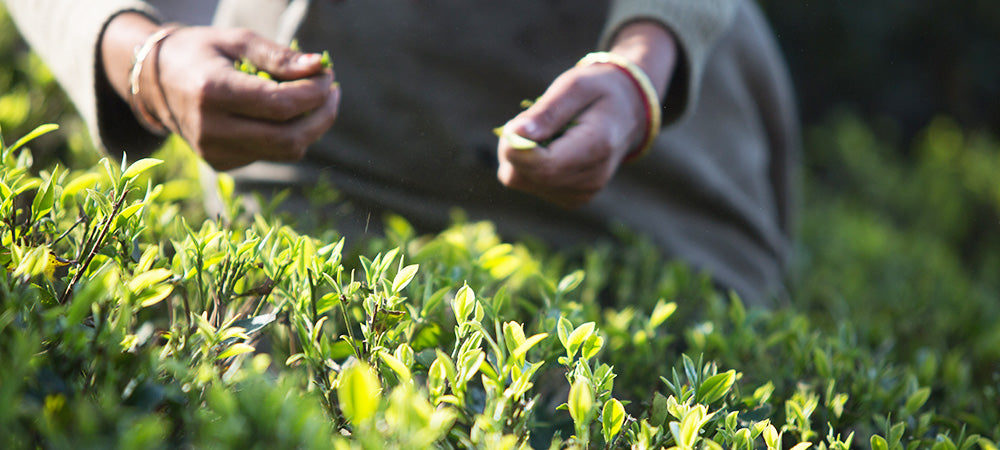
- Plucking. Fine orthodox tea is hand plucked, usually two leaves and a bud.
- Withering. The leaf rests in long troughs for many hours, losing much of its water, until it goes soft.
- Rolling. The leaf is rolled on a rolling table or by hand. This twists it and breaks its cells, so the juices meet the air, without chopping it up.
- Oxidation. The rolled leaf darkens in a humidity- and temperature-controlled room for as long as the tea maker judges right.
- Drying. Hot air stops oxidation and brings the moisture right down.
- Sorting and grading. The finished tea is sieved and picked over, and graded by leaf size: whole leaf, brokens, fannings and dust.
Our tasting notes for a Goomtee spring tea record a wither of 12 to 14 hours and “a gentle twist for approx 7-10 mins” on the rolling tables, with only light oxidation. The Seeyok summer batch we followed in June 2021 was rolled for 40 minutes, with the pressure raised gradually.
How CTC tea is made
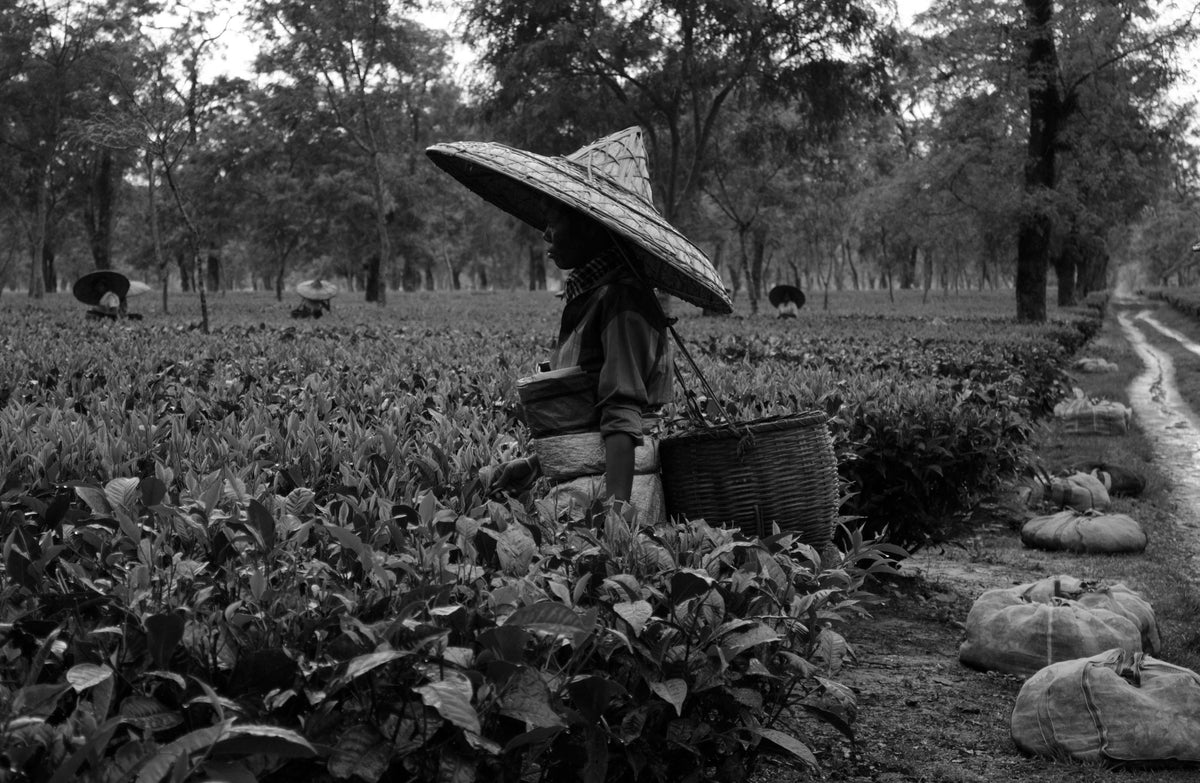
- Plucking. CTC can use larger, more mature leaf than fine orthodox tea, and on big estates it is often plucked by machine.
- Withering. A lighter wither than for orthodox tea, so the leaf keeps more of its moisture.
- Crush, tear, curl. The rotorvane breaks the leaf up, then sets of toothed rollers macerate it into small, even pellets.
- Oxidation. With so much broken surface, the pellets oxidize quickly.
- Drying. Hot air dries the granules until crisp.
- Sorting. The granules are sieved into grades by size: brokens, fannings and dust.
Either way, good tea is made fast once it leaves the bush. At Halmari, our team watched the day’s leaf weighed, made and tasted within about a day of plucking: “it only takes 24 hours for the tea to reach our cup,” and processing “starts almost immediately after it is plucked.” Our 2016 explainer summed up the machine side: leaves “are passed through a series of cylindrical rollers with serrated blades that crush, tear, and curl the tea into small, even-shaped pellets.”
Which teas are orthodox and which are CTC?
Darjeeling is known for orthodox tea. Assam, the Dooars and the Nilgiris make both, but most of their output is CTC, while their best single-estate teas are orthodox. Nearly all chai blends are CTC.Read more
Which is best for chai: orthodox or CTC?
For Indian chai boiled with milk, sugar and spices, CTC is best: it brews dark and brisk enough to stay strong under all that milk. An orthodox Assam is the better choice for a plain cup or a lighter milk tea.Read more
Tea 101 puts it simply: “The best base for chai is the CTC tea,” and almost all chais use a strong CTC base, balanced by milk and lifted by spices. Our staff notes describe the ideal chai the same way: “strong, black CTC tea” with milk, sugar and spices.

With orthodox leaf you steep and stop; with CTC the boil is the point. A delicate whole-leaf tea is spoiled by a hard boil, while CTC granules are made to take it, and they give the color and body that milk needs. In 2015, despite all the teas we had on hand, most of our team would stop every day for “at least one cup of piping hot Assam CTC chai” from Joy-da, the chaiwallah on the ground floor of our office.
Freshness matters with CTC too. For Teabox Kadak Chai, “we source from the best tea gardens of Assam, making sure to choose premium CTCs. On selection, the teas arrive at our facility within 1 week,” Kausshal Dugarr wrote in January 2022.
A few practical tips
- Use about a teaspoon of CTC per cup. Our basic masala chai uses 1 teaspoon CTC, ¾ cup water and ½ cup full-cream milk, simmered about 8 minutes. The full recipe is in How to make masala chai at home.
- Match the grade to the spices. With small spices such as cardamom, use a smaller CTC grade like BP (broken pekoe), so tea and spice infuse at the same pace. More in The best tea for masala chai.
- Want it extra strong? That is karak (kadak) chai: more CTC and a longer boil.
- Prefer orthodox? A malty summer Assam makes a smoother, rounder milk tea. Steep it, do not boil it: 95–100°C for 4–5 minutes, then add milk. See Assam tea for milk tea.
- Or use both: in Kolkata it is common to see people having their own blend made at the local shop, such as 50 g of orthodox Darjeeling and 100 g of CTC with a few strands of saffron.
On caffeine: CTC and orthodox are both black tea, at about 50 mg a cup, though the real figure varies with the leaf, how much you use, the water temperature and how long it steeps or boils. More in Caffeine in tea, and on what makes a chai a chai in What is chai?
What are the CTC tea grades?
CTC tea is graded by the size of its granules after sieving, into three groups: brokens, fannings and dust. There is no whole-leaf CTC.Read more
Shop orthodox and CTC teas
Orthodox vs CTC tea FAQ
What does CTC stand for?
CTC stands for crush, tear, curl, sometimes written cut, tear, curl. It is a way of making black tea in which withered leaf passes through toothed steel rollers that turn it into small, even granules. That is the CTC full form you will see on chai packs.
Is CTC tea bad?
No. CTC is a different style, made for strength, speed and consistency rather than nuance, and it is the right tea for Indian chai. What it gives up is the complexity of a good orthodox tea, and its smallest grades, fannings and dust, sit at the bottom of the grading scale. Choose a fresh CTC from a good garden, and use orthodox leaf when you want to taste the tea itself.
Is Assam tea CTC or orthodox?
Both. Most Assam tea is CTC, sold for chai, tea bags and blends, but Assam’s best estates also make orthodox whole-leaf teas, such as the golden-tipped summer teas. A whole-leaf grade such as TGFOP or FTGFOP tells you it is orthodox. See Assam tea.
Can one tea estate make both orthodox and CTC?
Yes, and many in Assam do. Doomni, one of the gardens we buy from, makes about 88% CTC and 12% orthodox, and its orthodox teas command premium prices. Halmari was known in 2015 and 2016 for record CTC prices, while the tea we buy from it is orthodox.
Which tea is best for masala chai?
A strong Assam CTC, because its granules brew dark and brisk enough to carry both milk and spices. A broken grade such as BP suits small spices like cardamom. Our recipe is in How to make masala chai at home.
Why do Indian chai stalls use CTC?
Because it is economical and gives color, body and taste within moments of boiling, which is what a busy stall needs. When CTC chai reached the Indian market in the 1960s, it was valued because it “could bring aroma, taste, and color within seconds of boiling.”
Can I make chai with orthodox tea?
Yes, with a malty orthodox Assam. Steep it rather than boiling it hard, then add hot milk and spice; the cup will be smoother and rounder than CTC chai, but less punchy. Delicate Darjeeling teas are best kept for drinking plain.
Is CTC tea the same as tea dust?
No. Dust is the finest grade, and it can come from both CTC and orthodox making. CTC is sieved into brokens, fannings and dust; loose chai tea is usually a broken grade, while fannings and dust mostly go into tea bags.
What is BOPSM?
BOPSM is a broken CTC grade, a little larger than BP. Tea 101 suggests it for chai made with big, chunky spices such as star anise. See CTC tea grades.
Keep reading
Sources
- Teabox Tea 101: Orthodox vs CTC; Black tea; Tea grades; Assam; The tea plant; Geographical Indications; Nepal; Seasons; FAQs; Chai or tea; Kangra; Meghalaya; Sikkim; Nilgiri
- Teabox blog: How is tea made? (2015), Assam Diaries: A tour of Halmari (2016), Teabox’s favorite chaiwallah (2015), The Teabox team in Assam (2016), Assam Diaries: A portal to the past (2016), Remembering the days of manual tea auction (2016)
- Teabox blog, Peter GW Keen: The tea navigation paths: artisan and agribusiness (2017), A beginner’s guide to Assam teas (2017), Would you like some sugar in your tea? Or a little tea in your sugar? (2017), English Breakfast: the baseline black tea (2016), Irish tea, history and elevenish
- Teabox blog: The beginner’s guide to choosing a Darjeeling (2017), India vs. Taiwan: The oolong challenge (2017), The Glenburn Boutique Hotel, Darjeeling (2017), Tea at Serendip (2017), Nepal: innovation in the high Himalayas, Teatime, Talktime (feat. Anjum Hasan and Zac O’Yeah) (2017)
- Teabox blog: The journey of our beloved chai (2020), The flavors of the valley (2020), The sweet palate, a cup of joy (2020), Teh tarik milk tea: Pulling depth and sweetness from tea (2015)
- Teabox blog, Ian Bersten: What became of the small leaf tea? (2015), Tea or coffee? I swing both ways! (2015)
- Teabox blog (Still Steeping): Roll Britannia: the early history of machinery in tea making, 2016; Chai: the way India drinks tea, 2015; Manual tea auction: the last citadel, 2016; A tour of the TANTEA estate, 2016; The planter and the tee: a Dooars tale, 2015; The chai story, 2021; Kangra tea history by Frank Miller
- Teabox product descriptions and product data (grades, blend ingredients, tasting and dry leaf notes), October 2026: Halmari, Singlijan, Classic Assam, Chota Tingrai, Doomni Gold and Mangalam Gold Summer Black; Kadak Chai; Assam Masala, Bombay Cutting and Kolkata Street Chai
- Teabox Drive: Teabox internal document; Teabox internal document, 2023; Teabox internal document, 2018; Teabox internal document, 2020; Teabox internal document, 2022; Teabox internal document, 2023; Teabox internal document; Teabox internal document, 2017; Teabox internal document; Teabox internal document, 2023; Teabox internal document, 2021; Tea notes, 2022; photos as credited
- Teabox on Instagram (@teabox.tea): Chota Tingrai, Jul 2016, Halmari CTC, Jul 2016, CTC rollers, Sep 2016, Chubwa, Sep 2018, Chubwa’s name, Sep 2018, grade groups, Apr 2021, Halmari orthodox, Aug 2021, chai history Masterclass, Jan 2022, Kangra, Feb 2022, grades video, May 2022, CTC explainer, Sep 2025
- Kausshal Dugarr on X (@Teapreneur): Kadak Chai sourcing, Jan 2022, one plant, Apr 2022, Sri Lanka, Jul 2022
- Teabox on YouTube: Halmari Tea Estate, Assam; Different grades of tea (Masterclass)

Leave a comment
All comments are moderated before being published.
This site is protected by hCaptcha and the hCaptcha Privacy Policy and Terms of Service apply.