


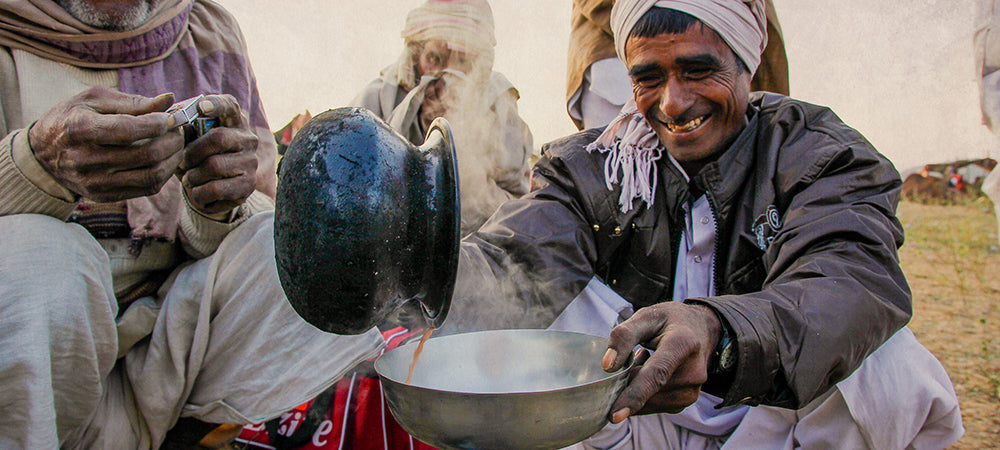
Chai is the word for tea in Hindi and many other Indian languages, and in India it usually means strong black tea simmered with milk and sugar. Add spices and it becomes masala chai, the drink much of the world calls “chai tea.” This guide explains what chai is made of, what it tastes like, how it differs from tea and a chai latte, and where it came from.
At a glance
- Meaning“Tea” in Hindi; in practice, milky sweet tea
- Made ofStrong black tea, water, milk, sugar
- Masala chaiChai with spices: cardamom, ginger, cinnamon, clove, pepper, fennel
- Tea usedMostly Assam, usually CTC granules
- MethodSimmered in one pan, not steeped
What is chai?
Chai is the Indian way of drinking tea: a strong black tea simmered with water, milk and sugar until it is creamy, dense and sweet.Read more
The word simply means tea, and it comes from cha, the Chinese word for the drink. Ask for chai anywhere in India and this is the cup you will be given. Our own glossary puts it in one line: “A preparation of black tea with milk, the most common way of consuming tea in India.” Our old FAQ was shorter still: chai is “tea made in the Indian style, CTC cooked in milk.”
The key word is simmered. You do not steep chai the way you steep a loose leaf black tea. You boil the tea in water, add milk and keep it at a medium to high heat for a few minutes, so that the tannic strength of the tea and the richness of the milk come together. “You do not steep chai, you brew it,” as one of our writers put it.
So what is chai made of? At its simplest, four things: tea, water, milk and sugar. The tea is almost always a strong, dark black tea, usually from Assam and usually CTC, the small, round granules that brew fast and give plenty of color and body. A light, aromatic tea like a Darjeeling has too thin a body for chai; milk and sugar would swamp it. Spices are optional; when they go in, the drink is masala chai. See Orthodox vs CTC tea for why the granules suit chai, and Assam tea for the region most chai comes from.
That is the odd thing about India and tea. As our old Tea 101 put it, the country “produces some of the world’s best teas from Darjeeling, Assam, the Nilgiris and Kangra but what the population best enjoys is chai, a sweetened milky tea made from CTC tea.”
Chai every day, and at our office
Chai is drunk everywhere in India: at home first thing in the morning, at roadside stalls, on railway platforms, in offices and whenever guests arrive. Avishek, of our procurement team, opened a chai tasting we hosted in 2021 by saying that “the style of preparation of chai varies distinctly from the north to the south and east to west. Every region in this vast country of ours has its own special chai.”
Our founder, Kausshal Dugarr, once listed “the perfect cup of chai,” missed through seven years of living in Singapore, as one more reason for coming back to India.
In Siliguri, where our teas are tasted and selected, most of our team stopped every day for a cup of Assam CTC chai from Joy-da, the chaiwallah on the ground floor of our office, as we wrote in 2015. Joy-da grew up in Sonarpur near Siliguri, where his father ran a sweet stall. His first job was in a bar, and when it shut he became a chaiwallah, 30 years before we wrote about him. Asked by a reader what made his chai so good, our editor answered that it was “the combination of his chai, the familiarity of his constant presence and a reason to stop for a chat and chai no matter how busy we are.”
What does chai taste like?
Plain chai tastes strong, malty and creamy, with a gentle sweetness and a brisk, tannic edge from the black tea; masala chai adds warmth and fragrance from spices such as cardamom, ginger, cinnamon and clove.Read more
A well-made cup is a balance: the tea should still come through the milk, and the spices should lift it rather than bury it. Our tasters judge a chai the way they judge a single-estate tea, by its top note, middle note and finish, and they taste a great many: in 2022 Avishek reckoned that, counting all the chai samplings, the team had tasted “closer to 24,678 cups” that year.
Read nextWhat does chai taste like?How the tea, the milk, the spices and even the cup shape the flavor, with our tasters’ notes blend by blendTea vs chai, chai tea and chai latte: what’s the difference?
Tea is any drink brewed from the leaves of the tea plant; chai is India’s milky, sweet tea simmered in a pan; masala chai is chai with spices; “chai tea” is the Western name for masala chai; and a chai latte is a café drink of spiced tea, syrup or powder mixed with steamed milk.Read more
Our founder’s shortest version: “Please repeat after me: Tea ≠ Chai.”

| What it is | How it is made | Taste | |
|---|---|---|---|
| Tea | Any brew of the tea plant: black, green, white, oolong | Leaves steeped in hot water, then strained; milk optional | Depends on the tea; delicate to bold |
| Chai | The Indian word for tea; in practice, milky sweet black tea | Strong black tea simmered with water, milk and sugar | Strong, malty, creamy, sweet |
| Masala chai | Chai with a spice mix (masala) | Spices simmered with the tea, then milk and sugar | Creamy, warm, spiced |
| Chai tea | A Western name for masala chai or a spiced tea blend | Usually a spiced black tea brewed with milk | As masala chai, often milder |
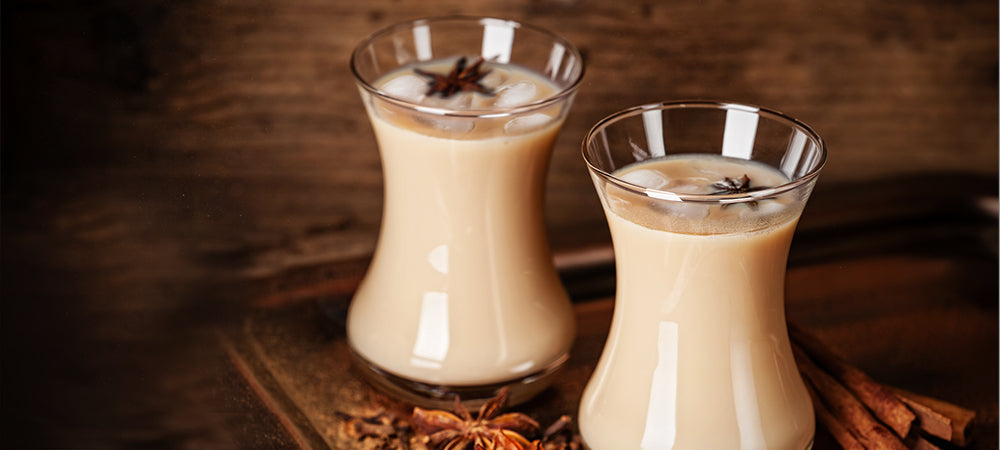
| Chai latte | A café adaptation of masala chai | Tea infusion, syrup or powder poured into steamed milk | Milky, frothy, usually sweeter |
Tea and chai
The difference between tea and chai is mostly in the leaf and the method. In broad terms, tea is made from loose leaves and drunk plain or with a little milk, while almost all chais use a strong CTC base, balanced with milk and lifted with spices. As more Indians drink green, white and single-estate teas, “tea” has become the broader word and “chai” the specific one.
It is still one plant. All teas, black, white, oolong, green and CTC, come from the same tea plant, a fact that almost always surprises people. The writer Jeff Koehler, who drank chai on the road in India for years, told us what changed when he finally tasted a Darjeeling plain: “no sugar, no milk, no lemon, no cardamom or ginger, no black pepper. Just tea. It had poise rather than the bounce of chai: patience over velocity, soft-spoken rather than brash.”
Chai tea
“Chai tea,” then, really means “tea tea.” Indians have called us out more than once for using the phrase in our ads; we use it because that is how the drink has become known around the world, and we are happy to see it reach so many places. Inside India, just say chai.
Peter Keen made the same point on our blog: “‘Chai’ is Hindi for tea, so chai tea is a redundancy.”
Chai latte
A chai latte is different again. Latte is Italian for milk, and a café latte is espresso with milk, a cousin of the French grand crème and the German Milchkaffee. A café chai latte is usually made by pouring a tea infusion, or a chai syrup or powder, into hot frothed milk, which makes it sweeter and milder than chai. Our own recipe card calls it “an adapted version of authentic Masala Chai from India.”
To an Indian, pouring tea into milk instead of boiling them together is quite unheard of. Many chai lattes in coffee shops start from “pre-brewed concentrates that are heavily pre-sweetened,” as Peter Keen noted in a draft for us. More in our Chai latte guide.
What is masala chai?
Masala chai is chai made with spices: strong black tea simmered with milk, sugar and a mix (masala) of spices such as cardamom, ginger, cinnamon, clove, black pepper and fennel.Read more
There is no single recipe. For every region of India, and almost every family, there is another way to make it. As Shruti, our tea blender in Siliguri, said in 2015, “Moms across the country have always thrown spices into the chai. Everyone has her own secret recipe for the kadak masala chai. But professionally, tea blending is still pretty new in India.”
Read nextWhat is masala chai?The spices, how our blenders build a masala chai, and the simple recipe our team sharesWhat are the types of chai in India?
India’s chai changes from region to region: strong kadak chai almost everywhere, cutting chai in Mumbai, kulhad chai in Kolkata, dhaba chai on the Punjab highways, cardamom chai in Kerala, and in Kashmir, the pink noon chai and the green kahwa.
Our blends follow the same map, which is why we call them “a short trip across India.” Two Fulbright scholars who spent a year crossing India in search of its chai wallahs, as our blog reported, met “over 1,000 chai wallahs” over “as many as 3,000 cups of chai” in 18 states, and concluded that “chai differs from one village to the next.”
- Kadak (karak) chai: kadak means strong. Bold, malty chai with tea, milk and sugar and no spices. Our Teabox Kadak Chai draws on teas from Assam and the Dooars. See Karak (kadak) chai.
- Bombay cutting chai: strong, spiced chai from the tapri, Mumbai’s roadside stall, served by the half glass. “Cutting” means a half cup. Most Mumbaikars, our team reckons, sip six or seven cups a day. Our story on Bombay’s cutting chai traces the habit to working breaks too short for a full cup.
- Kolkata street chai: poured into clay kulhads at street-corner addas, often with saffron, cardamom, nutmeg and ginger in our version.
- Punjabi dhaba chai: hearty, spice-laden chai from the highway dhabas, every one with its own secret recipe.
- Elaichi (cardamom) chai: sweet and fragrant, poured at the chai kadas of Kerala with pazham pori and bonda.
- Adrak (ginger) chai: fresh ginger grated into the pan, a winter favorite across India.
- Kashmiri chais: noon chai, the salted pink tea (see Kashmiri pink chai), a saffron and rose chai, and kahwa, a green tea with saffron, cardamom, almonds, cinnamon and cloves, drunk without milk (see Kashmiri kahwa). Ask a chaiwallah on a Srinagar houseboat for chai, we once wrote, and “he asks you which one, noon or kahwa?”
- Sulaimani: also known as ghava or kattan chaya, a black tea with lemon and no milk from South India, often served after a meal.
- Irani chai and butter chai: two more of the regional cups listed in our history posts.
Each style, with how it is made and served, is in Types of chai in India.
Which chais does Teabox make?
We make regional chais that follow India’s map, from Kolkata, Bombay, Punjab, Kashmir, Wayanad and Assam, along with a strong Kadak Chai and a range of Ayurvedic and herbal chais.Read more
Regional chai has been our plan from the start. Our blends follow the chai of each region, from Kolkata’s street chai to Kashmir’s saffron and rose.
Read nextOur chai rangeHow our regional chais began, where Kadak Chai comes from, and our Ayurvedic and herbal blendsWhat are Ayurvedic and herbal chais?
Ayurvedic chais are blends of tea, herbs and spices made in the tradition of Ayurveda, India’s traditional system of wellbeing; herbal chais leave out the tea leaf and use only herbs and spices.Read more
Both belong to an old Indian habit of brewing kitchen spices and herbs, and both are about flavor and ritual here rather than cures.
Ours include Rajasik for the morning, Rasayana for the evening and, in our Herbal Chai collection, the caffeine-free Abhay Ras. Each blend, and how to brew it, is in Our chai range.
Does chai have caffeine?
Yes. Chai is made from black tea, so a cup has caffeine; herbal chais made without tea leaves, such as tulsi or Abhay Ras, are caffeine-free.Read more
Our old Tea 101 guide put a cup of chai at about the same as a cup of black tea, roughly 50 mg. Our chai FAQ says the same in plain terms: our masala chais contain caffeine because they are made mainly from black CTC tea.
It is worth knowing. Caffeine has been the question our customers ask us most every year since 2022, and some had not realized that a chai contains any.
The real figure in your cup varies with the leaf, how much of it you use, the water temperature and how long you simmer it, and with the size of the cup; milk softens the taste but does not take caffeine out. Spices do not add caffeine. Kashmiri kahwa is a green tea, so it has some caffeine too. For the details, and how chai compares with coffee, see Does chai have caffeine?
Is chai good for you?
Chai is a drink, not a medicine, and research on chai itself is limited; most of what is said about it comes from what is known, or believed, about its tea and spices.Read more
As our old Tea 101 guide admitted, “chai is not a natural inclusion in tea research.”
Cardamom, ginger, cinnamon, clove and tulsi have a long place in Indian kitchens and in Ayurveda, and a cup of chai carries that tradition. Many of the claims made for chai online, including some in our own older posts, go further than the evidence. Milk and sugar are part of the cup as well.
Sugar is the part you control. Peter Keen, writing for us, found that ready-made chai drinks “almost all list the sugar content per cup as around 45 grams,” at about 4.2 grams to the teaspoon, and reminded readers that sugar is “not an intrinsic ingredient of tea but something added to it.” At home you can add the milk and sugar to taste. We look at what studies have and have not shown in Is chai good for you?
A short history of chai in India
Tea grew wild in Assam long before the British arrived, but chai as India drinks it is barely a hundred years old: it took shape in the early 1900s, when British tea companies pushed tea at railway stations and Indian vendors made it go further with milk, sugar and spices.Read more
Traders from Bengal and Gujarat, with better access to milk and spices, were among the first to blend them with the tea.
Read nextThe history of chai in IndiaFrom a spiced legend and the Singpho to railway stalls, CTC, chai cafés and chai-tinisHow to choose a good chai
Choose a chai with real spices and fresh tea rather than artificial flavorings, and pick the style by the cup you like: kadak for strength, cardamom for fragrance, a masala blend for warmth.Read more
Our old Tea 101 checklist still holds:
- Look for natural ingredients, not artificial flavorings; that keeps your cup closest to authentic Indian chai.
- Dry tea and granules should have no moisture or off notes.
- Look for strength and brightness when it brews.
- Long, well-rolled leaves are a sign of quality in a loose leaf chai.
- Read the label for allergens: some blends contain nuts, such as the almonds in kahwa.
The allergen point matters. Nut questions come up again and again from our customers, and on our site today only Kashmiri Kahwa declares an allergen, almond.
Look at the spices, too. Peter Keen’s advice was to focus on them, noting that the best chai makers tend to show the cinnamon sticks, cardamom pods and black peppercorns they use. He warned that white cardamom is a second-grade green pod bleached with hydrogen peroxide, and that much of the “cinnamon” sold in the US is cassia, while true cinnamon is the inner bark rolled into quills.
For loose tea to make chai from scratch, our writers’ advice is a strong, “kick-you-in-the-face” black tea: lowland teas grown nearer sea level, such as a full-bodied Assam, loose leaf or CTC. See Assam tea, or start with our Classic Assam Black.
Chai FAQ
Is chai the same as tea?
Chai means tea in Hindi, but in India it refers to a particular way of drinking it: strong black tea simmered with milk and sugar, often with spices. “Tea” is the wider word for any drink brewed from the tea plant, including green, white and oolong teas drunk plain.
What is the difference between chai and masala chai?
Chai is black tea simmered with milk and sugar. Masala chai is the same drink with spices added, usually some mix of cardamom, ginger, cinnamon, clove, black pepper and fennel. Masala means a spice mix.
What is the difference between chai tea and a chai latte?
“Chai tea” is the Western name for masala chai, spiced black tea brewed with milk. A chai latte is a café version made by pouring a tea infusion, or a chai syrup or powder, into steamed milk, so it is usually frothier, milder and sweeter. See our Chai latte guide.
Is there a caffeine-free chai?
Yes. Chais made only from herbs and spices, with no tea leaves, are caffeine-free, such as tulsi chai, Abhay Ras or Soma from our Herbal Chai range. Any chai made with black or green tea, including kahwa, contains caffeine.
Why is a chai with no spices still called chai?
Because chai means tea. In India, kadak chai is simply a strong, brisk cup of black tea brewed with milk, and you can add ginger, cardamom or any spice you like. Our Kadak Chai is made that way, with no added spices.
Can chai be drunk plain?
Yes. All tea, including chai, can be drunk plain if you prefer it. Most chais are strong, and milk is used to balance that. Kashmiri kahwa is the one chai blend that is only drunk plain, because it is made with a green tea base.
What is the difference between chai and matcha?
Chai is black tea simmered with milk, sugar and often spices, and it comes from India. Matcha is a Japanese green tea ground to a fine powder and whisked with water, sometimes with milk in a matcha latte. Both contain caffeine; they taste quite different, malty and spiced against grassy and vegetal.
What is a chai drink in a café?
In most cafés outside India, “chai” on the menu means a chai latte: spiced tea, syrup or powder with steamed milk. A “dirty chai” adds a shot of espresso. In India, a chai is simply a cup of milky tea, from a stall or a kitchen.
Keep reading
Sources
- Teabox blog: The Journey of Our Beloved Chai (2020), The Authentic Indian Chai Experience (2023), Teabox’s favorite chaiwallah (2015, with reader comments), A Blender of Teas (2015), Tea Blends That Didn’t Quite Make It (2015)
- Teabox blog: Cross Country in Search of the Chai Wallah (2015), Bombay’s Lifeline – Cutting Chai (2020), The Sweet Palate, a Cup of Joy (2020), The Flavors of the Valley (2020), Bun-maska-chai, only in a Bombay Irani (2017)
- Teabox blog: Would you like some sugar in your tea? Or a little tea in your sugar? (Peter Keen, 2017), From Europe and food to Asia and tea (2015), The Science Behind My Ginger Chai (2015), Why I love tea (2015)
- Teabox blog (Still Steeping): The Chai Story, 2021; Chai: the way India drinks tea, 2015 (with reader comments); The Teabox Top 10 Teas of 2015
- Teabox Tea 101: Chai, the Indian way of drinking tea; What’s the difference between tea, chai, chai tea?; How to choose a chai?; Why everyone should drink chai tea?; FAQs; Glossary of tea terms; Top 10 tea producing regions of the world; Famous teas from around the world; An overview: tea industry in India
- Teabox product records: blend ingredients and tasting notes (Kolkata Street, Bombay Cutting, Wayanad Cardamom, Punjabi Masala, Assam Masala, Kashmiri Saffron Rose, Kashmiri Kahwa, Rajasik, Rasayana, Abhay Ras, Ashoka Ras, Ojas Ras, Soma, Teabox Kadak)
- Teabox Drive: Teabox internal document, 2021; Teabox internal document, 2017; Teabox internal document, 2015; Teabox internal document, 2018; Teabox internal document; Teabox internal document, 2023; Teabox internal document, 2022; Teabox internal document, 2025; Teabox internal document, 2026; Teabox internal document; Teabox internal document, 2026; photos as credited
- Teabox on Instagram (@teabox.tea): masala chai legend, Sep 2020, Ayurvedic chai launch, May 2021, noon or kahwa, Aug 2021, how Indians began drinking tea, Jan 2022, old tea campaigns, Jan 2022, Kadak Chai and pruning, Jan 2022, cups tasted, Oct 2022, chai latte, Nov 2022, regional chais, Jul 2023, a short trip across India, Aug 2025, “tea tea,” Sep 2025, Ramayana Chai Collection, Oct 2026
- Kausshal Dugarr on X (@Teapreneur): the perfect cup of chai, May 2010, Vir Sanghvi quote, Jun 2020, Tea ≠ Chai, Jul 2020, chai as jugaad, Aug 2021, Kolkata street tea, Nov 2021, traceability, Jan 2022, Kadak Chai sourcing, Jan 2022, history threads, Mar 2022, one plant, Apr 2022; Teabox on X (@TeaboxTea): thandai and sherbet, Mar 2022
- Teabox on YouTube: True Story of Tea Cultivation in India


Leave a comment
All comments are moderated before being published.
This site is protected by hCaptcha and the hCaptcha Privacy Policy and Terms of Service apply.