


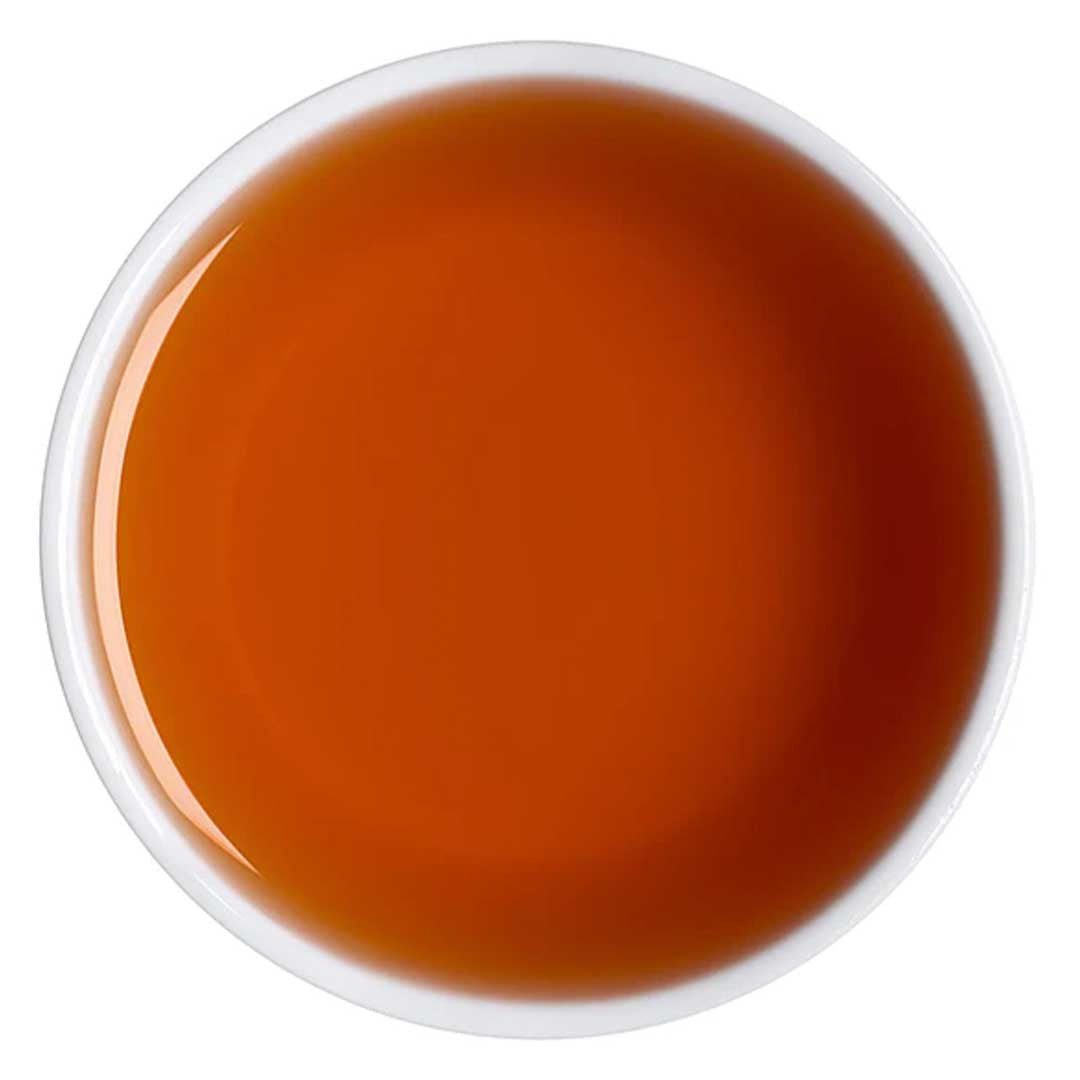
Yes, all true tea has caffeine: Tea 101 puts a cup of black tea at about 50 mg and a cup of green tea at about 20 to 45 mg, against about 90 to 95 mg for coffee. White and oolong teas have caffeine too, and matcha has plenty. The amount in your own cup moves with the leaf, how much you use, the water temperature and the steeping time. Only herbal teas, made without tea leaf, are naturally caffeine-free.
At a glance
- Black teaAbout 50 mg a cup
- Green teaAbout 20–45 mg a cup
- Oolong teaBetween green and black
- White teaGenerally on the lower side of green; varies
- Masala chaiAbout the same as black tea, since it is black tea
Does all tea have caffeine?
Yes. Every tea made from the tea plant, Camellia sinensis, has caffeine: black, green, white, oolong and the black tea in your chai. The plant makes it naturally, and what differs from one tea to the next is how much of it ends up in the cup.Read more
The tea bush makes caffeine for its own reasons. Our training deck explains that caffeine is the main methylxanthine in tea, alongside two chemically similar compounds, theobromine and theophylline, and that “the tea plant creates these chemicals as a way to ward off insects and other animals.” Peter G. W. Keen, writing for our blog in 2016, called caffeine one of the most effective natural pesticides, one that seems to have evolved from the bushes themselves and discourages many of the 300 or so tiny predators of the tea plant.
Many people still believe some types of tea come from a different plant. When our 2022 Teabox Masterclass took up that myth, the answer was plain: “All teas come from the same plant, Camellia Sinensis. They are different by the way they are made.”
Our Tea 101 archive makes a point that surprises most people: the dry leaves of black, green, white and oolong teas hold broadly similar amounts of caffeine. The differences in the cup come from the tea itself and from how you brew it: “the plant cultivar, type of tea, season of plucking, and the duration of infusion,” as well as how much leaf goes into the pot. So the label on the tin is a starting point, not a measurement.
The one family of “teas” with no caffeine is herbal tea, or tisane: chamomile, hibiscus, tulsi, butterfly pea flower and other blends made from flowers, herbs, roots or spices, with no tea leaf in them. We cover those below. Our tea expert Mohona Banerjee gave a whole 2022 masterclass to the question “What is Tisane? Are they really caffeine-free?” If you are new to the main types, start with What is green tea? and What is black tea?
How much caffeine is in a cup of tea?
Roughly, a cup of black tea has about 50 mg of caffeine, green tea about 20 to 45 mg, oolong somewhere between the two and white tea generally on the lower side of green; a cup of coffee has about 90 to 95 mg.Read more
These are approximate figures from our Tea 101 caffeine posts. Caffeine varies with the leaf, the quantity, the water temperature and the steeping time, so treat every number here as a guide, not a lab result.
| Drink, per cup | Caffeine (about) | On a 0–100 mg scale |
|---|---|---|
| Coffee | 90–95 mg | |
| Black tea | 50 mg | |
| Masala chai (black tea) | About the same as black tea | |
| Oolong tea | Between green and black | No fixed figure |
| Green tea | 20–45 mg | |
| White tea | Generally on the lower side of green | No fixed figure |
| Herbal tea (tisane) | None | 0 mg |
Bars show the upper end of each range. Figures: Tea 101, “Caffeine in tea” and “Why everyone should drink chai.”
Caffeine in the leaf, caffeine in the cup
It helps to keep two numbers apart. One is the caffeine in the dry leaf, a percentage of its weight. The other is the caffeine that actually reaches your cup, in milligrams, which depends on how you brew.
For the leaf, the best figures we hold come from tea scientists, not from us. A review by M. N. Dev Choudhury, F. Rahman and B. C. Barbora of the Tea Research Association’s Tocklai Experimental Station in Jorhat found that the made teas of North East India contain “between 3 and 5 per cent” caffeine. A German study of four commercial black tea bag blends measured 3.21 to 3.85%.
For the cup, the same Tocklai review notes that “in normal brewing, around 80% of caffeine present is extracted from the tea particles.” The rest stays in the wet leaf, which is why time, temperature and the amount of leaf matter so much.
Teabox has never lab-tested its own teas for caffeine, so we do not print milligram figures of our own. Our 2016 caffeine article drew a chart of popular drinks that put coffee at about 120 mg a cup, cola 50, black tea 40, oolong 30, green 20 and white about 16, and called the figures “just approximations.” The order is the same as Tea 101’s; the numbers are a little lower, a reminder of how much any single figure depends on the cup being measured.
How much caffeine is in green tea, matcha, white tea and oolong?
Green tea has caffeine, usually less in the cup than black tea; matcha has more, because you drink the whole leaf; white tea and oolong vary more than any other types, and bud-rich whites can surprise you.Read more
The short version: Tea 101 puts green tea at about 20 to 45 mg a cup, and every green tea and green blend we sell is rated “Low.” Our matcha is rated “High.” In the dry leaf, though, published research puts a bud-rich white tea above black, green and oolong; whether that reaches your cup depends on its cooler, gentler brew.
Read nextCaffeine by type of teaGreen tea, matcha, white tea, oolong and chai, leaf by leaf and cup by cupHow does Teabox rate the caffeine in its teas?
Every Teabox tea page carries a caffeine rating, from Caffeine Free through Low and Medium to High, so you can compare teas you know nothing else about.Read more
Our breakfast blends, chais and matcha are rated High; most single-estate Assam and Darjeeling blacks, our Moonlight whites and our oolong are Medium; our green teas and Silver Needle are Low; and our tisanes and herbal chais are Caffeine Free. Readers have long used these labels. One thanked us, on our 2016 caffeine article, for rating every tea High, Medium or Low: “It means I can select something low/medium for an afternoon cuppa.”
Read nextHow Teabox rates caffeineWhat High, Medium, Low and Caffeine Free mean, and where every tea in our range sitsWhat changes the amount of caffeine in tea?
Five things matter most: the tea itself (bush, season and how it was made), how much leaf you use, how hot the water is, how long you steep it and how big the cup is. You control the last four every time you brew.Read more
- The leaf. Tea 101 lists the plant cultivar, the type of tea and the season of plucking among the factors. The Tocklai review adds that the bud holds the most caffeine, with each older leaf holding less, and that in Assam caffeine peaks in June and July. Small CTC granules, the kind in most chai and many tea bags, brew fast and strong; whole leaf gives its strength up more slowly. More in Orthodox vs CTC tea.
- How much leaf. More leaf, more caffeine. A standard cup is about 2 to 2.5 g of leaf, roughly one heaped teaspoon, to 250 ml (8 oz) of water.
- Water temperature. Hotter water draws caffeine out faster. That is one reason a black tea brewed at 95–100°C (203–212°F) usually ends up stronger than a green brewed at 75–80°C.
- Steeping time. Time matters a great deal. Our 2016 article put black tea at around 20 mg after two minutes and around 50 mg after five.
- The cup. A large mug holds more tea than a standard cup, and more caffeine with it.

Milk does not remove caffeine. It softens the taste, and if it takes the place of some water each cup is a little less concentrated, but the caffeine is set by the leaf and the steep. Nor can you rinse it away: a quick first infusion poured off takes flavor with it and leaves much of the caffeine behind. For brewing times by tea, see How to brew loose leaf tea.
Read nextWhat affects the caffeine in teaFrom the bush, the pluck and the season to the grade, the factory and your teapot, with the research figuresTea vs coffee: which has more caffeine?
Coffee has more per cup: Tea 101 puts coffee at about 90 to 95 mg, close to twice a cup of black tea at about 50 mg.Read more
Yet gram for gram, dry tea leaf actually holds more caffeine than coffee beans. The difference is extraction: steeping draws out only part of the caffeine in tea leaf, while brewing coffee extracts much more from the bean.
The research we hold puts numbers on both halves. Tea leaves average about 3.5% caffeine against 1.1 to 2.2% for coffee beans, according to a 2009 study in the Czech Journal of Food Sciences that cites earlier coffee research. But coffee is brewed with far more grounds: filter coffee made at 20 g a liter held 310 to 410 mg of caffeine per liter in the German brewing study. Our own 2016 chart put a cup of coffee at about three times a cup of black tea.
Tea also contains an amino acid, L-theanine, that coffee does not. How it interacts with caffeine is still being studied, and we make no claims for it here. We first put the tea-versus-coffee caffeine question to our readers in 2016: “Ever wondered how much caffeine is in that cup of tea you’re drinking?” Taste, ritual and everything else are compared in our dedicated guide, Tea vs coffee.
Which teas are lowest in caffeine?
Among true teas, most green teas and the lighter, leafier whites are the gentlest, and our catalog rates them “Low”; the strongest are breakfast black teas, chais and matcha. But how you brew can matter as much as what you buy.Read more
Not every white is low. Bud-only whites start with the most caffeine in the leaf, and our Moonlight whites are rated Medium, while Silver Needle is rated Low. The bush matters too: in the Tocklai trials the China-type cultivars Indochina and Lingia were the lowest in caffeine of 16 grown side by side. China-type bushes are the ones behind Darjeeling’s chinary teas.
For a gentler cup without leaving the tea plant:
- Choose a green or a gentle white. A spring white such as our Darjeeling Special Spring Silver Needle White, light and refined with gentle floral notes, or an everyday whole-leaf Darjeeling Green Tea, both rated “Low.” See also White tea vs green tea.
- Try a light oolong. Glenburn Spring Moonshine Oolong is light-bodied and sweet-floral, with notes of peony, muskmelon and vine peach, and is rated Medium.
- Brew at the low end. Use a little less leaf, cooler water where the tea allows it and the shorter steeping time. Our earliest caffeine article, from 2013, gave the same advice: “Use a little less leaf and brew your teas with cooler water, and reduce the brewing time too.”
- Keep matcha and strong chai for earlier in the day. Save the gentler teas for the afternoon and a tisane for the evening.
Low caffeine is not the same as good tea. As Peter Keen put it in 2016, “That a tea is low caffeine doesn’t mean it’s a good tea,” and he warned against whites sold on that basis alone.
Which herbal teas are caffeine-free?
Herbal teas made without any tea leaf are naturally caffeine-free: chamomile, hibiscus, tulsi, rooibos, butterfly pea flower and spice or flower blends.Read more
They are not technically tea at all but tisanes, infusions of herbs, fruits and flowers. Our training deck puts the rule simply: “if it isn’t from the Camellia sinensis plant, it’s not tea,” and lists mint, chamomile, hibiscus, lemongrass, ginger, yerba maté, guayusa and rooibos among the herbal infusions. One caution on that list: yerba maté is not tea, but it does contain caffeine of its own, about 1% of the dry leaf in one study, so it is not caffeine-free.
Our caffeine-free range includes Pure Chamomile, whole flowers from the foothills of Uttarakhand that brew a floral, honeyed cup with notes of crisp apple; Hibiscus Lemongrass Tisane, tart and citrusy with a hint of spice; and Butterfly Blue Pea Flower. There are also caffeine-free chais, Ayurvedic blends of herbs and flowers with no tea leaf, in our Herbal Chai collection; read each ingredient list, since they combine several herbs. In the summer of 2022 we also made three iced tisanes, Kokum Hibiscus, Mint Jamun and Vanilla Grape, sold as “100% caffeine free with No Sugar Added.”
Read the ingredients, not just the name. Some blends that sound herbal are built on tea: green tea chamomile or green tea mint is still green tea, with green tea’s caffeine, and a traditional Kashmiri kahwa is made with green tea too. Our own Green Tea Chamomile Sleep is one of these: Pure Chamomile is a caffeine-free tisane, while the Chamomile Green blends chamomile with green tea, so it does contain caffeine, and customers have bought it expecting none. Likewise, our Rasayana Ayurvedic Chai, sold for the evening, is made with black tea. Caffeine-free also does not mean right for everyone; if you are unsure about an herb, check with your doctor. More in Herbal tea (tisanes).
What is decaf tea, and is decaffeinated green tea caffeine-free?
Decaffeinated tea is real tea that has had most of its caffeine removed, so it is lower in caffeine but never caffeine-free. That goes for decaffeinated green tea and decaf black tea alike.Read more
If you need none at all, choose an herbal tea instead. Any tea can be decaffeinated, though black and green teas are the usual candidates. Our Tea 101 archive describes four methods in use:
- Carbon dioxide. Pressurized liquid carbon dioxide draws the small caffeine molecules out of the leaf and leaves the larger flavor molecules behind. It is the method most often credited with keeping the most flavor.
- Ethyl acetate. The leaf is soaked in ethyl acetate, a compound that also occurs naturally in tea leaves and some fruits. Some drinkers say it leaves a flat or chemical taste. Because the compound is found in plants, Peter Keen noted in 2016, packs made this way can legally say “naturally decaffeinated.”
- Methylene chloride. A solvent that bonds with the caffeine so the leaf can be separated from it. Its use is debated.
- Water processing. Hot water extracts the caffeine along with the flavor; the water passes through a carbon filter that catches the caffeine, and the leaf reabsorbs the flavor. Common for coffee, less explored for tea.
Whatever the method, decaffeination tends to take some flavor away with the caffeine. Tea scientists explain why: caffeine is part of what makes a black tea brisk, and the Tocklai review warns that removing it “is likely to have adverse effect on the liquor characters.” If you buy decaf, look for a seller who says which method was used.
Teabox does not sell decaf tea. Customers do ask us for decaf black tea, decaf chai and a caffeine-free English Breakfast, and we understand why. For a lighter cup, we would rather point you to a white, a green brewed gently or a caffeine-free tisane.
Is the caffeine in tea bad for you?
We don’t give medical advice, and people respond to caffeine very differently. What we can say is how much is in your cup, so you can make your own choice.Read more
Our 2016 article’s view was that caffeine is part of what tea is, not something to fear: choose your tea for the enjoyment it offers and keep caffeine “very much in the back of your mind.” Aravinda Anantharaman, then our senior editor, put the house view in a line: “We feel you should drink coffee or tea or both for pleasure.” That interview with the coffee and tea trader Ian Bersten, Tea or coffee? I swing both ways!, is worth reading in full.
Caffeine is also part of what makes tea taste like tea. Tea scientists tie it to a black tea’s briskness and to the “cream,” the haze that forms as a strong black tea cools.
If caffeine does not suit you, the practical answers are the ones above: lighter teas, gentler brewing, smaller cups and herbal teas later in the day. If you are pregnant, have a health condition or take medication, ask your doctor what is right for you; our guide to tea during pregnancy covers that question in more detail. For what research has and has not shown about tea more broadly, see Health benefits of tea and Tea and health myths.
How much caffeine is too much?
It depends on the person. National health authorities publish daily guidance on caffeine for healthy adults, with lower figures in pregnancy, so check the guidance where you live and ask your doctor if you are unsure.
Then use the cup figures on this page to see where your own day lands. A simple way to count: at about 50 mg a cup, three cups of black tea come to roughly 150 mg; three cups of green tea, roughly 60 to 135 mg. Remember to add everything else with caffeine in it, such as coffee, cola, chocolate and energy drinks.
Time of day matters too. Caffeine lingers: our 2016 article reckoned that about half of it is gone some six hours after a cup, so about half the caffeine in a cup of black tea drunk at 8 am is gone by 2 pm, while half of a cup drunk at 8 pm is still there at 2 am. Hence, it said, the old habit of strong black tea at breakfast and lighter teas later in the day: “a morning wake-up black tea and lighter oolong, green or top-rate white for the late afternoon.”
Find your cup, by caffeine
Breakfast blends have been made for strength from the start. Our blog traces the first one to Drysdale, an Edinburgh tea master who in 1892 created a blend “designed for its strength and high levels of caffeine,” which Queen Victoria later took to London. Read the story in Wake Up to the Year of the Rooster. Here is our range from strongest to none:
Caffeine in tea FAQ
Does green tea have more caffeine than black tea?
Usually not. Tea 101 puts a cup of green tea at about 20 to 45 mg and black tea at about 50 mg, partly because green tea is brewed cooler and shorter. Brew a green hot and long, though, and it can come close to a light black tea.
Is decaf tea caffeine-free?
No. Decaffeination removes most of the caffeine but not all of it, whether the tea is black or green. For no caffeine at all, choose an herbal tea with no tea leaf, such as chamomile, hibiscus or tulsi.
Does masala chai have caffeine?
Yes. Masala chai is made with black tea, so a cup has about the same caffeine as a cup of black tea, roughly 50 mg. The spices add none. See Does chai have caffeine?
Will tea keep me awake at night?
It can, if you are sensitive to caffeine. Our 2016 caffeine article reckoned about half the caffeine in a cup is gone after some six hours, so keep black tea and matcha for earlier in the day and switch to a caffeine-free herbal tea in the evening.
Does matcha have more caffeine than green tea?
Generally, yes. With matcha you drink the whole powdered leaf instead of an infusion, and our matcha is rated “High” for caffeine while most of our loose green teas are rated “Low.” How much powder you use makes a big difference.
Does white tea have the least caffeine?
Often, but not always. White tea is generally on the lower side of green in the cup, but bud-only white teas can be livelier than the label suggests, and brewing time and the amount of leaf matter as much as the type.
Why does my “low caffeine” white tea feel strong?
Probably because it is made from buds. Tea scientists at Tocklai found the bud holds the most caffeine of any part of the shoot, and a 2009 study measured more caffeine in a white tea’s dry leaf than in black, green or oolong. A long, hot steep draws more of it out. See Caffeine by type of tea.
Does tea have more caffeine than coffee?
Dry tea leaf has more caffeine than coffee beans, gram for gram, but a cup of tea has less: about 50 mg for black tea against about 90 to 95 mg for coffee, because steeping draws out only part of the caffeine in the leaf. More in Tea vs coffee.
Keep reading
Sources
- Teabox Tea 101: Caffeine in tea; Is decaffeinated tea bad for you?; Why everyone should drink chai; Beginner’s guide to herbal tea; Black tea or green tea; Tea vs coffee; Types of tea; The difference between white and green tea
- Teabox blog (Still Steeping), Caffeine in Your Tea? Stop Worrying!, 2016 (Peter G. W. Keen), including its caffeine chart and reader comments; The true colors of the white tea, 2016 (Keen); Pesticides in tea and what you should know about it, 2016 (Keen)
- Teabox blog: When Samurai Went to War And Drank Green Tea (2016); Green tea and weight loss: Lessons from jockeys, dancers and athletes (2016, Keen); Microwaved, tepid, rolling boiling? Water for tea! (2016, Keen); Tea or coffee? I swing both ways! (2015, interview with Ian Bersten, with editor’s comment, 2016); Wake Up to the Year of the Rooster (2017)
- Teabox product data, October 2026: caffeine ratings, descriptions and tasting notes
- Teabox Drive: Teabox internal document; Teabox internal document, 2026 (internal); Teabox internal document, 2013; photos as credited
- Published research held in the Teabox knowledge library (not Teabox’s own work): M. N. Dev Choudhury, F. Rahman and B. C. Barbora, Tea Research Association, Tocklai Experimental Station, “Teabox internal document,” Two and a Bud; D. Komes et al., “Teabox internal document,” Czech Journal of Food Sciences 27 (2009); C. Lakenbrink, U. Engelhardt et al., “Teabox internal document,” Journal of Agricultural and Food Chemistry 48 (2000)
- Teabox on Instagram (@teabox.tea): caffeine question, Jul 2016, shade-grown matcha, Feb 2019, one plant myth, Mar 2022, tisane masterclass, Apr 2022, summer tisanes, May 2022, summer tisanes, May 2022, matcha grade, Jul 2022, matcha recipe, Jan 2023

Leave a comment
All comments are moderated before being published.
This site is protected by hCaptcha and the hCaptcha Privacy Policy and Terms of Service apply.