


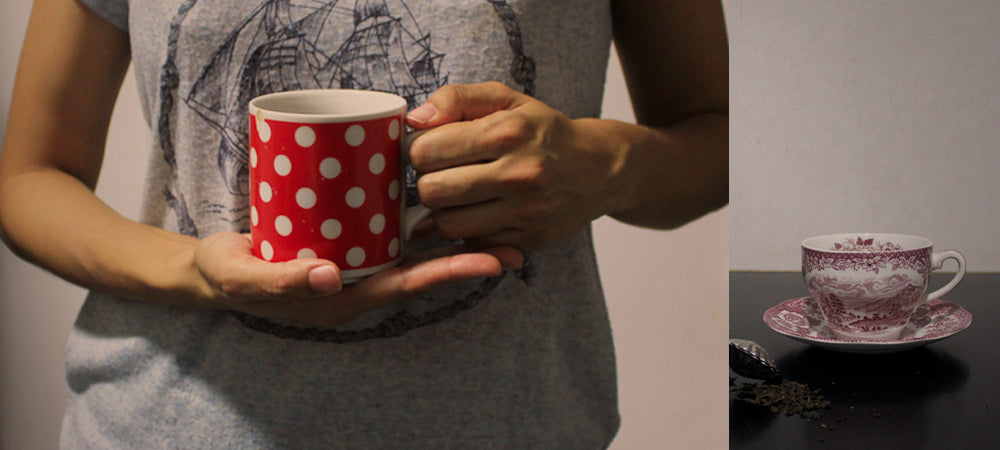
Many people keep drinking tea while pregnant, but every cup of true tea contains caffeine, and some herbal teas are not advised at all. Your doctor or midwife is the right person to tell you what suits you. We are tea tasters, not doctors, and this page is general information about tea, not medical advice. It explains what is in your cup, how the caffeine adds up, and how to read a blend label, so you can have that conversation with the facts in hand.
At a glance
- The short answerAsk your doctor or midwife; the main thing to discuss in tea is caffeine
- Caffeine guidanceUp to 200 mg a day, from all sources (ACOG, as cited by Tea 101)
- Black teaAbout 50 mg a cup
- Green teaAbout 20 to 45 mg a cup
- Masala chaiAbout the same as black tea
Can you drink tea while pregnant?
Many people keep drinking tea in pregnancy, and the main thing to discuss with your doctor or midwife is the caffeine in it.Read more
Our original Tea 101 guide put it the same way: you can usually keep your cup “if there are no other medical complications,” and it ended with a reminder that still stands, to consult your doctor before switching to something new during pregnancy. That guide was first drafted in May 2017. We have since reread it line by line and taken out every health promise it made about herbal teas.
It helps to split tea into two families. Black, green, white and oolong teas all come from one plant, Camellia sinensis, and all of them contain caffeine; so does masala chai, which is black tea with spices. Herbal teas, or tisanes, are made from other plants such as chamomile, ginger, hibiscus or mint. Most contain no caffeine, but caffeine-free is not the same as suitable in pregnancy.
Herbs have active compounds of their own, and for many of them there is little research in pregnancy. So when people ask what tea is safe during pregnancy, the honest answer has two parts: count your caffeine, and check your herbs with your doctor or midwife. There is no single list of pregnancy-safe teas that suits everyone.
This is also how we answer customers who ask us. We are tea makers rather than doctors, so we ask you to check with your doctor or midwife, and we will gladly send the full ingredient list of any of our blends to take to that appointment.
If the two families are new to you, start with Herbal tea (tisanes) and Black tea vs green tea.
How much caffeine is safe during pregnancy?
Tea 101 has long cited the American College of Obstetricians and Gynecologists (ACOG), which recommends up to 200 milligrams of caffeine a day in pregnancy, counted from every source, not just tea.Read more
Guidance differs between countries and is reviewed from time to time, and your own doctor or midwife may give you a different figure. Ask them which figure applies to you.
How many cups that is depends on the cup. Tea 101 puts a cup of black tea at about 50 mg and a cup of green tea at roughly 20 to 45 mg, against about 90 to 95 mg for a cup of coffee. On those figures, a few ordinary cups add up quickly, and coffee, cola, energy drinks and chocolate count too.
These are averages: caffeine varies with the leaf, how much you use, the water temperature and how long you steep it. A 2016 piece on our blog gave a sense of the range, putting black tea at around 20 mg when brewed for two minutes and about 50 mg at five. The leaf itself varies too. A review by the Tea Research Association at Tocklai, Jorhat, found that the made teas of North East India contain between 3 and 5 percent caffeine, and that normal brewing draws out around 80 percent of it.
| Your cup | Caffeine, roughly | Worth knowing |
|---|---|---|
| Black tea (Assam, Darjeeling, Nilgiri) | About 50 mg | Strong, long-steeped cups sit higher |
| Masala chai | About the same as black tea | Milk dilutes the cup, not the caffeine |
| Green tea | About 20 to 45 mg | Cooler water and shorter steeps extract less |
| Oolong | Between green and black | Rebrewing adds to the total |
| White tea | Generally on the lower side of green; varies | No fixed figure; it depends on the tea |
| Decaf tea | Lower, never zero | Still counts, a little |
| Herbal tea with no tea leaf | None | Check the label for green or black tea |
| Coffee, for comparison | About 90 to 95 mg | Counts toward the same daily total |
Using our caffeine labels to count
We do not test our teas for caffeine in a laboratory, so we give no milligram figure for any single product. What our product pages do carry is a caffeine rating of High, Medium, Low or Caffeine free. In October 2026 all our chais made with black tea, including the Ayurvedic ones, are rated High (our Instant Chai Latte Mix is Medium); most of our single-estate Assam black teas are rated Medium; and every green tea blend we sell is rated Low.
Low on our labels never means none. Only teas marked Caffeine free contain no tea leaf at all.
The full picture, including how brewing changes the numbers, is in Caffeine in tea.
Is green tea safe during pregnancy?
Green tea is not caffeine-free: it usually has less caffeine than black tea, but it counts toward your daily total just the same.Read more
Our original Tea 101 guide noted that there is no official advice to stop drinking green tea in pregnancy, only to keep its caffeine in mind.
Green tea is brewed cooler and shorter than black tea, at 75 to 80°C (167 to 176°F) for 2 to 3 minutes, and a gentle brew tends to extract less caffeine than a long, hot one. A plain green such as our Darjeeling Green Tea, which has nothing in it but green tea leaf and is labeled low caffeine on its product page, makes it easy to know what you are drinking. More on the tea itself in What is green tea?
Flavored green teas carry both
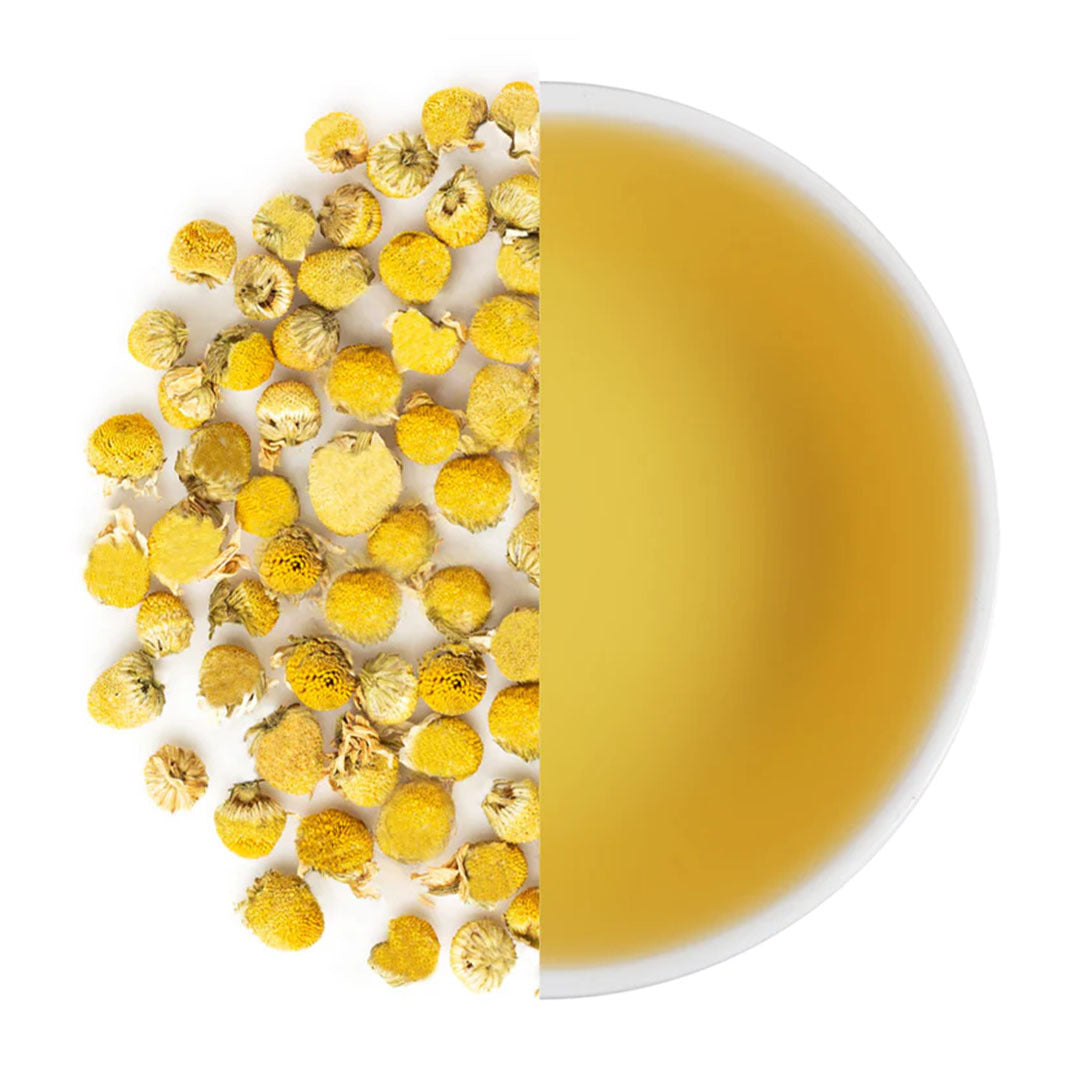
Many flavored green teas are a different matter: they combine green tea with herbs or flowers, so they carry both the caffeine and the herbs. Our own customers have been caught out by this. In 2022 a buyer of our chamomile green tea had not realized it was made with green tea at all. Our support team’s answer since then has been plain: Pure Chamomile is a caffeine-free tisane, while Chamomile Green blends chamomile with green tea, so it does contain caffeine.
White tea and concentrates
Two other cups catch people out. White tea is often assumed to be caffeine-free; it is not (see What is white tea?). Whites made mostly from buds can start with more caffeine in the leaf: the Tocklai review found caffeine highest in the bud, at 5.30 percent in a shoot of one leaf and a bud against 3.20 percent in a shoot of four leaves and a bud. How much reaches your cup still depends on the cooler, shorter brew white tea gets. Our own ratings reflect the range: our Moonlight white teas are rated Medium, while Silver Needle is rated Low.
Green tea supplements, extracts and powders deliver far more of the leaf than a brewed cup; any of these is one to ask your doctor about before taking.
Are herbal teas safe during pregnancy?
Not automatically. Herbal teas are usually free of caffeine, but they are made from plants with active compounds of their own, and there is little research on many of them in pregnancy.Read more
That is why the careful approach is to ask your doctor or midwife about any herbal tea you plan to drink regularly, and to treat “natural” as a description of where an ingredient comes from, not a promise that it is right for you. A 2016 piece on our blog made the point precisely: in food labeling, natural “just means found somewhere in nature.”
Our own archive has been on both sides of this. The original Tea 101 guide listed ginger, nettle, raspberry leaf, dandelion, peppermint and rooibos as teas you could drink during pregnancy. That 2016 piece took a more cautious view of herbal teas in general. It singled out “dieter” teas and blends with star anise, comfrey, aloe, senna, peppermint or oleander, warning that herbs can cause problems “in combination with each other, medications and laxatives, and through oversteeping and high dosages.”
We no longer publish a “safe list.” What one person’s doctor is happy with may not suit another, so the table below is a starting point for that conversation, nothing more.
| Herbal tea | What it is | In pregnancy |
|---|---|---|
| Chamomile | Dried flowers, honeyed and soft | Caffeine-free; ask your doctor or midwife before making it a habit |
| Ginger | Root, warm and spicy | Widely drunk; ask about how much and how often (see below) |
| Peppermint | Leaf, cool and fresh | Caffeine-free; our own sources disagree, so ask first |
| Rooibos | A South African shrub, naturally sweet | Caffeine-free; ask first |
| Raspberry leaf, nettle, dandelion | Herbal leaves and roots | Only on your doctor’s or midwife’s advice |
| Hibiscus | Flower, tart and ruby red | Ask first; often blended with other herbs |
| Tulsi (holy basil) | Leaf of the holy basil plant | Ask first; see Tulsi tea |
| Licorice root | Root, very sweet | Listed by Tea 101 as one to avoid |
For more on how tisanes are made and brewed, see Herbal tea (tisanes).
Is ginger tea good for pregnancy nausea?
Ginger tea is a familiar home drink in India and far beyond, and many people reach for it when they feel queasy; whether it suits you in pregnancy, and how much, is a question for your doctor or midwife.Read more
We cannot tell you it will ease nausea, and if morning sickness is severe or you cannot keep fluids down, that is something to raise with them rather than treat at home with tea.
If your doctor or midwife is happy for you to drink it, ginger tea is simply fresh ginger root, peeled and sliced or grated, simmered in water for a few minutes and strained. On its own it contains no caffeine. Ginger chai is different: it is black tea brewed with ginger, usually with milk, so it carries the caffeine of the tea. Ginger is also in almost every masala chai blend; see Chai spices and chai masala.
That holds for our own range too. Every Teabox blend that lists ginger is built on tea leaf: our masala and Ayurvedic chais, rated High for caffeine, and our Turmeric Ginger Tulsi Green teabags, rated Low. We do not sell a caffeine-free ginger tea, so a plain ginger cup is one to make at home from the root.

One kitchen tip from our blog, for anyone making ginger chai: fresh ginger can curdle hot milk. Its enzymes clot milk proteins most actively above 60°C and are neutralized above 70°C, so either boil the ginger in water before adding milk, or wait until the milk and water are hot enough to sizzle against the pan before adding the ginger. The full story is in The Science Behind My Ginger Chai.
Which teas should you avoid when pregnant?
Our original Tea 101 guide listed black cohosh, blue cohosh, dong quai, licorice root, and all diet, PMS or detox teas as herbal teas to avoid in pregnancy.Read more
That list is not complete, and your doctor or midwife may add to it. A few further cautions follow from everything above:
- Teas sold for a purpose. Diet, slimming and “detox” teas often mix several herbs, some of them laxative. Many “detox” green teas, including some sold by us, are green tea with herbs, so they bring caffeine as well as the herbs. Our view of what tea can and cannot do is in Tea and weight loss.
- Concentrated products. Extracts, capsules and supplements are not the same as a brewed cup. Writing about herbs and pets, our blog noted that concentrated extracts can run 500 to 2,000 times the strength of the natural leaf.
- Herbs you do not recognize. If a blend lists a plant you have not heard of, ask your doctor, midwife or pharmacist before drinking it.
- Very strong caffeinated cups. The old Tea 101 guide did not ban black, green, oolong or Darjeeling teas; it said to limit them because of their caffeine. How much suits you is a question for your doctor or midwife.
Health claims about tea are everywhere, and many go further than the evidence. We look at the common ones in Tea and health myths.
How to read a tea blend label in pregnancy
Read the ingredient list, not the name: it tells you whether a blend contains tea leaf, and so caffeine, and which herbs are inside.Read more
How to make a lighter cup of tea
If you and your doctor or midwife have agreed you will keep drinking tea, the simplest ways to keep its caffeine down are to use a little less leaf, steep for the shorter end of the time, and choose lighter teas.
These are brewing habits, not health advice:
- Measure the leaf. About 2 to 2.5 g (a heaped teaspoon) per 250 ml cup is our usual measure; a little less gives a lighter cup.
- Steep shorter and cooler where the tea allows. Green tea at 75 to 80°C for 2 to 3 minutes; Darjeeling first flush at 85 to 90°C for 3 to 4 minutes, rather than an Assam at a full boil for 5.
- Count every cup. Chai from a stall, iced tea, a matcha latte and a cola all add up.
- Swap some cups for a caffeine-free tisane you have checked with your doctor or midwife.
Why less leaf works better than a shorter steep
Caffeine dissolves early. In published research on consumer brews, 55 to 90 percent of the caffeine came out of black tea within two minutes, much faster than the leaf’s other compounds. So cutting the steep trims some caffeine and a good deal of strength, while using less leaf lowers both from the start.
Shorter steeps still help, and they change the taste. One of our longtime writers took 30 seconds off his black teas, brewing for 3 to 3½ minutes instead of 4 to 5. A reader who drinks Assam without milk took up to a minute off, and found it lost the almost-bitter edge milk would otherwise have softened.
Lighter leaf
The leaf you choose matters too. The Tocklai review found that smaller grades carry more caffeine than larger ones: Tea Board averages for North India put large pekoe leaf at 3.44 percent against 3.98 percent for dust. China-type bushes ran lowest of the 16 cultivars it measured. In practice, a whole-leaf tea brewed gently is a lighter cup than a strong CTC chai.
More on technique in How to brew loose leaf tea.
Tea during pregnancy FAQ
How many cups of tea can I drink while pregnant?
There is no single number, because caffeine per cup varies with the tea and the brew. Tea 101 cites ACOG guidance of up to 200 mg of caffeine a day from all sources, and puts a cup of black tea at about 50 mg; coffee, cola and chocolate count toward the same total. Your doctor or midwife may give you a different figure, so ask them.
Is decaf tea safe during pregnancy?
Decaffeinated tea has had most of its caffeine removed, but never all of it, so it is lower in caffeine rather than caffeine-free. It can help you cut back; ask your doctor or midwife how it fits into your day. We do not sell decaf tea ourselves; for no caffeine at all, a single-ingredient tisane such as Pure Chamomile is the closer choice, once your doctor or midwife is happy with it. See Caffeine in tea.
Is chamomile tea safe during pregnancy?
Pure chamomile is caffeine-free, but caffeine-free does not automatically mean suitable in pregnancy, and research on herbal teas in pregnancy is limited. Ask your doctor or midwife before drinking it regularly, and check that a “chamomile” tea is not chamomile blended with green tea.
Can I drink chai while pregnant?
Masala chai is black tea brewed with spices, so a cup has about the same caffeine as a cup of black tea and counts toward your daily total. Milk does not remove the caffeine. All our chais made with black tea, except the Instant Chai Latte Mix (Medium), are rated High for caffeine, including the Ayurvedic ones and the one named for the evening. Read the label of any spiced or “herbal” chai, and ask your doctor or midwife about the herbs in it.
Is green tea safe while pregnant?
Green tea contains caffeine, roughly 20 to 45 mg a cup by Tea 101’s figure, so it counts toward your daily caffeine just as black tea does. Tea 101 noted there is no official advice to stop drinking it in pregnancy. Ask your doctor or midwife what suits you, and ask them before taking any concentrated green tea extract.
Are all herbal teas caffeine-free?
Pure herbal infusions with no tea leaf are, but many blends include green or black tea. Check the ingredients for green tea, black tea or Camellia sinensis, and remember that caffeine-free does not mean automatically safe in pregnancy. In our own range, the teas rated Caffeine free include Pure Chamomile, Hibiscus Lemongrass Tisane, Butterfly Blue Pea Flower and the Herbal Chai blends.
Keep reading
Sources
- Teabox Tea 101: Guide to Drinking Tea During Pregnancy (source of the ACOG 200 mg citation and the herbs-to-avoid list); Caffeine in tea; Beginner’s guide to herbal tea
- Teabox blog: The Science Behind My Ginger Chai (2015); Tea and Herbs: For You, Fine. For Your Cat, Never (Peter G. W. Keen, 2016); Teabox stories (Still Steeping): “Natural” teas: The rewards, the risks and the watch-outs! (Peter G. W. Keen, 2016) and Caffeine in Your Tea? Stop Worrying! (Peter G. W. Keen, 2016, with reader comments)
- American College of Obstetricians and Gynecologists (ACOG) caffeine guidance, as cited in Tea 101
- Teabox product data: ingredient lists, product tags and caffeine ratings (Shopify, 21 Oct 2026)
- Teabox Drive: Teabox internal document, 2017; Teabox internal document, 2026; Teabox internal document, 2023; photos as credited
- Published research held in the Teabox knowledge library: M. N. Dev Choudhury, F. Rahman and B. C. Barbora, Teabox internal document, Two and a Bud, Tea Research Association, Tocklai; C. Lakenbrink, U. Engelhardt et al., Teabox internal document, J. Agric. Food Chem. 48, 2000

Leave a comment
All comments are moderated before being published.
This site is protected by hCaptcha and the hCaptcha Privacy Policy and Terms of Service apply.