


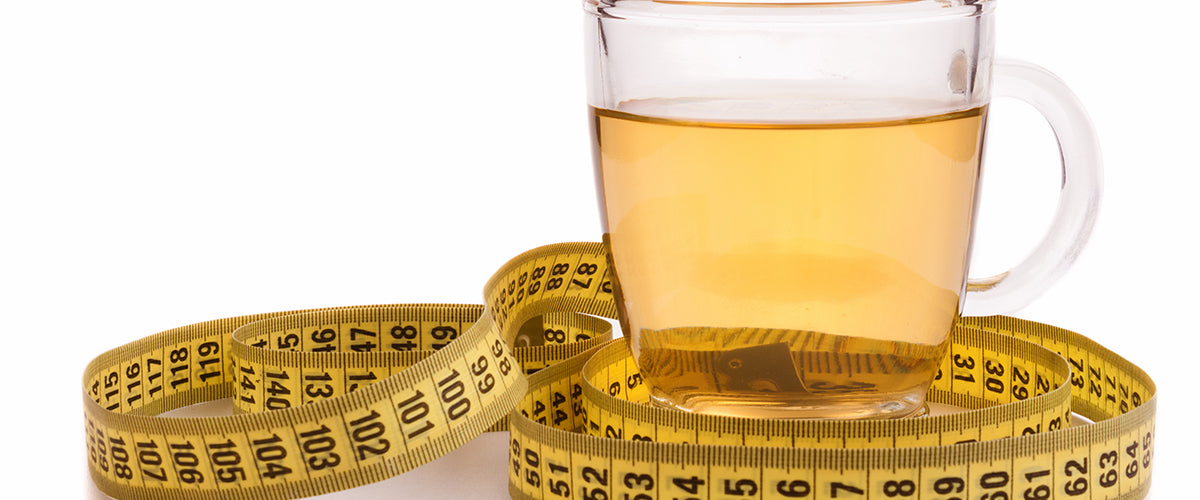
No tea, green or otherwise, causes meaningful weight loss on its own; research has not shown that drinking tea makes people lose weight. What tea can honestly do is replace sweet drinks: brewed plain, it is a flavorful, near-zero-calorie cup. And “diet” or “detox” teas are marketing labels, not a kind of tea, so read their ingredients closely.
At a glance
- Short answerNo tea causes meaningful weight loss by itself
- Most studiedGreen tea: its catechins (such as EGCG) and caffeine
- Research so farMixed and inconclusive; many studies used extracts, not brewed tea
- CaloriesPlain brewed tea: close to zero (about 1 to 2 for a cup of plain green tea)
- What adds caloriesSugar, honey, condensed milk, a lot of milk, sweet premixes
Can drinking tea help you lose weight?
Not on its own. Body weight depends on what you eat, how active you are, sleep, health and genes, and no single drink outweighs those, however it is marketed. Tea’s honest role is smaller and more practical: it is a drink with almost no calories that can take the place of drinks that have plenty.Read more
Our own Tea 101 pages once said otherwise. Older posts promised that green tea helps “stimulate the metabolism,” that oolong burns “tummy fat” and that white tea breaks down fat cells. We have reread the research behind those lines and no longer make any of those claims. This guide sets out what studies have and have not found, in plain terms, and what we think tea is genuinely good for.
The doubts are not new inside Teabox. In 2014 our founder, Kausshal Dugarr, put “green tea can make you lose weight” on his list of five lies told about tea, and answered it in three words: “No. Just no.” He wrote that he had spent hours looking for a definitive study showing that green tea helps people lose weight, and had not found one.
Peter Keen, writing for our blog in 2016 after reading through the research on green tea and weight, put it just as bluntly: does drinking green tea directly create weight loss? “The scientific answer is simple, too: No. There is no scientific evidence whatsoever, only hopeful hints.” His full story on green tea and weight loss is on our blog.
What people who must stay light actually drink
The same piece looked at a group of people whose work depends on staying light and strong: jockeys, dancers and athletes. In the literature on how they eat, tea turns up as part of a balanced breakfast and a calm start to the day, “not seen as a factor that in any way directly causes weight loss.” Keen found that “there is not one study that recommends even two cups at a time or multiple cups a day.”
Water, not tea, does the main work of keeping them hydrated, taken in small, frequent sips through the day. Where they choose green tea, it is mainly because it is pleasant and smooth to sip, and a single cup of black tea with a little milk and sugar is just as common. Keen’s summary of the arithmetic was plain: loss “is a function of calories taken in minus calories out.”
What does the research say about green tea and weight loss?
Green tea is the most studied tea for weight, and the results are mixed: some studies report small changes, others find none, and the findings have not been consistent enough to show that drinking green tea makes people lose weight. That is the plain answer to “does green tea help you lose weight?”Read more
What researchers have looked at
Most of the interest centers on two things in green tea: catechins, a group of plant compounds of which EGCG (epigallocatechin gallate) is the best known, and caffeine. Researchers have asked whether these, alone or together, change how much energy the body uses. More on what catechins are in Antioxidants and tannins in tea.
A cup holds far less of these compounds than the leaf does. In a study of brewed black tea bags, Lakenbrink and colleagues (Journal of Agricultural and Food Chemistry, 2000) found that a brew of up to two minutes drew only about 35 to 55% of the leaf’s polyphenols into the cup, while caffeine came out much more readily. That gap is one reason results from concentrated extracts tell us little about an ordinary cup.
What the research has not shown
- Brewed tea: that it causes weight loss. Our 2016 review of the literature found that “even the most promising scientific reports find only a small impact on weight,” which Keen put at “typically under five pounds,” and that even these “have not been confirmed by replicated studies.”
- Cause: that the tea, rather than the rest of the routine, made the difference. Where a link appears, people have often changed their breakfast, their activity or their other drinks at the same time, and it is hard to separate the tea from the rest. Keen called it “impossible to sort out exactly how much the tea is the explanation.”
- More cups: that more cups mean more effect. Even our old Tea 101 post conceded that “gulping down nine or ten cups of green tea isn’t going to do much for you.” Extra cups mainly add caffeine.
- Extracts: that extracts behave like tea. Much of the research and most “fat burner” products use concentrated green tea extract, not leaf brewed in a cup. The 2016 blog noted that green tea extract supplements had been listed as a health risk rather than an aid. A supplement is not a cup of tea, and the two should not be confused.
So when you read “green tea for weight loss,” read it as a hope, not a finding. If you enjoy green tea, drink it for its flavor. For the leaf itself, see What is green tea?
Does oolong, black or white tea help with weight loss?
No type of tea has strong evidence for meaningful weight loss. Oolong, black and white tea have each been linked to weight in a few studies, but those were short studies, animal studies or lab work on cells, which cannot show that drinking the tea makes people lose weight.Read more


Oolong tea
Oolong is partly oxidized, so it sits between green and black tea in flavor and in its mix of compounds. Our old post cited a 2009 study, which it credited to the Chinese Journal of Integrative Medicine, that reported lower weight and body fat after six weeks of drinking oolong. The same post told readers to keep a balanced diet, exercise and cut calories alongside the tea, which is exactly why the tea cannot be given the credit.
A single short study does not show that oolong causes weight loss, and nothing we have read supports the idea that it targets belly fat. See What is oolong tea?
Black tea
The research our old black tea post leaned on, which it attributed to the journal PLOS ONE, was done in mice fed a high-fat diet together with concentrated black tea compounds (polyphenols and theaflavins). Results in mice given extracts do not reliably carry over to people drinking a cup of tea. Black tea is still a fine near-zero-calorie drink when it is taken plain or with a squeeze of lemon. More in What is black tea?
White tea
The claim that white tea “burns away fat cells” traces back to laboratory work on fat cells, which our old post credited to German scientists, not to people drinking white tea. What white tea genuinely offers is a delicate, naturally sweet cup that nobody is tempted to load with sugar.
Keen was harder on the white teas sold in health stores. They are often sold as lower in caffeine than green, which he called “sort of true on average, but many are higher than black teas,” and most are greens not processed the meticulous way real whites are: “mediocre tea and ineffectual diet aids.” Our Special Spring Silver Needle, by contrast, is made only from unopened buds, withered slowly and gently in the open air. See What is white tea?
One type is not “better” than another
Keen’s advice in a 2016 piece on tea and health was simply to drink the tea you like: there is no evidence “that green tea is ‘better’ from a health perspective than black or oolong,” a distinction he compared to “the medical benefits of green apples versus red ones.”
The honest summary for every type: choose the tea you enjoy unsweetened, because that is the one you will keep drinking in place of something sweeter.
Tea and weight loss: claims vs evidence
Most weight loss claims about tea go well beyond what studies have shown. Here are the ones we hear most, set against what is actually known.Read more
| Claim | What research has shown | Our verdict |
|---|---|---|
| Green tea burns fat and speeds up metabolism | Mixed results; effects, where reported, are small and not consistently replicated; many studies used extracts | Not shown for brewed tea |
| Green tea burns belly fat | No good evidence that any tea targets fat in one part of the body | Myth |
| Oolong prevents weight gain | A few short studies; not confirmed by strong evidence | Not shown |
| Black tea boosts metabolism | Mainly animal studies using concentrated compounds | Not shown in people |
| White tea breaks down fat cells | Laboratory studies on cells only | Not shown in people |
| Peppermint tea curbs appetite; hibiscus reduces bloating | Little good evidence | Enjoy them as caffeine-free drinks |
| Drink it on an empty stomach, or before a workout, for best results | No good evidence that timing changes anything | Drink tea when you enjoy it |
| More cups, more weight loss | Not shown; more cups mean more caffeine | Myth |
| Detox teas cleanse the body and melt weight | Laxative types mainly cause water loss, not fat loss | Avoid the promise; read the label |
| Swapping sugary drinks for plain tea cuts calories | Plain tea has close to zero calories | True |
How to read a weight loss claim
Watch the small words. Keen noted that research conclusions on tea and health are “invariably littered with ‘may,’ ‘suggests,’ ‘potentially’,” and that no positive claim yet “passes basic tests of statistical reliability, replication, predictive validity, or generalizable results.” A small study that found green tea drinkers lost some weight over a few months is, in his words, “suggestive or promising” at most. “When you read in an ad that something positive about the connection is ‘proven,’ it isn’t at all.”
A weight loss tea story, examined
Keen took apart one magazine story of the kind the hype produces: a December 2015 Redbook piece headlined “Mom Lost 100 Pounds in One Year Drinking Weight Loss Tea.” Before the change, the woman’s day included sugary soda “or five cups of tea with milk and sugar nearly every day,” with cookies dunked in them. She then switched to nine cups of green tea a day, though she “hated the bitter taste and had to force herself to drink it.”
Keen’s verdict: “Maybe reducing her calorie intake had a little to do with this.” The sugar and the cookies went; the plain tea took their place. That swap, not the green tea, is the part of the story the evidence supports. For more claims we have retired, see Tea and health myths.
What are diet teas and detox teas, and are they safe?
“Diet tea,” “slimming tea” and “detox tea” are marketing names, not types of tea; some contain laxative herbs such as senna, which mostly cause water loss, not fat loss.Read more
How many calories and how much sugar are in tea?
A cup of plain tea has almost no calories, about 1 to 2 for plain green tea, while bottled iced teas and packaged chais often carry around 45 g of sugar a cup, about ten teaspoons.Read more
How to use tea sensibly if you are watching your weight
Use tea as a swap, not a supplement: drink it plain or nearly plain in place of a sugary drink, keep the caffeine to earlier in the day, and let diet and activity do the real work.Read more
- Swap, don’t add: A cup of tea in place of a soda, a sweet coffee or a juice is where the calories are saved. Tea added to an unchanged diet changes little.
- Keep it plain: Keep it plain or close to it. Sugar, honey and condensed milk add calories quickly over several cups a day. A slice of lemon adds flavor, not calories; see How to make lemon tea.
- Mind the chai: Masala chai simmered with plenty of milk and sugar is a treat, not a diet drink. Less sugar, or a plain cup of the same tea, keeps it lighter. See Is chai good for you?
- Try it iced: Home-brewed iced tea, unsweetened, is a good stand-in for bottled sweet drinks in summer. See How to make iced tea.
- Watch the caffeine: Tea 101 puts a cup of green tea at about 20 to 45 mg of caffeine and black tea at about 50 mg, against about 90 to 95 mg for coffee; the real figure varies with the leaf, how much you use, the water temperature and the steeping time. Caffeine late in the day keeps some people awake, so keep caffeinated tea for earlier in the day. See Caffeine in tea.
- Drink water too: The jockeys, dancers and athletes Keen studied relied on “a little tea and plenty of water,” sipped through the day rather than gulped.
- Don’t replace meals: Don’t replace meals with tea. Tea is a drink, not food.
- Get personal advice from a doctor or registered dietitian if you want to lose a significant amount of weight.
The swap only lasts if you like the cup. Bitterness is the usual reason people reach for the sugar bowl, and it usually comes from water that is too hot or leaf left in too long. Our brewing temperatures, and the teas our tasters enjoy without sugar, are in Tea without sugar.
Tea and weight loss FAQ
What is the best tea for weight loss?
No tea has good evidence for meaningful weight loss on its own. The best choice is any tea you enjoy unsweetened (green, black, oolong, white or herbal), drunk in place of sugary drinks. That swap is where the real calorie saving lies.
Does green tea help you lose weight?
Research on green tea and weight is mixed: some studies report small changes, others find none, and many used concentrated extracts rather than brewed tea. It has not been shown that drinking green tea makes people lose weight. It is a pleasant, near-zero-calorie drink when taken without sugar.
Does green tea burn belly fat?
There is no good evidence that green tea, or any tea, burns fat in one part of the body. Claims about belly fat go well beyond what studies have shown.
Are detox teas safe?
“Detox” is a marketing label, not a type of tea. Some detox or slimming teas contain laxative herbs such as senna, which cause water loss rather than fat loss. Read the ingredients, and ask a doctor or pharmacist before using one, especially if you are pregnant or take medication. More in Diet and detox teas.
Does green tea with lemon or honey help with weight loss?
Lemon adds flavor without calories, which can make plain tea easier to enjoy. Honey is a form of sugar, so it adds calories. Neither turns green tea into a weight loss drink.
When is the best time to drink tea for weight loss?
There is no good evidence that timing matters, whether before a workout or on an empty stomach. Drink tea when you enjoy it, ideally in place of something sweeter, and keep caffeinated tea away from bedtime.
How many calories are in a cup of tea?
Plain brewed tea has close to zero calories; our own green tea notes put a cup of plain, unsweetened green tea at about 1 to 2 calories. The calories come from what you add: sugar, honey, condensed milk or a lot of milk. See Tea without sugar.
How much sugar is in bottled iced tea or packaged chai?
When Peter Keen read the labels for our blog in 2017, bottled tea, iced tea, packaged chai and bubble tea averaged around 45 g of sugar a cup. At about 4.2 g a teaspoon, that is roughly ten teaspoons. Some labels list a serving of only half a cup, which makes the figure look smaller.
Keep reading
Sources
- Teabox blog: Green tea and weight loss: Lessons from jockeys, dancers and athletes (Peter Keen, 2016), Would you like some sugar in your tea? Or a little tea in your sugar? (Peter Keen, 2017), Microwaved, tepid, rolling boiling? Water for tea! (Peter Keen, 2016)
- Teabox blog: Should you add milk to tea? (Ian Bersten, 2015), Teh tarik milk tea: Pulling depth and sweetness from tea (Adeline Teoh, 2015), The Sweet Palate, a Cup of Joy (Samvit Kher, 2020)
- Teabox blog (Still Steeping stories): “Natural” teas: The rewards, the risks and the watch-outs! (Peter Keen, 2016); Tea vs health: You be the judge and the jury (Peter Keen, 2016); 5 lies you’ve been told about tea (Kausshal Dugarr, 2014); What’s selling at the Sydney Tea Festival? (Kausshal Dugarr, 2015); Sweet meets: How sugar with tea came to be (Adeline Teoh, 2016)
- Teabox Tea 101: Can just drinking green tea actually lead to weight loss?; Is drinking black tea good for weight loss?; Does drinking white tea actually help you lose weight?; Oolong tea for weight loss; What are diet/dieter’s teas? (all rewritten here, with their health claims removed)
- Teabox Tea 101 caffeine posts, for caffeine figures
- Teabox Drive: Teabox internal document, 2023 (calorie figure only); Teabox internal document, 2023; photos as credited
- Published research held in Teabox’s Drive knowledge repository: Lakenbrink, Engelhardt et al., Teabox internal document, Journal of Agricultural and Food Chemistry 48, 2000
- Teabox on Instagram (@teabox.tea): less sugar in chai, Nov 2024
- Teabox product descriptions and estate notes, 2026 season


Leave a comment
All comments are moderated before being published.
This site is protected by hCaptcha and the hCaptcha Privacy Policy and Terms of Service apply.