


Afternoon tea is a light, elegant snack of tea, small sandwiches, scones and cakes taken around four o’clock; high tea was a hearty evening meal that working families ate at the table around six. Both are British customs of the 19th century, but they came from very different homes. Today the names are often mixed up, and many hotels sell “high tea” when what they serve is afternoon tea.
At a glance
- Afternoon teaLight snack, about 3 to 5 pm, classically 4 o’clock
- Began1840s, credited to Anna, Duchess of Bedford (1783 to 1857)
- Also called“Low tea,” after the low sitting-room tables
- High teaFull evening meal, about 6 pm, at the dining table
- Who ate itWorking families; also called “meat tea”
What is afternoon tea?
Afternoon tea is a small, sociable meal of tea with finger sandwiches, scones and little cakes, served in the middle of the afternoon, traditionally at four o’clock. It began among Britain’s upper classes as a way to bridge the long gap between lunch and a late dinner, and it is now a treat for birthdays, weekends and visitors.Read more
How afternoon tea began
Tea was fashionable in Britain by the late 17th century, but for a long time it was a drink, not a meal. The meal is usually credited to Anna, the seventh Duchess of Bedford. The story goes that in the 1840s she suffered from a “sinking feeling” in the late afternoon, in the long stretch between lunch and the evening meal, and asked for a tray of tea, bread and butter and cake to be brought to her room.
Her full name was Anna Maria Russell, and she lived from 1783 to 1857. She was a confidante of Queen Victoria, and her tea of cakes and sandwiches “began at around four o’clock,” which is why four is still the classic hour. As our story Women of tea points out, she was not the first to pour tea in the afternoon. Serving tea then was already “very much part of a woman’s domain” in parts of Europe. Her rank simply put her in the right position to set the trend in England, and from there in its colonies and the Americas.
She soon invited friends to join her, and the habit moved from her rooms to drawing rooms across the country. Queen Victoria took to it too, and was once the Duchess’s guest. The Victoria sponge, a sponge cake sliced in half and filled with jam, cream or both, is named in her honor.
Because the working classes were at work at four o’clock, the custom stayed largely with the upper classes. That, our 2017 story suggests, is probably where much of the etiquette of formal tea came from, along with the growing importance of owning fine teaware.
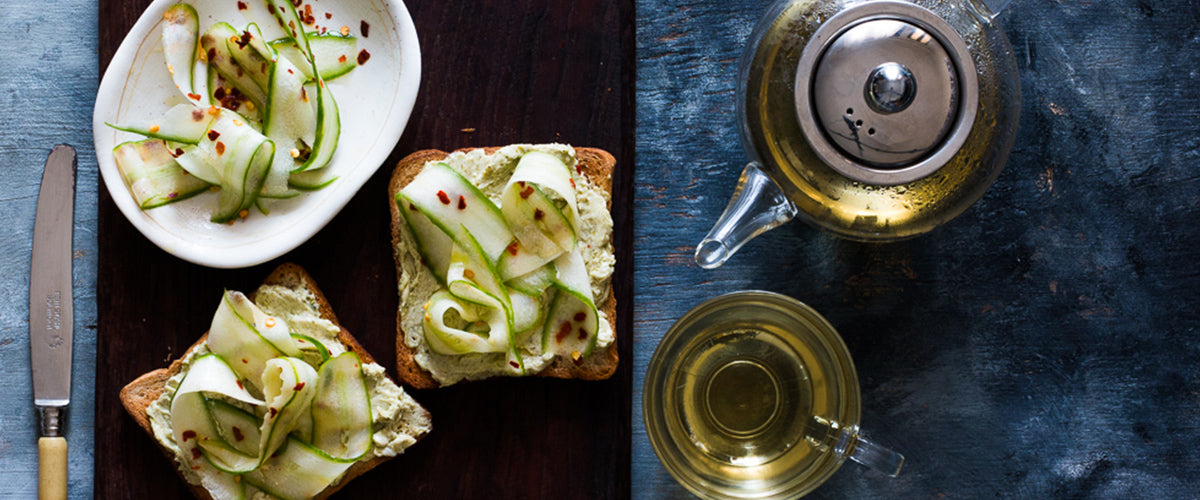
Afternoon tea kept growing grander. By the 1920s it had acquired silver teaware, linens, hors d’oeuvres and sometimes a jazz band: in the words of our 2015 story, “It became less about tea and more about the pageantry.” Its admirers took it seriously. One of our early stories quotes Henry James: “There are few hours in life more agreeable than the hours dedicated to the ritual known as afternoon tea.” As the story adds, he said hours, not minutes.
Why was afternoon tea called “low tea”?
Because it was served on low tables beside comfortable chairs in the sitting room, not at the high dining table.Read more
Afternoon tea was served in the sitting room or drawing room, on low tables beside comfortable chairs, so it was sometimes called “low tea.” That small detail is the key to the whole naming muddle, as you will see below.
Afternoon tea did not stay with the aristocracy. Peter Keen, a British writer and longtime contributor to our blog, wrote for us in 2016 about the afternoon teas of his youth in the 1960s and 1970s: low-key gatherings, by invitation only, around the host’s best china, mostly attended by women while the men were at work. The hostess brought out her one porcelain tea set and her favorite tea cozy, in a well-kept living room. There were biscuits, Swiss rolls and sweets, and the tea was Assam. A Darjeeling was kept for very special guests. At 16, as the youngest at the table, he was expected to “be seen but not heard,” and his helpings of chocolate digestive biscuits were limited to two.
What is high tea?
High tea was the evening meal of working families in Britain: a hearty spread of meat, pies, bread and something sweet, eaten at the dining table around six o’clock with a big pot of strong tea. It was a proper meal for people coming home hungry after a long day, not a dainty snack.Read more
Before the 19th century, most British families ate two main meals a day, a heavy breakfast and supper. In the 19th century, workers who traveled long distances to their jobs got into the habit of eating a substantial meal at about six in the evening. It was fresh, simple, homemade food: cold meat, pies, tarts, salads and sandwiches, which is why it was also called “meat tea.”
The tea itself was not always the point. Our 2017 story describes Britons of all classes coming home from work to a meal called “tea,” with “a hot dish, meat, bread and possibly cake, with or without tea the beverage.”
In much of Britain, people still say “tea” when they mean their evening meal. The names of meals have long puzzled visitors: in the countryside, “dinner” was usually eaten at midday and “supper” in the evening. As our 2016 story on English food and tea puts it, “dinner might be called tea, too.” The words simply marked when you ate the one big meal of the day.
Why is it called “high” tea?
The usual explanation is the furniture. High tea was eaten sitting up at the high dining table, while afternoon tea was taken on low tables in the sitting room. So “high” never meant grand or upper class; if anything, it meant the opposite.
What was tea like in working Britain?
Strong, sweet and filling: the everyday tea of working Britain was a big pot of black tea with hearty food, taken in cafés, at home and in breaks through the working day.Read more
Tea in everyday Britain was built on working-class habits, not aristocratic ones. The Lyons Corner Houses, the big London tea rooms, were a haven of tea “perhaps even more central to everyday English life than Starbucks has been in the US,” with fresh interiors and waitress service in what was really a fast-food café: “They were built on the working class traditions of tea, not the aristocratic ones. Tea really did bind the culture together.”
Food at a working tea was meant to fill you up. Our 2016 story lists the chocolate digestive for dunking, Swiss rolls, the breakfast fry-up and the bacon sarnie, eaten with “a cup of strong black tea, one that is definitely not served in a delicate porcelain tea set.”
Peter Keen’s working Britain started early. The day began at dawn with a cup of strong Ceylon black tea, a routine he joined at the age of eight. The tea came mostly from India, Ceylon and Kenya, and it was always whole leaf, in black blends from the big everyday brands. A Darjeeling was a luxury in working-class homes, saved for special guests or a special occasion.
Tea breaks are woven into the British day in other ways too. Even cricket stops for tea: a day of Test cricket has a fine rhythm to it, with two hours of play, lunch, and two more hours of cricket before a tea break, followed by another couple of hours.
High tea vs afternoon tea: what’s the difference?
Afternoon tea is a light, elegant snack between meals; high tea is a full evening meal. They differ in who ate them, when, where they were served, and what was on the plate.Read more
| Afternoon tea | High tea | |
|---|---|---|
| Who started it | The upper classes, 1840s | Working families, 19th century |
| When | About 3 to 5 pm, classically 4 o’clock | About 6 pm |
| Where | Sitting or drawing room, low tables | Dining table, high chairs |
| Kind of meal | A light bridge between lunch and dinner | The main evening meal |
| Food | Finger sandwiches, scones, small cakes | Cold meat, pies, tarts, salads, bread |
| Tea | Fine teas: Darjeeling, Earl Grey, a breakfast blend | Strong black tea, usually with milk |
| Other names | Low tea | Meat tea, or simply “tea” |
| Mood | Polite, social, unhurried | Hearty, practical, family |
The real difference is hunger. For the upper classes of the 18th and 19th centuries, tea time was formal, scheduled and built around invited guests and the family circle. The food was a light extra, “rather like the peanuts you get served on the side in a bar.”
A working family’s tea had to do a day’s job. The same story describes the bacon sarnie as built on different principles: “It is meant to be filling. It is a slab.” That is why the two meals call for different pots. A delicate Darjeeling suits a cucumber sandwich; a strong, malty Assam stands up to pies, cheese and milk.
The hour mattered as well. Afternoon tea was “a much more social affair,” held while working people were still at work. High tea was the meal they came home to.
Why do people mix up high tea and afternoon tea?
Because “high tea” sounds grander, hotels and tea rooms, especially outside Britain, began using it for the elegant afternoon spread, and the name stuck. In many places a “high tea” invitation now means sandwiches, scones and fine china: afternoon tea in all but name.Read more
The confusion runs right through our own archive. Our 2016 story Cucumber Sandwiches and Bacon Sarnies: English Food and Tea Cultures calls the cucumber sandwich “the emblem of high tea,” meaning the refined hotel version, and notes you won’t find a bacon sarnie “in a four-star hotel offering afternoon tea at a five-star price.” Peter Keen remembered the “high teas at the Savoy or the Ritz where scones, cucumber and salmon sandwiches would be served.”
Other stories of ours do the same. One on teacups says, “High tea ceremonies invariably include saucers. Tea drinking as everyday routine doesn’t need them.” Another, on tea in France, praises “the Gallic style of high tea elegance” and notes that one of London’s grandest hotels serves only teas from a French retailer.
Strictly, every one of them was describing afternoon tea. Neither is wrong as everyday speech, but if you are booking, it helps to know which one you will get.

For the wider story of how tea became a British habit, see The history of tea; for how other countries take theirs, see Tea cultures of the world.
What were the British tea meals in India?
India picked up its own British tea meals. The best known was chota hazri, “little breakfast,” an early morning tea of the colonial household; the grand hill-station hotels and clubs added a tea hour of their own.Read more
Chota hazri, the early morning tea
Chota hazri was also translated as early morning tea or bed tea. A food historian quoted in our 2015 story, Cecilia Leong-Salobir, describes it as the first meal of the day for Anglo-Indians, taken between five-thirty and six and consisting of tea, boiled or poached eggs, toast and fruit. It was peculiar to the Bengal Presidency and was called “early tea” in Madras.
The old glossary Hobson-Jobson quotes Edward Waring’s The Tropical Resident at Home: “There is one small meal… it is that commonly known in India by the Hindustani name of chota-haziri, and in our English colonies as ‘Early Tea.’” Our writer, who went to boarding school in Kurseong in the 1970s, had never heard the term there. So he asked Charles Tresham, an Anglo-Burmese alumnus of the school whose family had lived in Calcutta. “In school we used it to mean ‘small porridge’,” Tresham told him. “At home it was ‘small breakfast’.”
Tea in the hill stations
In the hill stations, tea in the grand old hotels became part of local life. In Tea at the Ritz, our writer Sangeetha Shinde remembers the Ritz Hotel in Coonoor, in the Nilgiris, and cups of tea in a dining hall with a bank of windows over the rose gardens. The hotel was run by Vittal and Vasantha Iyanna, who had left a tea plantation job to be near their daughters’ school. As a teenager she sat at the far left table with the best view, and poured half a bowl of sugar into her golden cup.
She also had a standing summer date in Coonoor for tea at 4 pm on Thursdays with Erach Avari, a Parsi gentleman in a red tie and tweed jacket. They made the tea together, opened a packet of Marie biscuits and read to each other in his library, as she tells in Parsi Tea Parties for Two. For the planters, the evening tea and talk happened at the club: “the Coonoor Club is the planter’s primary watering hole in Coonoor and has been since 1885.”
What is cream tea, and how is it different from afternoon tea?
A cream tea is the simplest version: a pot of tea with scones, clotted cream and jam, and no sandwiches or cakes. Afternoon tea includes the scones and adds a sandwich course and a sweet course, so a cream tea is lighter and quicker.Read more
Cream tea belongs to the farmhouse and tea room tradition, especially in Devon and Cornwall in southwest England, where the draw is “scones, strawberry jam and clotted Devon cream.”
Clotted cream itself is old farm produce. Our 2016 story calls it “peasant farmer produce” with the great merit of not curdling, and dates its first reference to 997 CE, before the Norman conquest. It was “not part of the high tea tradition” but “very much the upper end of the farmhouse one,” which places it in the farmhouse kitchen rather than at the formal hotel tea.
The great cream tea argument is about order. In Devon, the cream goes on the scone first and the jam on top; in Cornwall, it is jam first, then cream. Either way, the scone should be warm.
The farmhouse tea traveled, too. In Patagonia in Argentina, Welsh tea houses still compete to serve bara brith, a “speckled” cake bread, with black tea.
Which teas should you serve at afternoon tea?
For afternoon tea, serve one fine, fragrant tea such as a Darjeeling or an Earl Grey, plus one strong breakfast tea for guests who take milk; for a high tea or a hearty spread, a malty Assam or English Breakfast is the right pot.Read more
Our own picks run from a Margaret’s Hope second flush, Peter Keen’s choice, to a Halmari Assam for the bacon sarnie, with milk, lemon and sugar on the side.
Read nextTeas for afternoon tea and high teaThe Darjeelings, Earl Grey and Assams to pour, what goes with each kind of food, and whether to add milkHow do you host your own afternoon tea?
Serve three courses in order, finger sandwiches, warm scones, then small cakes, with two or three loose leaf teas brewed in a warmed pot, and leave plenty of time for conversation.Read more
Our 2015 story names the three essentials: the right tea, the right food and the right table. The full guide covers the menu, the cucumber sandwich, the table, the manners, what to wear and how to brew each tea.
Read nextHow to host afternoon teaThe menu, the cucumber sandwich, the table, the manners, the dress code and the pot, step by stepHigh tea and afternoon tea FAQ
Is high tea the same as afternoon tea?
No. Afternoon tea is a light snack of sandwiches, scones and cakes served around four o’clock. High tea was a hearty evening meal that working families ate around six. Many hotels now say “high tea” when they mean afternoon tea, which is why the two are confused.
Why is it called high tea?
Because it was eaten at the high dining table, while afternoon tea was served on low tables in the sitting room, which is why afternoon tea was also called “low tea.” “High” never meant posh.
What time is afternoon tea?
Traditionally four o’clock, and usually somewhere between three and five in the afternoon. High tea was later, at about six in the evening.
Who was the Duchess of Bedford?
Anna Maria Russell, Duchess of Bedford (1783 to 1857), was a confidante of Queen Victoria. She is credited with making afternoon tea a social occasion in the 1840s, when she began taking tea with cakes and sandwiches at about four o’clock and invited friends to join her.
What is the best tea for afternoon tea?
A Darjeeling, especially a fruity second flush, and an Earl Grey are the classic choices, because they are fragrant without overpowering delicate food. Add a strong English Breakfast or Assam for guests who like milk. See Darjeeling tea.
What is the difference between cream tea and afternoon tea?
A cream tea is just tea with scones, clotted cream and jam. Afternoon tea adds a course of finger sandwiches and a course of small cakes, so it is a fuller, longer meal.
What is chota hazri?
Chota hazri, “little breakfast,” was the early morning tea of Anglo-Indian households in British India: tea with eggs, toast and fruit, taken around half past five or six. It is a morning meal, not a version of high tea.
Keep reading
Sources
- Teabox Tea 101: High tea and afternoon tea in English tea culture
- Teabox blog (Still Steeping): Women of tea (2017); Cucumber Sandwiches and Bacon Sarnies: English Food and Tea Cultures (2016); Tea at the Ritz (2017); Parsi Tea Parties for Two (2016); Tea in France: Not What You Might Expect (2016); Welsh tea, only in Patagonia (2017); Should you add milk to tea? (2015); How the teacup got its handle (2016)
- Teabox blog (Still Steeping), For the love of afternoon tea, 2015
- Teabox blog (Still Steeping), Beyond the Jane Austen tea party, 2016
- Teabox blog (Still Steeping), An Afternoon of Chota Hazri, 2015
- Teabox blog (Still Steeping), Good Tea Needs a Good Teacup, 2016; Attaining Tea Nirvana for the Lazy, 2015; History of the Nilgiri tea, 2016
- Teabox product descriptions and tasting notes, 2026
- Teabox Drive photos: Teabox internal document, Teabox internal document
- Teabox on Instagram (@teabox.tea): Lyons Corner Houses, Mar 2016
- Kausshal Dugarr on X (@Teapreneur): the Test cricket tea interval, Jul 2022

Leave a comment
All comments are moderated before being published.
This site is protected by hCaptcha and the hCaptcha Privacy Policy and Terms of Service apply.