


While gardens in Darjeeling and Assam rest from December to spring, the Nilgiris keep plucking. The first half of this page explains what happens in the northern gardens in winter; the second explains why the Blue Mountains are different, and why that difference gives us frost tea. For the teas themselves, see What is frost tea?
Why do most tea gardens stop in winter?
Most Indian tea gardens stop plucking in winter because the cold and the short days stop the bushes from putting out new leaf.Read more
With no fresh shoots to pick, the estates use the winter to prune the bushes and service their factories, and plucking starts again in spring. Our old Tea 101 guide put it simply: “Winter is a time of rest for tea plants.” When it is cold, the days are short and the air is dry, no leaves are produced.
Light is a large part of it. Peter Keen, writing for us in 2016, noted that the tea bush must have an average of 5 hours of sunshine a day to unfold its leaves after the dormant winter, one of the main reasons tea farming grew up on the highland slopes of mountains.
Region by region
- Darjeeling: the autumn flush is the last harvest of the year, and plucking ends in late November or early December. In 2023 the Tea Board of India set 11 December as the last day of picking, after which the bushes were pruned to prepare them for spring. Once temperatures in Darjeeling fall below about 12°C, the bushes go into winter dormancy.
- Assam: the estates enter a resting phase in mid-December, when the bushes are pruned and the factories are overhauled.
- Kangra: winters are harsh, and no harvest takes place until spring. Our 2015 story on the season says the plantations of Darjeeling, Assam and Kangra all “undergo hibernation until it’s spring again.”
Winter is not idle in the garden
Pruning is skilled work, and it is planned. At Margaret’s Hope in Darjeeling, the estate told us it tests its bushes in the lab every year before deciding which can take a hard prune: “We basically test for starch content in the shoots. If the plant has an optimal amount of it, it can survive hard pruning. Otherwise, you lose a good plant.” During winter the whole estate is spruced up, with old plants pruned, some removed and new ones planted.
The days start early. Manisha Singh, a field assistant at Balijan in Assam, told us that cold winters, when no harvest takes place, put her in the field by 4.30 to 5 am to oversee the pruning. Her story is in What a Progressive Tea Industry Needs.
The rest is what makes spring so exciting: the bushes wake up with the first flush. For the whole calendar, see Seasons of tea.
Our own tasting room follows the same rhythm. Each December, once the last autumn teas are in, our team posts that “the mountains have gone to sleep” and waits for the first winter frost teas from the Nilgiris in January.
In December 2022 our procurement team wrote that, with the autumn flush finally over and the winter flush yet to arrive, there was little to do but wait; by 10 January 2023 the first samples of that winter’s harvest had begun to arrive.
Why don’t the Nilgiris stop in winter?
The Nilgiris keep making tea in winter because they lie far to the south, where winters are cold and dry but not cold enough to send the bushes into full dormancy.Read more
Growth slows down rather than stopping, so the estates can keep plucking, in small volumes, through the coldest months. Unlike the northern regions, the Nilgiris produce tea all year round. The region is also cold and dry in winter, “but not as much as the north,” and so, while the volume is low, some very high-quality teas are made.
Latitude does the work
Tea grows longest near the equator. In a 2016 essay for us, Peter Keen put the point where the bushes become dormant at around 18 degrees of latitude north and south. Darjeeling and Assam lie well north of that line; the Nilgiris lie well south of it, so the cold slows the bush without shutting it down.
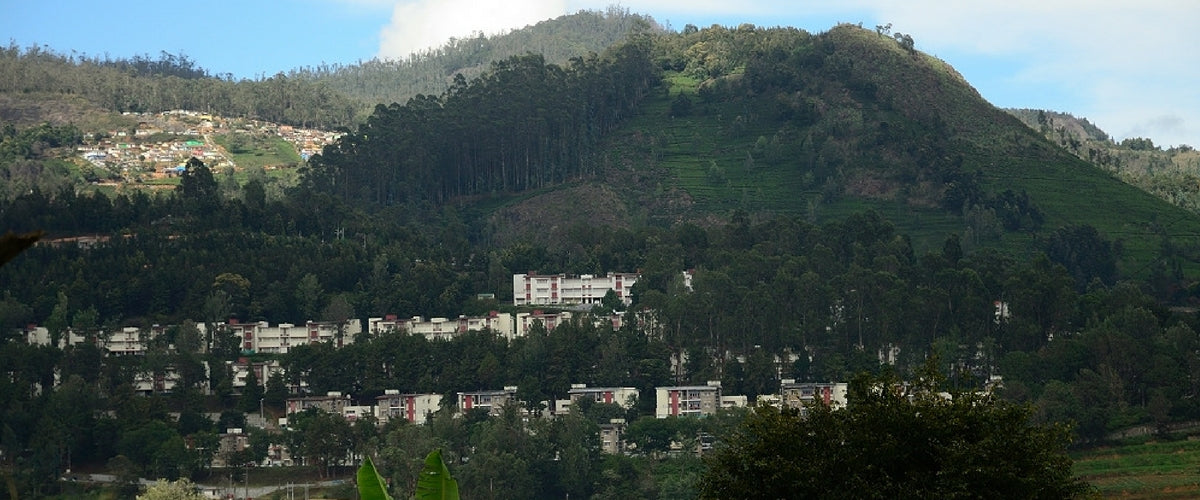
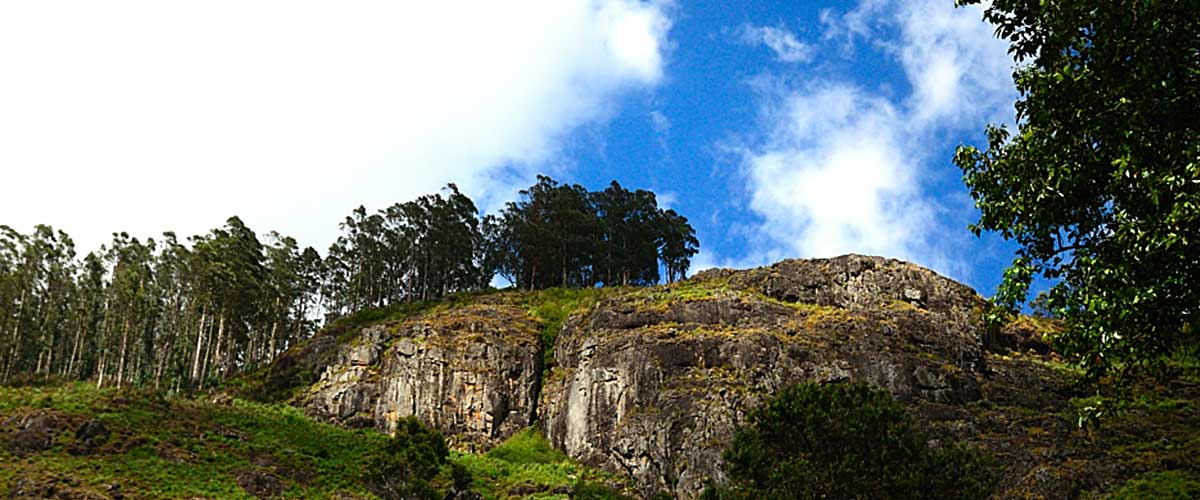
The Nilgiris, whose name means Blue Mountains, are a range in Tamil Nadu that also spans parts of Karnataka and Kerala, with tea estates from about 1,000 to 2,500 meters (3,280 to 8,200 feet). Our 2019 Blue Hills Box leaflet puts the hills at about 3,900 square kilometers.
Slowed, not pruned
That leaflet also explains the difference in the field: in the winters and early spring “the growth of the plants are stunted but are not pruned like in other tea regions,” and “because of this the nutrients and flavors get concentrated and accentuated during the cold period.”
The rain arrives just before. The Eastern Nilgiris get most of their rain from the northeast monsoon, from October to December, and when the gardens do prune, they open soil and water conservation trenches in the pruned fields, as many as 800 a hectare at Craigmore. The cold, dry weeks that follow are the frost season.
Winter in the hills is its own season. The locals know it has begun when the temperature drops a few notches and the annual visitors arrive: the Kashmir flycatcher, the wagtails and warblers, and the tourists from the plains. As one of our 2023 posts put it, in winter most tea regions in India produce no tea at all, “with the exception of the Blue Mountains.”
For the region itself, its history and its other estates, see our Nilgiri tea guide.


Keep reading
Sources
- Teabox blog (Still Steeping): The Winter of Our Teas (2015), Mountain Megabrands (2016), What a Progressive Tea Industry Needs (2015)
- Teabox blog (Still Steeping): A Biography of the Tea Bush (Peter GW Keen, 2016); The Delight of Margaret’s Hope (2016); A Hundred Acre Forest in the Nilgiris (2016)
- Teabox Tea 101: What are winter flush teas?
- Teabox product FAQ: Billimalai Winter Frost Black (Nilgiri altitude range)
- Teabox Drive: Teabox internal document, 2019; photos as credited
- Teabox on Instagram (@teabox.tea): Tea Board closing date, Dec 2023, Darjeeling dormancy, Nov 2022, mountains asleep, Dec 2023, mountains asleep, Dec 2025, waiting for the winter flush, Dec 2022, first winter samples, Jan 2023, the Blue Mountains, Jan 2023. Teabox on YouTube: Nilgiris, Different Indian tea flushes

Leave a comment
All comments are moderated before being published.
This site is protected by hCaptcha and the hCaptcha Privacy Policy and Terms of Service apply.