


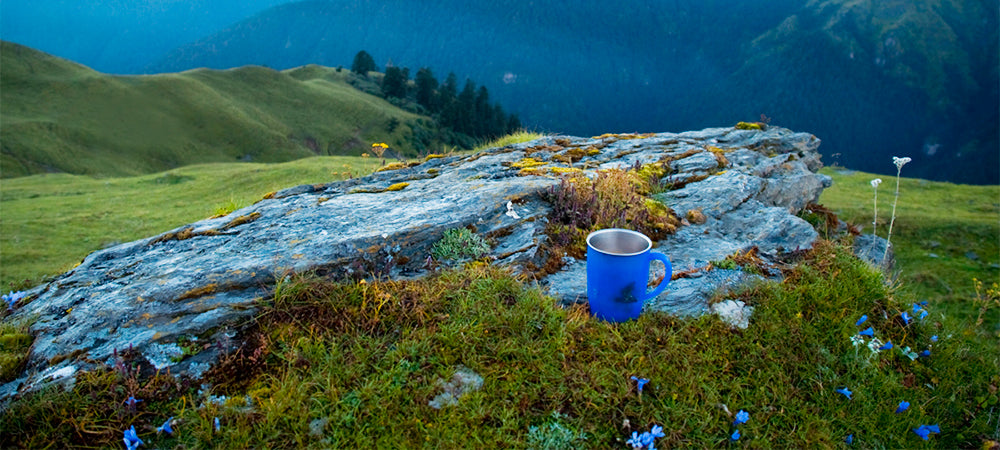
Tea came to Nepal in the 1860s: the first garden was planted at Ilam in 1863, with a second at Soktim two years later. For more than a century the hills had no roads, much of the crop went across the border as “Darjeeling,” and only from the late 1970s did Nepal begin to make and sell fine tea under its own name.
How did tea come to Nepal?
Tea is not native to Nepal; it was brought in as a gift or an idea from its neighbors in the 1860s, and Ilam, the first garden, is still an elite producer.Read more
Two stories are told about how it began. In one, the Chinese emperor (our 2019 post says the Chinese government) gave tea saplings to Nepal’s prime minister, Jung Bahadur Rana. In the other, his son-in-law, Colonel Gajraj Singh Thapa, visited Darjeeling, loved its tea and went home to plant his own. Ilam made orthodox tea; Soktim made CTC.
Tea 101 did not try to settle which story is true. What counts, it said, is that Nepal went on to grow “a delicate, superior and aromatic tea that holds its own against the best in the world.” Our 2016 story agrees that tea “appears to have been introduced in the 1860s with the launch of a few estates, one of which, Ilam, remains an elite producer.”
Nepal’s people in Darjeeling’s gardens
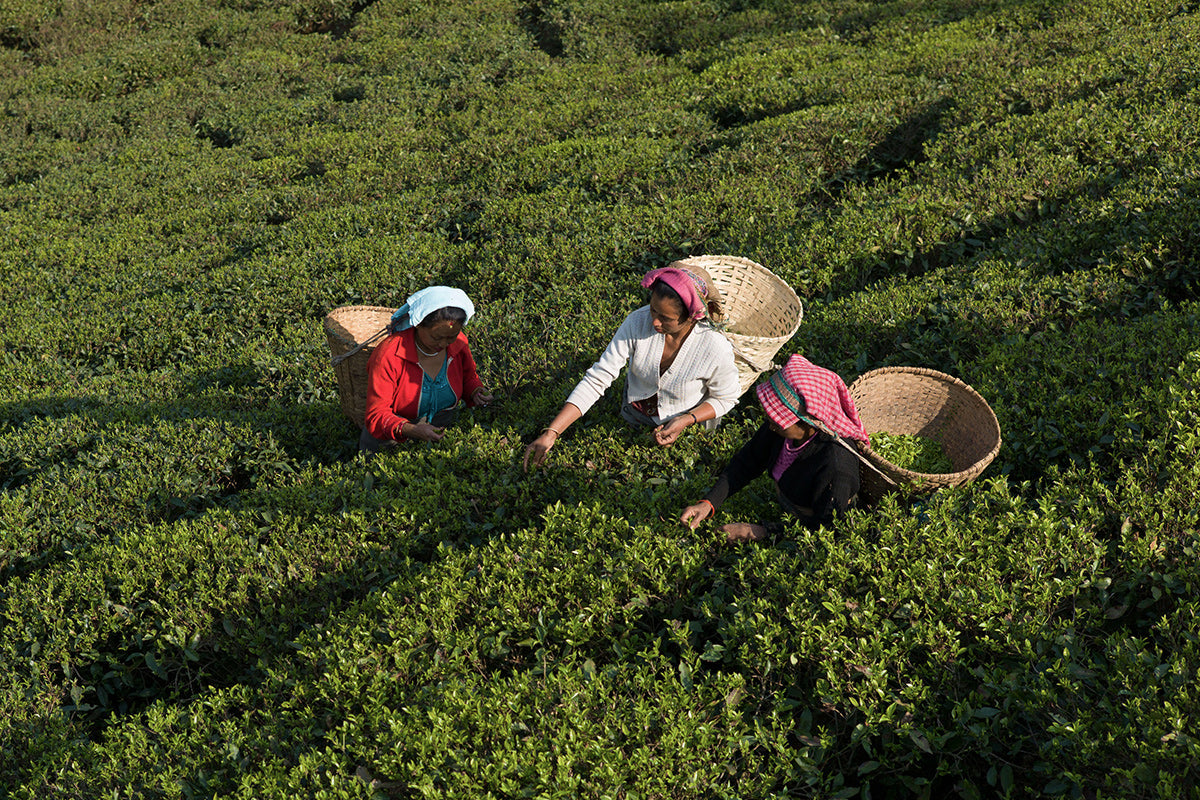
Nepal shaped Darjeeling tea long before its own industry took off. When Dr. Campbell needed workers for the first Darjeeling gardens, he enlisted a Nepali nobleman, Dakman Rai, who brought thousands of Gorkhas and other Nepalese across the hills. Dakman Rai was paid partly in tea seed, and with it he set up his own gardens: Soureni in 1878, Phuguri in 1880 and Sampripani in 1883.
Families still trace their tea lives to that migration. Arun Kumar Gomden, the veteran Darjeeling tea maker credited with naming the muscatel teas at Castleton, told us that his great-grandfather arrived in Darjeeling from Nepal in the late 1870s as a labor contractor for the British planters; see our conversation with the muscatel master. At Jungpana, our writer found that most plantation workers were Nepali Hindus.
What happened between 1863 and today?
Nepal tea grew slowly for a century, revived after 1978, was given its own Tea Zones in 1982 and was opened to private owners in the 1990s.Read more
| When | What happened |
|---|---|
| 1863 | Nepal’s first tea garden is planted at Ilam, in the far east. |
| 1865 | A second garden opens at Soktim, making CTC tea. |
| To the 1950s | There are no roads into the tea region. Tea is made mostly for home use, and some of what leaves the hills is smuggled into India and sold as Darjeeling. |
| 1978 | Ilam sets up its own tea processing factories, and a stagnant industry begins to revive. |
| 1982 | King Birendra Bir Bikram Shah Dev declares five districts, Ilam, Jhapa, Dhankuta, Terhathum and Panchthar, the “Nepal Tea Zones.” |
| 1990s | Government-run tea farms are sold to private owners, and independent organizations work to improve quality and build an export industry. |
| 2014 | Teabox starts selling teas from Nepal. |
| 2010s | Nepal’s hill gardens begin making fine green teas, and a “Himalayan” tea category grows in Europe, built largely on Nepal tea. |
Before 1978, Tea 101 says, Nepal’s teas went mostly into making up the quality and volume of Darjeeling’s. By 1982 Nepal was producing its own fine tea, which is when the five Tea Zones were declared.
For how Nepal fits into the wider tea map, from China to Kenya, see our parent guide, The world’s tea producing regions.
Why was Nepal tea so slow to reach the world?
Because the hills had no roads until the 1950s, legal exports had to go through Indian auctions and Indian taxes, and smuggling Nepal leaf into Darjeeling paid better than building a name.Read more
For decades legal export was slow and costly: Nepal’s teas went to Calcutta (now Kolkata) for auction through Indian brokers, and India charged a 20% duty on imported tea.
Meanwhile, as our 2016 story put it, “ingenuity and money created a thriving smuggling business that continues to flourish.” The Nepal industry learned to make a fancy-looking leaf rather than a flavorful one. Many of Darjeeling’s bushes had grown old, and their brittle leaf lacked the bright look buyers wanted, so the younger Nepal leaf, close in taste, was blended in to keep Darjeeling looking good and turning a profit.
The farms themselves were held back too. Like China’s, they were government owned and run by privileged insiders, often amateurs or well-connected former tea traders living off guaranteed sales. The whole story of Nepal leaf inside Darjeeling packs, and how the law changed it, is in Nepal tea vs Darjeeling tea.
What changed after the 1990s?
Private owners took over the gardens, saw that their hills matched Darjeeling’s, and began making teas, first black and then green and white, to sell as Nepal tea.Read more
After privatization in the 1990s, new owners saw that their hills matched Darjeeling’s and began making teas to sell under their own name. In the last decade of the 20th century, Tea 101 adds, independent organizations came forward to improve and refine Nepal tea and helped create a commercially viable industry.
By the time our writer looked in 2016, the change was visible at every step. Brokers were working inside Nepal, which brought more visibility and better prices, though Nepal “still lacks a strong reputation in the world market.” Guranse had become the center of the new industry, with modern facilities, clonal bushes and its own processing for small farms, and the gardens had begun making green teas in the Japanese style.
The growers also went looking for buyers. Our December 2016 story on Germany described the Nepalese Tea Growers Association tightening its ties with Hamburg, Europe’s main Darjeeling hub, through “plenty of trips,” and a new “Himalayan” brand forming there, built on Nepal tea. Prices were rising with reputation and demand, though a severe drought hurt the quality and volume of the 2016 spring harvest.
How did Teabox come to Nepal?
We started selling Nepal teas in 2014, bought them on regular trips from our base in Siliguri, about an hour from the border, and kept Nepal teas in our range for most of the next decade.Read more
In April 2014 our founder wrote that Teabox was bringing “the finest teas from Nepal to tea lovers for the first time.” Our first labels from that spring named the garden, the flush and the grade, as on the Kanyam Black: first flush, single estate, SFTGFOP1. In August 2015 our tasters spent a week sampling teas from Nepal.
A team with Nepal in it
When the April 2015 earthquake struck, we felt the tremors at our facility in Siliguri. Our blog wrote then that Teabox had “an apparent Nepalese gene.” Balaji, who managed our Nepal sourcing, was from Nepal and had joined us in 2014 after five years in the Nepalese tea industry. Gopal, the head of our Darjeeling sourcing team, comes from Nepal’s Gorkha district, one of the worst hit. Teabox gave $2,000 toward a $5,000 fundraiser for UNICEF’s relief work in Nepal.
Visits, lots and labels
In July 2017 our team set off for new tea gardens in Nepal in search of fine teas, and visited gardens such as Kanyam. That summer we launched a spring white from Guranse, picked on 20 April 2017, with a dry leaf marked by spice, toasted cereal and earthy notes. Our launch copy noted that Nepal’s white teas had “been getting better by the year.”
In June 2018 our procurement team made another tour of Nepal’s gardens to collect tea in person. Our Ilam summer green stayed in the range until about 2022. Today we have no Nepal tea in stock; see what to try instead.
Keep reading
Sources
- Teabox blog: Nepal: Innovation in the high Himalayas (2016); Tea in Germany & its Darjeeling Connection (2016); The beginner’s guide to choosing a Darjeeling (2017); India vs. Taiwan: The oolong challenge (2017); The Muscatel Master (2021); God in the Tea Gardens (2015)
- Teabox blog (Still Steeping, not currently published): Nepal Earthquake Appeal, 2015; The Future of Darjeeling’s Tea, 2015; Tea in Islamic cultures, 2016
- Teabox Tea 101: The Nepal tea (original article); The Darjeeling tea
- Teabox product pages for Okayti, Thurbo and Temi, 2026 season
- Teabox Drive: Teabox internal document, 2017; Teabox internal document, 2017; Teabox internal document, 2017; Teabox internal document, 2016; Teabox internal document, 2016; Teabox internal document, 2014; Teabox internal document, 2023; Teabox internal document, 2020; supplier estate data (2019); Nepal procurement tour record (June 2018); Teabox license records; product listing files (2014 to 2022); Guranse visit photos (May 2017), Nepal green tea product photos, Darjeeling estate photos
- Teabox on Instagram (@teabox.tea): Panchkanya spring black, Jul 2015, sampling teas from Nepal, Aug 2015, new gardens in Nepal, Jul 2017, Kanyam visit, Jul 2017, Ilam Tea Estate, Aug 2019, iced Ilam green, Jan 2020, 2.5 g samples, Apr 2021
- Kausshal Dugarr on X (@Teapreneur): Nepal teas at Teabox, Apr 2014, blending Darjeeling and Nepal, Oct 2021, Nepal black tea, Oct 2021

Leave a comment
All comments are moderated before being published.
This site is protected by hCaptcha and the hCaptcha Privacy Policy and Terms of Service apply.