


Unlike Darjeeling, most Nilgiri tea comes from small farms. Badaga farmers with a hectare or less grow most of the leaf, a cooperative helps them process and sell it, and on the big estates the work is now done largely by people who came from the far side of India. This page follows them. For the region itself, its teas and how to brew them, start with Nilgiri tea.
Who grows most of the Nilgiri tea?
Small growers do: only about 30 percent of Nilgiri tea comes from large plantations, and most of the rest is grown by Badaga farmers on plots of less than a hectare.Read more
A 2016 count put the area under tea at 66,175 hectares, producing 135 million kg a year, and one report found that only 30 percent of it came from large plantations; the rest was grown by smallholders, most of them local Badaga farmers with less than a hectare each, who sell their leaf to “bought leaf” factories. A bought-leaf factory is a standalone tea factory with no garden of its own, and their number grew along with the number of small growers.
The Badagas: from millet to tea
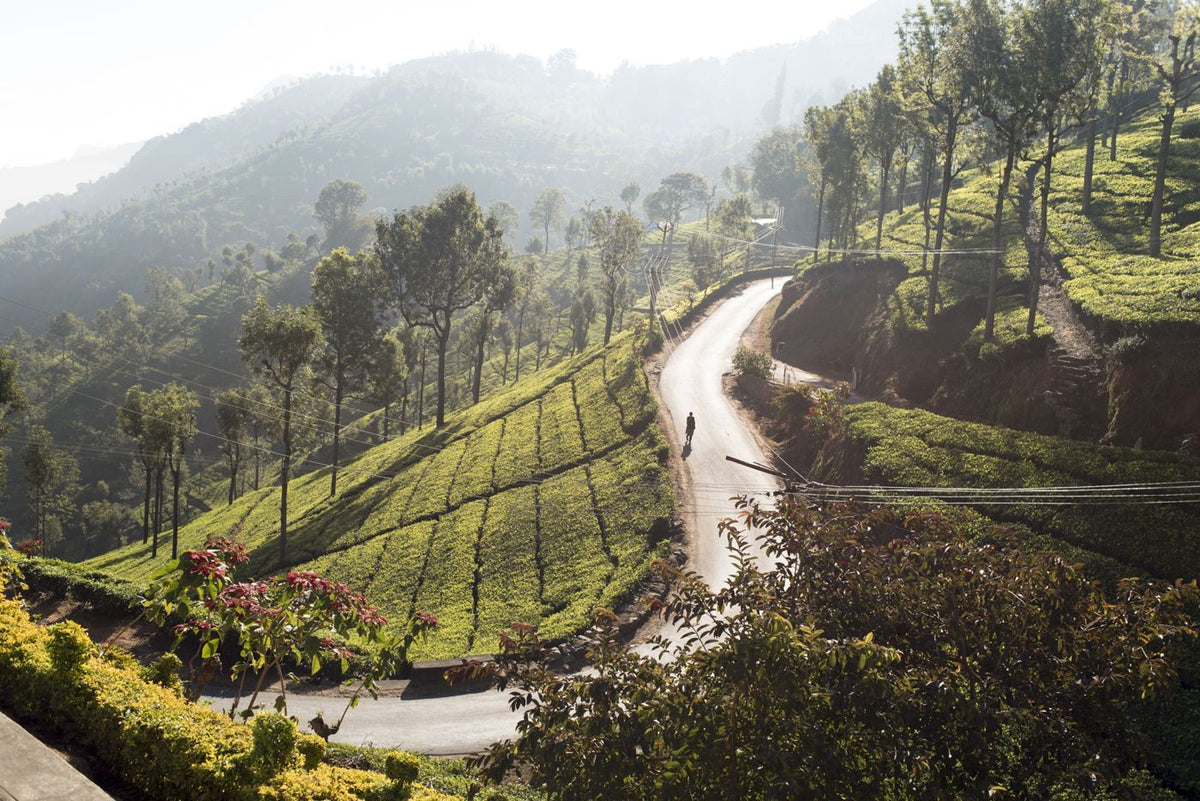
The Badagas, whose name means “northerners,” are the largest indigenous community in the Nilgiris. After World War I they moved from their traditional millet to potatoes and, by 1920, to tea, and today “more than 80% of the community still remains connected to tea,” across some 370 Badaga villages. Drive around the hills and you see their hamlets, called hattis, nestling on slopes surrounded by tea, with women working among the bushes and in the potato and cabbage fields.
Why the small farms chose tea
Cherian P. Matthew, a third-generation planter, told us why the small growers moved to tea. Coffee is harvested once a year, but tea runs on “a weekly cycle. So the small growers were able to get money every week.” Coffee estates also needed a big workforce only at harvest, while a tea estate has work all year round. How coffee gave way to tea across the hills is told in The history of Nilgiri tea.
A cooperative for small growers
Small growers also have INDCO, the Nilgiri-based federation that our founder called India’s largest tea cooperative, set up to help them with processing, distribution and trading. In 2021 it caused a stir by offering its growers procurement rates higher than the Tea Board’s, and, as our founder noted, it was “not the first or only time.”
Who works on the Nilgiri tea estates?
On the big estates, much of the work is now done by migrant workers from eastern and northeastern India, about 50,000 of them by a 2016 estimate, who have taken the places of Tamil families whose children moved to the cities.Read more
Workers from eastern and northeastern India, about 50,000 by a 2016 estimate, now fill jobs once held by Tamil families whose children have moved to the cities: see The Changing Face of Tea Gardens in the Nilgiris.
The people behind the numbers
Our 2016 story met some of them.
- Sunil Gurung: came from Alipurduar in West Bengal, by way of building sites around Delhi and work in Kerala, to Devashola estate, which gives free housing and health care; those were what made him bring his family south.
- Chilo: left her family’s small farm in Jharkhand in 2009 to work at Craigmore, where her husband works too; she visits home once a year.
- Mangu Oran: a tea roller at Craigmore’s Woodlands factory, also from Jharkhand, who hopes to stay until he retires.
Wages were part of the pull. In 2016 the Nilgiris Settlement Wage was Rs 241 a day, which Balaji Rao, managing director of Devashola, told us was “double of what is paid in West Bengal.”
What our buyer saw
Our tea buyer noticed the change on his 2016 visit: fewer locals and more workers from Odisha, Bengal, Assam, Jharkhand and Nepal. One man told him his great-grandfather had come from western Nepal; at Glendale the gatekeeper was Nepali, and was so pleased to hear that our buyer’s own forefathers came from Nepal that he rushed to bring his father to meet him. At Parkside, a worker was surprised to meet a Hindi-speaking visitor. Both told him they were happy with their living and working conditions.
Where the Tamil families went
By the mid-1980s, the educated children of Tamil estate workers were leaving for blue-collar jobs in nearby cities, and later for jobs in information technology. Their places in the estate “lines” were filled by workers from the east and northeast. At TANTEA, the Tamil Nadu government’s tea corporation, most workers are still local Tamils or descendants of the Tamil families resettled from Sri Lanka in 1968.
What are working conditions like on Nilgiri estates?
Better than in most of India’s tea regions, by the accounts we have gathered: the estates are more mechanized, safety rules are followed, and the welfare laws that apply across India are enforced in Tamil Nadu.Read more
“Unlike Darjeeling and even Assam, the Nilgiris tea estates run a highly mechanized and efficient set-up,” our buyer wrote in 2016, and he saw “greater efficiency, an adherence to safety norms, and an overall higher quality of working” in the estates around Coonoor.
Laws, and estates that keep their word
Worker welfare on the Nilgiri estates goes back to the 1930s, when many companies began providing water, electricity, roads, drainage and health care. The Minimum Wages Act of 1948 and the Plantation Labour Act of 1951 added drinking water, crèches, medical care, housing and maternity benefits by law, and a senior planter told us that though these rules are pan-Indian, “in Tamil Nadu they are actually enforced.”
Our buyer also found that estate managers kept their promises. At Glendale, the school and crèche that management had promised to renovate on his previous visit were done by January 2016, and concrete block bricks had replaced tar on some roads so the soil could hold the water. Many plantations had started growing herbs and peppers in empty patches.
Shears and hands
Mechanization shows in the fields. At TANTEA the everyday crop, mostly CTC, is harvested with shears, “not the delicate hand plucking of two leaves and a bud,” which is kept for the specialty silver needle. Even the small things are steady: at the Adderley post office, we met Anitha, the postwoman, and learned that tea workers trust the India Post savings schemes because they are government run and seen as secure.
What is life like in the Nilgiri hills?
Away from the fields, life in the hills still turns on tea: the planters’ club in Coonoor, the old estate bungalows, and towns where the talk is of weather and green-leaf prices.Read more
The Coonoor Club has been the planters’ hangout since 1885, and most evenings the talk is about tea, the weather and green-leaf prices. The planters there today “are not English, Irish or Scottish; they are Tamil, Badaga, Kannada, Malayalee, Gujarati and Sikh.”
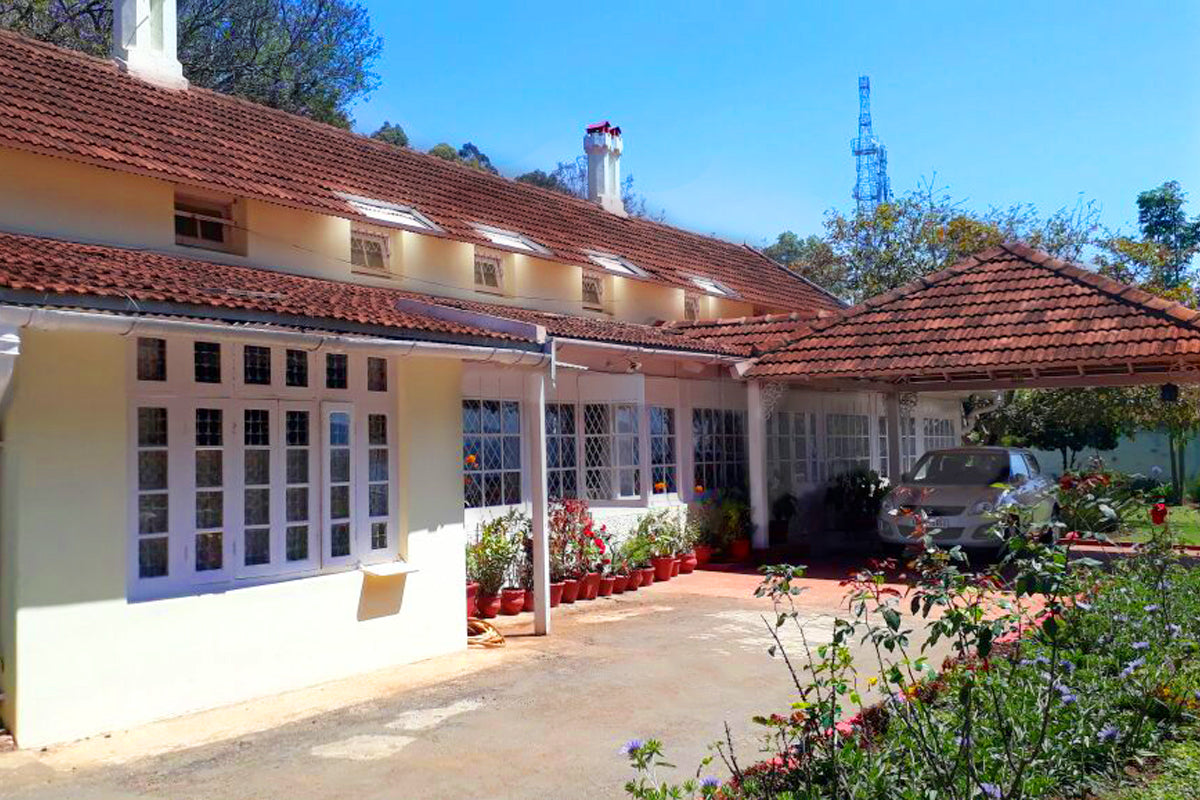
On estates, managers are still called “dorais” and their assistants “chinna dorais,” and many of the old bungalows have become homestays. Our buyer stayed in some of the best colonial bungalows in the country on his 2016 trip, and called the one at Craigmore “the best bungalow I have ever stayed in, across the country.” For life in the hills beyond the tea, read That Nilgiris Bubble.
Keep reading
Sources
- Teabox Tea 101: The Nilgiris: blue mountains, shola forests, and aromatic tea; What are winter flush teas?
- Teabox blog (Still Steeping): When King Coffee Bowed Out to Tea (2016); The Changing Face of Tea Gardens in the Nilgiris (2016); Prisoners’ tales from the Nilgiris (2016); That Nilgiris Bubble (2016); Mountain Megabrands (2016); A chronicler of the Nilgiris, S. Muthiah (2017); A House for Chinna Dorai – Estate Bungalows in the Nilgiris (2017)
- Teabox blog (Still Steeping): The Beginner’s Guide to Winter Flush Teas from the Nilgiris (2017); The Winter of Our Teas (2015); An Interlude Called Autumn (2015); A Nilgiri girl in Darjeeling (2017)
- Teabox blog (Still Steeping): From Coonoor to Mincing Lane: The History of the Nilgiri Tea (Nina Varghese, 2016); A Hundred Acre Forest in the Nilgiris (2016); A tour of TANTEA estate, Nilgiris (2016); It’s time for tea from the Nilgiris (2016); The Badagas of Nilgiris (2016); Clonals: the tea of the future (Peter GW Keen, 2016)
- Teabox product tasting notes, picking dates, grades, altitudes, FAQs and estate descriptions for Havukal, Glendale, Korakundah and Billimalai Winter Frost Black and Glendale Autumn Twirl Green, 2022 to 2026 lots
- Teabox Drive: Teabox internal document, 2018; Teabox internal document, 2023; Teabox internal document; Teabox internal document, 2017; Teabox internal document, 2019; Teabox internal document, 2025; Teabox internal document, 2025; photos as credited
- Teabox licence records: Tea Board certification trade mark licence for Nilgiri Orthodox, 2015 to 2026 (internal file, not linked)
- Teabox on Instagram (@teabox.tea): toy train at Glendale, Jan 2016, Adderley post office, Feb 2016, Glendale Twirl, Apr 2016, Mint Cooler, Apr 2016, Craigmore, May 2016, Nilgiri White, Nov 2016, Orange Sorbet, May 2017, January trip south, Jan 2019, Havukal fields, Jan 2019, Havukal factory and yield, Jan 2019, Havukal history, Jul 2020, Glendale, Aug 2020, tea gardens and wildlife, Sep 2021, mountain railways, Jan 2022, the Blue Mountains, Feb 2022, Meet the Growers, Sep 2022, waiting for the winter flush, Dec 2022, the Blue Mountains in winter, Jan 2023, Glendale tasting, Feb 2023, Korakundah 2024, Glendale 2024
- Kausshal Dugarr on X (@Teapreneur): Nilgiri teas, Dec 2016, how tea came to the Blue Mountains, Oct 2021, INDCO procurement rates, Oct 2021, INDCO and small growers, Oct 2021, Meet the Growers season 2, Jul 2020. Teabox on YouTube: Karthik Jayaram, Havukal Tea, Nilgiris

Leave a comment
All comments are moderated before being published.
This site is protected by hCaptcha and the hCaptcha Privacy Policy and Terms of Service apply.