


Assam’s main harvests are the first flush, from late March to late May, and the prized second flush in summer, which gives the maltiest, most golden-tipped teas; the monsoon and autumn flushes follow, then a winter rest. The second flush is considered superior to the first: a fuller body, sweeter, with plenty of gold tips.
This page follows the Assam year through our own visits, season reports and tastings. For Darjeeling and the Nilgiris, start with Seasons of tea, and for the region itself, Assam tea.
Why are Assam’s seasons different from Darjeeling’s?
Assam is low, hot and wet, so its large-leaf bushes grow fast and give far more tea, and the seasons show more as body and malt than as delicate aroma.Read more
Assam grows low, at about 30 to 150 m, in heat of 20 to 30°C, so the large-leaf Assamica bushes grow fast. Summer gives more tea than spring, though less than the monsoon.
The bushes shape the season’s cup too. Dikom, for example, has nearly 70% of its bushes in high-quality clones such as P126A, N436, S3A3, T3A3, CP1 and Tenali 17, and Mangalam is planted entirely with clonal bushes at 42,480 bushes a hectare.
The gardens are also far from us. Our Assam partner estates sit about 400 to 900 km from our facility in Siliguri, from Doomni at 403.8 km to Namsang at 897.1 km, against 38 to 93 km for our Darjeeling gardens.
Is there an Assam first flush worth drinking?
Yes, though it is lighter and less famous than the summer flush: Assam’s spring teas are brisk and bright, and in 2024 we added our first two to the spring collection.Read more
In Assam the first flush runs from March to April, after the winter pruning. In spring 2024, for the first time, we introduced two Assams in our spring range: Chardwar, from Tezpur district, and Dinjoye, “a robust, malty delight” from Dibrugarh district.
In 2026 our spring Assams were picked later than the house window: Dinjoye on 5 May and Chardwar on 29 and 30 May.
The spring of 2024, when those first two launched, was a dry one: Assam had 42% less rain than usual from March onward, and the North Bank gardens lost about 40% of their crop until May.
When is the Assam second flush?
The second flush is Assam’s summer harvest, from late May into July, when the bushes put out the most buds and make the maltiest, most golden-tipped teas of the year.Read more
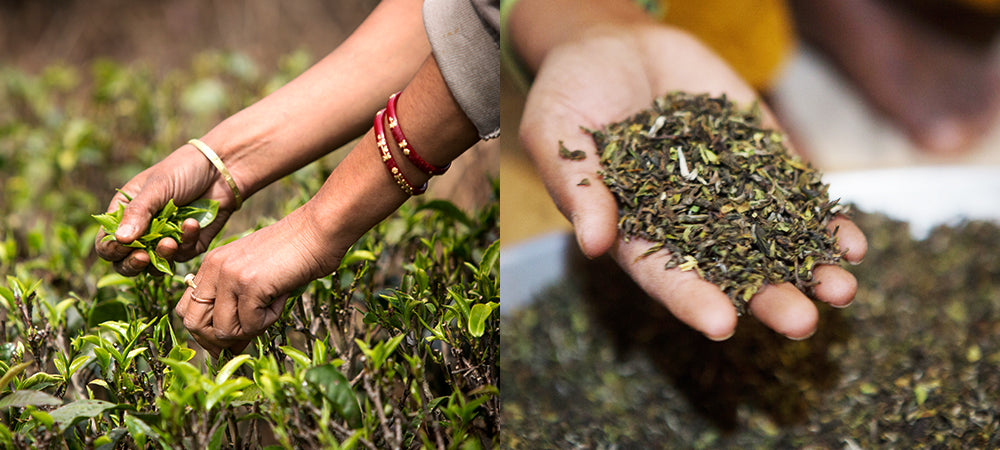
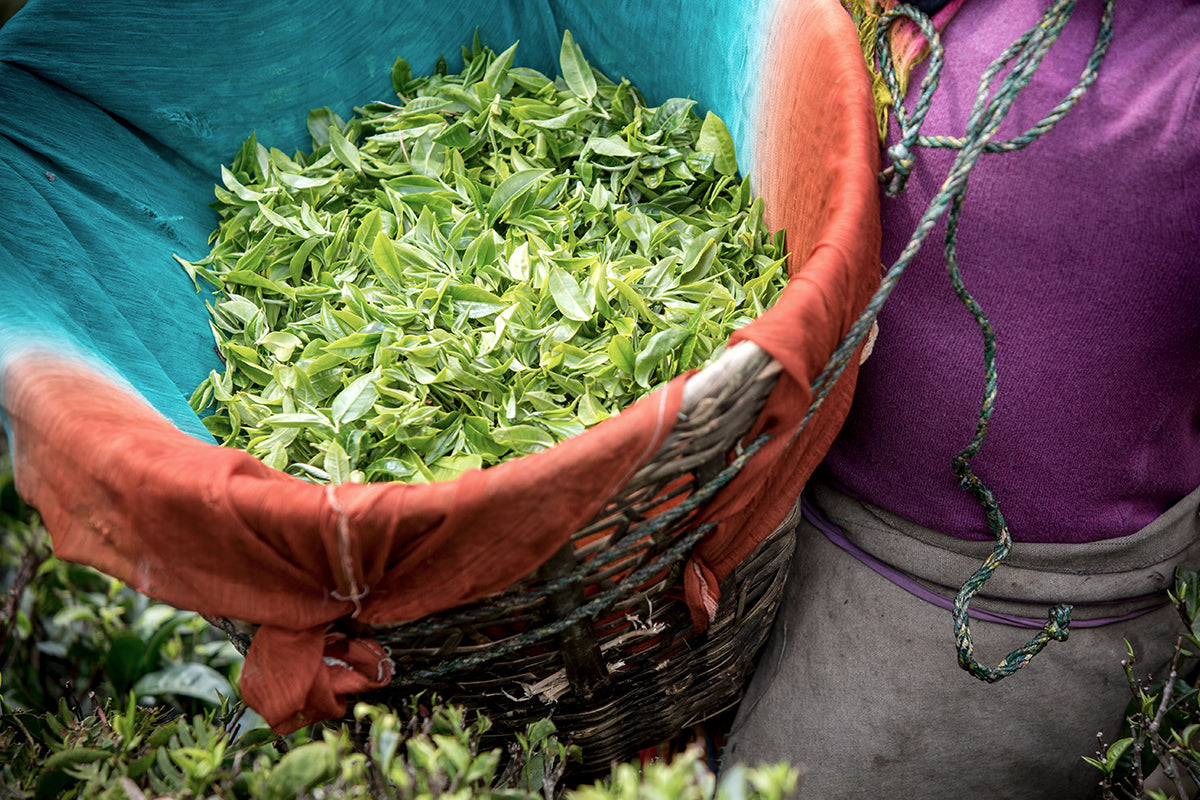
Our procurement team visited during the summer flush of 2015 and found Halmari collecting leaf in bamboo buckets to keep it from bruising, and Basmatia “famous for its golden tippy tea, Assam’s summer specialty.” That trip also took in Chubwa, Balijan, Hoogrijan, Zaloni, Rajgarh and Mankota; the name Chubwa comes from Chah Bowa, Assamese for “tea planting.”
“Every summer, we make our annual visit to Assam for the summer flush,” as Ravi Kothari of our procurement team wrote in 2017. As the summer samples arrive, “the cups are maltier, sweeter, and mellower” week by week.
How the summer builds
The rains decide when the summer teas peak. In 2023 useful rains in May let select estates in the prime belts of Jorhat, Moran, Dibrugarh and Tinsukia start making summer teas by early June, “the character’s yet to peak.” After the 2024 drought, our team expected quality “to peak with rich, malty characters emerging from June 20th onwards.”
Our summer buying then runs for months. In 2026 our Assam summer lots were picked from Halmari on 2 and 3 July to Dikom and Namsang on 19 to 21 September; in 2025 Dikom was picked on 29 and 30 August. Our summer partners include Halmari, Doomni, Mangalam, Dikom and Harmutty.
How we taste a summer flush
In July 2021 our tasters set the season’s samples out two ways. A horizontal tasting compared different gardens in the same season: Harmutty, Halmari, Mangalam, Doomni and Coombergram. A vertical one compared different clones from the same garden, sections of Halmari.
Two months later they tasted one Mangalam summer black at four oxidation times, from 2 hours 30 minutes (“muted”) to 3 hours 30 minutes, which they chose: “Let’s launch this!” The full trial is in How is tea made?, and the tea is our Assam Mangalam Gold Summer Black. Our Halmari Summer Black and Dikom Classic Summer Black come from the same season.
What happens to Assam tea in autumn and winter?
After the summer and the rains, Assam makes a lighter autumn tea, then rests from about mid-December, when the bushes are pruned and the factories overhauled.Read more
Assam’s autumn flush teas are lighter, with less body than summer’s, but the liquor is still bright and brisk; they are considered second best after the summer flush. After autumn the gardens rest.
Tea 101 puts the start of that rest in mid-December, when the estate enters a resting phase and, along with the pruning of the bushes, the factories see some overhauls. In Assam and the Dooars the bushes are pruned from the second half of January to the end of February, and there is no harvest at all.
Winter is hard work in the gardens all the same. At Balijan, field assistant Manisha Singh told us that in the cold months, when no harvest takes place, she is in the field by 4.30 to 5 am to oversee the pruning. More in Assam tea.
Keep reading
Sources
- Teabox blog (Still Steeping): What’s the fuss about the first flush? (2015), A Postcard from Darjeeling: Thinking Spring (2015), An Interlude Called Autumn (2015), The Beginner’s Guide to Winter Flush Teas from the Nilgiris (2017)
- Teabox blog (Still Steeping): In Assam for the summer flush (2015), The Winter of Our Teas (2015), An Indian Summer in a Cup (2015), Conversations from a tea garden (2015), Meet the man who created the Darjeeling oolong (2015), A balancing act in the Darjeeling tea gardens (2015), What a progressive tea industry needs (2015), From Europe and food to Asia and tea (2015)
- Teabox blog (Still Steeping): The Teabox team in Assam (2016), Teabox: 100 countries and counting (2017), The beginner’s guide to choosing a Darjeeling (2017), A Nilgiri girl in Darjeeling (2017), Of tea, wildlife and stories of yore from Assam (2017), The steep road ahead (2020), A tryst with history (2020), The muscatel master (2021)
- Teabox blog stories: Tea flushes: Your guide to tea harvest (2014); First flush teas: A refreshing class of tea (2014); The future of Darjeeling’s tea (2015); The delight of Margaret’s Hope (2016); The chemistry of tea: a lab, not a leaf (2016)
- Teabox Tea 101: Seasons of tea; Guide to spring teas; Your guide to summer teas; Autumn teas; Guide to winter tea; First flush and second flush; Assam
- Teabox Drive: Teabox internal document, 2023; Teabox internal document, 2023; Teabox internal document, 2024; Teabox internal document, 2019; Teabox internal document, 2022; Teabox internal document, 2019; Teabox internal document, 2016; Teabox internal document, 2017; Teabox internal document, 2024; photos as credited
- Teabox product records: tasting notes, picking and listing dates, freshness journeys, estate distances, product FAQs and brewing fields (Giddapahar, Halmari, Havukal, Glendale, Jungpana, Okayti, Castleton, Upper Namring, Dikom, Mangalam)
- Teabox on Instagram (@teabox.tea), Kausshal Dugarr on X (@Teapreneur) and Teabox Masterclasses on YouTube, linked where used

Leave a comment
All comments are moderated before being published.
This site is protected by hCaptcha and the hCaptcha Privacy Policy and Terms of Service apply.