


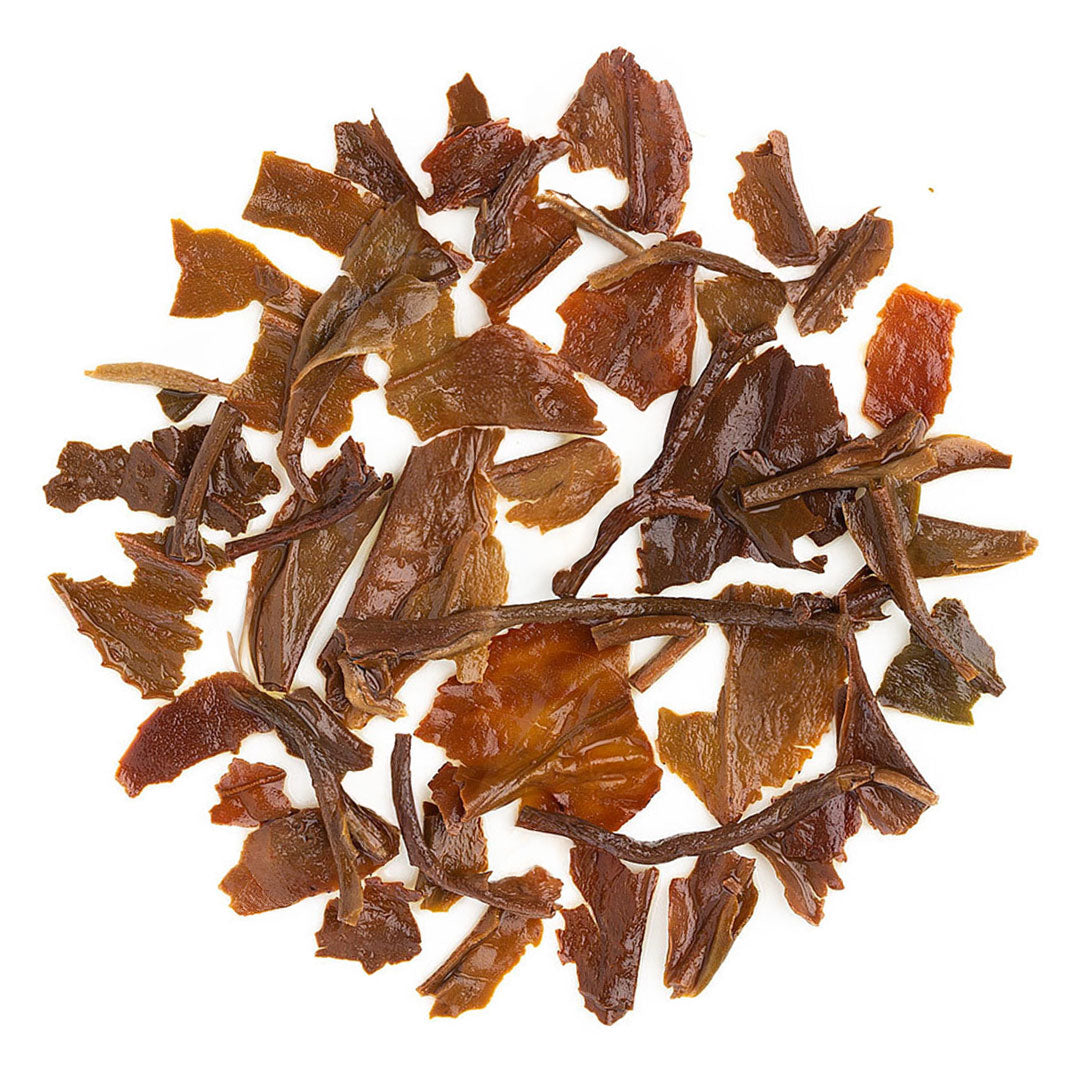
Kangra tea began in 1852, grew into one of British India’s most admired teas, collapsed after the great earthquake of 1905, survived for decades on handmade green tea, and has been slowly revived since the 1960s. Few tea regions anywhere have had a stranger path. For the valley, its taste and how to brew it, start with our Kangra tea guide.
How did tea come to Kangra?
A government botanist judged the valley right for tea in the late 1840s, and commercial planting began in 1852 at Holta, near Palampur, with bushes grown from China seed.Read more
Dr William Jameson, superintendent of the botanical gardens of the North West Provinces, surveyed Kangra and judged the lower Dhauladhar slopes right for tea. Tea 101 dates his visit to 1849. “A feasibility survey was conducted and in 1848 the area was declared suitable for tea plantations,” our founder wrote in his own account of the valley.
Commercial planting began in 1852, twelve years after the first plantings in Darjeeling, as Tea 101 and Frank Miller both count it, with the first estate at Holta, near Palampur. The bushes were of China origin: “most of the seedlings were pure China jat, Camellia sinensis var. sinensis,” Miller wrote. By 1892 more than 9,000 acres were under tea.
The 1850s to 1900s: a promising start
For about 50 years the industry grew at a brisk pace, and Kangra became one of the leading tea regions of British India. The tea earned a remarkable name. In 1883 the Gazetteer of the Kangra District called it “probably superior to that produced in any other part of India,” and Kangra teas won a gold medal in London in 1886 and a silver in Amsterdam in 1895.
Most of the handmade, orthodox green tea went west, through the market towns of Pathankot and Amritsar, to Afghanistan and the Middle East, though it was known and liked in Europe too. Green tea suited both the China bushes and those buyers, and it set the style the valley would fall back on after 1905.
What did the 1905 earthquake do to Kangra tea?
The Kangra earthquake of 4 April 1905 leveled the valley’s tea factories, and with capital, labor and markets all out of reach, Kangra never regained its place among India’s great tea regions.Read more
At about 6 in the morning of 4 April 1905, one of the great Himalayan earthquakes struck the valley. Frank Miller gives its magnitude as 7.6 to 8.0 and calls it “India’s worst earthquake ever.” It leveled villages, temples, forts and tea factories and killed about 20,000 people.
Many British planters sold their gardens to local buyers and left. Capital and labor to rebuild were scarce, and repairs were slow: “Garden productivity plummeted. Production languished.” The Kolkata auctions were some 2,000 km away, and the world’s taste was moving toward black and CTC teas, never Kangra’s strength. Darjeeling, Assam and the Nilgiris pulled far ahead. (CTC is explained in Orthodox vs CTC tea.)
Each of those problems fed the next. Without working factories the gardens could not make black tea for the auctions, and without auction sales there was no money to rebuild the factories. Miller, writing 110 years later, called it “an almost mortal blow,” a shock “from which it has not yet fully recovered.”
How did Kangra tea survive the 20th century?
The planters who stayed could not restore black tea production, so they kept making what Kangra did best: handmade green tea, sold mostly to Afghanistan and the Middle East.Read more
The Dharmsala Tea Company, founded in 1882 when Gurdayal Singh Mann bought his first estates, is one of the companies that came through. It is still run by the Mann family, now in its sixth generation, and its estate bungalow, built before the earthquake and restored after it, still stands.
“For 135 years now, the company and these estates have been a part of the Mann family,” the company told us in 2017, which it believes makes it one of the few estates in India to have stayed with a single owner for so long. Its factory, which also dates from 1882, had by then become an ISO and HACCP-certified factory making black, green, oolong and white teas.
That long run of green tea is why Kangra was, “for the longest period,” the main supplier of green tea to Central and West Asia and Russia. What those greens taste like is on our Kangra tea types page.
How was Kangra tea revived?
From the 1960s, a new state government, a regional auction, cooperative factories and later the Tea Board of India slowly brought Kangra tea back, and by 2010 its auction price had edged above the all-India average.Read more
The 1960s: a new start
The 1960s changed the valley. In 1960 the Dalai Lama moved from Mussoorie to Dharamsala and established a “little Tibet” there, putting the district on the world map. In 1964 a tea auction center opened at Amritsar for the small growers of northwest India, represented by the Kangra Tea Planters Supply & Marketing Co-operative, and later in the decade Kangra moved from Punjab into Himachal Pradesh.
By the late 1960s the state government was offering cooperative factories, loans to old gardens, farm extension, tea research, bush replacement schemes and laws to stop old tea estates being turned to other uses. “These programs, it has to be said, were not as successful as they might have been,” Miller wrote.
With state help, four cooperative factories opened at Palampur, Bir, Sidhbari and Baijnath between 1964 and 1983, so that small growers without a factory of their own could process their leaf. Running costs proved too high, and by 2004 only Palampur was still working.
The Tea Board and a new generation
The Tea Board of India then stepped in, training and funding small growers and inviting larger planters to invest. Old cooperative factories were leased to private operators, and a new generation of owners arrived, some with decades of experience in Darjeeling. Research centers sponsored by the Government of India and the Himachal Pradesh Department of Agriculture also began to work on the local tea industry. In 2005 Kangra tea was registered as a Geographical Indication; see Does Kangra tea have a GI tag?
By 2010, the average auction price of Kangra tea (Rs 109 a kilo, about $2.40 at the time) had edged above the all-India average (Rs 104), a sign that buyers were taking it seriously again. It was still below the north India average of Rs 119. Anirudh Suri of the Dharmsala Tea Company told us in 2017 that building ties with buyers, blenders and tea writers abroad had taken years: “Thankfully, it’s starting to pay off.”
| When | What happened |
|---|---|
| Late 1840s | Dr William Jameson surveys Kangra and finds it suited to tea. |
| 1852 | Commercial planting begins; the first estate is at Holta, near Palampur. |
| 1882 | Gurdayal Singh Mann founds the Dharmsala Tea Company. |
| 1883 | The Kangra District Gazetteer calls the tea “probably superior” to any in India. |
| 1886, 1895 | Gold medal in London, silver in Amsterdam. |
| 1892 | More than 9,000 acres are under tea. |
| 1905 | The Kangra earthquake destroys factories; many British owners sell and leave. |
| 1960 | The Dalai Lama settles in Dharamsala. |
| 1964 | A tea auction center opens at Amritsar for northwest India’s small growers. |
| 1964–1983 | Four cooperative factories open; by 2004 only Palampur is still running. |
| 2005 | Kangra tea is registered as a Geographical Indication. |
| 2010 | Kangra’s average auction price (Rs 109 a kilo) passes the all-India average. |
| Today | Around 6,000 gardens, nearly all making orthodox black tea. |

For the wider story, see The history of tea.
Keep reading
Sources
- Teabox Tea 101: Kangra, the fall and the rise of a tea industry
- Teabox blog: In Kangra, for a tour of the tea gardens (Aravinda Anantharaman with Anirudh Suri, Dharmsala Tea Company, 2017)
- Teabox blog: Missives from Gunehar: Leaving the city (Prachi Sibal, 2016), The bookseller of McLeod Ganj (Prachi Sibal, 2016)
- Teabox blog: An Indian Summer in a Cup (2015), The Winter of Our Teas (2015), What’s the fuss about the first flush? (2015)
- Teabox blog (Still Steeping) Teabox story: Rising from the embers: Kangra’s tea gardens, 2015 (Frank Miller)
- Teabox blog (Still Steeping) Teabox story: All about Indian tea terroir, 2014 (Kausshal Dugarr)
- Teabox Drive: Teabox internal document, 2017; Teabox internal document, 2012; Teabox internal document, 2018; Teabox internal document, 2023; Teabox internal document, 2016; photos as credited
- Teabox internal records (not linked): supplier estate records, 2019; certificate and license register, 2026
- Teabox product descriptions, 2026 season (closest teas): Giddapahar Spring Chinary Black, Castleton Spring Chinary Black, Darjeeling Green Tea, Glenburn Spring Moonshine Oolong
- Teabox on Instagram (@teabox.tea): Kangra tea Masterclass, Feb 2022, 118 countries, Apr 2021
- Kausshal Dugarr on X (@Teapreneur): India’s 4th tea region, Oct 2021, Jameson’s survey, Oct 2021
- Teabox on YouTube: Teabox Masterclass, Kangra


Leave a comment
All comments are moderated before being published.
This site is protected by hCaptcha and the hCaptcha Privacy Policy and Terms of Service apply.