


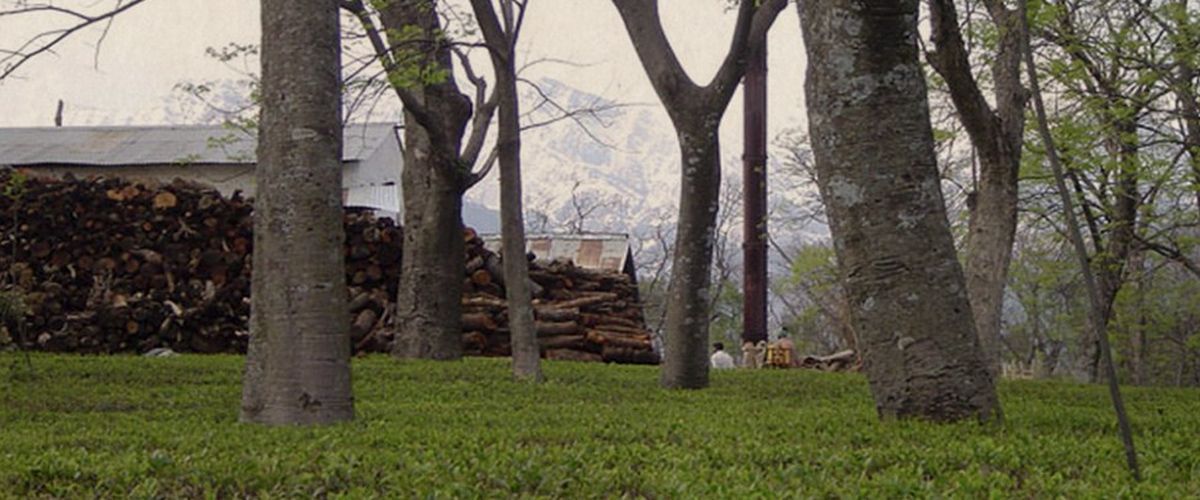
Kangra tea is tea grown in the Kangra valley of Himachal Pradesh, in north India, below the snow peaks of the Dhauladhar range. Planted in 1852, praised in Victorian London, almost wiped out by an earthquake in 1905 and slowly revived since, it has held a Geographical Indication (GI) since 2005. It makes light, gently vegetal black teas and a famous green tea.
At a glance
- WhereKangra valley, Himachal Pradesh, around Palampur and Dharamsala
- MountainsLower slopes of the Dhauladhar range, western Himalaya
- First planted1852, at Holta near Palampur
- BushesChina and China-hybrid, many over 100 years old
- GardensAround 6,000, most of them small
Where is Kangra tea grown?
Kangra tea grows in the Kangra valley in the western Himalaya, in the north Indian state of Himachal Pradesh, mostly around the towns of Palampur and Dharamsala.Read more
The gardens sit on the lower slopes of the Dhauladhar range, whose snow-capped peaks rise straight up behind them. That is why you will also hear it called Kangra valley tea, Palampur tea or simply Himachal tea.
It is the smallest of India’s classic tea regions. As our founder, Kausshal Dugarr, has put it: “Apart from Darjeeling, Assam, & the Nilgiris, not many are aware of India’s 4th tea-growing region. Even fewer people have tried teas from Kangra valley which were once considered the most superior.” For where it sits among the others, see our guide to Indian tea regions.
Climate, soil and height
Two things make the valley good for tea.
- The right temperatures: through the main cropping season, March to October, the valley stays within roughly 13–35°C (55–95°F), the range in which tea bushes grow well.
- Rain and soil: rainfall is generous and well spread through the year, and the loamy soil holds it well.
Altitude matters too. The first estate, at Holta, was planted at about 1,260 meters. The Dharmsala Tea Company’s three estates, Mann, Hoodle and Towa, lie between 4,000 and 6,500 feet (about 1,200 to 2,000 meters), a range that overlaps with many of the gardens in Darjeeling.
Frank Miller, who spent 30 years in tea, lived among these gardens in the 1960s. He first rented a house near the Holta Tea Estate, “one of the region’s original gardens,” then moved to a cottage on Bundla, “a big, beautiful tea property” that ran from just north of the old Palampur bus stand to the edge of Neugal Khad, a deep, broad canyon full of boulders.
The Kangra gardens we have bought from
Most of the valley’s gardens are small, but a few are proper estates with their own factories. Our 2018 training manual counted four Kangra plantations among the gardens we bought from, beside 29 in Darjeeling, 35 in Assam, 21 in the Nilgiris and 11 in the rest of the North East.
Our 2019 supplier records give the size of two of them. Wah, founded in 1857, covers 104 hectares and makes about 0.3 million kg of tea a year with 300 permanent workers. The Dharmsala Tea Company’s garden, founded in 1882, covers 60 hectares and makes about 0.1 million kg with 180 workers. Even the bigger of the two is a modest garden by Assam standards.
The history of Kangra tea: rise, fall and revival
Kangra tea began in 1852, grew into one of British India’s most admired teas, collapsed after the great earthquake of 1905, survived for decades on handmade green tea, and has been slowly revived since the 1960s.Read more
Few tea regions anywhere have had a stranger path. The full story, from Dr William Jameson’s survey to the medals, the earthquake, the Mann family’s 135 years and the 1960s revival, is on its own page.
Read nextThe history of Kangra teaThe 1852 planting, the 1905 earthquake, the green tea years and the slow revivalDoes Kangra tea have a GI tag?
Yes. Kangra tea was registered as a Geographical Indication in India in 2005, so only tea grown and made in the defined Kangra area can be sold as “Kangra tea.”Read more
It is the same kind of protection that Darjeeling tea received in 2004, when it became India’s first GI.
For a region this small, the tag matters. It protects the name from tea made elsewhere and gives buyers abroad a reason to look for it. Frank Miller, who lived in Palampur in the 1960s and spent 30 years in tea, called it a “coveted” certification that “will help it gain recognition in the global marketplace.”
He saw the GI as one part of a wider turn. “Developments in the Kangra valley during the last 15 years have moved Kangra tea ahead exponentially,” he wrote in 2015, pointing also to new research centers and private owners. The planters agree it has been hard work: Anirudh Suri of the Dharmsala Tea Company told us that Kangra’s planters “have lacked sufficient global exposure and marketing assistance” and have had to build relationships with buyers one by one.
A GI is a name, not a logo you can print freely. Teabox holds Tea Board licenses to use the Darjeeling and Nilgiri Orthodox certification marks, but none for Kangra, because we do not sell Kangra tea at present. What a GI is, and how it differs from organic or fair trade labels, is explained in Tea certifications explained.
What does Kangra tea taste like?
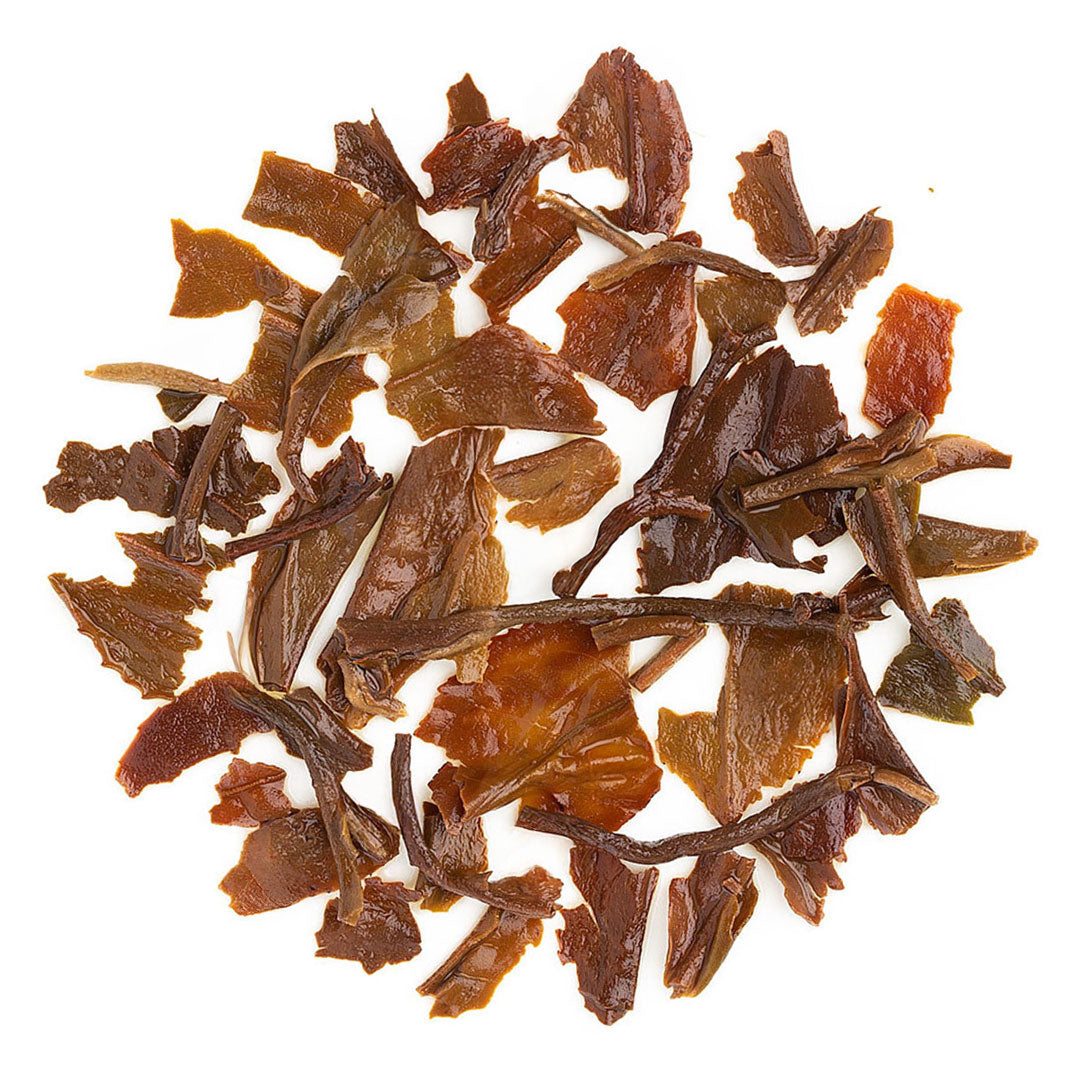
Kangra tea is light and subtle: most Kangra teas have a green, vegetal aroma that carries into the cup, with an earthy depth and a gentle, understated pungency.Read more
It is softer and less astringent than most Darjeeling, with none of Darjeeling’s summer “muscatel” grape note.
Kausshal Dugarr, Teabox’s founder, described Kangra’s teas in 2014 as “notably grassy, mellow and subtly sweet.” Frank Miller found them “subtle, light in body, but pronouncedly floral, like a Darjeeling,” and borrowed a Thai phrase for the comparison: “same-same, yet different.”
Why it tastes this way
The character comes from the bushes. Kangra’s gardens are planted with China and China-hybrid bushes, most of them more than 100 years old, rather than the big-leafed Assam type behind most Indian tea. (More in Chinary, Assam and clonal tea plants.) Small-leafed China bushes give a lighter, more aromatic cup than Assam bushes, which is why Kangra sits nearer Darjeeling than Assam in the cup.
Miller went further: “Even Darjeeling cannot guarantee all its tea is old-style China, as much else has been introduced recently in that place.” He also noted that in Kangra “a lot of the skilled labor is done by hand and by feel, the way it was one hundred plus years ago.” The planters credit care as well as age: the hybrid bushes are “organically regenerative,” the Dharmsala Tea Company says, and regular pruning keeps them healthy.
Through the seasons
Spring gives Kangra its lightest blacks. Assam, Kangra and the Nilgiris all make a first flush in spring, but it is Darjeeling’s that commands the highest prices. In summer, we have counted the “earthy and smooth green teas from Kangra” among the rarer teas of the season.
Kangra tea is also rare. Frank Miller put it at only 0.01 to 0.03 percent of India’s annual tea sales in 2015.
What kinds of tea does Kangra make?
Nearly all of Kangra’s 6,000 or so gardens make orthodox black tea today, but the valley made its name with handmade green tea, and a few estates also hand-roll oolong and make small lots of white tea.Read more
Our procurement team has cupped Kangra’s hand-rolled oolong, and the business that became Teabox was already selling one in 2012. Their notes, and what each of the four types is like, are on their own page.
Read nextKangra black, green, oolong and white teasWhat each type tastes like, with our own tasting notes on Kangra oolongKangra tea vs Darjeeling tea: what’s the difference?
Kangra and Darjeeling are Himalayan cousins: both grow on high slopes from China-type bushes planted in the mid-1800s, but Kangra tea is milder, more vegetal and earthier, while Darjeeling is more floral, brisker and, in summer, muscatel.Read more
Kangra is also far smaller and far less known.
The two are most alike in spring. As Anirudh Suri of the Dharmsala Tea Company put it: “Like the Darjeeling teas, Kangra first flush blacks tend to be greenish in appearance, and offer a light and bright cup to the tea lover. At the same time, Kangra teas do not have the typical muscatel touch that you find in Darjeeling teas.”
| Kangra | Darjeeling | |
|---|---|---|
| Where | Kangra valley, Himachal Pradesh | Darjeeling hills, West Bengal |
| Mountains | Dhauladhar range, western Himalaya | Eastern Himalaya, below Kanchenjunga |
| Tea since | 1852 | 1841 (first seeds); gardens from the 1850s |
| Bushes | China and China-hybrid, mostly over 100 years old | China (Chinary) and modern clonals |
| Main teas | Orthodox black; historic green | Orthodox black; also green, white, oolong |
| Taste | Vegetal, earthy, mellow, softly pungent | Floral and bright in spring; muscatel in summer |
| Astringency | Lower | Higher, especially in spring |
| Flushes | Spring, summer (June) and monsoon; no autumn flush in our calendar | Spring, summer, monsoon and autumn |
| GI status | 2005 | 2004, India’s first |

The calendars run side by side. Our 2023 training deck puts Kangra’s spring flush in the same window as Darjeeling’s, from mid February to mid April, its summer flush in June, when Darjeeling, Kangra and Nepal give “full-bodied, sweet, fruity” cups, and its monsoon flush from mid July to the end of September. Unlike Darjeeling, Kangra has no autumn flush in that calendar. In both places winter is harsh and the bushes rest: “No harvest takes place until spring.”
The planters themselves see one difference in the field. “Between Darjeeling and Kangra,” says the Dharmsala Tea Company, “we’d say the Chinese bushes fare well and yield better in Kangra.” Kangra also resembles Nepal tea: another Himalayan region long in Darjeeling’s shadow, now making a name of its own. For the whole Darjeeling picture, read our Darjeeling tea guide.
How do you brew Kangra tea?
Brew Kangra black tea like a first flush Darjeeling, at 85–90°C (185–195°F) for 3 to 4 minutes, and Kangra green tea cooler, at 75–80°C (167–176°F) for 2 to 3 minutes.Read more
Use about 2 to 2.5 g of leaf (a heaped teaspoon) for a 250 ml (8 oz) cup, and drink it plain: milk hides its delicate flavor.
- Black tea: water at 85–90°C, 3 to 4 minutes. If it tastes thin, add more leaf next time rather than steeping longer.
- Green tea: water at 75–80°C, 2 to 3 minutes. Boiling water brings out bitterness, which Kangra’s greens otherwise have very little of.
- Oolong: water at 85–95°C, 3 to 5 minutes. Hand-rolled oolong will give two to four infusions. When DarjeelingTeaXpress, the business that became Teabox, sold a Kangra autumn oolong in 2012, it advised 90°C for 3 minutes 30 seconds, right in the middle of that range.
- White tea: water at 80–85°C, 3 to 5 minutes.
The black tea advice follows from the taste. Kangra’s spring blacks are only lightly oxidized and greenish, like a first flush Darjeeling, so water straight off the boil can flatten their aroma and pull out more astringency than they need. The greens are the most delicate of all, which is why they get the coolest water and the shortest steep.
More detail in How to brew loose leaf tea.
Can you visit the Kangra tea gardens?
Yes, Kangra is easy to reach: the tea gardens lie around Palampur and Dharamsala, below the Dhauladhar range.Read more
The nearest airport is Gaggal, just outside Dharamsala, and the road from there toward Bir runs past Palampur, where the first estate was planted. When our writer Prachi Sibal made that drive to Gunehar, about two hours, her driver stopped at the Tashijong monastery, the Baijnath temple and even the agriculture university at Palampur.
Kangra is a valley of many visitors. Dharamsala is home to the Dalai Lama and a large Tibetan community, and Tibetan monks are often seen walking through the Mann family’s estates in the morning or evening “to find solace or for quiet reflection.” The family’s old estate bungalow has hosted British officials, film stars, writers and chefs, and more recently a wedding. Read the planters’ own account in In Kangra, for a tour of the tea gardens.
Beyond the gardens there is the 13th-century Shiva temple at Baijnath and the old Kangra fort of the Rajput Katoch dynasty. The valley also gave its name to the Pahari, or Kangra, school of miniature painting, and its old hill stations include Dalhousie, Dharamsala, Palampur, Mandi and Kulu. In McLeod Ganj, above Dharamsala, Prachi Sibal spent an afternoon over chai with the Tibetan bookseller Lhasang Tsering; her story is The bookseller of McLeod Ganj.
The valley is also a crossroads. Miller lists its neighbors as Punjab, Jammu and Kashmir, Lahaul and Spiti, Chamba, Tibet and Ladakh, and its people include the nomadic Gaddis, goat herders “who move seasonally with their flocks” between mountain and valley.
Tea is part of daily life in the villages too. The people of these hills call themselves pahadis, hill people, and for generations tea has been one of their main livelihoods. When Prachi Sibal spent a winter in Gunehar, near Bir, she found herself “called for tea often and by nearly everyone I talk to, including the village grocer.” Read her story in Missives from Gunehar: Leaving the city.
Where can you buy Kangra tea?
Teabox does not sell Kangra tea at the moment, but these teas come closest in style.
We have shipped Kangra teas in the past, alongside teas from Darjeeling, Assam, the Nilgiris, Meghalaya and Sikkim. In 2016 our store had its own pages for Kangra black, green, white and oolong teas, and in 2018 we still stocked Wah Classic Spring Green. Readers still ask: “Do tell me how I can source some tea from Kangra,” one wrote under our Kangra story in 2019.
For Kangra’s light spring blacks, try a Chinary spring Darjeeling, also made from old China bushes; for its green tea tradition, a Darjeeling green. For another small Himalayan region that grows Chinary bushes, read Sikkim tea.
Kangra tea FAQ
Does Kangra tea have a GI tag?
Yes. Kangra tea was registered as a Geographical Indication in India in 2005, so only tea grown and made in the defined Kangra area of Himachal Pradesh can be sold as Kangra tea.
Is Kangra tea like Darjeeling tea?
They are cousins rather than twins. Both are Himalayan teas from old China-type bushes, and Kangra’s spring blacks look and brew much like a first flush Darjeeling. But Kangra tea is milder, more vegetal and earthier, and it lacks the muscatel note of a Darjeeling summer tea. See our Darjeeling tea guide.
Can you visit the tea gardens in Kangra?
Yes. The gardens lie around Palampur and Dharamsala in Himachal Pradesh, below the Dhauladhar range, and the nearest airport is Gaggal, near Dharamsala. Check with an estate before you go, as not all of them take visitors.
When is Kangra tea harvested?
The main cropping season runs from March to October. Spring brings a first flush, as it does in Darjeeling, Assam and the Nilgiris, and in an early year it can start in mid February. There is a summer flush in June and a monsoon flush from mid July. In winter the bushes rest, and no tea is plucked until spring.
Why is Kangra tea so little known?
The 1905 earthquake destroyed its factories just as it was making a name, and for most of the 20th century the valley survived by selling handmade green tea to Afghanistan and the Middle East. It is also tiny, a minute share of India’s tea, so little of it reaches shops abroad.
Does Teabox sell Kangra tea?
Not at present. We have sold Kangra black, green, white and oolong teas in the past. For a similar cup today, try a Chinary spring Darjeeling, made from old China bushes, or a Darjeeling green.
Keep reading
Sources
- Teabox Tea 101: Kangra, the fall and the rise of a tea industry
- Teabox blog: In Kangra, for a tour of the tea gardens (Aravinda Anantharaman with Anirudh Suri, Dharmsala Tea Company, 2017)
- Teabox blog: Missives from Gunehar: Leaving the city (Prachi Sibal, 2016), The bookseller of McLeod Ganj (Prachi Sibal, 2016)
- Teabox blog: An Indian Summer in a Cup (2015), The Winter of Our Teas (2015), What’s the fuss about the first flush? (2015)
- Teabox blog (Still Steeping) Teabox story: Rising from the embers: Kangra’s tea gardens, 2015 (Frank Miller)
- Teabox blog (Still Steeping) Teabox story: All about Indian tea terroir, 2014 (Kausshal Dugarr)
- Teabox Drive: Teabox internal document, 2017; Teabox internal document, 2012; Teabox internal document, 2018; Teabox internal document, 2023; Teabox internal document, 2016; photos as credited
- Teabox internal records (not linked): supplier estate records, 2019; certificate and license register, 2026
- Teabox product descriptions, 2026 season (closest teas): Giddapahar Spring Chinary Black, Castleton Spring Chinary Black, Darjeeling Green Tea, Glenburn Spring Moonshine Oolong
- Teabox on Instagram (@teabox.tea): Kangra tea Masterclass, Feb 2022, 118 countries, Apr 2021
- Kausshal Dugarr on X (@Teapreneur): India’s 4th tea region, Oct 2021, Jameson’s survey, Oct 2021
- Teabox on YouTube: Teabox Masterclass, Kangra

Leave a comment
All comments are moderated before being published.
This site is protected by hCaptcha and the hCaptcha Privacy Policy and Terms of Service apply.