


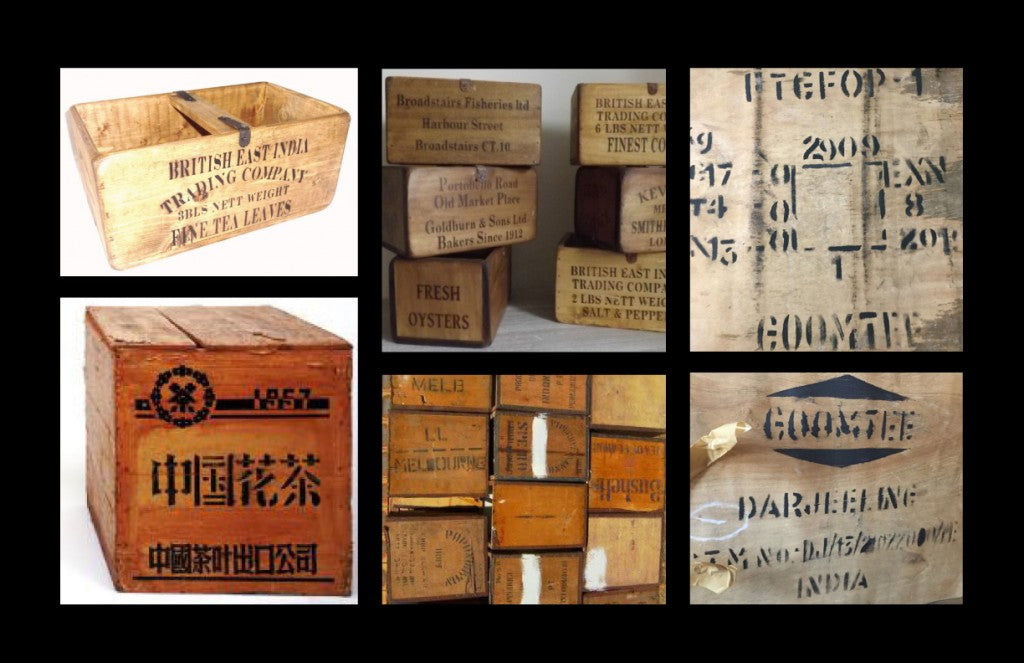
Tea grew wild in Assam long before the British arrived: the Singpho people of Upper Assam brewed it from their own gardens. The British turned it into an industry in the 1830s, to break China’s hold on the tea trade. This part of our complete guide to Indian tea follows that story from the first wild bushes to the chai stalls on every railway platform.
Who drank tea in India first?
The Singpho people of Upper Assam were making and drinking tea from their own wild bushes before any European saw a tea garden in India.Read more
The Singphos plucked tender leaves from wild bushes, dried them in the sun, exposed them to the night dew for three days and then packed them into hollow bamboo tubes and smoked them until the flavor developed. As our founder has written, “each Singpho family owned their respective tea gardens.”
When our team visited Margherita in Upper Assam in 2016, the bamboo tea was still being made. The leaf was slow-roasted in a wok, dried in the sun, crushed and packed into bamboo hollows, then left above the hearth to smoke for as long as two months before being cut into coin-sized discs. Read the full story of Singpho coin tea on our blog.
In 1823 the Scottish trader Robert Bruce, on a trip to Rangpur, the old Ahom capital, was introduced to this brew; Tea 101 credits the Assamese nobleman Maniram Dewan with taking him to the Singpho chief. Bruce died soon after, and it was his brother Charles who sent samples to Calcutta, where the plant was identified as a tea of its own kind and named assamica.
The fuller account of the Singpho, Bruce and Maniram Dewan is in The history of Assam tea.
How did the British build India’s tea industry?
The East India Company, having lost its monopoly on the China trade, set out in the 1830s to grow its own tea in Assam, and by 1839 Indian tea was on sale in London.Read more
The idea was old. Joseph Banks had advised the East India Company on growing tea as early as 1788, but it was only taken up in 1833, when the company lost its monopoly on trade with China. Charles Bruce then set up the first nursery, with 80,000 seeds brought from China, and two Chinese tea makers were hired to teach the craft. In 1834 the company set up a Tea Committee to run the experiment.
The first attempts failed. In 1835 tea was planted in Upper Assam where the Dibru meets the Brahmaputra, but the plants could not take hold and died. The next year, saplings planted at Chubwa grew, and the estate still dates its first successful planting to 1836.
The first British plantation followed in Upper Assam in the late 1830s, and in 1839, for the first time, Indian tea went on sale in Britain; until then only Chinese teas had been auctioned there. That 1839 sale is where our founder starts the story of Indian tea’s place in the world. The same year, Maniram Dewan served as Dewan of the Assam Tea Company, which our 2021 story calls the first tea company in the world.
Growth was fast after that. By 1862 Assam had more than 160 gardens, owned by five public companies and 57 private planters.
How did tea reach Darjeeling, Kangra and the south?
China-type seed did poorly on the hot Assam plains but thrived in the hills, so Darjeeling, Kangra and later the Nilgiris and Munnar became tea country between the 1830s and 1880.Read more
Dr. Archibald Campbell planted it in Darjeeling in 1841, and Kangra’s first commercial garden opened in 1852. In the south, tea seed was first sown in the Nilgiris in 1835, and Munnar planted its first tea in 1880.
Darjeeling’s first gardens
Campbell’s garden was an experiment; the planters came in the 1850s. Captain Samler was the first, at Alubari in 1856, for the Kurseong and Darjeeling Tea Company, and Dr. Brougham planted Harsing and Dooteriah in 1859. The Nepali nobleman Dakman Rai brought in thousands of workers, paying them in seed, and set up Soureni in 1878, Phuguri in 1880 and Sampripani in 1883.
The numbers grew quickly. By 1866 Darjeeling had 39 gardens making 21,000 kg of tea; four years later there were 56 gardens making 71,000 kg.
Not all the early planters were British. German missionary families, the Wernickes and the Stolkes, founded Steinthal, Risheehat, Goomba and Tumsong, and managed Makaibari, Tukvar, Bannockburn and Glenburn. The German residents were arrested in 1939, and by 1949 that chapter was over; Peter Keen tells it in Tea in Germany & its Darjeeling Connection.
The Nilgiris
In the south, Lord William Bentinck’s Tea Commission sent to China for seed and for tea makers. The mansion at Ketti where the early seed was raised is now the women’s hostel of the CSI College of Engineering. Dunsandle, above 1,800 m, and Thiashola, “mother of the forests,” opened in 1859, were among the first estates. Seeds were sown at Ketti in 1835, and the first commercial estates followed in 1859.
The longer story, from China to the world, is in The history of tea.
How did India learn to drink tea?
Indians did not take to tea at first; it took decades of campaigns, cheap CTC tea and railway tea stalls to make chai the national drink.Read more
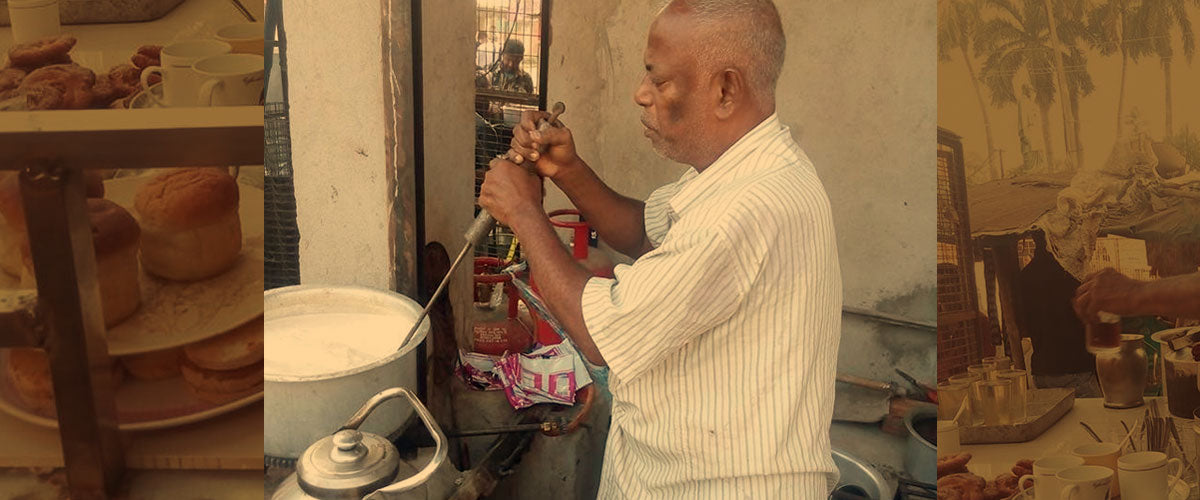
Indians did not take to tea at first: most preferred native drinks such as thandai and sherbet. The industry set out to change that. The Tea Cess Committee of 1903, renamed the Indian Tea Market Expansion Board in 1937, promoted tea across the country, and the tea stalls at railway stations and docks are a legacy of those campaigns. Cheap CTC dust and fannings made tea affordable for everyone, and after independence the Tea Board advertised tea as “Swadeshi,” India’s own.
Some regions came to it late. In Kashmir, CTC chai arrived in the valley around the 1970s, and “by the end of 1985, every stratum in Kashmir knew about CTC chai,” as our 2020 story on the valley’s flavors records. How those habits look today is in How India drinks tea.
“The British built India’s tea industry to ship Indian tea to the world under a British flag. 79 years later, we ship from Siliguri to 125+ countries under our own.”


Keep reading
Sources
- Teabox blog (Still Steeping): Bombay’s Lifeline – Cutting Chai (2020), The Changing Face of Tea Gardens in the Nilgiris (2016), A chronicler of the Nilgiris, S. Muthiah (2017), When King Coffee Bowed Out to Tea (2016), On a food trail through the Nilgiris (2016)
- Teabox blog (Still Steeping): Meet the man who created the Darjeeling oolong (2015), Tea in Germany & its Darjeeling Connection (2016), A balancing act in the Darjeeling tea gardens (2015), The Steep Road Ahead (2020), Teatime, Talktime (feat. Anjum Hasan and Zac O’Yeah) (2017)
- Teabox blog (Still Steeping): The Teabox team in Assam (2016), Assam Diaries: The Jalans at Chota Tingrai (2016), Of tea, wildlife and stories of yore from Assam (2017), A Beginner’s Guide to Assam Teas (2017), Spinning Yarn, Weaving Tales (2017), Writing Novels, Drinking Assam Tea (2015), A bazaar in my backyard (2016)
- Teabox blog (Still Steeping): The Flavors of the Valley (2020), Meet the team: Ravi Kothari, Tea Buyer (2015), Remembering the days of manual tea auction (2016), Mountain Megabrands (2016)
- Teabox blog (Still Steeping): A breath of fresh air in India’s tea gardens, 2015; The top tea growing regions of India, 2015; All about Indian tea terroir, 2014; Chai: the way India drinks tea, 2015; Manual Tea Auction: The Last Citadel, 2016; How Teabox ensures its teas are fresh, 2015; Pairing Tea with Tech, 2015; From Coonoor to Mincing Lane: The History of the Nilgiri Tea, 2016; A tour of TANTEA estate, Nilgiris, 2016; Raising Our Cups to Maniram Dewan, 2021; The Delight of Margaret’s Hope, 2016; How much does good tea cost?, 2016
- Teabox Tea 101: An overview of the tea industry in India; Top 10 tea producing regions of the world; Geographical Indication (GI); Assam; Darjeeling; Nilgiri; Kangra; Munnar; Sikkim; Meghalaya
- Teabox Tea 101 guides: Darjeeling tea; Sikkim tea; Famous tea estates of India; Seasons of tea; What is chai?
- Teabox Drive: Teabox internal document, 2023; Teabox internal document, 2018; Teabox internal document; Teabox internal document; Teabox internal document, 2023; Teabox internal document, 2017; Teabox internal document, 2020; photos as credited
- Teabox product records: estate descriptions, invoice numbers, freshness journeys and tasting notes, 2026 season (Castleton, Temi, Namsang, Doomni, Seeyok, Badamtam, Halmari, Banaspaty, Havukal, Lakyrsiew)
- Teabox on Instagram (@teabox.tea): tea workforce, Mar 2024, 24 roles, Sep 2022, estate names, Sep 2022, the first nursery, Jan 2022, Chubwa, Sep 2018, rivers and soils, Sep 2021, first flush tasting, Mar 2023, not from the auction, Jun 2021, and the other posts linked where used
- Kausshal Dugarr on X (@Teapreneur): auction share, Oct 2021, London auctions since 1679, Oct 2021, and the other posts linked where used; Teabox on YouTube, linked where used

Leave a comment
All comments are moderated before being published.
This site is protected by hCaptcha and the hCaptcha Privacy Policy and Terms of Service apply.