


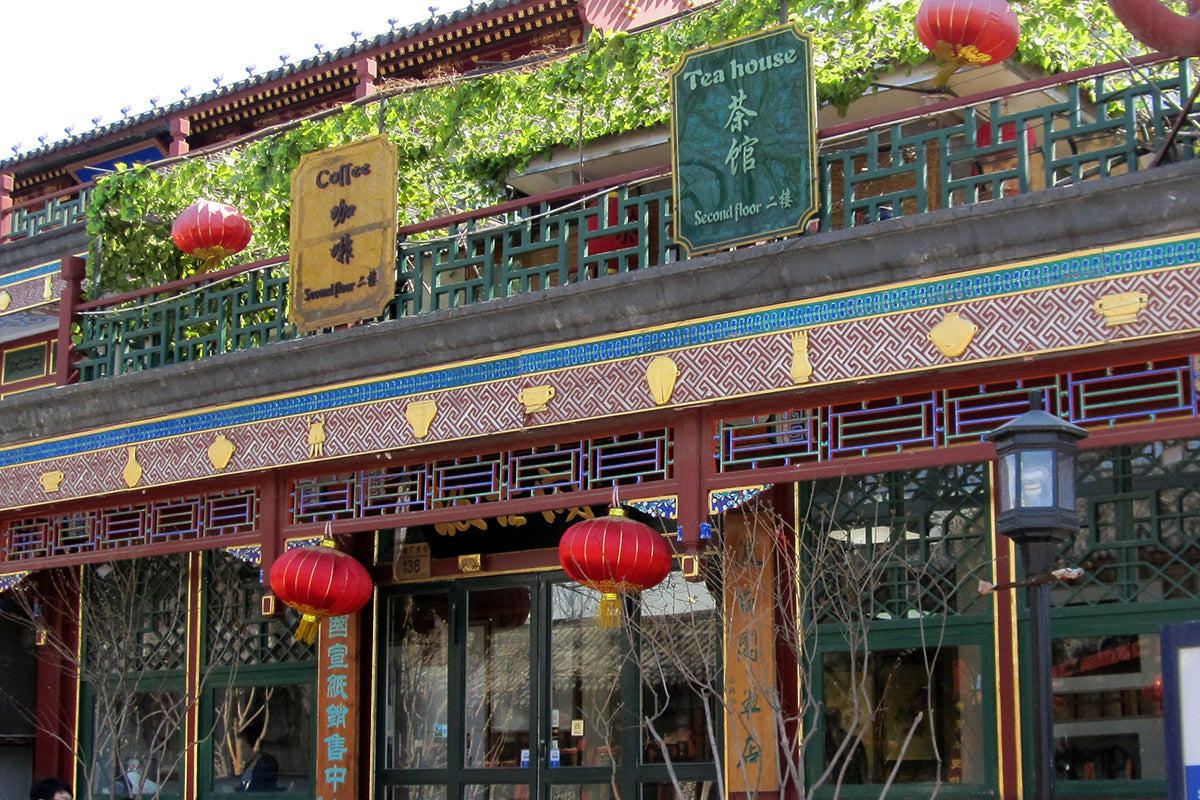
China has grown and drunk tea for thousands of years; India’s tea industry is less than two centuries old, built by the British in the 1830s to break China’s hold on the tea trade. But the tea plant was not new to India. The Assam variety grew wild in the northeast, and the Singpho people there had brewed it for generations.
Did India have tea before the British?
Yes. The Assam plant is native to northeast India, and the Singpho were brewing its leaf long before the first British garden was planted.Read more
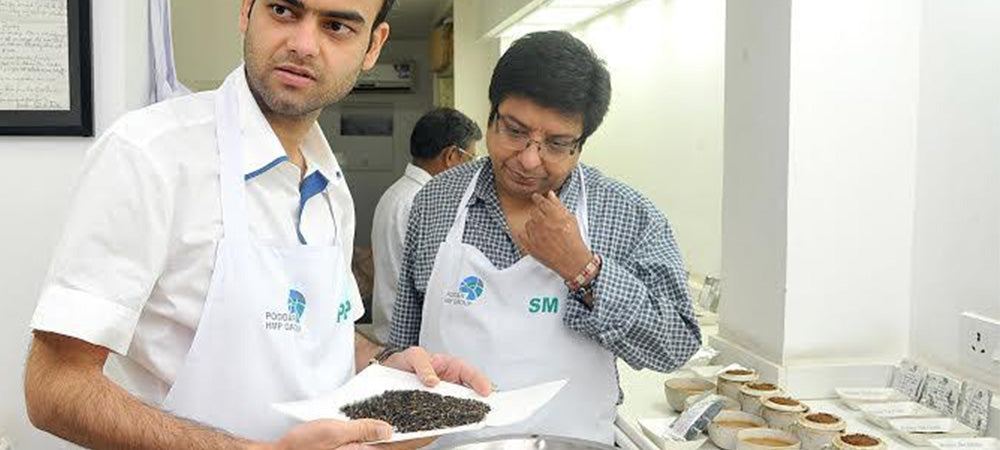
On a visit to Margherita in Upper Assam, with our procurement manager Ravi Kothari, our team heard one version of how the British found it: Maniram Dewan, from neighboring Jorhat, brought Robert Bruce to Margherita and showed him the wild bushes, “a hardy and strong plant so unlike its delicate Chinese cousin.”
In 1823 the Scottish trader Robert Bruce was shown the Singpho’s tea, through the Assamese nobleman Maniram Dewan. After Robert’s death his brother Charles sent samples to Calcutta, where the plant was confirmed as tea of its own kind, later named assamica. The first commercial gardens followed in Upper Assam in the late 1830s, and in 1839 Indian tea went on sale in Britain for the first time. Until then, the tea Britain drank came from China.
The Singpho way with tea is still alive: our team watched leaf being roasted, packed into bamboo and smoked over the hearth to make their coin tea. The full story is in Assam Diaries: Margherita, the Singphos and Coin Tea, and the wider Indian story in The history of tea in India.
Why did Britain want to grow its own tea?
Because every leaf Britain drank came from China, on China’s terms, and had to be paid for in silver.Read more
China let foreign traders work only from one small stretch of the port of Canton, and it wanted almost nothing Europe made. Peter Keen, writing for our blog, explained that China “insisted on payment in silver,” and that when the First Opium War began in 1839, “fully 35% of all the money flowing through the equivalent of the Federal Reserve system was for hard currency to pay for tea.”
Our training deck tells how the trade broke down: “a Chinese official sent 20,000 chests of opium to a watery grave in a sea near Canton. A year later, Britain declared war on China and China retaliated by placing a strict embargo on all exports of tea.”
Early tries with Chinese plants
The idea was older than the war. Chinese tea plants were already trickling into the botanical garden at Shibpur, outside Calcutta, set up by the army engineer Lieutenant Colonel Robert Kyd, and “with the plants came skillful Chinese ‘gardeners’ adept at growing tea.”
In 1788 the botanist Joseph Banks sent the East India Company a report suggesting it grow its own tea in India rather than depend on China, but his ideas were rejected. The plan only came back in 1833, when the Company lost its monopoly on the China trade and suddenly saw India as a profitable alternative.
How did Chinese seed and tea makers shape Indian tea?
The British planted Chinese seed and hired Chinese tea makers; the China plant failed on the hot Assam plains but thrived in the cool hills, which is why Darjeeling and Kangra grow China-type bushes to this day.Read more
Seed and tea makers from China
Charles Bruce was appointed to set up the first nursery, with 80,000 seeds collected from China, and he hired two professional tea makers from China to help him perfect the craft. The imported Chinese variety soon struggled with the harsher climate.
The British also brought Chinese seed and plants. On the hot Assam plains the China plant did poorly, so planters there turned to the local Assam bush. In the cool hills it thrived: Dr Archibald Campbell planted China seed in his Darjeeling garden in 1841, and Kangra was planted with China bushes from 1852.
Chinese tea makers went south too. John Ajoo was “one of six Chinamen who came to the Nilgiri Hills in the latter days of the East India Company to advice in regard to tea planting and manufacture,” and later planted 13 acres at Munnar, still remembered as the “Chinaman’s field.” His descendant James Suthan Ajoo, who traces the family to Huizhou in Anhui, sent us the family story in 2016, quoting a 1953 planters’ history.
Robert Fortune’s journeys
The best-known link is the Scottish botanist Robert Fortune, who “is said to spy on China’s ancient tea processing techniques, smuggling the tea seeds and returning to India with knowledge, equipment and a team of experienced Chinese growers,” as our training deck puts it. The East India Company asked him in 1848 to bring tea plants and seed out of China. His first attempt failed; in 1849 he took cuttings from the Wuyi mountains, famous for black tea, with the help of his Chinese servant Sing Hoo, and sent them to India from Shanghai in glass cases with soil, so they could grow on the voyage.
Where the China plant took root
The hills still carry that Chinese heritage. Namring, Darjeeling’s largest estate by area and production, is “rooted in its original China seed heritage.” In Kangra, our team found gardens “planted with both Chinese and Chinese-hybrid bushes. In these estates, most bushes are over 100 years old.”
That is why Darjeeling tea tastes so different from Assam tea, grown only a few hundred kilometers away. Read more in Kangra tea and our tour of the Kangra tea gardens.

Why did the world split into two tea camps?
Because once India’s gardens were producing, Britain and its empire switched to strong Indian black tea with milk and sugar, while Europe, Russia and the United States went on buying large-leaf China tea.Read more
The long voyage from Canton
Before Indian tea, everything bound for Europe sailed from Canton, the one small stretch of port where China let foreign traders work. The voyage to London around the Cape of Good Hope was about 20,000 km, and the tea was often 18 to 24 months old by the time it was sold. Our blog traced Britain’s turn from green to black tea partly to this: the green teas arriving after such a journey grew poorer and more adulterated, and traders pushed their Chinese agents for the darker “red” tea, which kept better.
Chinese tea makers answered with “bohea” or “red” teas made for the European market, which “remained far fresher than greens in the China-to-London sailing ship journey that could take a year.” The best of them, the “Congou teas from Anhui and Yunnan were far superior and became the base for black teas.”
The fast tea clippers cut the time; in the Great Race of 1866 the two leading ships reached England from China after 99 days, within half an hour of each other. The Suez Canal, opened in 1869, ended the clipper era. Read the whole story in At a fast clip: Shipping tea from China.
How Indian tea won Britain
Once Assam’s gardens were producing, Indian black tea, strong and good with milk and sugar, became very popular in Britain. Ian Bersten, writing for our blog, tied this to sugar too: the strong small-leaf tea “tasted very good with the plentiful amounts of sugar available from England’s monopoly of the product in Jamaica.”
Machines sealed it. Peter Keen’s figures for our blog show China’s tea exports to the UK falling from 70 million lb in 1872 to 15 million lb in 1912, as rolling machines made Assam tea far cheaper to produce.
By the 1900s, as a 2015 essay on our blog put it, the world had divided into two camps: “small leaf black tea in the British Commonwealth and large leaf China tea in Europe, Russia and the United States.”
The two camps today
Bersten found the split “basically the same today for leaf tea.” China and Japan “supplied green tea in large leaf only,” while “manufacturers in Ceylon, India, Kenya and Indonesia supplied small leaf tea for teabags,” with a much smaller amount of large leaf tea. Another 2015 essay on our blog put it with a smile: “The world of tea easily divides into the Eastern Orthodox Green Tea Religion and the Indian/Ceylon/Kenya Black Tea Religion.”
The camps are shifting. Reporting from the Sydney Tea Festival in 2015, our blog noted that the old British Empire cup, “made with small-leaf black tea from India, Ceylon, Kenya and Indonesia, made with milk and sugar,” had come to seem “unfashionable” to younger drinkers looking for tea to drink without sugar. Today India makes its own whites, greens and oolongs too; see Indian vs Chinese tea, type by type. For the longer story, read The history of tea.
Keep reading
Sources
- Teabox Tea 101: Indian vs Chinese teas; Overview of the tea industry in India; Tea producing regions
- Teabox blog: What Became of the Small Leaf Tea? (Ian Bersten, 2015), At a fast clip: Shipping tea from China (Peter GW Keen, 2017), English Breakfast: The Baseline Black Tea (Peter GW Keen, 2016), An Homage to a Box of Tea: Musings of an Art Historian (Romita Ray, 2016)
- Teabox blog: Assam Diaries: Margherita, the Singphos and coin tea (2016), In Kangra, for a tour of the tea gardens (2017), Meet the man who created the Darjeeling oolong (2015), India vs. Taiwan: The Oolong Challenge (Frank Miller, 2017)
- Teabox blog: A short lesson on Asian green tea (Adeline Teoh, 2017), Jasmine Teas: A Scent of Perfection (Peter GW Keen, 2016), Moonlight Sonatas: The Great White Teas (Peter GW Keen, 2016), The finest cup of tea in Beijing (Zac O’Yeah, 2017)
- Teabox blog (Still Steeping): Roll Britannia: the early history of machinery in tea making (Peter GW Keen, 2016); Why Tea Is a Religion and Coffee Isn’t (2015); What’s selling at the Sydney Tea Festival? (2015); People Who Love to Drink Tea From Morning to Evening (Zac O’Yeah, 2016); Black tea: All you need to know (2014)
- Teabox internal documents (Google Drive): Teabox internal document, 2023; Teabox internal document, 2017; Teabox internal document, 2016; photos as credited
- Teabox product tasting notes, estate descriptions and product data, 2026: Nilgiri Glendale Autumn Twirl Green, Special Spring Silver Needle White, Badamtam Spring Moonlight White, Castleton Summer Moonlight White, Margaret’s Hope Spring Moonlight White, Classic Assam Black, Castleton Spring Chinary Black, Upper Namring Spring Clonal Black, Glenburn Spring Moonshine Oolong
- Kausshal Dugarr on X (@Teapreneur): India and 25% of the world’s tea, Jun 2020, Delhi hotel tea, Dec 2016
- Teabox on Instagram (@teabox.tea): How tea was brought to India, Jan 2022, Donyi Polo spring oolong, May 2019; Teabox on YouTube: True Story of Tea Cultivation in India

Leave a comment
All comments are moderated before being published.
This site is protected by hCaptcha and the hCaptcha Privacy Policy and Terms of Service apply.