


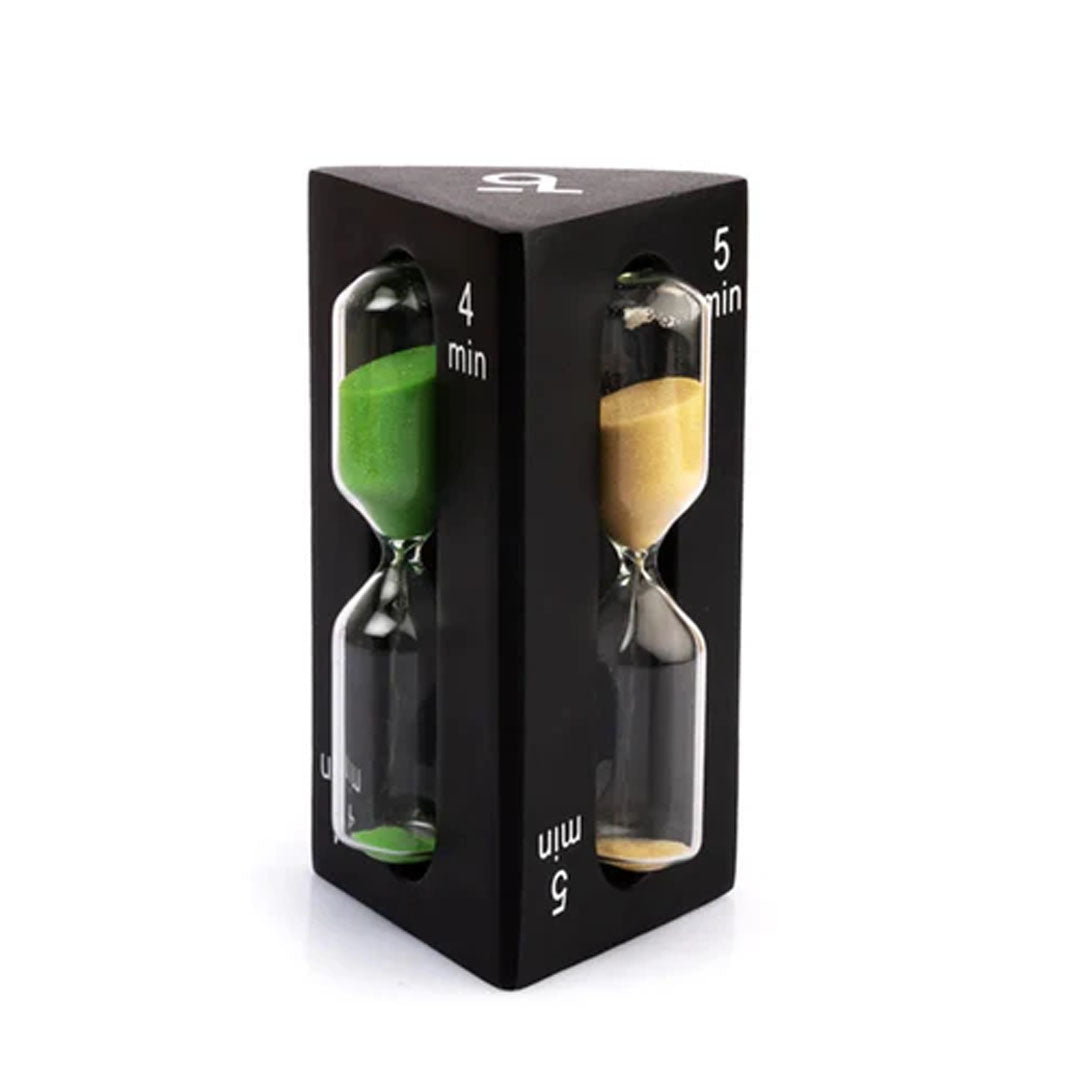
Delicate teas need cooler water; strong black teas need it hot. Most brewing problems come down to the same four things: the water, its temperature, the steeping time and how much leaf goes in. This page answers the brewing questions we are asked most; the basic five-step method is on our Tea FAQs page.
What temperature should water be for tea?
Green and white teas want water well below the boil, oolong and Darjeeling a little below it, and Assam black tea and herbal tisanes water at or just off a full boil.Read more
Use these as a starting point, then follow the steeping notes on each tea:
| Tea | Water | Steep | Milk? |
|---|---|---|---|
| Green tea | 75–80°C (167–176°F) | 2–3 min | No |
| White tea | 80–85°C (176–185°F) | 3–5 min | No |
| Oolong | 85–95°C (185–203°F) | 3–5 min; rebrew 2 to 4 times | No |
| Darjeeling first flush | 85–90°C (185–195°F) | 3–4 min | No |
| Darjeeling second flush | 90–95°C (195–203°F) | 3–5 min | Best plain; a splash is fine |
| Assam black (orthodox) | 95–100°C (203–212°F) | 4–5 min | Welcome |
| Herbal tisanes | 100°C (212°F) | 5–7 min | Usually no |
The reason is chemistry. Peter Keen, writing for our blog, put the working range at 170°F to 212°F, about 77°C to a full boil, and warned that “greens brewed at boiling point will be nastily bitter, and blacks tepidly heated at the lower end flat and lacking flavor.” For a Darjeeling he suggested about 205°F, “around half a minute off the boil.” Read Microwaved, tepid, rolling boiling? Water for tea!
No thermometer? Our old kettle card had a simple rule for green tea: bring the water to the boil, then let it stand for about three minutes before you pour. Never heat the water in a microwave; Keen calls the oven “a tomb where teas go only to die,” because it heats water unevenly.
For Darjeeling in detail, see How to brew Darjeeling tea; for pots, cups and infusers, see Choosing teaware.
How long should you steep tea?
Usually 2 to 5 minutes, depending on the tea; when you are unsure, three minutes is a safe place to start.Read more
Keen’s rule of thumb for our blog was that “the median time is just three minutes, with black teas up to five and Japanese green teas as short as 1.5 minutes.” His shortest advice: “When in doubt, choose 3 minutes.”
A longer steep makes a stronger, more bitter cup, not a better one. “Longer does not mean stronger, only more bitter,” Keen wrote, and when a tea disappoints, “don’t increase the time or temperature. If the tea is too weak, add more leaf in your next brewing.”
Chai is the exception that wants time. Our chai pages suggest about 2.5 g of chai for a 150 ml cup and a 5-minute steep. For the full stovetop method, see How to make masala chai at home.
Whatever the tea, try it plain the first time. Our 2016 brewing note put it simply: “just try it plain once; you’ll be surprised how many layers are there to a cup of tea.”
How much tea should you use, and how many cups does a pack make?
About 2 to 2.5 g of leaf, roughly one heaped teaspoon, for a 250 ml (8 oz) cup; at that rate a 100 g pack makes about 40 cups.Read more
Our product pages give the same count: a 100 g pack of our Darjeeling Green Tea, like several of our single-estate Darjeelings, is listed at 40 cups. Keen gave our readers a rule of thumb that fits it: “10 g equals four teaspoons equals four cups,” with a standard teaspoon defined as 5 ml. Read The Teaspoon: Measure, Stir, Display or Steal?
At the tasting bench our tasters weigh rather than spoon. They set out three tables, each with at least ten cups, and weigh 2.5 g of every tea, “not 2.4 g nor 2.6 g,” because only the same measure in every cup lets them pick the best one fairly.
At home a spoon is fine, as long as it is the same spoon each time. An Ideal Teaspoon takes out the guesswork. If the cup is too weak, add a little more leaf next time rather than steeping longer.
Does the water you use matter?
Yes: fresh, filtered water makes a bright, lively cup, while reboiled, very hard or distilled water makes it flat or dull.Read more
Use freshly drawn, filtered or good spring water, and do not reboil water that has stood in the kettle. Distilled water is the opposite of hard water: “deficient in minerals and producing a bland steep.” Read The Element of Water: Get Your Tea Right.
Keen opened his water story with a line we often repeat, “Look after the water and the tea will look after itself,” and set out his rules:
- Neutral water: aim for water close to a neutral pH of around 7, and avoid hard water that tastes of minerals or leaves a film on the cup.
- Filtered over bottled: a simple filter on the tap is the practical choice; “in the many tests of teas and water, filtered water is consistently the most highly rated.”
- The right heat: high for black teas and lower for green teas, as in the table above.
- The right time: only the few minutes the tea type needs, and never the microwave.
Our tasters take water seriously too. At a 2016 workshop in Siliguri they tasted the same teas made with three different kinds of water, “to see the effect of minerality on tea.” Read What I Learned at My First Ever Tea Tasting.
Why does my tea taste bitter?
Usually the water was too hot for the tea or it steeped too long.Read more
Brew green and white teas cooler, keep to the time, and strain the leaf out when the time is up. See How to brew loose leaf tea.
Keen called bitterness “one of the most common complaints about tea,” and said it is “almost always because of the water, not the tea,” provided the tea is real leaf. Brew a green tea too hot and too long, he explained, and “the tannins overwhelm the entire drink.”
Some bitterness belongs in tea. Our training deck reminds staff that “bitterness is a common attribute in many teas because of varying degrees of tannins,” but when our tasters screen a lot, “teas with a lot of harshness/bitterness is a strict no-no,” even for a strong Assam.
The grade matters as well. Bitter green teas are often made of dust, broken leaf or fannings: dust gives the tannins far more surface to spread from than a whole leaf, whose tannins take their time.
Can you steep the same leaves twice?
Good whole leaf teas will often give a second infusion; small broken leaf, tea bags and chai usually give their best in the first.Read more
Our product pages say so tea by tea. Our green teas are marked for two steeps and every chai for one. Oolongs go furthest: brew them two to four times at 85–95°C.
Kolkata has a name for overdoing it. At a pavement stall you may hear of “two-foot tea” or “three-foot tea”: “foot” in colloquial Bengali also means boiling, so two-foot tea is leaf brewed twice, and “you can gauge the number of ‘foots’ from the extent of grimace on the drinker’s face.” Read Two-Foot Tea and the Bengali.
Keep reading
Sources
- Teabox Tea 101: FAQs
- Teabox blog: Should you add milk to tea? (2015), The Element of Water: Get Your Tea Right (2021), Microwaved, tepid, rolling boiling? Water for tea! (2016), The Teaspoon: Measure, Stir, Display or Steal? (2016), Introducing TeaPacs – Groundbreaking innovation from Teabox (2016)
- Teabox blog: From Bush to Cup: The Logistics of Tea (2016), The beginner’s guide to choosing a Darjeeling (2017), Two-foot tea and the Bengali (2016), What I learned at my first ever tea tasting (2016)
- Teabox blog (Still Steeping): 5 lies you’ve been told about tea (2014), How Teabox ensures its teas are fresh (2015), Beyond the tea bag (2016), Tea vs health (2016)
- Teabox product descriptions and product data (tasting notes, invoice numbers, picking dates, freshness journey, cups per pack, caffeine ratings), October 2026: Pure Chamomile, Pure Japanese Matcha, Doomni Gold Summer Black, Margaret’s Hope Spring Moonlight White, Badamtam Spring Moonlight White, Classic Earl Grey Citrus Black, Darjeeling Green Tea, Castleton Summer Muscatel, Teabox Kadak Chai, Assam Masala Chai, Kashmiri Kahwa, Chamomile Green
- Teabox Drive: Teabox internal document (2023); Teabox internal document (Jan 2022); Teabox quality team glossary, based on IS 4541 (2016); Teabox internal document (Apr 2023); Teabox internal document (2021); Teabox internal document (2015); Teabox internal document (2021); Teabox internal document (Dec 2022); Teabox internal document (2016); photos as credited
- Teabox on Instagram (@teabox.tea): tea goes stale, Nov 2017, TeaPacs, May 2018, four enemies, Jun 2018, matcha, Feb 2019, -5°C storage, May 2020, chai with or without milk, Sep 2020, 2.5 g samples, Apr 2021, bitter green tea, Sep 2021, pack sizes, Nov 2021, one plant, Mar 2022, monsoon storage, Jul 2022, 11,456 cups, Oct 2022, garden to pack, Jan 2026
- Kausshal Dugarr on X (@Teapreneur): tea and chai, Jul 2020, Nepal and Darjeeling, Oct 2021, chai from tea bags, Dec 2021, traceability, Jan 2022, First Flush 2022 cups, May 2022, fine teas and bags, Aug 2022, 45 days of stock, Aug 2022, hand sorting, Dec 2022, 125+ countries, Aug 2026
- Teabox on YouTube: Why tea should be consumed fresh (Teabox Masterclass)

Leave a comment
All comments are moderated before being published.
This site is protected by hCaptcha and the hCaptcha Privacy Policy and Terms of Service apply.