


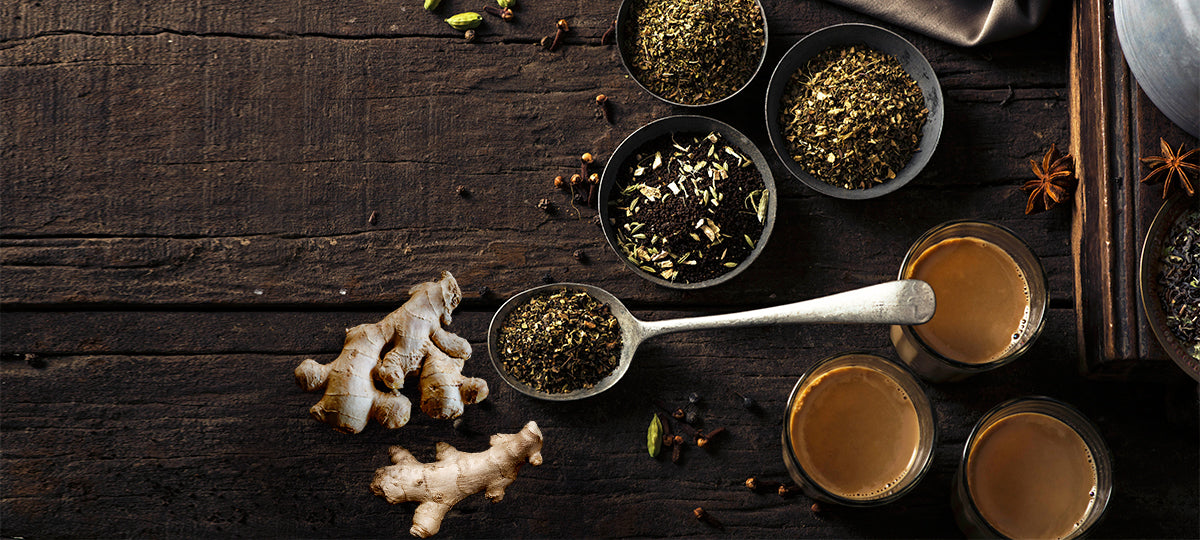
To make chai masala powder, lightly toast whole cardamom, cloves, black peppercorns and cinnamon, grind them fine, and mix in dried ginger powder. It takes about 10 minutes and keeps for weeks in a sealed jar. Use it when you do not have time to crush fresh spices; when you do, our one-cup recipe with fresh whole spices is below, followed by the teas that carry spice best.
How do you make chai masala powder?
Toast the whole spices gently in a dry pan, cool them, grind them to a fine powder and stir in ground dried ginger; a quarter teaspoon of the mix is enough for one cup.Read more
Ingredients
- 2 tablespoons green cardamom pods
- 1 tablespoon cloves
- 1 tablespoon black peppercorns
- 2 cinnamon sticks, about 2 inches (5 cm) each
- 2 tablespoons ground dried ginger (sonth)
- Optional: 1 teaspoon fennel seeds, or a little freshly grated nutmeg
Method
- Break the cinnamon into small pieces.
- Toast the cardamom, cloves, peppercorns, cinnamon (and fennel, if using) in a dry pan over low heat for 1 to 2 minutes, stirring, until they smell fragrant. Do not let them darken.
- Tip them onto a plate and let them cool completely.
- Grind to a fine powder in a spice grinder or with a mortar and pestle.
- Stir in the ground ginger (and nutmeg, if using). Sift out any coarse bits of husk or bark if you like a smoother cup.
- Store in a small, airtight jar away from light and heat.
Mixing masala into dry tea
If you would rather keep a ready-spiced tea in the jar, follow the rules our blenders use. Our tips for home blends say to crush the spices first and then mix them with the tea, and to keep nearly two-thirds of the blend as tea.
Match the size of the spice to the size of the leaf, so that both brew at the same pace and the spice does not sink to the bottom of the jar. The same tips, written with our blender Shruti Tripuraneni, put it as a rule: “Always use ingredients of similar density and size to avoid de-blending.” Our Tea 101 advice is to pair small ingredients such as cardamom with a smaller CTC grade such as BP (Broken Pekoe), and big, chunky ones such as star anise with a larger grade such as BOPSM (Broken Orange Pekoe Souchong Mixed). A fine homemade powder works with any CTC.
How do you make masala chai with fresh whole spices?
Boil the tea in water, add lightly crushed spices for a minute, then add milk and sugar and let the chai rise to a boil twice before straining.Read more
This is the method from our own Indian masala chai recipe, first published on our blog in 2016. It makes one generous mug in 9 to 12 minutes.
Ingredients (1 mug)
- 1 teaspoon CTC black tea
- ¾ cup water
- ½ cup full-cream milk
- Sugar, to taste
- 2 cardamom pods, lightly crushed
- ¼ inch fresh ginger, crushed
- ½ inch cinnamon stick
Method
- Bring the water to a boil. As it starts to bubble, add the tea and let it boil for about 2 minutes.
- Add the spices and simmer for another minute.
- Add the milk and simmer for 2 to 5 minutes.
- Add sugar to taste and simmer for about 2 minutes more.
- Let the chai rise to a boil, then once more, until it turns toffee-colored.
- Turn off the heat and strain into a mug.
To use masala powder instead, stir about ¼ teaspoon into the boiling tea at step 2. For the full method, milk ratios and how to scale up for a pot, see How to make masala chai at home.
Other ways our writers add the spices
The order is not fixed, and our archive holds several house methods that work. Jerry Pinto’s Mahim kitchen, in our story A Mumbai tea story, builds the spice in the water: “Tear open two elaichi,” add a strand of lemongrass, a cinnamon stick “one inch long, well-thumped,” or “a clove or two,” then “one level teaspoon of tea leaves for each cup.” The pot is lidded until it boils, and hot milk goes into each cup separately.
Another writer’s mother kept the spice apart. She brewed “a pot of regular chai (with a little less milk than she’d conventionally use)” and, on the side, made “a fiery concentrate of spices” from ginger, pepper, fennel, cinnamon and cardamom, adding it “just as the tea would come to a boil.” That is the slow-pot version of a jar of masala: the spice is ready before the tea is.
Whichever order you choose, keep the water hot. Our first Tea 101 gives 95–100°C for chai, and fresh ginger should only meet milk that is already very hot.
Which tea is best with chai masala?
A strong, small-grained Assam CTC is best, because it brews dark and brisk enough to carry both the spices and the milk.Read more
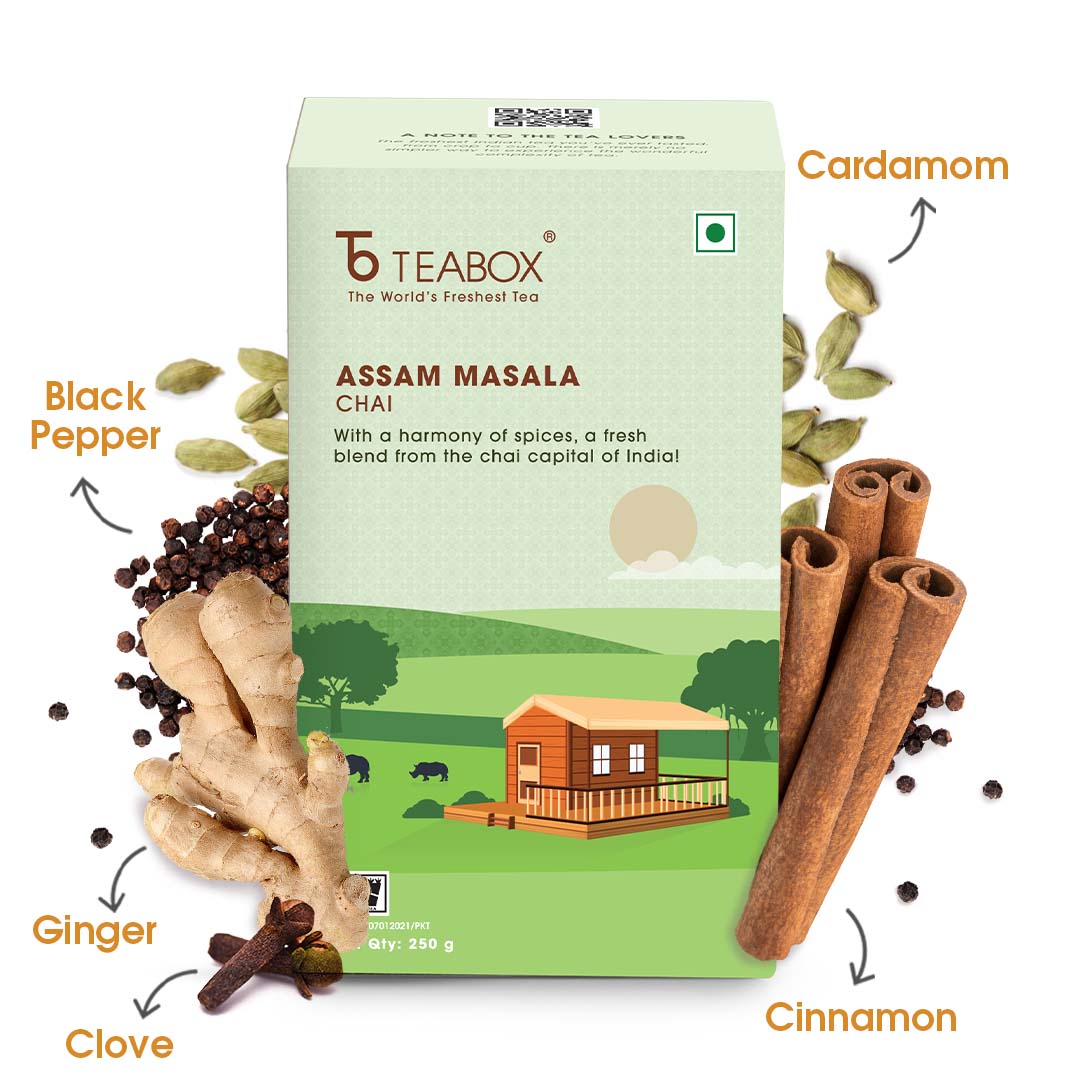
Spices need a tea strong enough to stand up to them and to milk. That is why most masala chai is made with Assam CTC: the small, rolled granules brew fast and dark. “Black tea offers briskness and astringency to the infusion, and takes to the addition of milk effortlessly,” as our tasting note for Assam Masala Chai puts it.
Our own chais are built on small grades for the same reason. Our chai product notes say they use “a mix of BP (Broken Pekoe) and BP1 (Broken Pekoe 1),” because “the smaller grain size allows for a quicker and more robust infusion.” For an unspiced base, our Kadak Chai is made from premium CTCs that we choose from Assam gardens.
A malty whole-leaf summer Assam such as Halmari Summer Black also works well; brew it a little longer. Tea 101 says the same: other teas that work with milk “are most Assam black teas, especially the summer black teas,” and most breakfast teas are made to take milk well.
Our tips for creating your own tea blends warn against the opposite: delicate first flush Darjeeling should not be paired with “strong, intensely aromatic flavors like cardamom or ginger.” See Orthodox vs CTC tea and Assam tea for more on the base, and Karak (kadak) chai for the extra-strong style.
Keep reading
Sources
- Teabox blog: The Science Behind My Ginger Chai (2015), 8 Tips for Creating Your Own Tea Blends (2015), Ginger: Not just chai’s partner-in-crime (2016), A Blender of Teas (2015), Tea Blends That Didn’t Quite Make It (2015)
- Teabox blog: Would you like some sugar in your tea? Or a little tea in your sugar? (2017), The Journey of Our Beloved Chai (2020), A Mumbai tea story (2015), Cross Country in Search of the Chai Wallah (2015), The Sweet Palate, a Cup of Joy (2020), Behind the scenes: Making of our Diwali gifts (2016)
- Teabox blog (Still Steeping): How to make Indian masala tea, 2016; Chai: the way India drinks tea, 2015; My inconspicuous companion, 2015
- Teabox Tea 101: FAQs; Chai (masala chai entry); Popular teas around the world
- Teabox product blend notes: Assam Masala, Bombay Cutting, Kolkata Street, Kashmiri Saffron Rose, Wayanad Cardamom, Gujarati Mint Spice, Punjabi Masala, Ashoka Ras, Rajasik, Rasayana chais, Kadak Chai and The Chai Tea Gift Box, October 2026
- Teabox Drive: Teabox internal document, 2018; Teabox internal document; Teabox internal document, 2015; Teabox internal document, 2023; Teabox internal document, 2016; Teabox internal document, 2025; Teabox internal document, 2025; Teabox internal document, 2026; Teabox internal document, 2017; photos as credited
- Teabox on Instagram (@teabox.tea): Assam Masala Chai tasting note, Nov 2019, chai concentrate, Jan 2020, masala chai folklore, Sep 2020, Assam Masala Chai spices, Oct 2020, Choco-Orange Chai, Jan 2023, Jaipur Masala Chai, Aug 2023, blending sessions, Apr 2024, our blender, Jun 2024, chai popsicles, Sep 2024, Gujarati Mint Spice Chai, Oct 2024, Rajasik, Nov 2024, Rasayana, Nov 2024, Varanasi chai, Dec 2025
- Kausshal Dugarr on X (@Teapreneur): coconut oil in chai, Jan 2022, Kadak Chai sourcing, Jan 2022

Leave a comment
All comments are moderated before being published.
This site is protected by hCaptcha and the hCaptcha Privacy Policy and Terms of Service apply.