


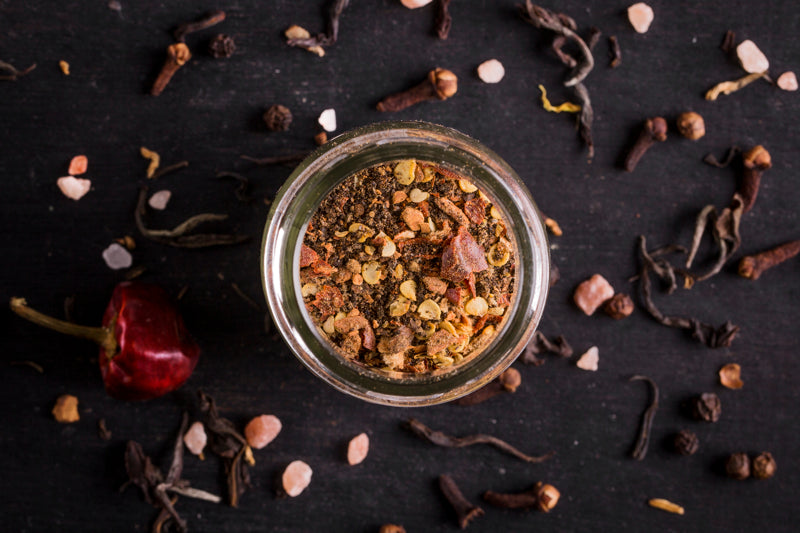
Chai masala changes across India, and our regional blends show the range: ginger and fennel for Mumbai’s cutting chai, saffron and nutmeg for Kolkata, saffron and rose for Kashmir, and cardamom alone for Kerala. Our regional chais are our blenders’ reading of each place, built from the spices that place is known for. They are not the only versions: every city has hundreds.
How does chai masala change across India?
Each region leans on a different spice: ginger in Mumbai, saffron in Kolkata and Kashmir, cardamom in Kerala, and a heavier, many-spice mix on Punjab’s highways.Read more
| Blend | Inspired by | Spices and additions |
|---|---|---|
| Assam Masala Chai | The classic | Cinnamon, black pepper, cardamom, clove, ginger |
| Bombay Cutting Chai | Mumbai’s half-cup street chai | Ginger, cardamom, fennel |
| Kolkata Street Chai | Chai in clay kulhads at Kolkata’s adda spots | Saffron, cardamom, nutmeg, ginger |
| Kashmiri Saffron Rose Chai | Kashmir’s all-day chai ritual | Saffron, rose petals, green cardamom |
| Wayanad Cardamom Chai | Kerala’s chai kadas | Cardamom, half-beaten pods |
| Gujarati Mint Spice Chai | Gujarat | Mint, lemongrass, nutmeg, ginger |
| Punjabi Masala Chai | Punjab’s highway dhabas | Eight herbs and spices; “immensely spicy and rich” |
| Jaipur Masala Chai | Jaipur | Assam CTC with orange, chocolate and cinnamon |
| Varanasi chai | Varanasi | Saffron, rose petals, almonds, pistachios and classic masala spices |
Fennel (saunf), which one reader told us belongs in any “real” Indian chai, gives a sweet, faintly aniseed note that softens ginger’s heat. Saffron (kesar) is the luxury addition, used in our most celebratory blends; one of our blenders, asked about our 2016 Diwali chais, said: “I am partial to the ones that have saffron and cardamom in them.”
How the regional spices show in the cup
The order in which you taste the spices is as much a part of each blend as the list. Avishek of our procurement team, scripting a tasting of three of our chais, described them like this.
- Kolkata Street Chai: “A full-bodied cup,” with ginger and nutmeg at the top, “aromatic cardamom” in the middle, and saffron that “can be perceived at edges; lends delicate sweetness.” He adds that “a dash of milk brings out the flavors even more.”
- Kashmiri Saffron Rose Chai: a “bright & brisk, medium-bodied cup,” where saffron brings “intense color, aroma” first, rose comes through in the middle and green cardamom “lingers on.” He called it “a dessert-like blend suited to celebrate all Indian festivities.”
- Assam Masala Chai: “Sweet, spicy dry leaf aroma” and “a full-bodied cup,” opening on ginger, with cinnamon and clove in the middle and cardamom and black pepper at the finish. With milk, “it is impressively dense, full-bodied and sweet.”
Our product note for Kolkata Street Chai reads the same cup a little differently: cardamom first, then “strong hints of ginger, citrus, malt, and nutmeg.”
What cooks do in each city
Our blends are a starting point; the cities have their own habits. In Kolkata, our writer found people mixing their own leaf in local shops, “50 g of orthodox Darjeeling tea and 100 g of CTC tea leaves, along with a few strands of saffron,” and noted that “people in Kolkata drink their chai sweet.”
In Mumbai, Jerry Pinto met a different chai in almost every community he visited, from a Marwari tea “made with only milk and with cloves to kill” to his own Mahim pot of elaichi, lemongrass, cinnamon and clove. For how these chais taste and where they are drunk, see Types of chai in India.
You can taste most of our blends side by side in our Authentic Indian Chai trial pack, which has 10 chais in 10 g sample packs, or in The Chai Tea Gift Box, six of our regional chais in tins.
How do chai spices change with the season?
Warmer, heavier spices such as pepper, clove and nutmeg suit winter, while summer chais lean on cooling, fresh herbs such as mint, lemongrass and fennel.Read more
We plan our own blends this way. Our 2015 range plan matched flavors to the calendar:
- Diwali: cardamom, saffron, cashew, almonds, raisins, dalle chili, nutmeg, pumpkin and maple, the rich, festive end of the spice box.
- Autumn: cardamom, cinnamon, bay leaf, pumpkin, walnut, kokum, maple and ginger, for the first cool evenings.
- Winter: pepper, clove, nutmeg and cinnamon, with coffee, chicory, chocolate, turmeric, tulsi and ginger as partners.
The same plan set out to “make regional chais our year long theme and carry 10 chais from different regions.” Home cooks make the summer swap by instinct. One of our writers suggested: “During summers, you may try using lemongrass, fennel and mint as well (that’s my favorite kind).” Our Gujarati Mint Spice Chai, launched in October 2024, is built the same way, on lemongrass, mint and ginger.
Beyond the classic five: other chai spices and herbs
Beyond the core five, chai cooks reach for fennel, nutmeg, saffron, star anise, rose, mint, lemongrass and tulsi (holy basil).Read more
Each shifts the cup in a clear direction: fennel and rose toward sweetness, mint and lemongrass toward freshness, star anise and nutmeg toward warmth.
- Nutmeg (jaiphal): warm and sweet; grate a tiny amount, as it is strong.
- Star anise (chakra phool): licorice-like and warming; use it sparingly.
- Saffron (kesar) and rose: fragrance and color, as in Kashmiri and Varanasi-style chai. Kashmir’s other famous spiced drink, made with green tea, is Kashmiri kahwa.
- Mint and lemongrass: fresh and bright, as in Gujarati-style chai.
- Tulsi (holy basil): peppery and clove-like; it appears in our Ayurvedic chais alongside ginger and black pepper. More in Tulsi (holy basil) tea.
- Mace and ajwain: mace, the lacy coat of the nutmeg seed, and ajwain (bishop’s weed), a pungent, slightly bitter seed, are both on Peter Keen’s list for a fine masala chai. Our 2018 training manual also lists bishop’s weed among chai spices.
- Bay leaf: our Tea 101 page on teas of the world lists “even bay leaves” among chai spices.
Our Ayurvedic and herbal chais
Our Ayurvedic chais draw on herbs and roots from Indian tradition as well as kitchen spices: ginger, black pepper and tulsi in Rajasik; ashwagandha, turmeric, licorice and star anise in Rasayana; rose, licorice, ginger, cardamom and cinnamon in Ashoka Ras Chai, which tastes “floral at first, gently spiced underneath.” We describe them here for their flavor only. For what research does and does not say about spiced tea and health, read Is chai good for you?
Unusual additions
Some additions surprise even us. Peter Keen’s turning point as a chai drinker was a chocolate chai: “Dark, bitter chocolate and pungent pepper didn’t sound promising. It was superb.” Vanilla went the other way: our saffron vanilla chai took fifteen attempts in one day and never worked.
Some additions are not spices at all. Kausshal Dugarr, our founder, first tasted coconut oil in chai at a friend’s home, and wrote in January 2022: “Not the usual ingredient one adds to a cup of chai, but it greatly alters the flavor. Slightly nutty, absolutely different & very delicious.”
Chai spices also travel well beyond the saucepan. We have steeped a spiced chai into a concentrate for chai lattes (5 teaspoons of chai to 400 ml of hot water, 10 minutes, then strained and kept in the fridge) and frozen a saffron and rose chai, with condensed milk and cardamom, into popsicles. See Chai concentrate, powder and syrup and Chai latte.
Keep reading
Sources
- Teabox blog: The Science Behind My Ginger Chai (2015), 8 Tips for Creating Your Own Tea Blends (2015), Ginger: Not just chai’s partner-in-crime (2016), A Blender of Teas (2015), Tea Blends That Didn’t Quite Make It (2015)
- Teabox blog: Would you like some sugar in your tea? Or a little tea in your sugar? (2017), The Journey of Our Beloved Chai (2020), A Mumbai tea story (2015), Cross Country in Search of the Chai Wallah (2015), The Sweet Palate, a Cup of Joy (2020), Behind the scenes: Making of our Diwali gifts (2016)
- Teabox blog (Still Steeping): How to make Indian masala tea, 2016; Chai: the way India drinks tea, 2015; My inconspicuous companion, 2015
- Teabox Tea 101: FAQs; Chai (masala chai entry); Popular teas around the world
- Teabox product blend notes: Assam Masala, Bombay Cutting, Kolkata Street, Kashmiri Saffron Rose, Wayanad Cardamom, Gujarati Mint Spice, Punjabi Masala, Ashoka Ras, Rajasik, Rasayana chais, Kadak Chai and The Chai Tea Gift Box, October 2026
- Teabox Drive: Teabox internal document, 2018; Teabox internal document; Teabox internal document, 2015; Teabox internal document, 2023; Teabox internal document, 2016; Teabox internal document, 2025; Teabox internal document, 2025; Teabox internal document, 2026; Teabox internal document, 2017; photos as credited
- Teabox on Instagram (@teabox.tea): Assam Masala Chai tasting note, Nov 2019, chai concentrate, Jan 2020, masala chai folklore, Sep 2020, Assam Masala Chai spices, Oct 2020, Choco-Orange Chai, Jan 2023, Jaipur Masala Chai, Aug 2023, blending sessions, Apr 2024, our blender, Jun 2024, chai popsicles, Sep 2024, Gujarati Mint Spice Chai, Oct 2024, Rajasik, Nov 2024, Rasayana, Nov 2024, Varanasi chai, Dec 2025
- Kausshal Dugarr on X (@Teapreneur): coconut oil in chai, Jan 2022, Kadak Chai sourcing, Jan 2022

Leave a comment
All comments are moderated before being published.
This site is protected by hCaptcha and the hCaptcha Privacy Policy and Terms of Service apply.