


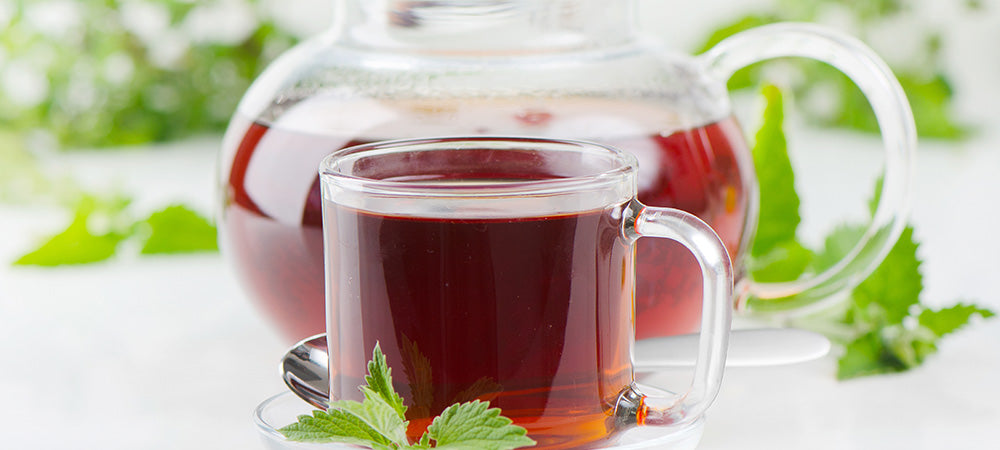
Use about a heaped teaspoon of dried tulsi, or a small handful of fresh leaves, for each 250 ml cup; pour on water just off the boil, cover, and steep for 5 to 7 minutes. Strain and drink it plain, or add a little honey or a squeeze of lemon. Like other herbal tisanes, tulsi needs full heat and time to release its flavor.
What water, time and amount does tulsi need?
Tulsi needs water at a full boil, 100°C, and 5 to 7 minutes under a lid, which is our house standard for herbal tisanes, with about a heaped teaspoon of dried leaf or 8 to 10 fresh leaves per cup.Read more
We have always brewed tulsi hot. When we first sold tulsi chais in 2014, our records gave water at 90 to 100°C (194 to 212°F), 1 to 1.25 teaspoons (2 to 2.3 g) of blend for a 180 ml cup, and 4 minutes. A plain tulsi cup, with no tea leaf to turn bitter, can take the longer steep.
The lid matters as much as the heat. Tulsi’s scent is its clearest feature, and covering the cup or pot while it steeps keeps that aroma in the water rather than in the room.
Herb-only tulsi cups are best without milk. Of our caffeine-free Abhay Ras, made with tulsi and no tea leaf, our product page says: “We recommend drinking it without milk to preserve its bright, tangy, herbal profile.” Customers have asked us why some Ayurvedic chais curdle milk and which are meant for water only, so we say it plainly: milk goes into tulsi chai made with black tea, not into a plain tulsi infusion.
How do you make tulsi tea with fresh leaves?
Tear a handful of rinsed leaves, pour boiling water over them, cover and steep for 5 to 7 minutes, then strain.Read more
Tulsi tea with fresh leaves (serves 1)
Ingredients
- 250 ml (about 1 cup) water
- 8 to 10 fresh tulsi leaves, or 1 heaped teaspoon dried tulsi
- Honey or a squeeze of lemon, to taste (optional)
Method
- Rinse the fresh leaves and tear or lightly crush them between your fingers to open them up.
- Bring the water to a boil and pour it over the leaves in a cup or teapot.
- Cover, to keep the aroma in, and steep for 5 to 7 minutes. For a stronger cup, simmer the leaves in the water for 3 to 5 minutes instead.
- Strain, and add honey or lemon if you like. Drink warm.

Fresh or dried?
Fresh leaves give a lighter, greener cup; dried leaves keep all year and give a deeper, rounder one. Store dried tulsi like tea, in an airtight, opaque container away from heat, light and kitchen smells (see How to store tea).
A slice of fresh ginger, a crushed cardamom pod or a few black peppercorns in the pot are the classic Indian additions. Our 2014 Tulsi Ginger Chai paired tulsi with ginger and no tea at all, so the cup stayed caffeine-free.
How do you brew tulsi green tea?
Brew a tulsi green tea as you would green tea, at 75–80°C for 2 to 3 minutes, because the tea leaf turns bitter in boiling water long before the tulsi gives up its flavor.Read more
Green tea and tulsi share a fresh, vegetal character, and turmeric and ginger give the pair warmth. If you are blending your own, steep the tulsi first in hotter water, let the pot cool for a minute, then add the green tea. More on brewing it in What is green tea?
Our Turmeric Ginger Tulsi Green teabags list four ingredients: green tea (Camellia sinensis), turmeric (Curcuma longa), ginger (Zingiber officinale) and holy basil (Ocimum tenuiflorum). Each 2 g bag is meant for a 150 ml cup and is made to be steeped twice.
How do you make tulsi chai?
Tulsi chai is made exactly like any spiced chai: the herbs boil in the water first, then the tea, then the milk.Read more
This recipe follows our blog’s lemongrass chai, with tulsi in place of lemongrass. The original is in How to Make Lemongrass Tea.
Tulsi chai (serves 2)
Ingredients
- 1 cup (about 240 ml) water
- 1 cup (about 240 ml) milk
- 2 tsp CTC black tea, such as an Assam CTC
- 8 to 10 fresh tulsi leaves, torn (or 1 tsp dried tulsi)
- ½-inch piece of fresh ginger, grated (optional)
- Sugar, to taste
Method
- Heat the water in a pan and add the tulsi and the grated ginger.
- Bring the water to a boil, then add the tea.
- After 30 to 40 seconds, add the milk.
- Bring the chai to a boil again and add sugar as you like.
- Let it simmer for another minute, then strain into cups.
Why the order matters
Boiling the ginger in the water before the milk goes in is not just tradition. One of our writers found his ginger chai curdled until he learned that an enzyme in fresh ginger clots milk at warm temperatures and is switched off by real heat. He tells the story in The Science Behind My Ginger Chai.
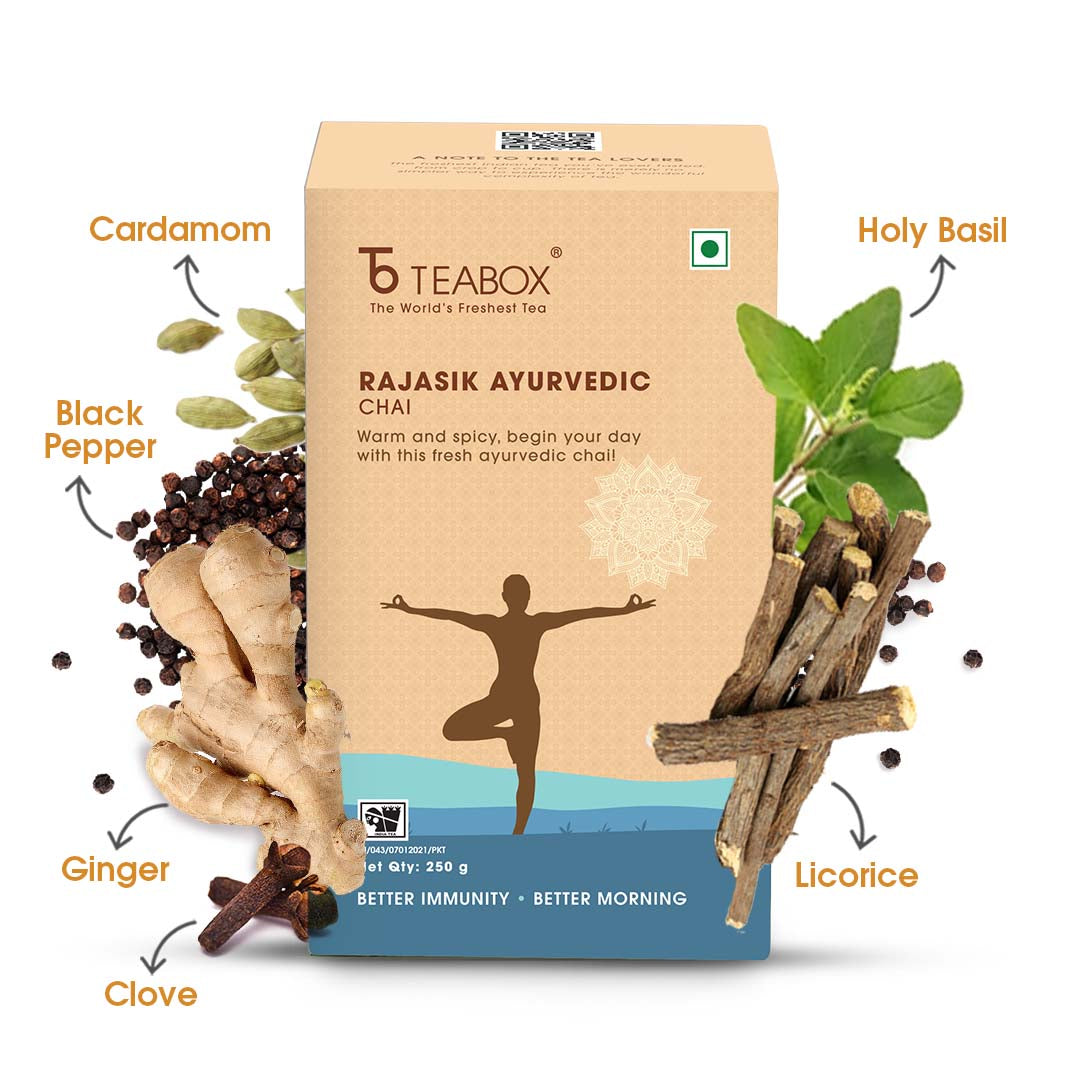
For the full method, and for ratios of water to milk, see How to make masala chai at home; for tulsi alongside cardamom, cinnamon and the other chai spices, see Chai spices and chai masala. If you would rather not measure, our Rajasik Ayurvedic Chai already blends Assam CTC with tulsi, ginger, black pepper and cardamom.
Keep reading
Sources
- Teabox blog: How to Make Lemongrass Tea (2015), The Science Behind My Ginger Chai (2015), Assam Diaries: A Day at Majuli (2016), Nostalgia in a Spray (2016), Assam Diaries: Margherita, the Singphos and Coin Tea (2016), The Art of Wellbeing (2020), The Journey of Our Beloved Chai (2020), The Authentic Indian Chai Experience (2023)
- Teabox blog (Still Steeping): “Natural” teas: The rewards, the risks and the watch-outs!, 2016; Ancient Remedies in Modern Times: Ayurveda and Yoga, 2020
- Teabox Tea 101: Chai, the Indian way of drinking tea, Flavored blends; caffeine figures from the Tea 101 caffeine posts
- Teabox product records (descriptions, ingredients, tasting notes, brewing and FAQ fields), October 2026: Rajasik Ayurvedic Chai, Turmeric Ginger Tulsi Green (Teabags), Abhay Ras Chai, Soma Ayurvedic Chai, Ayurvedic Chai Trial Pack
- Teabox Drive: Teabox internal document (2014 SKU records and 2021 tea descriptions); Teabox internal document, 2016; Teabox internal document (blending unit records, 2018 to 2019); Teabox internal document, 2026; Teabox internal document, 2026; photos Teabox internal document, Teabox internal document, Teabox internal document
- Teabox on Instagram (@teabox.tea): Basil Twirl, Apr 2016, Be CALM, Jan 2019, Gaja Indian Heritage box, Oct 2021, Rajasik, Nov 2024, winter Ayurvedic chais, Dec 2025
- Standard botanical and cultural references for tulsi’s species, types and customs (flagged for review in the notes)

Leave a comment
All comments are moderated before being published.
This site is protected by hCaptcha and the hCaptcha Privacy Policy and Terms of Service apply.