


The main families of flavor added to tea are spices, flowers, herbs, citrus oils, fruit, and dessert or “liquor” flavors such as chocolate, rum or wine. Our own range has run through floral, fruity, spicy, nutty, citrus, mint, rum, wine and chocolate teas. Below, each family in turn: what it adds to the cup, which teas it suits, and the blends our tea masters have made with it.
Which spices are used in tea blends?
Cardamom, ginger, cinnamon, clove and black pepper are the classic tea spices, with saffron for special occasions; all of them suit a strong black tea, and most are at their best in chai.Read more
Spices are the heart of Indian tea. Cardamom adds a sweet, perfumed note and is the most common chai spice; ginger gives warmth and bite; cinnamon brings sweetness; a pinch of black pepper, or even cayenne, adds heat. Spiced black tea brewed with milk is masala chai: see What is chai?
Our Kashmiri Saffron Rose Chai takes the idea further, with saffron strands, rose petals and green cardamom. Our tasting notes describe a cup that starts with distinct notes of saffron, which lend a pleasant sweetness, before the more fragrant rose comes in toward the finish. It joined our range in September 2019.
Saffron was also in the very first blend Shruti made for us, Kesar Delight: “Darjeeling white tea generously blended with saffron strands, with a sprinkling of lemongrass and chamomile flowers.”
Spices beyond chai
Spices are not only for milky chai. When Nagendranath Chiluvuru, then our R&D head, made our 2016 Diwali blends, he found that “black pepper, cardamom, and ginger – just pop, while the fancier vanilla, saffron, red pepper, and even chocolate and lavender add some indulgence.” That collection included Spice Sparkler, topped with pink pepper, and Jasmine Spice, a spice and floral blend.
In Kashmir, green tea is spiced instead, with saffron, cardamom, cinnamon, cloves and almonds: see Kashmiri kahwa.
Which flowers are used in tea blends?
Jasmine and rose are the two great tea flowers; geranium, kewra, marigold, cornflower, lavender and chamomile each have a smaller place, sometimes for scent and sometimes simply for color.Read more
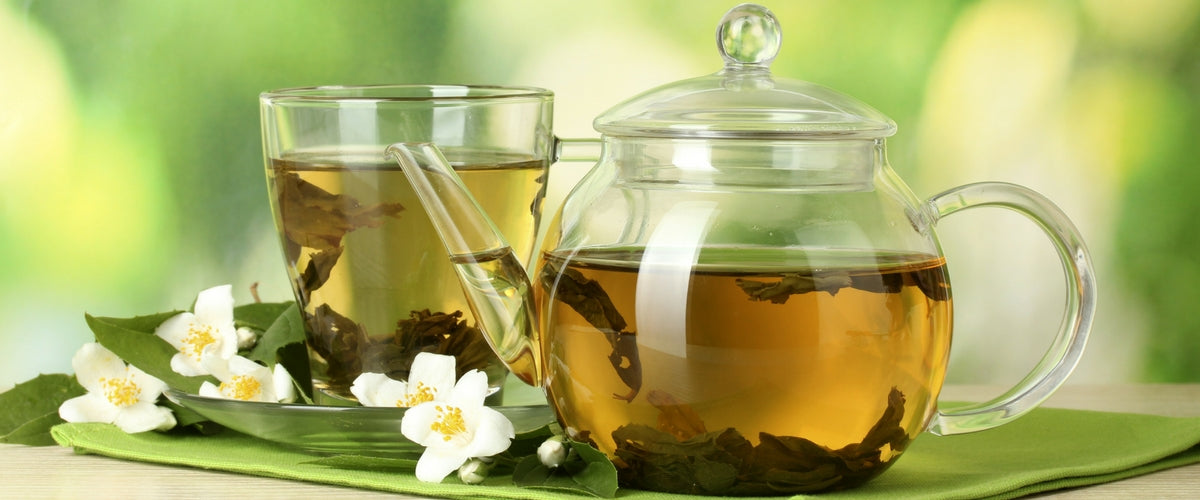
Jasmine is the classic partner for green tea (more on it in Jasmine tea and jasmine pearls). Rose petals and buds add fragrance and a soft sweetness to black, green and white teas: Green Tea Rose Glow blends rose petals with whole-leaf green tea. Its lime-green cup opens on soft tones of rose with fruity undertones, and gentle vegetal notes come through toward the end. Alongside the petals, it uses a natural rose flavor.
Mountain Rose
Our Mountain Rose is one of the first floral blends our tea masters created. Shruti made it in 2015, inspired by Indian desserts. Give it a moment in the cup and it may remind you of payasam, the south Indian milk pudding scented with rose and cardamom.
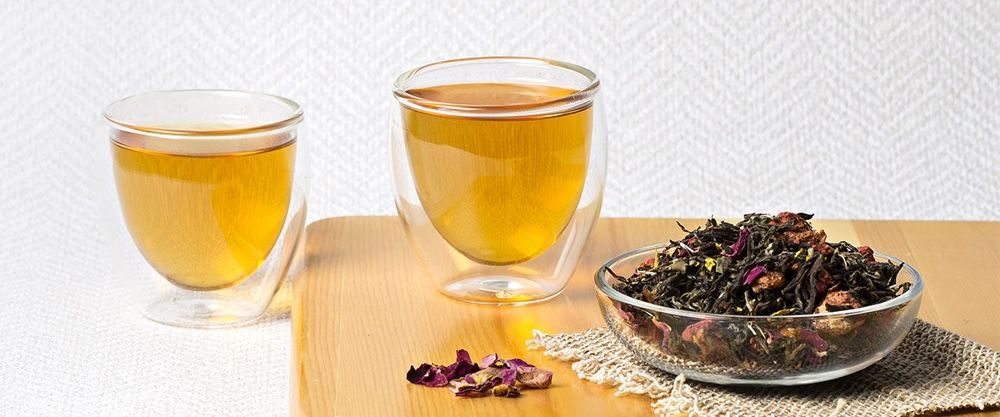
Look closely at the dry leaf and you will see long black leaves with red and blue flowers: the red is rose, the blue is cornflower, which is listed among its ingredients. In the cup it turns dark amber, with no astringency and notes of rose, jasmine, cardamom and cream.

It is also our most romantic tea. Our founder, Kausshal Dugarr, counted “178 orders of our best seller Mountain Rose just before Valentine’s Day” in a post from May 2022: “That’s about 8 kgs of rose consumed in TEA!”
Other flowers
Other flowers go further afield: geranium, marigold, cornflower and lavender all have a place in the blender’s palette. Our past Rose Mist paired white tea with pink rose buds, a floral, sweet cup. Black Opal was a black tea with cornflower, orange and yellow marigold and jasmine, and Morning Dew set jasmine, marigold and cornflower on a high-grown Nilgiri green tea.
Kewra, the screwpine flower used in Indian sweets, brings rose-like notes. Our Kewra Delight Oolong combined it with chocolate, cardamom and a floral oolong for Diwali. For a gentle floral white still on sale, see Ivory Geranium Blossom in Which flavors go with which teas?
Which herbs are used in tea blends?
Mint is the herb most often added to tea, usually to green tea; basil and its Indian cousin tulsi, lemongrass and chamomile are the others you will meet most.Read more
Mint is the most refreshing addition of all. Moroccan mint, green tea with mint leaves, is the famous example. Our own version used rolled winter flush green tea with spearmint and peppermint, steeped hot or cold. Basil, and its Indian cousin tulsi, adds a fresh, slightly peppery note to green tea.
Mint also mixes well with spice. Our 2016 Diwali collection had Mint Jubilee, a green tea built on mint and fennel. Lemongrass and chamomile are softer: Shruti used both, with saffron, to round out a Darjeeling white tea in Kesar Delight.
When an herb is blended with tea, the cup still has the caffeine of its tea. When there is no tea at all, it is a tisane: see Herbal tea (tisanes).
What citrus flavors go into tea?
Bergamot, whose oil turns black tea into Earl Grey, is the great citrus flavor in tea; lemon, orange peel and lemon peel are used too.Read more
Some flavors come from natural oils or extracts. The best known is bergamot, a fragrant citrus fruit whose oil turns black tea into Earl Grey. Our Classic Earl Grey Citrus Black uses Assam black tea, which gives a sweet, malty, caramel-like base, with pure bergamot extract for the citrus. The full story is in Earl Grey tea.
The base is a TGFOP1 grade Assam: short, narrow, brownish-black leaves with a few golden tips. It brews rich reddish-brown, and our tasters call it intensely sweet, robust and brisk, with notes of caramel, bergamot and malt.
How we learned to make Earl Grey
Getting the bergamot was the first hurdle. In 2015 our R&D team received its first consignment of bergamot extract after two months of struggle with customs clearance. Shruti then crafted an Earl Grey of every kind, black, white, green and oolong, “after sampling 80-odd versions of all,” including a smoky Earl Grey made with a high-fired tea. By mid-2016 we offered ten Earl Grey variants.
Real bergamot is precious. It takes about 200 kilograms of the fruit to make one kilo of true bergamot essence, and the best comes from Calabria and Sicily in southern Italy. That is why, as our 2016 guide put it, Earl Grey is not a tea but a style of drink: “Farmers don’t grow Earl Grey.”
Lemon itself adds a tangy lift to black and green teas; drink lemon tea without milk, as the acid curdles it.
Which fruits are used in tea blends?
Dried peach, strawberry, mango, pineapple and berries are the usual fruits, and they make blends that are lovely iced; our own summer blends have leaned on Indian fruit.Read more
Dried fruit such as peach, strawberry, mango or pineapple makes blends that are lovely iced. Our summer blends have leaned on Indian fruit: Mint Jamun paired the juicy sweetness and tartness of jamun (black plum) with mint and pineapple, and later summer tisanes used real freeze-dried kokum, jamun and grape.
Mint Jamun Black arrived in April 2019 with two other fruity black teas, Chilli Berry and Mango Strawberry, followed in May by Blackberry Black and Orange Pineapple Black. By 2022 the summer range had become caffeine-free tisanes made with real fruit: Kokum Hibiscus, Mint Jamun and Vanilla Grape, inspired by India’s old summer sharbats.
Our first iced teas, in 2015, were inspired by Indian summer drinks too, including one modeled on aam panna, the raw mango cooler. The surprise of that pack was a coffee-flavored iced tea. For how we built them, see Blending for iced tea.
What are wine, rum and chocolate teas?
They are black or white teas given the taste of wine, rum or dessert with natural flavorings, nuts or cocoa; they carry the flavor but no alcohol.Read more
Black tea also takes to dessert flavors: chocolate, nuts and dried fruit. Each winter our tea masters have made “liquor-flavored” teas with natural flavorings: Rum & Raisin, “sweet, dense, and heady,” and a spiced Mulled Wine tea. We suggested drinking them hot or cold, straight up, or as part of a winter cocktail.
The one still on sale is Champer’s Holiday: Darjeeling silver needle white tea with natural wine and apple flavors, all flavor and no alcohol. Our tasting notes describe fragrant white flowers, the “suppleness of a young champagne” and a hint of stewed apple, in a white-gold cup. The dry leaf is long, unopened silvery-green buds with downy hair. Our tasters pair it with cheese, olives, barbecued fruit, cherries or strawberries.
It was first made for Christmas 2017, and it is the only one of that year’s holiday blends we still make.

Chocolate and nuts have their own place in our holiday history. Our 2016 Diwali blends included Chocolate Marmalade and Vanilla Pistachio Tuile, “a flavored blend laden with the nuts,” and our 2016 Christmas collection had a Nutcracker.
Keep reading
Sources
- Teabox Tea 101: Types of tea: Flavored Blends
- Teabox blog: Tea: A Blended History (2016); 8 Tips for Creating Your Own Tea Blends (2015); Tea Blends That Didn’t Quite Make It (2015); A Blender of Teas (2015); Jasmine Teas: A Scent of Perfection (2016)
- Teabox blog: Behind the scenes: Making of our Diwali gifts (2016); Behind the Scenes: Making of Our Iced Tea (2015); English Breakfast: The Baseline Black Tea (2016); The Tea Navigation Paths: Artisan and Agribusiness (2017); The Beginner’s Guide to Choosing a Darjeeling (2017); Tea in France: Not What You Might Expect (2016)
- Teabox blog (Still Steeping archive): Shades of Earl Grey, 2015; How to Choose Your Earl Grey, 2016; The Teabox Top 10 Teas of 2015, 2015; How Much Does Good Tea Cost?, 2016; Beyond the Tea Bag: A Starter’s Guide to Leaf Tea, 2016
- Teabox product descriptions, tasting notes and product data, October 2026: Mountain Rose Black, Classic Earl Grey Citrus Black, Green Tea Jasmine Soothe, Green Tea Rose Glow, Champer’s Holiday, Ivory Geranium Blossom White, Kashmiri Saffron Rose Chai, Kashmiri Kahwa
- Teabox Drive: Teabox internal document, 2015; Teabox internal document; Teabox internal document, 2017; Teabox internal document, 2016; Teabox internal document, 2018; photos as credited
- Teabox on Instagram (@teabox.tea): Mountain Rose, Jun 2015, Black Opal, Apr 2016, tea-poached pears, Jan 2017, Rose Mist, May 2017, flavor families, Nov 2017, liquor-flavored teas, Dec 2017, Morning Dew, Aug 2018, Kewra Delight, Oct 2018, Mint Jamun, Jun 2019, Nilgiri Jasmine Black, Oct 2019, Champer’s Holiday, Nov 2019, Moroccan Mint, Jan 2020, R&D team, Mar 2020, jasmine green, Nov 2020, kewra notes, Nov 2020, tea mocktail, Dec 2020, Earl Grey plum cake, Nov 2021, Masterclass part 2, Apr 2022, Summer Blends, May 2022, freeze-dried fruit, Apr 2023, tasting team, Jun 2024
- Kausshal Dugarr on X (@Teapreneur): alcohol and tea flavors, Dec 2016, Mountain Rose orders, May 2022

Leave a comment
All comments are moderated before being published.
This site is protected by hCaptcha and the hCaptcha Privacy Policy and Terms of Service apply.