


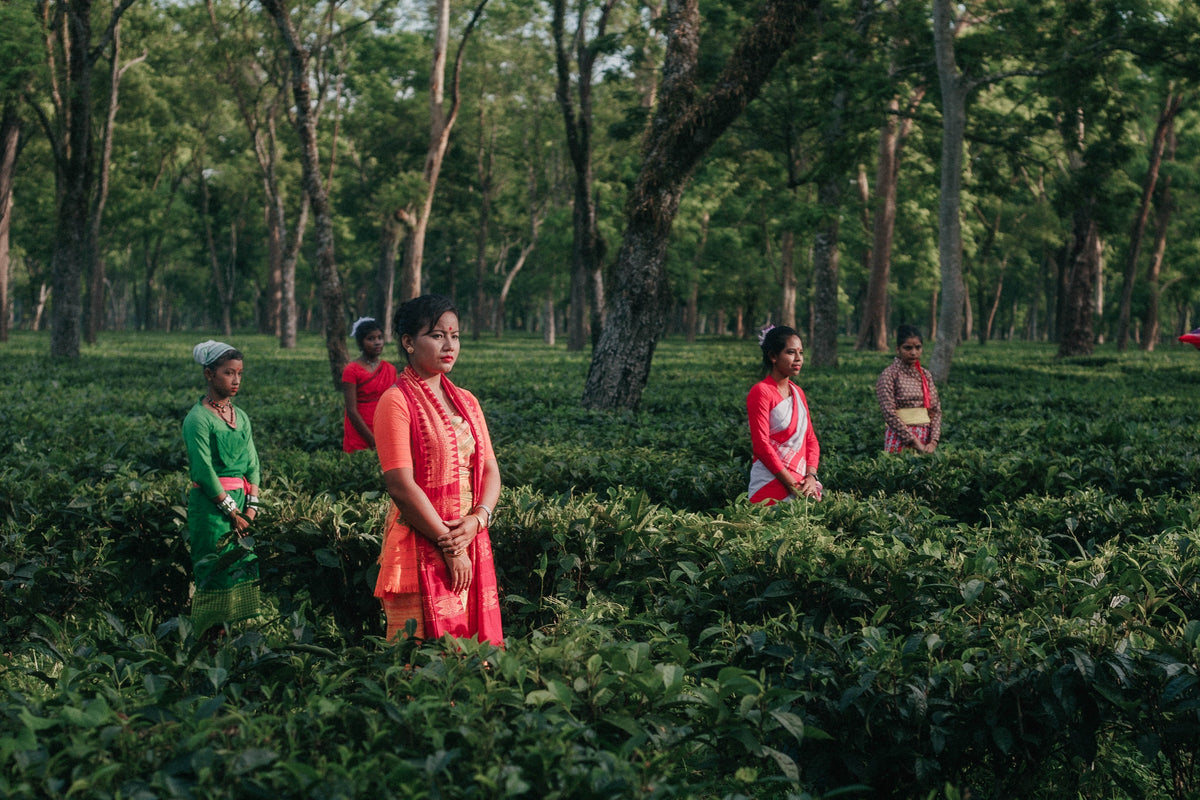
India has three famous tea regions: Darjeeling in the Himalayan foothills, Assam in the Brahmaputra valley and the Nilgiris in the hills of the south. They differ in almost everything that shapes a cup, from altitude and rainfall to the tea plant itself, and each has its own guide. Here is what sets them apart, with what we have learned buying from their gardens.
What makes Darjeeling tea different?
Height, cool mist and old China-type bushes on very steep slopes, in a small hill district whose name only 87 registered gardens may use.Read more
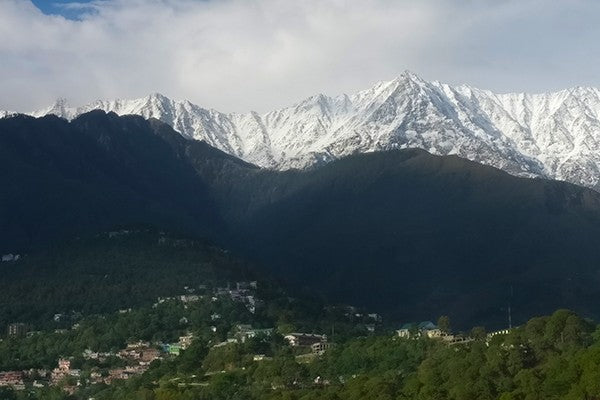
Darjeeling is a hill district of northern West Bengal, in the Himalayan foothills, where tea grows on slopes so steep that every leaf is plucked by hand. Only tea from its 87 registered gardens can legally be called Darjeeling.
Its Chinary and clonal bushes make light, floral black teas in spring, the grape-like “muscatel” teas of summer, and fine whites, greens and oolongs; teas are sold by estate and by season, or flush. “The thin mountain air, the loamy soil and humid-cool-rainy weather makes these teas aromatic and unique,” as we have described them; the hills are about an hour and a half from our facility.
Kurseong, at about 4,500 ft, takes its name from the Lepcha for “place of white orchids” and has made aromatic first flush teas since the 1880s.
A small place, picked by hand
All of this comes from a small area. The gardens cover about 70 square miles, a quarter of the size of New York City, on steep slopes where soil erosion and landslides are a constant threat.
The work is slow. A single kilogram of leaf takes about 20,000 shoots, plucked on slopes of 40 to 60 degrees, and each bush gives only about 40 cups of tea a year. Labor accounts for 60 to 70% of a garden’s total incremental expenses.
Rivers below the gardens
Rivers run past many of the gardens we buy from. The Teesta passes near Upper Namring in Kurseong, and the Mahananda rises in Darjeeling and flows past Jungpana. The Rangeet, about 80 km long and a tributary of the Teesta, Sikkim’s largest river, runs below Badamtam, and the Mechi flows near Thurbo and Singbulli in the Mirik valley. The soil changes as the land falls, from mixed sandy loam in Darjeeling to rich alluvial soil in Assam.
How the hills grew
The hills grew fast. By 1866 Darjeeling had about 39 gardens making 21,000 kg of tea; by the 1870s there were 113 gardens across 6,000 hectares, employing 19,000 people. The Darjeeling Himalayan Railway, built to carry tea and people up from Siliguri, is now a UNESCO World Heritage Site.
In between, Tea 101 records, the count reached 56 gardens making 71,000 kg by about 1870. The railway was listed by UNESCO in 1999. Read the full Darjeeling tea guide, and for the two seasons that matter most, first flush tea and second flush tea.

What makes Assam tea different?
Heat, heavy rain and the native large-leaf Assam plant on the flat floor of the Brahmaputra valley, which together give strong, malty teas and most of India’s crop.Read more
The broad, low valley of the Brahmaputra, hot and humid with heavy rain, is where India’s native tea plant was found and where most of India’s tea is grown. Tea 101 calls Assam the world’s largest tea-growing region.
It makes strong, brisk, malty black teas in two styles: whole-leaf orthodox teas, the best of them golden-tipped summer teas, and the granular CTC tea that goes into most Indian chai and breakfast blends. Our 2023 staff training deck puts Assam’s share at more than half of India’s tea.
Prices at the top can be startling: in February 2022 a lot of Golden Pearl, a specialty tea from Nahorchukbari in Dibrugarh district, sold for Rs 99,999 per kg.
What we see on our buying trips
Every summer our procurement team makes its annual visit to Assam for the second flush, tasting lot by lot. On one such trip, Ravi Kothari, our tea buyer, described Upper Assam as “flat land with very bright, vast skies,” ringed mostly by oil and coal fields. The trip began in Dibrugarh, dubbed the “tea city of India,” which sits among estates such as Chubwa and Dikom.
The gardens work differently from Darjeeling’s. Assam’s estates are more mechanized, and the region is so vast that they are spread far apart. Some sit on the state’s edges: at Koilamari, on the border with Arunachal Pradesh, most of the pluckers belong to the Karbi or Nyishi peoples and live across the border.
Read the Assam tea guide, and for the two leaf styles, Orthodox vs CTC tea.

What makes Nilgiri tea different?
Year-round growth at 1,000 to 2,500 m in the Western Ghats, which gives fragrant, brisk teas and the winter frost teas made while the northern gardens rest.Read more

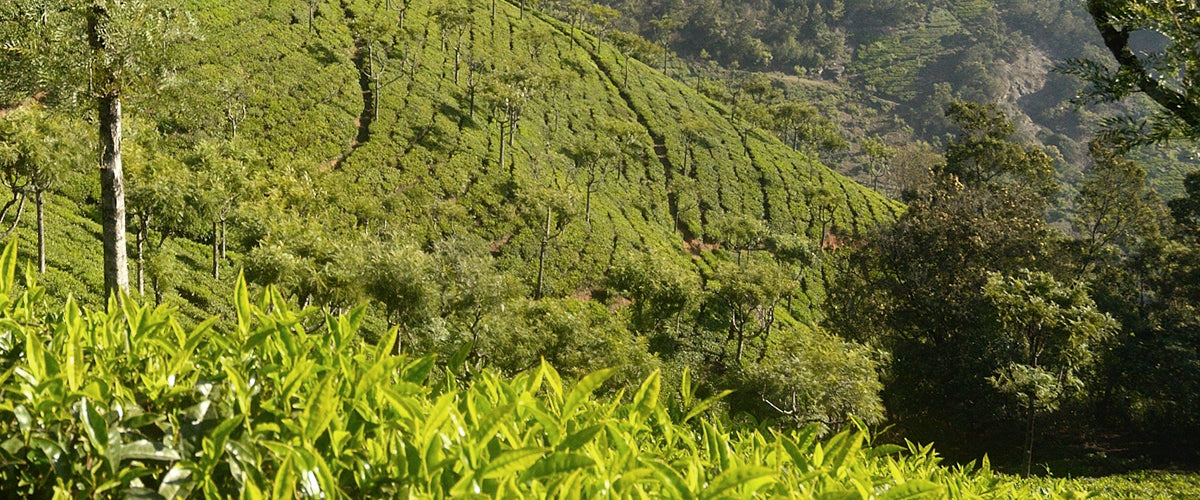
The Nilgiris, or Blue Mountains, are part of the Western Ghats in Tamil Nadu, named after the blue kurinji flowers that bloom once every 12 years. Gardens lie between about 1,000 and 2,500 m and get roughly 60 to 90 inches of rain a year.
Nilgiri teas are fragrant and brisk, with notes of flowers and tropical fruit; the prize is the winter frost tea, made in the cold months while the northern gardens rest. Our Havukal frost tea grows on east-facing slopes at 5,500 to 6,000 ft, on an estate making tea since 1910.
From coffee to tea
Many Nilgiri gardens began as coffee estates and turned to tea after blight and a gold rush in the late 1800s, and much of the tea now comes from smallholdings, many of them owned by the local Badaga people. Read When King Coffee Bowed Out to Tea.
The area under tea kept growing long after that switch: a Tea Board survey counted 23,879 hectares in 1976 and 66,175 hectares in 2016.
A changing workforce
Today the gardens’ workforce is changing too: by 2016 some 50,000 workers from eastern and northeastern India had moved to the Nilgiris, as the educated children of Tamil estate families left for city jobs. See The Changing Face of Tea Gardens in the Nilgiris.
Pay is part of the pull. “The wages in the Nilgiris are higher than in West Bengal; the Nilgiris Settlement Wage stipulates Rs. 241 per day, which is double of what is paid in West Bengal,” Balaji Rao, managing director of Devashola Tea Estate, told us in 2016. More in the Nilgiri tea guide.

Keep reading
Sources
- Teabox blog (Still Steeping): A tour of the Tocklai Tea Research Institute (2016), When King Coffee Bowed Out to Tea (2016), The Glenburn Boutique Hotel, Darjeeling (2017), The Changing Face of Tea Gardens in the Nilgiris (2016)
- Teabox blog (Still Steeping): A House for Chinna Dorai – Estate Bungalows in the Nilgiris (2017), In the wow zone at the Goomtee cottage (2015), In Kangra, for a tour of the tea gardens (2017), A Secret Tea Garden in the Clouds (2015), Assam Diaries: Margherita, the Singphos and Coin Tea (2016)
- Teabox blog (Still Steeping): In Assam for the summer flush (2015), The Teabox team in Assam (2016), Assam Diaries: A Portal to the Past (2016), Of tea, wildlife and stories of yore from Assam (2017), The Beginner’s Guide to Choosing a Darjeeling (2017), A Nilgiri girl in Darjeeling (2017)
- Teabox blog (Still Steeping): Tea in Germany & its Darjeeling Connection (2016), An Indian Summer in a Cup (2015), The Winter of Our Teas (2015), Teatime, Talktime (feat. Anjum Hasan and Zac O’Yeah) (2017), Madam Superintendent and Durga Puja in a Tea Garden (2016), Tigers and Tea (2017), The Steep Road Ahead (2020), Tea Days and Club Nights (2016), Making the Perfect Tea (2015), Missives from Gunehar: Leaving the city (2016)
- Teabox blog (Still Steeping): Raising Our Cups to Maniram Dewan: The Father of Assam Tea, 2021; All about Indian tea terroir, 2014; The Top Tea Growing Regions of India, 2015; Rising from the embers: Kangra’s tea gardens, 2015; The Planter and the Tee: A Dooars Tale, 2015; It’s time for tea from the Nilgiris, 2016
- Teabox Tea 101: An overview: tea industry in India; Assam; Darjeeling; Nilgiri; Sikkim; Meghalaya; Kangra; Munnar; Geographical Indication
- Teabox product estate descriptions and product data, 2026 season: Castleton Spring, Castleton Summer Muscatel, Halmari, Namsang, Doomni, Havukal, Temi Spring, Temi Summer Muscatel, Lakyrsiew Summer
- Teabox Drive: Teabox internal document, 2018; Teabox internal document, 2023; Teabox internal document; Teabox internal document (estate’s own account); Teabox internal document, 2017; Teabox internal document, 2017; Teabox licence records (internal, 2026); photos as credited
- Teabox on Instagram (@teabox.tea): Meghalaya, Jun 2018, Donyi Polo summer oolong, Aug 2017, Chubwa records, Sep 2018, Chubwa name, Sep 2018, Donyi Polo spring oolong, May 2019, Darjeeling history, Jun 2020, Kurseong, Mar 2021, rivers, Sep 2021, toy trains, Jan 2022, Sikkim, Feb 2022, Arunachal, Feb 2022, Assam, Feb 2022, Darjeeling, Feb 2022, Dooars, Feb 2022, tea workforce, Sep 2022, tasting count, Oct 2022
- Kausshal Dugarr on X (@Teapreneur): Arunachal teas, Aug 2019, Kangra, Oct 2021, first flush 2022, May 2022, Tata Finlay, Jan 2023
- Teabox on YouTube: Masterclass regions clips (Darjeeling, Assam, Nilgiris, Sikkim, Meghalaya, Kangra, Dooars-Terai, Arunachal Pradesh) and Who were the Kalimpong Kids, linked where used

Leave a comment
All comments are moderated before being published.
This site is protected by hCaptcha and the hCaptcha Privacy Policy and Terms of Service apply.