


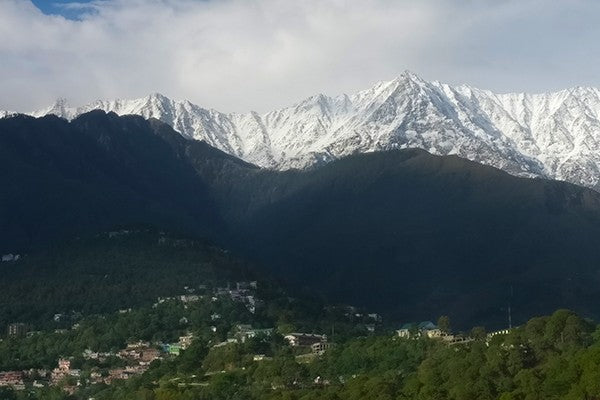
Beyond Darjeeling, Assam and the Nilgiris, India grows tea in Sikkim, Meghalaya, Kangra, Munnar, the Dooars and Terai, and Arunachal Pradesh. Some are young regions built around a single garden; others are old regions that history passed by. Few of their teas reach shops under their own names, which makes the good ones worth seeking out.
What is Sikkim tea?
Tea from Darjeeling’s Himalayan neighbor, made mainly at Temi, a garden founded by the state in 1969, and a few younger estates such as Bermiok; it sits between Darjeeling and Assam in strength.Read more
Unlike the colonial gardens elsewhere, Sikkim’s tea came from its king: Palden Thondup Namgyal invited a British planter, Teddy Young, to build a garden, and Temi was founded by the Government of Sikkim in 1969. It covers 177 hectares near Namchi and began farming organically in 2005.
The garden climbs to nearly 5,000 ft, and our tasting note for its summer tea finds “a burst of vanilla, that pleasantly balances the Muscat grape and raisin.” We have described Sikkim teas as “neither as brisk as Assam nor as light as Darjeeling.”
Bermiok and the younger gardens
Younger gardens such as Bermiok, started in 2002, have followed. In its own account, Bermiok calls itself the first professionally managed private tea estate in Sikkim: the family decided to plant tea in 1999, planted Darjeeling clonal bushes in 2002 and 2003, and began commercial production in 2008 with its own small factory. Read Sikkim tea and the Temi tea garden.

What is Meghalaya tea?
Tea from the misty Shillong plateau, where a few small gardens planted since the 1970s, LaKyrsiew among them, make mellow teas with toffee, cocoa and stone-fruit notes.Read more
Meghalaya means “abode of clouds,” and its hills are known for heavy rain, forest and mist.
The East India Company’s prospectors found the Shillong plateau well suited to tea, but the Khasi ruler would not allow migrant labor into his lands, so colonial tea never came.
In the 1970s the Tea Board of India earmarked three areas, Umsning, Tebronggre and Riangdo, with Assam-type plants lower down and Darjeeling-style bushes higher up, at 3,000 to 5,500 ft.
LaKyrsiew, a garden built from scratch
Near Shillong, LaKyrsiew (“awakening” in Khasi) planted its first field in 2003 and makes small lots of mellow teas with toffee, cocoa and stone-fruit notes.
Its founders started with the help of a retired Welsh planter and a Khasi supervisor, raised their own seedlings, and planted that first field on 10 acres in the spring of 2003. A vacated cowshed became the factory, with a small rolling table, a withering trough and a hand-operated, gas-fired drier. The first teas were, as one of the founders admitted, “fairly indifferent in quality,” until friends in the tea industry helped refine the making.
The garden kept its standards high: in 2012 it uprooted and replanted that first field, because the leaf was abundant but its quality did not satisfy them. Read the full story: A Secret Tea Garden in the Clouds.
A tea-drinking state that grew little tea
Meghalaya has long drunk far more tea than it grew. The writer Anjum Hasan, who grew up in Shillong in the 1980s and 1990s, told us that no tea was really produced and marketed there then, “it was more of a Brooke Bond culture”; her parents still boil CTC with milk and sugar. Small local gardens such as Sharawn, Urlong and LaKyrsiew have changed that. See Meghalaya tea.

What is Kangra tea?
Light, vegetal green, black and oolong teas from old China bushes in a Himalayan valley of Himachal Pradesh that was once famous, was ruined by an earthquake in 1905, and is slowly reviving.Read more
Kangra is a valley in Himachal Pradesh, below the snowy Dhauladhar range. Tea planting began in 1852, eleven years after Darjeeling’s first planting, with pure China bushes; in 1883 the district gazetteer called its tea “probably superior to that produced in any other part of India,” and it won medals in London (1886) and Amsterdam (1895).
Then the earthquake of April 1905 destroyed its factories, and many British owners sold up and left. Revival came slowly from the 1960s; Kangra tea received GI status in 2005. Its teas are light and vegetal, and its green teas and hand-rolled oolongs are the specialties.
As our founder, Kausshal Dugarr, wrote: “Apart from Darjeeling, Assam, & the Nilgiris, not many are aware of India’s 4th tea-growing region.”
One family, 135 years
The Mann family’s Dharmsala Tea Company shows how the old gardens survived. Gurdayal Singh Mann bought the first estates in 1882, and by 2017 the family had held them for 135 years, through six generations. Its Mann, Hoodle and Towa estates lie in the Dhauladhar range at 4,000 to 6,500 ft, and most of their bushes are over 100 years old.
The family describes its green teas as citrusy and often nutty, with very little bitterness, and its hand-rolled oolongs as having “a smooth, creamy flavor, more oriental in make.” Kangra’s first flush blacks can resemble Darjeeling’s, but without the muscatel touch. Their verdict on the region’s long decline is frank: Kangra’s planters “have lacked sufficient global exposure and marketing assistance.”
We have sold Kangra tea before: our 2018 range included a Wah Classic Spring Green from Kangra. Read Kangra tea, and the visit that produced these notes, In Kangra, for a tour of the tea gardens.

What is Munnar tea?
Strong, brisk orthodox tea from the High Range of Kerala, at about 1,500 m, where most of the gardens have been owned by their own workers since 2005.Read more
Munnar lies in the High Range of Kerala, in the Western Ghats, at about 1,500 m. In 1877 John Daniel Munro leased the Kannan Devan hills from the local raja; tea was introduced in 1880 by A. H. Sharp, and Finlay Muir and Company soon bought up more than 30 estates, which later became part of Tata Tea.
In 2005 Tata handed the business to its workers: 98% of the 13,000 workers came to own around 68% of the Kannan Devan Hill Plantation, and the loss-making estates turned a profit. Munnar orthodox tea is strong and brisk, with a clean, biscuity aroma. Tata Tea itself started as Tata Finlay Ltd., working alongside Finlay and Company of Glasgow.
Planters’ Kerala
Kerala’s planting districts had their planters’ clubs too. Ravi Mathews, a senior planter, remembered Kerala’s Peermade Club in the 1960s: “Saturday nights were Club Nights and once a month, films were projected on an ancient 35 mm projector.”
Growing tea and serving it well are different things. On a family trip through Kerala in 2015, one of our writers found that “across the state the tea was hopelessly bad! Too milky in some places, too watery at others,” and ended up making her own. Read Munnar tea.
What is Dooars tea?
Strong tea from the plains at the foot of the Darjeeling hills in North Bengal, made in large gardens among forests and wildlife reserves and seldom sold under an estate name.Read more
The plains at the foot of the Darjeeling hills, in North Bengal, where tea grows alongside elephants, rhinos and deciduous forest. Dooars means “doors” in Bengali, Assamese and Nepali: it is the gateway to the Northeast and Bhutan. British agency houses built most of the gardens, with a significant share founded by Indian entrepreneurs. Of the 283 tea gardens in North Bengal, 154 are in the Dooars, and together they employ about 3.5 lakh (350,000) workers.
The Dooars has “a totally different terroir from Assam,” a former manager of Rydak, a garden on the edge of a tiger reserve, told us, and its monsoon brings heavy rain from June to October.
Gardens at the forest’s edge
That manager, Chirinjiv Bedi, was running Rydak in 1984, when newspapers often came once a week. “We were cut off by three rain-fed rivers,” he told us.
Other gardens share the forest. Mathura Tea Estate runs up to Chilapata forest, an elephant corridor between Jaldapara National Park and the Buxa Tiger Reserve, where “deer, bison, elephants, leopards, and rhinoceros still roam”; planted by the great-grandfather of the historian Romita Ray, it stayed in her family until 1997. The Buxa reserve itself borders a number of plantations.
Why Dooars tea is rarely named
You rarely see a Dooars garden named on a pack of fine tea, and Teabox does not list one today. Most of its crop is everyday tea, which made it vulnerable when India locked down in 2020: nearly 90 percent of the first flush produce from the Dooars and Assam went to waste. This guide is our page for the Dooars and Terai; there is no separate guide.

What is Arunachal tea?
Tea from India’s easternmost state, best known for the whites, golden tippy teas and smooth oolongs of Donyi Polo, its first garden, founded in 1985.Read more
India’s easternmost state is a newcomer with a growing reputation. Donyi Polo, its first tea garden, was founded in 1985 and is known for silver needle whites, golden tippy teas and oolongs; its spring oolong is light, smooth and creamy, close in style to a Taiwanese oolong. In 2018 its “Golden Needle” sold for Rs 40,000 per kg.
Its summer oolong surprised us in 2017: “Resembling a white tea, and with sweet, vegetal and woody flavors, it has a smoothness that’s described as velvety.” “Happy to see teas from Arunachal doing so well, giving a strong competition to the famed regions,” our founder, Kausshal Dugarr, wrote.
The state also shares a border with Assam’s gardens: at Koilamari, most of the pluckers live across the line in Arunachal.

Keep reading
Sources
- Teabox blog (Still Steeping): A tour of the Tocklai Tea Research Institute (2016), When King Coffee Bowed Out to Tea (2016), The Glenburn Boutique Hotel, Darjeeling (2017), The Changing Face of Tea Gardens in the Nilgiris (2016)
- Teabox blog (Still Steeping): A House for Chinna Dorai – Estate Bungalows in the Nilgiris (2017), In the wow zone at the Goomtee cottage (2015), In Kangra, for a tour of the tea gardens (2017), A Secret Tea Garden in the Clouds (2015), Assam Diaries: Margherita, the Singphos and Coin Tea (2016)
- Teabox blog (Still Steeping): In Assam for the summer flush (2015), The Teabox team in Assam (2016), Assam Diaries: A Portal to the Past (2016), Of tea, wildlife and stories of yore from Assam (2017), The Beginner’s Guide to Choosing a Darjeeling (2017), A Nilgiri girl in Darjeeling (2017)
- Teabox blog (Still Steeping): Tea in Germany & its Darjeeling Connection (2016), An Indian Summer in a Cup (2015), The Winter of Our Teas (2015), Teatime, Talktime (feat. Anjum Hasan and Zac O’Yeah) (2017), Madam Superintendent and Durga Puja in a Tea Garden (2016), Tigers and Tea (2017), The Steep Road Ahead (2020), Tea Days and Club Nights (2016), Making the Perfect Tea (2015), Missives from Gunehar: Leaving the city (2016)
- Teabox blog (Still Steeping): Raising Our Cups to Maniram Dewan: The Father of Assam Tea, 2021; All about Indian tea terroir, 2014; The Top Tea Growing Regions of India, 2015; Rising from the embers: Kangra’s tea gardens, 2015; The Planter and the Tee: A Dooars Tale, 2015; It’s time for tea from the Nilgiris, 2016
- Teabox Tea 101: An overview: tea industry in India; Assam; Darjeeling; Nilgiri; Sikkim; Meghalaya; Kangra; Munnar; Geographical Indication
- Teabox product estate descriptions and product data, 2026 season: Castleton Spring, Castleton Summer Muscatel, Halmari, Namsang, Doomni, Havukal, Temi Spring, Temi Summer Muscatel, Lakyrsiew Summer
- Teabox Drive: Teabox internal document, 2018; Teabox internal document, 2023; Teabox internal document; Teabox internal document (estate’s own account); Teabox internal document, 2017; Teabox internal document, 2017; Teabox licence records (internal, 2026); photos as credited
- Teabox on Instagram (@teabox.tea): Meghalaya, Jun 2018, Donyi Polo summer oolong, Aug 2017, Chubwa records, Sep 2018, Chubwa name, Sep 2018, Donyi Polo spring oolong, May 2019, Darjeeling history, Jun 2020, Kurseong, Mar 2021, rivers, Sep 2021, toy trains, Jan 2022, Sikkim, Feb 2022, Arunachal, Feb 2022, Assam, Feb 2022, Darjeeling, Feb 2022, Dooars, Feb 2022, tea workforce, Sep 2022, tasting count, Oct 2022
- Kausshal Dugarr on X (@Teapreneur): Arunachal teas, Aug 2019, Kangra, Oct 2021, first flush 2022, May 2022, Tata Finlay, Jan 2023
- Teabox on YouTube: Masterclass regions clips (Darjeeling, Assam, Nilgiris, Sikkim, Meghalaya, Kangra, Dooars-Terai, Arunachal Pradesh) and Who were the Kalimpong Kids, linked where used

Leave a comment
All comments are moderated before being published.
This site is protected by hCaptcha and the hCaptcha Privacy Policy and Terms of Service apply.