


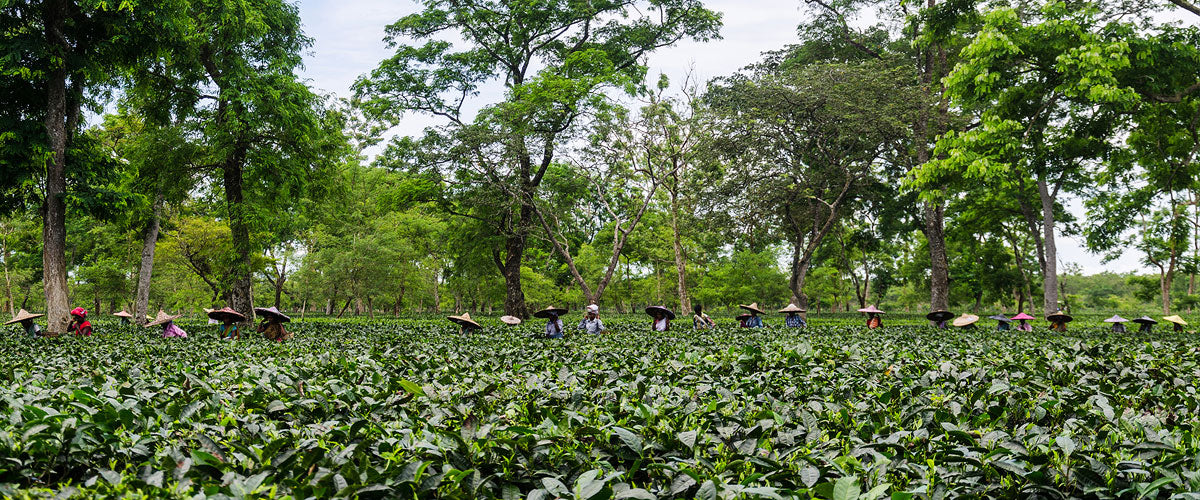
Assam Tea: A Guide to Assam Black Tea and Its Malty Taste
Assam tea is black tea grown in the Brahmaputra valley of Assam, in northeast India, from the region’s native tea plant, Camellia sinensis var. assamica.

Types of Tea: A Beginner’s Guide to Black, Green, White, Oolong and Herbal Teas
There are four main types of tea: black, green, white and oolong, and all four come from the same plant, Camellia sinensis.
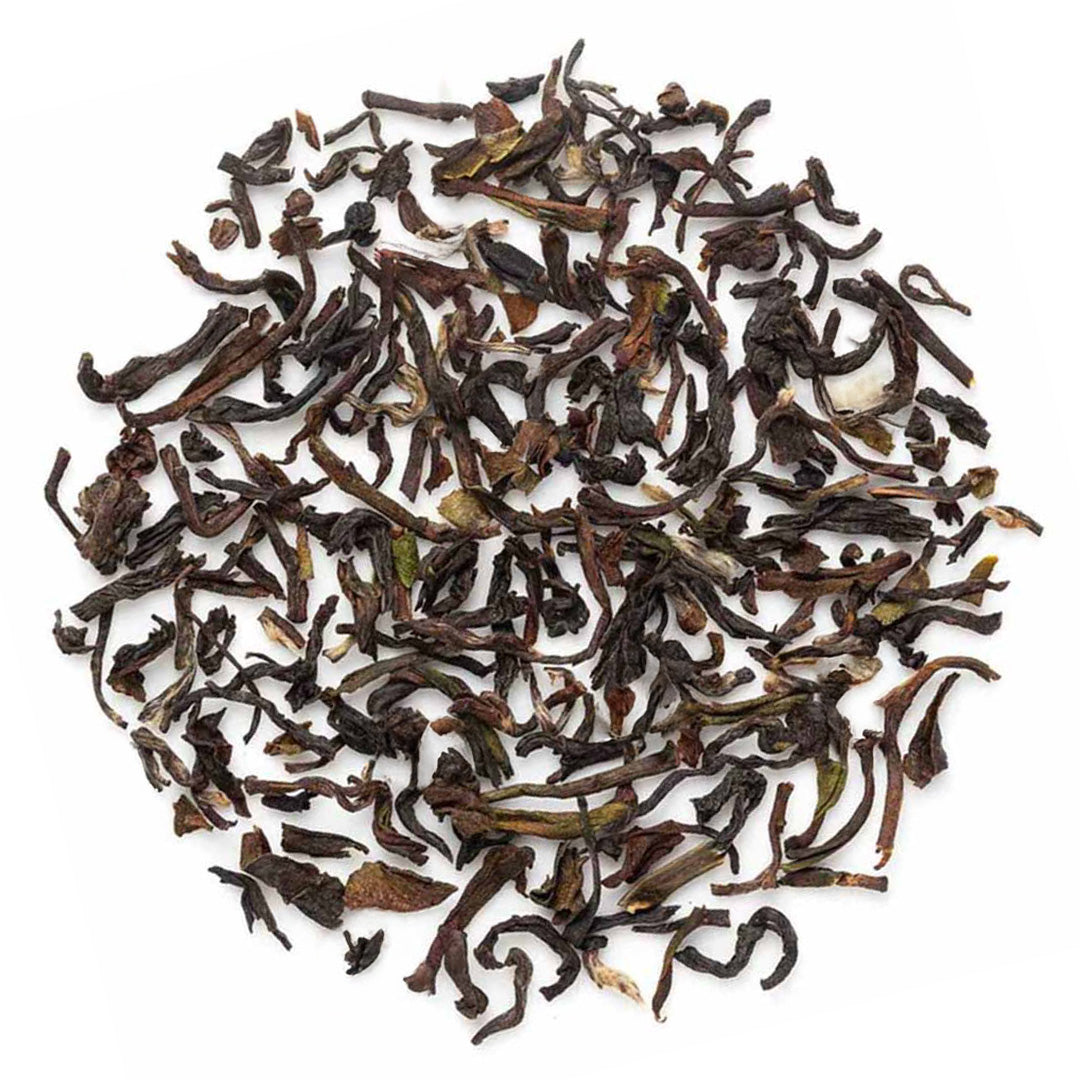
Types of Black Tea: Assam, Darjeeling, Nilgiri and Beyond
Black teas are named for where they grow, and each region has its own climate, bushes and style.
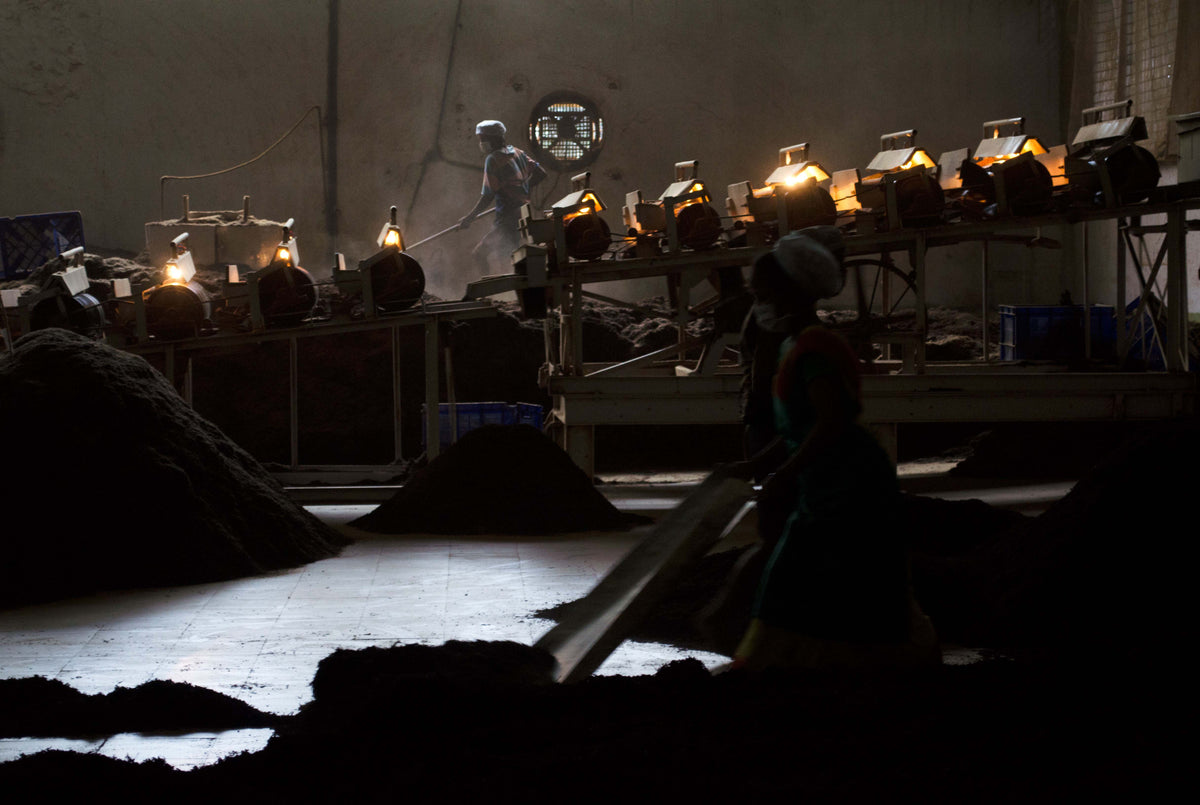
How Black Tea Is Made: Withering, Rolling, Oxidation and Drying
The leaf for black tea is the same as for any tea; what changes is how long each step lasts and how hard the leaf is worked.
The History of Black Tea: From the Wuyi Mountains to Assam
The first black tea is usually said to be Lapsang Souchong, made in the Wuyi mountains of Fujian about 400 years ago.
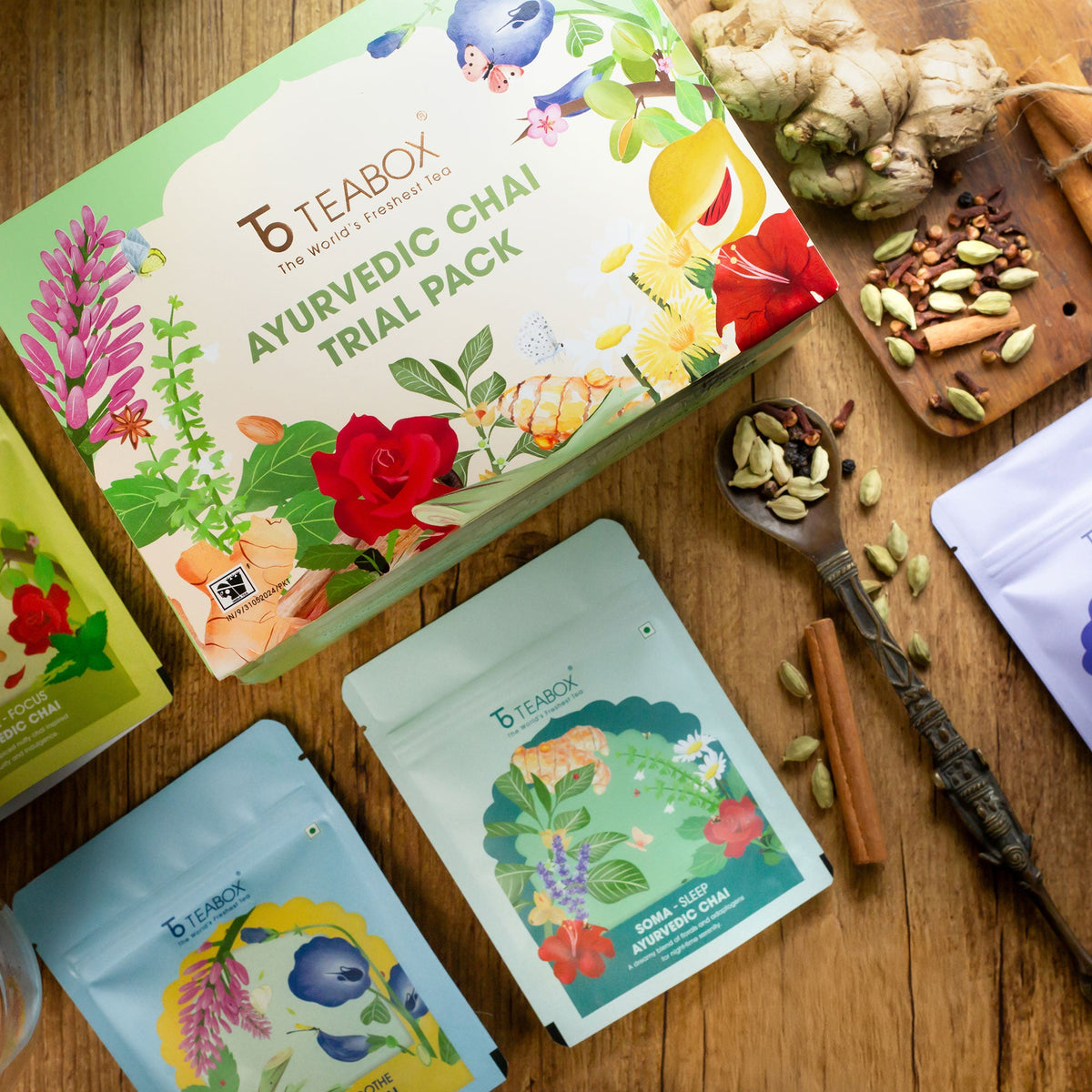
Herbal Teas, Flavored Blends and Chai: Beyond the Four Main Types
Herbal teas are not made from the tea plant at all; flavored blends and chai are made from real tea combined with other ingredients.
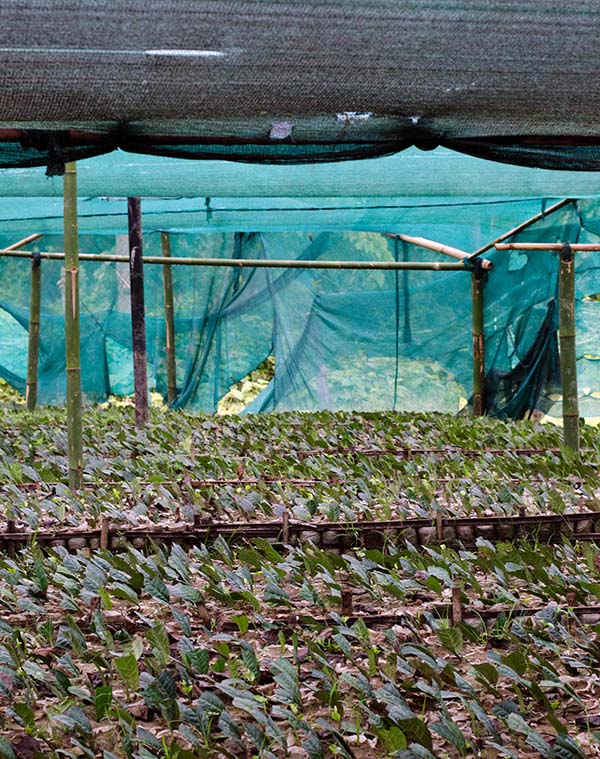
What Is Tea? The Tea Plant, Camellia sinensis, Explained
Tea is a drink made by steeping the processed leaves and buds of one plant, Camellia sinensis, in hot water.
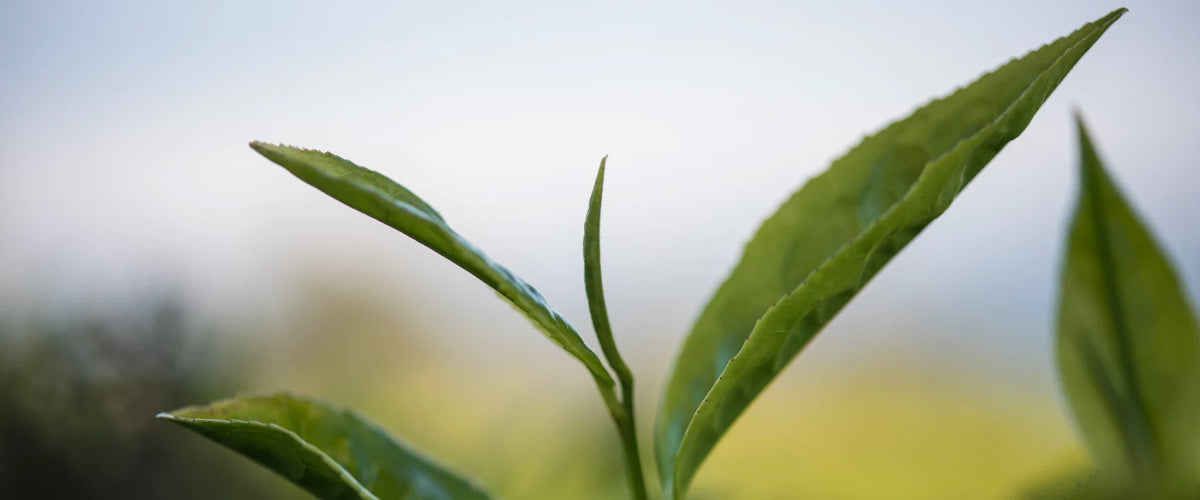
The Tea Plant: Camellia Sinensis, Its Varieties and How to Grow One
The tea plant, Camellia sinensis, is an evergreen shrub in the same family as garden camellias, with glossy, slightly serrated leaves.
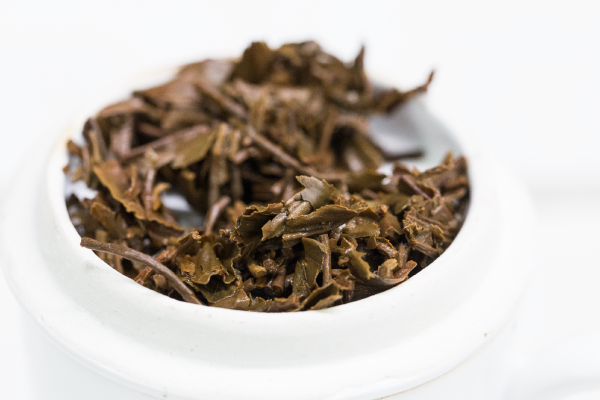
Black, Green, White and Oolong Tea: The Four Main Types Explained
Black, green, white and oolong teas are all made from the same leaf; what sets them apart is how far that leaf is allowed to oxidize.
How Is Tea Made? From Leaf to Cup, Step by Step
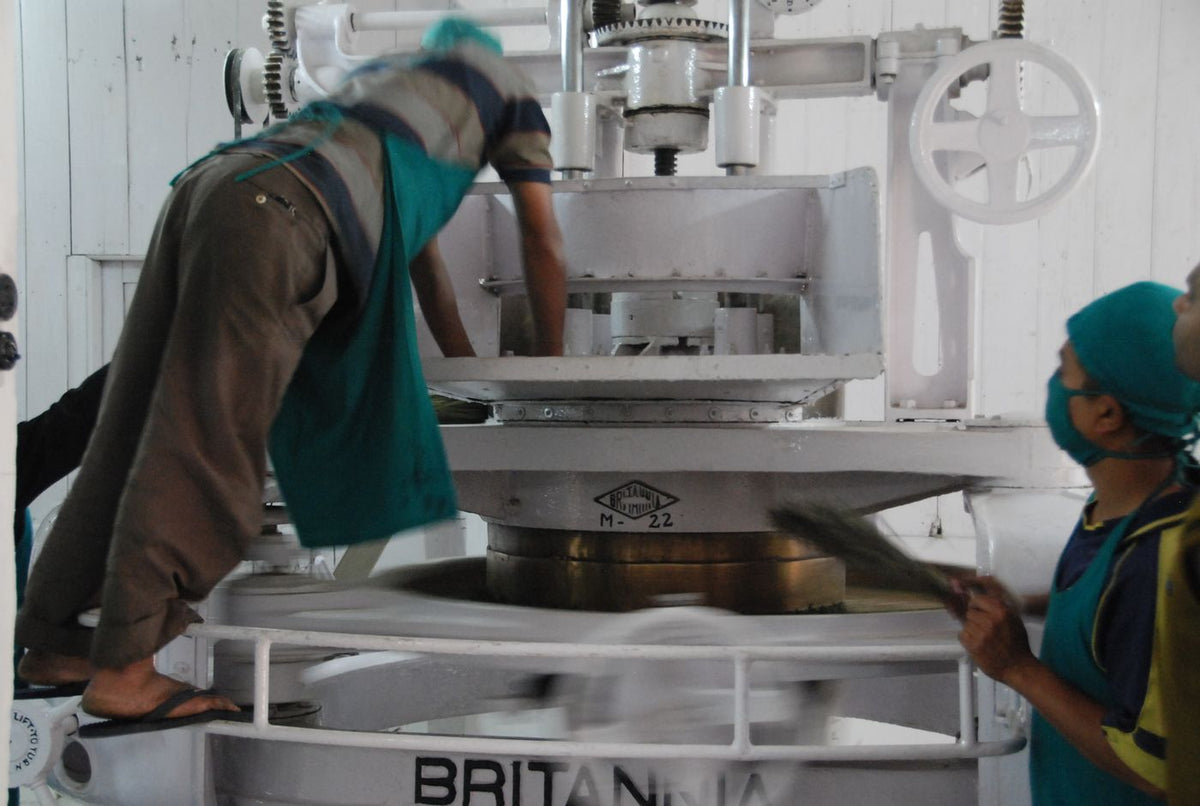
Tea is made by plucking young shoots of the tea plant, then withering, rolling, oxidizing and drying the leaves before they are sorted into grades.
Tea Making Step by Step: Plucking, Withering, Rolling, Oxidation and Drying
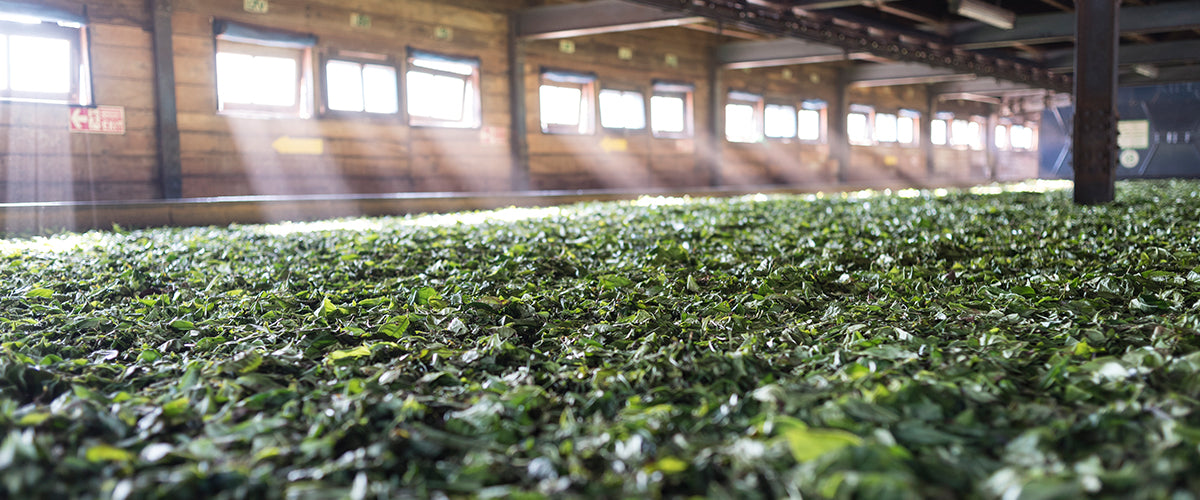
The steps below follow an orthodox black tea, the most complete version of the process, and note where other teas leave the path.
What Is Black Tea? How It’s Made, Types of Black Tea, and How to Brew It With or Without Milk
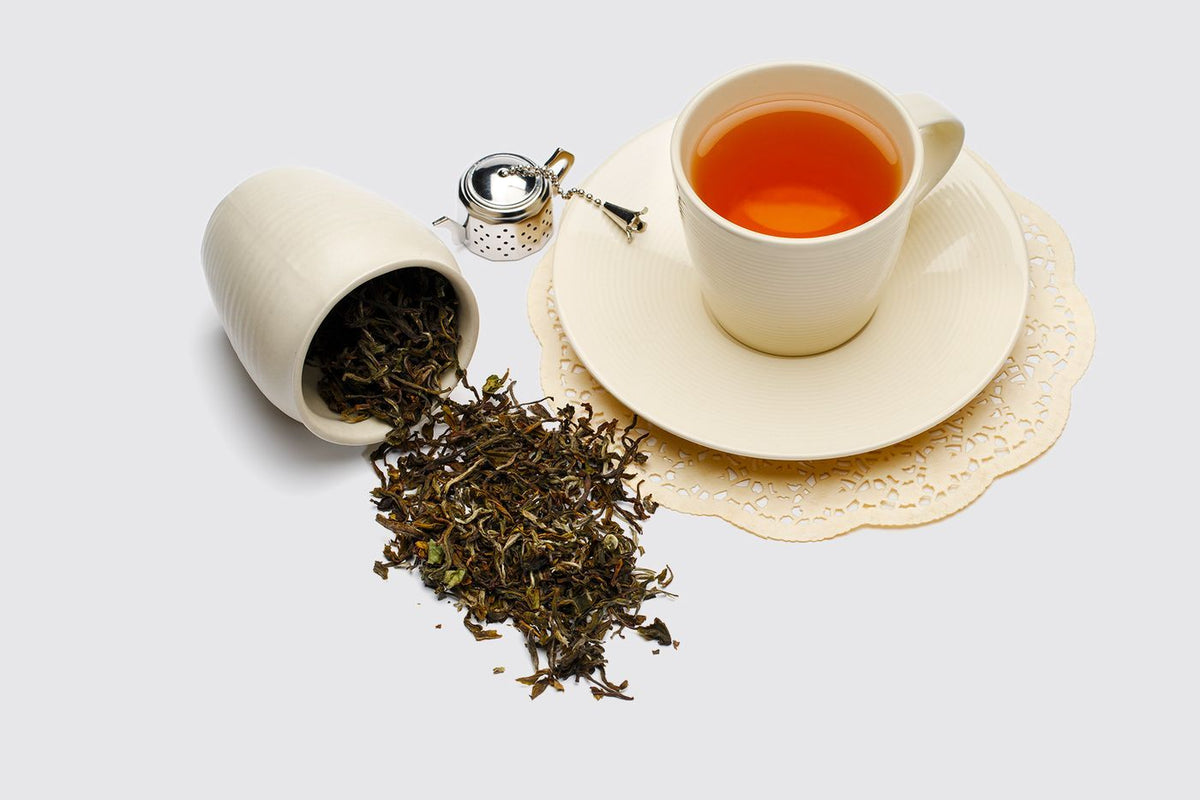
Black tea is tea whose leaves have been fully oxidized after plucking, which turns them dark and gives a stronger, fuller cup than green, white or oolong tea.
How to Choose a Good Black Tea: Leaf, Label, Freshness and Taste
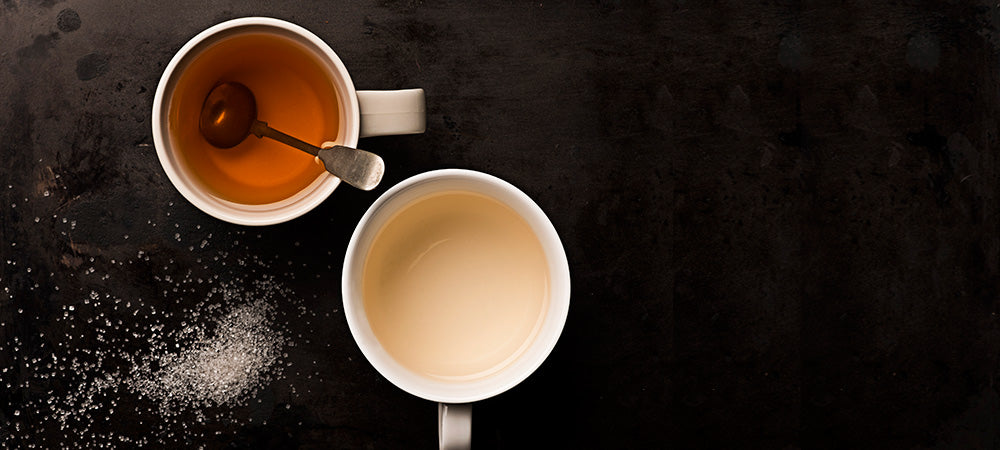
A good black tea shows itself before you brew it: long, well-rolled, tippy leaf that is completely dry and smells clean.

What Is Green Tea? How It’s Made, the Main Types, and How to Make Green Tea Without Bitterness
Green tea is tea whose leaves are heated soon after plucking so they do not oxidize, which keeps them green and fresh-tasting.
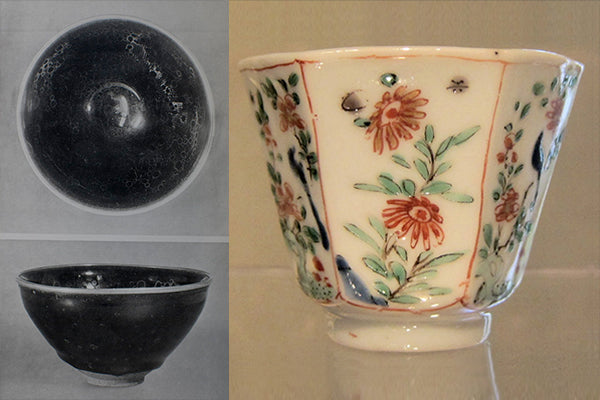
The History of Green Tea: From Ancient China to Japan’s Way of Tea
Green tea began in China, and it is the oldest style of tea. Every early tea was, in effect, green: oxidized black tea came much later.
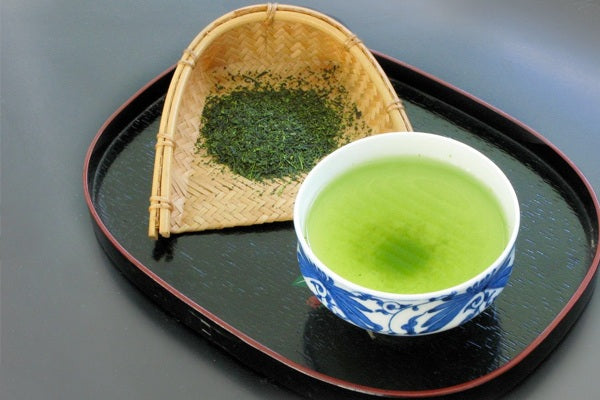
Types of Green Tea: Chinese, Japanese, Nepali and Flavored Greens
The main types of green tea are grouped by country and method: pan-fired Chinese greens, steamed Japanese greens, and Indian and Nepali greens, which are mostly pan-fired or machine-fired orthodox ...
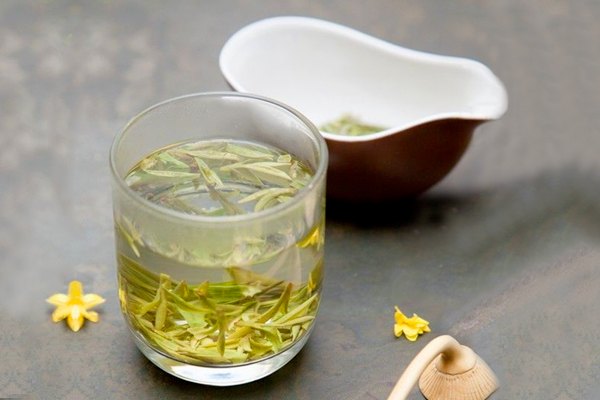
How to Make Green Tea Without Bitterness: Temperatures, Timings and Recipes
To make green tea, steep about 2 to 2.5 g of leaf (roughly one heaped teaspoon) in 250 ml of water at 75–80°C (167–176°F) for 2 to 3 minutes, then strain.
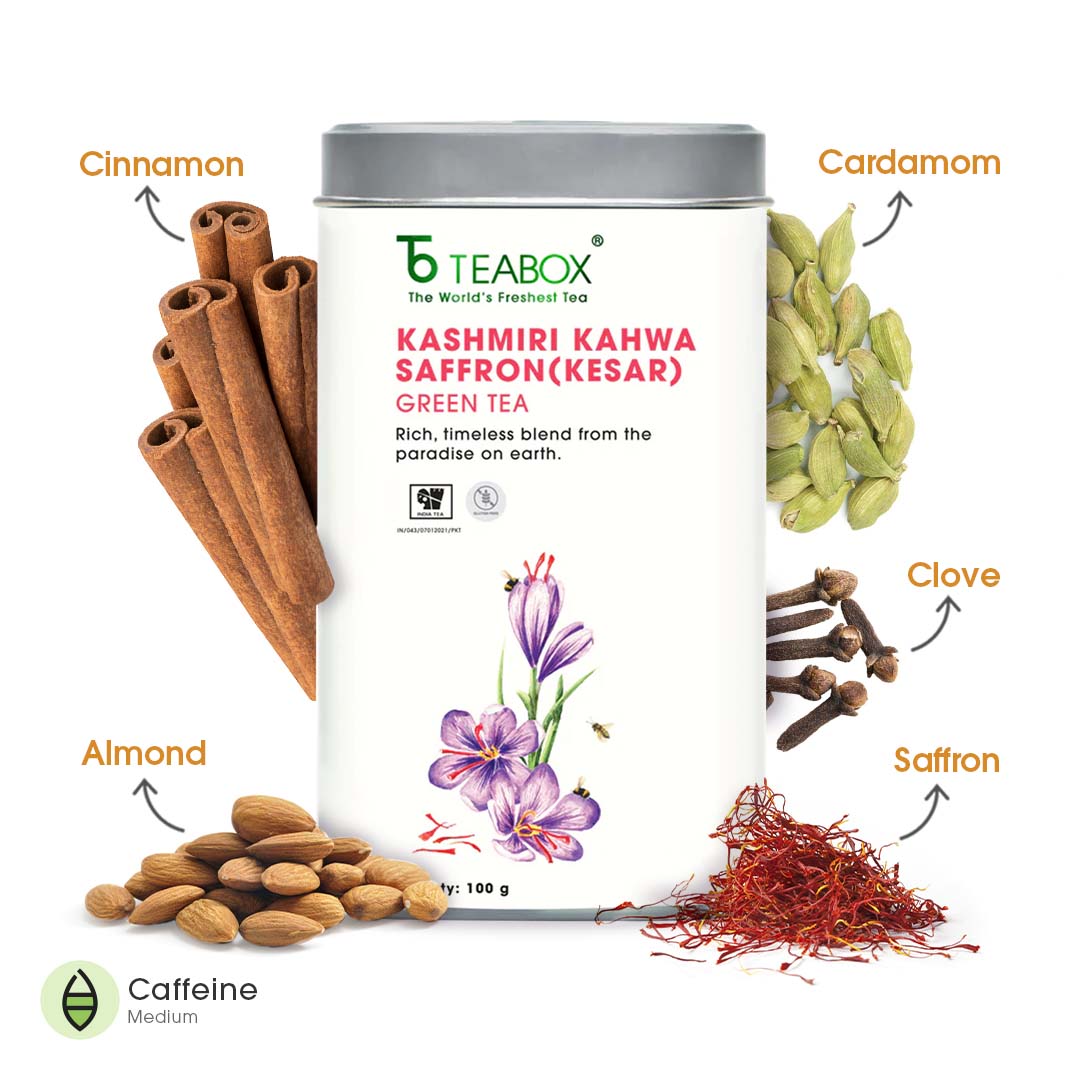
Indian Green Tea: Darjeeling, Nilgiri, Kangra, Assam and Kashmiri Kahwa
India makes green tea in Darjeeling, the Nilgiris and Kangra, among other regions, mostly as pan-fired or machine-fired orthodox leaf, and Kashmir has its own spiced green tea, kahwa.
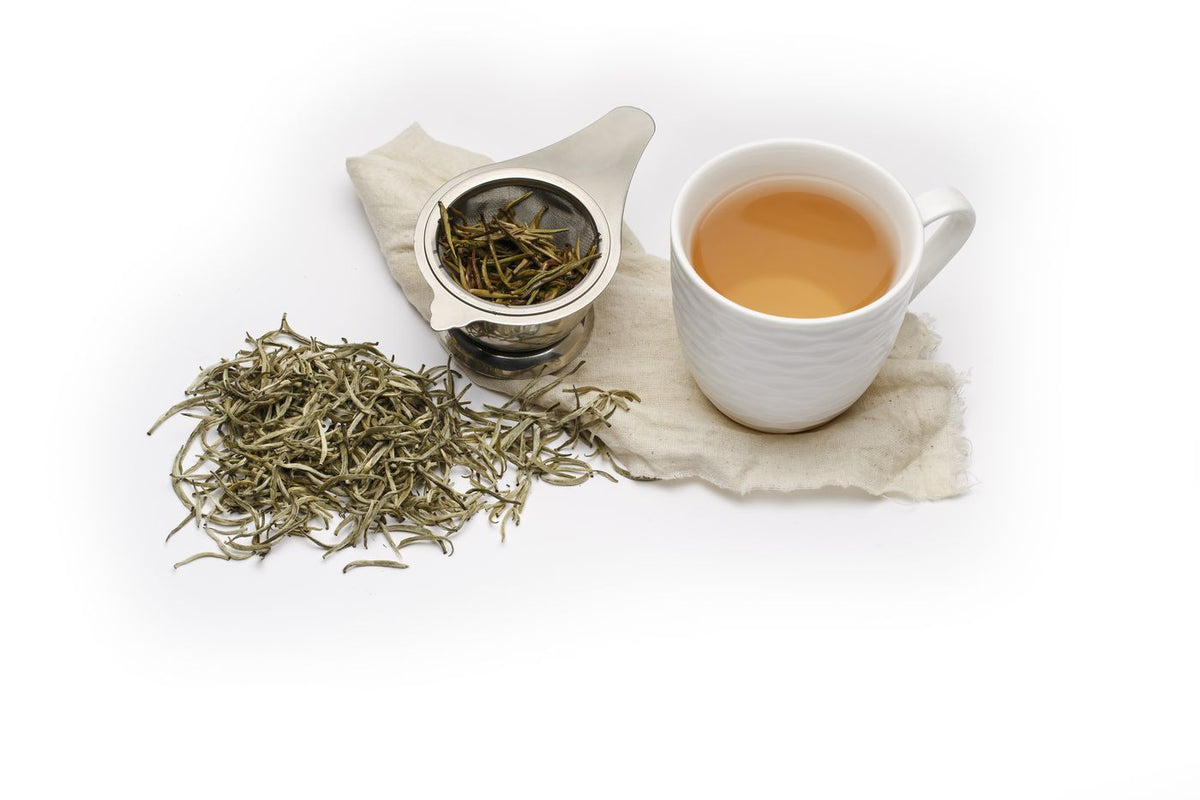
What Is White Tea? Silver Needle, White Peony (Bai Mu Dan) and Darjeeling Moonlight Explained
White tea is the least processed of all teas: young buds, sometimes with one or two tender leaves, are simply withered and dried, with no rolling and no deliberate oxidation.
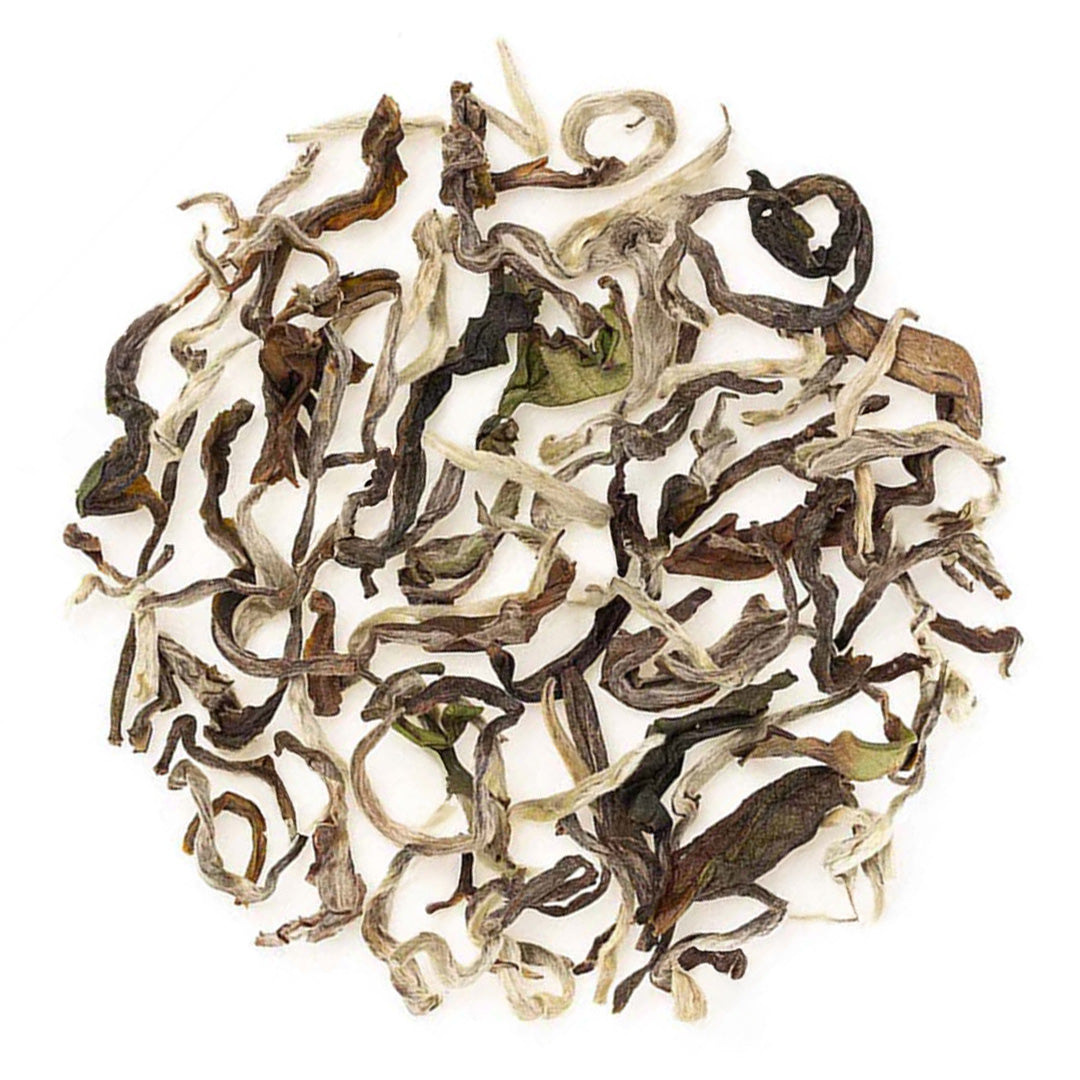
Types of White Tea: Silver Needle, White Peony, Shou Mei and Moonlight
Made only from buds, Silver Needle is the most prized white tea and one of the most expensive; White Peony adds the first leaves, Shou Mei uses later leaf, and Moonlight is the name for an estate’s...
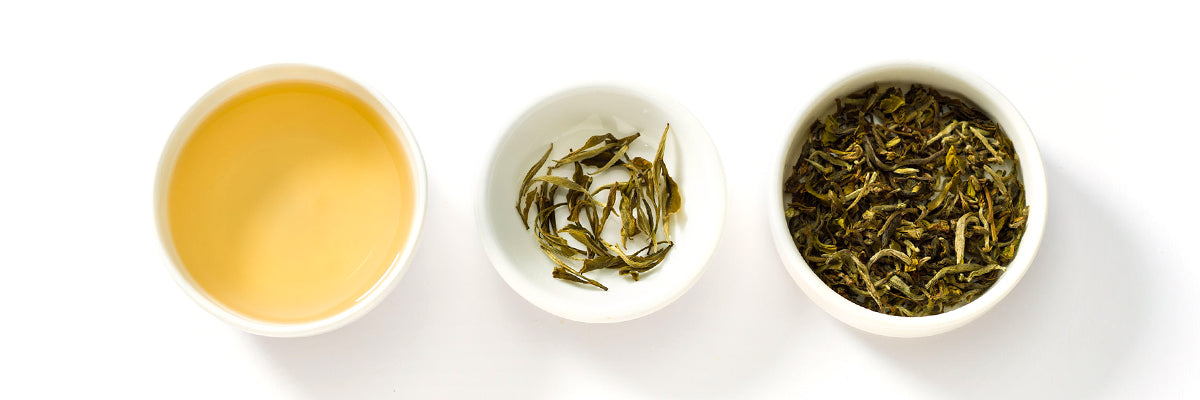
Indian White Tea: Darjeeling Moonlight and Nilgiri Whites
Darjeeling’s white teas are mostly made in the spring first flush, from March to mid-April, when the young leaf is at its most aromatic.

Oolong tea is partly oxidized tea from the tea plant, made by stopping oxidation somewhere between green tea and black tea.

Types of Oolong Tea: Tie Guan Yin, Da Hong Pao, Oriental Beauty and Darjeeling Oolong
Oolongs come in two main shapes: small, tightly rolled oolongs such as Tie Guan Yin, and long, twisted strip-style oolongs such as Da Hong Pao, which is the older and more commonly made style.

The History of Oolong Tea: The Black Dragon, from Fujian to Taiwan
Oolong comes from Fujian province in southeast China, though no record says exactly when the first one was made; its name, wu long, means “black dragon,” and two old stories explain it.
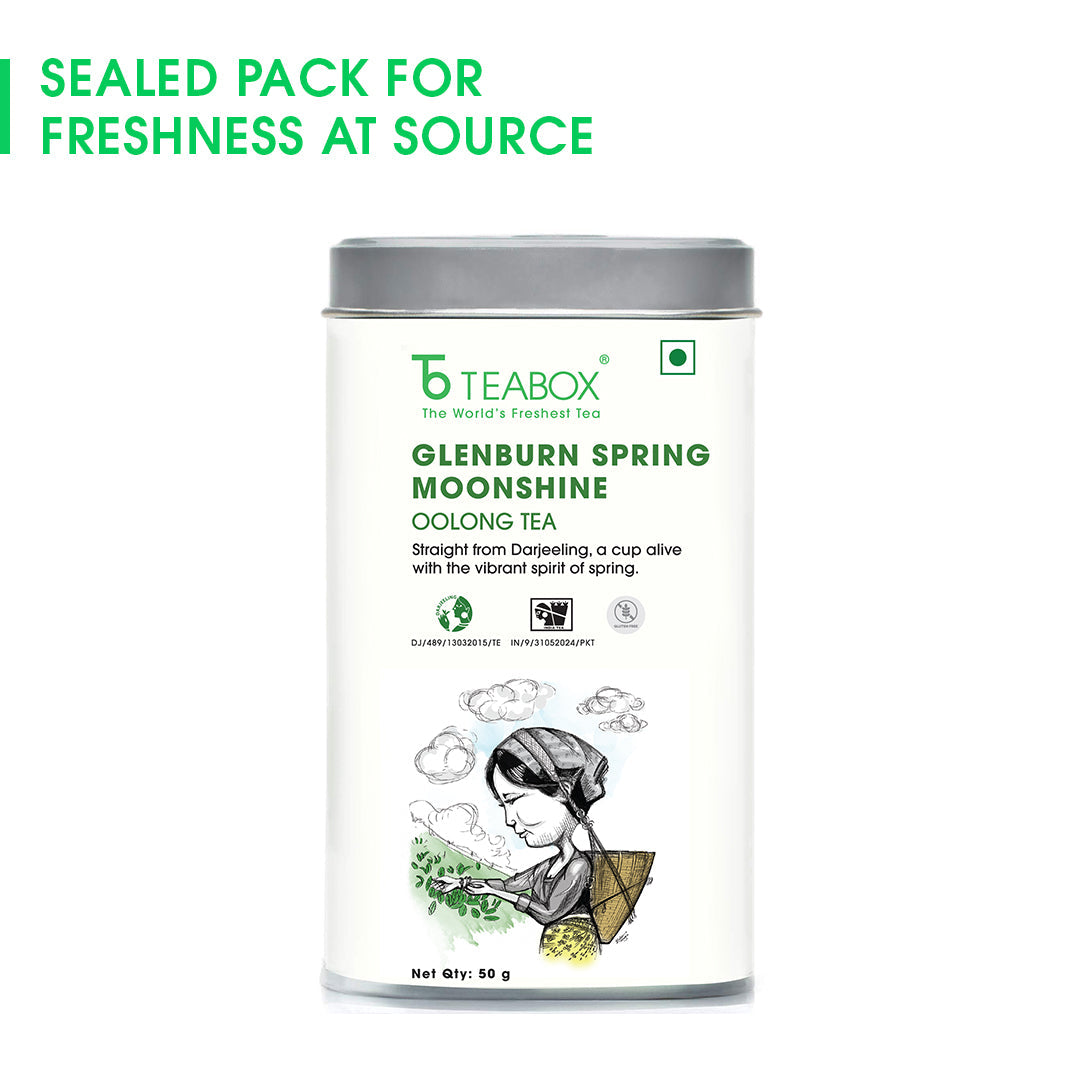
Indian Oolong Tea: Namring, Singbulli and the Darjeeling Oolong
India makes oolong. Darjeeling has made it since the early 1990s, when Sumon Majumder experimented at the Namring estate with Taiwanese-style methods, and today estates in Darjeeling, Sikkim, Aruna...

What Is Herbal Tea? A Guide to Tisanes, from Chamomile and Hibiscus to Rooibos and Butterfly Pea
Herbal tea, or a tisane, is an infusion of flowers, herbs, roots, seeds or fruit in hot water, made without any leaf from the tea plant.
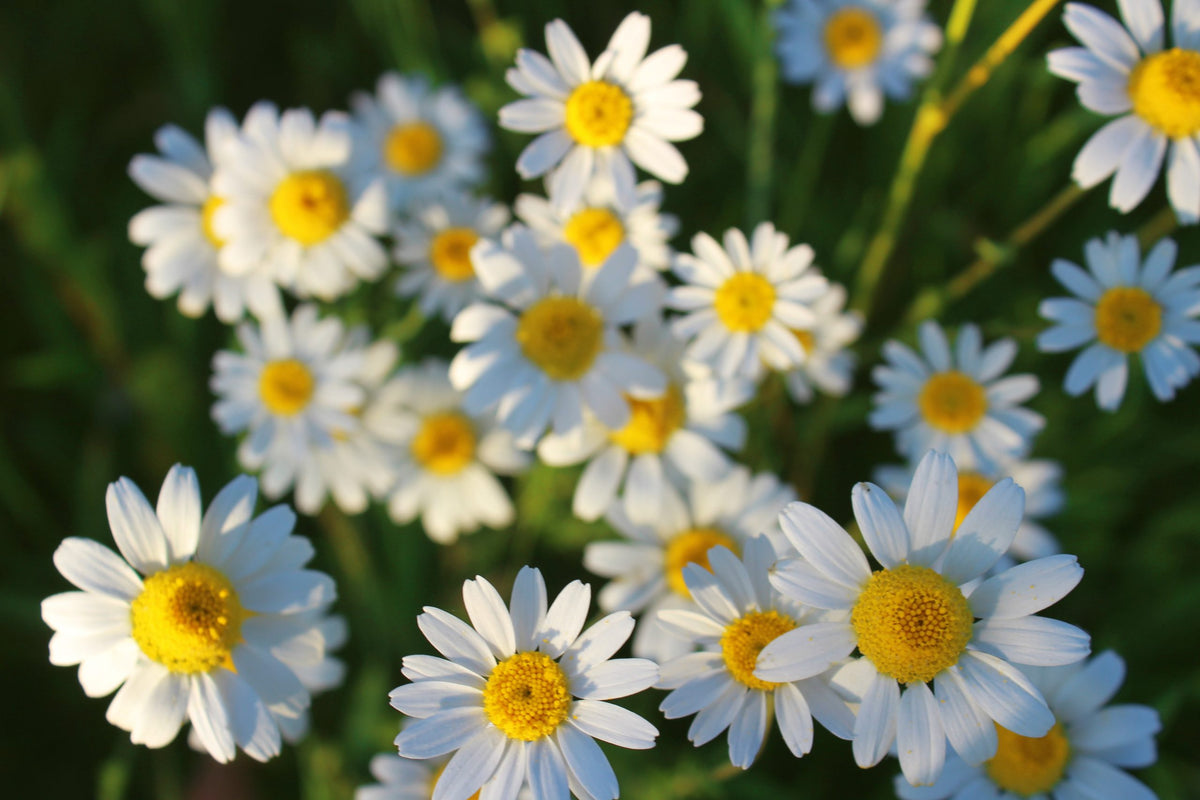
Popular Herbal Teas: Chamomile, Hibiscus, Peppermint, Lemongrass, Rooibos and Butterfly Pea
The most popular herbal teas are chamomile, hibiscus, peppermint, lemongrass, rooibos and butterfly pea flower, each with a very different taste and color.
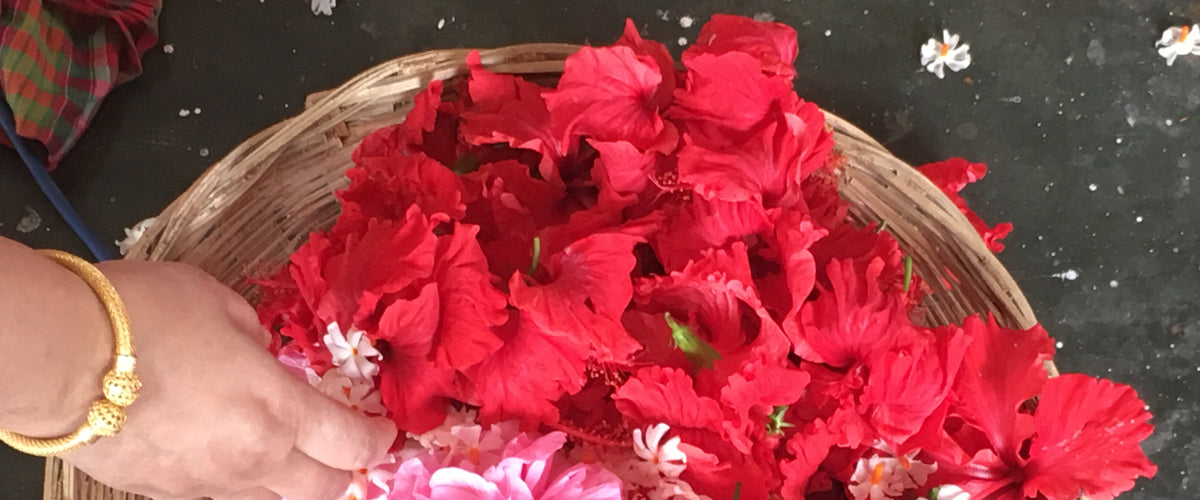
Indian Herbal Brews: Tulsi, Kadha, Ayurvedic Herbal Chai and Sharbat Tisanes
India has drunk herbal infusions for centuries: tulsi, ginger, amla, fennel and spices are brewed in homes across the country, and Ayurveda, India’s traditional system of wellbeing, has long chosen...
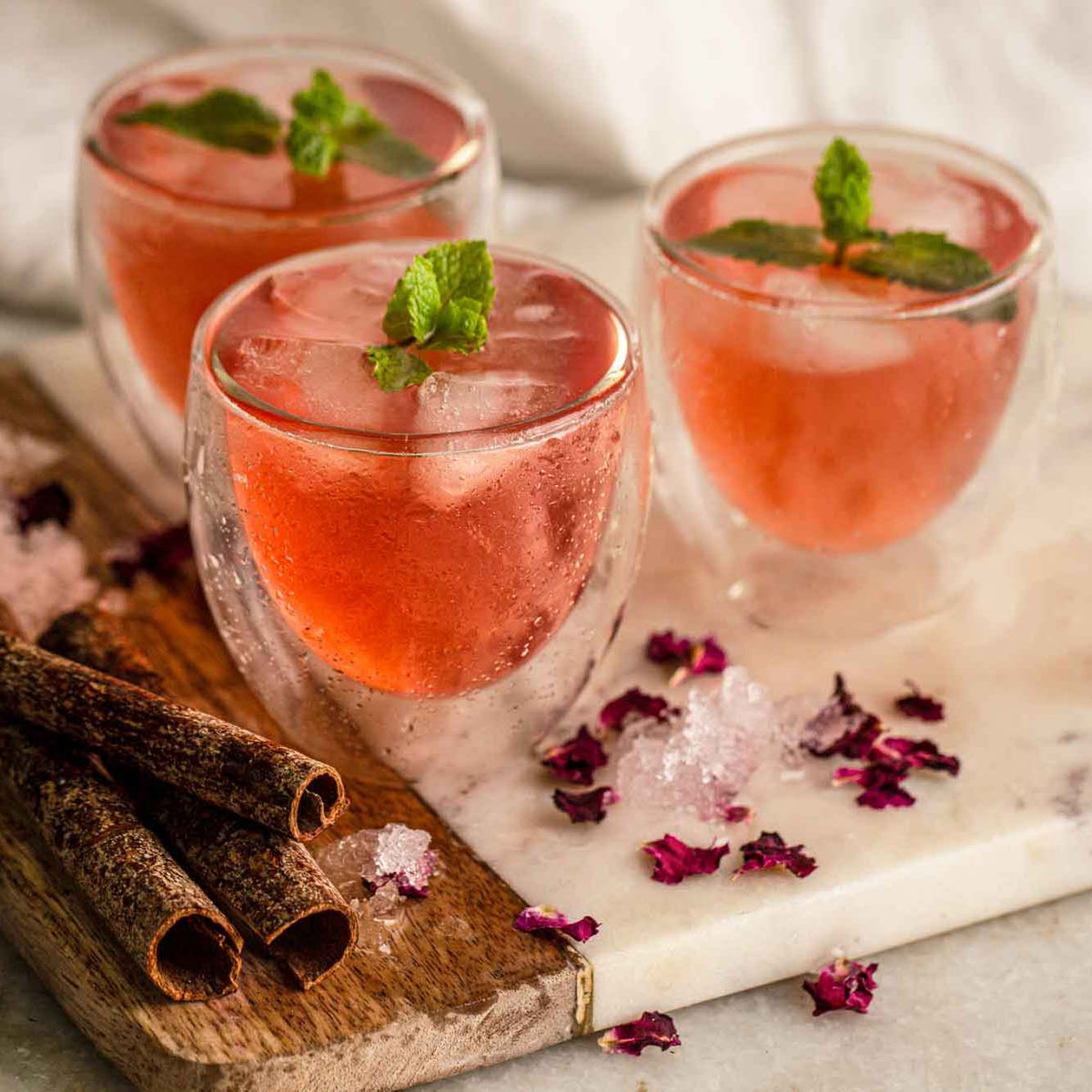
How to Brew Herbal Tea: Water, Time, Measures and an Iced Hibiscus Recipe
Brew herbal tea with freshly boiled water at 100°C (212°F), about a heaped teaspoon per 250 ml cup, and steep it covered for 5 to 7 minutes.
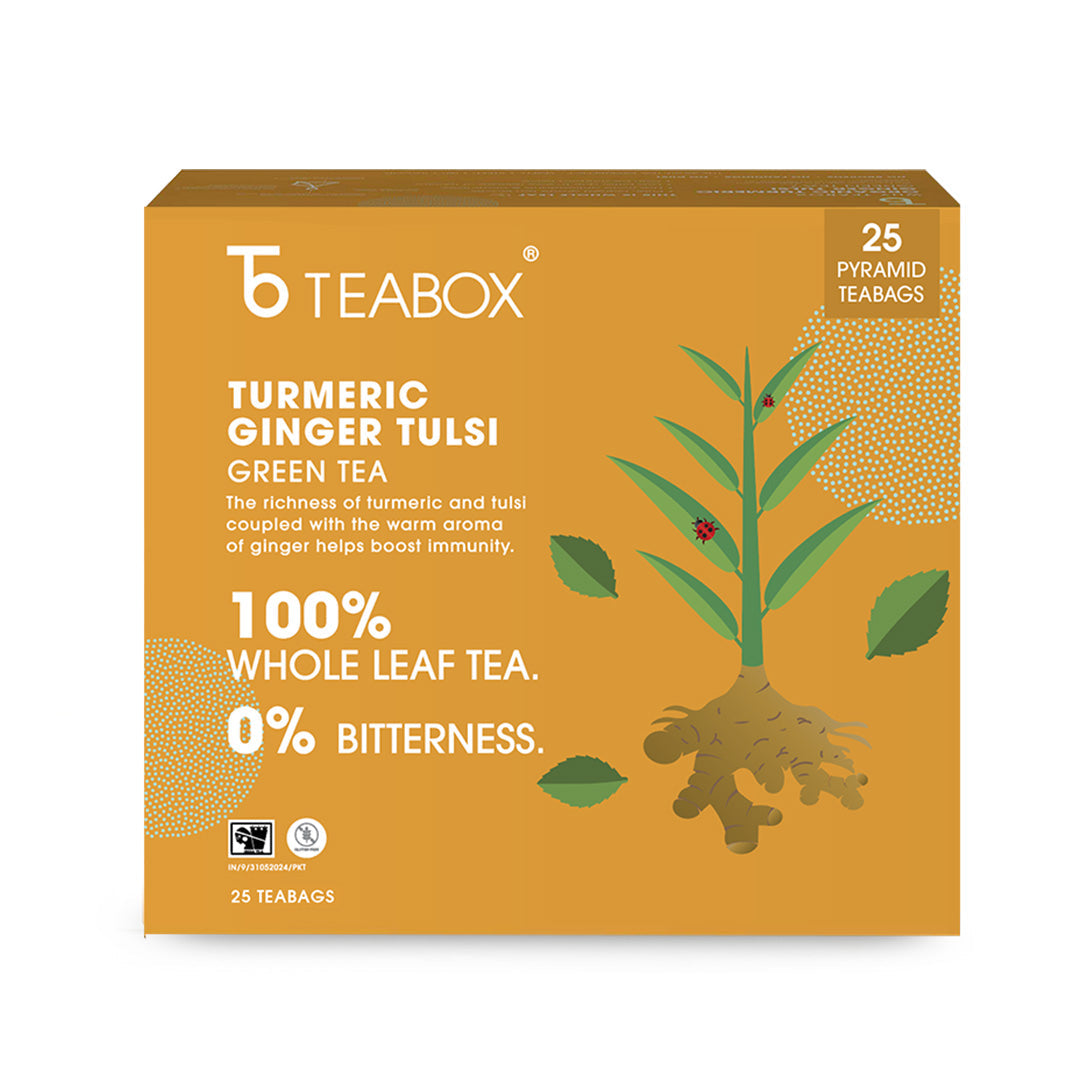
Tulsi Tea (Holy Basil Tea): What It Is, How It Tastes and How to Make It
Tulsi tea is an herbal infusion made from the leaves of holy basil, the sacred basil of India, brewed on its own, with green tea or in chai.

Tulsi in Indian Tradition and Ayurveda: The Courtyard Plant and the Kitchen Herb
Few plants are so closely woven into Indian daily life as tulsi: it is watered, offered, prayed to and brewed, often in the same morning.
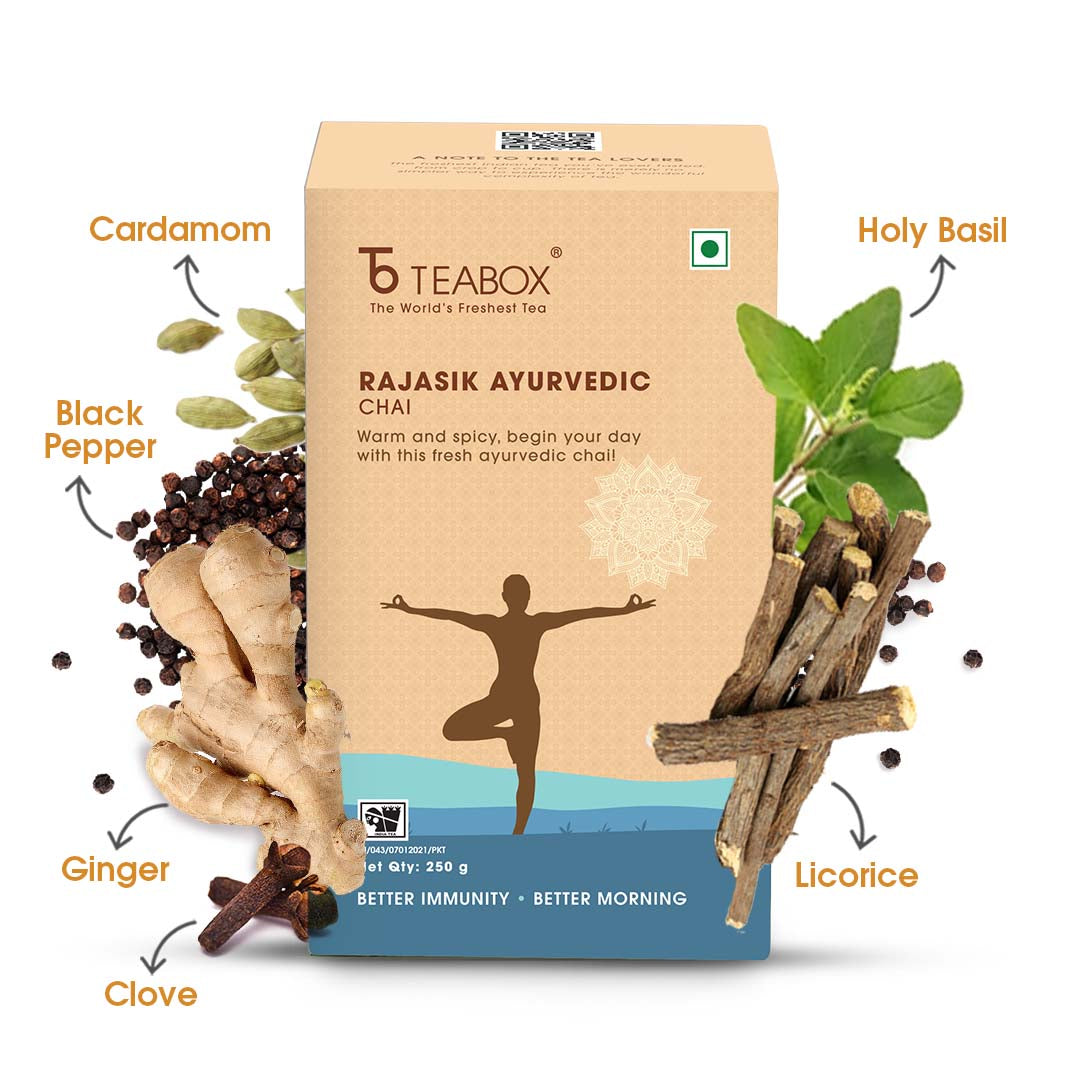
Rama, Krishna and Vana Tulsi: The Types of Holy Basil and How They Taste
Tulsi tea tastes peppery and clove-like, with a fresh, green, slightly minty edge and a gentle warmth that lingers.
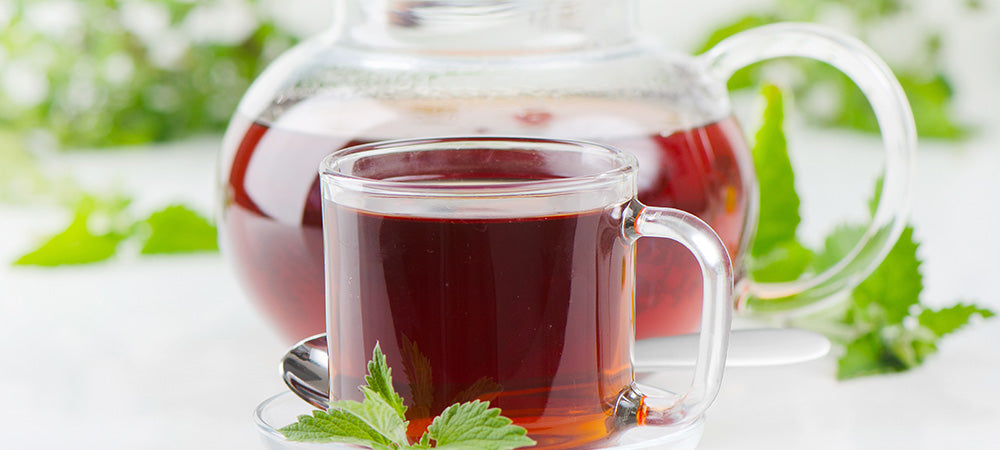
How to Make Tulsi Tea and Tulsi Chai: Fresh Leaves, Dried Leaves and Green Tea
Use about a heaped teaspoon of dried tulsi, or a small handful of fresh leaves, for each 250 ml cup; pour on water just off the boil, cover, and steep for 5 to 7 minutes.
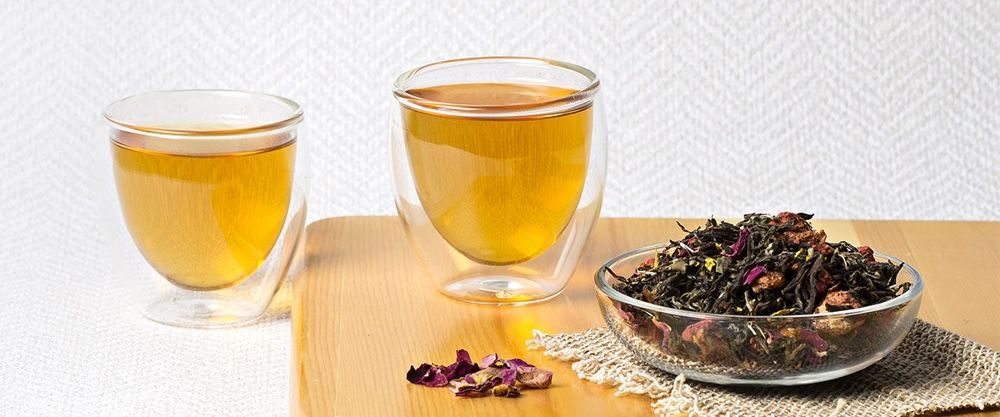
Flavored Tea Blends: Jasmine Tea, Earl Grey, Rose and Spice, and How to Choose a Good One
A flavored tea blend is real tea (black, green, white or oolong) mixed or scented with other ingredients, such as flowers, spices, fruit, herbs or natural flavorings, to add aroma and taste.
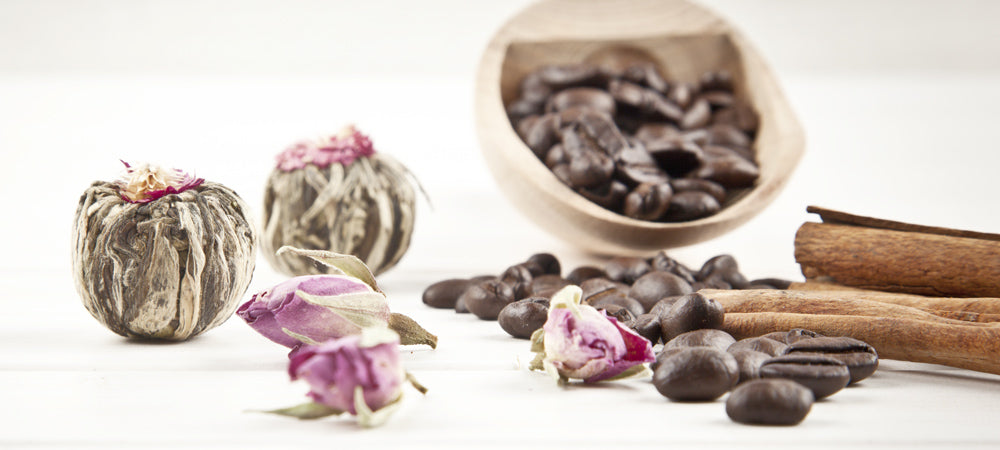
Flavors in Tea Blends: Spices, Flowers, Herbs, Citrus, Fruit and Wine
The main families of flavor added to tea are spices, flowers, herbs, citrus oils, fruit, and dessert or “liquor” flavors such as chocolate, rum or wine.
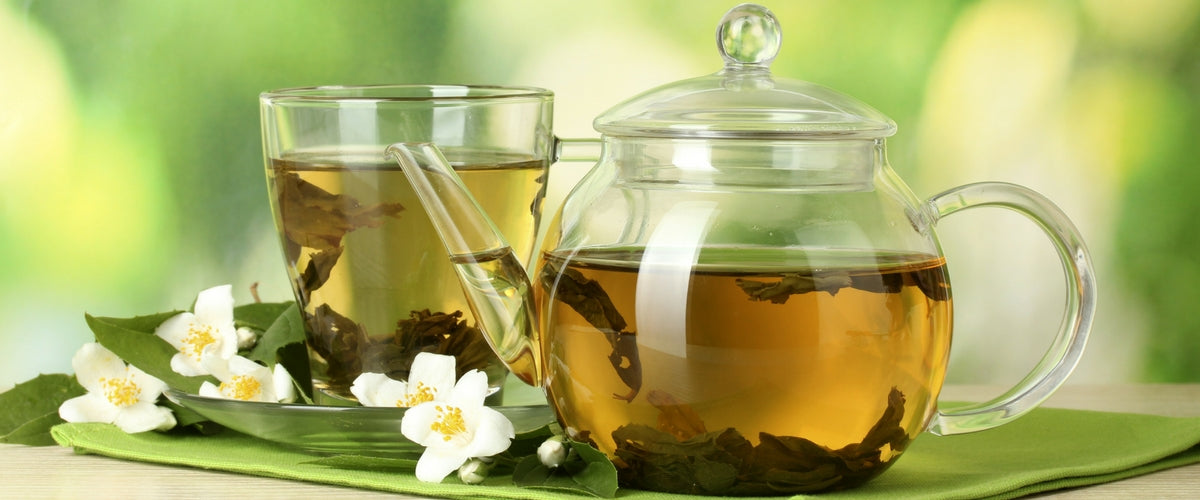
Jasmine Tea and Jasmine Pearls: How Jasmine Green Tea Is Scented
Jasmine tea is tea, usually green, that has been scented with fresh jasmine blossoms until the leaf takes on their perfume.
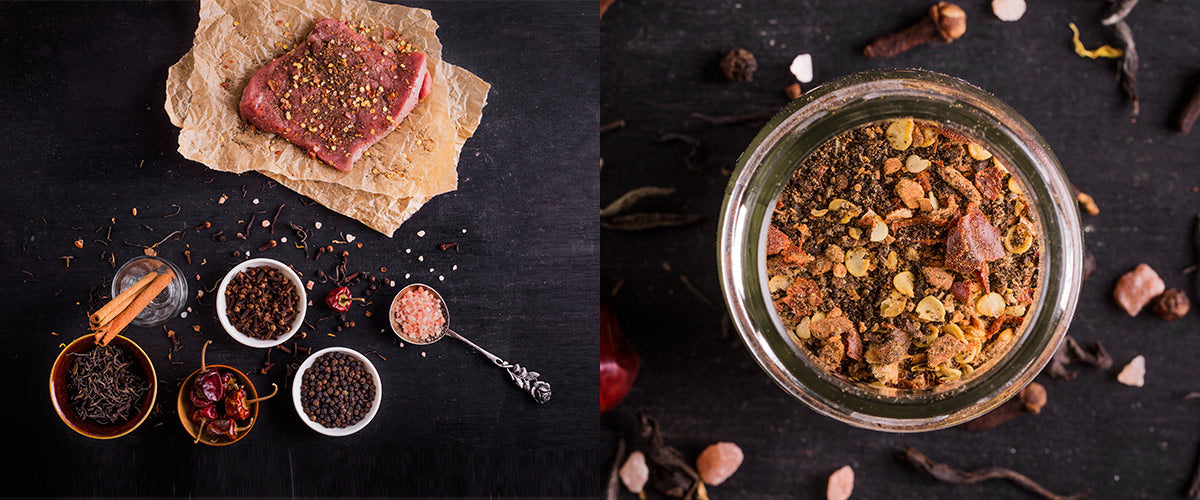
How to Make Your Own Tea Blend: Tips From Our Blenders
Yes, you can make your own flavored tea at home. Start with a tea you like, add one or two dried ingredients from your kitchen, keep the tea at about two-thirds of the mix, and taste as you go.
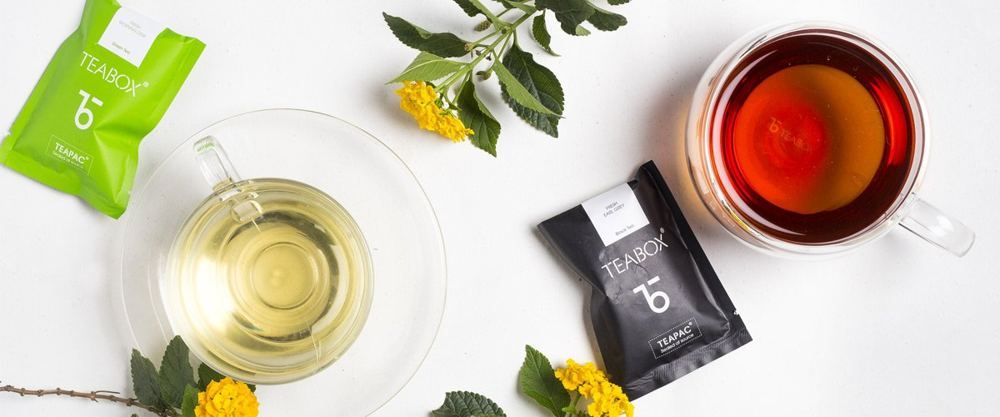
Black Tea vs Green Tea: How They’re Made, How They Taste, and Which Has More Caffeine
Black tea and green tea come from the same plant, Camellia sinensis; the difference is processing: black tea is fully oxidized, while green tea is heated soon after plucking so it does not oxidize.

How Black Tea and Green Tea Are Made: Oxidation, Fixing and the Gardens That Make Both
Black tea is withered, rolled and left to oxidize fully before it is dried; green tea is heated soon after plucking, which stops oxidation, and is then rolled and dried.
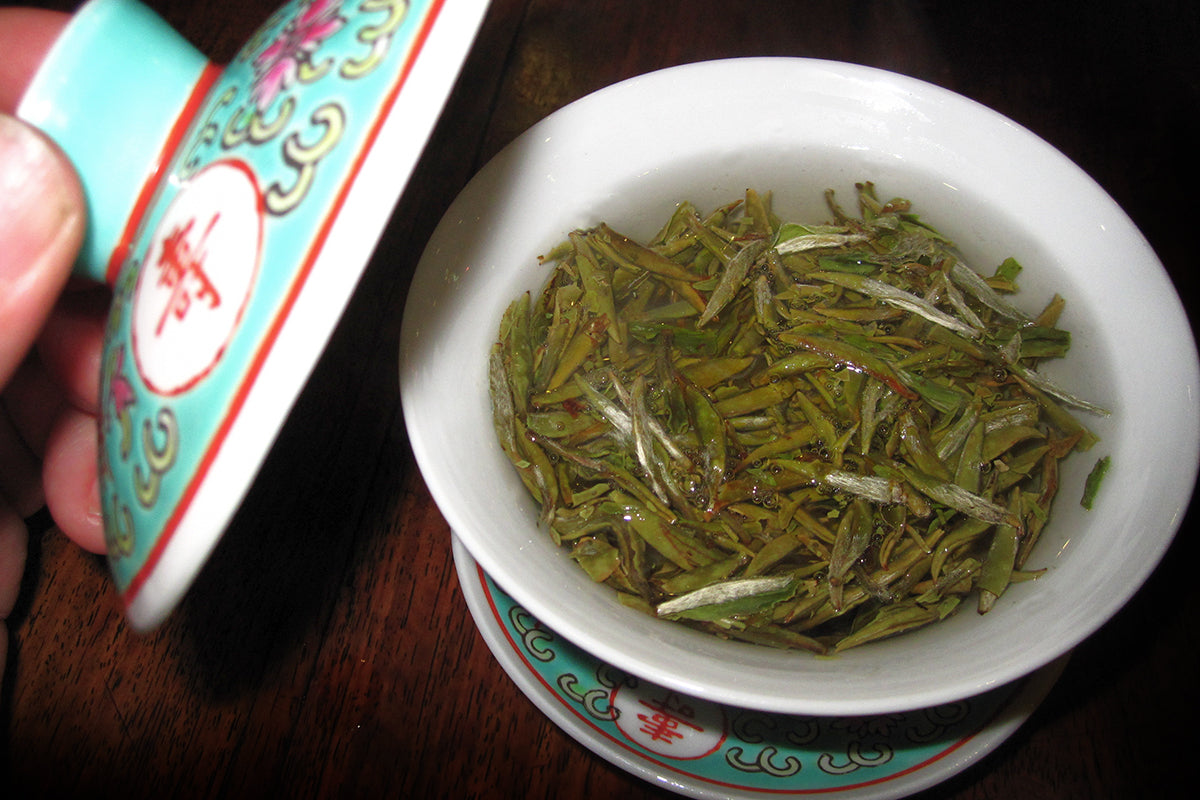
How Black Tea and Green Tea Taste: Our Tasting Notes Side by Side
Black tea tastes fuller and rounder, malty, fruity or floral depending on where it grows, with a brisk finish; green tea tastes lighter and fresher, toasty and nutty when pan-fired, grassy and mari...

White Tea vs Green Tea: The Difference in Processing, Taste, Caffeine and Brewing
White tea and green tea come from the same plant, and the difference is processing: white tea is only withered and dried, while green tea is heated soon after plucking, then rolled and dried.

White Tea vs Green Tea Taste: Our Tasting Notes Side by Side
Our current tasting notes show how far apart white and green tea can sit, even when they come from the same hills.
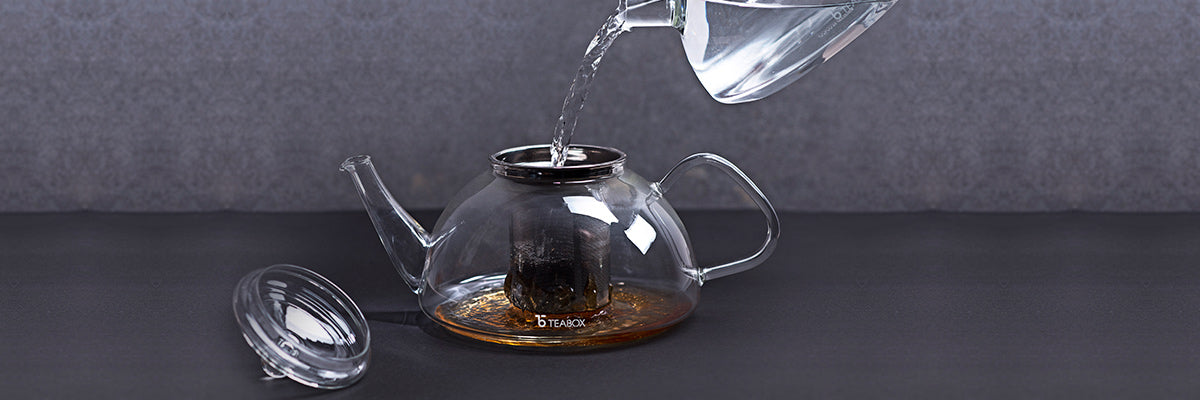
How to Brew White Tea and Green Tea: Water, Time and How Many Steeps
White tea wants water at 80–85°C for 3 to 5 minutes; green tea a little cooler and shorter, at 75–80°C for 2 to 3 minutes.
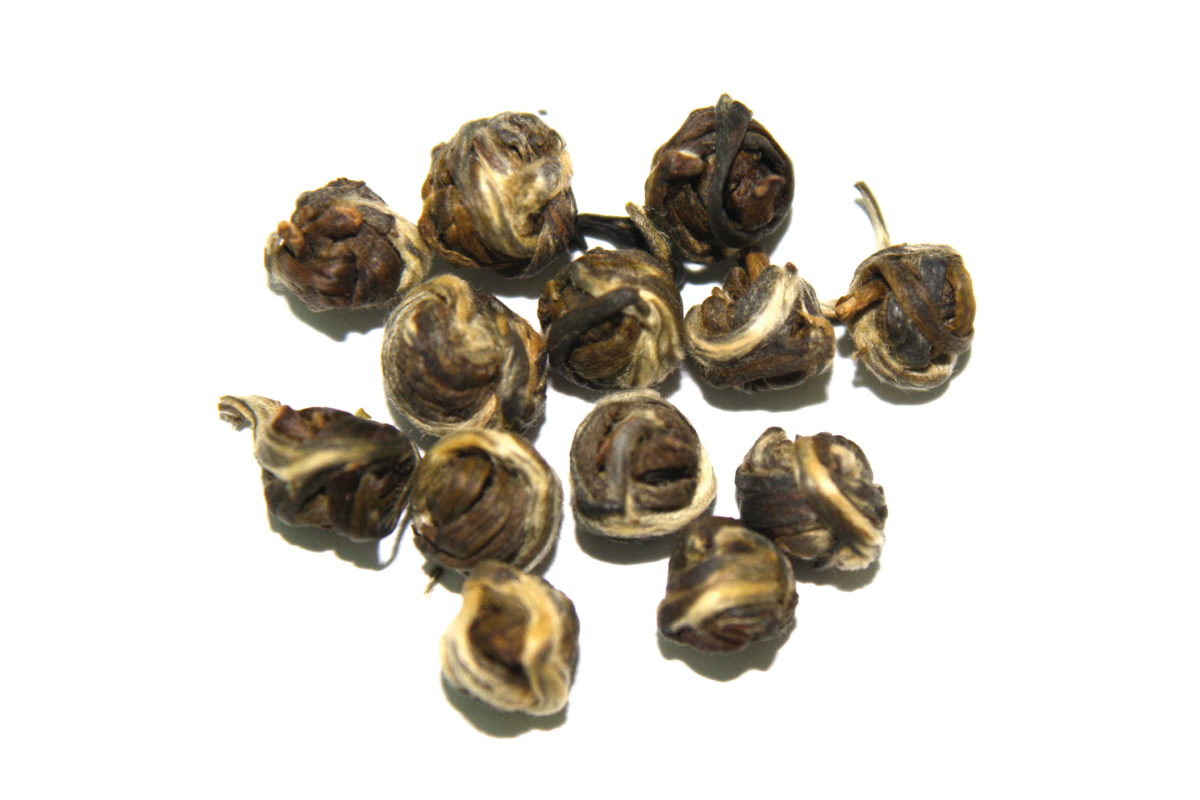
Oolong vs Green Tea: The Difference in How They’re Made, Taste, Caffeine and Brewing
Oolong and green tea come from the same plant, and the difference is oxidation: green tea is heated soon after plucking so it barely oxidizes, while oolong is bruised and allowed to oxidize part of...
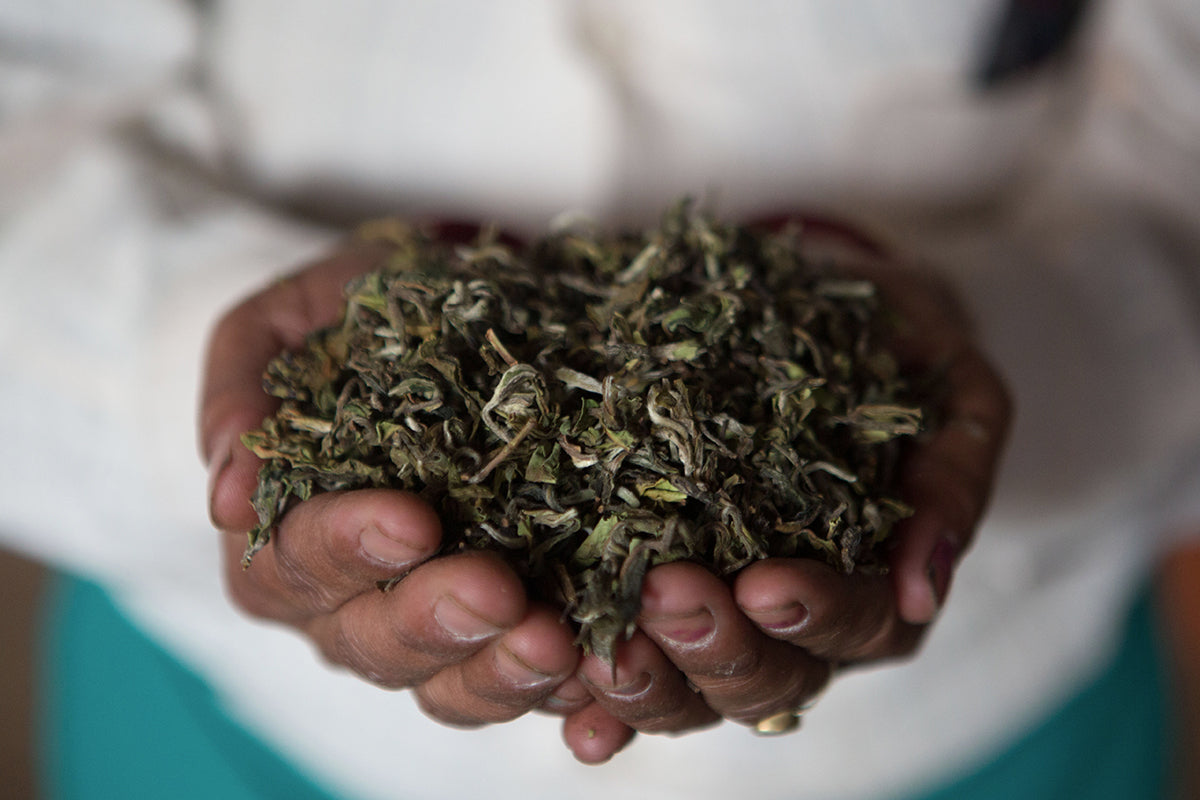
How Oolong and Green Tea Are Made: Fixing, Withering, Bruising and Oxidation
Green tea is heated soon after plucking to stop oxidation before it starts, then rolled and dried; oolong is withered, bruised and left to oxidize to a chosen point before it is heated, then rolled...
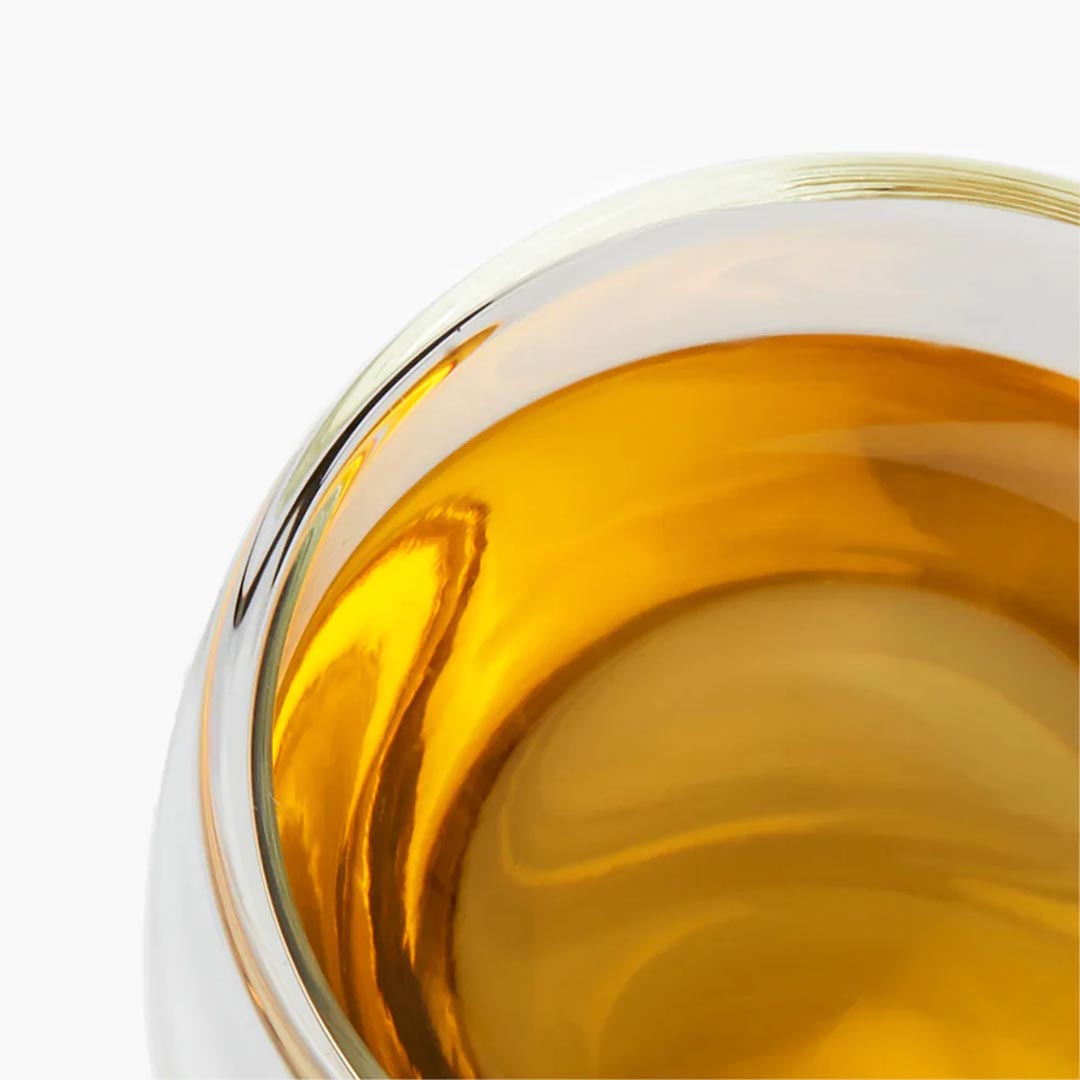
How to Brew Oolong and Green Tea: Temperature, Time and How Often to Re-steep
Brew green tea cooler and shorter, and oolong hotter and longer: green tea at 75–80°C for 2 to 3 minutes, oolong at 85–95°C for 3 to 5 minutes, then again.

Chinary, Assam and Clonal Tea Plants: The Tea Cultivars Behind Your Cup
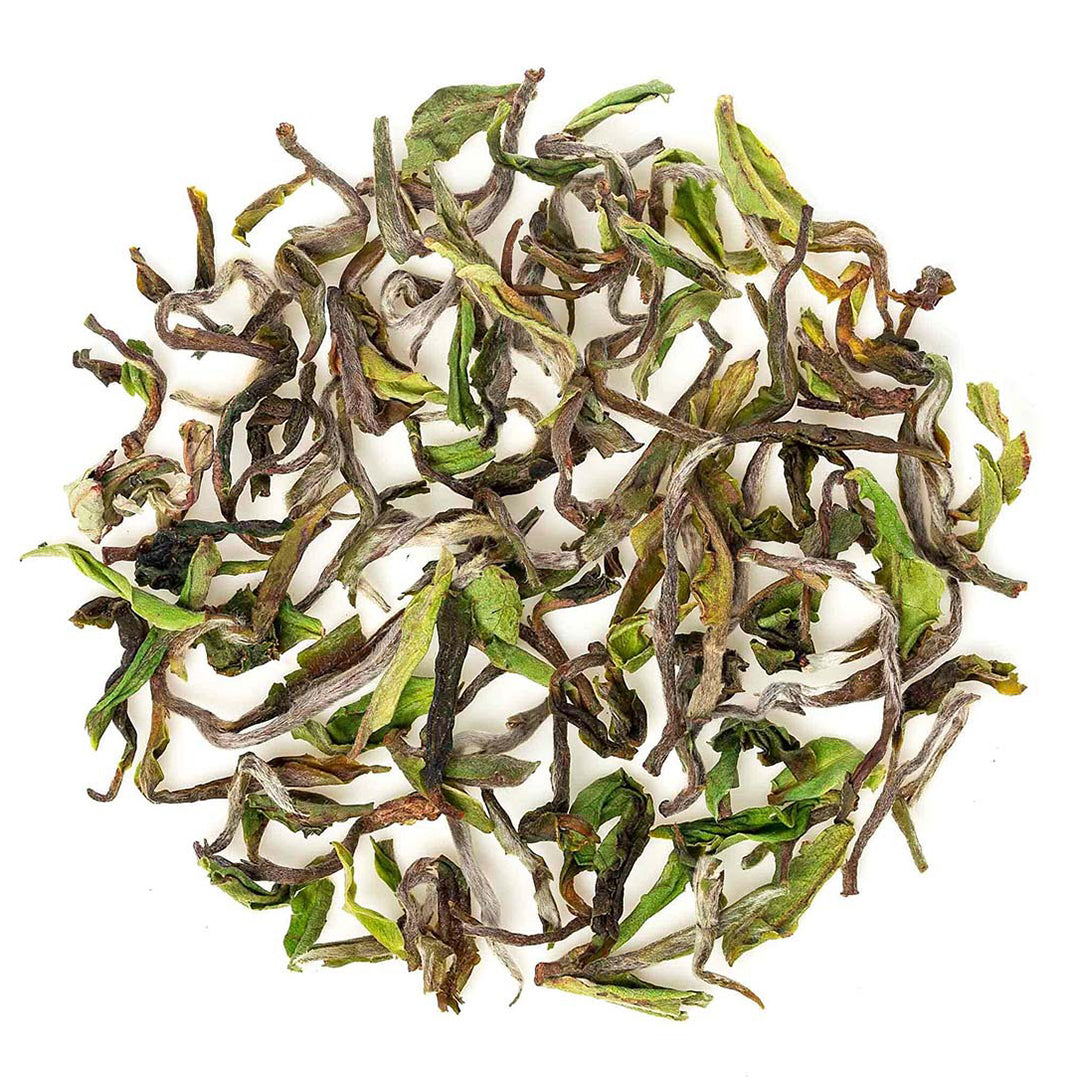
All tea comes from one plant, Camellia sinensis, grown in India as Chinary (the China variety), the Assam variety and clonals (bushes grown from cuttings of one chosen parent).
Tea Clones Explained: AV2, B157, P126 and the Clonal Bushes of India
A clonal tea plant is grown from a cutting of one carefully chosen parent bush, so every new bush is a genetic copy of it, with the same growth, chemistry and aroma.
Chinary vs Clonal Tea: How the Bush Changes the Cup
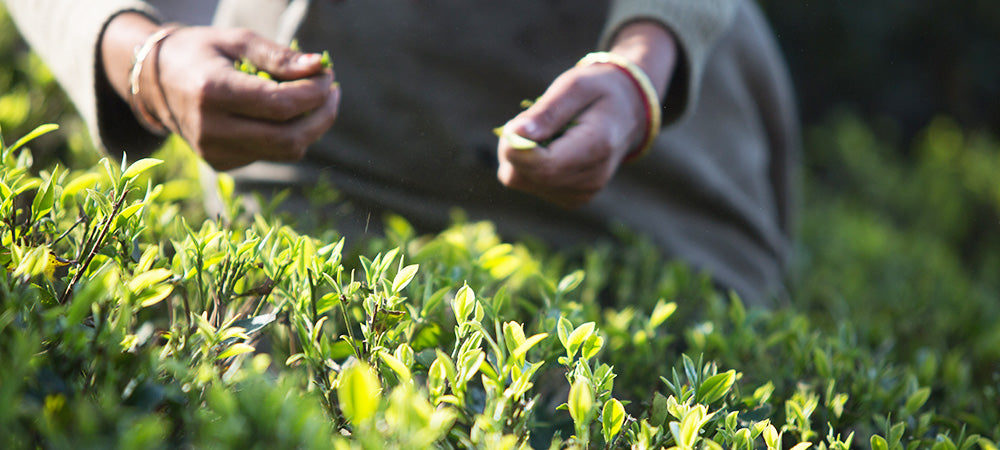
The clearest comparison is one estate, one season, two kinds of bush. Chinary teas, from seed-grown China bushes, change from garden to garden and year to year; clonal teas, from cuttings of one ch...

Orthodox vs CTC Tea: What CTC Tea Is, How Each Is Made, and Which Is Best for Chai
Orthodox tea is rolled to keep the leaf whole or in large pieces, while CTC tea (crush, tear, curl) is cut by machine into small, hard granules that brew strong and fast.
Which Teas Are Orthodox and Which Are CTC? Darjeeling, Assam, the Nilgiris and Beyond
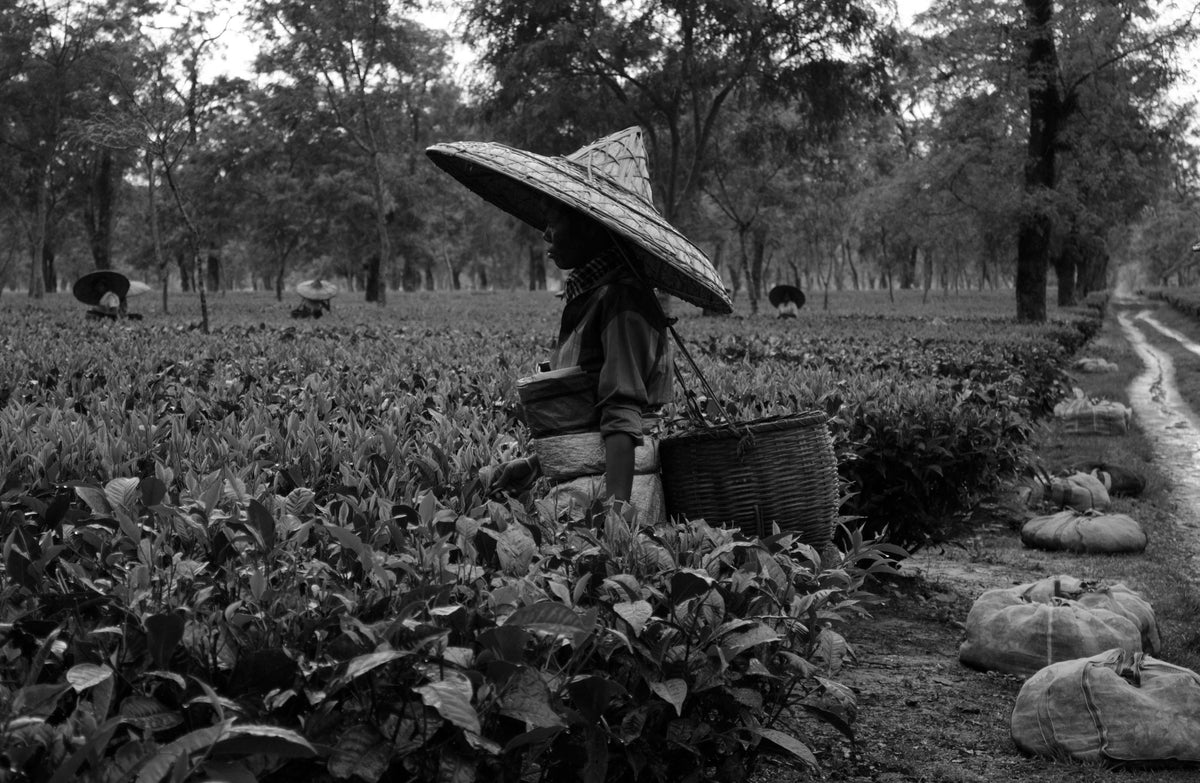
Darjeeling is known for orthodox tea. Assam, the Dooars and the Nilgiris make both, but most of their output is CTC, while their best single-estate teas are orthodox.
CTC Tea Grades: BOP, BP, BOPSM, Fannings and Dust Explained
CTC tea is graded by the size of its granules after sieving, into three groups: brokens, fannings and dust.
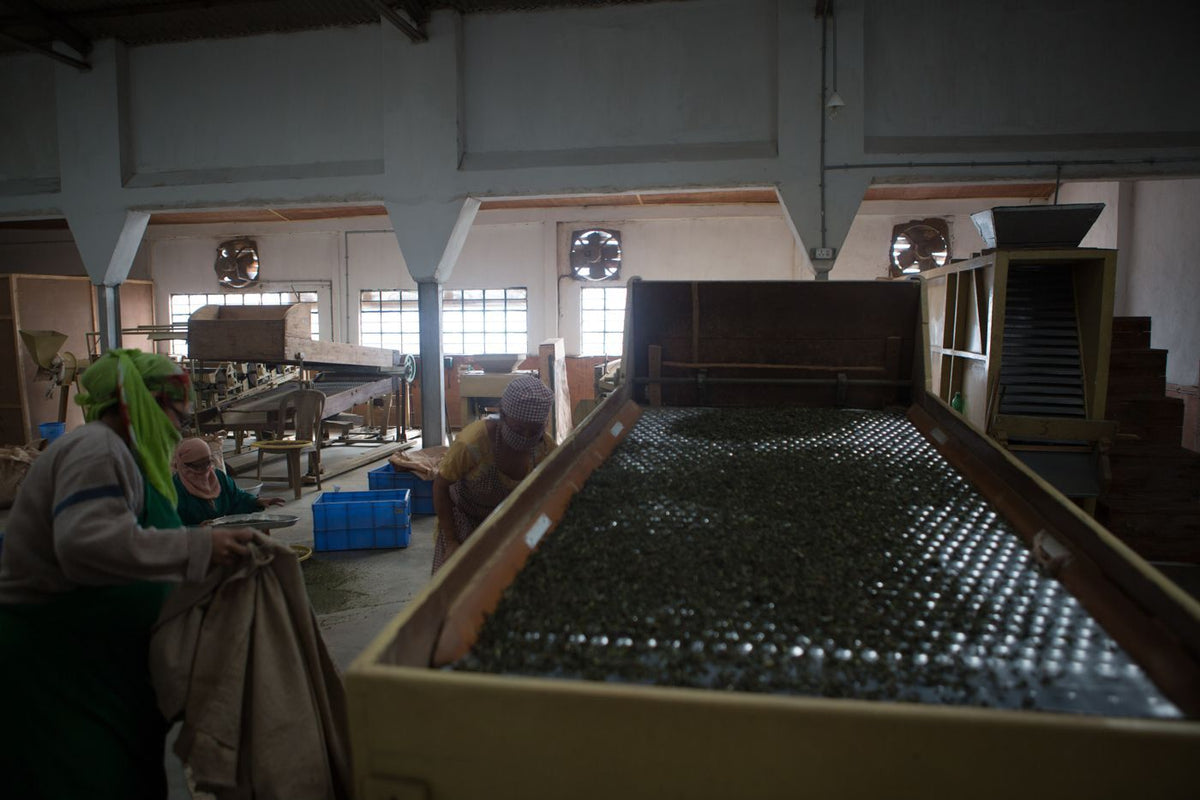
Tea Grades Explained: What Orange Pekoe, FTGFOP and BOP Really Mean
Tea grades are letter codes that describe the size and makeup of dry black tea leaf, from whole leaf grades like OP and FTGFOP down to broken leaf, fannings and dust.
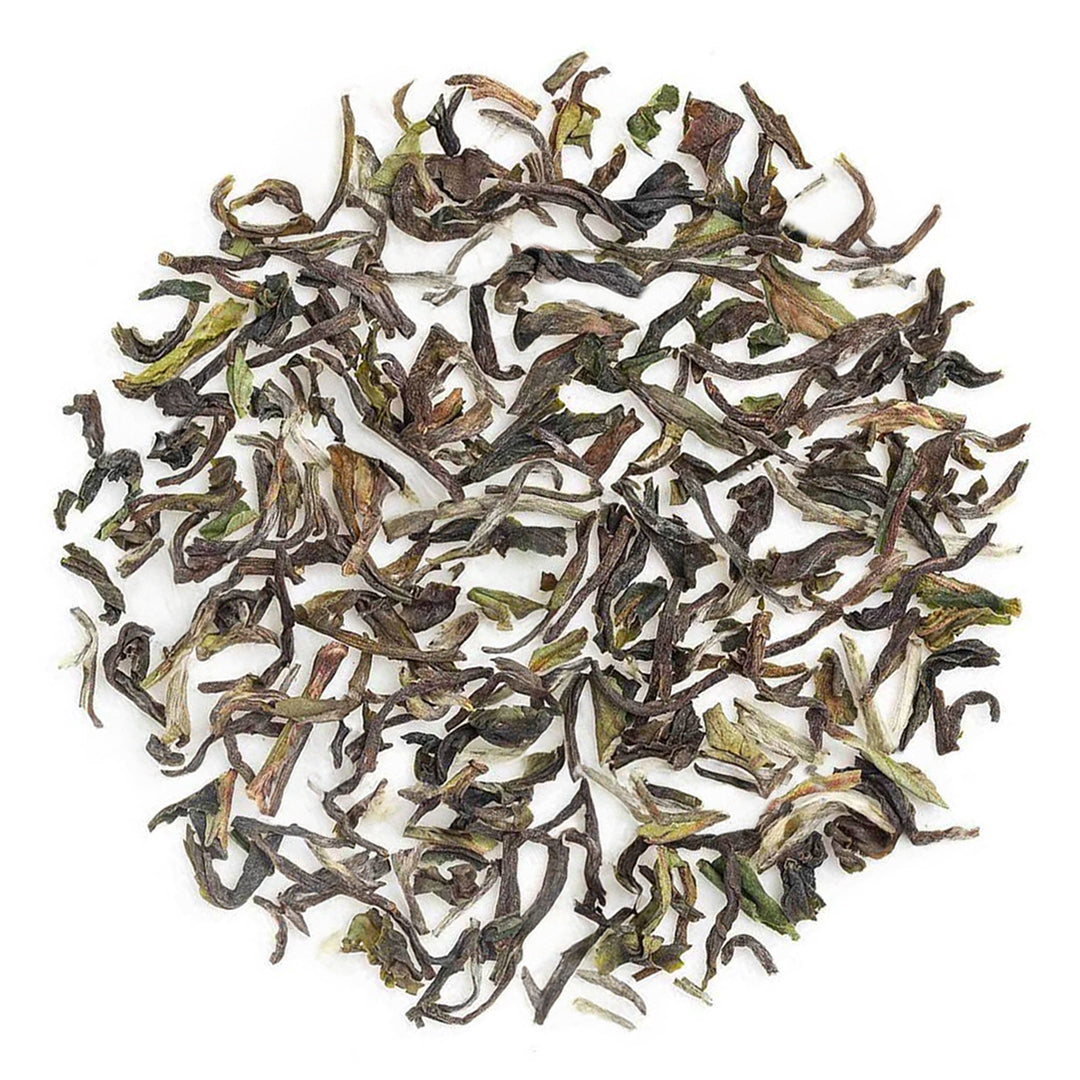
Whole Leaf Tea Grades: What OP, FOP, TGFOP and SFTGFOP1 Mean
Whole leaf grades build up letter by letter, from OP (whole leaf) to SFTGFOP1 (Special Finest Tippy Golden Flowery Orange Pekoe One), and each added letter promises more buds, more tips or a finer ...

Broken Tea Grades, Fannings and Dust: BOP, CTC Grades and Tea Bag Tea
Broken Orange Pekoe (BOP) is the main broken leaf grade: leaf that has broken during rolling or been cut, sorted into pieces smaller than whole leaf.

How Tea Is Graded: Sorting, Screening and Hand Sorting, From Garden to Teabox
Before a tea joins our collection, it has to pass a screening that starts with the dry leaf.
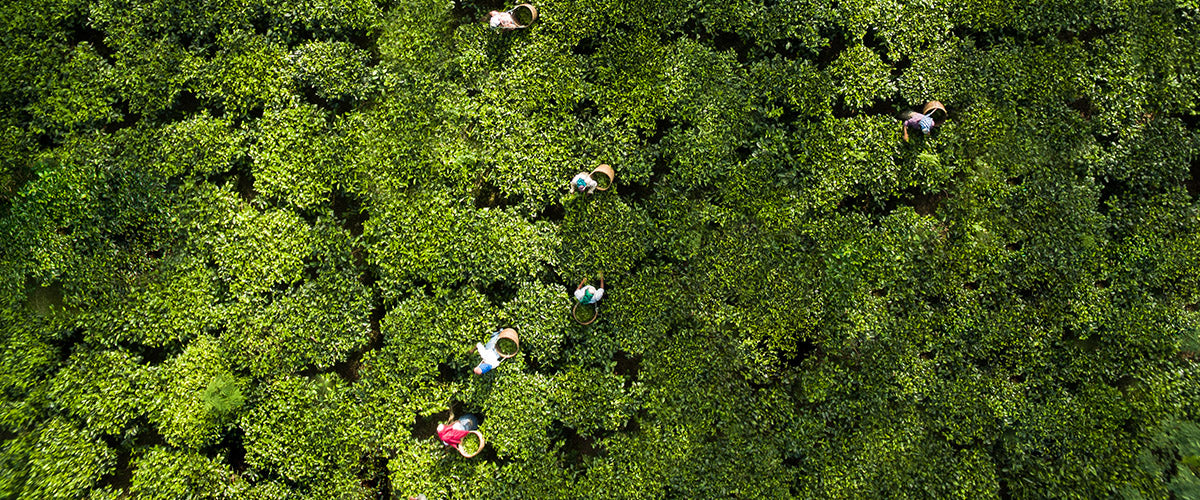
Indian Tea: The Complete Guide to India’s Teas, Regions, Chai and How to Choose
Indian tea is tea grown and made in India, mostly black tea, from regions such as Assam, Darjeeling and the Nilgiris.
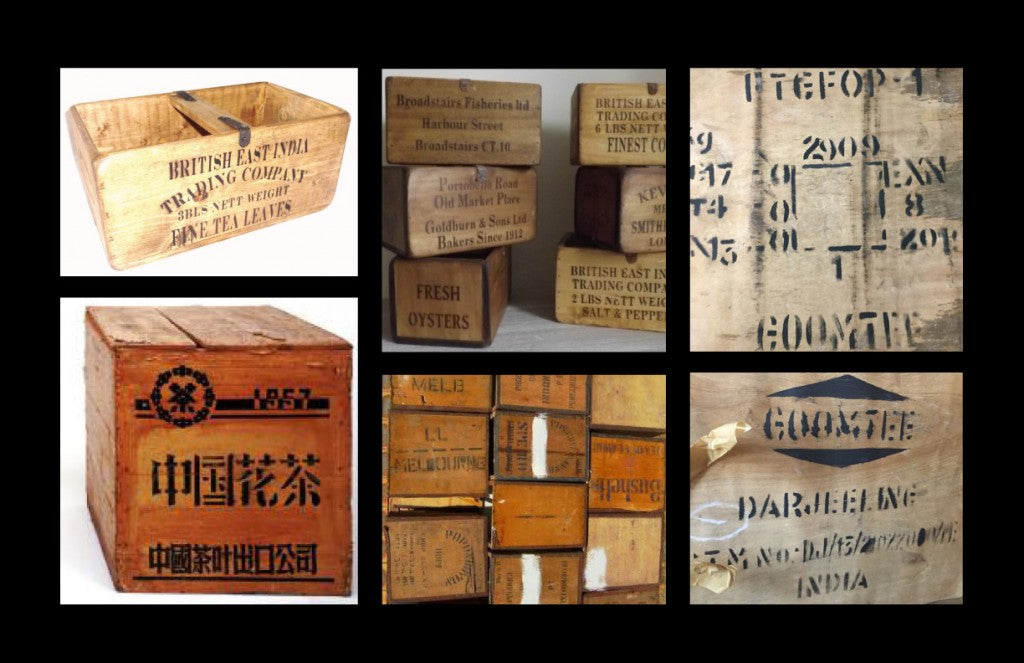
How Tea Came to India: The Singpho, the British and the Making of a Tea Nation
Tea grew wild in Assam long before the British arrived: the Singpho people of Upper Assam brewed it from their own gardens.
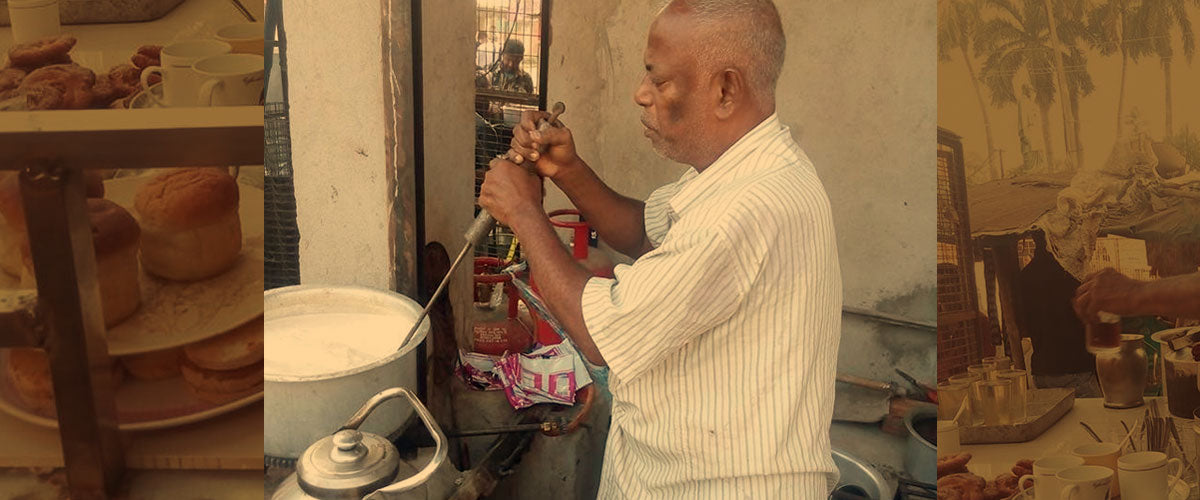
How India Drinks Tea: Chai, Cutting, Kahwa and How to Make Indian Tea
Most of India drinks its tea as chai: strong black tea, usually Assam CTC, boiled in one pan with milk and sugar, often with spices such as cardamom and ginger.
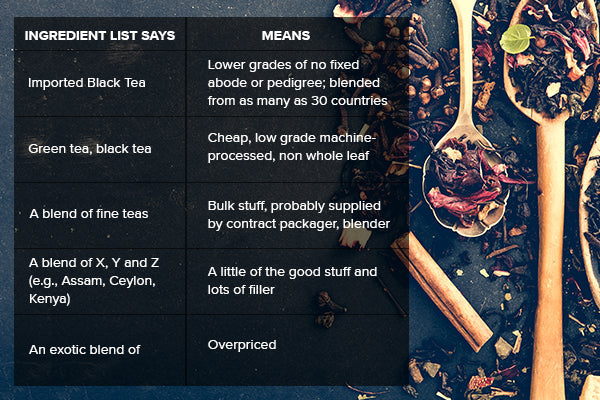
How to Choose and Buy Indian Tea: Labels, Taste and Buying from Source
A good Indian tea label names the region, the estate, the flush, the tea type, the grade and the year.
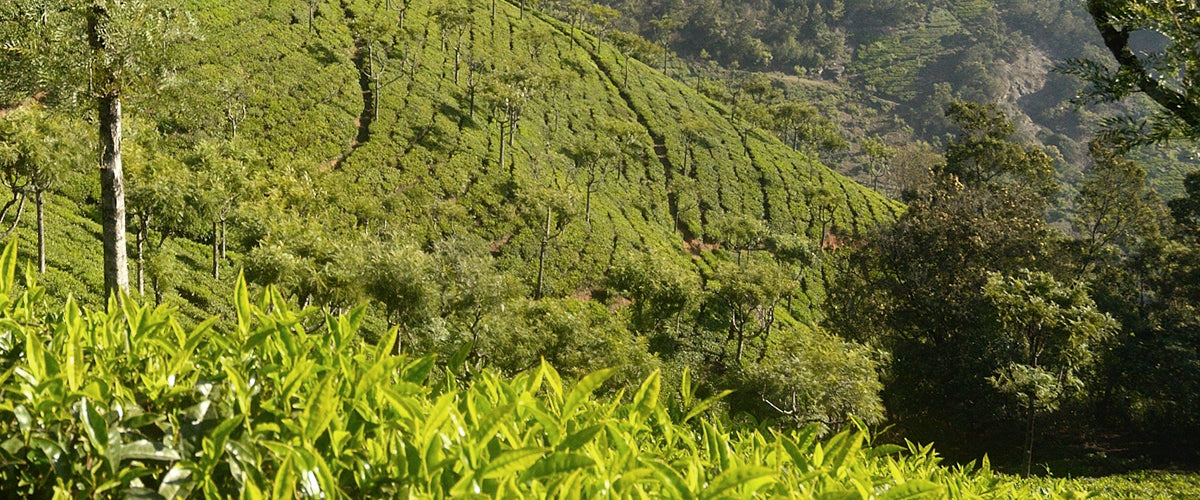
Indian Tea Regions: Where Tea Is Grown in India, from Darjeeling and Assam to the Nilgiris
India grows tea in two main belts: the northeast, home to Darjeeling, Assam, Sikkim, the Dooars and Meghalaya, and the hills of the south, home to the Nilgiris and Munnar.
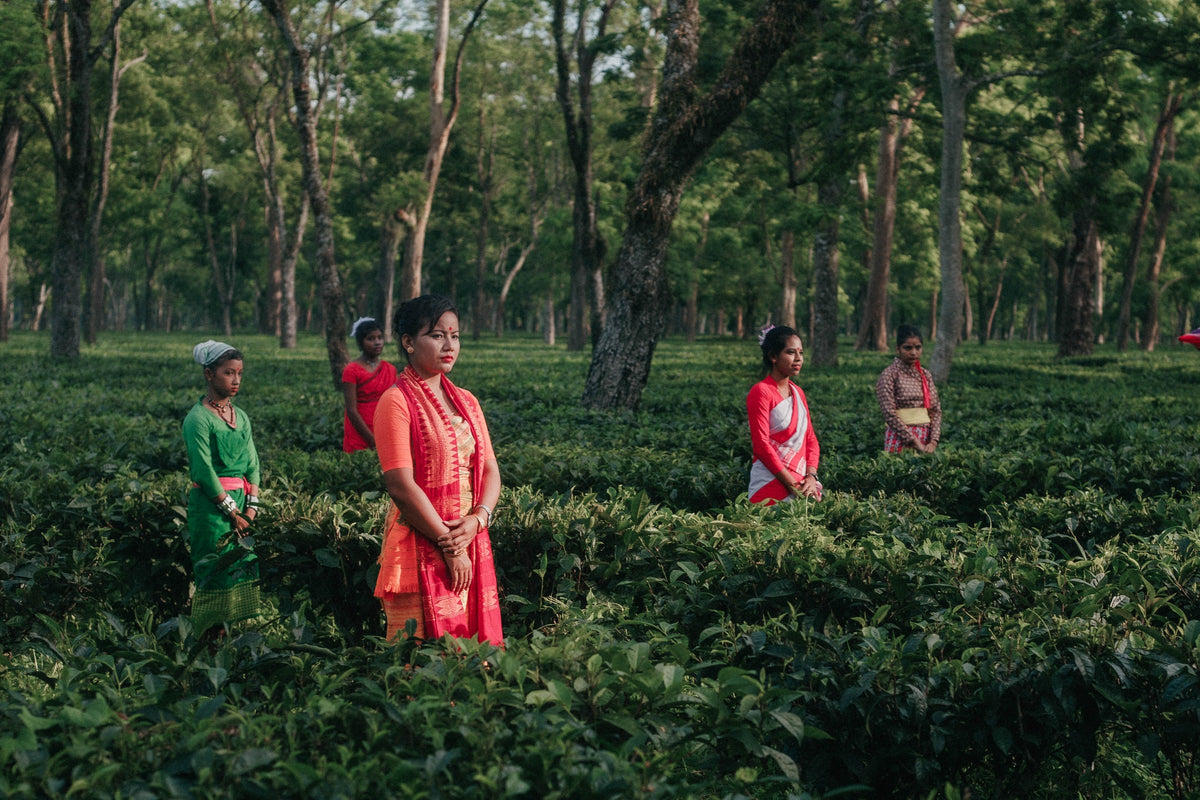
Darjeeling, Assam and the Nilgiris: India’s Three Great Tea Regions
India has three famous tea regions: Darjeeling in the Himalayan foothills, Assam in the Brahmaputra valley and the Nilgiris in the hills of the south.
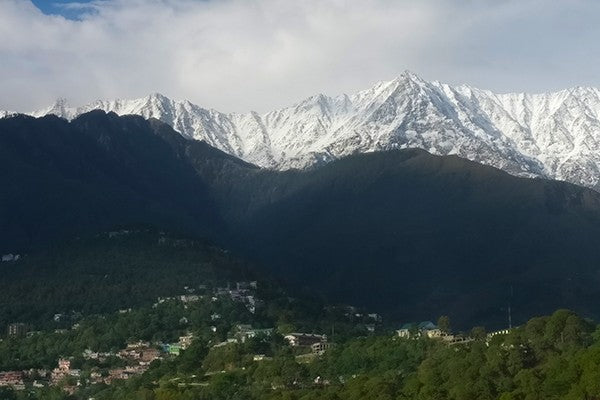
India’s Smaller Tea Regions: Sikkim, Meghalaya, Kangra, Munnar, the Dooars and Arunachal
Beyond Darjeeling, Assam and the Nilgiris, India grows tea in Sikkim, Meghalaya, Kangra, Munnar, the Dooars and Terai, and Arunachal Pradesh.

How Tea Came to India’s Regions: From the Singpho to the First Gardens and Tocklai
The tea plant grew wild in northeast India long before anyone farmed it, and the Singpho people of Assam were brewing it for generations; commercial tea came with the British, who set up the first ...

Visiting India’s Tea Gardens: Estate Bungalows, Toy Trains and Tea Tours
Several of India’s tea regions welcome visitors, from heritage bungalows in Darjeeling to Munnar’s tea museum and the hill railways, but most working gardens are not set up for casual visits, so bo...

Darjeeling Tea: A Complete Guide to the “Champagne of Teas”
Darjeeling tea is tea grown and made in the Darjeeling hills of West Bengal, India, in the foothills of the Himalayas.
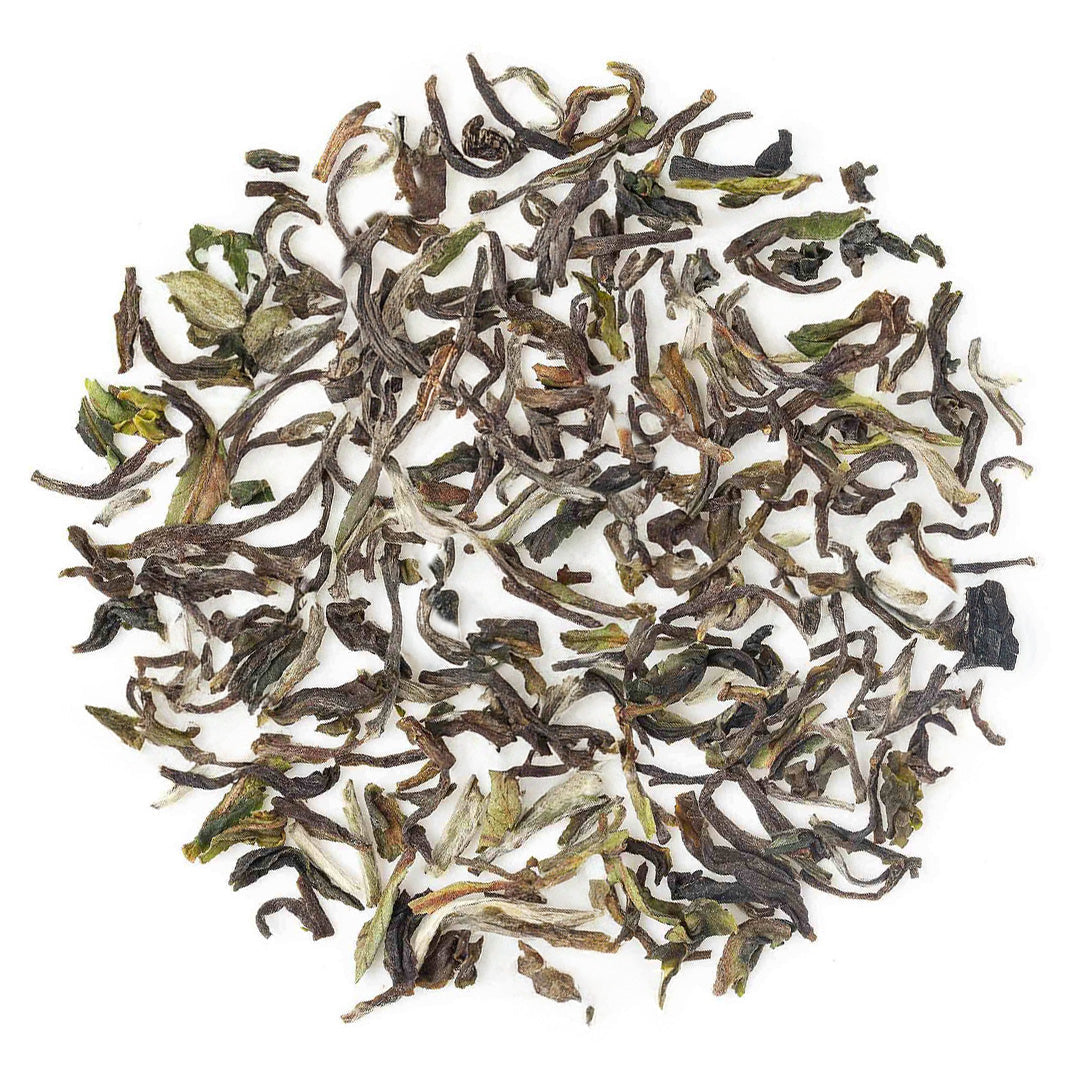
Types of Darjeeling Tea: Black, White, Oolong, Green and the Bushes Behind Them
Most Darjeeling is made as black tea, but the gardens also make green, white and oolong teas from the same bushes.
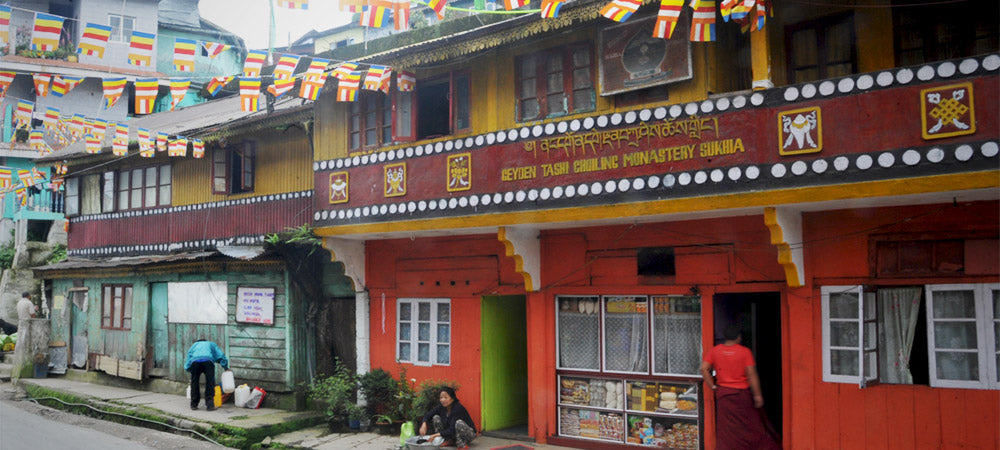
The History of Darjeeling Tea: From Campbell’s Seeds to the GI Tag
Darjeeling’s tea industry began in 1841, when Dr. Archibald Campbell planted China tea seeds in his garden, and the first commercial gardens followed in the early 1850s.
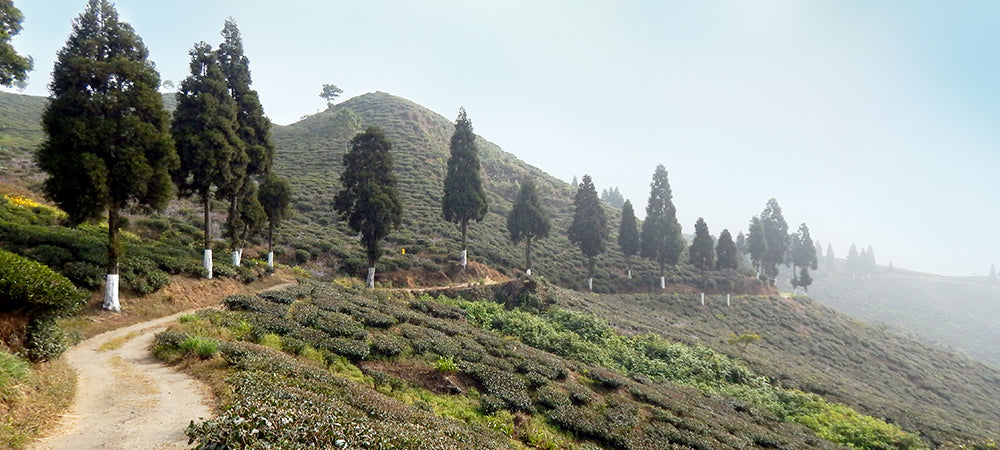
Darjeeling Tea Estates: The Gardens Behind Our Teas
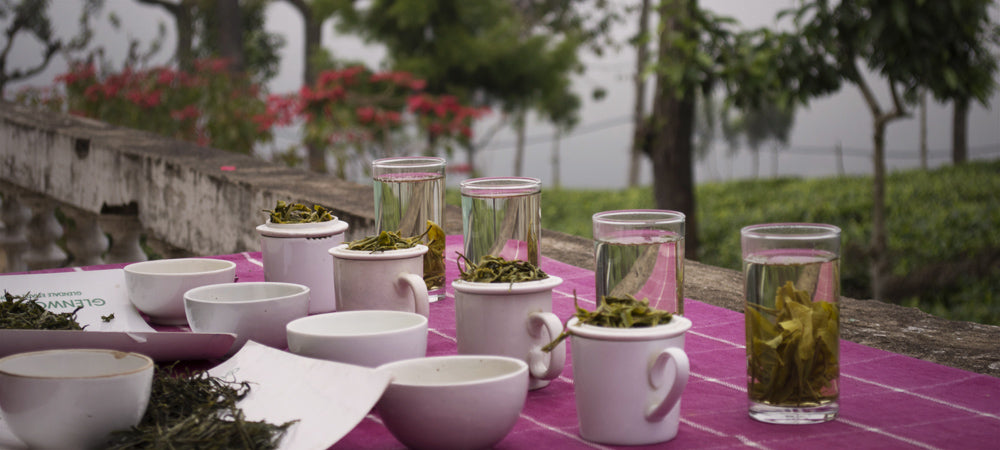
Teabox buys directly from estates across Darjeeling, including Castleton, Margaret’s Hope, Jungpana, Goomtee, Giddapahar, Okayti, Thurbo, Seeyok, Badamtam, Namring and Glenburn.
Buying Darjeeling Tea: Record Prices, Buyers and How to Spot the Real Thing
Darjeeling is called the Champagne of teas because, like Champagne, it comes from one small protected region, it changes with every season and estate, and its best lots sell for some of the highest...
Types of Assam Tea: Orthodox, CTC and Golden Tips
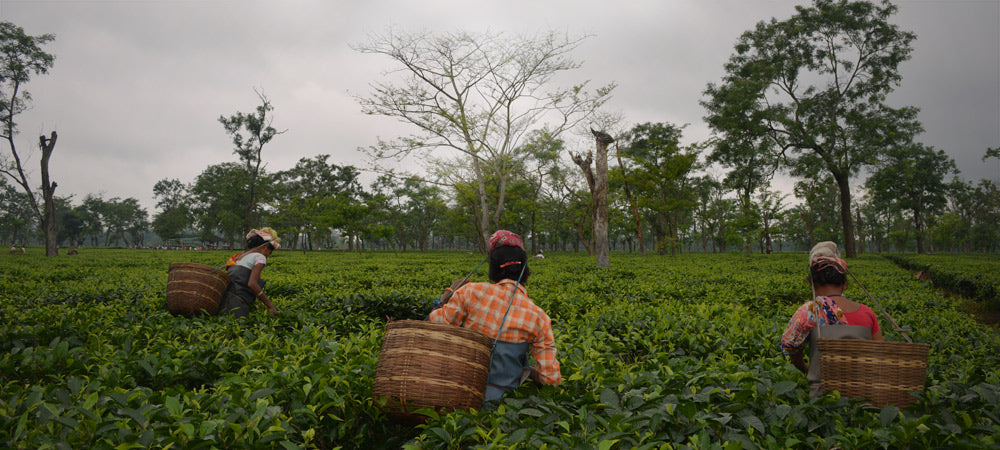
Assam tea comes in two main styles, orthodox whole leaf and CTC, and its best teas are the golden-tipped second flush.
The History of Assam Tea: The Singpho, Robert Bruce and Maniram Dewan
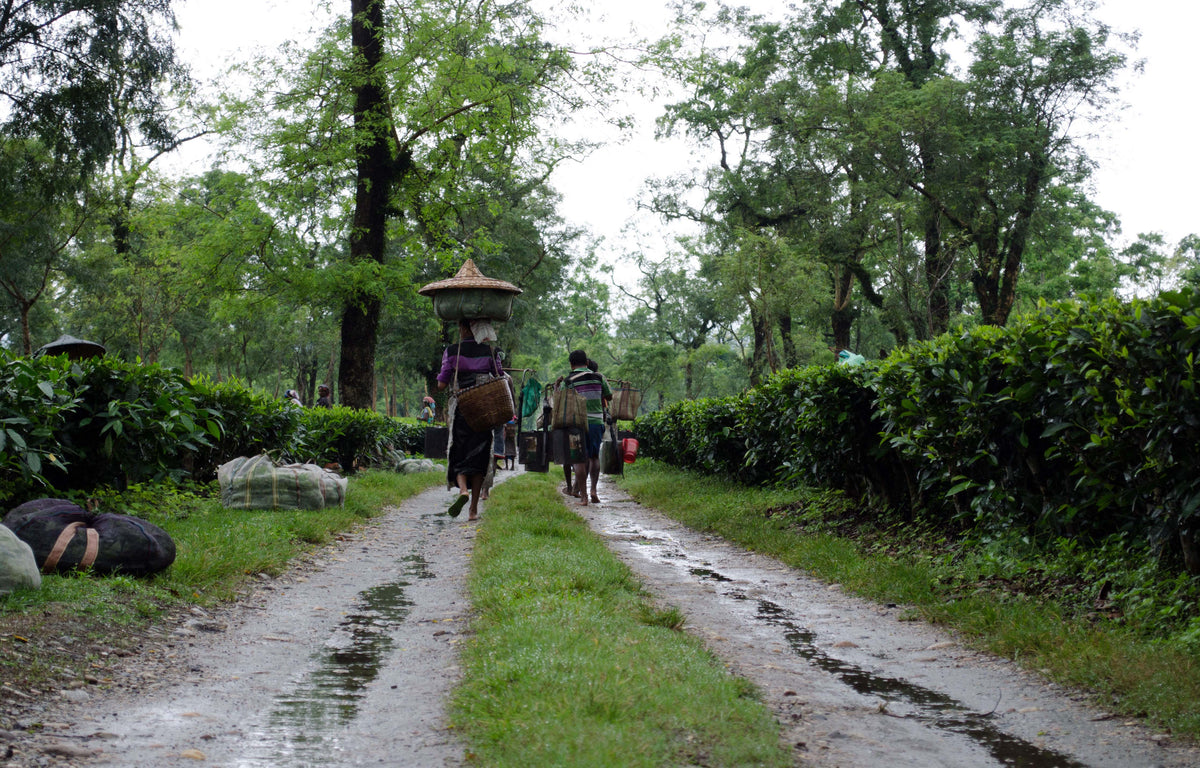
Tea grew wild in Assam, and the Singpho people were brewing it long before the British arrived; the outside world “discovered” it in 1823, when a Singpho chief showed the Scottish trader Robert Bru...
Assam Tea Estates: The Gardens Behind Our Teas
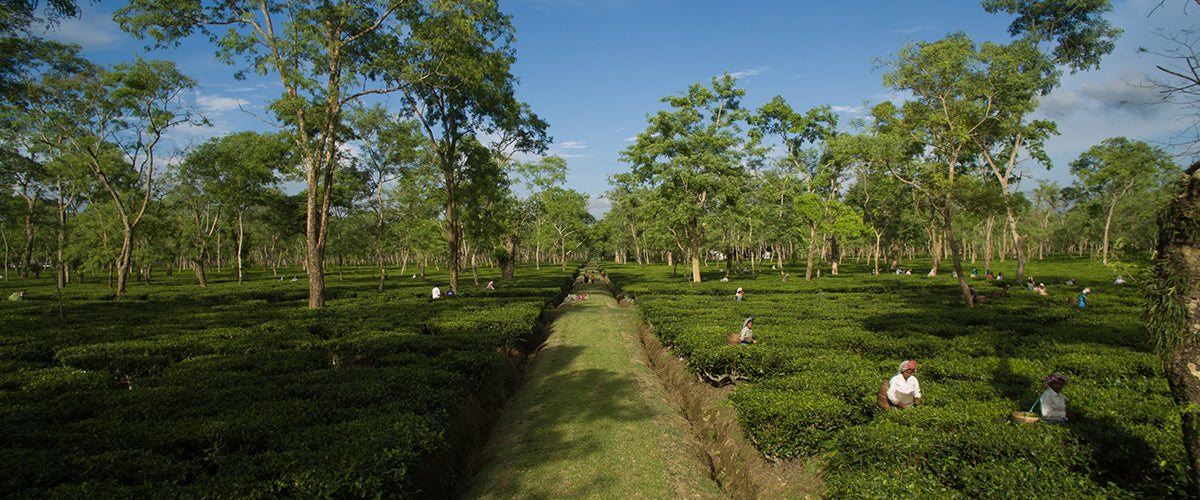
Teabox buys Assam tea directly from single estates, including Halmari, Mangalam, Dikom, Namsang, Harmutty, Doomni, Meleng, Chota Tingrai, Singlijan, Banaspaty, Koilamari, Dejoo, Dinjoye and Chardwar.
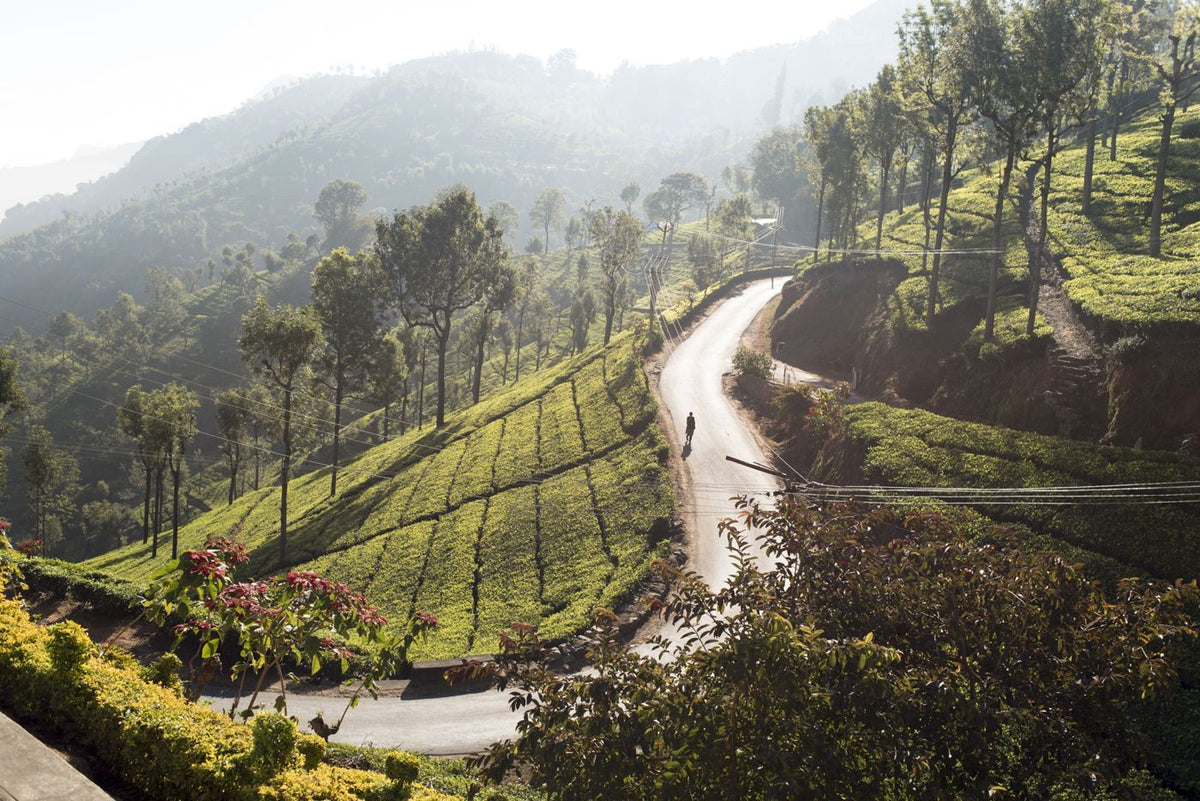
Nilgiri Tea: A Guide to Nilgiri Black Tea, Frost Teas and the Estates of the Blue Mountains
Nilgiri tea is tea grown in the Nilgiri hills of Tamil Nadu, in southern India, on slopes from about 1,000 to 2,500 meters.
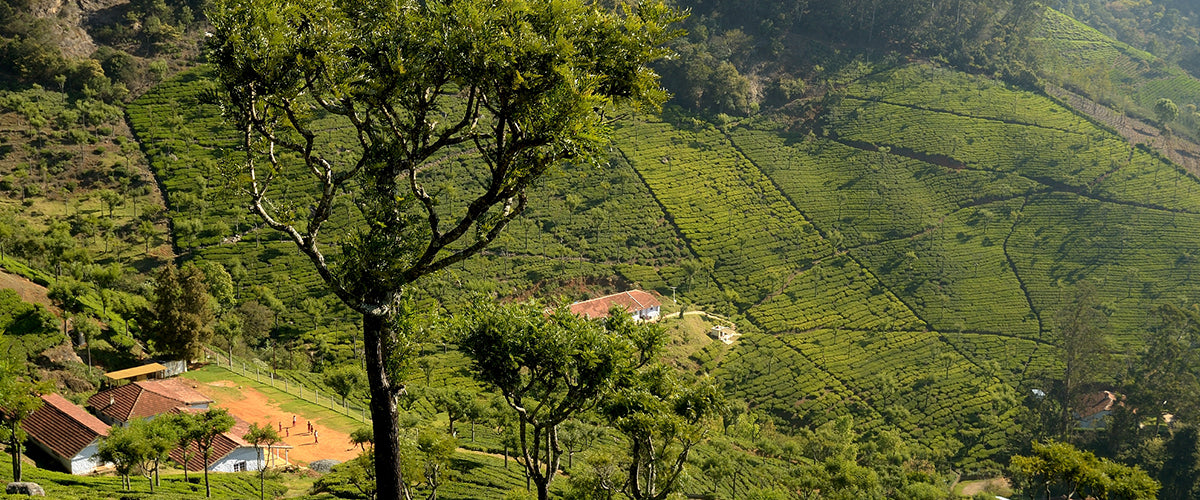
Who Grows Nilgiri Tea? Smallholders, Estate Workers and the People of the Blue Mountains
Unlike Darjeeling, most Nilgiri tea comes from small farms. Badaga farmers with a hectare or less grow most of the leaf, a cooperative helps them process and sell it, and on the big estates the wor...
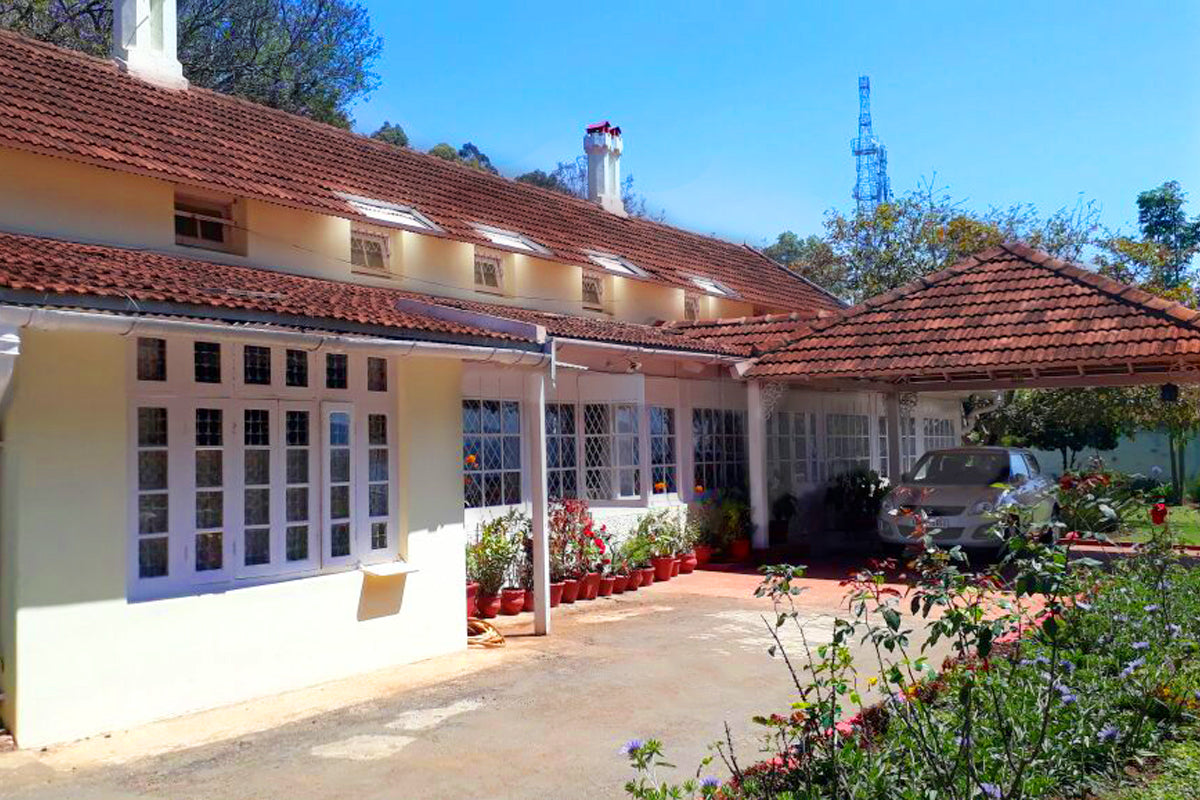
The History of Nilgiri Tea: From the Ketti Valley to Mincing Lane
Tea came to the Nilgiris in the 1830s, when British officials began experimenting with China seed in the cool hills, and the first lasting estates were planted in the 1850s.
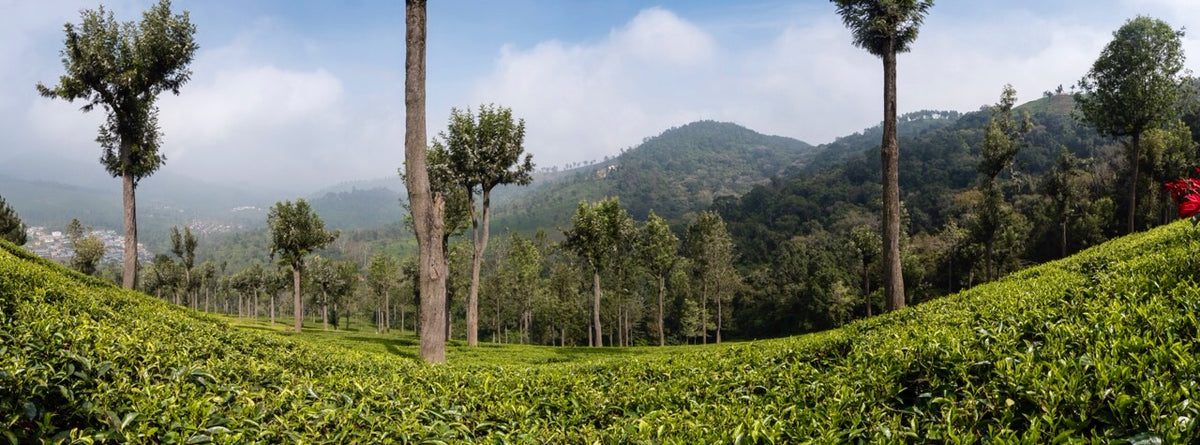
The Nilgiri Tea Estates: Glendale, Havukal, Craigmore and the Gardens of the Blue Mountains
Teabox currently buys from Glendale, Havukal, Korakundah and Billimalai. This page follows those four and the other gardens our buyers know well, from Craigmore’s protected forest to the government...
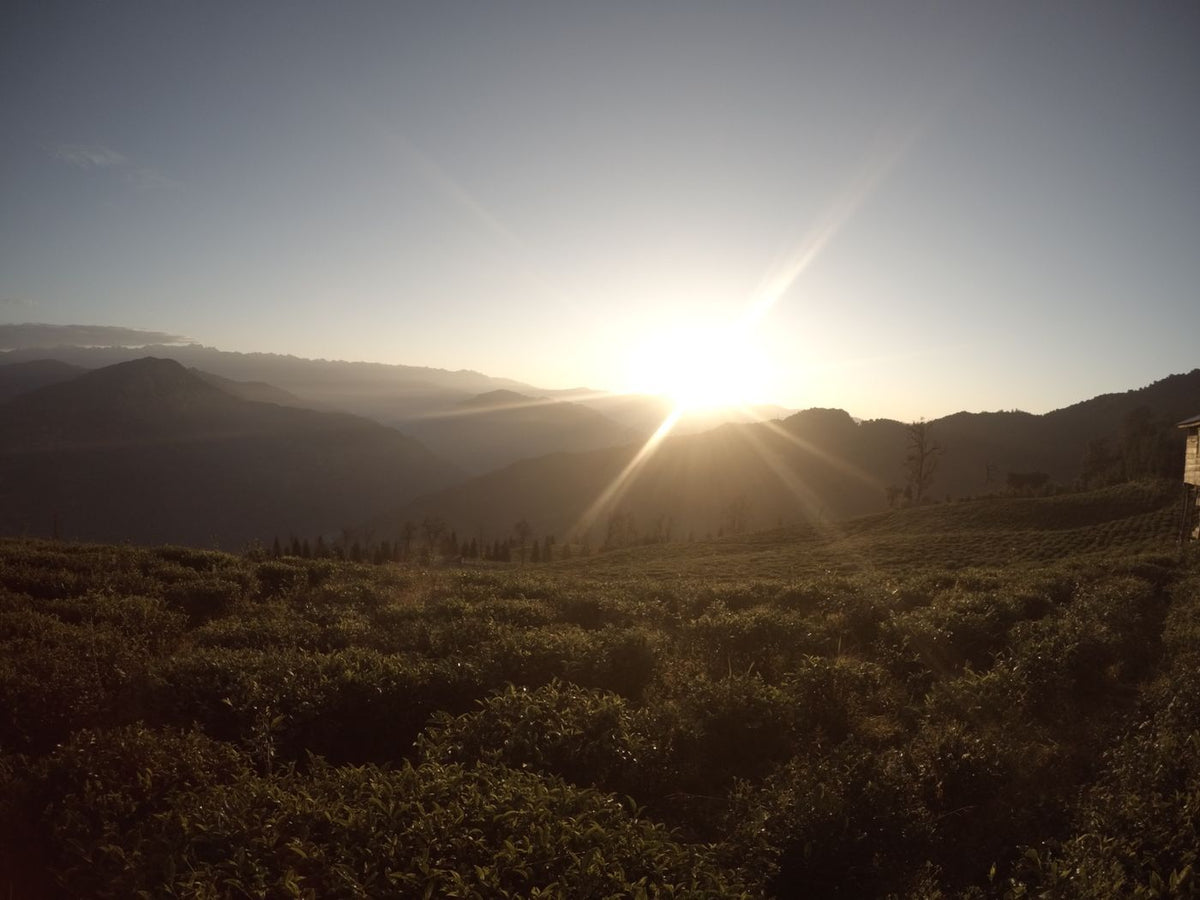
Sikkim Tea and the Temi Tea Garden: India’s Organic Himalayan Tea
Sikkim tea is tea grown in the small Himalayan state of Sikkim, India, and most of it comes from one famous garden: Temi, set up by the Government of Sikkim in 1969 and farmed organically since 2005.
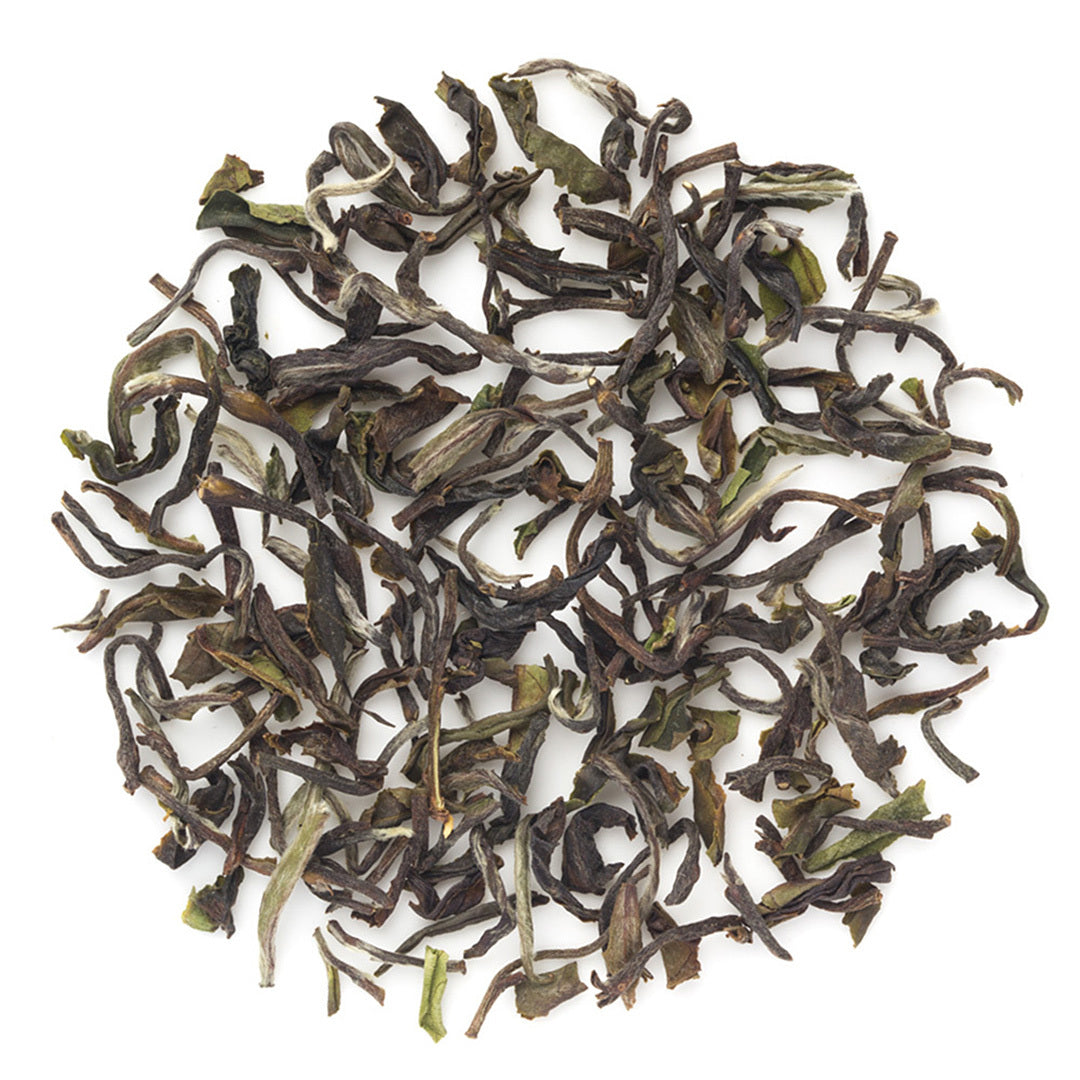
The Temi Tea Garden: How a King Gave Sikkim Its Tea
Unlike the colonial gardens of Darjeeling, Assam and the Nilgiris, Temi was the idea of a Himalayan king, and it was set up by the Government of Sikkim.
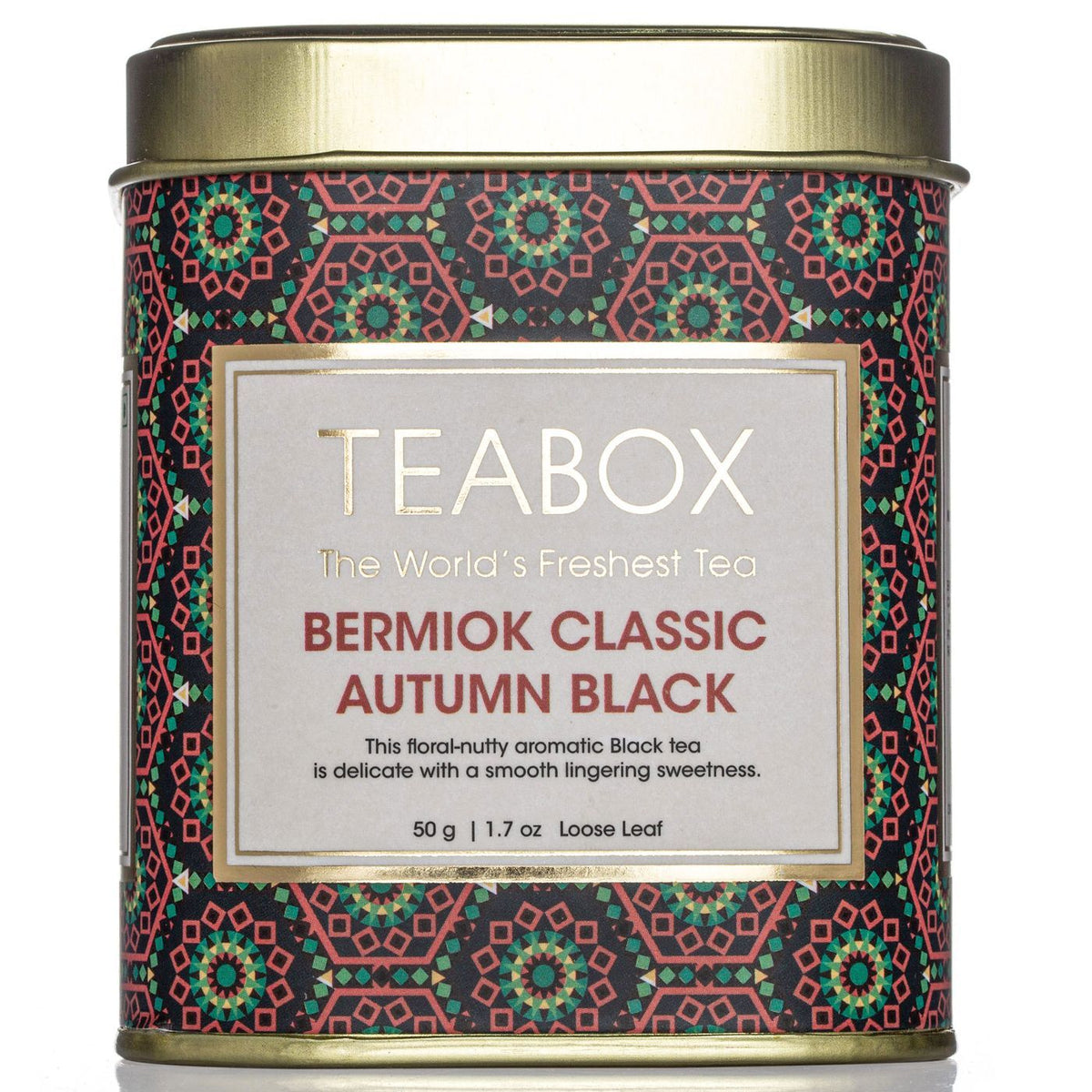
Bermiok: Sikkim’s Boutique Tea Garden and the People Behind It
Temi is no longer alone: smaller boutique gardens have been planted in Sikkim since the turn of the century, and the best known of them is Bermiok.

Meghalaya Tea: India’s Young Tea Region and the Lakyrsiew Garden near Shillong
Meghalaya tea is tea grown in the hills of Meghalaya, the small state just south of Assam in northeast India, where tea was only planted in earnest from the 1970s.
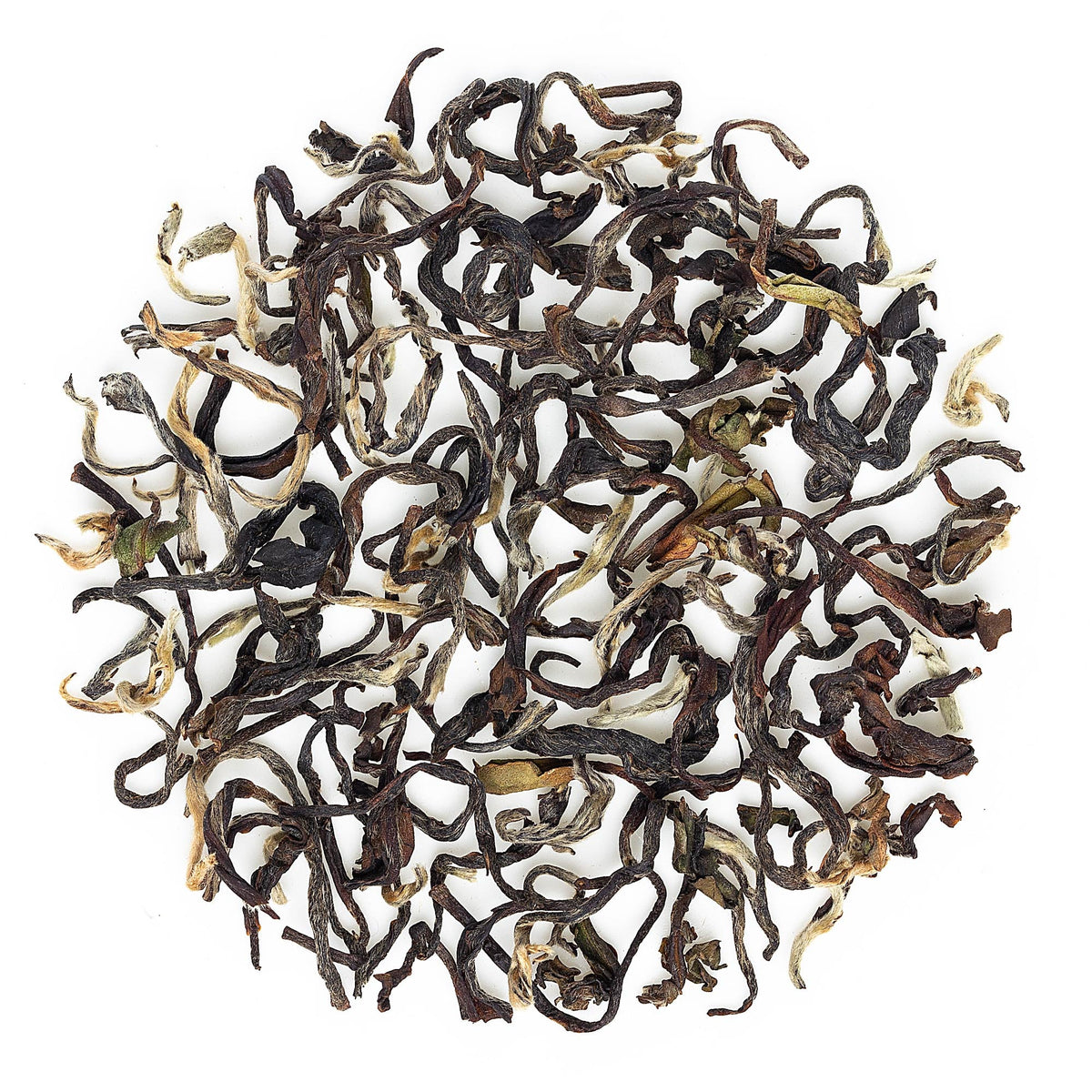
History of Meghalaya Tea: From a Forgotten Report to the 1970s Survey
Tea came to Meghalaya late: the British judged the Shillong plateau ideal for tea in the 19th century but never planted it, and commercial tea arrived only after the Tea Board of India surveyed the...
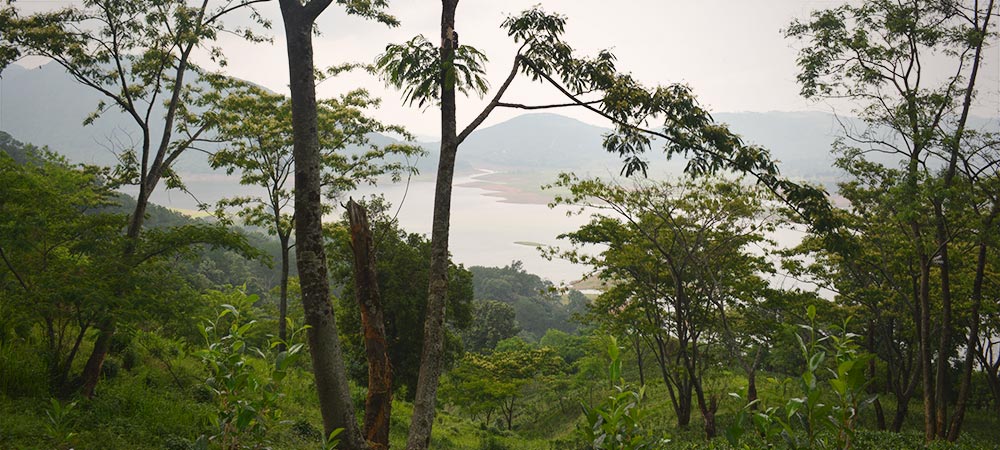
The Lakyrsiew Tea Estate: Meghalaya’s Boutique Garden on Umiam Lake
Lakyrsiew (also written LaKyrsiew or La Kyrsiew) is a small boutique tea garden near Shillong, and the source of both Meghalaya teas we sell.

Kangra Tea: The Himalayan Valley Tea That Fell and Rose Again
Kangra tea is tea grown in the Kangra valley of Himachal Pradesh, in north India, below the snow peaks of the Dhauladhar range.
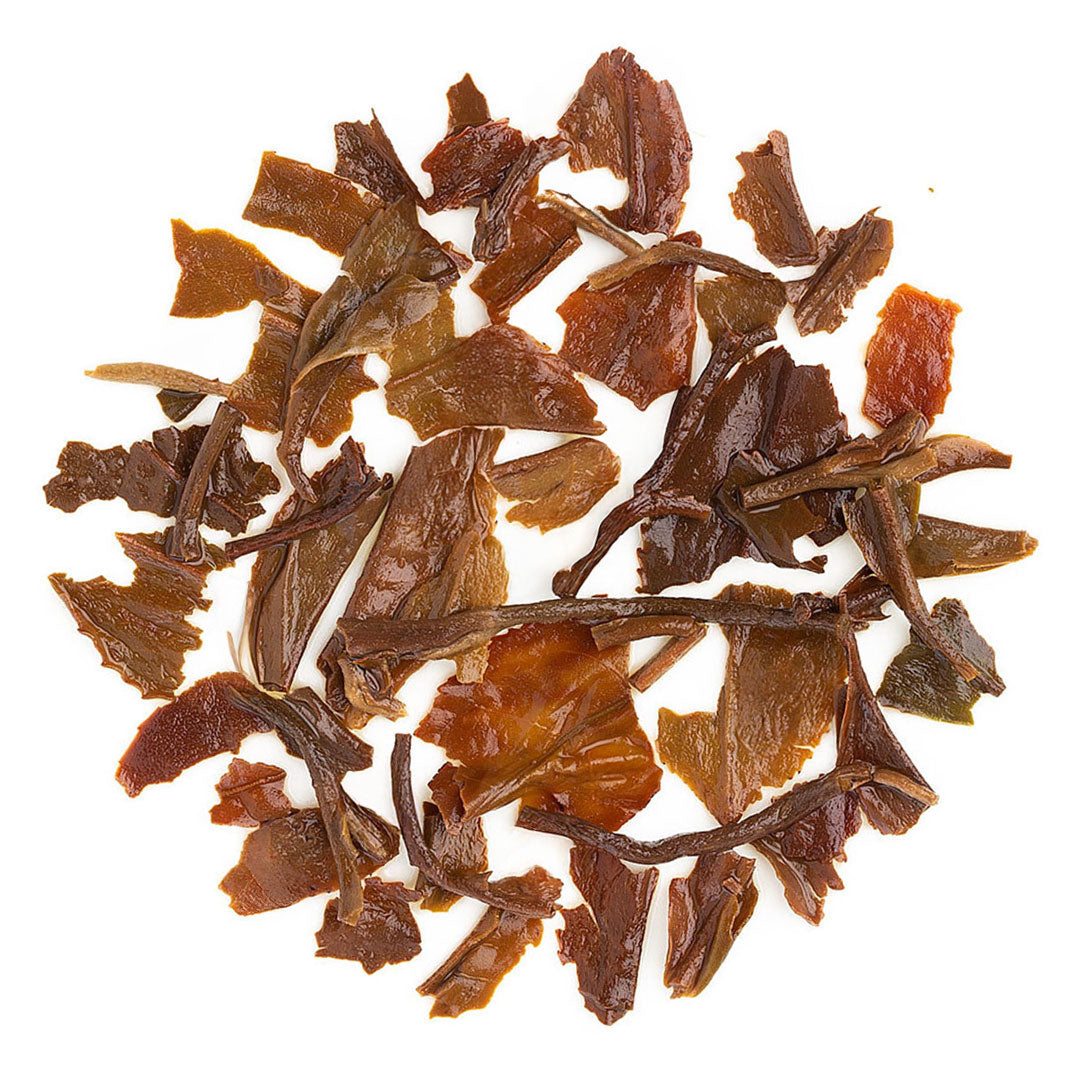
The History of Kangra Tea: Rise, Fall and Revival
Kangra tea began in 1852, grew into one of British India’s most admired teas, collapsed after the great earthquake of 1905, survived for decades on handmade green tea, and has been slowly revived s...
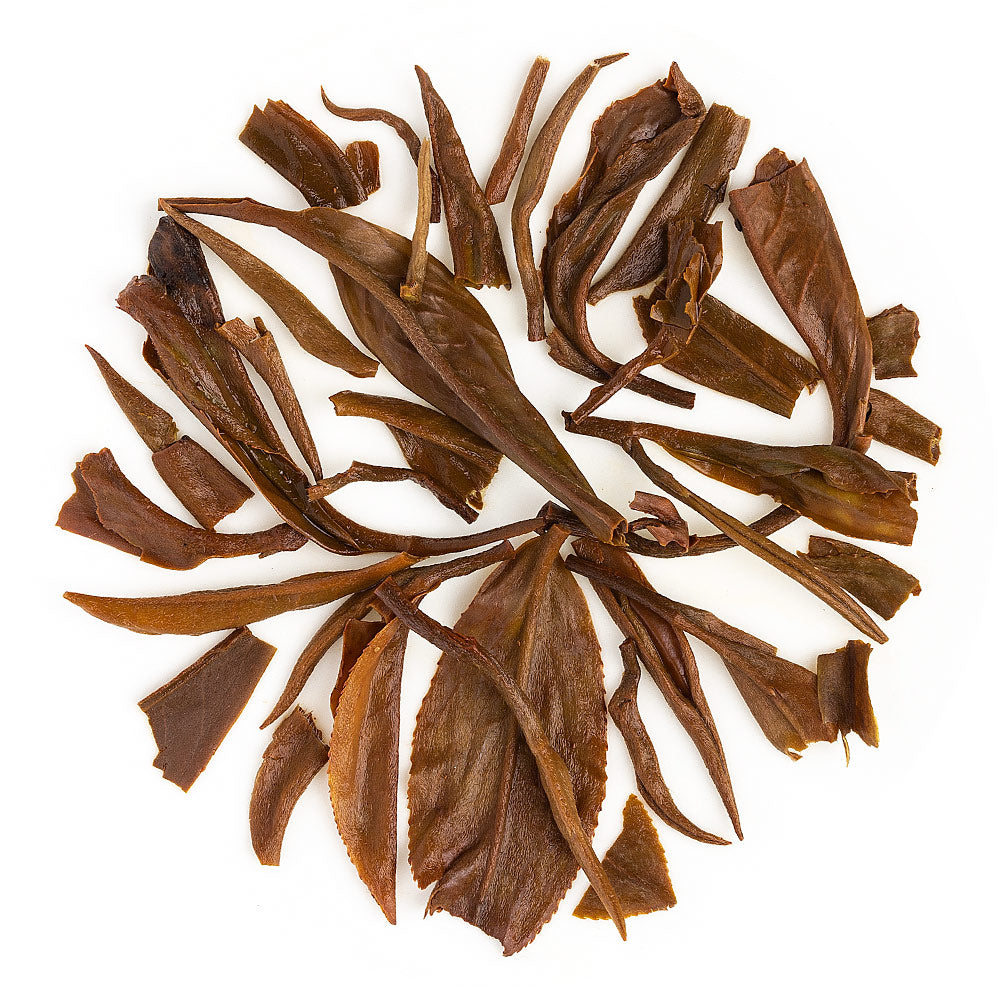
Kangra Black, Green, Oolong and White Teas
Kangra makes all four of the main tea types, from the same old China and China-hybrid bushes.
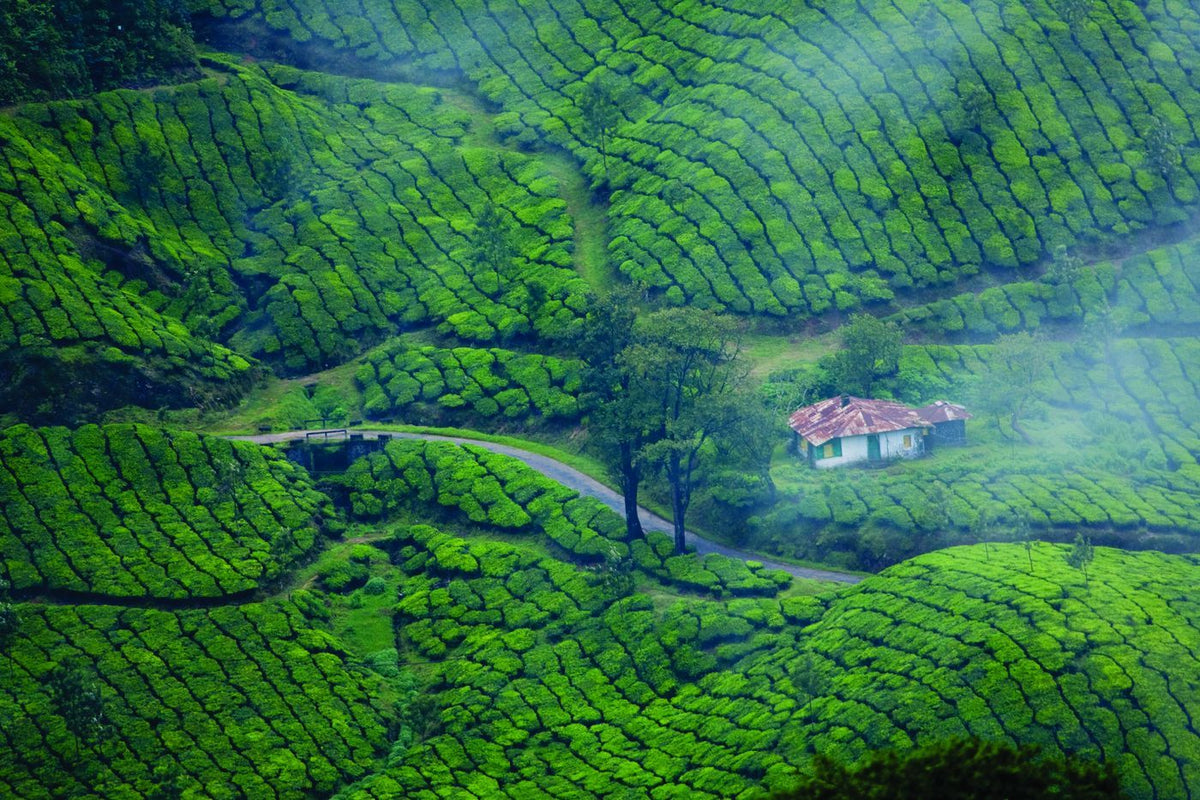
Munnar Tea: A Guide to Kerala Tea from the High Range
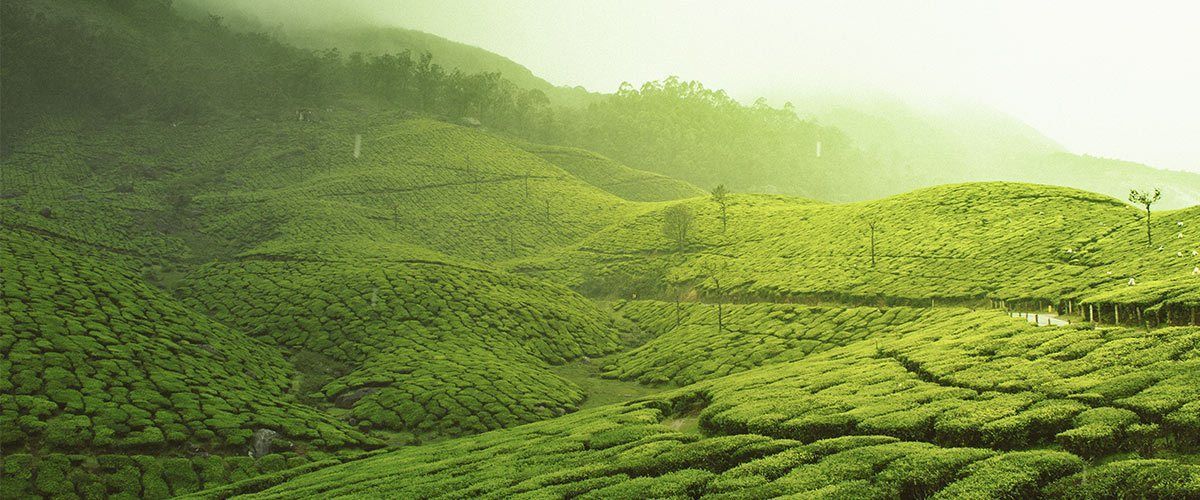
Munnar tea is tea, mostly black, grown in the Kannan Devan hills around Munnar, a hill town about 1,500 m up in the Western Ghats of Kerala, south India.
History of Munnar Tea: How Tea Came to the High Range
In the 19th century Munnar was part of the kingdom of Travancore, and its tea story begins with a lease of 1877 and a first planting in 1880.
Famous Tea Estates of India: Darjeeling and Assam Gardens, and Where Their Names Come From
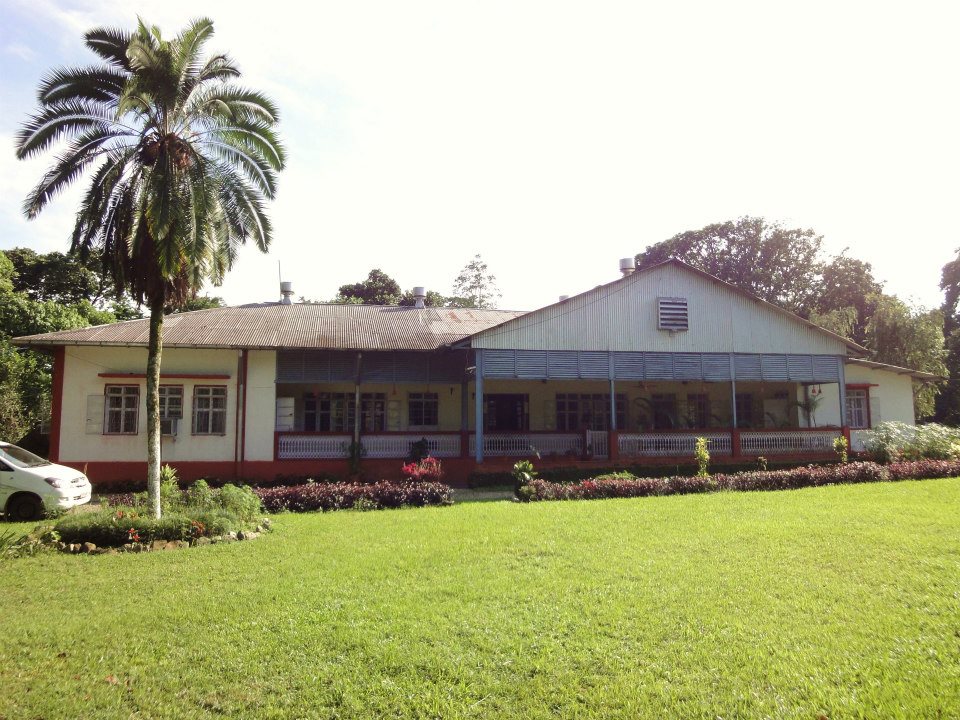
India’s most famous tea estates are single gardens, each with its own name, history and style, such as Castleton, Margaret’s Hope and Jungpana in Darjeeling, and Halmari, Namsang and Dikom in Assam.
Famous Darjeeling Tea Estates: Castleton, Margaret’s Hope, Jungpana, Goomtee and More
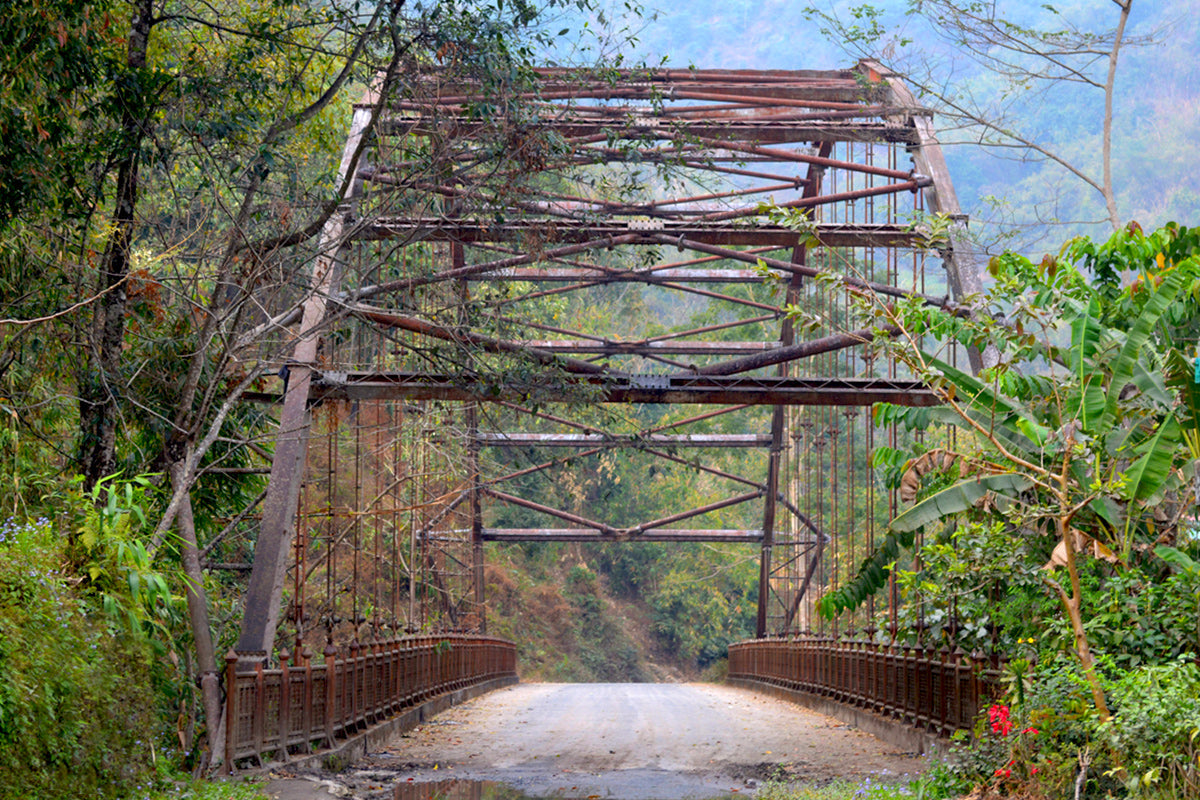
Darjeeling has 87 registered gardens; the most famous include Castleton, Margaret’s Hope, Jungpana, Goomtee, Giddapahar, Makaibari, Namring, Okayti, Thurbo, Seeyok, Badamtam, Puttabong and Glenburn.

Where Indian Tea Estate Names Come From: Okayti, Jungpana, Dikom and More
Most Indian tea estate names come from local words, Lepcha, Nepali, Assamese, Bodo-Kachari or Khasi, from the British planters and their families, or from a local legend.
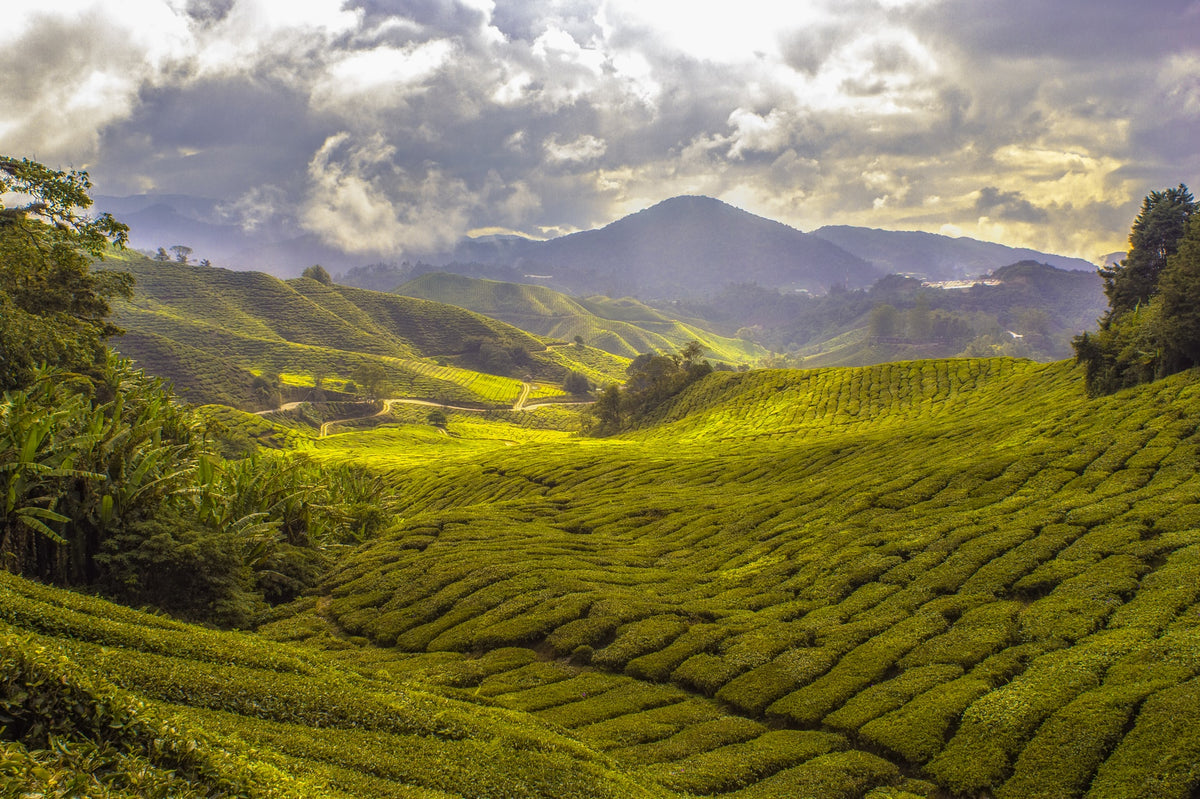
Tea is grown in warm, wet tropical and subtropical regions, and China is the largest tea producer in the world, with India second and Kenya third.
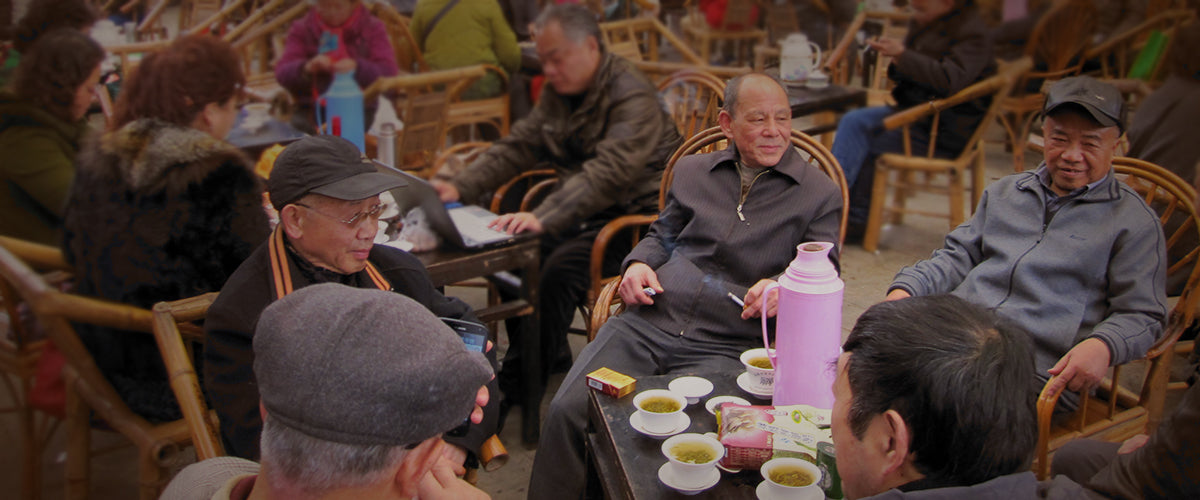
Tea in China, Japan and Taiwan: East Asia’s Great Tea Countries
China is the largest tea producer in the world and the country where tea drinking began, and it makes every type of tea, from green and white to oolong, black and pu-erh.
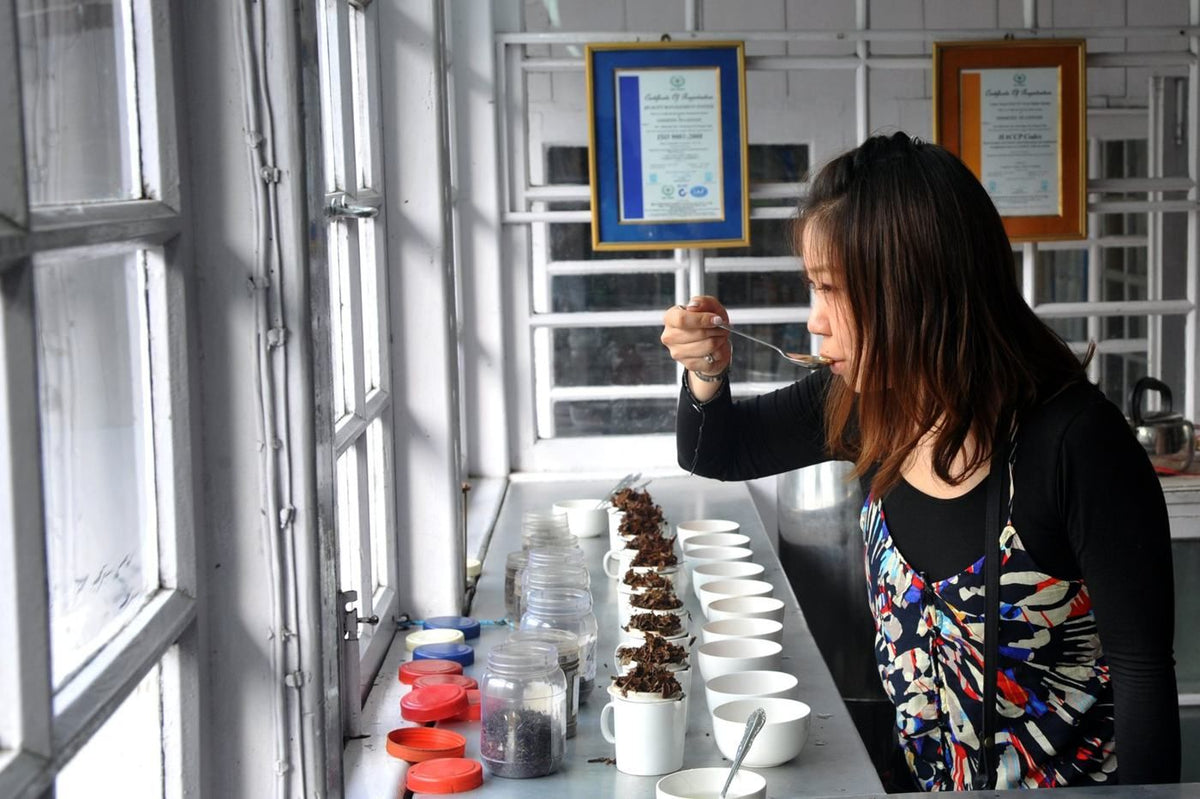
Kenya, Sri Lanka and Beyond: More of the World’s Tea Producing Countries
Beyond the big names, tea is an important crop in Turkey, Indonesia, Vietnam, Iran and Argentina, and smaller amounts are grown as far away as Australia.
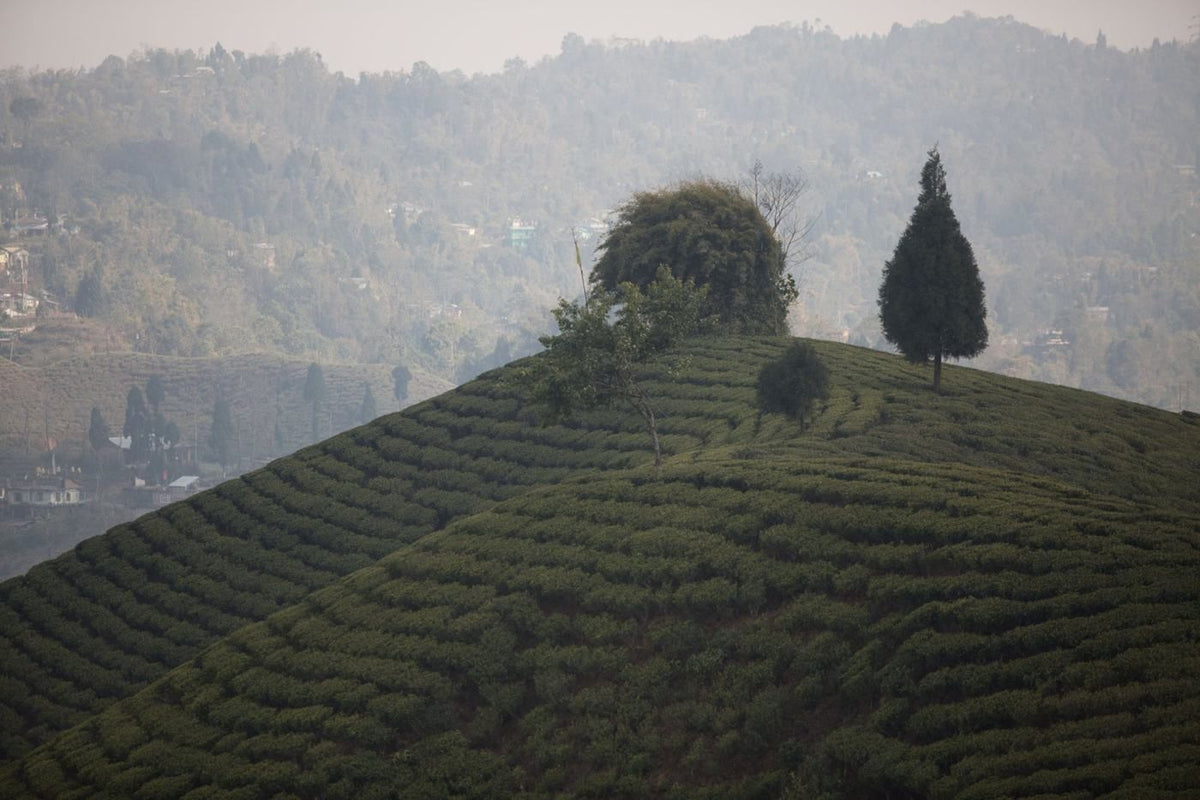
Nepal Tea: Ilam, the Eastern Hills and Darjeeling’s Himalayan Neighbor
Nepal tea is tea grown in Nepal, mostly in the eastern hill districts of Ilam, Panchthar, Dhankuta and Terhathum, right across the border from Darjeeling.
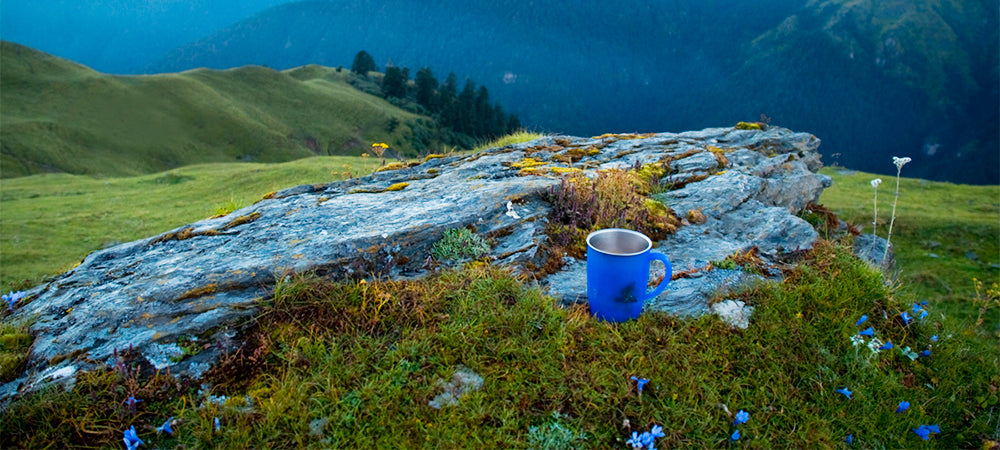
The History of Nepal Tea: From Ilam’s First Garden to the Himalayan Label
Tea came to Nepal in the 1860s: the first garden was planted at Ilam in 1863, with a second at Soktim two years later.
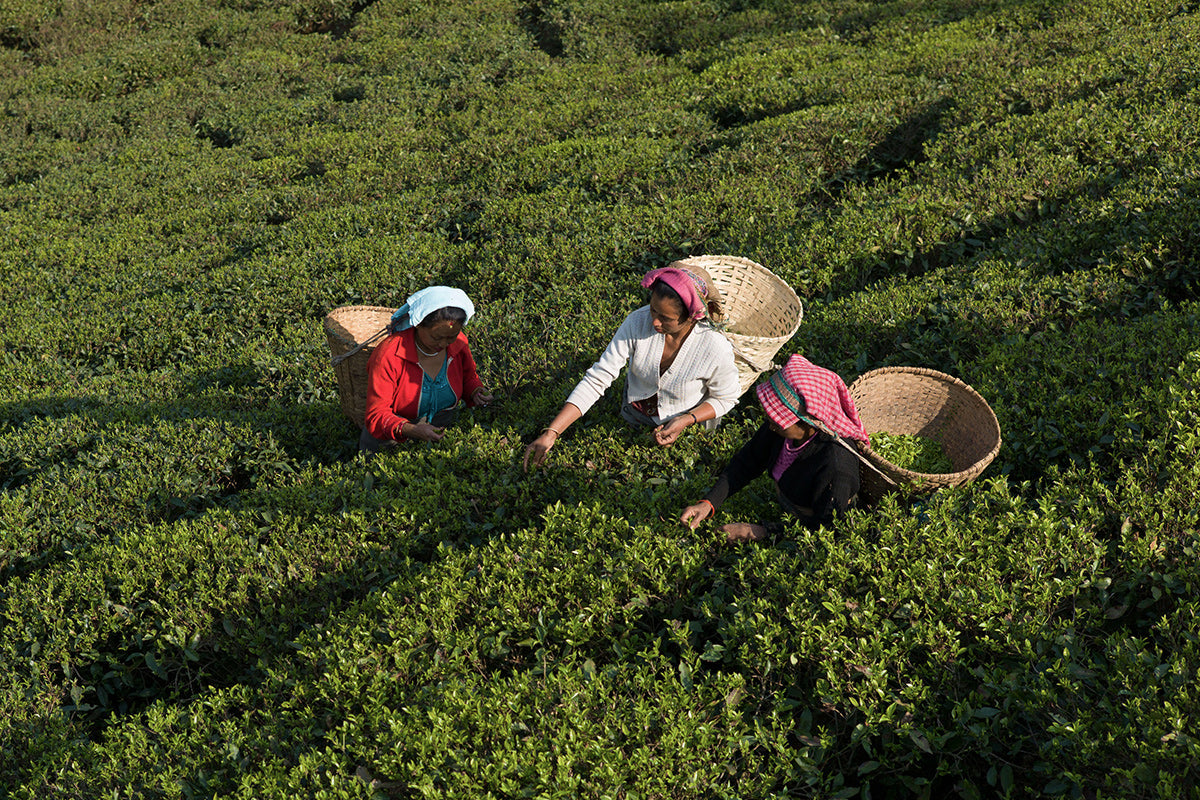
Nepal Tea vs Darjeeling Tea: Same Hills, Different Names
Nepal tea and Darjeeling tea grow in the same stretch of the Himalaya and taste alike, but Darjeeling tea comes only from registered gardens in the Darjeeling hills of India, and the name is legall...
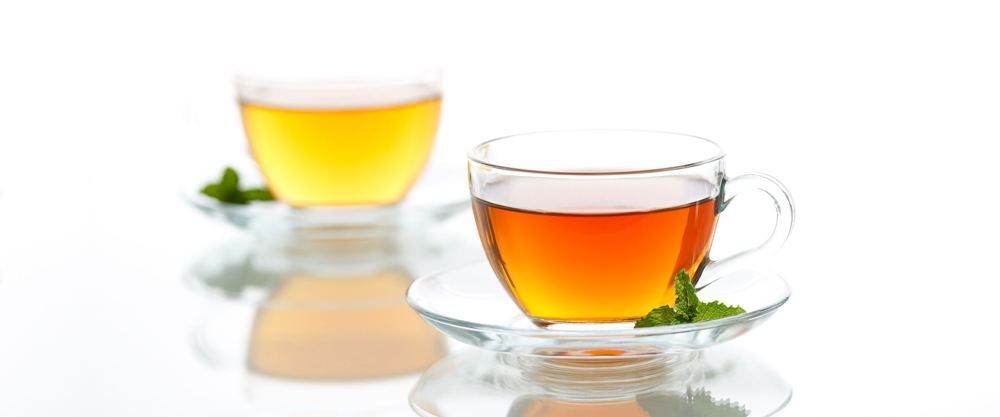
Indian vs Chinese Tea: What’s the Difference Between Them?
Indian and Chinese teas come from the same plant, Camellia sinensis, but mostly from two different varieties of it and two very different traditions.

How Tea Came to India from China: Wild Assam Tea, Chinese Seed and the Two Tea Camps
China has grown and drunk tea for thousands of years; India’s tea industry is less than two centuries old, built by the British in the 1830s to break China’s hold on the tea trade.
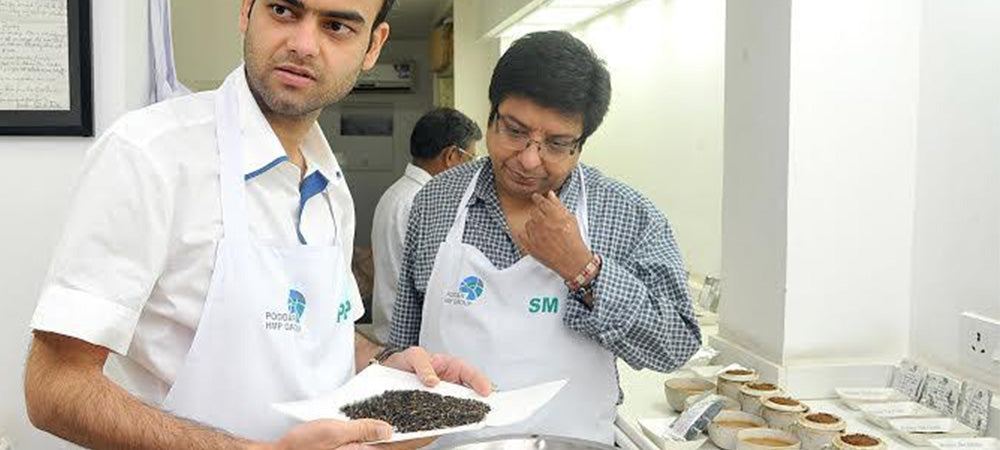
Indian vs Chinese Tea, Type by Type: Green, White, Black and Oolong Compared
Type by type, Chinese teas tend to be softer and more mellow, and Indian teas more intense and fragrant, with black tea the style where India shines.

Tea Certifications Explained: USDA Organic, Fairtrade, Rainforest Alliance and GI Tags
Tea certifications are independent checks that a tea was grown, traded or labeled to a published standard.
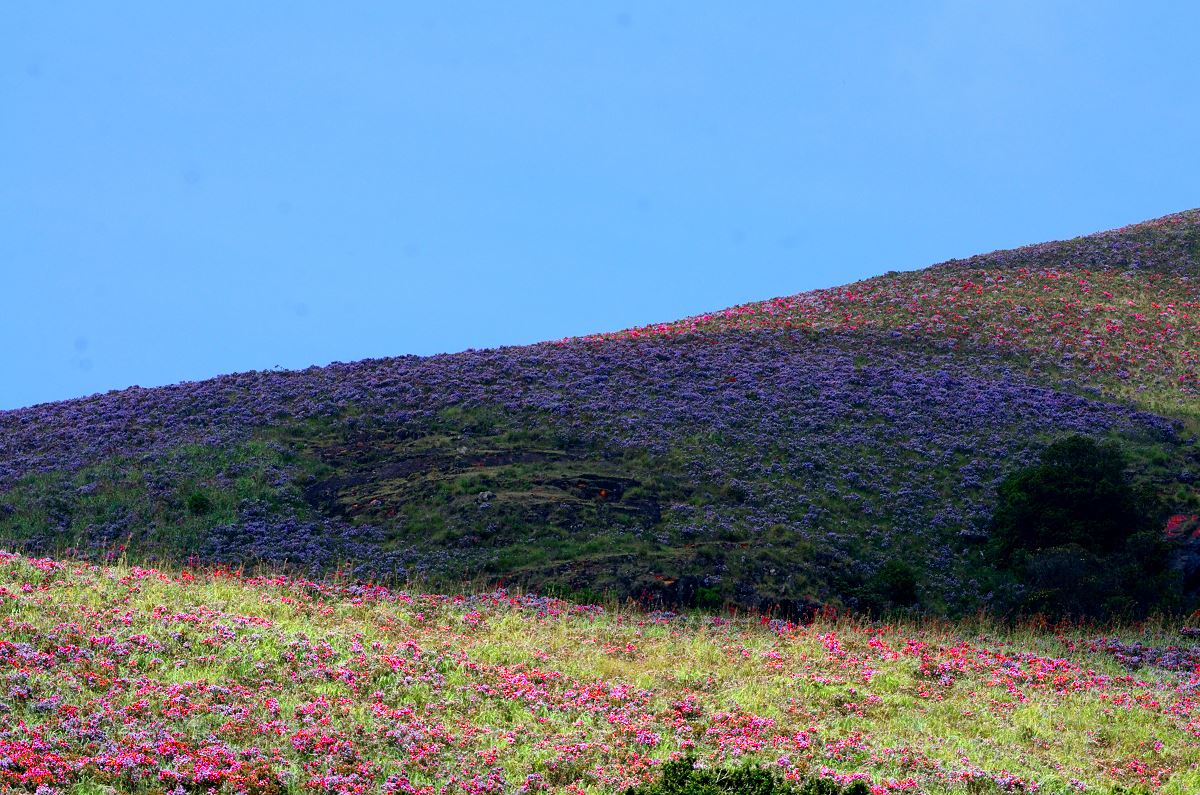
Organic Tea Certification: USDA Organic, India Organic and Biodynamic Tea
Organic tea certification confirms that a farm and the units that process and pack its tea follow an organic standard, which bans most synthetic pesticides and fertilizers and sets rules for soil, ...
Other Tea Certifications: ISO, Trustea, the Ethical Tea Partnership and Elephant Friendly
Beyond the big four, tea estates may hold food-safety and quality certificates (ISO 22000, ISO 9001), farm-practice standards (Global G.A.P.), worker programs (the Ethical Tea Partnership) and wild...
Certified Teas at Teabox: Organic, Fair Trade and Rainforest Alliance Estates
In our product data in October 2026, 43 active Teabox teas list at least one certification held by their estate: 38 list Rainforest Alliance, 24 the Ethical Tea Partnership, 10 USDA Organic and 5 F...
Seasons of Tea: A Guide to Tea Flushes, from Spring’s First Flush to Nilgiri Winter Frost
A tea flush is a season of new growth on the tea bush, and the harvest that comes from it.
Darjeeling Tea Flushes: Spring, In-Between, Summer, Monsoon and Autumn
Darjeeling has five seasons of tea: the first flush in spring, a short in-between flush, the second flush in summer, the monsoon flush and the autumn flush, after which the gardens rest for winter.
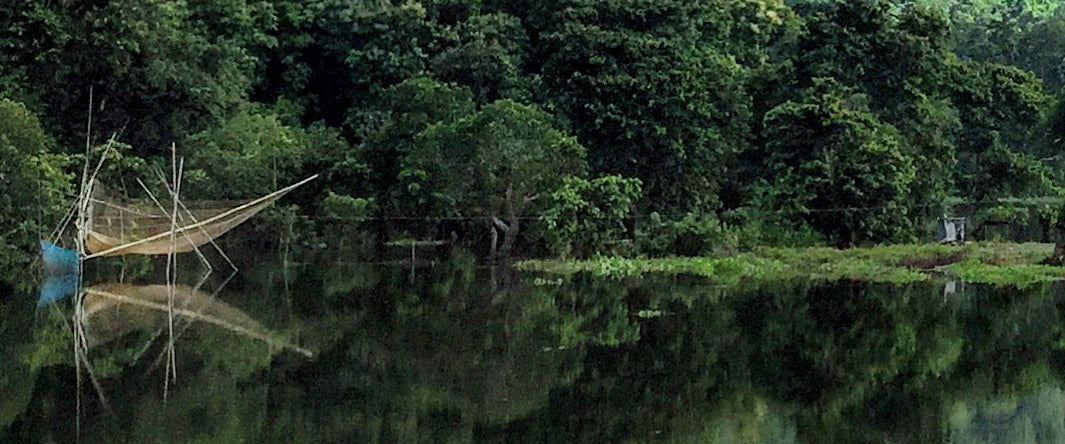
Assam Tea Flushes: Spring, the Golden Summer Flush, Monsoon and Autumn
Assam’s main harvests are the first flush, from late March to late May, and the prized second flush in summer, which gives the maltiest, most golden-tipped teas; the monsoon and autumn flushes foll...
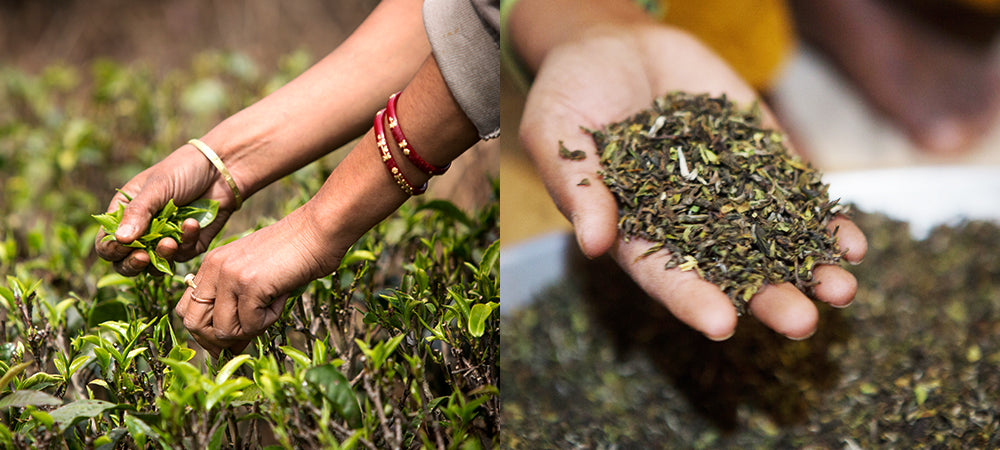
When We Pick Each Flush: Teabox Picking Dates, 2024 to 2026
Our own lots run later than the classic windows at almost every turn: the big spring chinary teas are often picked in May, summer teas into August, autumn teas into mid-December, and Nilgiri frost ...
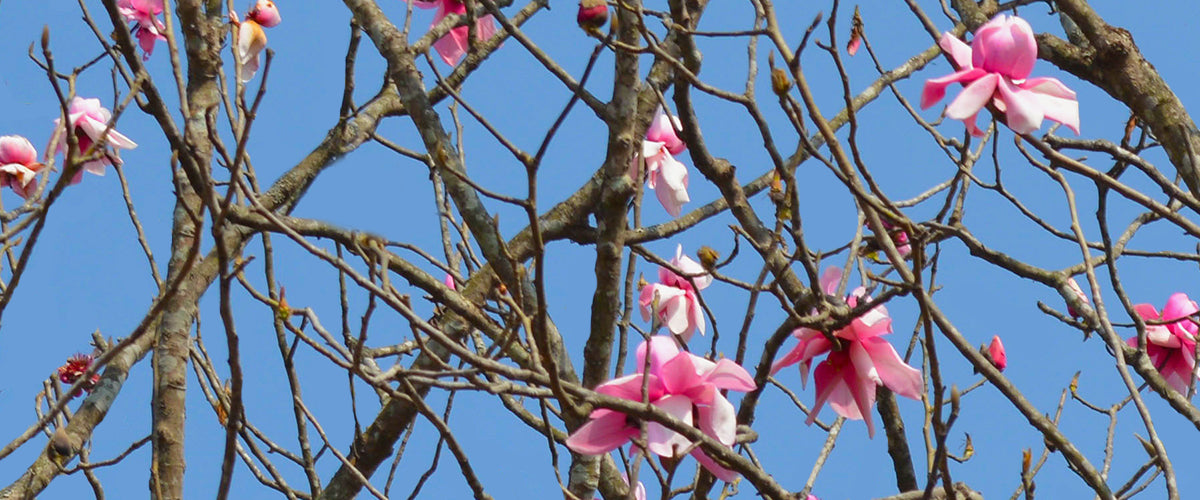
What Is First Flush Tea? A Guide to Darjeeling’s Spring Harvest
First flush tea is the first harvest of the year, picked in spring as tea bushes wake from their winter rest.
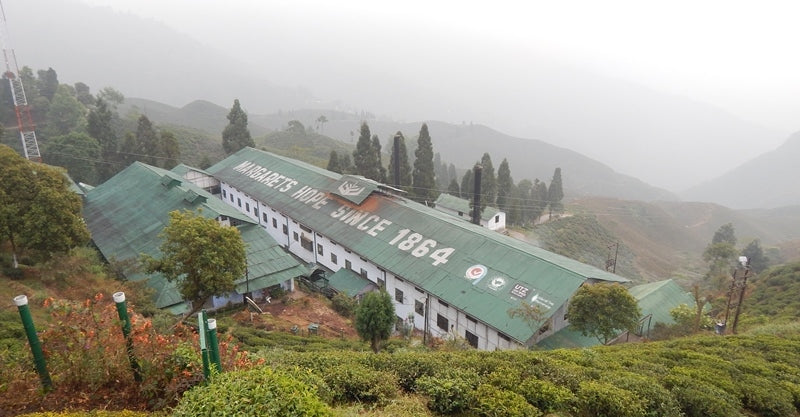
When Is First Flush Tea Picked? Darjeeling’s Spring Harvest, Week by Week
First flush plucking in Darjeeling usually starts in early March, sometimes in late February after a warm winter, and runs until mid-April.
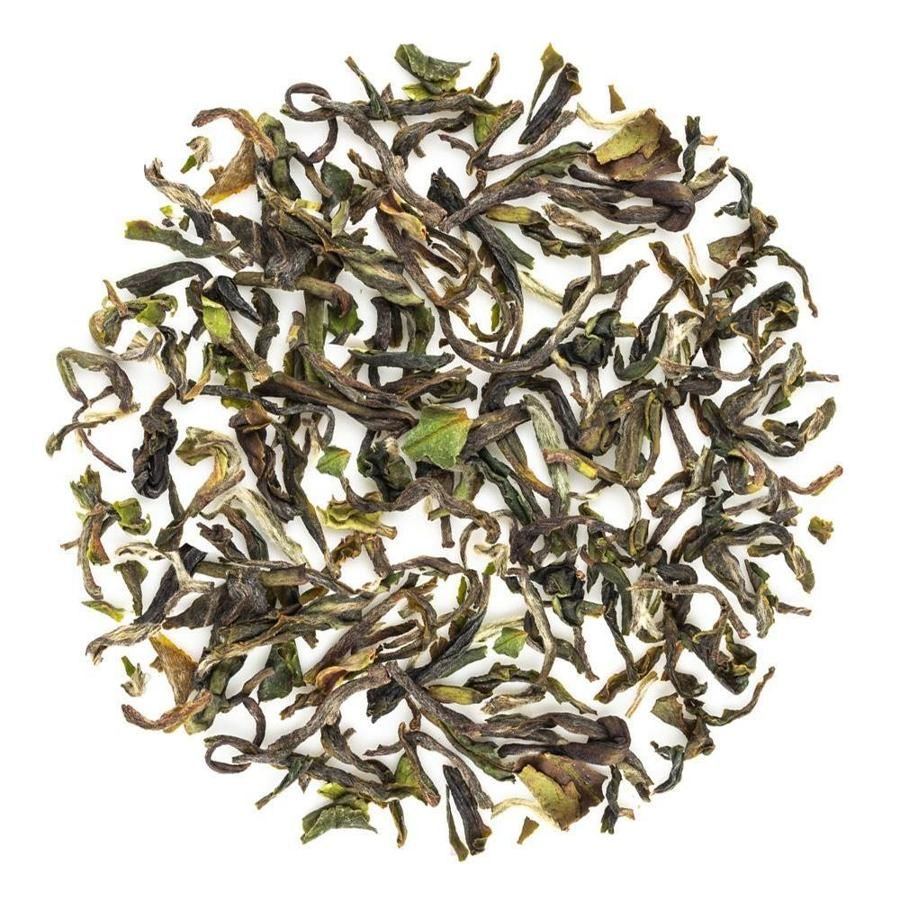
First Flush Tasting Notes: How Our Tasters Judge Darjeeling’s Spring Teas
Our tasters judge every first flush on three things, side by side: the dry leaf, the infused leaf and the liquor.

What Is Second Flush Tea? Darjeeling’s Muscatel Summer Harvest and Assam’s Golden Tips
Second flush tea is the summer harvest: tea plucked from late May into June, after the spring first flush.
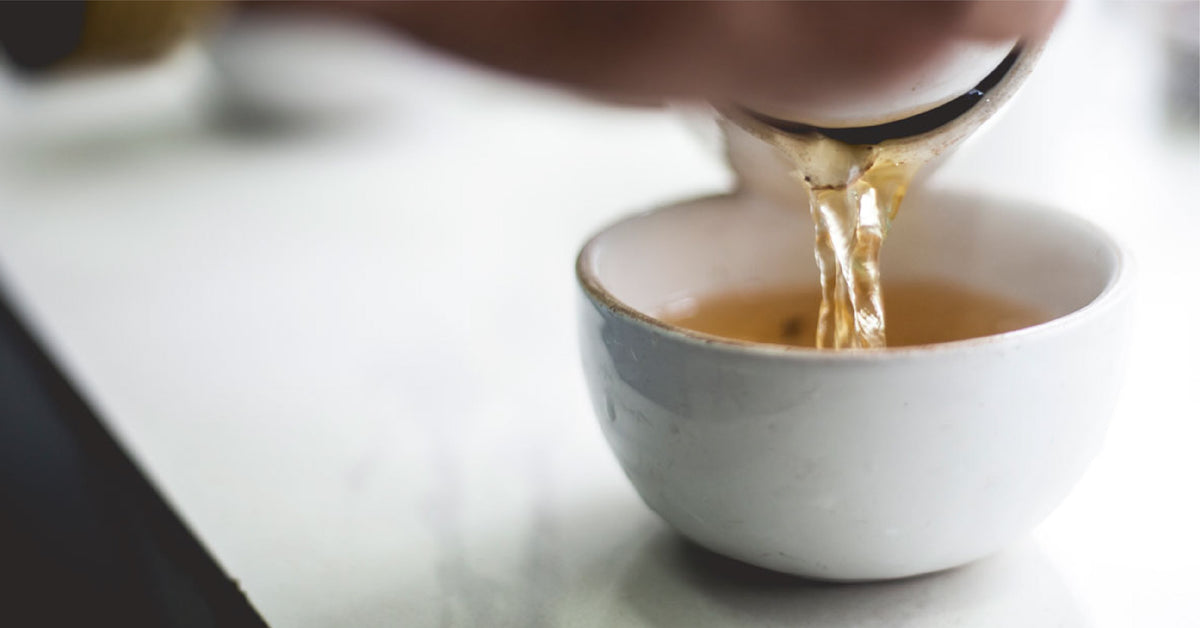
Darjeeling Muscatel Tea: What It Is, Who Named It and How It Is Made
Muscatel is the rich, grape-like flavor found in some Darjeeling second flush teas, named after the Muscat grape used in winemaking.
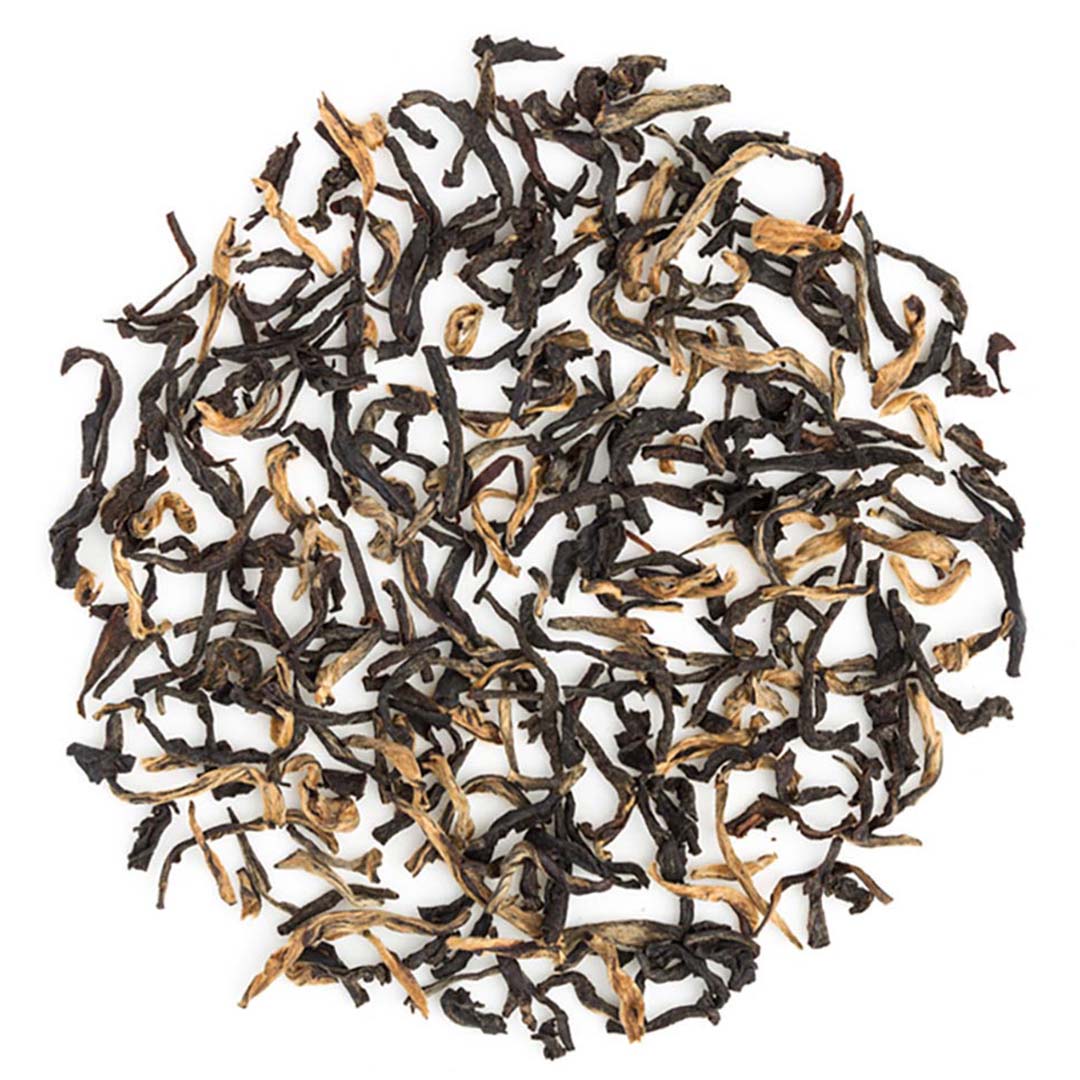
Assam Second Flush Tea: Malty Summer Teas and Golden Tips
Assam’s second flush is its most prized harvest: bold, malty, full-bodied teas with a dark amber cup and plenty of golden tips.
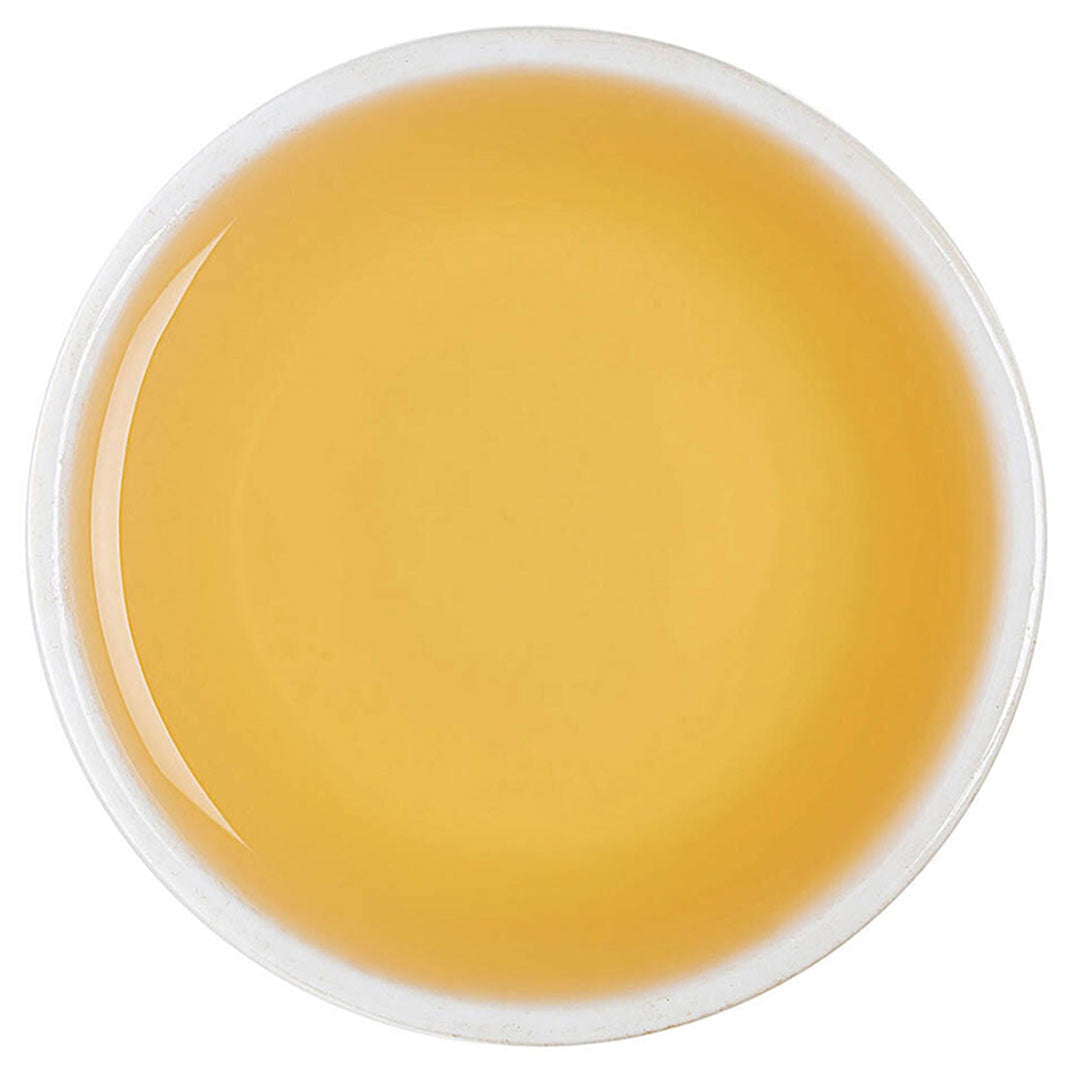
First Flush vs Second Flush Darjeeling: Spring and Summer Tea from the Same Garden, Side by Side
First flush is Darjeeling’s spring harvest: young leaf that brews a light, floral, brisk, pale gold cup.
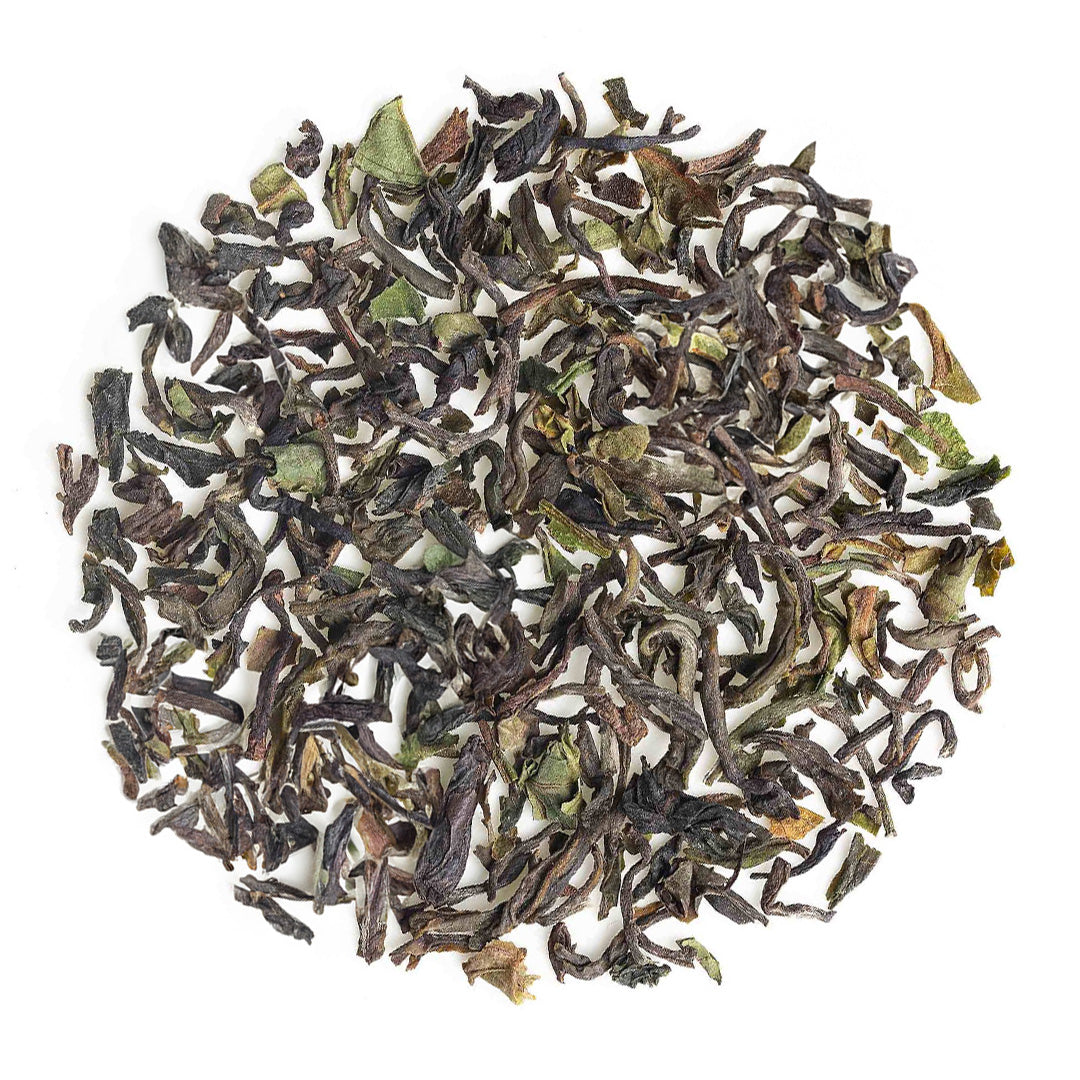
Spring vs Summer Darjeeling, Estate by Estate: Okayti, Margaret’s Hope, Giddapahar and Castleton
The pattern holds across Darjeeling: every garden’s spring tea is greener and brisker, and its summer tea darker and fruitier, but each garden keeps its own accent.
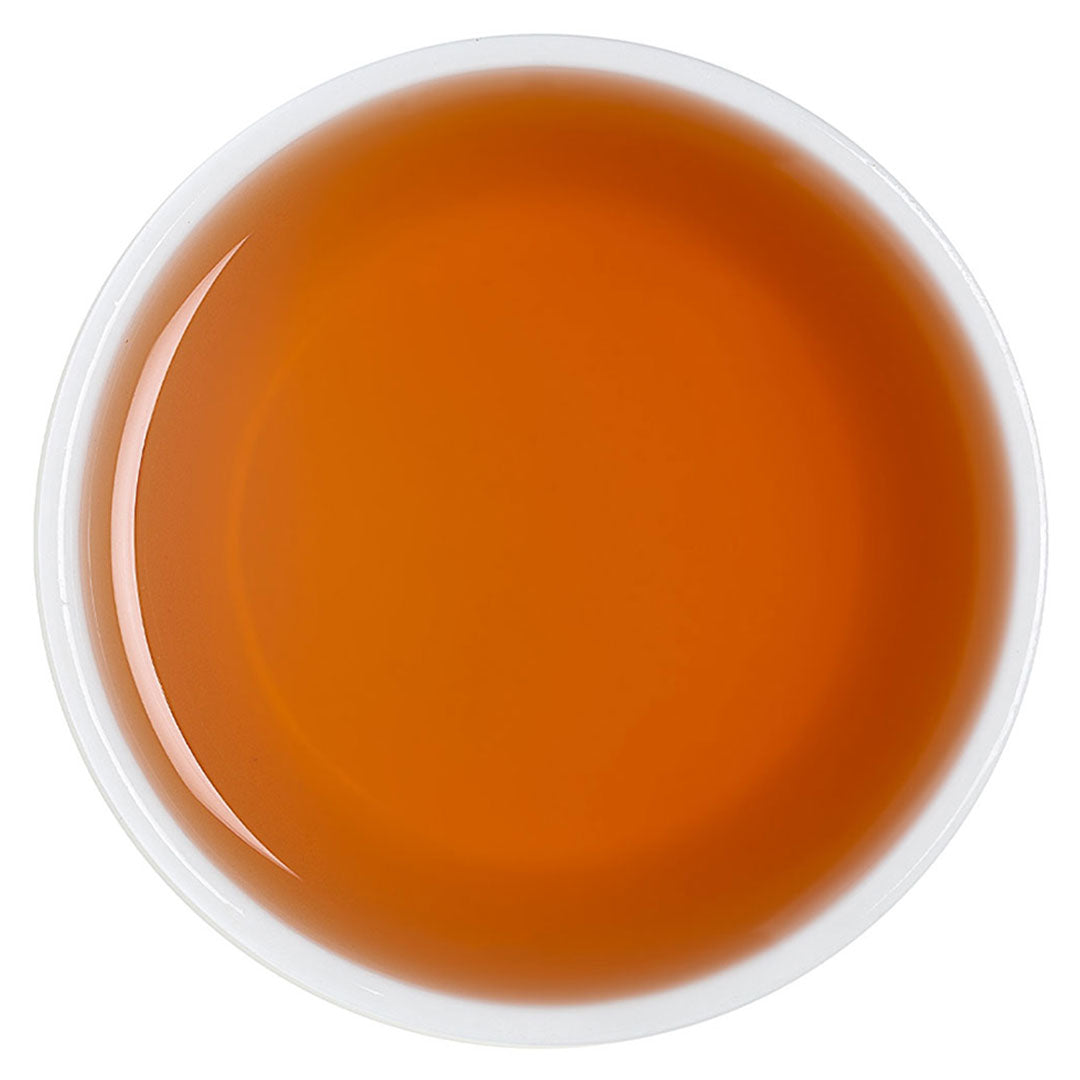
Three things change between spring and summer: the leaf itself, the weather it grows in, and how the tea maker handles it.

Autumn Flush Tea: Darjeeling’s Third Flush and India’s Mellow Fall Harvest
Autumn flush tea is the last harvest of the year in India’s northern tea hills, plucked from about mid-October into November, and in some years into early December, after the monsoon and before win...
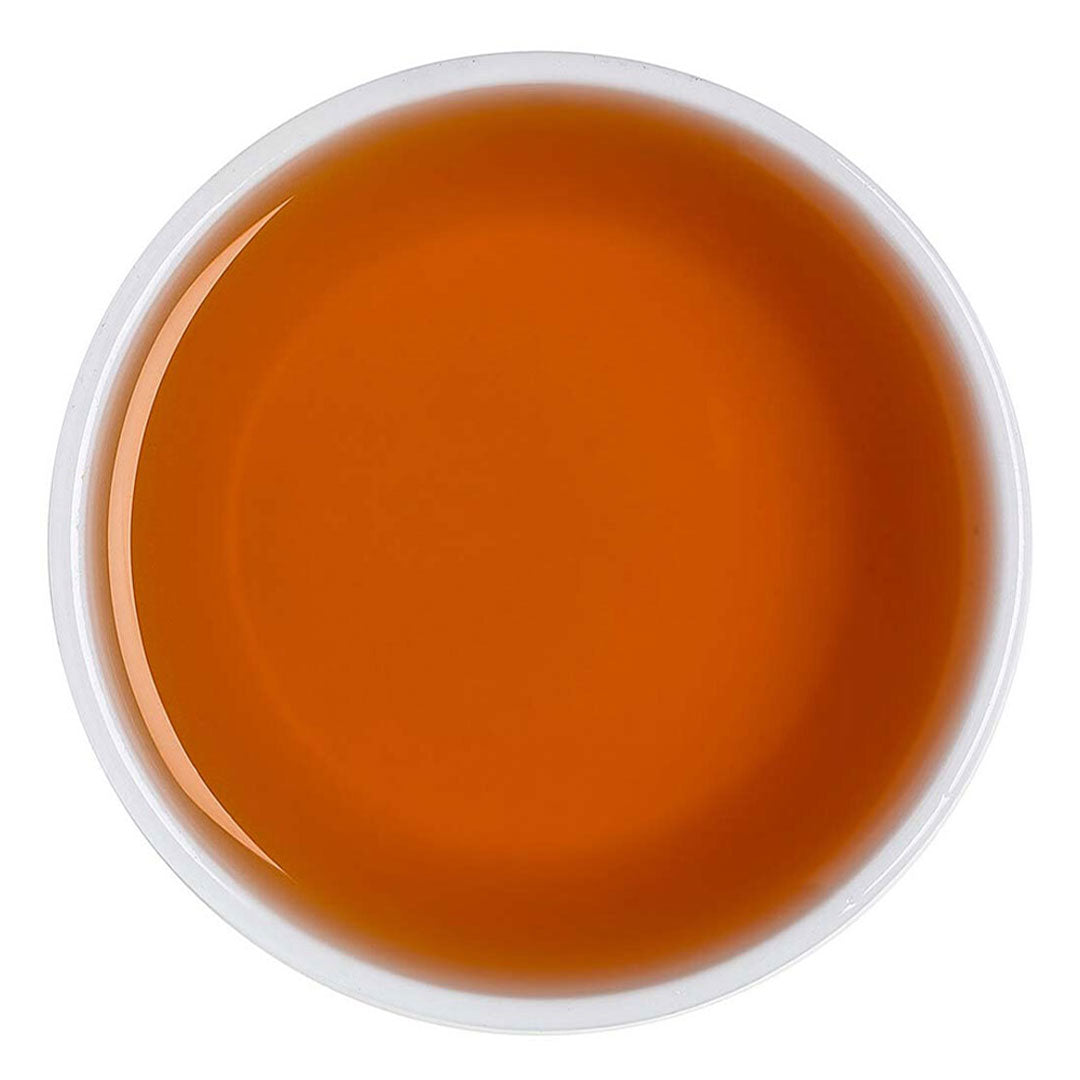
Darjeeling Autumn Flush Teas, Estate by Estate
Estates such as Goomtee and Thurbo are known for fine autumn flush teas, and every Darjeeling garden makes its autumnal a little differently.
Autumn Teas Beyond Darjeeling: Assam, Sikkim, Meghalaya, the Nilgiris and Nepal
Darjeeling is not the only place with an autumn flush. Assam, Sikkim and Meghalaya make autumn teas before their own winter rest, and the Nilgiris, which pluck all year, make fresh, aromatic autumn...

What Is Frost Tea? Winter Flush and Frost Teas from the Nilgiris
Frost tea is tea plucked in the Nilgiris in winter, when cold weather and frost slow the bushes’ growth and concentrate flavor in the leaf.
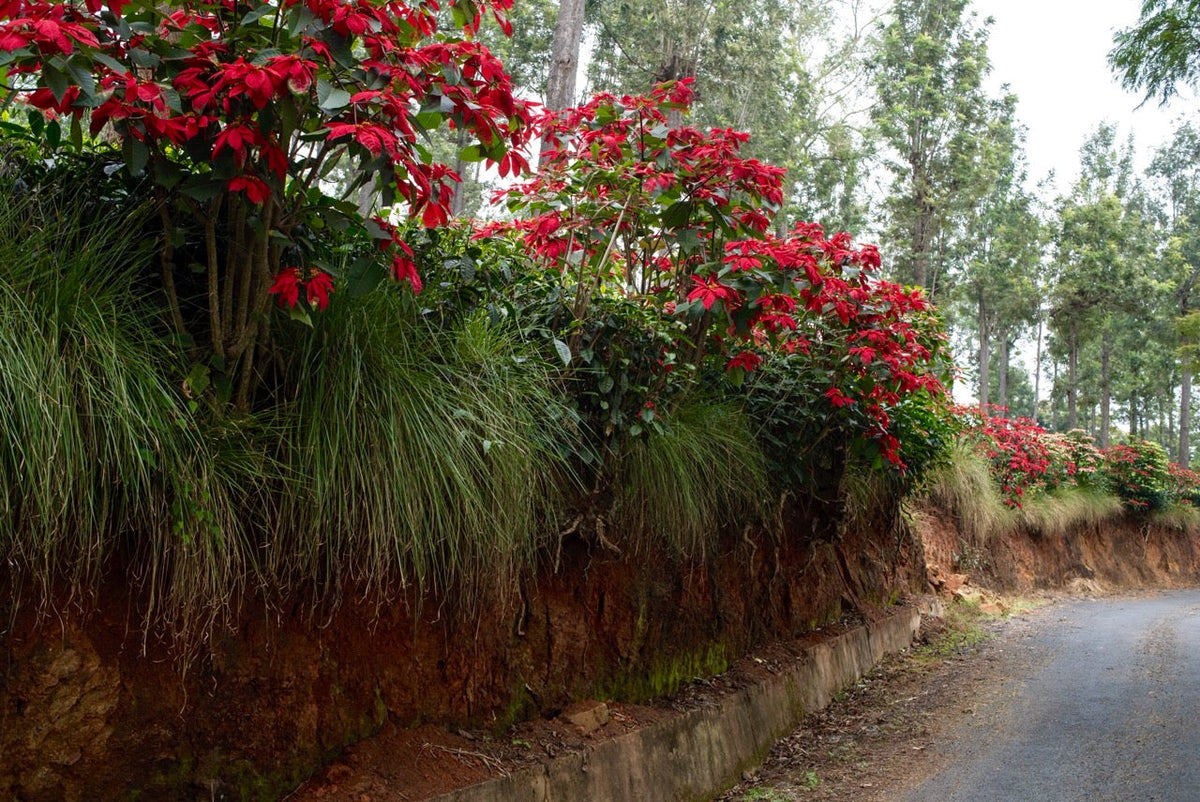
Why Tea Rests in Winter, and Why the Nilgiris Keep Plucking
While gardens in Darjeeling and Assam rest from December to spring, the Nilgiris keep plucking.
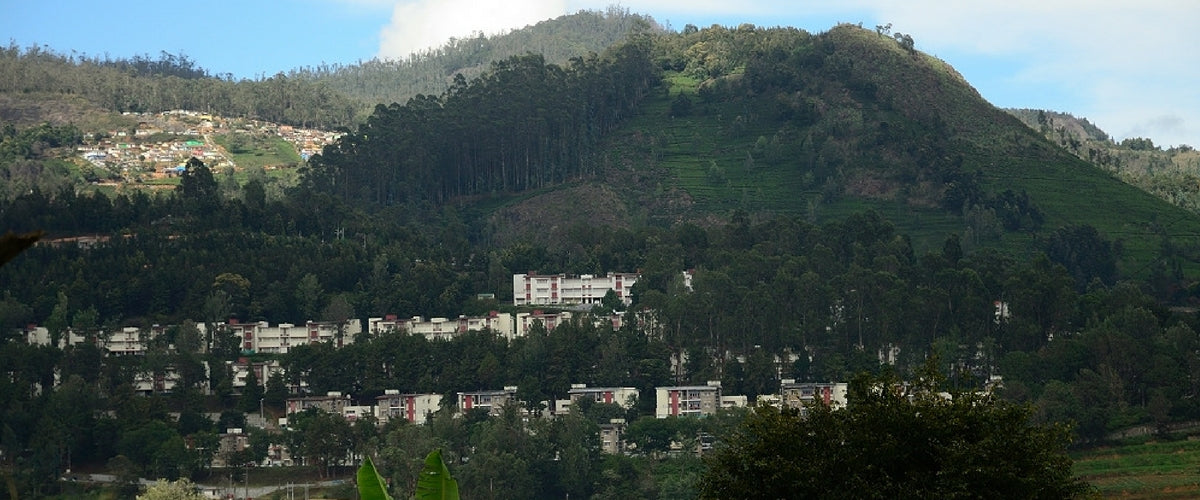
The Nilgiri Frost Tea Estates: Havukal, Glendale, Billimalai and Korakundah
Frost tea is made in small batches by a handful of high Nilgiri estates. Havukal is the garden most closely tied to winter frost black tea at Teabox; Glendale, Billimalai and Korakundah make the ot...

How to Brew Loose Leaf Tea: How Much Leaf, How Hot and How Long to Steep Every Type
To brew loose leaf tea, use about 2 to 2.5 g of leaf (a heaped teaspoon) for each 250 ml (8 oz) cup, pour water at the right heat for that tea, steep for the right time, then strain.
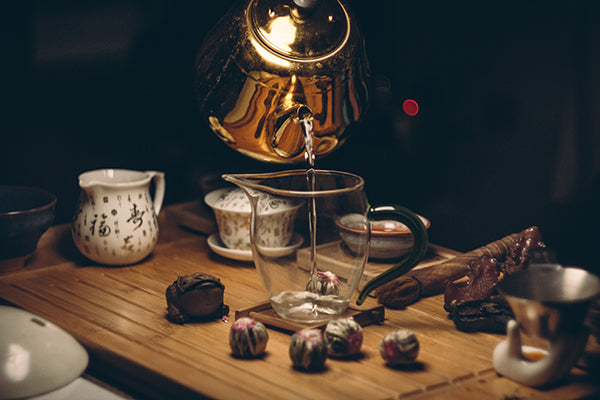
Water for Tea: Which Water to Use, How Hot to Heat It, and Why It Changes the Cup
Use fresh, filtered water, boiled once, and heat it to suit the tea: a cup of tea is almost entirely water, so the water decides how much of the leaf’s flavor reaches you.
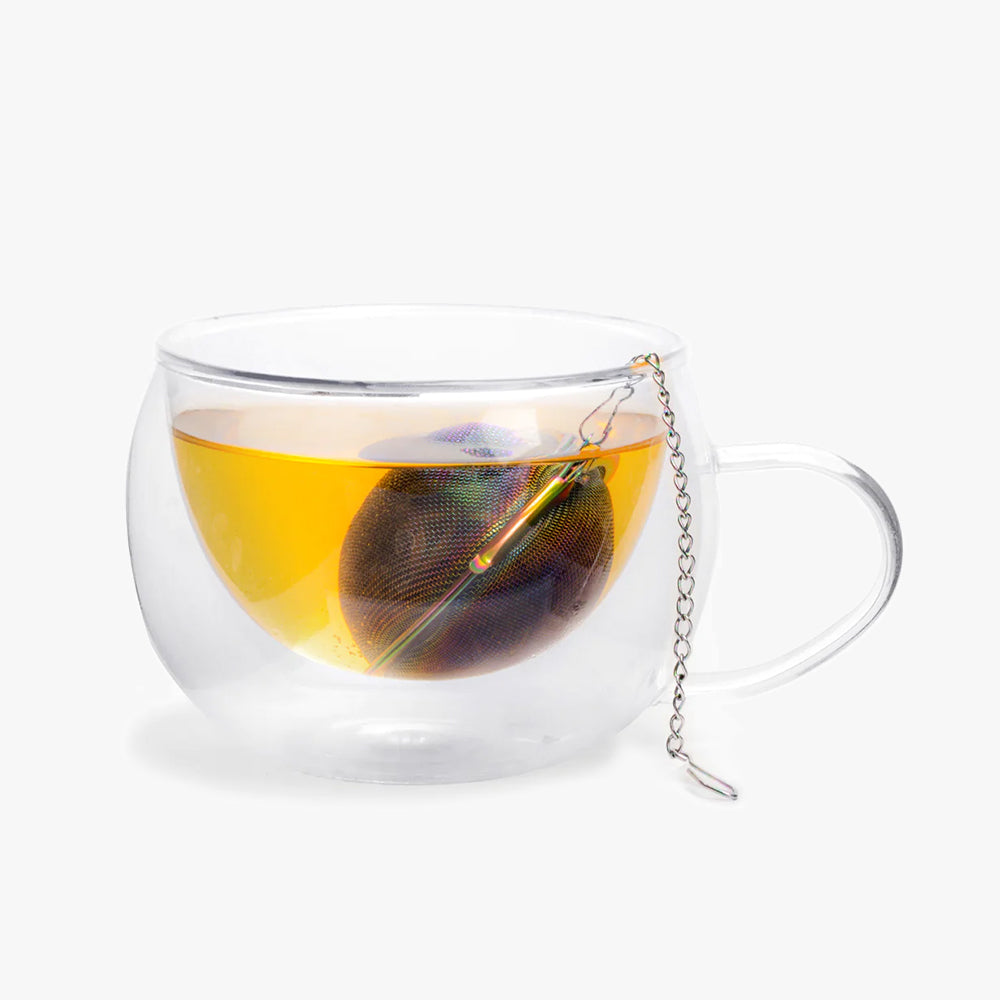
Tea Brewing Mistakes: Why Tea Turns Bitter, Weak or Flat, and How to Fix It
Most bad cups come from water that is too hot, a steep that is too long, or too little leaf.
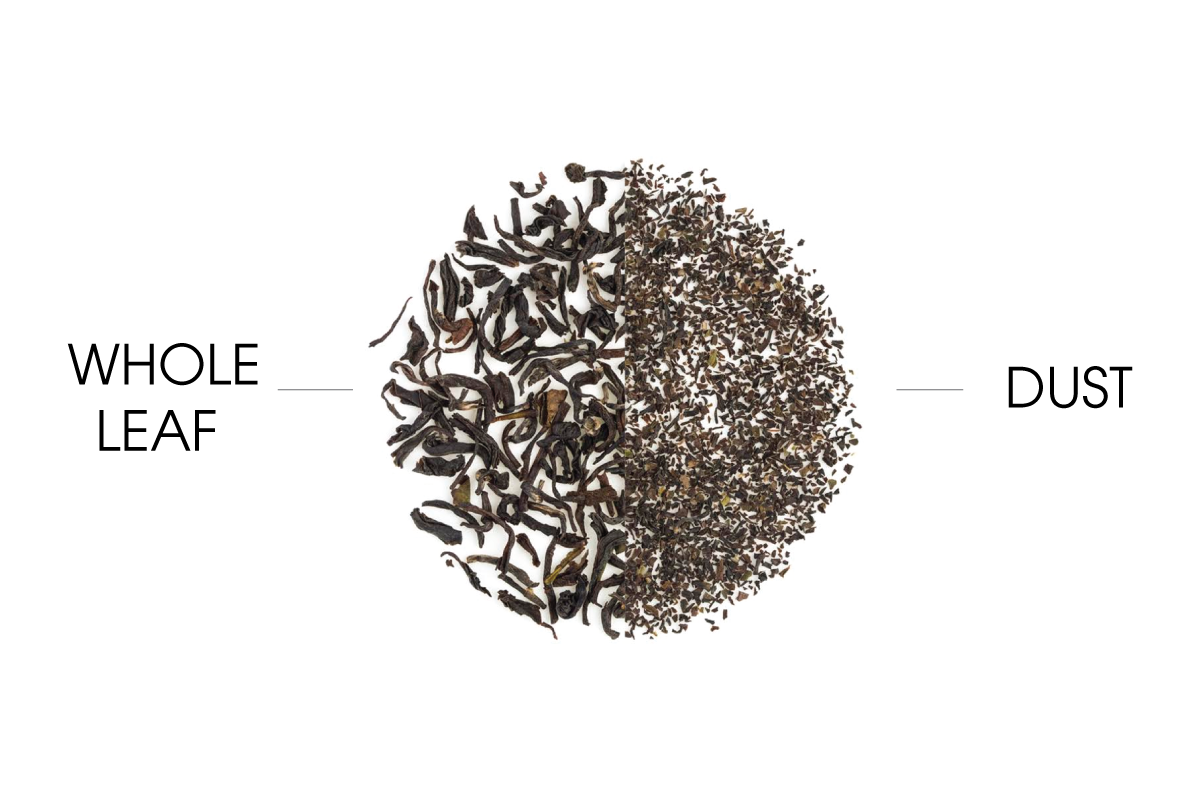
Loose Leaf Tea vs Tea Bags: Flavor, Freshness and Waste
Loose leaf tea is usually whole or large leaf that has room to open and gives a fuller, more layered cup; most tea bags hold small broken pieces that brew fast, strong and dark.
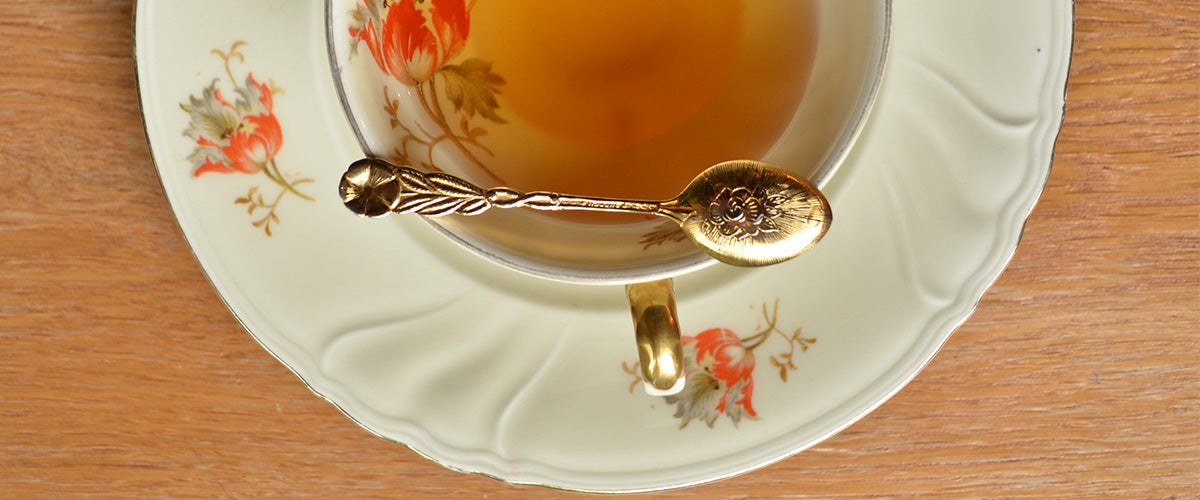
How to Brew Darjeeling Tea: Water Temperature and Steeping Time for Every Flush
To brew Darjeeling tea, steep about 2 to 2.5 g of leaf per 250 ml (8 oz) cup in water at 85–95°C, below a full boil, for 3 to 5 minutes, then strain and drink it plain.
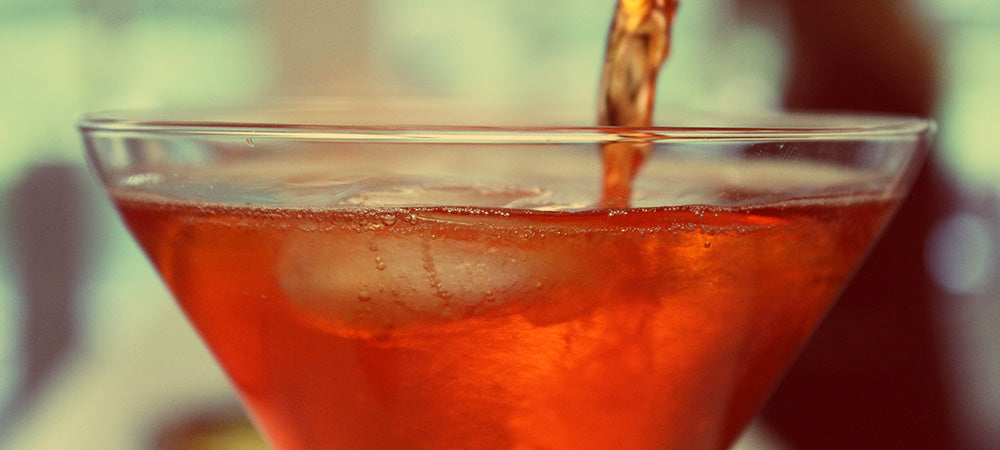
Gongfu and Iced Darjeeling: Short Steeps, Cold Brews and a Winter Toddy
Beyond the everyday cup, Darjeeling can be brewed gongfu style, with more leaf, less water and a series of short steeps, or brewed at double strength and poured over ice, or cold-brewed in the frid...
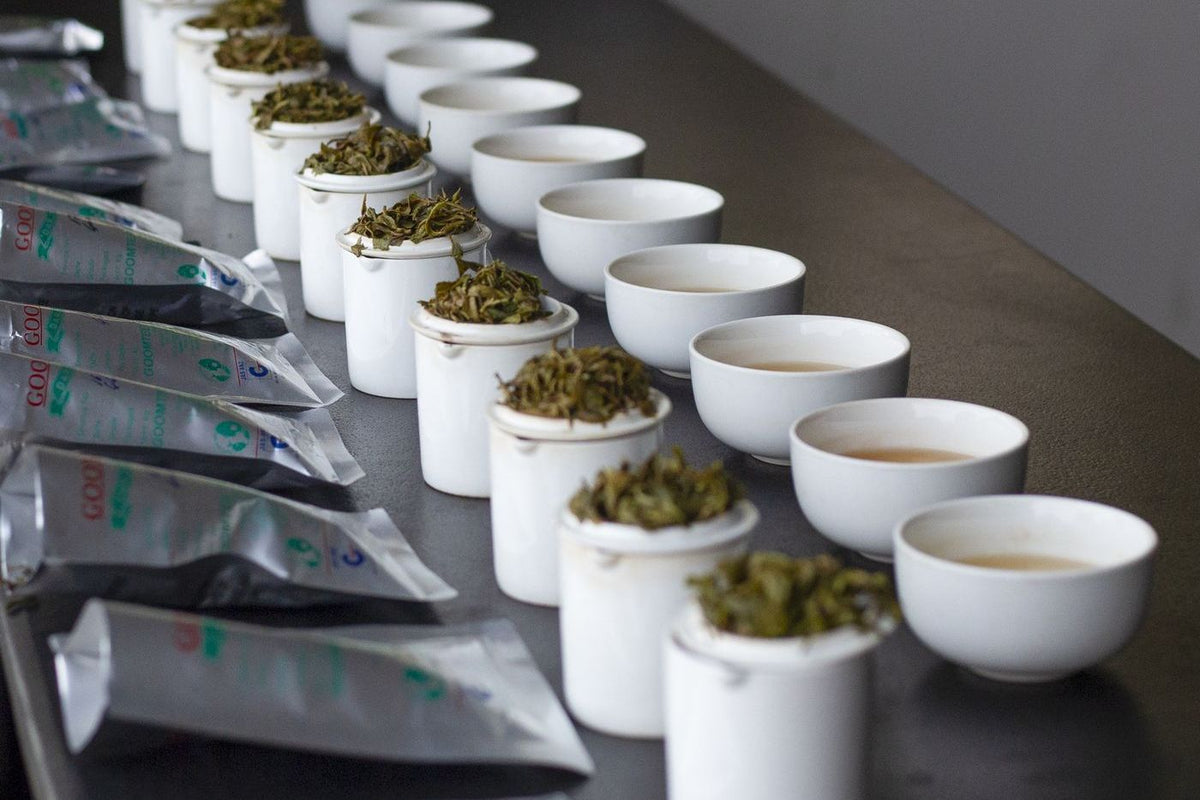
How to Taste Tea Like an Expert: A Step-by-Step Guide to Tea Cupping and Tasting Notes
To taste tea like an expert, look at and smell the dry leaf, brew a weighed sample for a set time, then judge the infused leaf and the liquor, and slurp the tea noisily so it sprays across your pal...
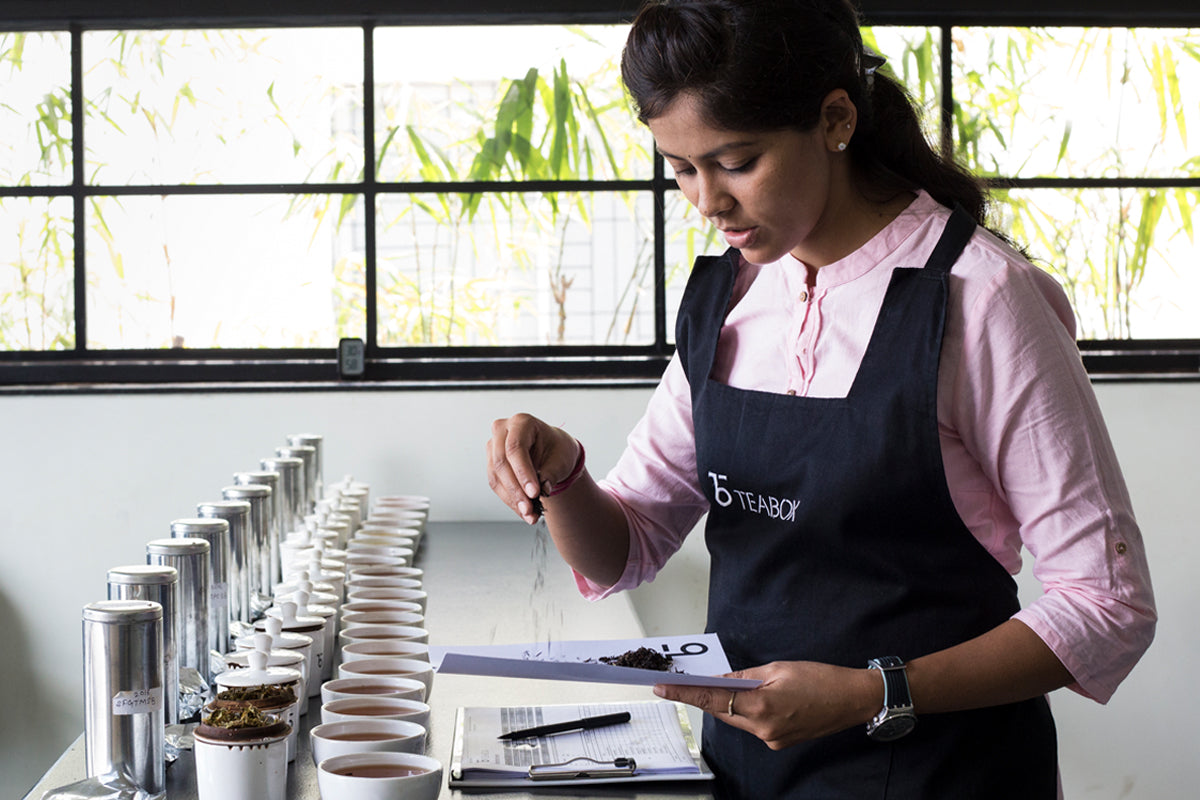
How to Cup Tea: The Taster’s Method, Step by Step, and What to Look For
A cupping always runs in the same order: the dry leaf, then the infused leaf, then the liquor, each judged by eye and by nose before the tea is slurped.
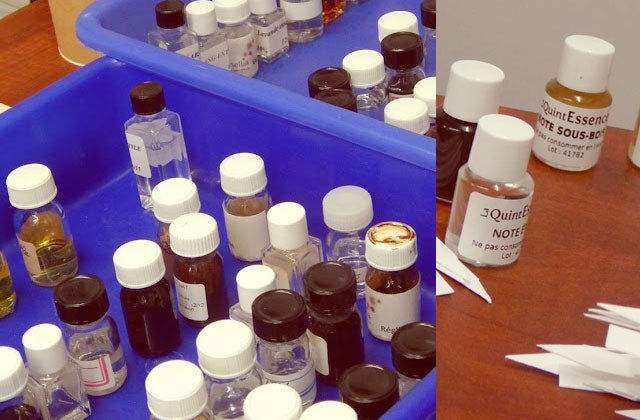
Tea Tasting Notes: The Words Tea Tasters Use and How a Note Is Written
A shared vocabulary is what turns a private impression into something another taster can check.
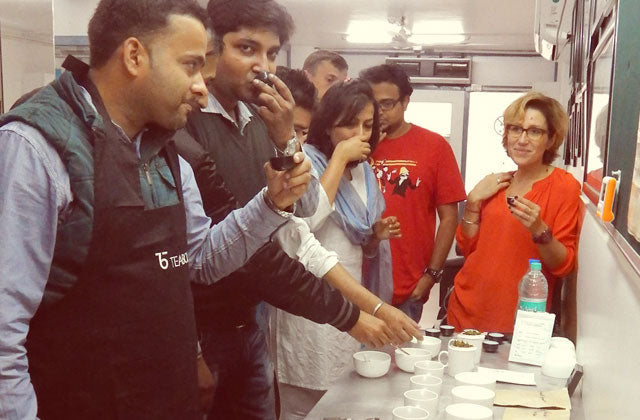
How to Do a Tea Tasting at Home: Flights, Method and Teas to Try
Choose three or four teas that differ in one way only, brew them side by side with the same leaf weight, water and time, and taste from lightest to strongest, writing notes as you go.
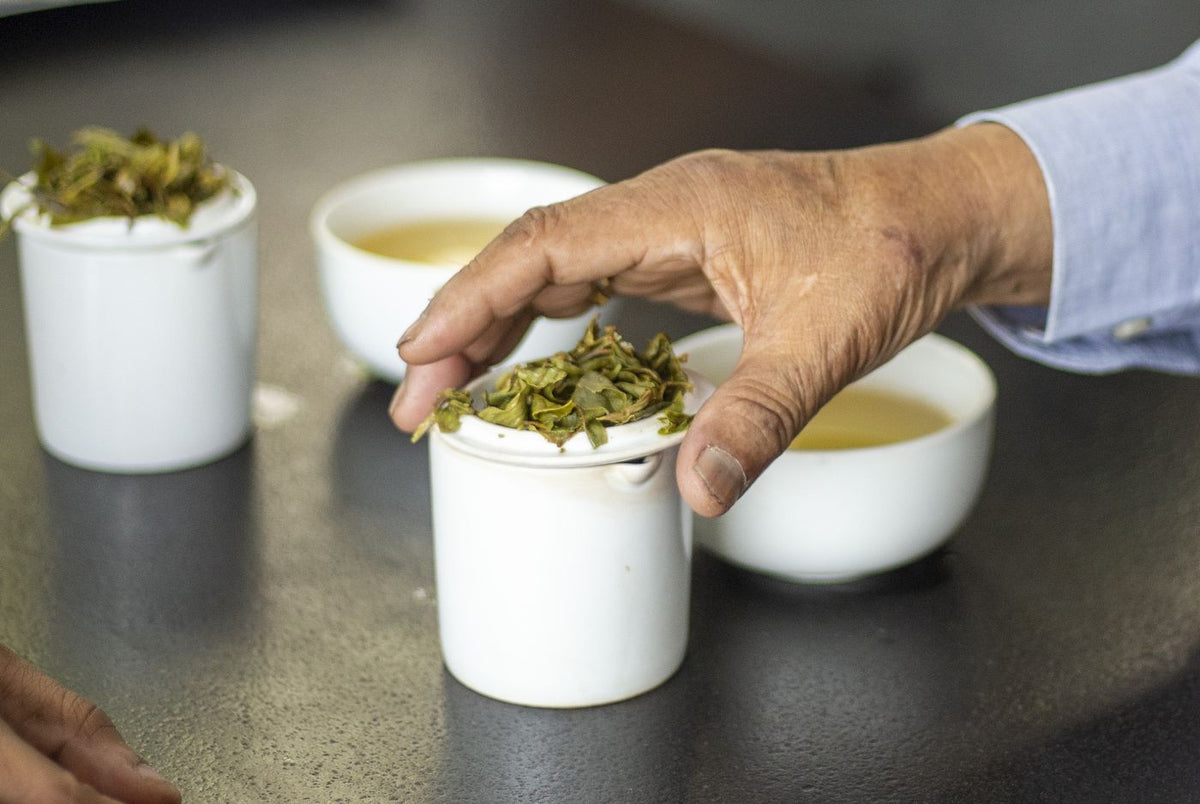
Inside the Teabox Tasting Room: How We Taste Every Lot
Every single-estate tea we sell is cupped by our tasting team before it is listed, at the estates during the season and at our tasting bench in Siliguri, where every sample is weighed, brewed and p...
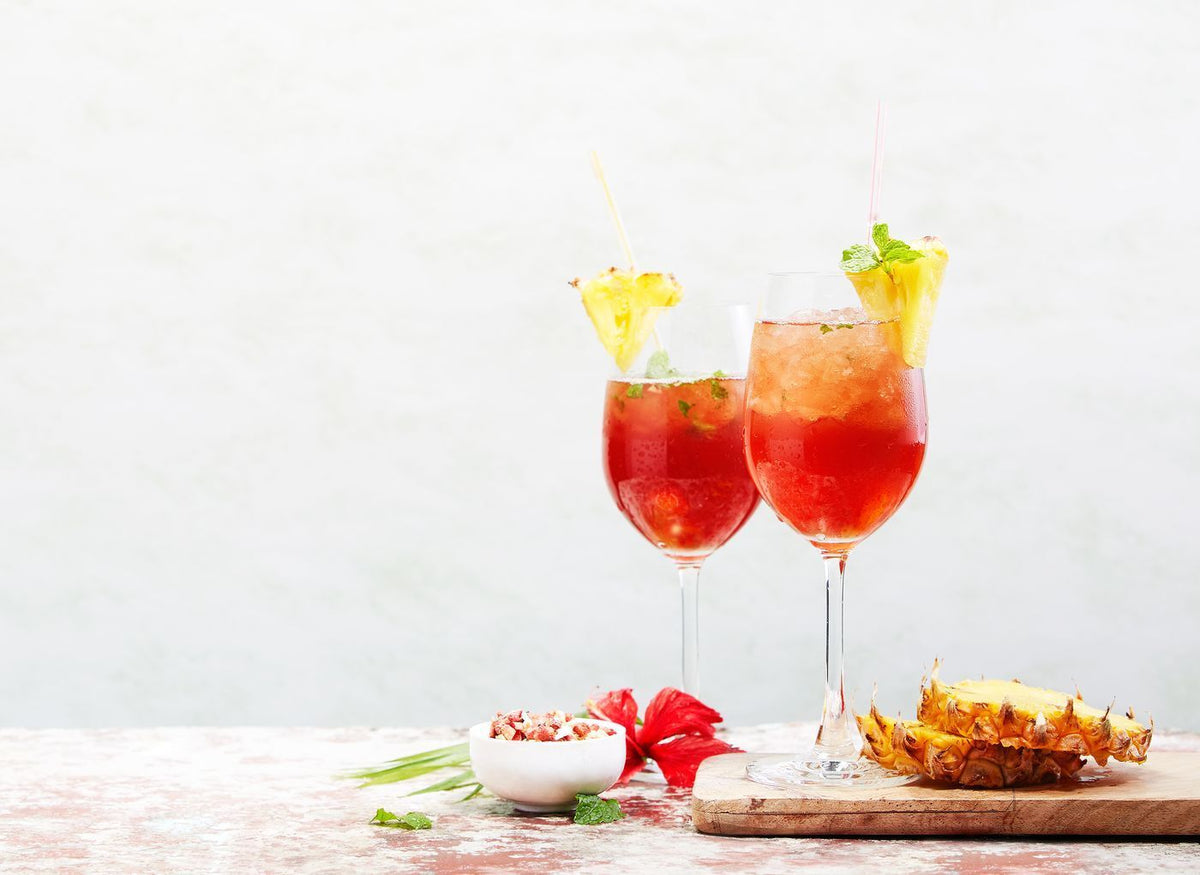
How to Make Iced Tea: Hot Brew, Cold Brew Tea and Easy Iced Tea Recipes
To make iced tea, brew the tea hot at double strength and pour it straight over ice, or cold brew the leaves in a jug of cold water in the fridge for at least 8 hours.

The Best Tea for Iced Tea: Assam, Darjeeling, Green Tea and Caffeine-Free Tisanes
Almost any tea can be iced, but strong, malty Assam black tea gives the classic amber glass, Darjeeling gives a lighter, fruitier one, green tea gives the freshest, and hibiscus gives a ruby-red, c...
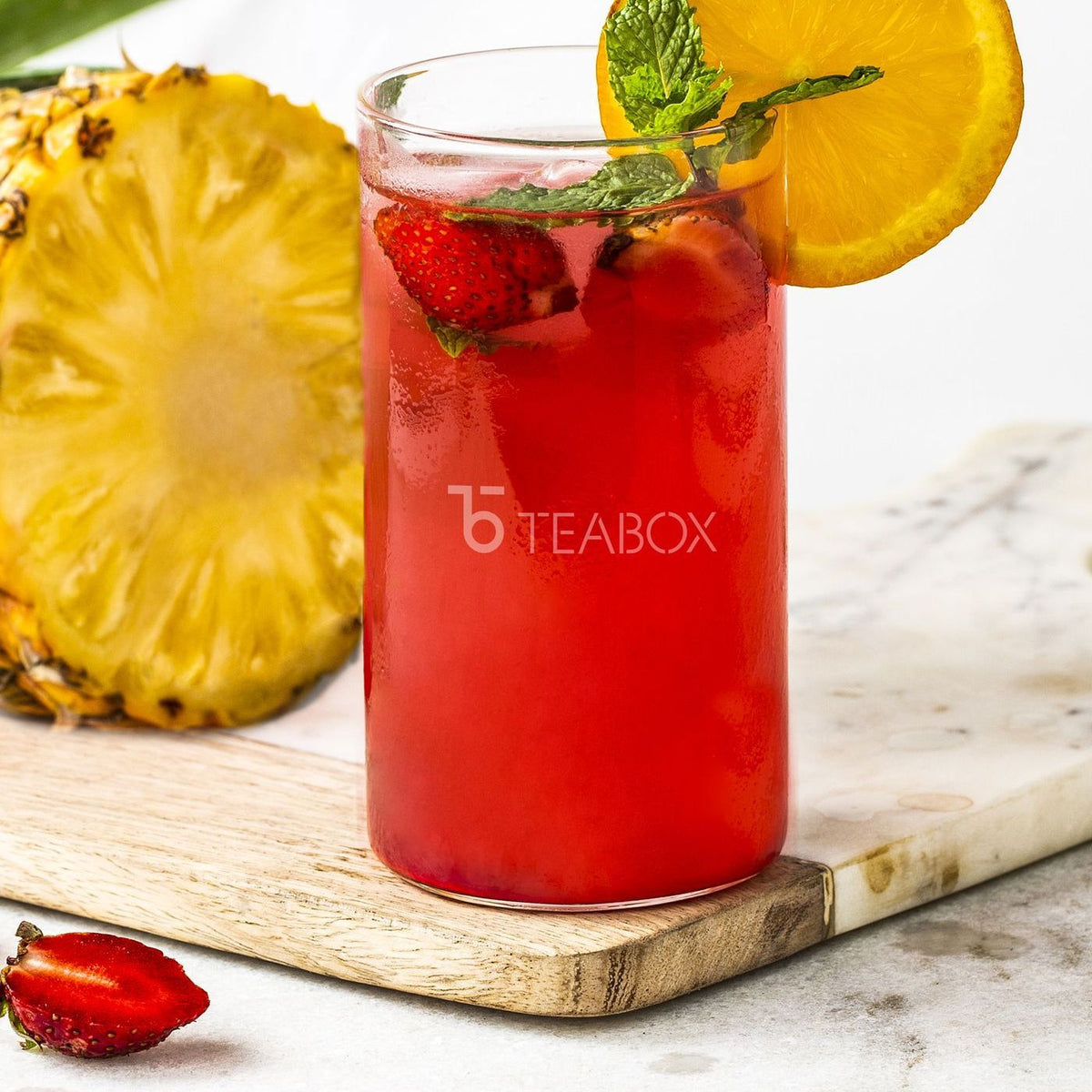
Easy Iced Tea Recipes: Ginger, Mango, Moroccan Mint, Iced Chai and Mocktails
The simplest iced tea recipes add one or two fresh flavors to a strong green or black tea base: ginger, mango, mint or spice.
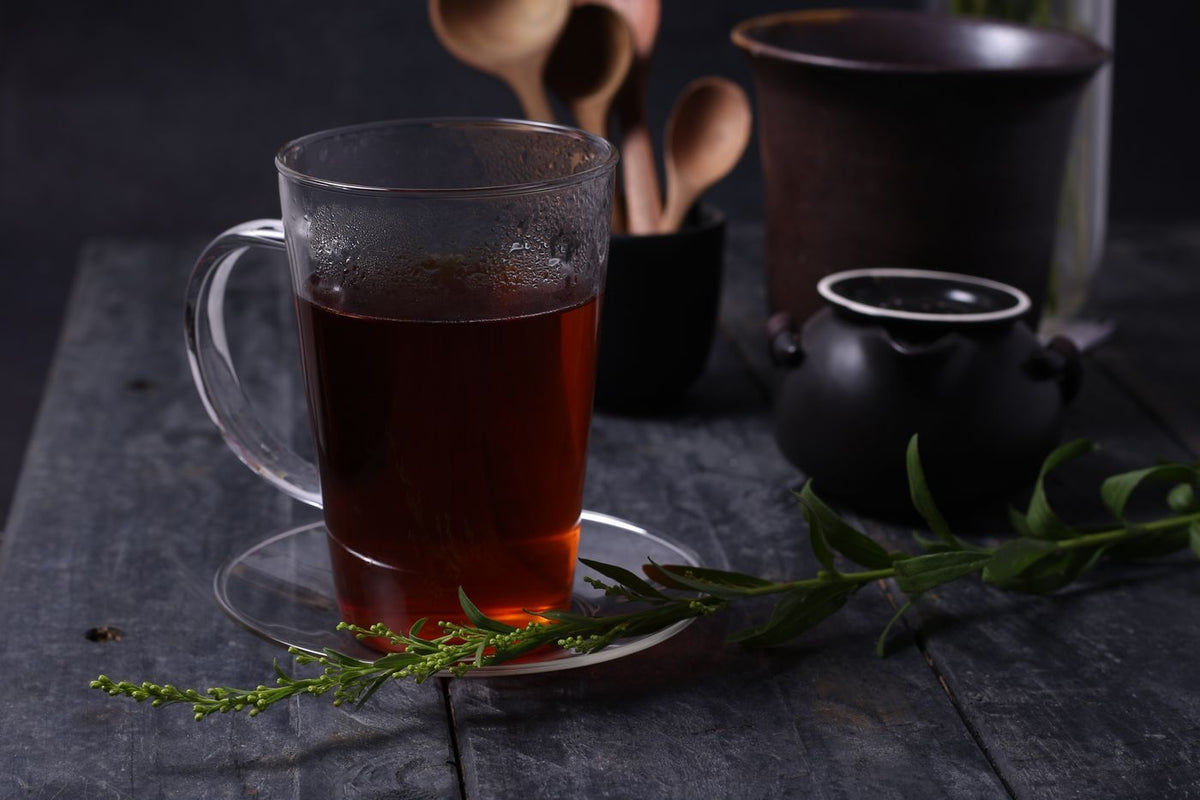
How to Make Lemon Tea: Black Tea with Lemon, Ginger and Honey Lemon Tea, Russian Tea and Sulaimani
To make lemon tea, steep a heaped teaspoon of black tea in a cup of just-boiled water for about 4 minutes, strain it, then stir in a teaspoon or two of fresh lemon juice.
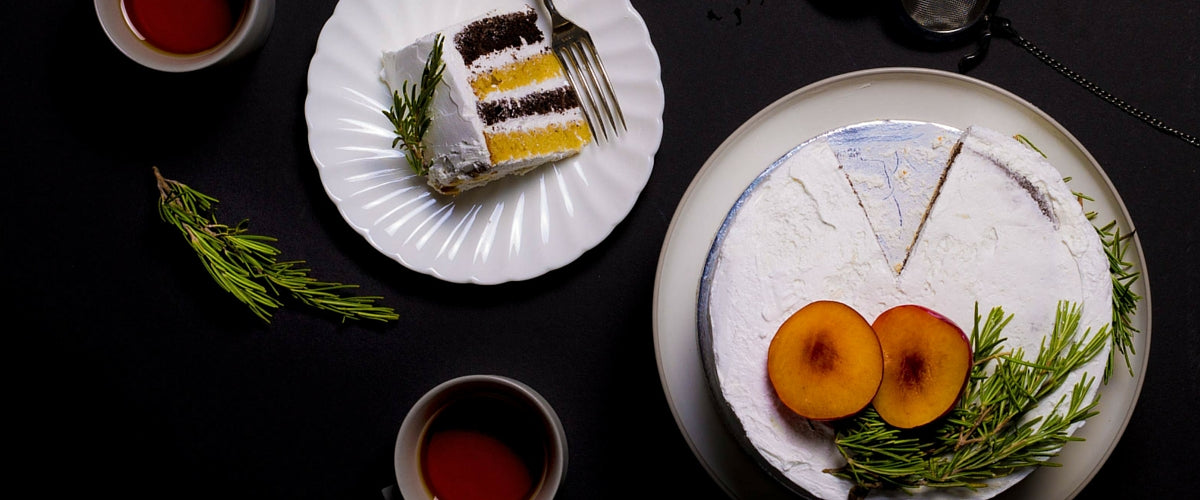
Lemon Tea Traditions: Russian Lemon Tea, Kerala’s Sulaimani and Bengal’s Lebu Cha
No one knows exactly when lemon was first added to tea. Our old Tea 101 post notes that there is no documented history, though lemons are native to Asia, so the pairing may well have begun there.
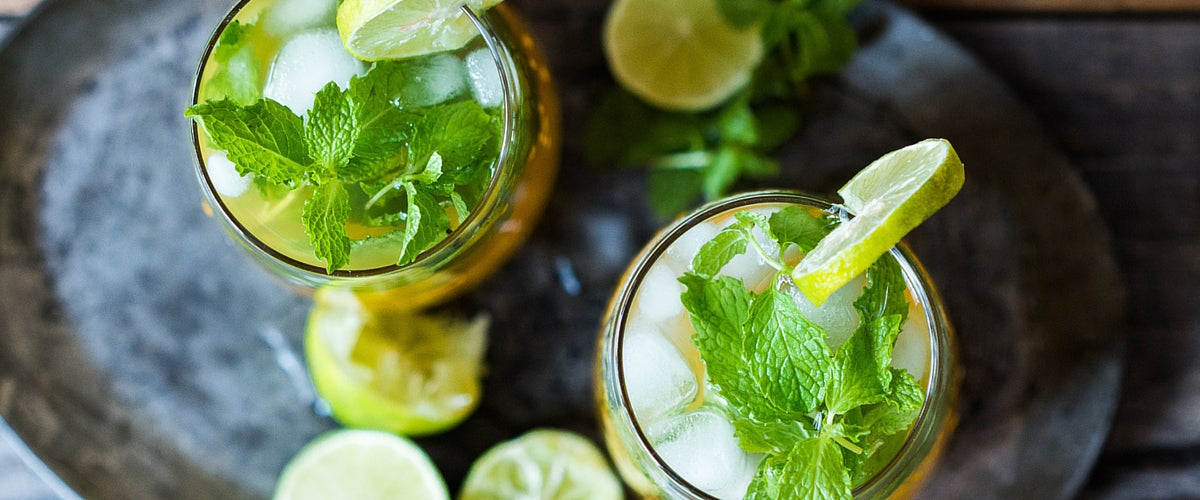
Lemon also turns blue butterfly pea tea purple, brightens iced tea, and finishes a hot toddy.
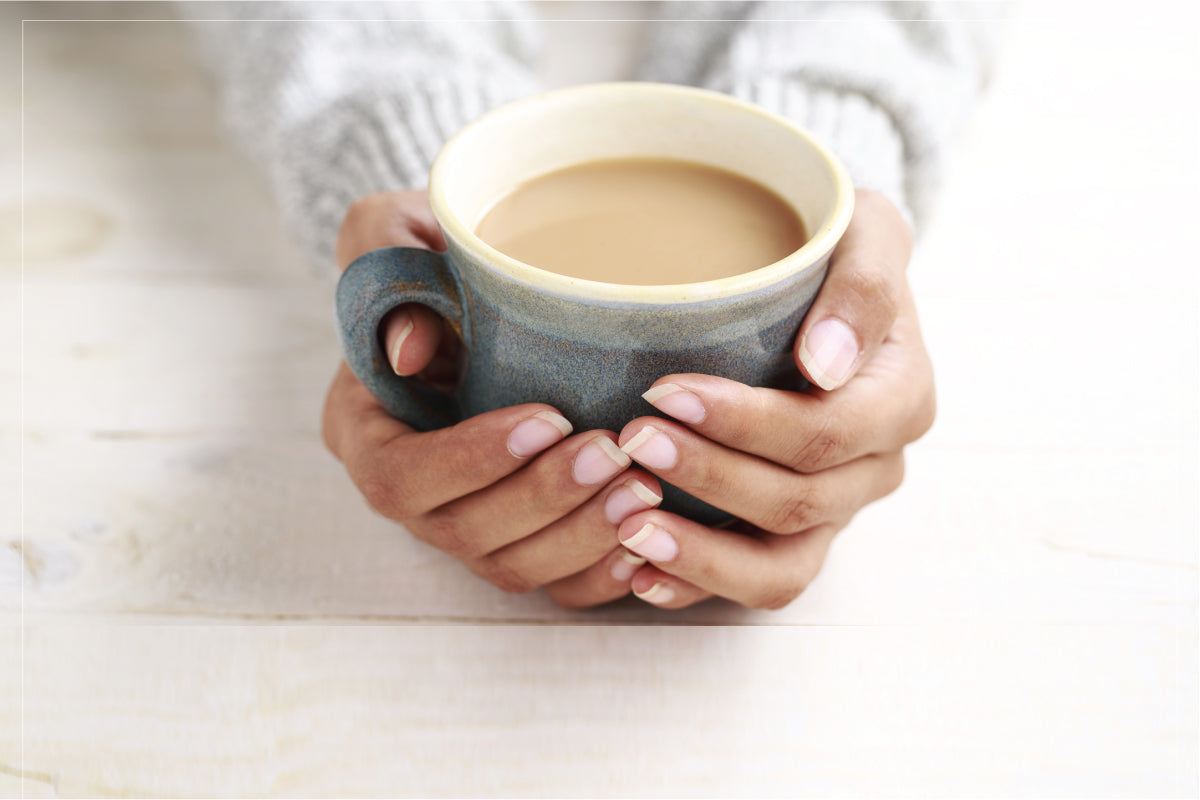
Assam black tea is the best tea for milk tea because it brews strong, malty and full-bodied enough to keep its flavor under milk and sugar.
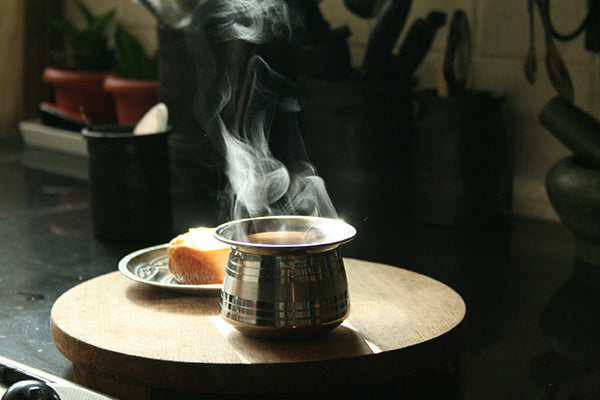
Assam Milk Tea Recipe: The Steeped Cup, the Boiled Indian Way and an Iced Milk Tea
To make Assam milk tea, steep two heaped teaspoons of Assam in 250 ml of just-boiled water for 4 to 5 minutes, strain, and stir in milk and sugar to taste.
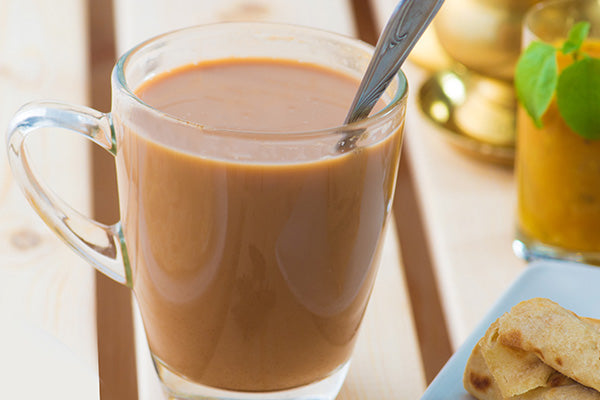
Milk Tea Around the World: Indian Chai, Hong Kong Milk Tea, Bubble Tea, Teh Tarik and Thai Tea
All of the world’s great milk teas start with strong black tea and milk; they differ in how the tea is brewed, which milk is used and how the drink is served.
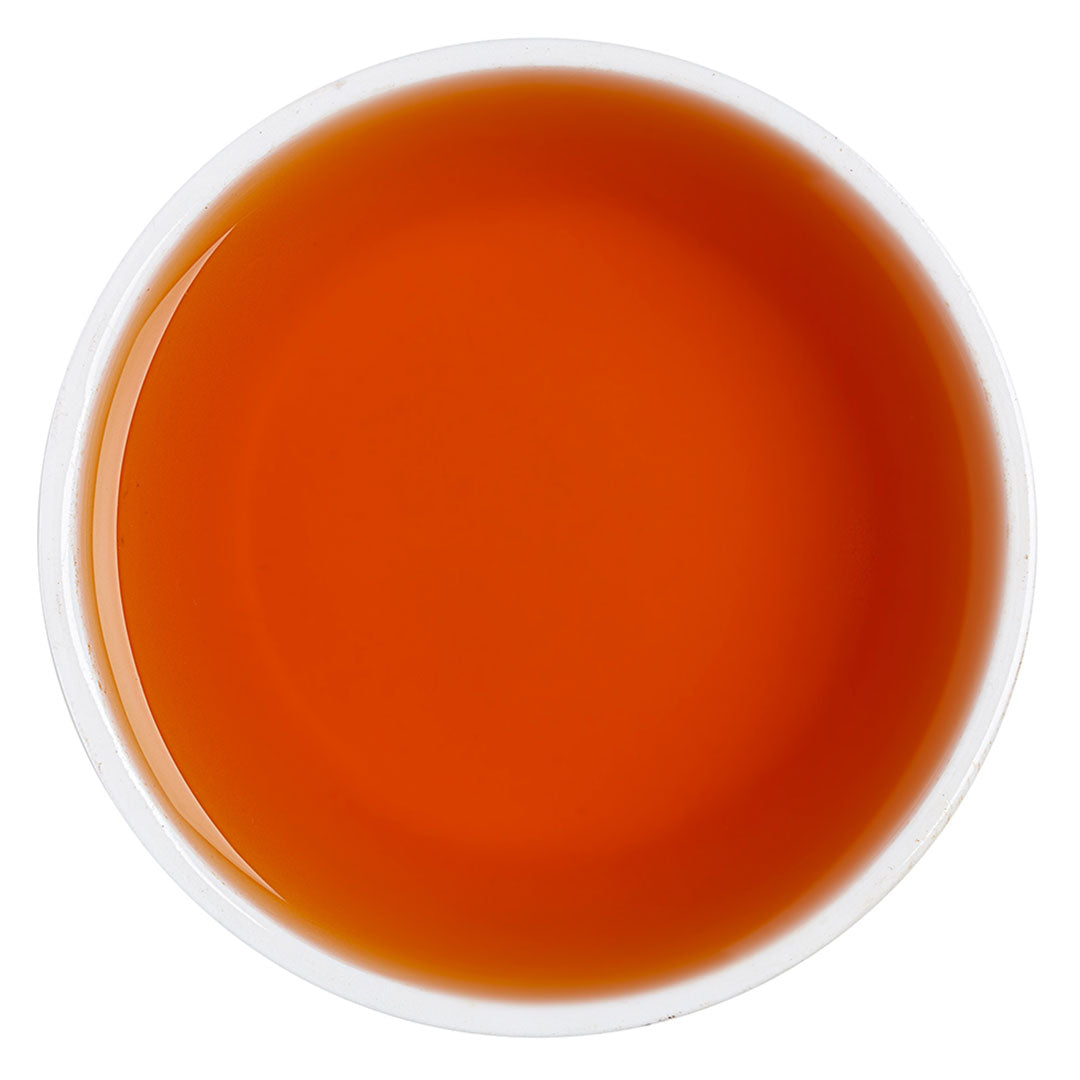
Assam Bubble Tea: How to Make Boba Milk Tea With Assam Black Tea
For bubble tea, brew Assam twice as strong as usual, let it cool, then pour it over ice and cooked tapioca pearls with milk and a little sugar syrup.
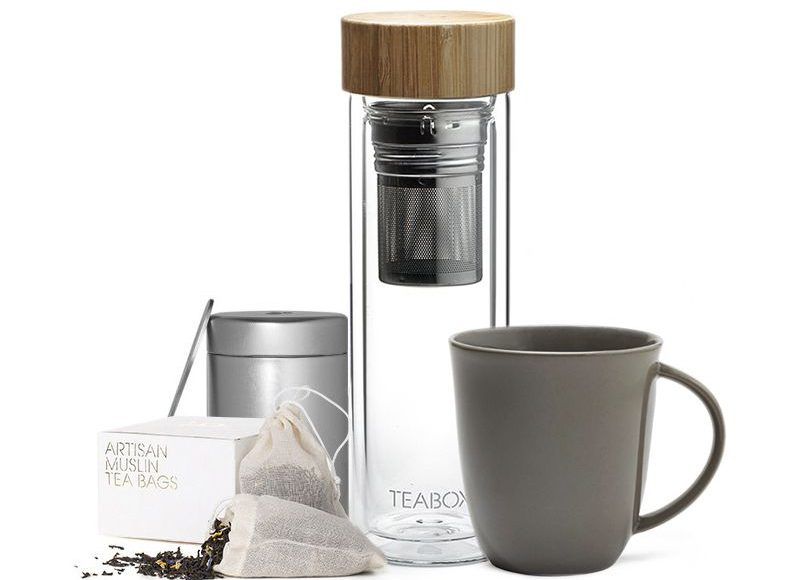
To make good tea while traveling, pack your own loose leaf in a small airtight tin, bring a compact infuser or an infuser mug, and take care over the water.

Tea on the Road: Good Water, Hotel Kettles and How to Make Tea Without a Kettle
Water is the one part of the cup you cannot bring from home, and it is what most often lets travelers down.

The Best Teas for Travel: Tea Bags, Black Teas, Oolongs, Chai and What to Leave at Home
The best teas for travel are forgiving ones that taste good even when the water or the timing is not quite right: robust black teas, oolongs, chai and good whole-leaf tea bags.

What Is Chai? Masala Chai, Chai Tea and Chai vs Tea Explained
Chai is the word for tea in Hindi and many other Indian languages, and in India it usually means strong black tea simmered with milk and sugar.
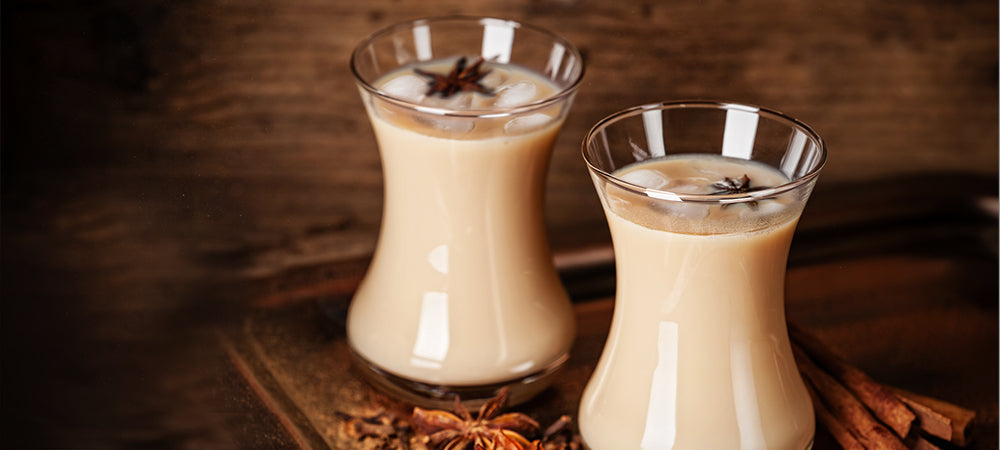
What Does Chai Taste Like? Tasting Notes From Our Chai Blends
Plain chai tastes strong, malty and creamy, with a gentle sweetness and a brisk, tannic edge from the black tea; masala chai adds warmth and fragrance from spices such as cardamom, ginger, cinnamon...
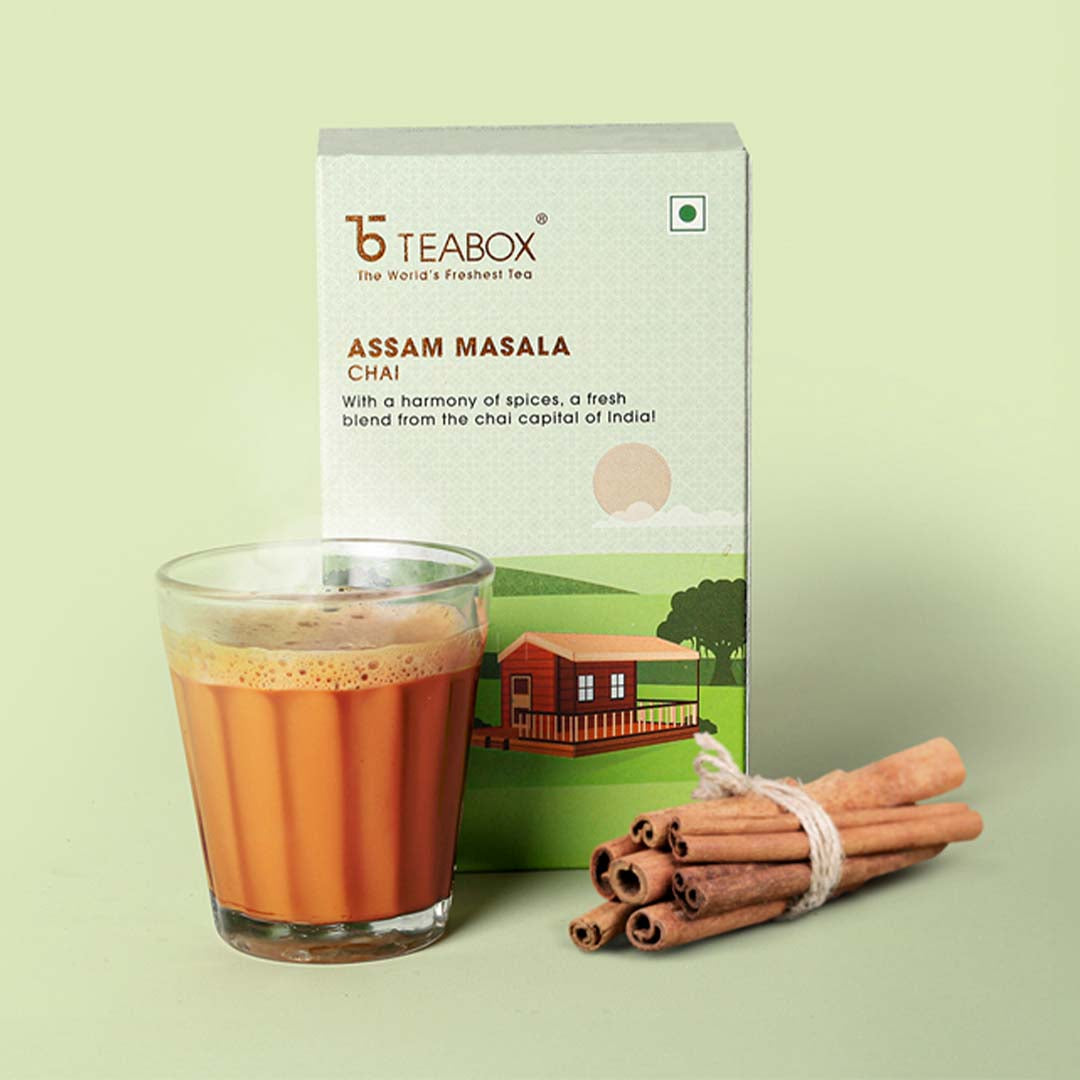
What Is Masala Chai? Spices, Blends and a Simple Recipe
Masala chai is chai made with spices: strong black tea simmered with milk, sugar and a mix (masala) of spices such as cardamom, ginger, cinnamon, clove, black pepper and fennel.

Teabox Chais: Our Regional, Kadak, Ayurvedic and Herbal Blends
We make regional chais that follow India’s map, from Kolkata, Bombay, Punjab, Kashmir, Wayanad and Assam, along with a strong Kadak Chai and a range of Ayurvedic and herbal chais.

The History of Chai in India: From Railway Stalls to Chai Cafés
Tea grew wild in Assam long before the British arrived, but chai as India drinks it is barely a hundred years old: it took shape in the early 1900s, when British tea companies pushed tea at railway...
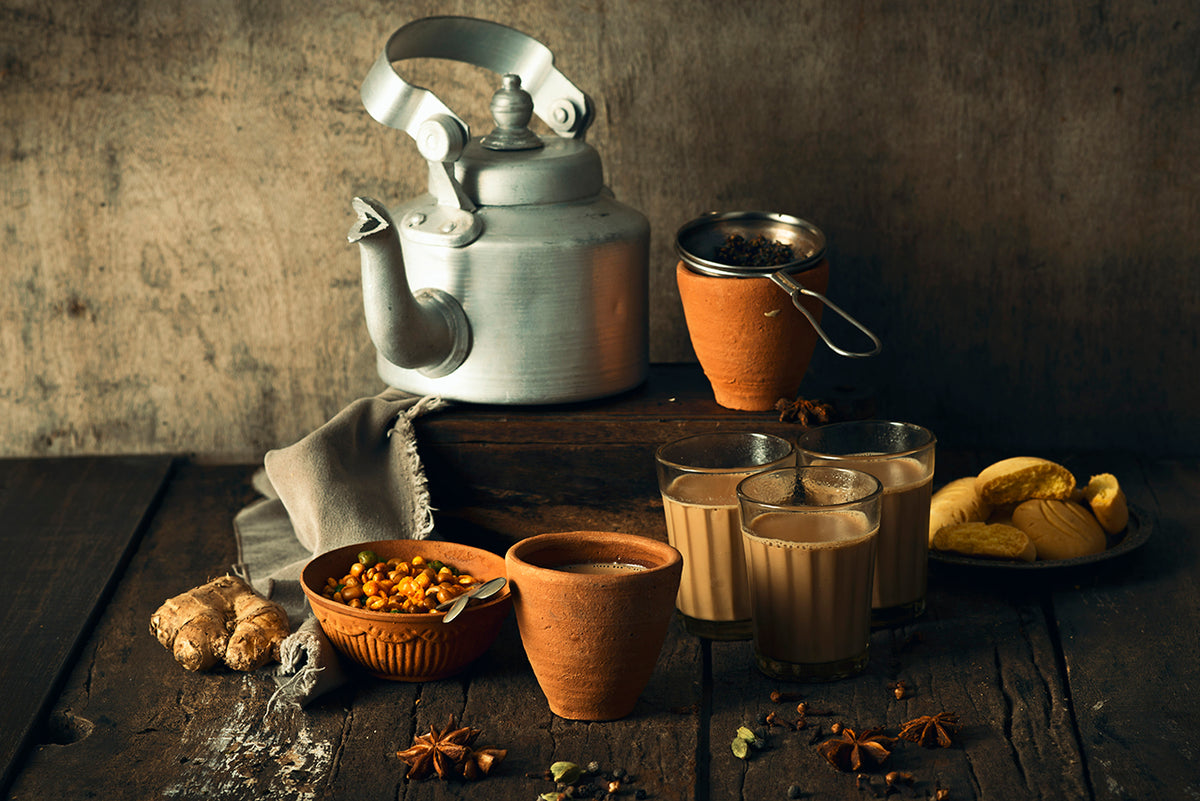
How to Make Masala Chai at Home: A Traditional Chai Recipe, Step by Step
To make masala chai, boil water, add strong black tea and lightly crushed spices, then pour in milk and sugar and simmer until the chai turns a toffee brown.
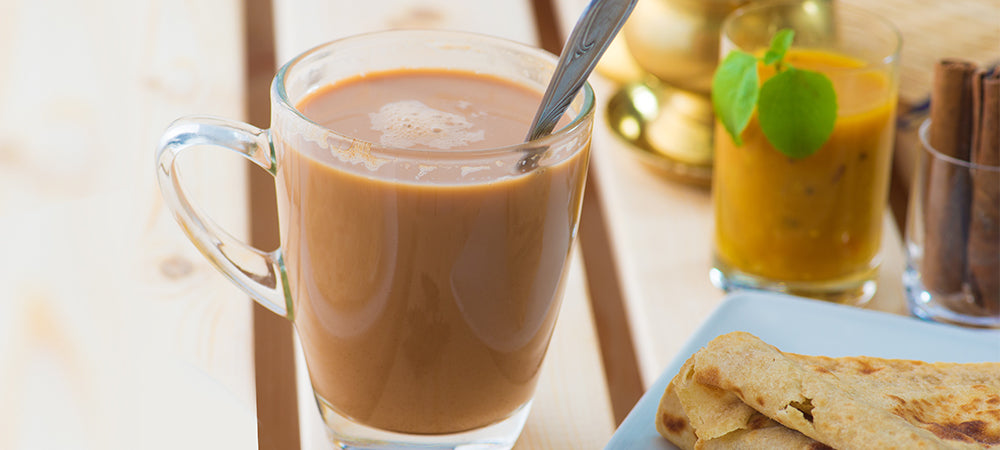
The Best Tea for Masala Chai: Assam CTC, Tea Grades and Teabox Chai Blends
The best tea for masala chai is a strong, malty black tea, and in India that almost always means Assam, usually as CTC.
Masala Chai Variations: Ginger, Cardamom, Cutting, Lemongrass, Vegan and Iced Chai
Change one element at a time: more ginger for adrak chai, cardamom alone for elaichi chai, a plant milk for a vegan cup, or a strong brew chilled and poured over ice for iced chai.

Chai Masala: What Spices Are in Chai, and How to Make Your Own Chai Spice Mix
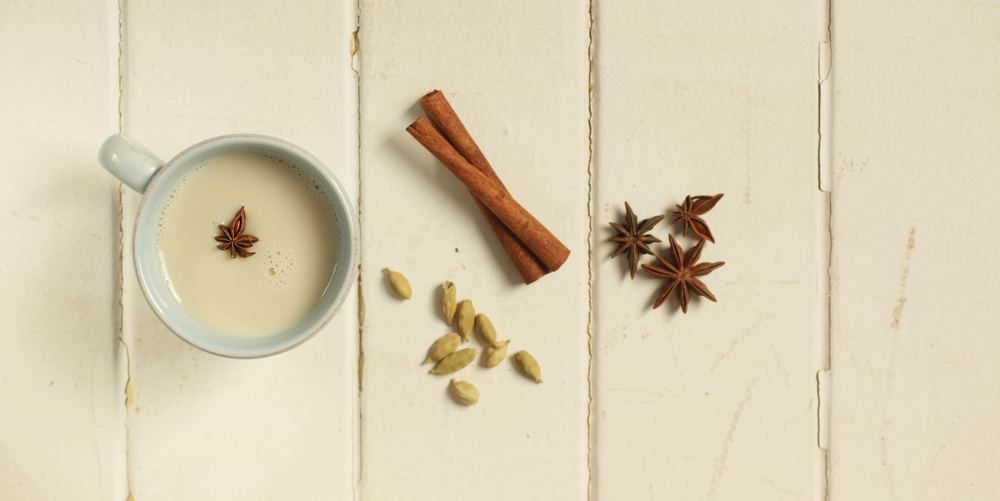
Chai masala is the spice mix that turns milky Indian tea into masala chai, and its core is five warm spices: cardamom, ginger, cinnamon, clove and black pepper.
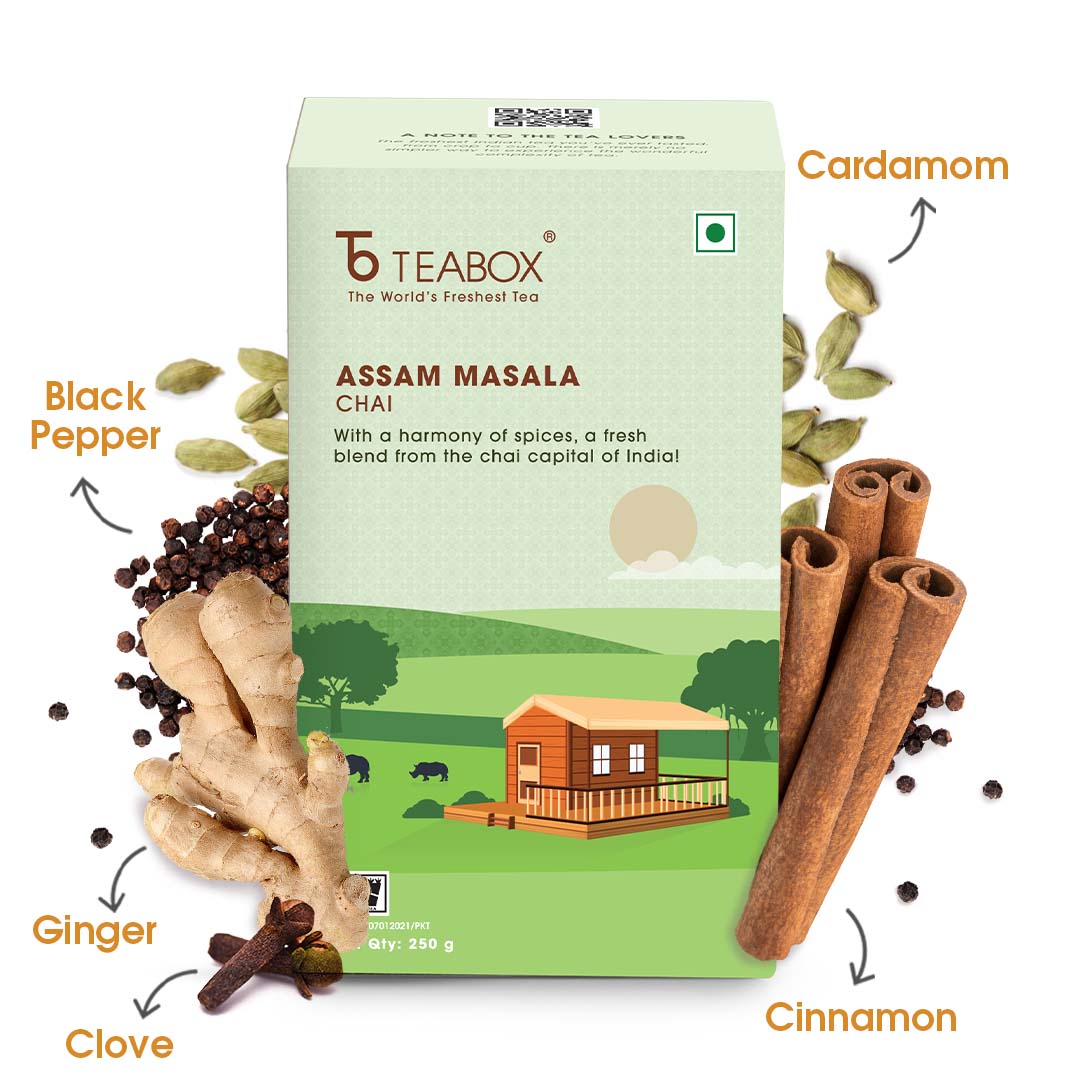
The Five Chai Spices: Cardamom, Ginger, Cinnamon, Clove and Black Pepper
Cardamom brings a cool, floral sweetness; ginger adds lemony heat; cinnamon gives sweet warmth; clove adds depth; and black pepper gives a slow heat at the back of the throat.
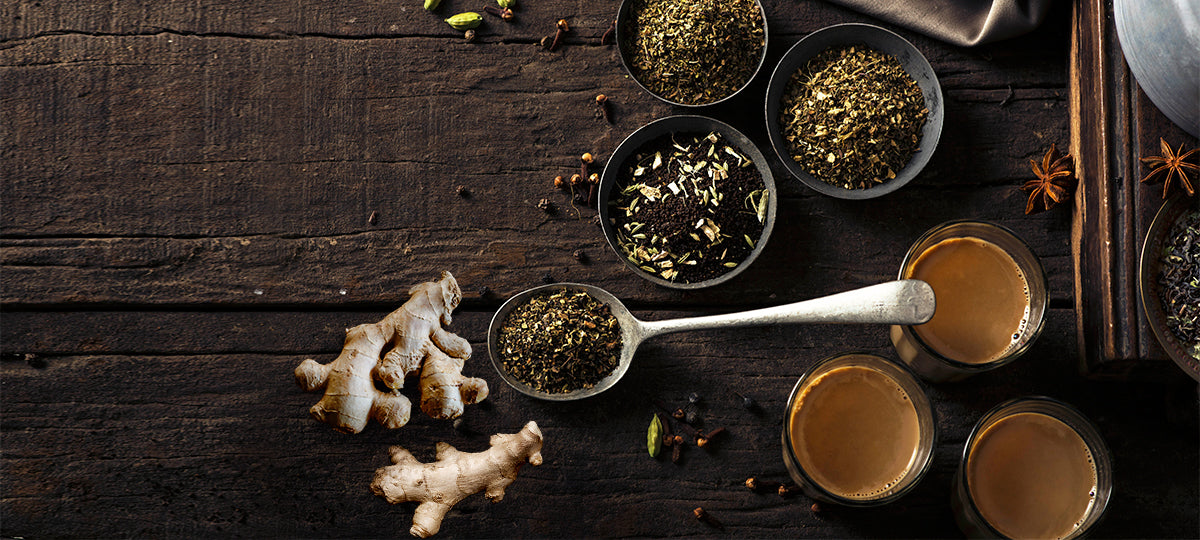
Chai Masala Recipe: How to Make Chai Spice Mix and Spiced Chai at Home
To make chai masala powder, lightly toast whole cardamom, cloves, black peppercorns and cinnamon, grind them fine, and mix in dried ginger powder.
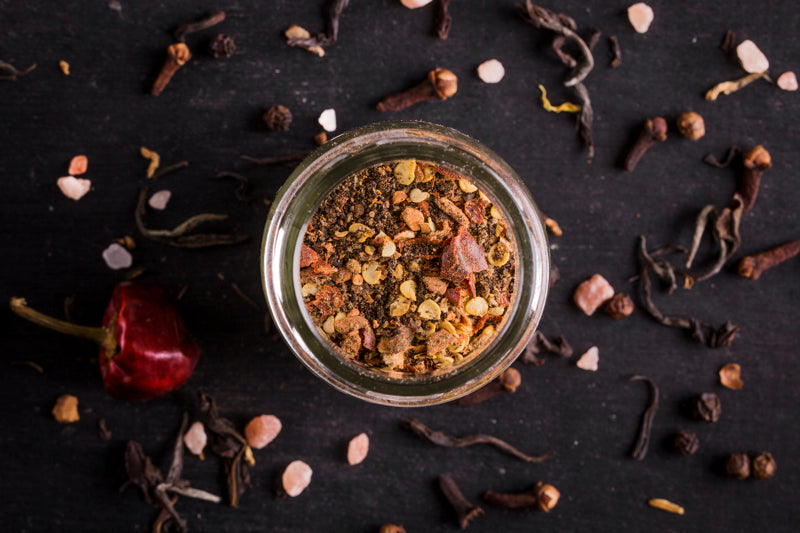
Regional Chai Masala Blends: How the Spice Mix Changes Across India
Chai masala changes across India, and our regional blends show the range: ginger and fennel for Mumbai’s cutting chai, saffron and nutmeg for Kolkata, saffron and rose for Kashmir, and cardamom alo...
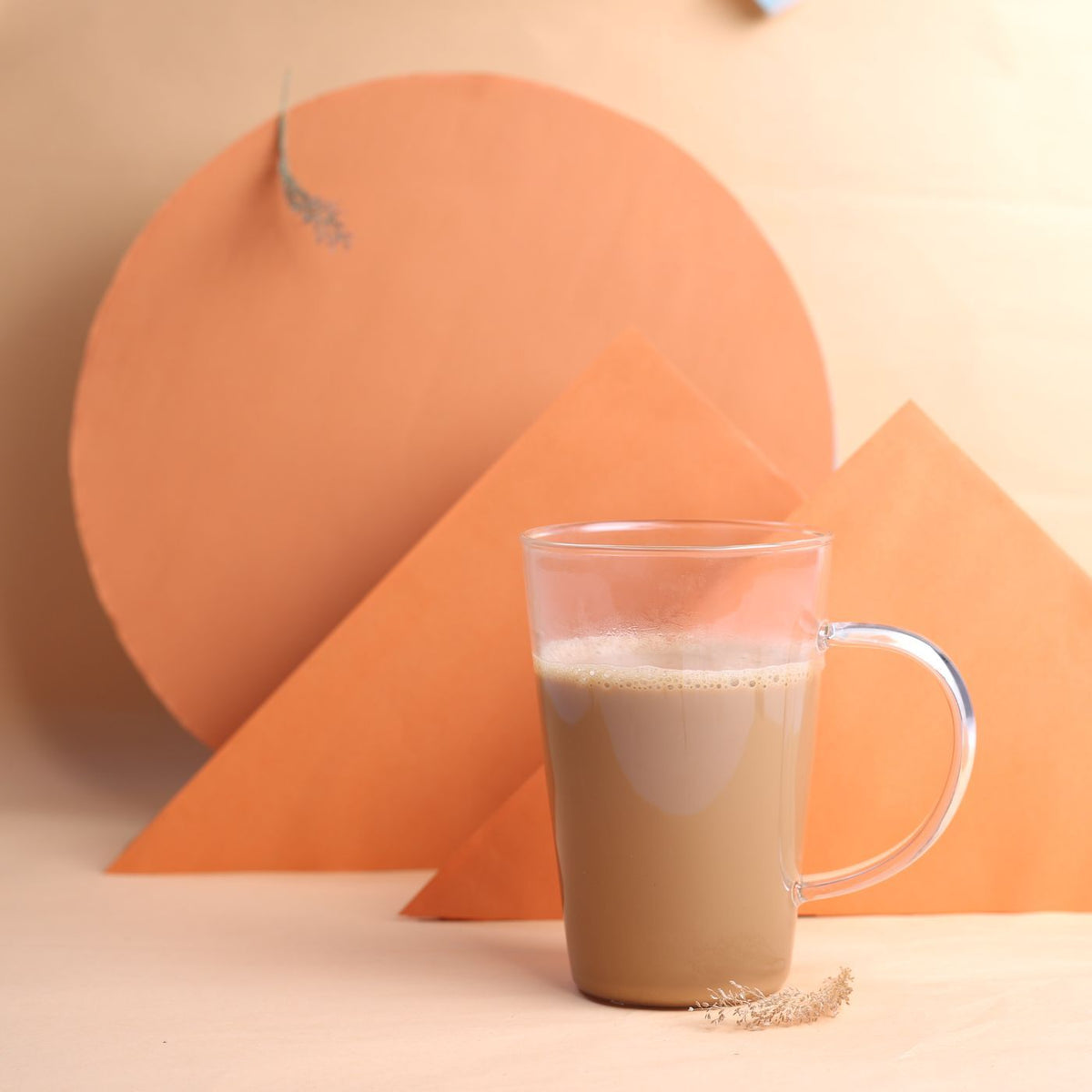
Chai Concentrate, Chai Syrup and Chai Powder: How to Make and Use Them
Chai concentrate is strongly brewed, strained spiced tea that you keep in the fridge and mix with milk for a fast cup of chai or a chai latte.
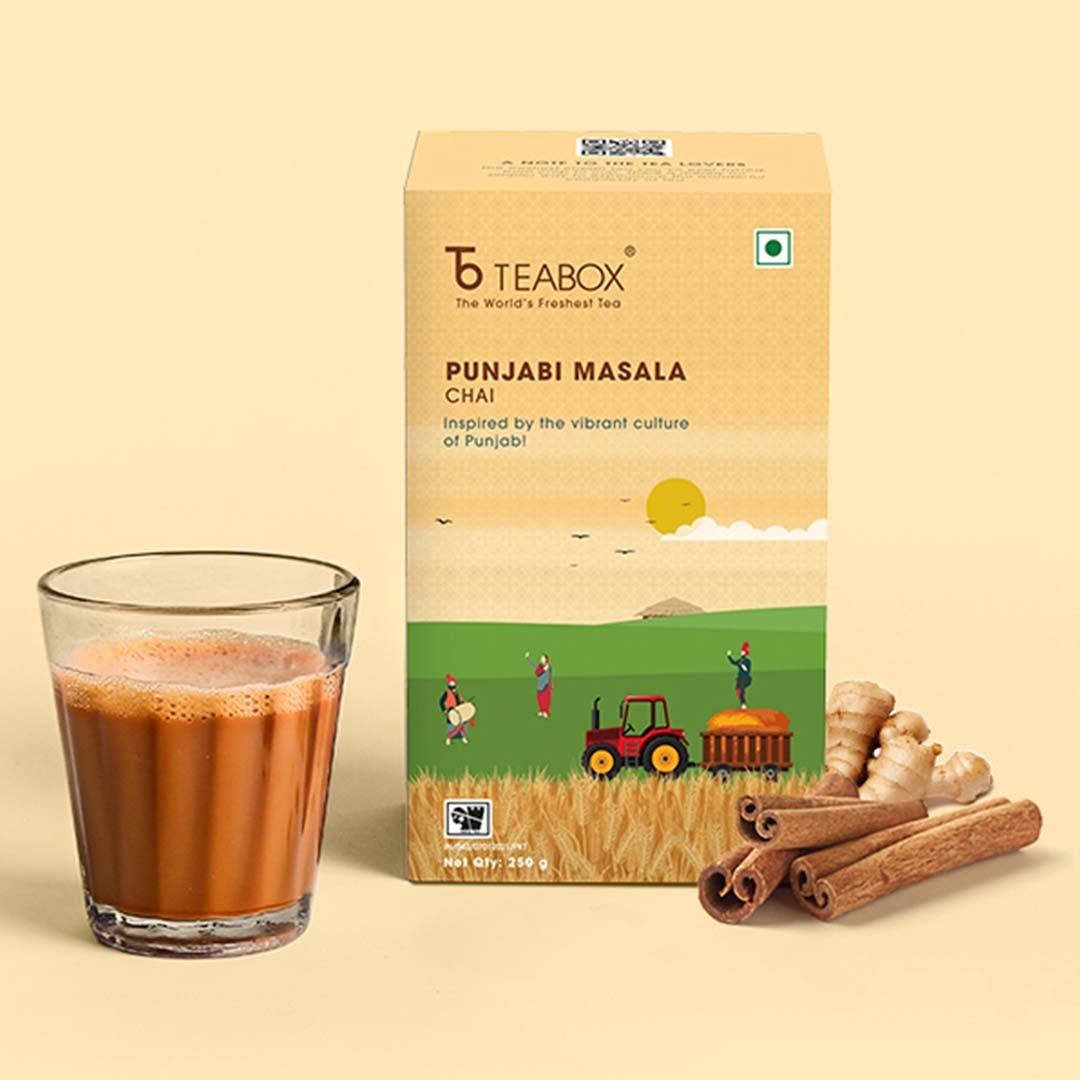
How to Make Chai Concentrate at Home: Two Teabox Recipes
Steep 5 teaspoons of a loose-leaf masala chai blend in 400 ml of hot water for 10 minutes, strain, and refrigerate.
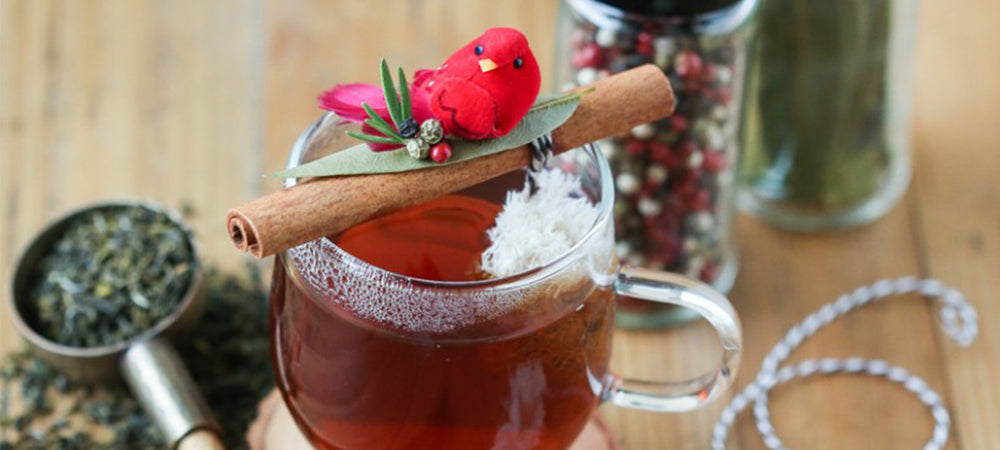
Chai Syrup and Chai Powder: How to Make One and Choose the Other
Chai syrup is a simple sugar syrup simmered with chai spices and strained: it adds sweetness and spice in one pour, but on its own it is not tea.
Chai Lattes, Iced Chai and Mocktails from Chai Concentrate
For a hot chai latte, mix 80 ml of concentrate with sugar or honey and top up with hot, frothed milk; for iced chai, pour concentrate over ice and add cold milk.
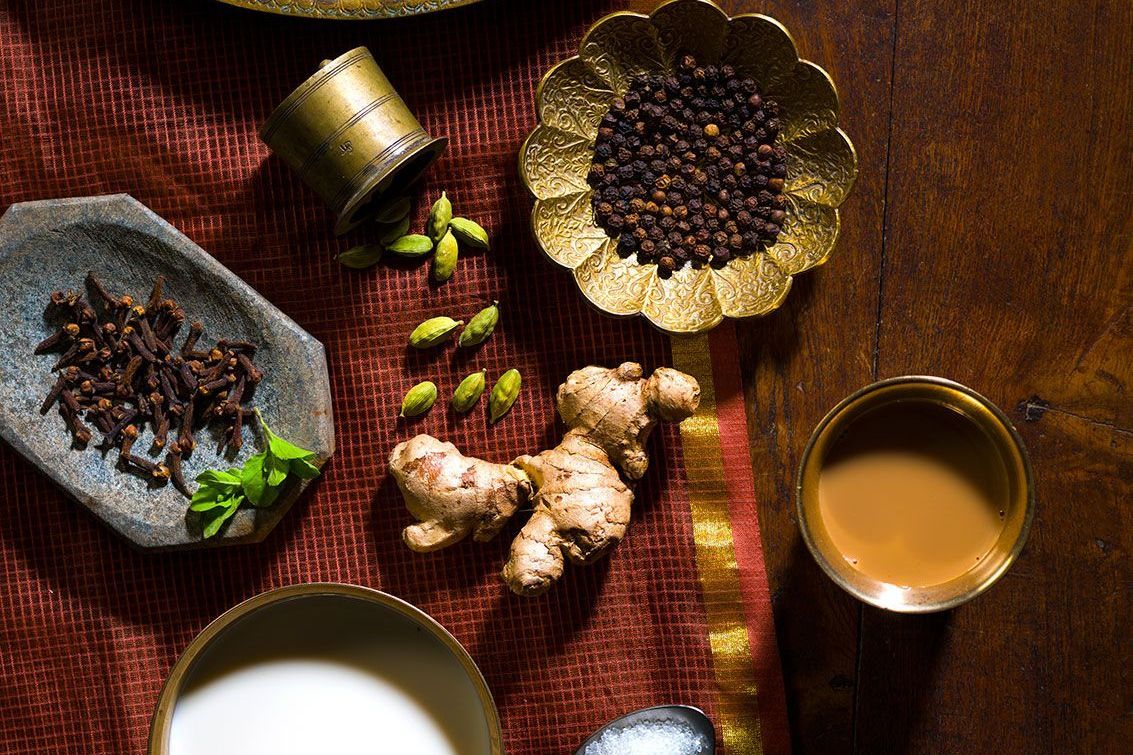
What Is a Chai Latte? How to Make a Chai Latte at Home, Hot or Iced
A chai latte is strong, spiced black tea topped up with hot, frothed milk and usually sweetened: the café-style cousin of Indian masala chai.
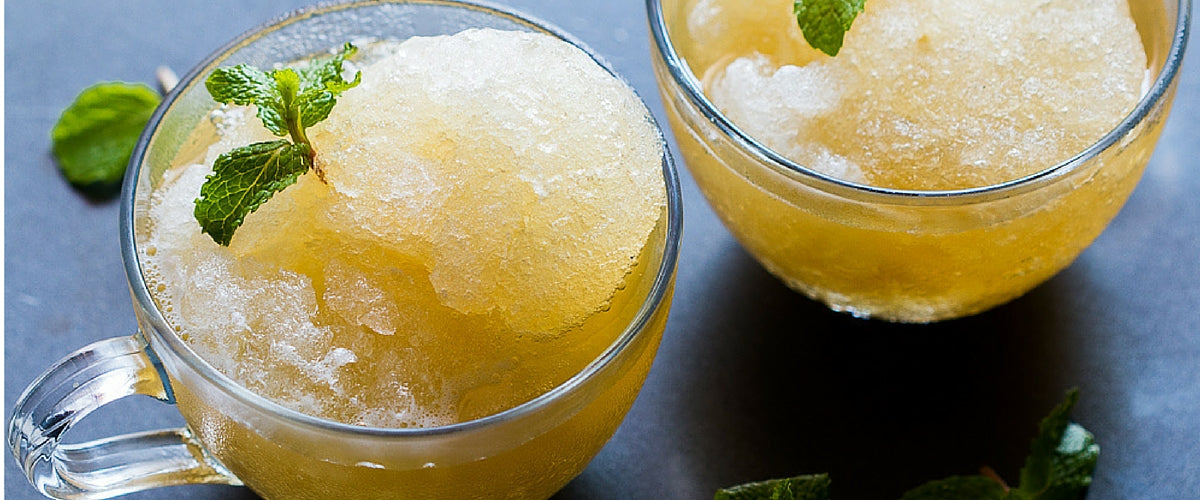
Iced Chai Latte: How to Make It at Home, Plus a Make-Ahead Chai Concentrate
Brew the spiced tea extra strong, let it cool, chill it, then pour it over ice and top it with cold milk.
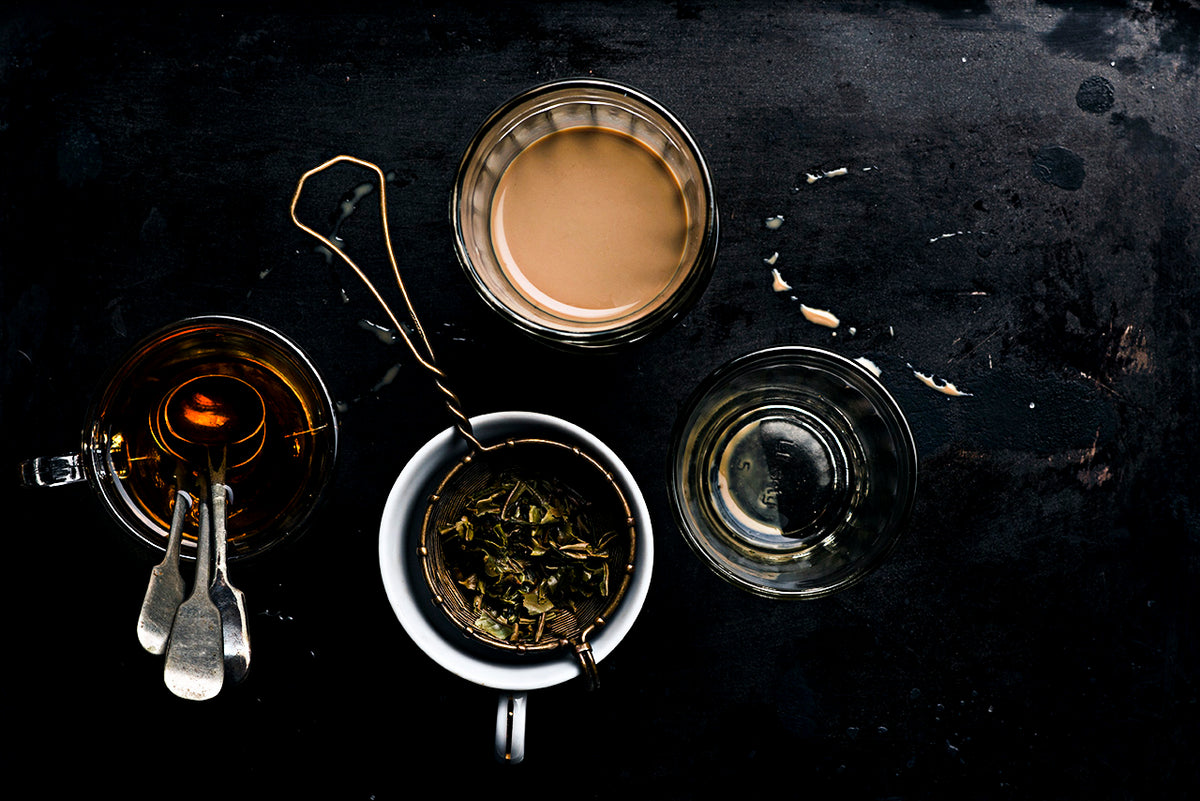
Chai Latte Variations: Vanilla, Chocolate, Oat Milk, Regional Chais and Dirty Chai
Once you can make a plain chai latte, you can change almost anything in it: the milk, the sweetener, the chai blend, even what goes into the cup beside the tea.
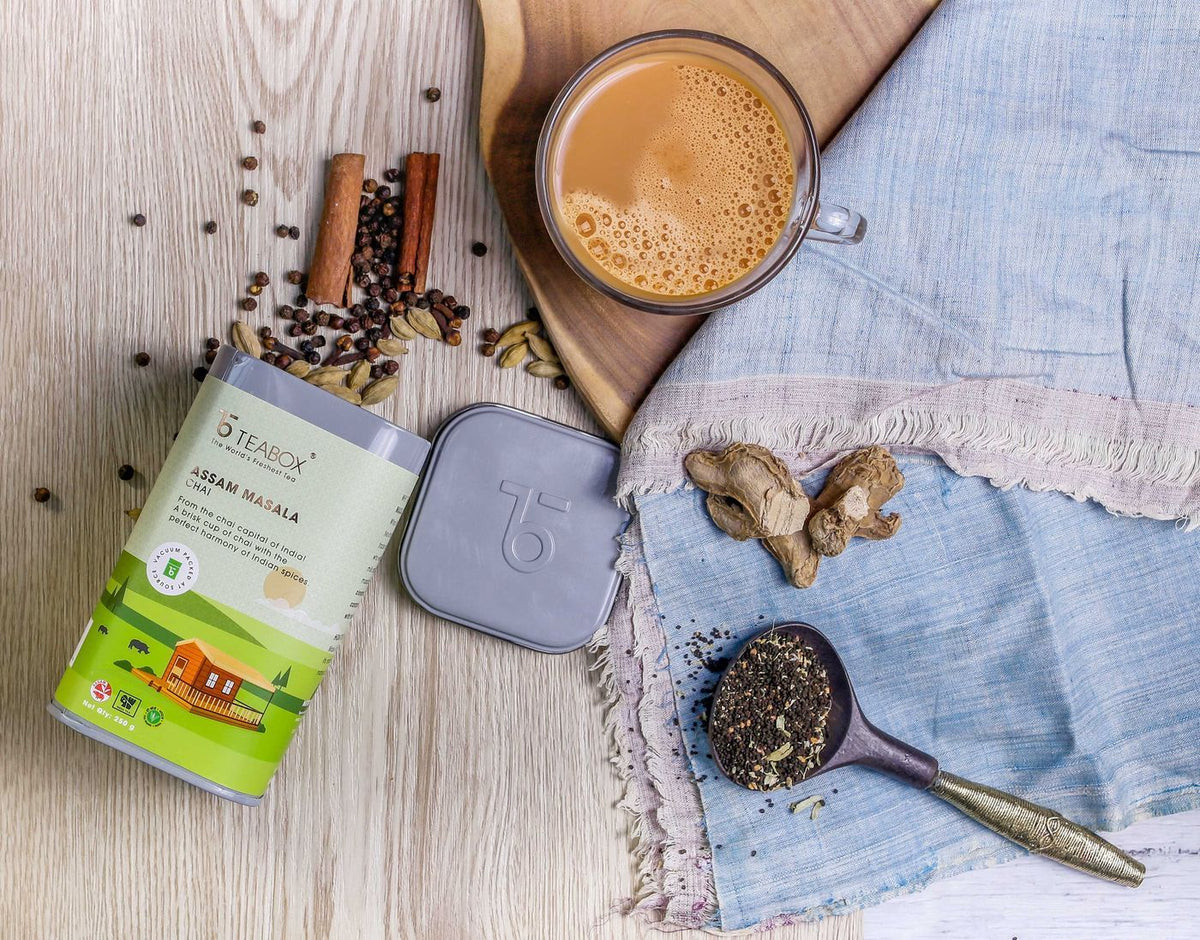
Dirty Chai: What It Is, a Dirty Chai Latte Recipe, and How to Make It Iced
A dirty chai is a chai latte with a shot of espresso added: spiced, milky black tea with coffee stirred through it.

Dirty Chai Recipes: A Hot Dirty Chai Latte, Iced Dirty Chai, and No Espresso Machine Needed
The chai has to be strong, because milk and coffee both soften it. Brew it longer and with more leaf than you would for a plain cup.
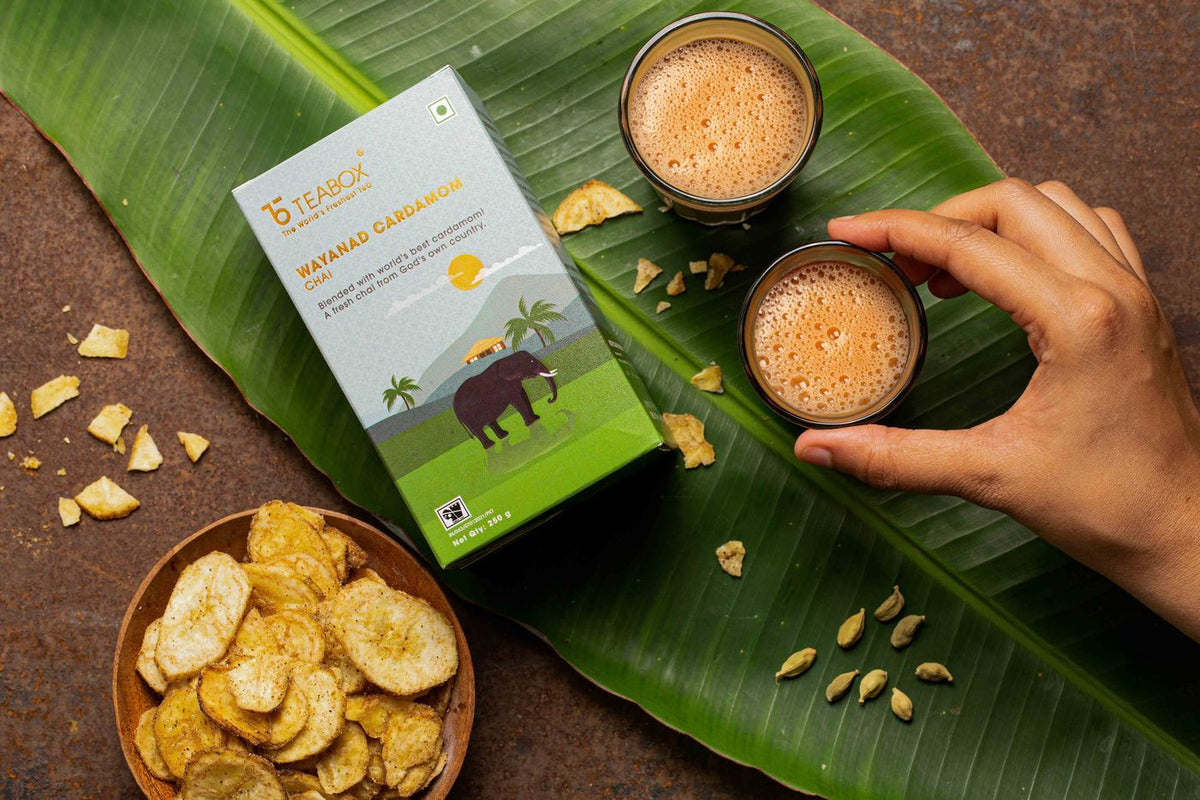
Types of Chai in India: Cutting, Irani, Ginger, Kolkata, Sulaimani and More
India has no fixed number of chais: every region, café and household makes its own, but about a dozen styles are widely known.
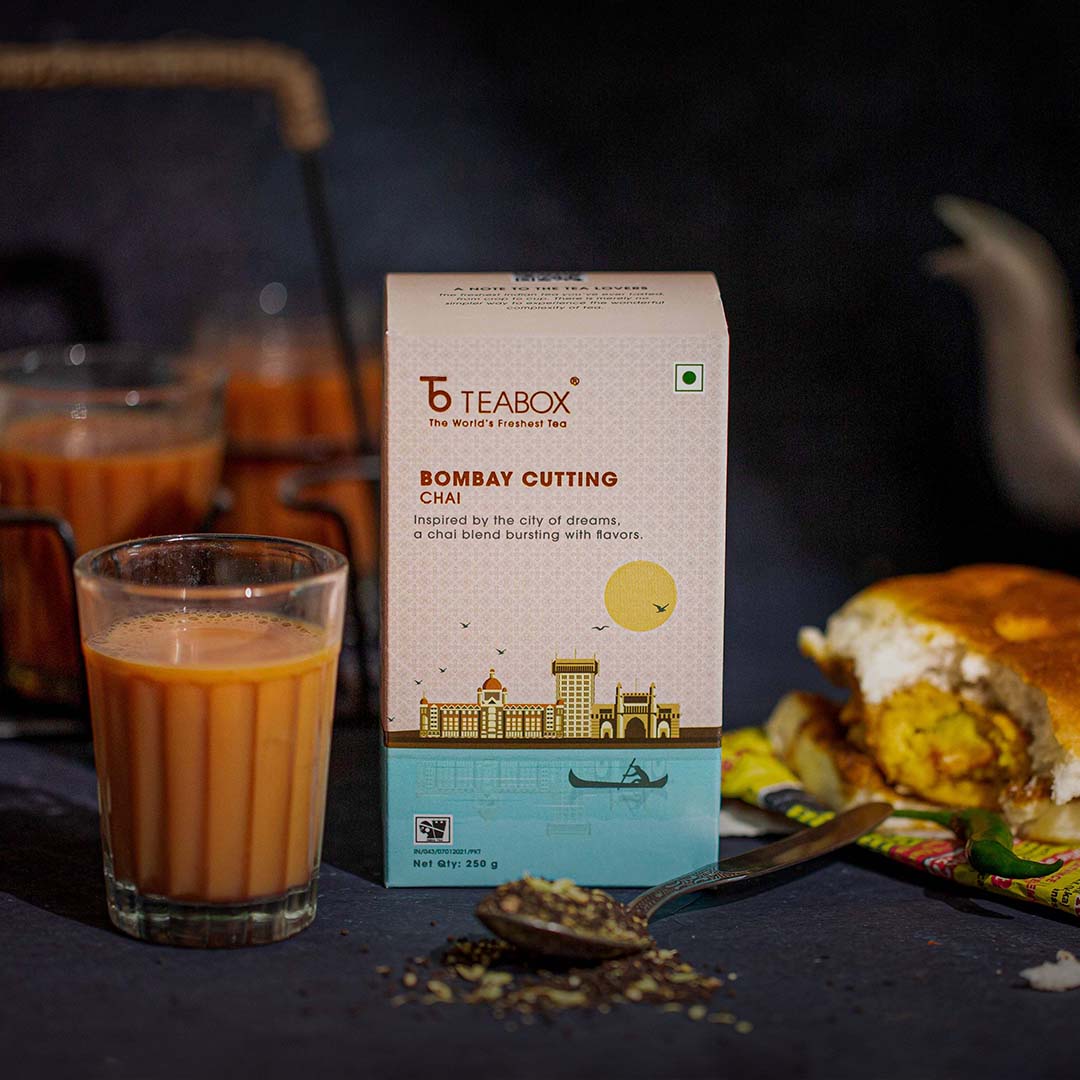
Cutting Chai and Irani Chai: Mumbai’s Half Glass and the Irani Café Cup
Cutting chai is Mumbai’s street chai, served as half a glass: strong, sweet and milky, and often spiced with ginger and cardamom.
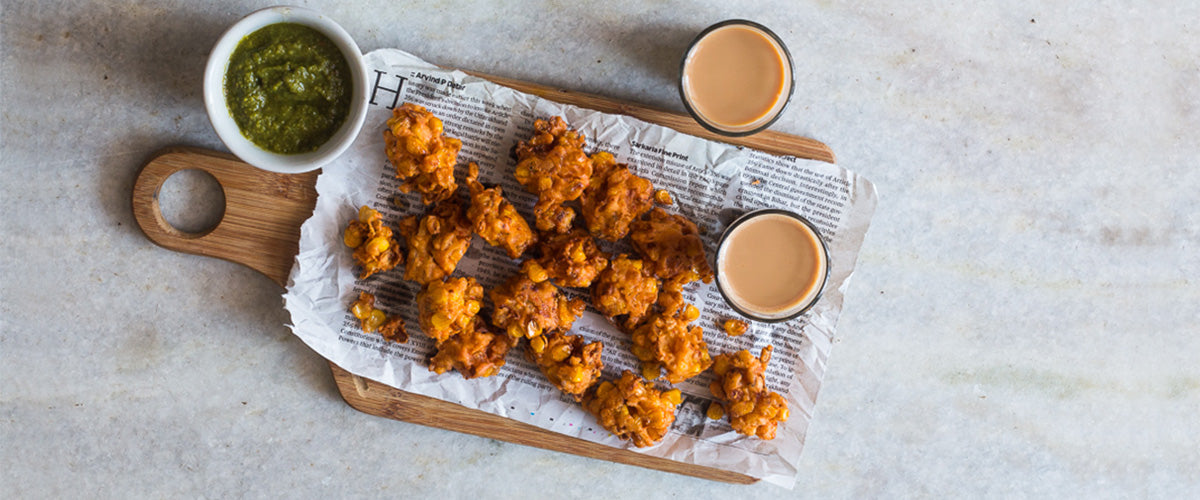
Adrak (Ginger) Chai: What It Is, Why It Curdles and How to Make It
Adrak chai is chai made with fresh ginger (adrak in Hindi), crushed and boiled in the pot so that the cup has a warm, peppery bite.
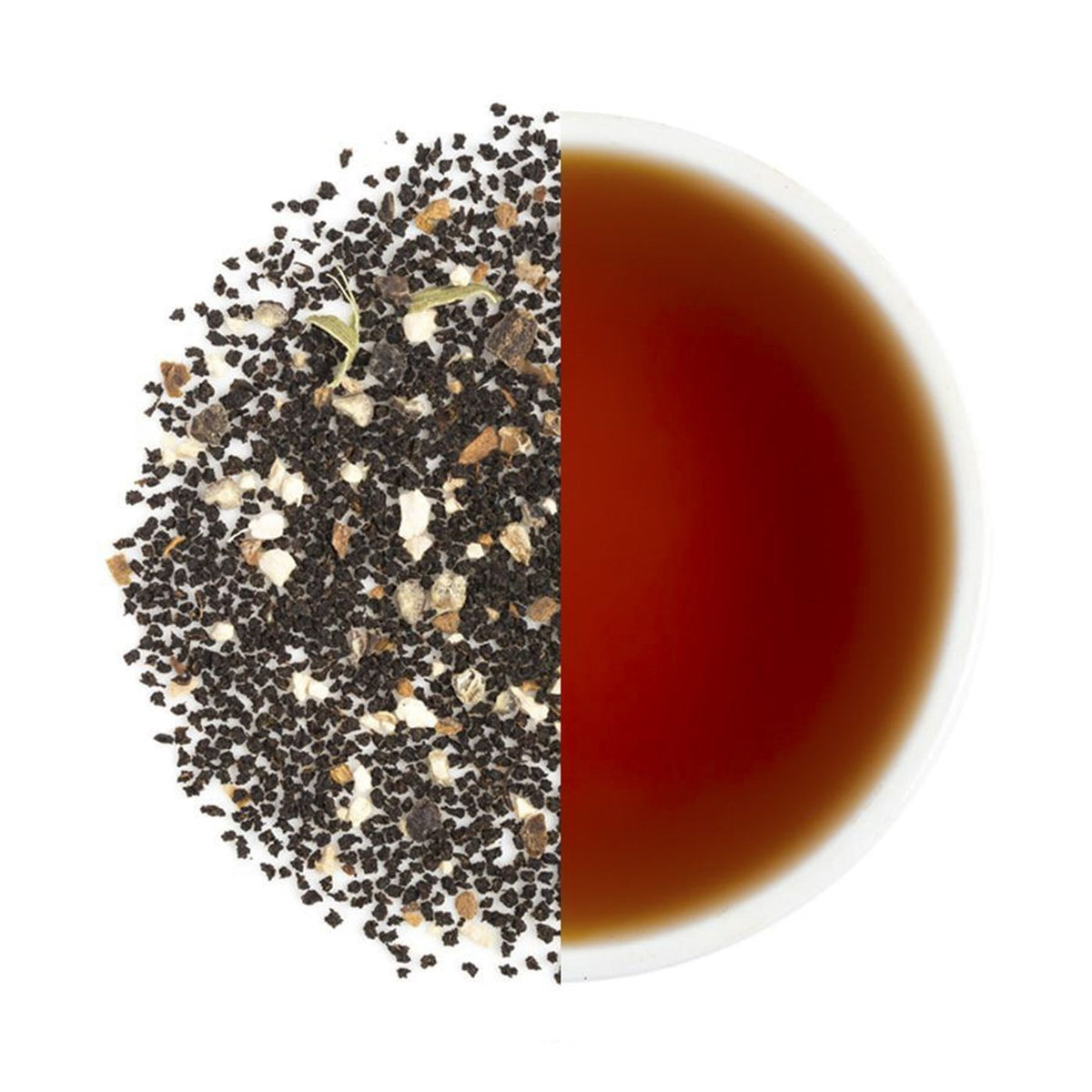
Kolkata Chai, Matka Chai and Tandoor Chai: India’s Chai in Clay
All three are chai in clay. Kolkata chai is sweet, milky and sometimes scented with saffron, sold in small clay cups; matka (kulhad) chai is any chai served in an unglazed clay cup; tandoor chai is...
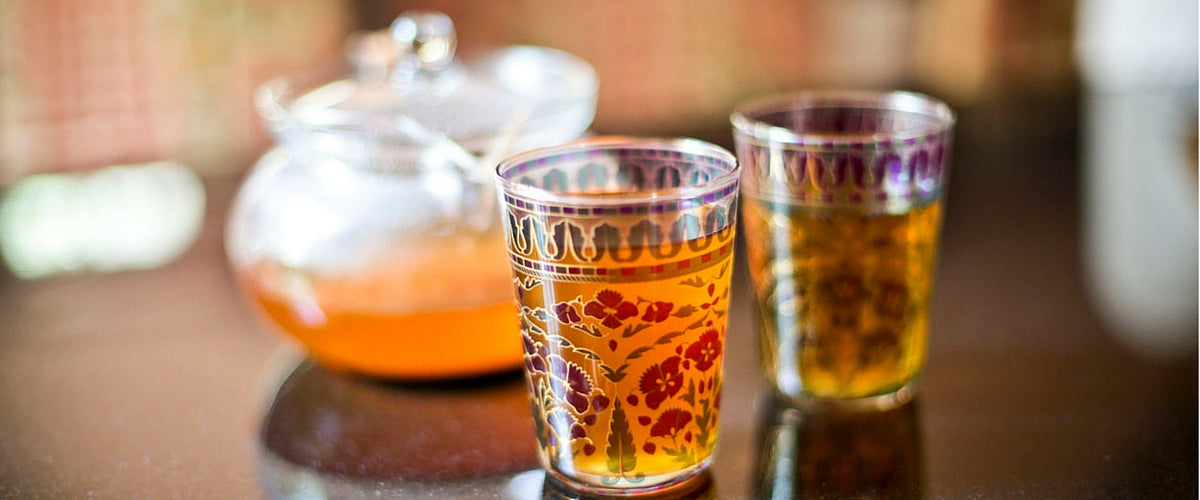
Sulaimani Tea: The Spiced Black Tea of Kerala’s Malabar Coast, With Recipe
Sulaimani (also spelled sulemani) is the black tea of Kerala’s Malabar coast: tea brewed without milk, sweetened, and served in small glasses with lime, usually cardamom and sometimes saffron.
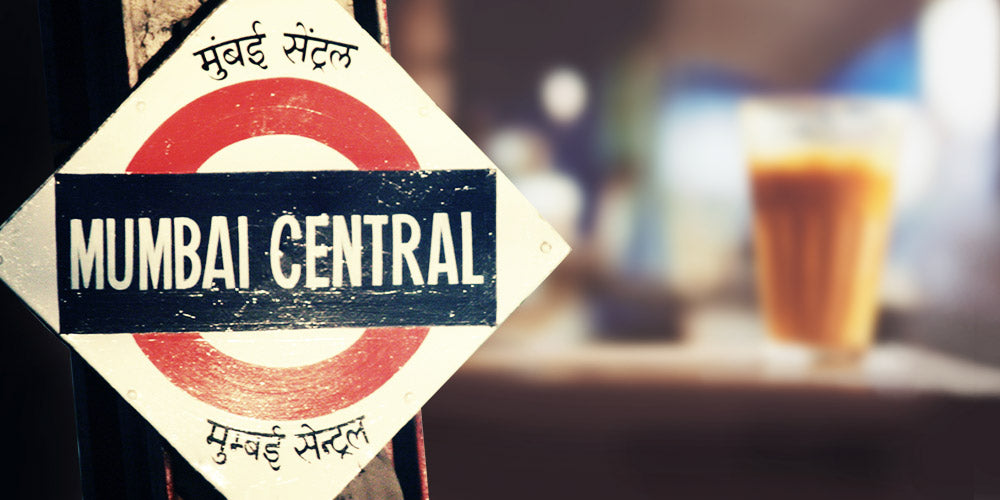
Karak Chai (Kadak Chai): What It Is, How It Differs From Masala Chai, and a Karak Tea Recipe
Karak chai is strong black tea, usually Assam CTC, boiled hard with milk and sugar until it turns thick, sweet and toffee-colored.
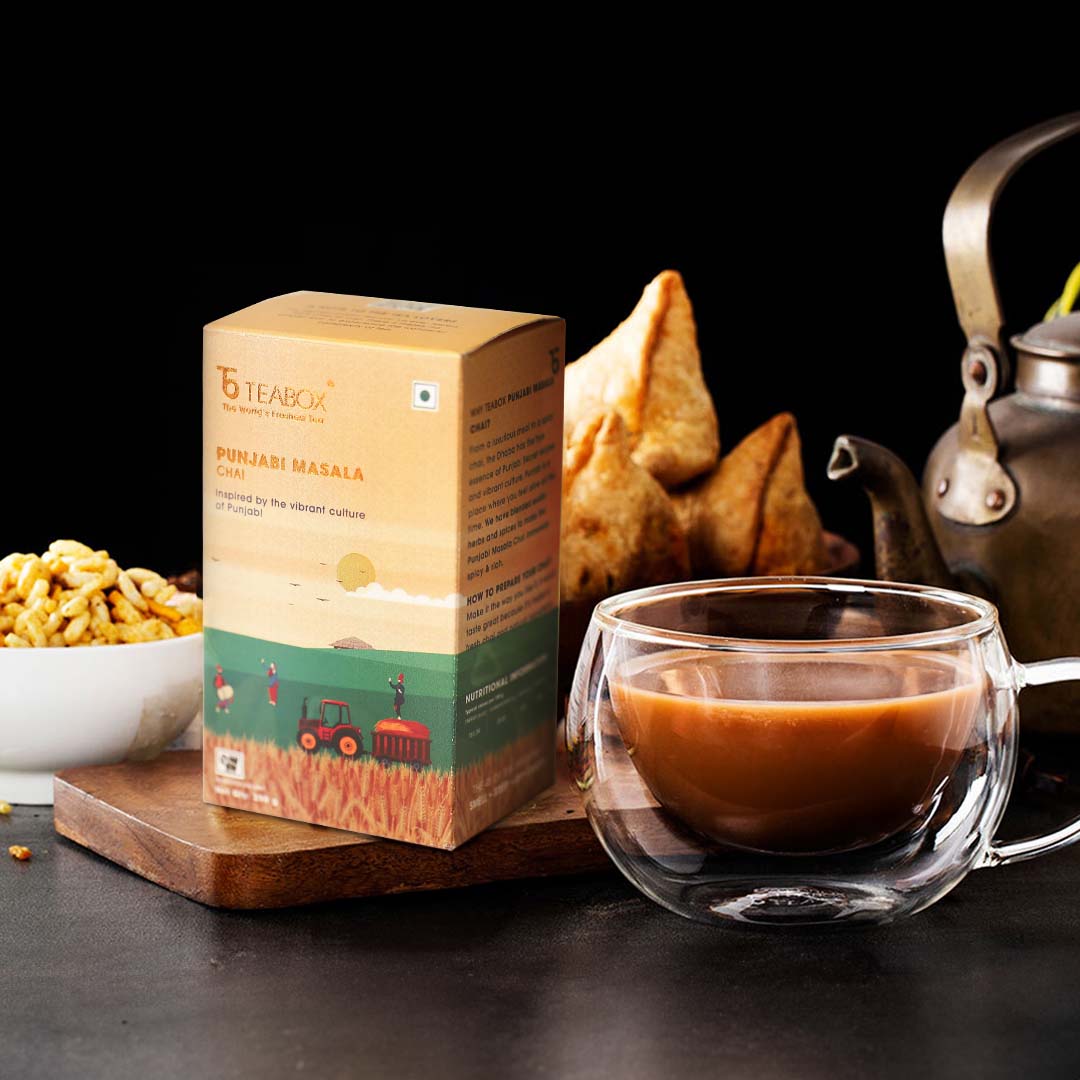
Karak Chai Recipe: How to Make Strong Kadak Chai at Home
To make karak chai, boil strong CTC tea in water for about two minutes, add milk and sugar, then let the pan rise to the boil twice more until the chai turns the color of toffee, and strain.
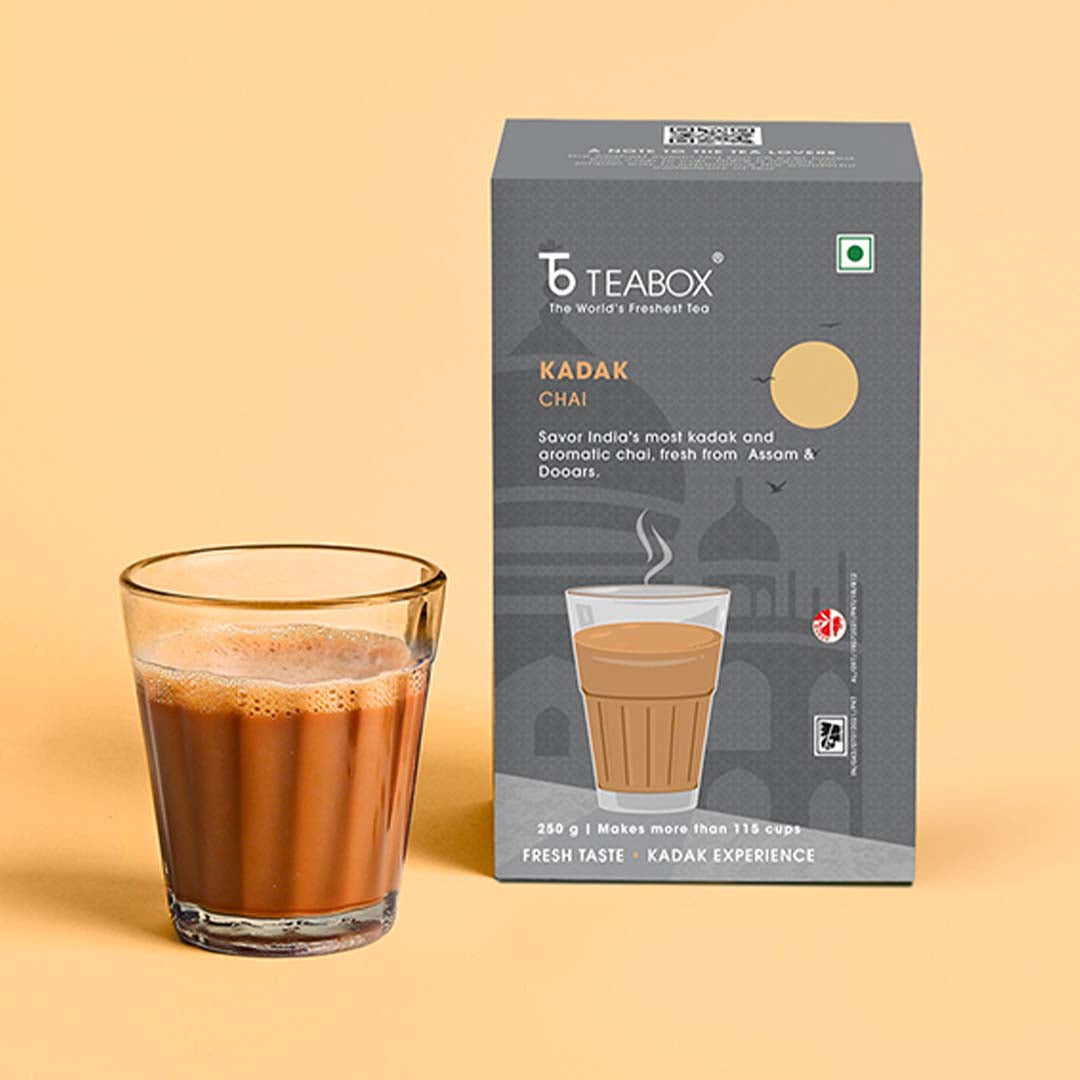
The Best Tea for Karak Chai: Why Assam CTC Works, and How to Choose It
The best tea for karak chai is a fresh Assam CTC: small, even granules that brew fast, give a dark, malty liquor and keep their strength through a long boil and a lot of milk.
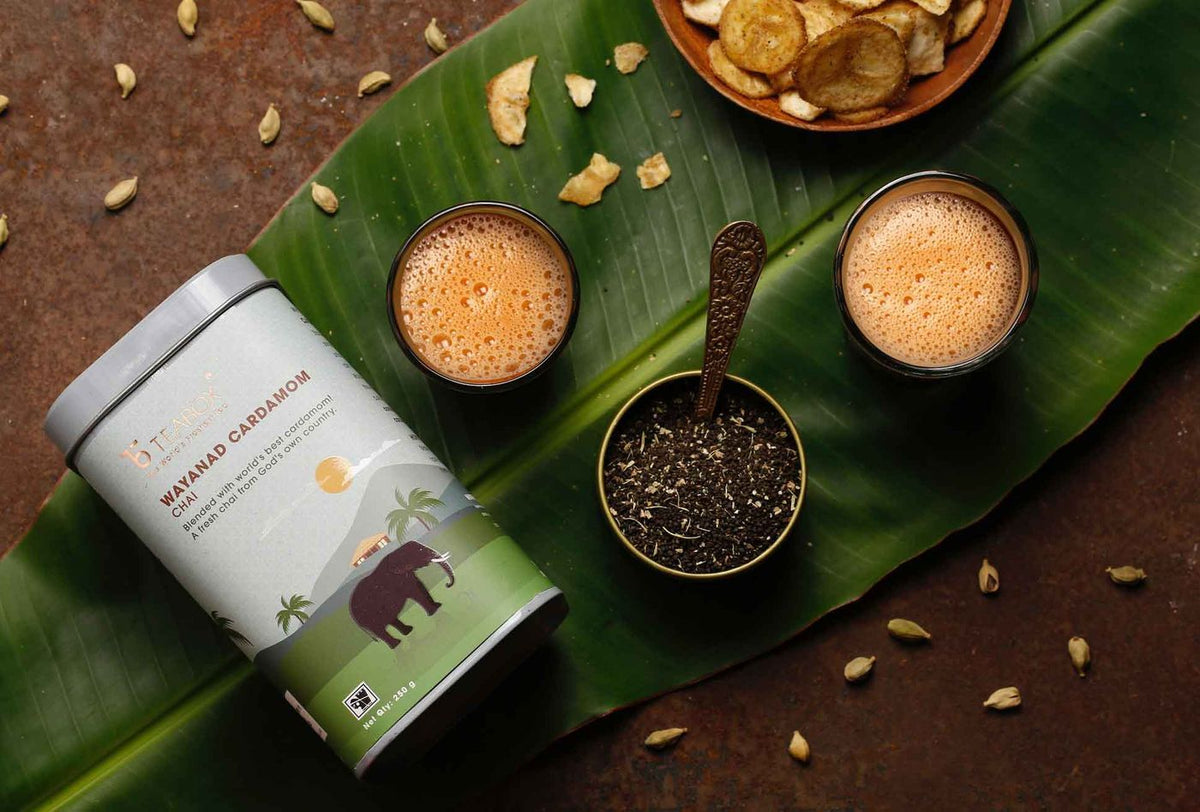
Cardamom Tea and Elaichi Chai: What It Is, How to Make It and Where India’s Cardamom Grows
Cardamom tea, or elaichi chai, is black tea simmered with milk, sugar and crushed green cardamom pods, and one of the most popular chais in India.

Elaichi Chai Recipe, Iced Cardamom Chai and Cardamom Tea Without Milk
Unlike a pot of loose leaf tea, chai is not steeped: it is simmered at a medium-to-high heat, which binds the strength of the tea to the milk and gives a creamy, dense cup.
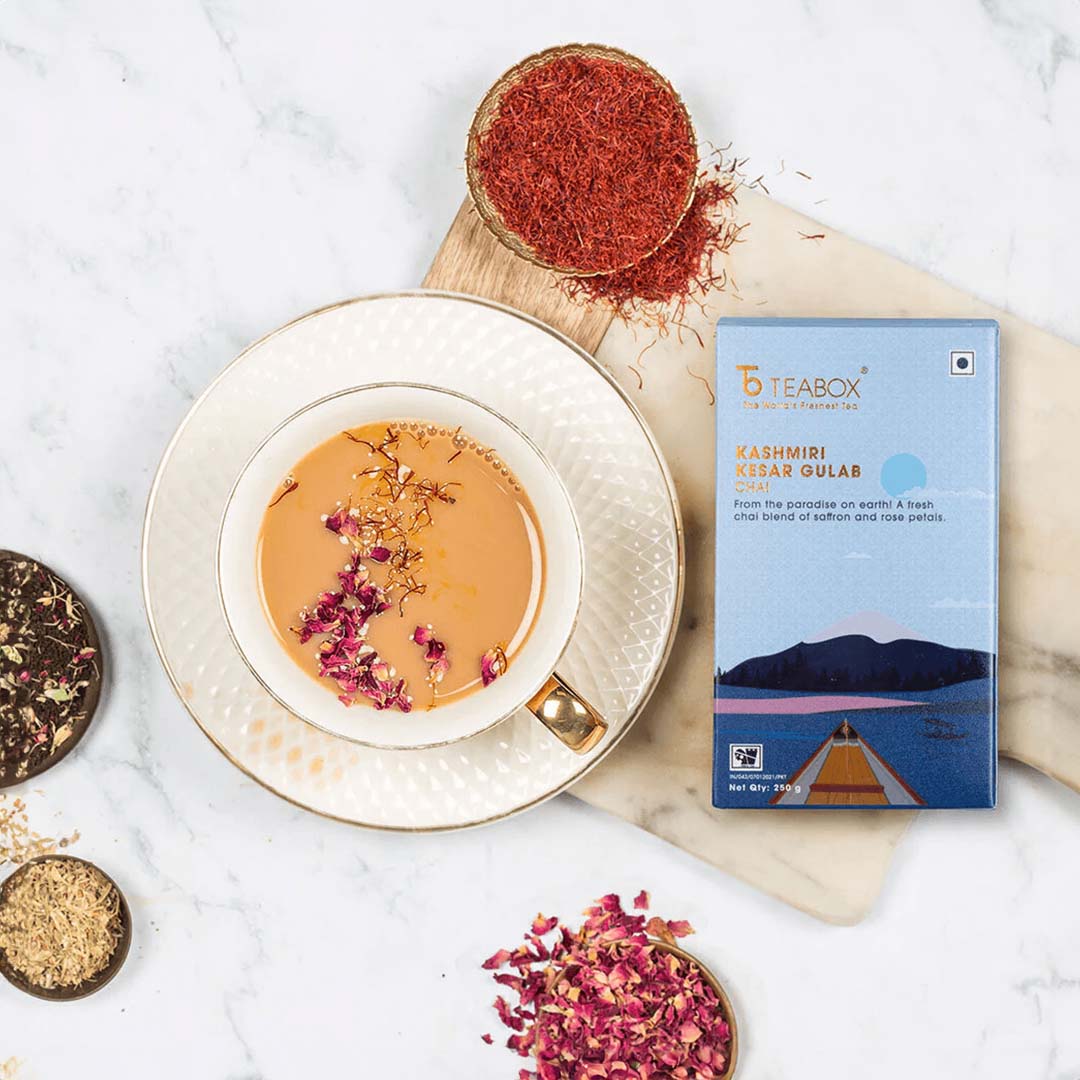
What Is Kashmiri Pink Chai? Noon Chai, Kashmir’s Salted Pink Tea, and How to Make It
Kashmiri pink chai, also called noon chai or sheer chai, is a salted milk tea from Kashmir, made by boiling green tea leaves with a pinch of baking soda until the brew turns deep red, then adding m...
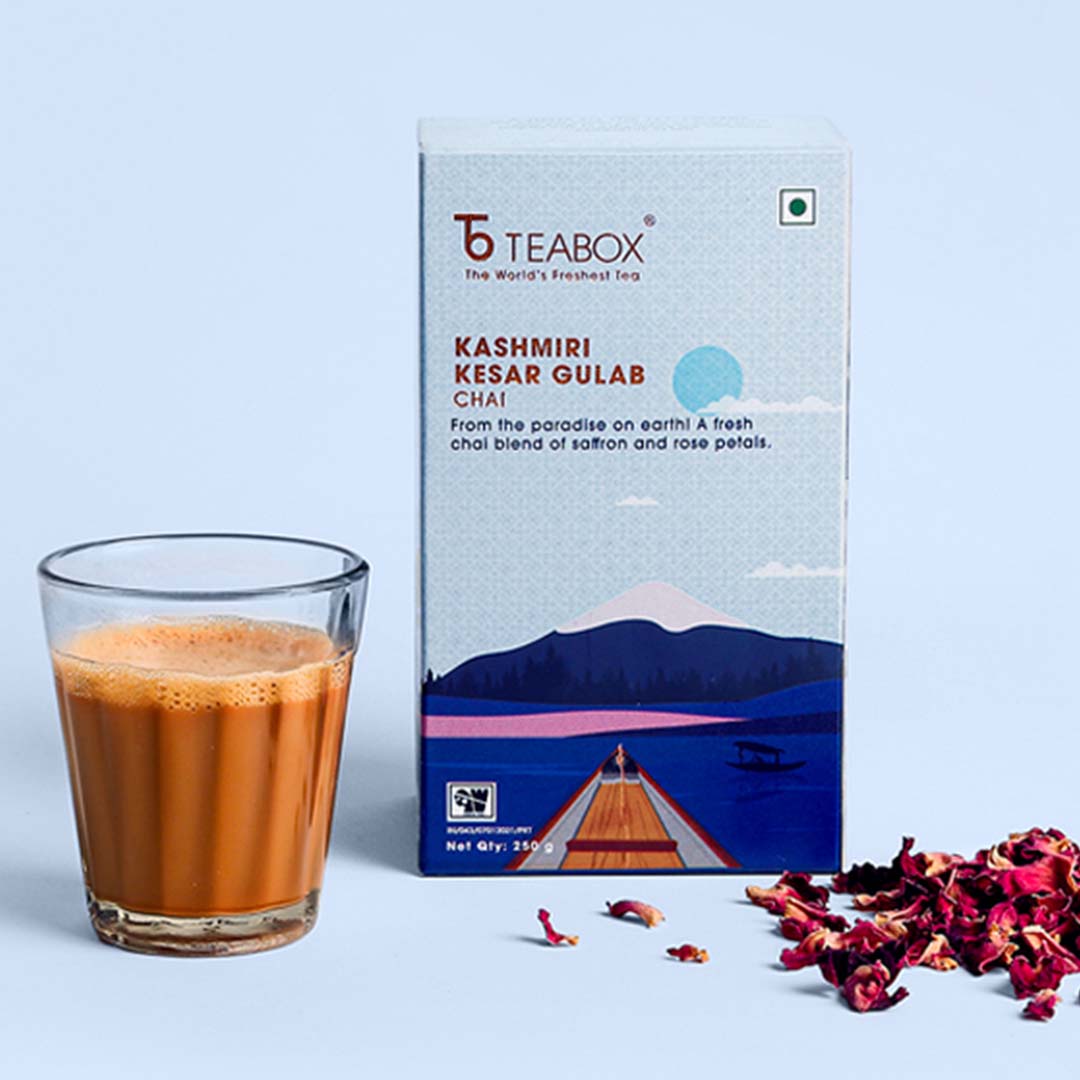
How to Make Kashmiri Pink Chai: Why It Turns Pink, Which Leaves to Use, and the Noon Chai Recipe
Kashmiri pink chai is made by boiling green tea leaves with baking soda until the water is reduced and red, adding ice-cold water and aerating until burgundy, then simmering with milk and salt unti...

What Is Kashmiri Kahwa? Kashmir’s Saffron Kahwa Tea and How to Make It
Kashmiri kahwa is a clear, golden green tea from Kashmir, brewed with saffron, green cardamom, cinnamon and cloves and served with slivered almonds, usually sweetened and never with milk.
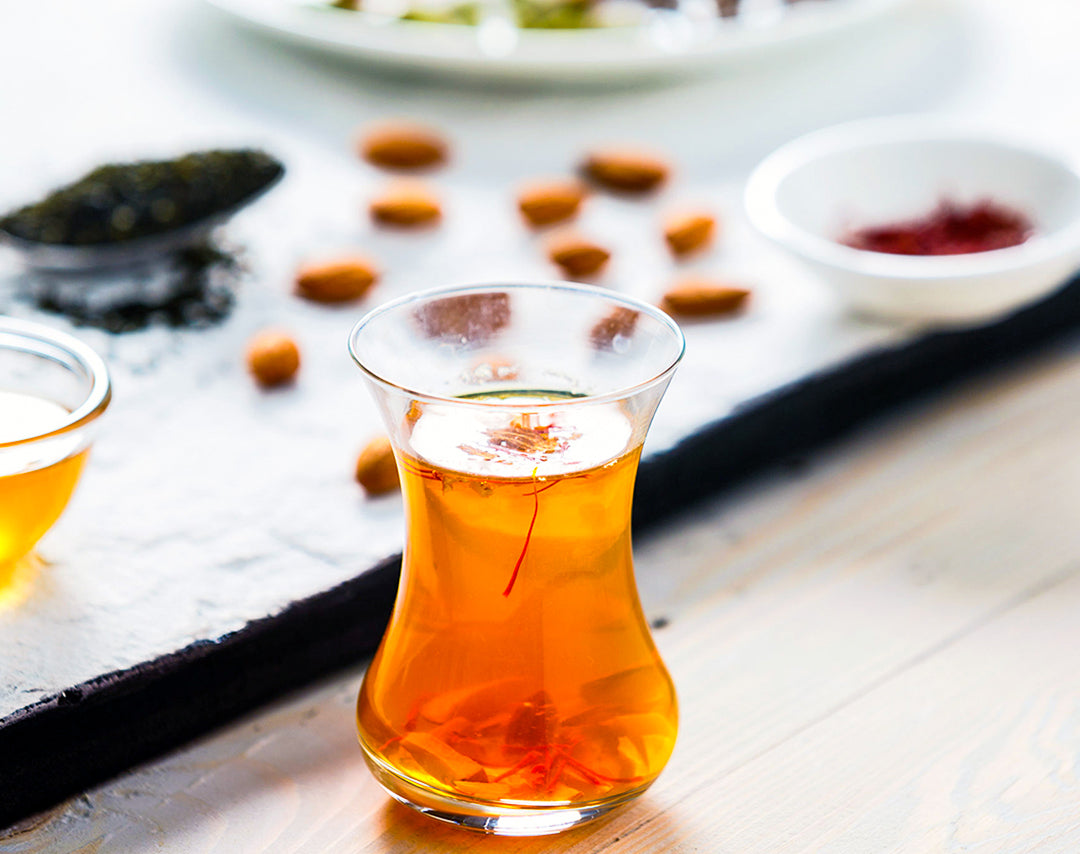
Kahwa in Kashmir: The Samovar, the Morning Cup and the Tea of Guests
Many Kashmiris drink kahwa several times a day, starting at dawn in winter, and it is the tea served to guests, at weddings and on festive days.
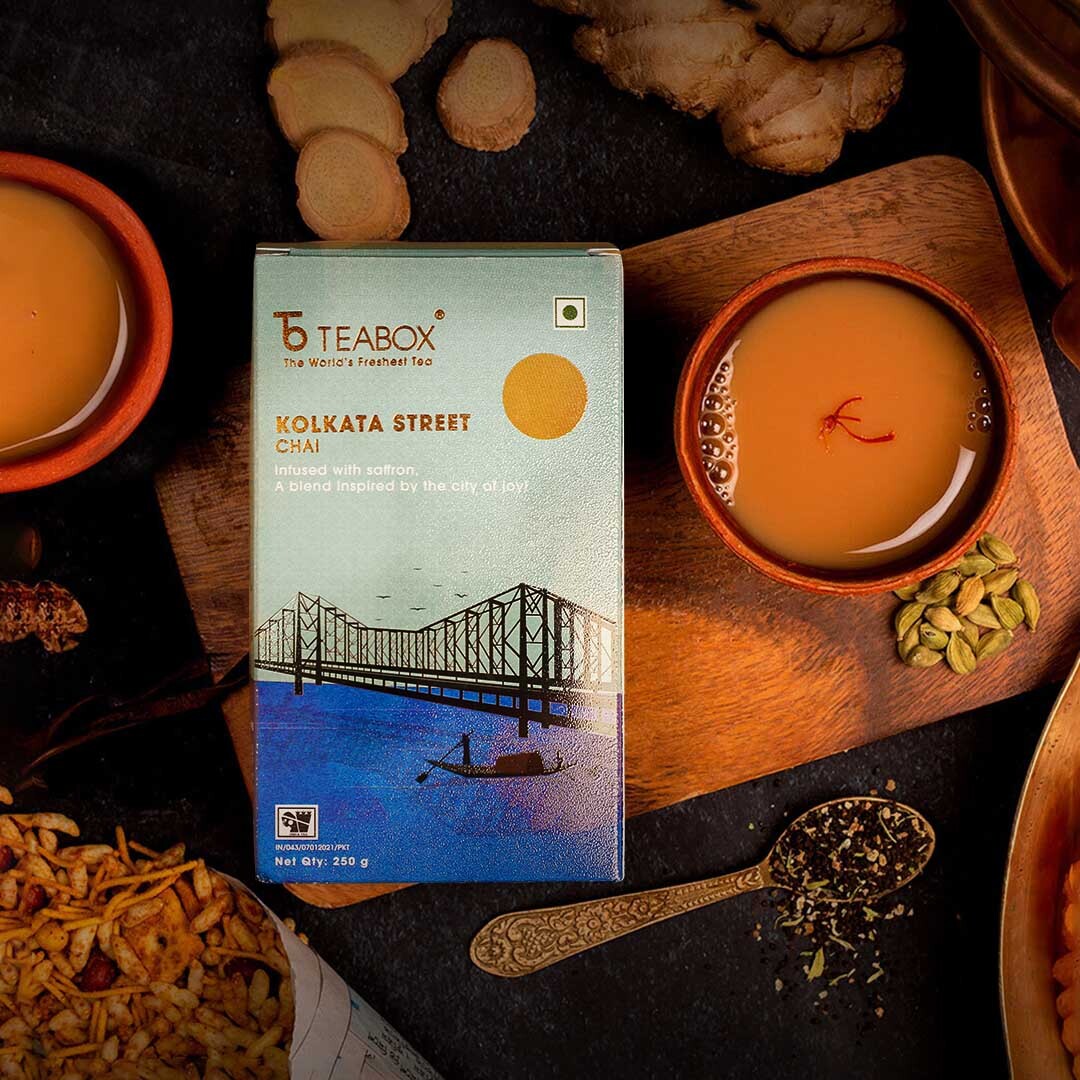
Does Chai Have Caffeine? Masala Chai, Chai Latte and Caffeine-Free Chai Explained
Yes. Chai made with black tea has caffeine: Tea 101 puts a cup at about 50 mg, the same as a cup of black tea and roughly half as much as a cup of coffee.
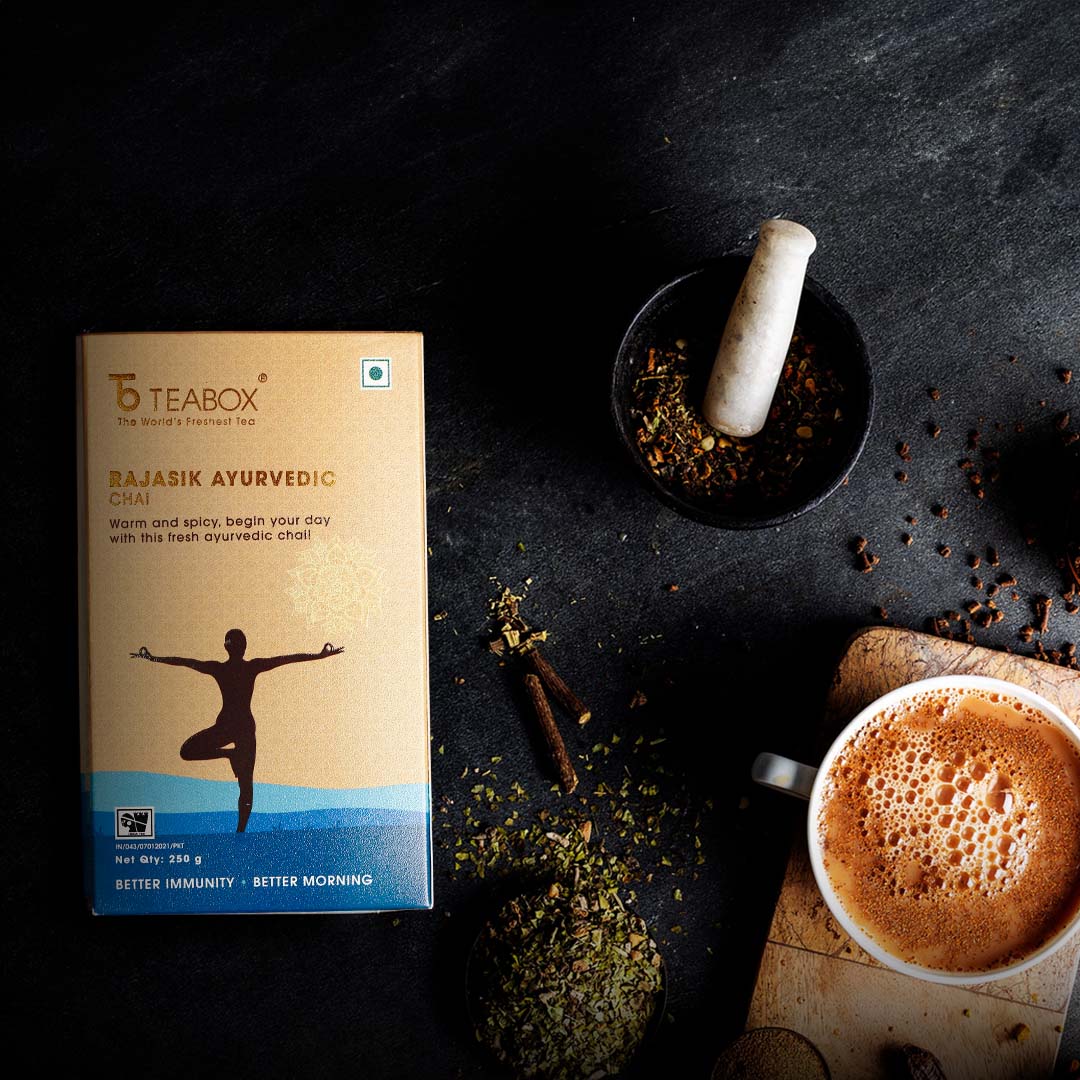
What Changes the Caffeine in Chai: The Leaf, the Boil, the Milk and the Cup
Three things matter most: how much tea goes into the pot, how long it brews or boils, and how big the cup is.
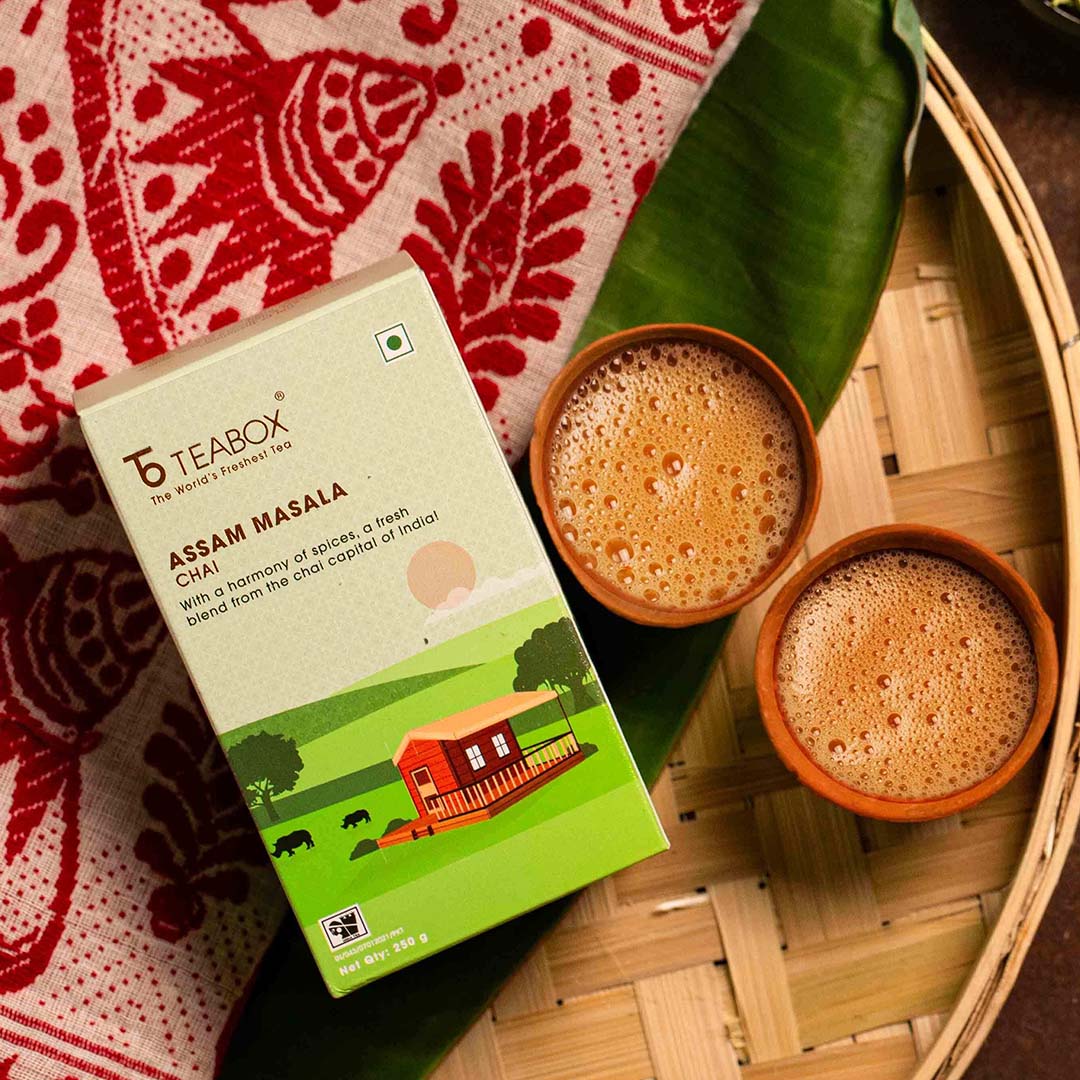
Caffeine in Teabox Chais: Every Chai We Make, by Caffeine Rating
Most Teabox chais carry a caffeine rating in our product data, and every chai we make with black tea is rated High.
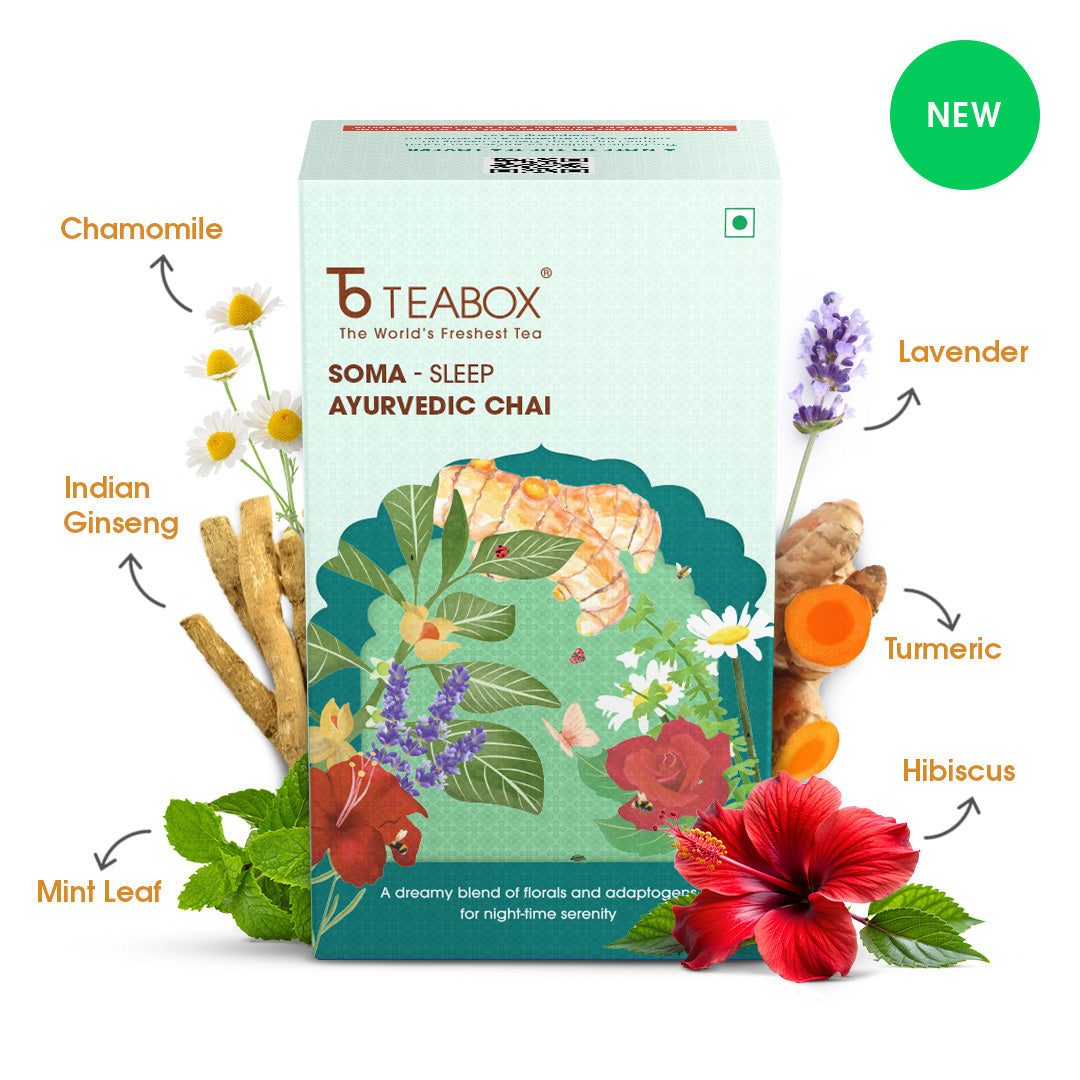
Decaf and Caffeine-Free Chai: Herbal Chais, Decaf Tea and the “Chai” Drinks That Still Have Caffeine
Decaf chai and caffeine-free chai are not the same thing. Decaf chai is made with black tea that has had most of its caffeine removed, so a little remains.

Is Chai Good for You? What’s in Masala Chai, Chai Latte Calories and Sugar, and the Spices Explained
Chai is black tea simmered with milk, spices and usually sugar, so whether it suits you depends mostly on how you make it: how much sugar and milk go in, and how big the cup is.

What Is in a Cup of Chai? The Tea, the Spices, the Milk and the Sugar
A cup of masala chai has four parts: a strong black tea, whole or ground spices, milk, and a sweetener.
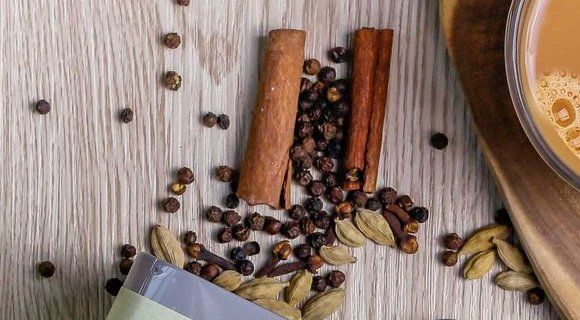
Chai Spices in Indian Tradition and Ayurveda: Ginger, Cardamom, Tulsi and More
Indian homes have long simmered spices and herbs in water or milk, and many of chai’s spices also appear in Ayurveda, India’s traditional system of medicine.

How to Make a Lighter Chai: Less Sugar, Less Milk, and a Sugar-Free Chai Latte
To make a lighter chai, cut the sugar gradually, use less or lower-fat milk, let the spices carry the flavor, and keep the cup small.

Famous Teas of the World: The Classic Blends and Single-Origin Teas Worth Knowing
The world’s famous teas fall into two families: classic blends such as English Breakfast, Earl Grey, Russian Caravan and masala chai, and single-origin teas named for where they grow, such as Darje...

Famous Tea Blends: English Breakfast, Earl Grey, Russian Caravan, Masala Chai and More
A blend mixes teas from different gardens or regions, sometimes with flowers, fruit oils or spices, so that the cup tastes the same every time you buy it.
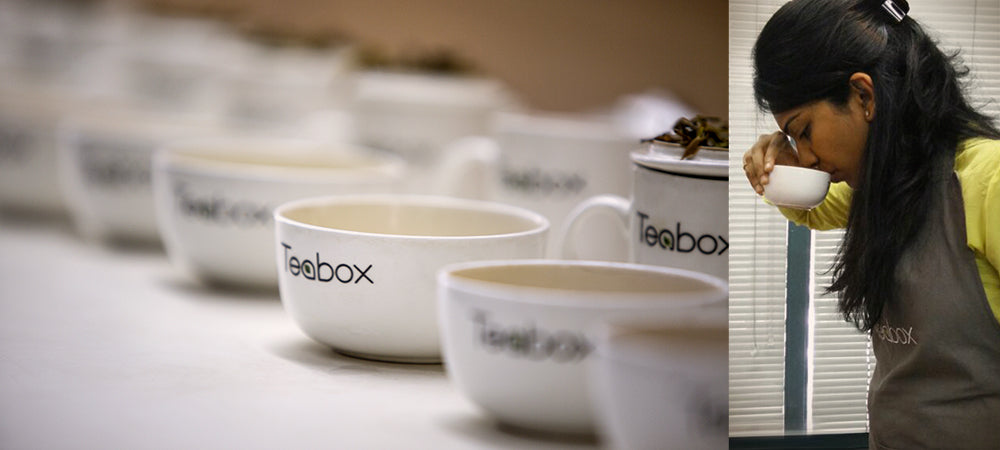
Famous Single-Origin Teas: Darjeeling, Assam, Keemun, Dragon Well and Ceylon
The most famous single-origin teas are named for their place: Darjeeling and Assam from India, Keemun and Dragon Well (Longjing) from China, and Ceylon from Sri Lanka.
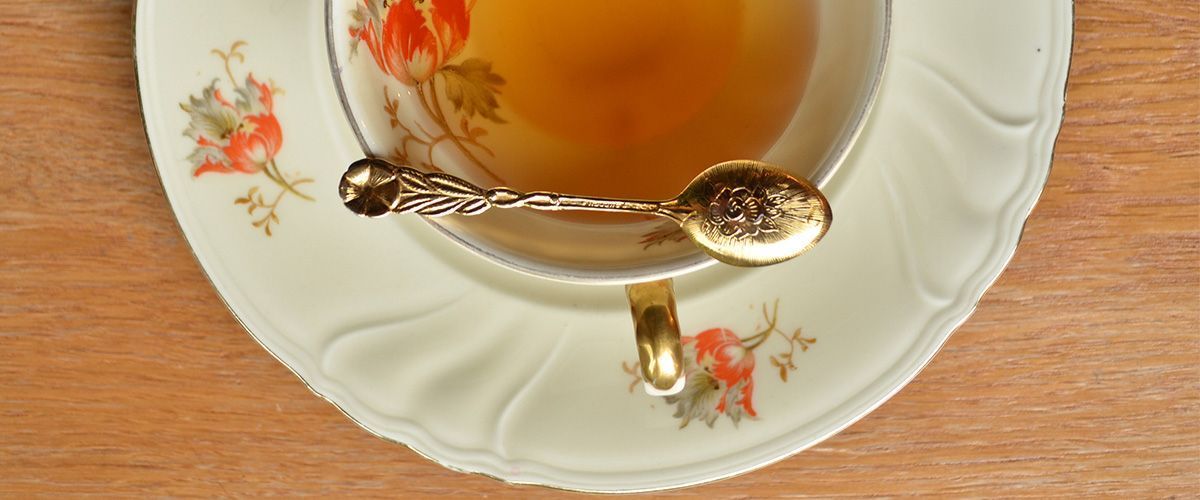
What Is Earl Grey Tea? Bergamot, Taste, Types and How to Brew It
Earl Grey tea is black tea scented with oil of bergamot, a fragrant, sour citrus fruit grown for its peel.

The History of Earl Grey Tea: The Earl, the Legends and the Dates
Nobody knows for certain who first blended Earl Grey; the name honors Charles Grey, the second Earl Grey, British prime minister from 1830 to 1834, and bergamot-scented tea was on sale in Britain b...

Types of Earl Grey: Lady Grey, French, Cream, Lavender, Green and More
Earl Grey has grown into a whole family: Lady Grey adds more citrus, French Earl Grey adds rose, lavender Earl Grey adds lavender, Earl Grey cream adds vanilla, and green, white and rooibos version...
How to Brew Earl Grey Tea: Water, Timing, and Milk or Lemon
Brew Earl Grey with freshly drawn water just off the boil, 95–100°C (203–212°F), for 3 to 5 minutes, using about 2 to 2.5 g of loose leaf (a heaped teaspoon) per 250 ml cup.
English Breakfast tea is a strong, full-bodied blend of black teas, built mainly on Assam and often rounded out with Ceylon, Kenyan or Chinese teas, made for the morning and for milk.
The History of English Breakfast Tea: New York, Edinburgh and the Hearty British Breakfast
Nobody knows for certain who first mixed English Breakfast, but what is clear is that strong black breakfast blends took over from Chinese teas in Britain during the 1800s, as tea from India and Ce...
English Breakfast vs Earl Grey, Irish Breakfast and Assam: What Is the Difference?
All three breakfast blends are strong black breakfast teas; Irish Breakfast is maltier, darker and more Assam-heavy than English, and Scottish Breakfast is usually sold as the fullest of the three.
Irish breakfast tea is a strong, malty black tea blend built mainly on Assam, made to be drunk with milk first thing in the morning.
The History of Irish Tea: Hardship, Wartime and the Ritual of Elevenses
Ireland drinks its tea strong because, for generations, most households could afford only cheap, weak leaf, so they brewed it long and strong and softened it with milk, and the taste for a heavy, m...

Russian Caravan Tea: The Smoky Black Tea Blend, Its Caravan Story, Taste and How to Drink It
Russian Caravan tea is a smoky, full-bodied black tea blend named after the camel caravans that carried Chinese tea overland to Russia from the late 1600s.

How Russians Drink Tea: The Samovar, Zavarka and Lemon Tea
In Russia, tea is made in two steps: a very strong concentrate called zavarka is brewed in a small teapot, then diluted in each glass with hot water from a samovar. Russians love their tea black, s...
Teabox no longer sells a Russian Caravan blend, and we do not sell Lapsang Souchong; our teas come from Indian estates.
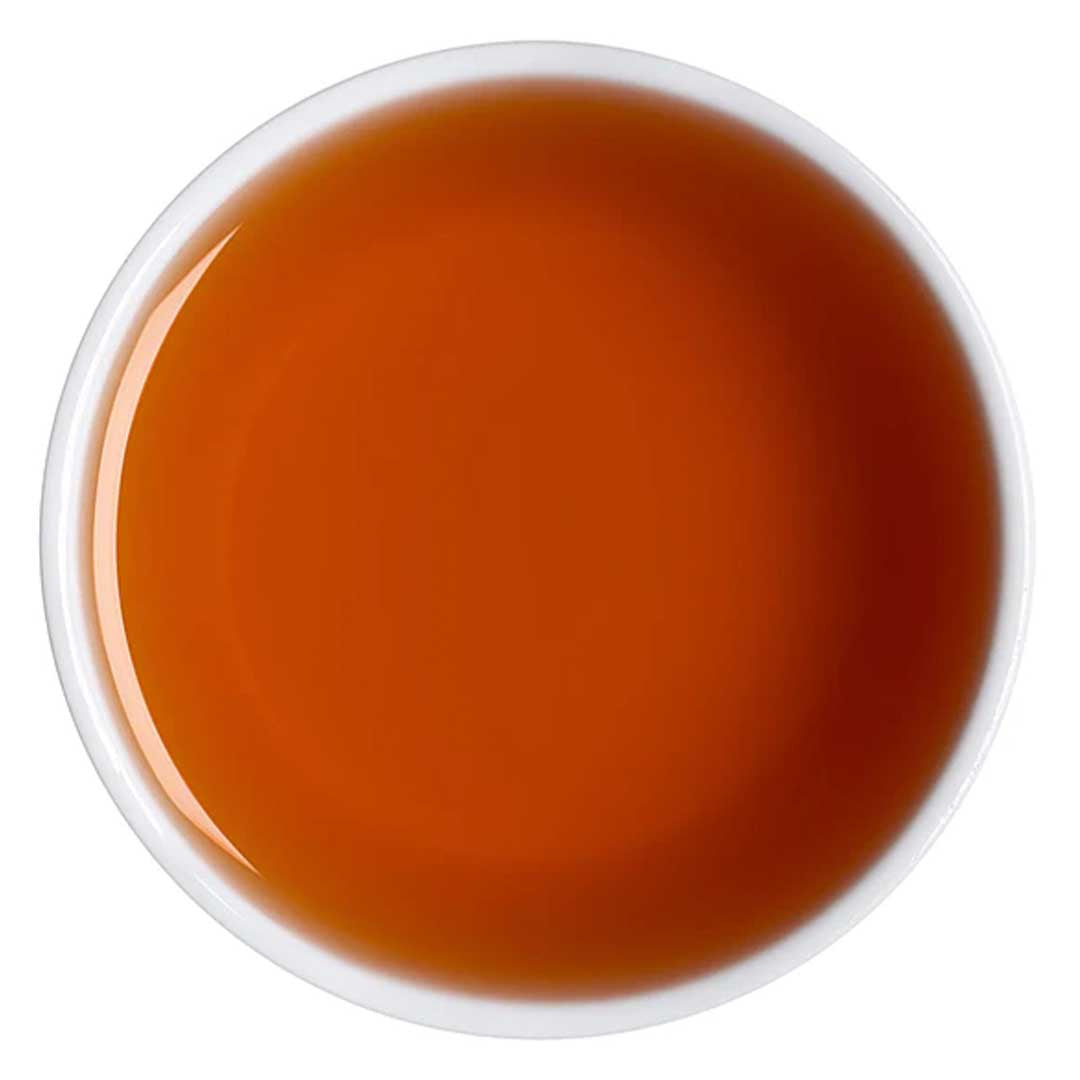
Yes, all true tea has caffeine: Tea 101 puts a cup of black tea at about 50 mg and a cup of green tea at about 20 to 45 mg, against about 90 to 95 mg for coffee.
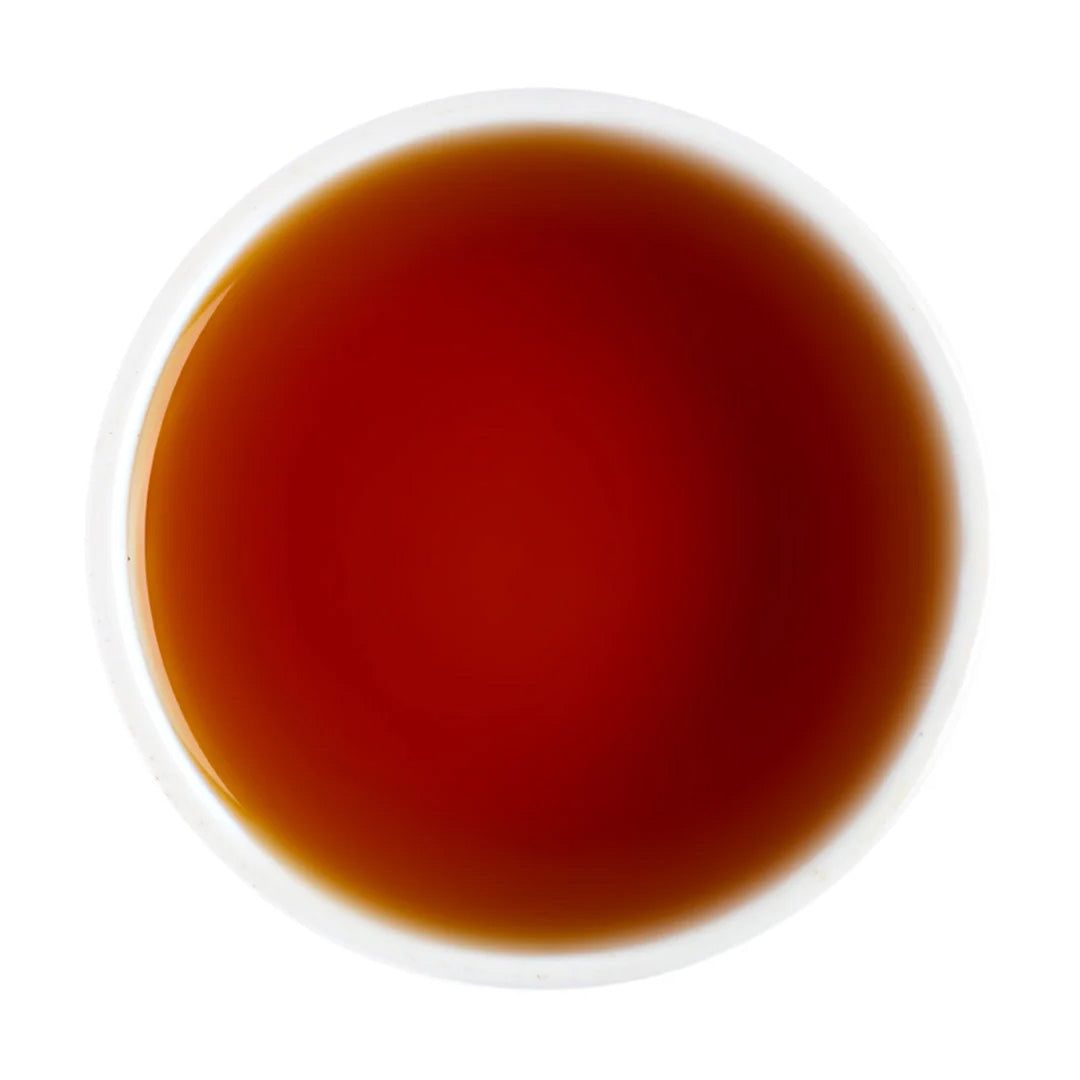
Caffeine by Type of Tea: Green Tea, Matcha, White Tea, Oolong and Chai
Every type of tea has caffeine, but the type alone does not tell you how much: the leaf a tea is made from sets what is in it, and the way it is brewed sets what reaches your cup.
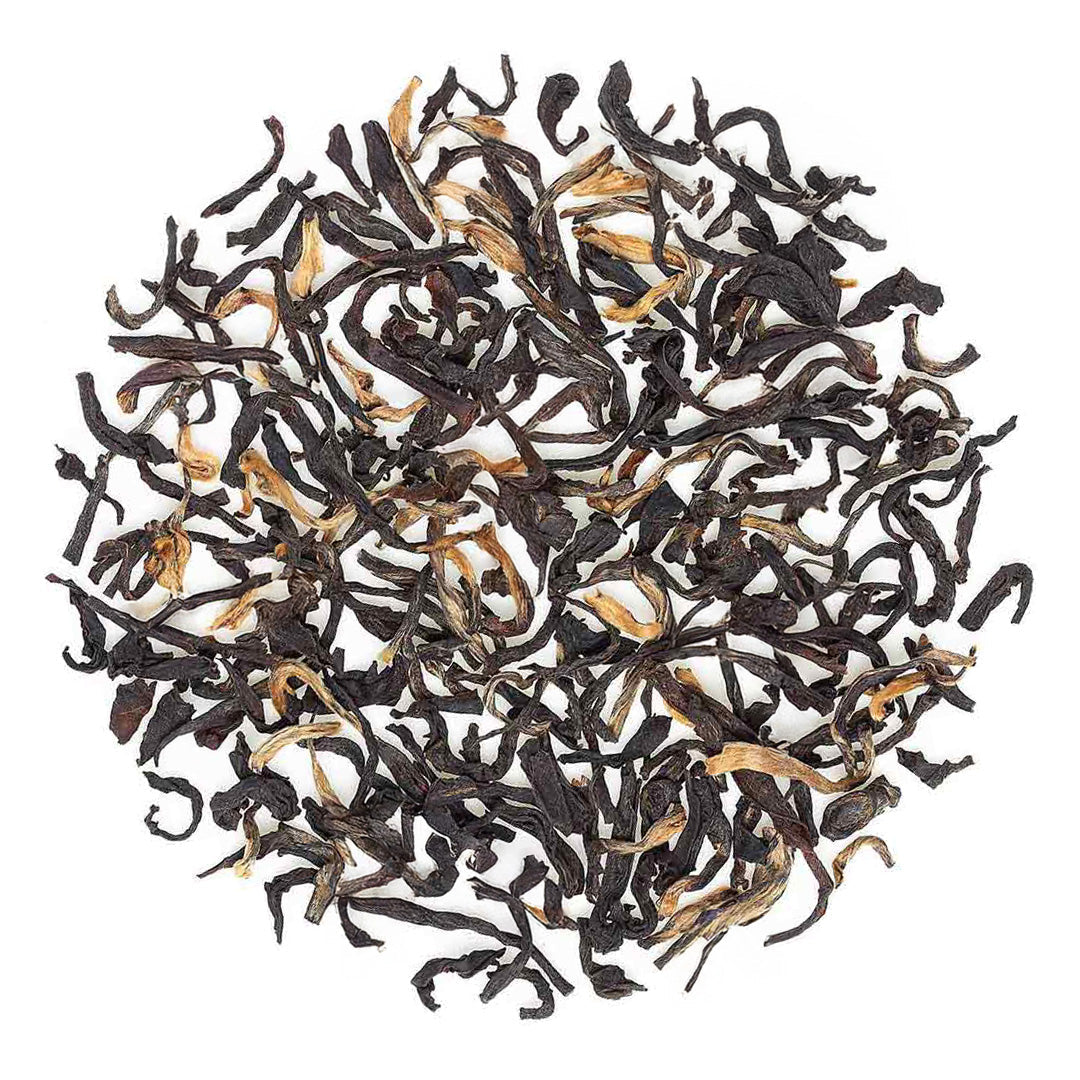
How Teabox Rates Caffeine: High, Medium, Low and Caffeine Free
Every Teabox tea page carries a caffeine rating, from Caffeine Free through Low and Medium to High.
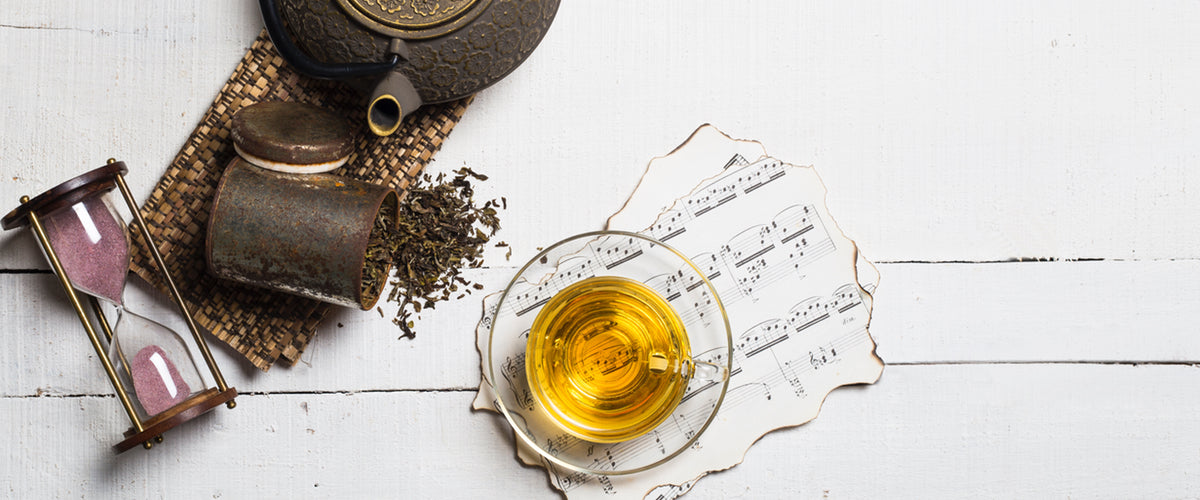
What Affects the Caffeine in Tea: From the Bush to Your Cup
The caffeine in your cup is decided twice: once in the garden and the factory, which set how much is in the leaf, and once in your teapot, which sets how much of it you draw out.
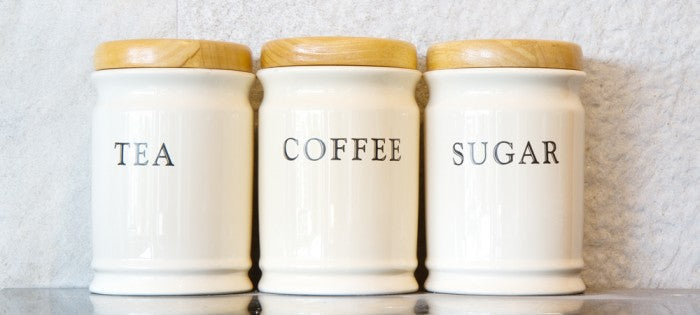
Tea vs Coffee: Caffeine in Tea vs Coffee, Green Tea vs Coffee, Taste and How to Switch
A cup of tea has less caffeine than a cup of coffee: about 50 mg for black tea and 20 to 45 mg for green tea, against about 90 to 95 mg for coffee.
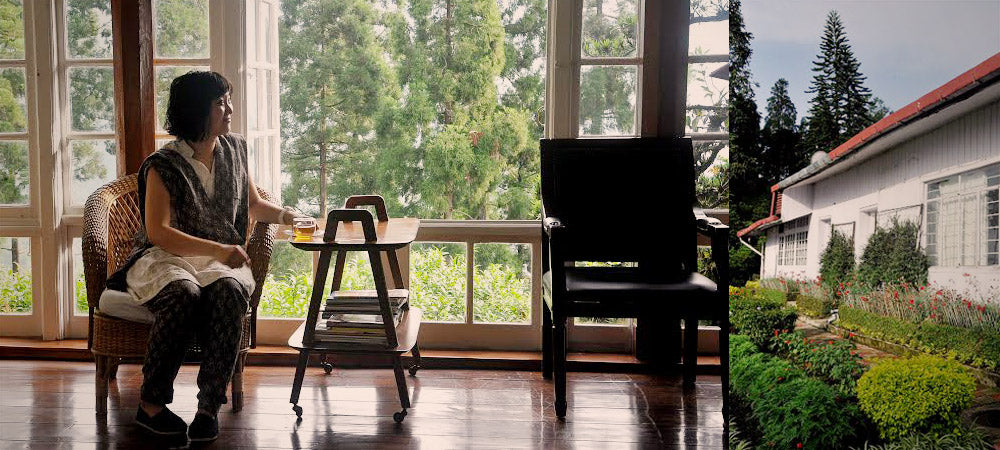
The History of Tea and Coffee: Legends, Rituals and India’s Coffee Hills
Tea is the older drink by far: it began in China, by legend more than 3,000 years ago. Coffee is recorded much later, in the 15th century, in Yemen.
How to Switch from Coffee to Tea: A Cup for Every Time of Day
Start with a tea that feels familiar: a strong, malty Assam or breakfast black with milk, or a kadak chai, in the morning; then try lighter teas later in the day.

Plain tea is a low-calorie drink that contains caffeine and natural plant compounds that scientists have studied for decades, but research has not shown that tea prevents, treats or cures any disease.
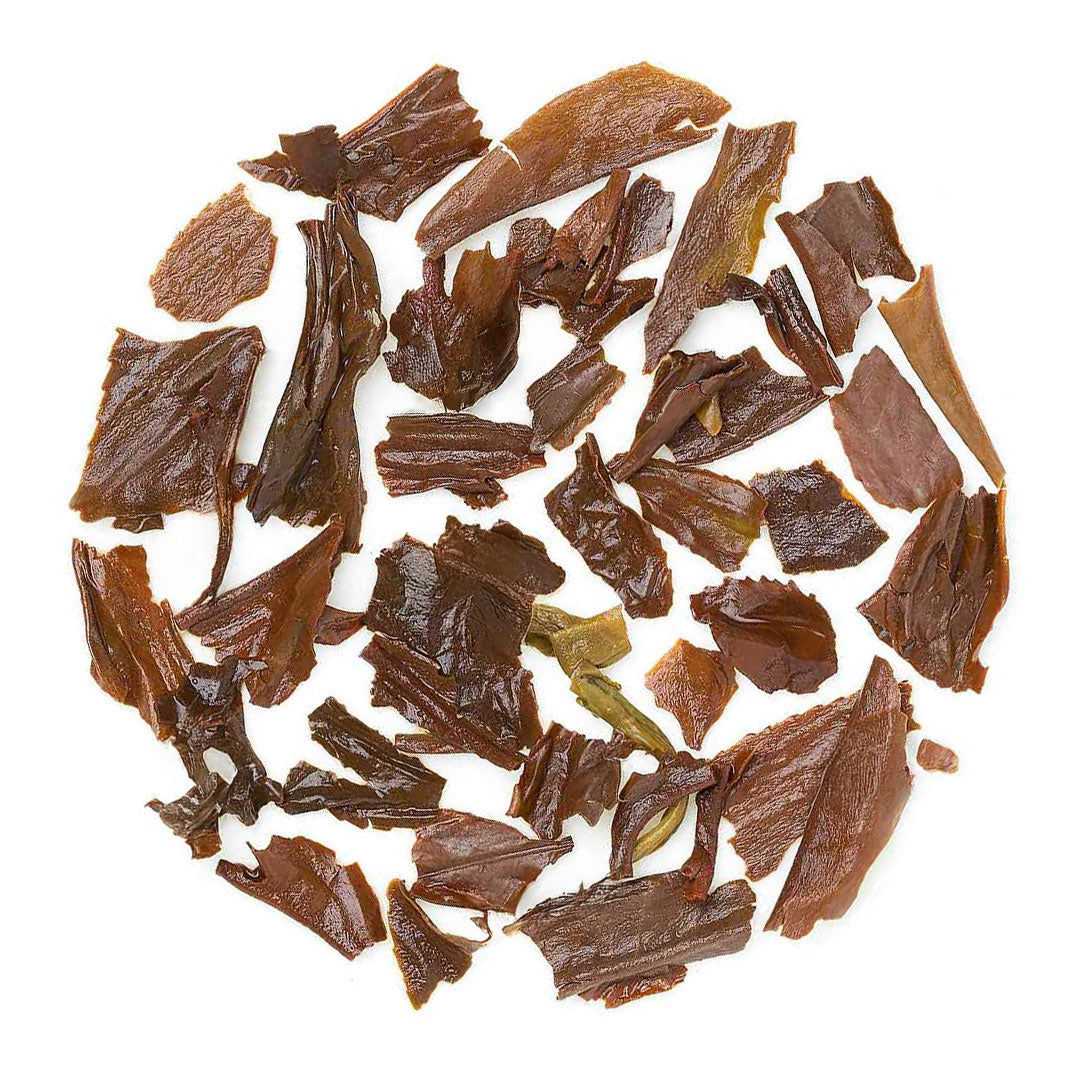
What Is in a Cup of Tea? Polyphenols, Caffeine, L-Theanine and Minerals Explained
A cup of tea is mostly water, plus small amounts of polyphenols (the compounds behind tea’s color, briskness and much of its taste), caffeine, the amino acid L-theanine, and traces of minerals.

Green, Black, White and Oolong Tea Benefits: What Research Has and Has Not Shown, Tea by Tea
Green tea is the most researched of all teas, black tea comes next, and white tea and oolong have been studied far less; for none of the four has a health benefit of drinking it been established.
Antioxidants and Tannins in Tea: Catechins, EGCG and Theaflavins Explained
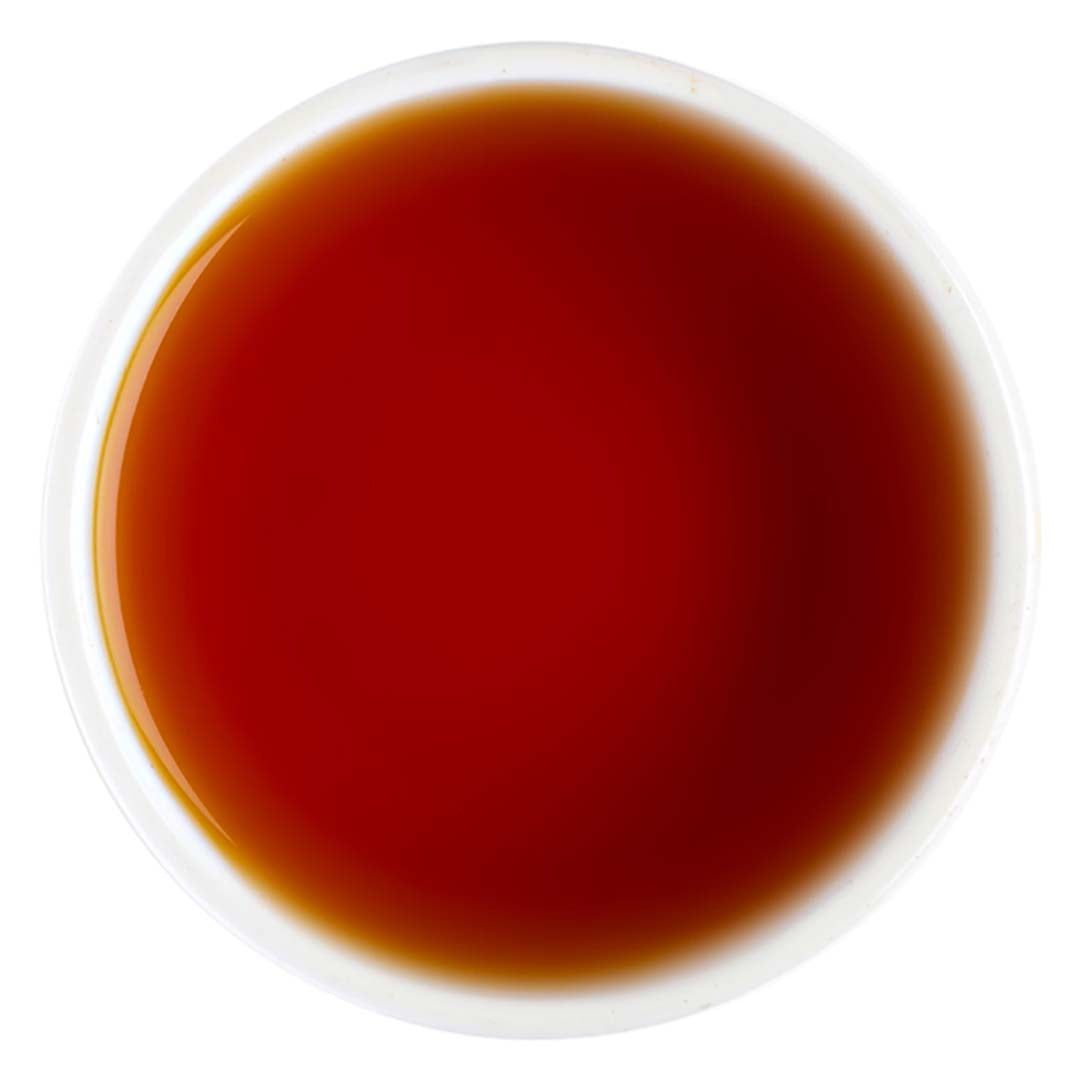
The antioxidants in tea are polyphenols, mainly catechins such as EGCG in green and white tea, and theaflavins and thearubigins in black tea.
Tea Polyphenols: Catechins, EGCG, Theaflavins and Thearubigins, and How Processing Shapes Them
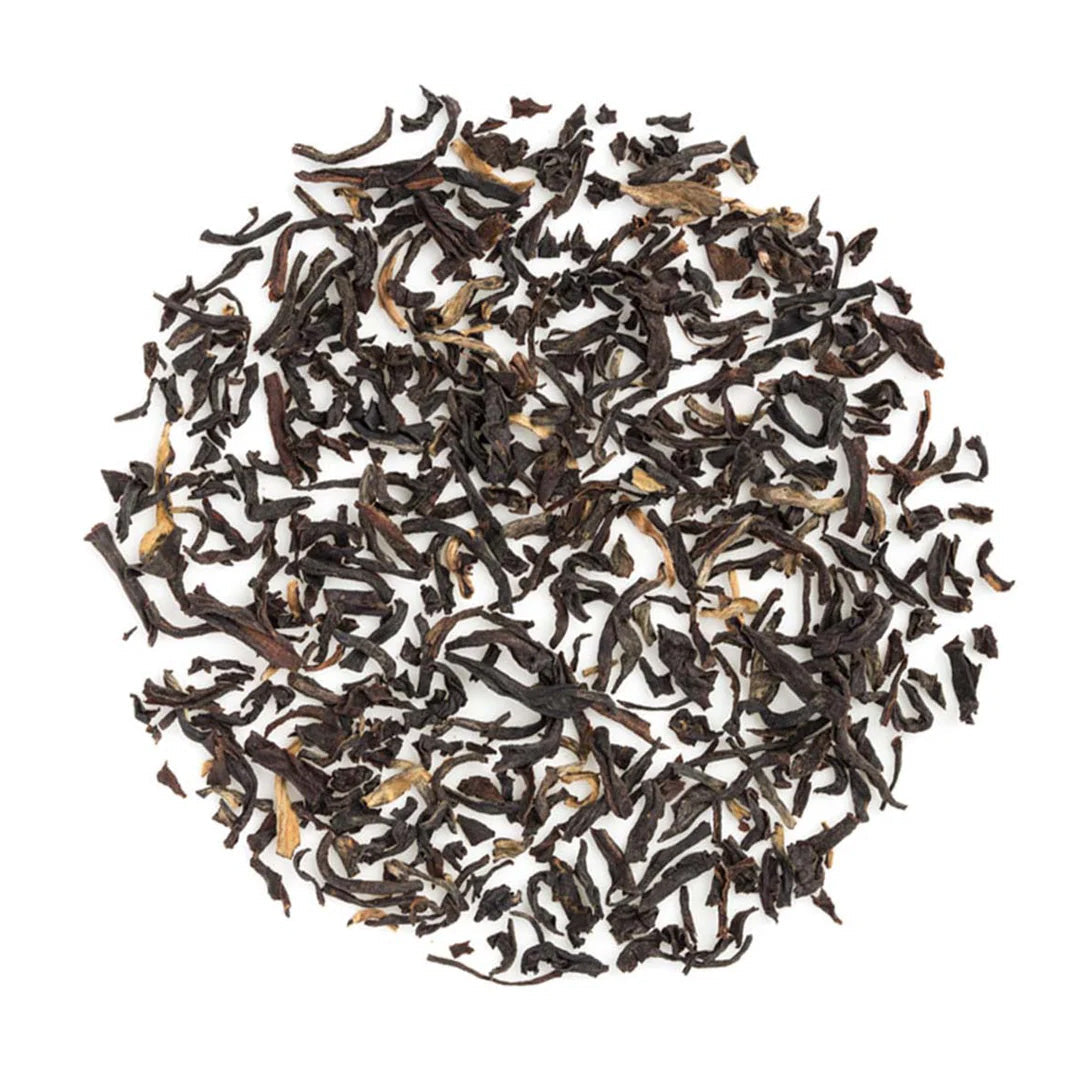
Tea’s polyphenols come in two families: the catechins of the fresh leaf, led by EGCG, and the theaflavins and thearubigins that form from them when the leaf is oxidized.
Why Does Tea Taste Bitter or Dry? Astringency, Bitterness and How to Brew a Smoother Cup
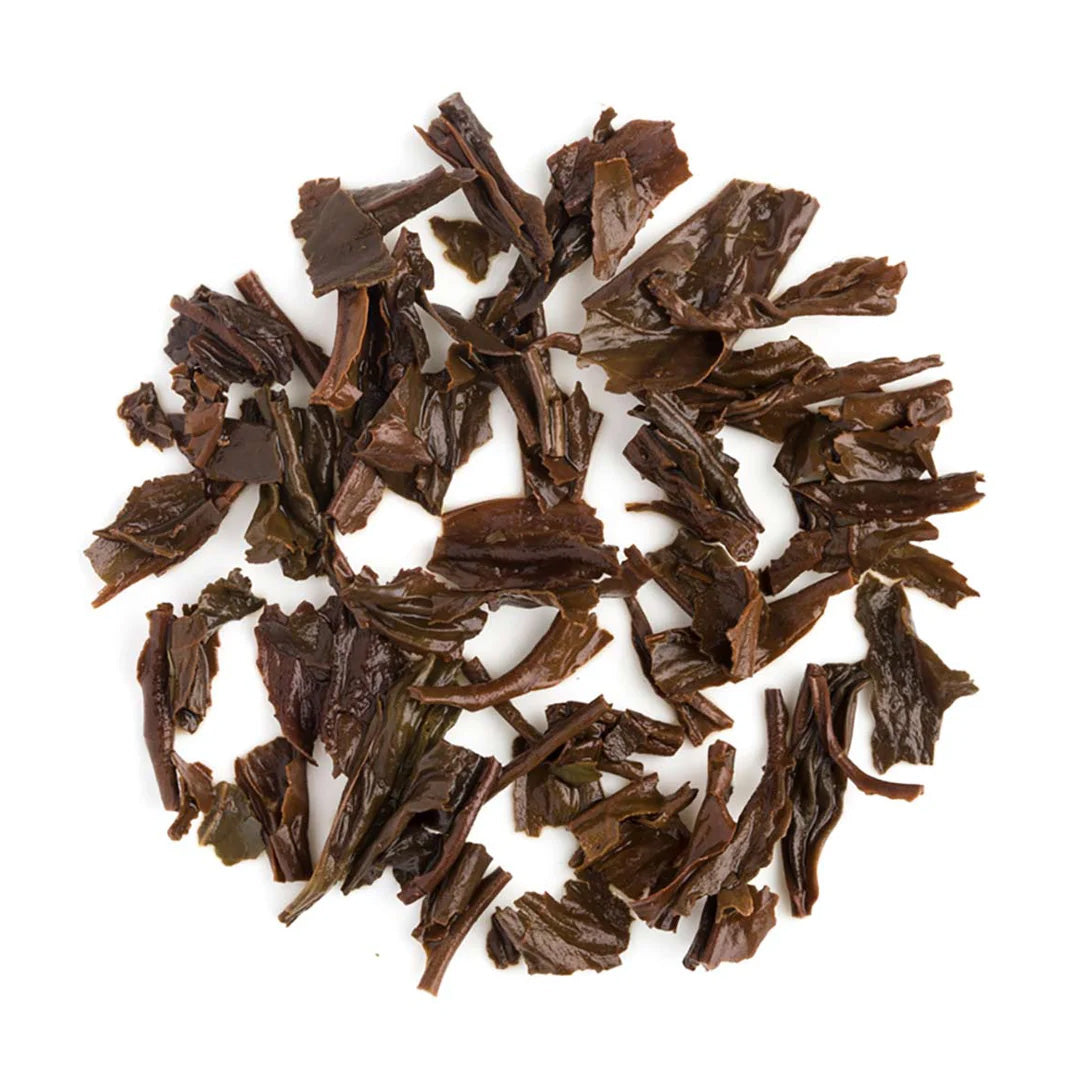
Dryness is astringency: tea’s tannins bind to proteins in your saliva, and your mouth loses its slippery coating.

Tea and Weight Loss: Does Green Tea Help You Lose Weight?
No tea, green or otherwise, causes meaningful weight loss on its own; research has not shown that drinking tea makes people lose weight.
Diet and Detox Teas: What They Are and How to Read the Label
“Diet tea,” “dieter’s tea,” “slimming tea,” “skinny tea” and “detox tea” are marketing names, not types of tea.
Tea Without Sugar: Calories, Sugar and a Cup You Enjoy Plain
A cup of plain tea has almost no calories; what changes that is the sugar, honey and milk that go into it, and the sugar already in ready-made teas.
Tea During Pregnancy: Caffeine, Green Tea and Which Herbal Teas Need Care
Many people keep drinking tea while pregnant, but every cup of true tea contains caffeine, and some herbal teas are not advised at all.
Reading Tea Blend Labels in Pregnancy: What Is in Each Teabox Blend
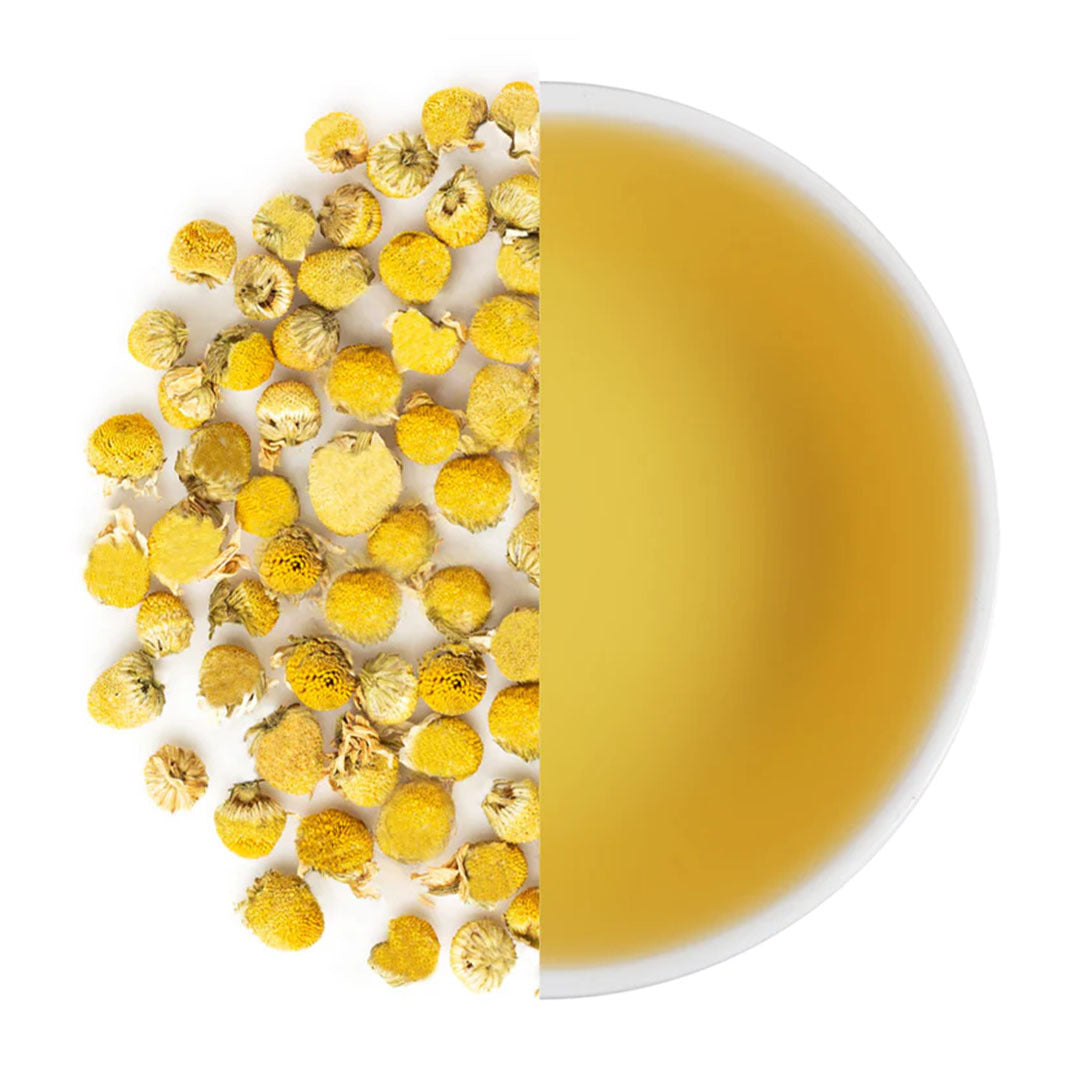
Read the ingredient list, not the name: a name tells you about flavor or mood, while the ingredients tell you whether there is tea leaf (and so caffeine) and which herbs are inside.

Tea and Health Myths: Heart Health, Blood Pressure, Diabetes, Cancer and Kidney Stones
Tea is an enjoyable drink with a long history as a folk remedy, but no tea has been shown to treat, cure or prevent heart disease, high blood pressure, diabetes, cancer or kidney stones.
Tea as Medicine: Cures, Poisons and Legends from Lu Yu to Gandhi
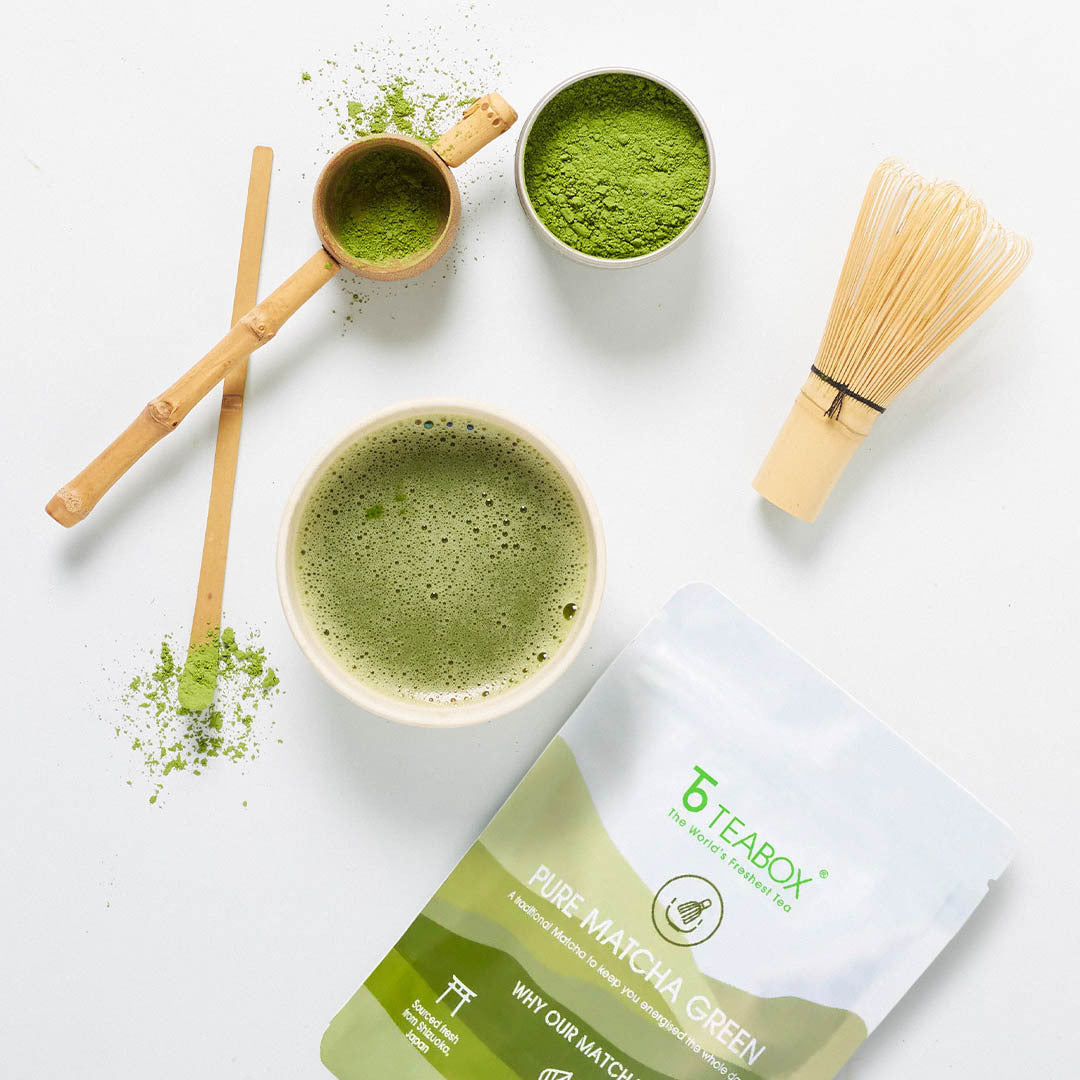
Tea was taken as a remedy long before it became an everyday drink, and many of today’s health claims are echoes of that history rather than findings from modern research.

Everyday Tea Myths: Caffeine, Detox, Organic Tea, Pesticides, Tea Bags and More
Most popular tea claims are either half-true, unproven or simply marketing. Here are the ones we hear most often, with what our own sources and tasters can honestly say.
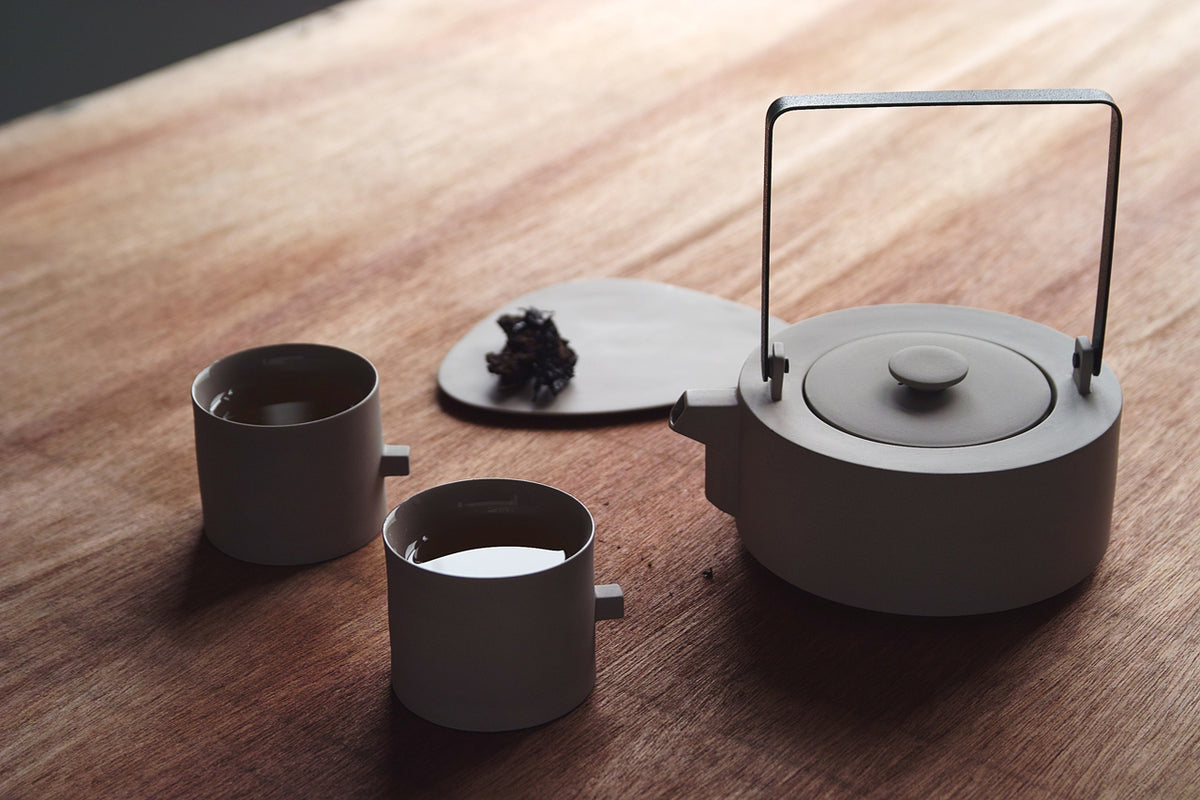
Good teaware is non-porous, neutral in taste, holds heat well and suits the tea you drink: porcelain or glass for delicate teas, sturdy ceramic for strong milky ones.
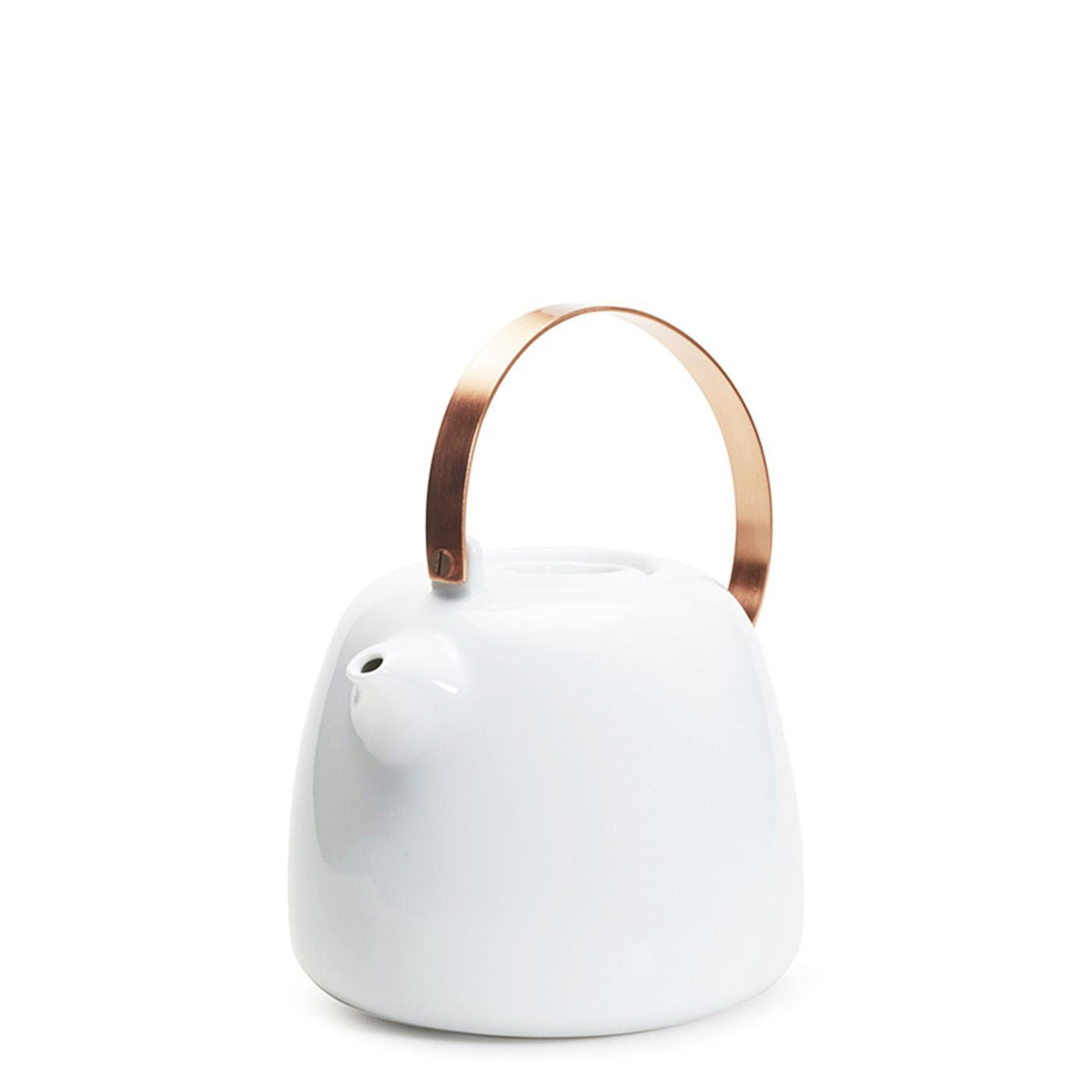
How to Choose a Teapot, a Tea Infuser or a Tea Maker
If you drink one cup at a time, a roomy infuser or a tea infuser mug is all you need; if you brew for several people, a teapot with a lift-out basket or a tea maker does the same job on a bigger sc...

How to Choose a Tea Cup: Porcelain, Bone China, Double-Walled Glass, Clay and Steel
For most teas, the best cup is a thin-lipped porcelain or bone china cup, or a double-walled borosilicate glass; choose a sturdy glazed mug for strong milky teas, and a clay kulhad or small glass f...
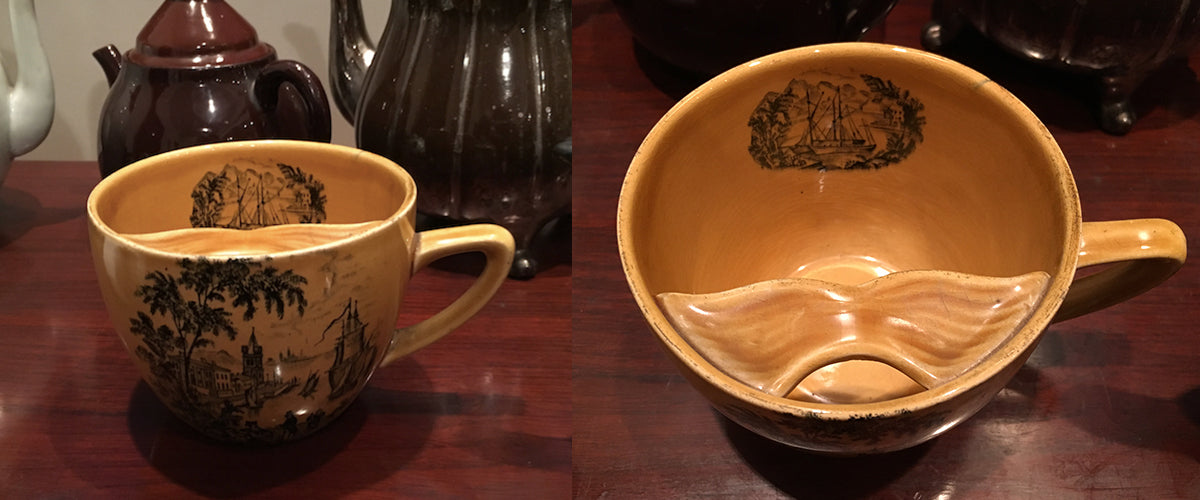
A Short History of Tea Makers: From Tea Bowl to Teapot, Teacup, Samovar and Kettle
Tea was first brewed and drunk in bowls in China; the teapot followed in the Yuan dynasty, the gaiwan was perfected under the Ming, Europe added the handle to the teacup in the early 1700s, and the...

How to Remove Tea Stains from Cups and Clean Your Teapot, Infuser and Other Teaware
To remove tea stains from cups, rub them with a paste of baking soda and a little water, then rinse; for stubborn stains, soak the cup overnight in warm water with baking soda or a splash of white ...
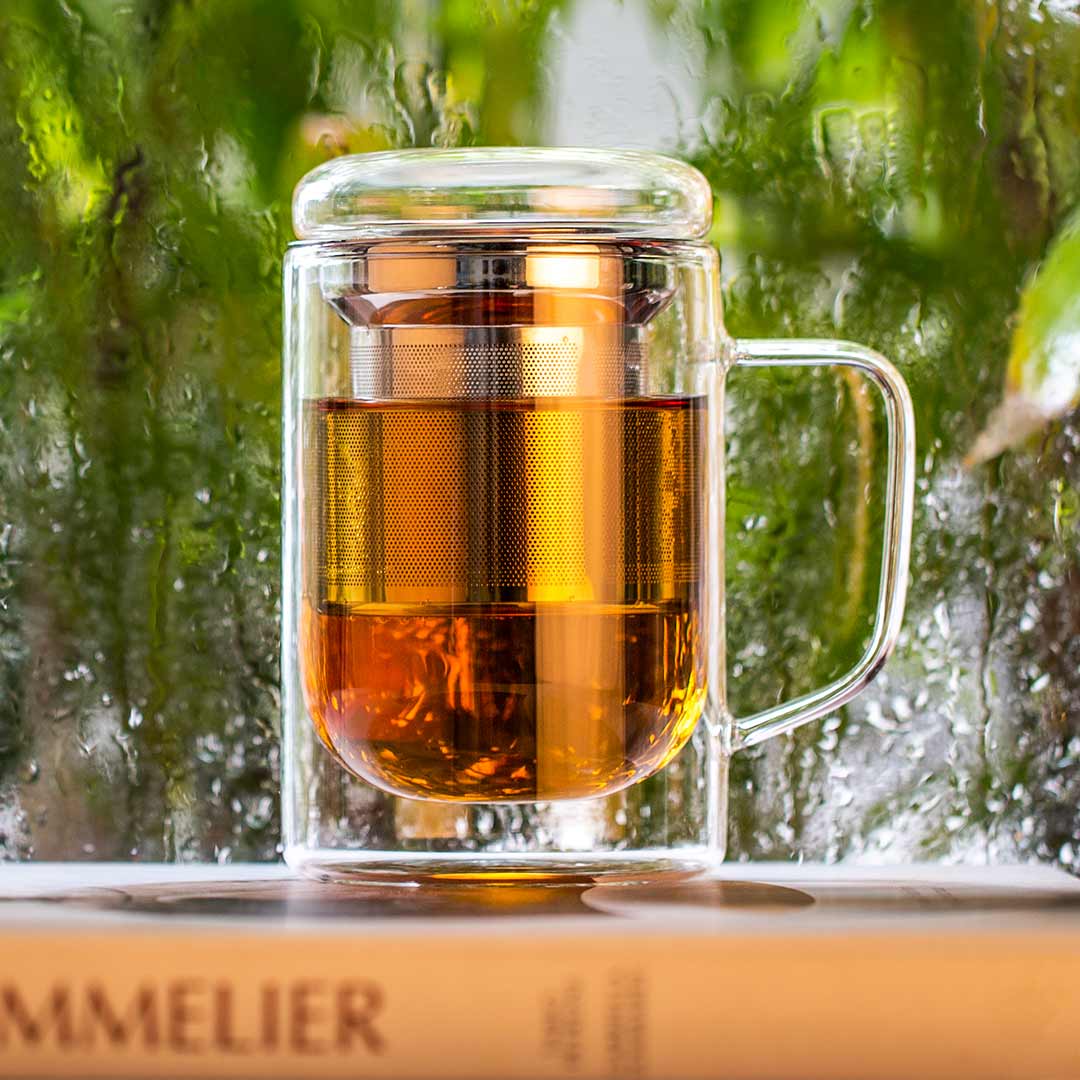
How to Clean Teaware by Material: Glass, Ceramic and Clay, Porcelain, Metal and Cast Iron
Every material asks for the same three things, a rinse, a gentle wash and a full dry, but each has its own rule for stains and its own list of things to avoid.
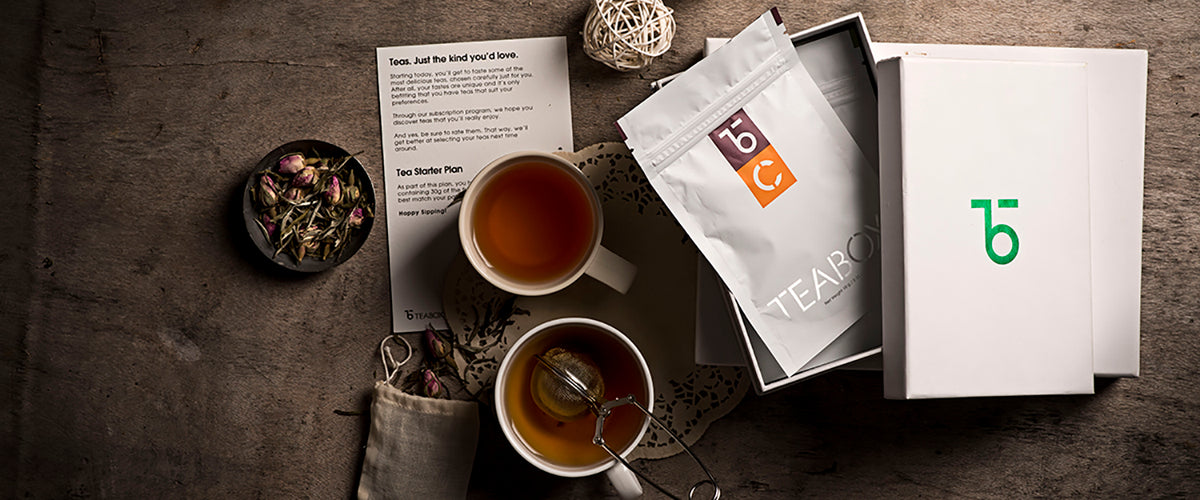
How to Store Tea: Does Tea Expire, Can Tea Bags Go Bad, and How Long Does Tea Last?
Tea does not expire the way fresh food does, but it does go stale: kept airtight, dark, cool and dry, most loose leaf tea and tea bags taste their best within about a year of being made.
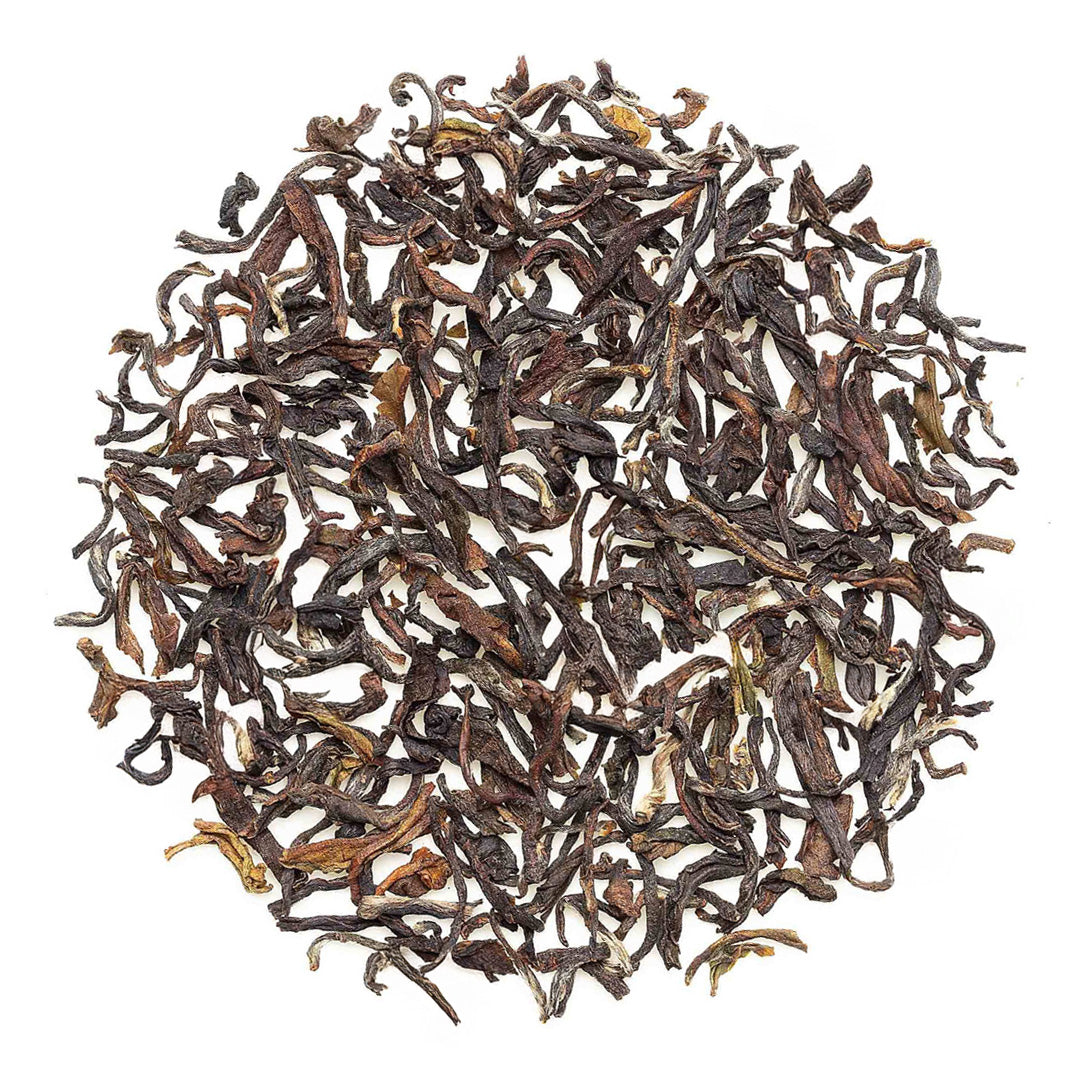
Storing Tea at Home: The Best Containers, the Best Spot and the Fridge Question
The best tea container is airtight, opaque, free of smells and not much bigger than the tea inside it, and the best place for it is a cool, dry, dark cupboard.
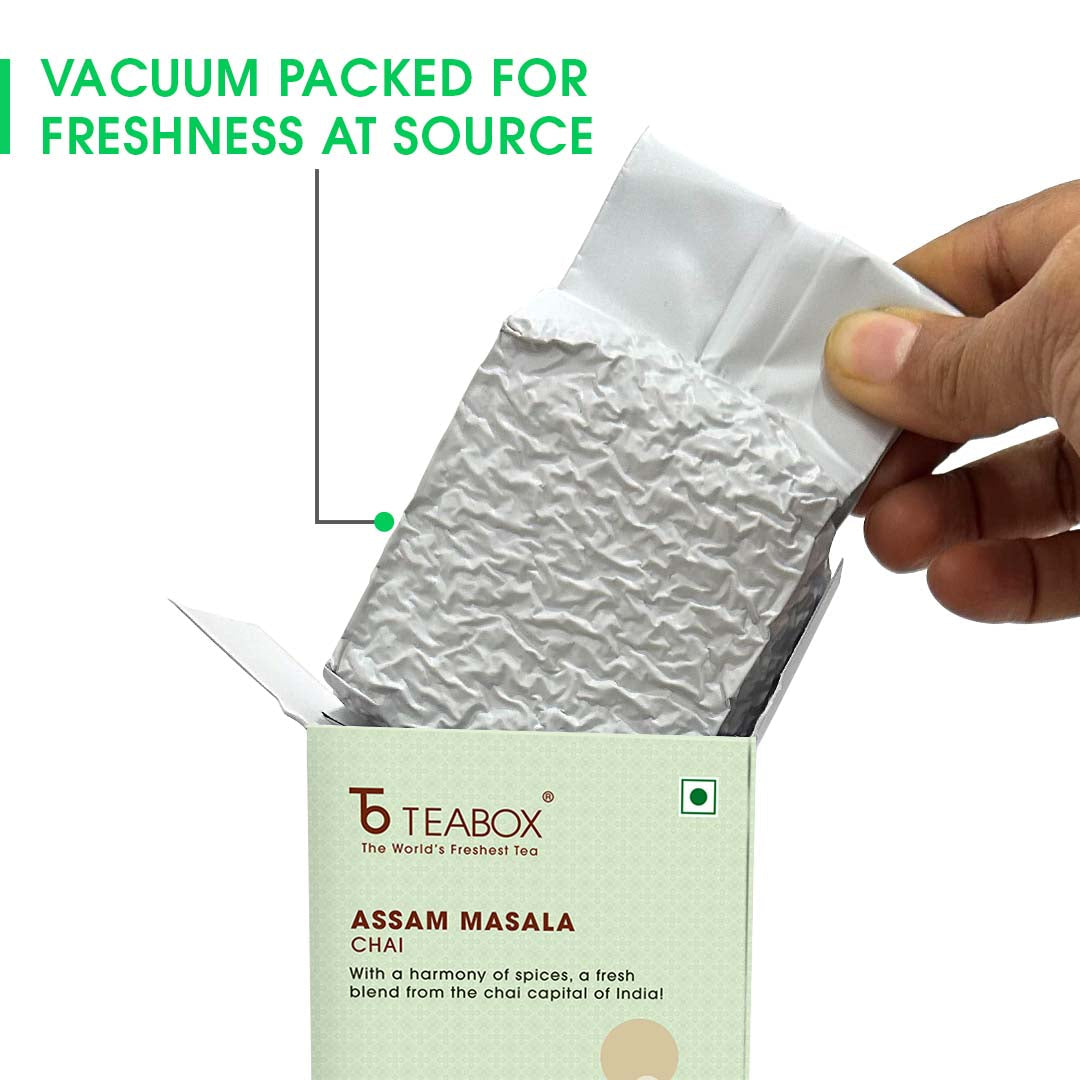
How Teabox Keeps Tea Fresh, From the Estate to Your Door
By keeping the journey short, the tea sealed and the four enemies out at every step. Most tea passes through auctions, exporters, importers, wholesalers and retailers before it reaches a cup; we cu...

The History of Tea: Where Tea Originated, Who Discovered It and How It Reached England and India
Tea originated in China, where people used the leaves of the tea plant for thousands of years, first as medicine and food and later as an everyday drink.

The History of Tea in England and Europe: Dutch Ships, London Coffee Houses and the British Cup
Tea reached Europe in the early 1600s, brought by Dutch traders, and arrived in England in the 1650s, where it was first sold in London coffee houses as an exotic medicine.

The History of Tea in India: Wild Assam Tea, the Singpho and the First Gardens
Tea grew wild in Assam long before the British arrived, and the Singpho people of Upper Assam brewed it from their own gardens.

Tea cultures are the ways different countries brew, serve and share the same plant: gongfu brewing in China, the tea ceremony in Japan, darye in Korea, chai in India, afternoon tea in Britain, the ...

East Asian Tea Ceremonies: Chinese Gongfu, the Japanese Tea Ceremony and Korean Darye
China has the oldest tea culture in the world, because tea was first drunk there, and Korea, Japan and Tibet all received tea from China.

Tea in Britain and Europe: Afternoon Tea, the Cuppa, French Salons de Thé and East Frisia
British tea culture runs from the first strong, milky mug of the morning to afternoon tea, a light meal of tea with sandwiches, scones and small cakes.

Samovars, Mint Tea and Butter Tea: How Russia, the Middle East, the Himalayas and Malaysia Drink Tea
A samovar, Russian for “self-boil,” keeps water hot all day beside a pot of very strong tea; Morocco drinks green tea with mint and sugar, Turkey strong black tea from stacked kettles; the Himalaya...

High Tea vs Afternoon Tea: What Is High Tea, What Is Afternoon Tea, and Where Cream Tea Fits In
Afternoon tea is a light, elegant snack of tea, small sandwiches, scones and cakes taken around four o’clock; high tea was a hearty evening meal that working families ate at the table around six.
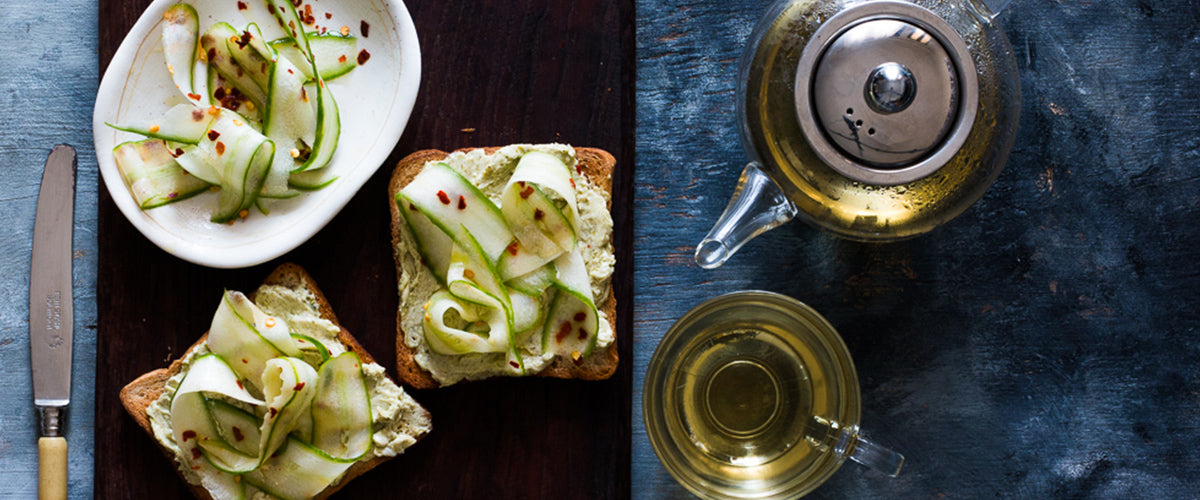
Teas for Afternoon Tea and High Tea: What to Pour With Sandwiches, Scones and a Bacon Sarnie
Loose leaf is the traditional choice for afternoon tea. Our 2015 story is firm about it: “It’s the only authentic way to go about this.” Which leaf you choose depends on the food, so this guide tak...
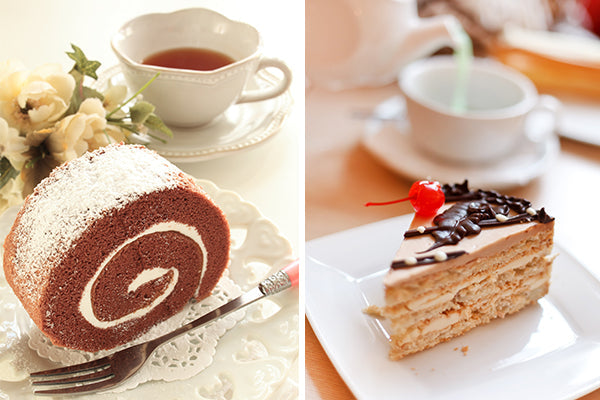
How to Host Afternoon Tea: The Menu, the Table, the Manners and the Pot
Choose two or three teas, keep the food small, brew loose leaf in a warmed pot, and leave plenty of time for conversation.
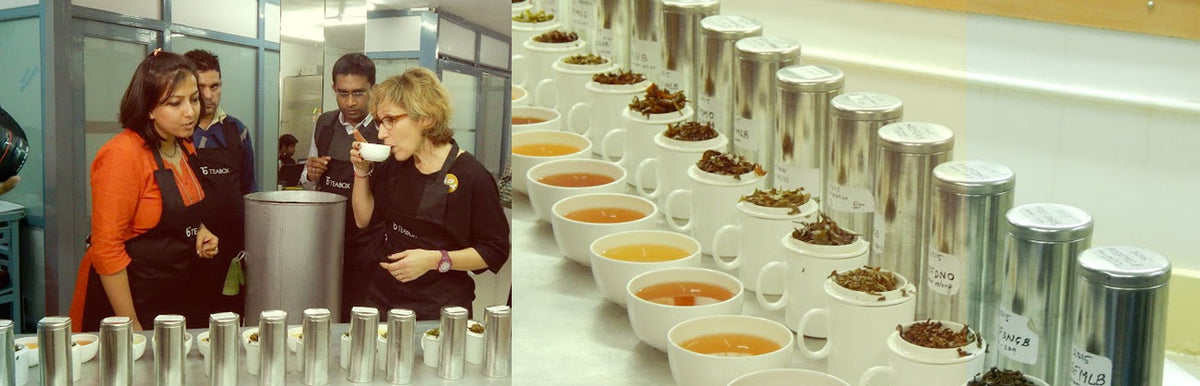
Tea Glossary: An A to Z of Tea Terminology and Words to Describe Tea
A tea glossary explains the words tea makers, tasters and labels use: where a tea grew, how it was made and how it tastes.
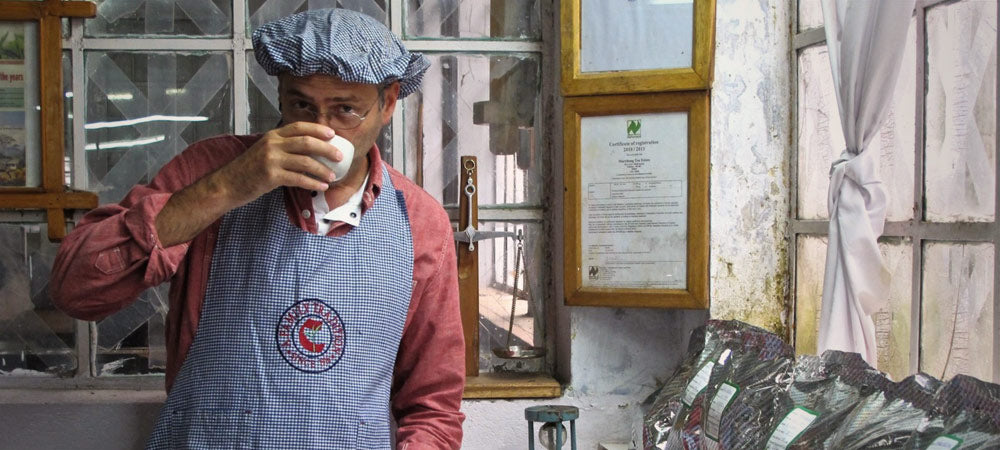
Tea Terms A to C: From Astringent and Amber to Creaming Down and CTC
Each term below gets a one- or two-line meaning; a link means a Tea 101 guide covers it in full.
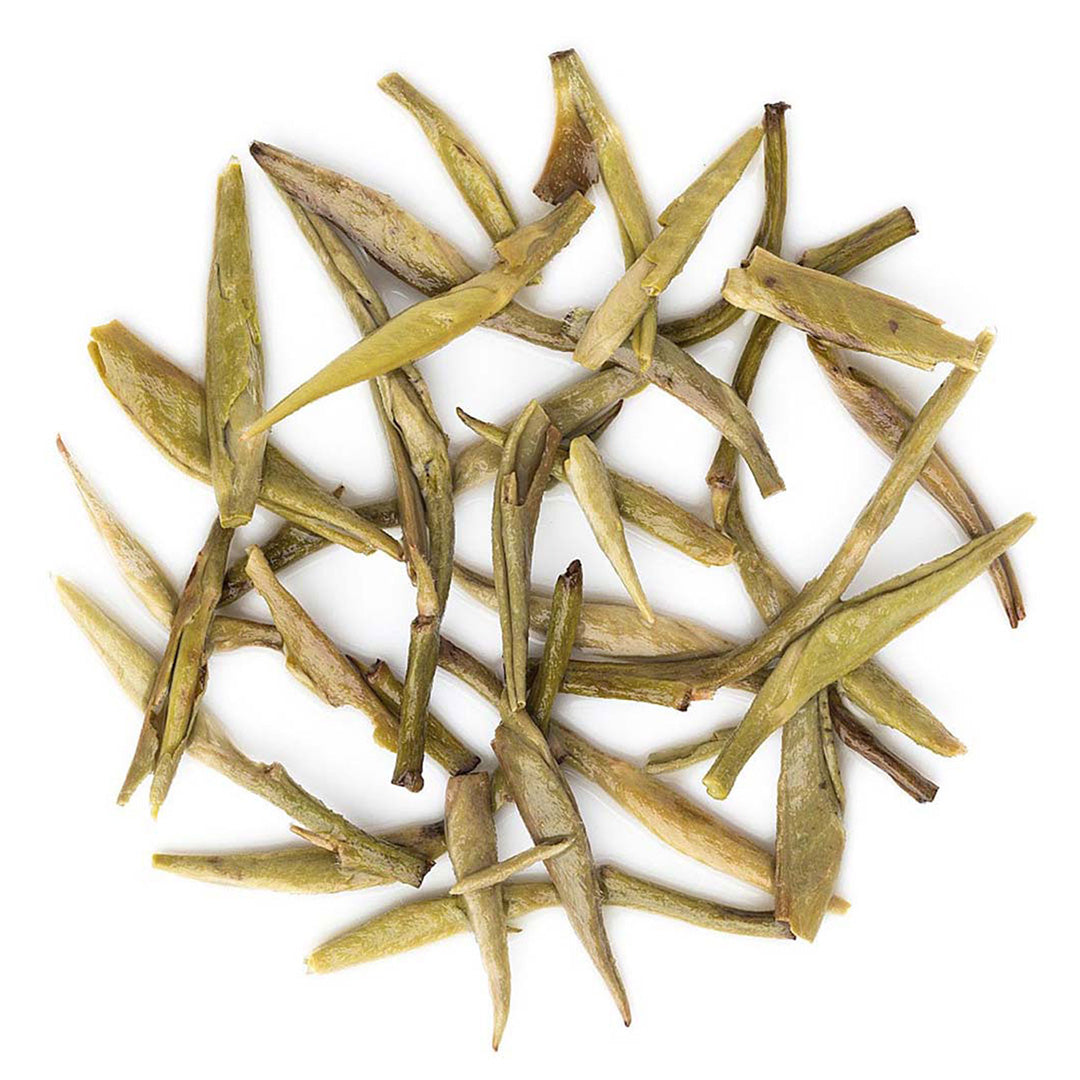
Tea Terms D to M: From Dry Leaf and Flush to Malty and Muscatel
Each term below gets a one- or two-line meaning; a link means a Tea 101 guide covers it in full.
Tea Terms N to Z: From Notes and Orthodox to Tippy and Woody
Each term below gets a one- or two-line meaning; a link means a Tea 101 guide covers it in full.
Tea FAQs: Does Tea Expire, Do Tea Bags Go Stale and How to Make Loose Leaf Tea
Tea does not expire the way fresh food does, but it does go stale: loose leaf tea and tea bags slowly lose aroma and flavor, so most tea tastes best within about a year, kept airtight, dark, cool a...